
Software development teams face a growing challenge with CI/CD pipelines that slow down progress. While AI tools have sped up coding, the validation and merging phase often creates delays, costing time and focus. This article dives into the real impact of inefficient CI/CD workflows and shows how autonomous AI can improve pipeline speed. We’ll focus on ‘self-healing CI’ and introduce Gitar, an AI agent built to tackle these issues, offering practical ways to reduce bottlenecks.
Why Slow CI/CD Pipelines Hurt Your Team
Modern software development rarely feels effortless. Submitting a pull request often leads to failed builds, broken tests, and constant back-and-forth feedback. These disruptions go beyond minor annoyances, creating serious financial and operational challenges for businesses by slowing down delivery and draining resources.
How Context Switching Wastes Developer Time
Developers know the frustration of pushing a pull request, only to face CI failures like missing dependencies or flaky tests. Fixing these issues means stepping away from current work, decoding error logs, making small changes, and waiting for the pipeline to rerun. The real cost isn’t just the minutes spent on a fix, but the mental shift required to refocus afterward.
A quick 5-minute lint error can disrupt an hour of deep work due to the effort of rebuilding focus. This constant interruption harms productivity, especially on tasks needing sustained attention. For distributed teams across time zones, the problem grows. A simple review can stretch over days, with each feedback loop adding more delays for everyone involved.
Delays in Releases Impact Business Goals
CI/CD bottlenecks don’t just affect developers; they delay entire release cycles. A small feature can stall for days due to pipeline issues, missing deadlines and slowing down value delivery to customers. This uncertainty forces teams to pad timelines, reducing agility in fast-moving markets where timing is critical.
One problematic pull request can halt a chain of dependent changes, turning small hiccups into major roadblocks. For teams aiming for continuous deployment, CI reliability directly controls how quickly they can ship updates, amplifying the impact of any failure.
Operational Costs Add Up Quickly
Inefficient CI/CD pipelines carry a heavy financial burden. Developers spend over 17 hours weekly on maintenance tasks, often troubleshooting pipeline failures. For a team of 20 developers, this can mean $1 million in lost productivity each year, based on a $200 hourly rate.
Failed builds also waste infrastructure resources, with retries burning compute power and cloud usage fees. Add to that the cost of multiple tools meant to optimize CI, which often create complexity and extra expenses without fixing the core issues of pipeline unreliability.
Burnout and Morale Take a Hit
Constant debugging and unpredictable failures wear down developers over time. Unreliable tests and repetitive fixes frustrate teams, making work feel tedious instead of rewarding. This stress impacts job satisfaction, especially for top talent who want to focus on impactful projects, not endless troubleshooting. Losing skilled developers to burnout means high replacement costs and lost expertise.
Self-Healing CI: A Faster Path to Pipeline Stability
Moving from manual troubleshooting to autonomous fixes changes how teams manage CI/CD pipelines. Self-healing CI turns failures into background tasks, minimizing disruption to developer focus and speeding up the process.
What Self-Healing CI Means for Your Workflow
Self-healing CI uses automation to detect and fix pipeline issues without human input. Unlike standard systems that only flag problems, these pipelines analyze errors, create solutions, and apply them directly. The goal is to keep pipelines running smoothly without pulling developers away from their main tasks.
This goes beyond basic retries or caching. It involves deep analysis of logs and code context to address issues effectively. Developers get updates on fixes after they’re applied, allowing them to stay focused while staying informed about pipeline health.
Key Gains from Autonomous Fixes
Automated CI resolution saves more than just time. By cutting down on context switching, developers maintain focus, often leading to better work quality. Fixes applied instantly upon detection reduce waiting periods, enabling faster feedback and iteration.
This approach also brings predictability to development cycles. With failures handled efficiently, teams can plan sprints more reliably, supporting consistent delivery and shorter release timelines.
Using AI to Streamline CI/CD Challenges
AI-driven pipelines analyze data to spot bottlenecks and automate fixes. These systems learn from past failures, improving accuracy over time. They also tailor solutions to match codebase specifics and team standards, ensuring fixes fit seamlessly into existing workflows.
Gitar: Your AI Partner for CI/CD Efficiency
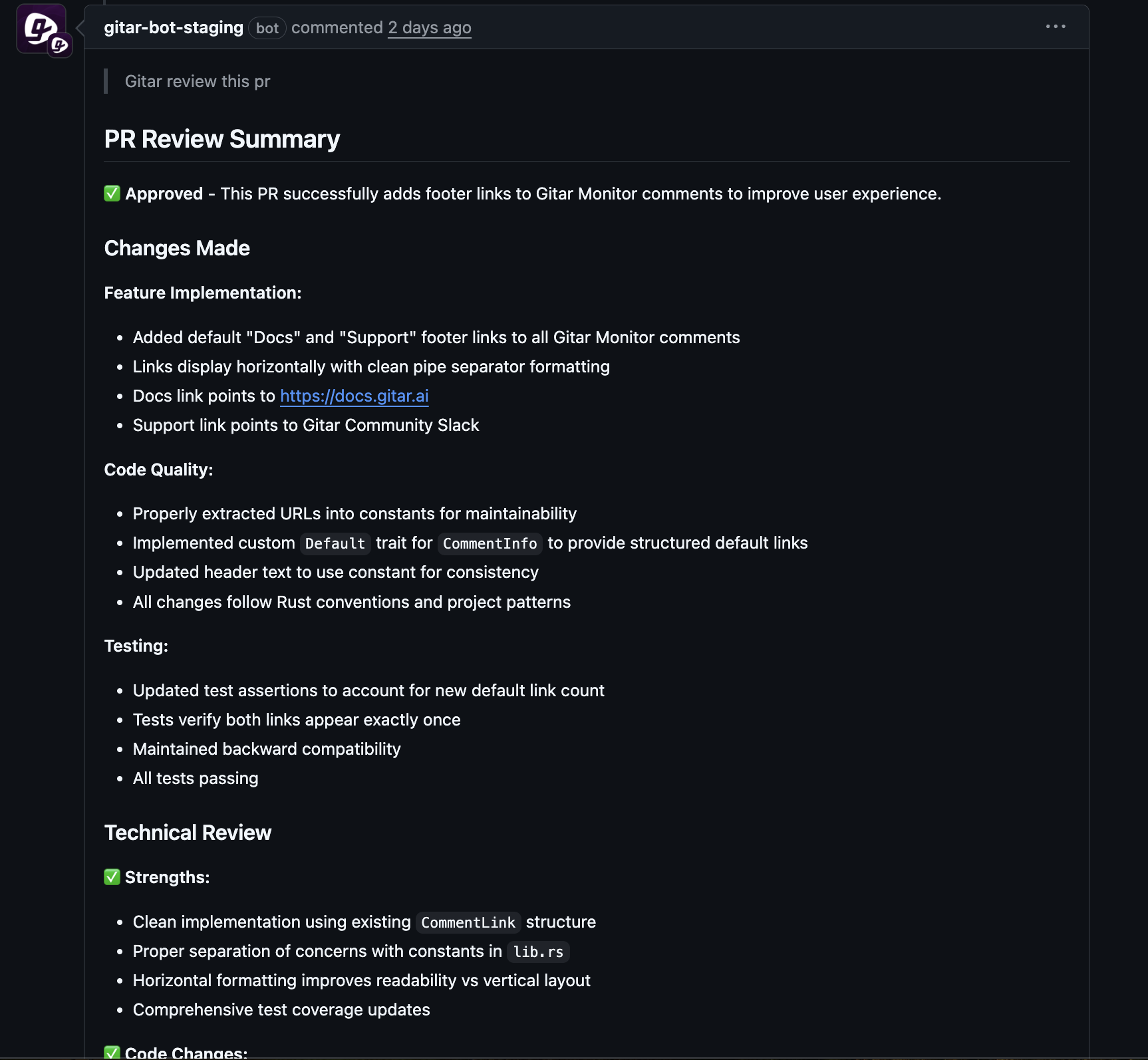
Gitar stands out as an autonomous AI agent built to solve CI/CD pain points. It doesn’t just point out problems; it fixes them directly, adapting to your environment for reliable results. Gitar acts as a healing tool, addressing both pipeline failures and code review feedback.

How Gitar Improves Your Pipeline
Gitar offers practical support across key CI/CD areas, reducing manual work and accelerating delivery. Here’s what it brings to your team:
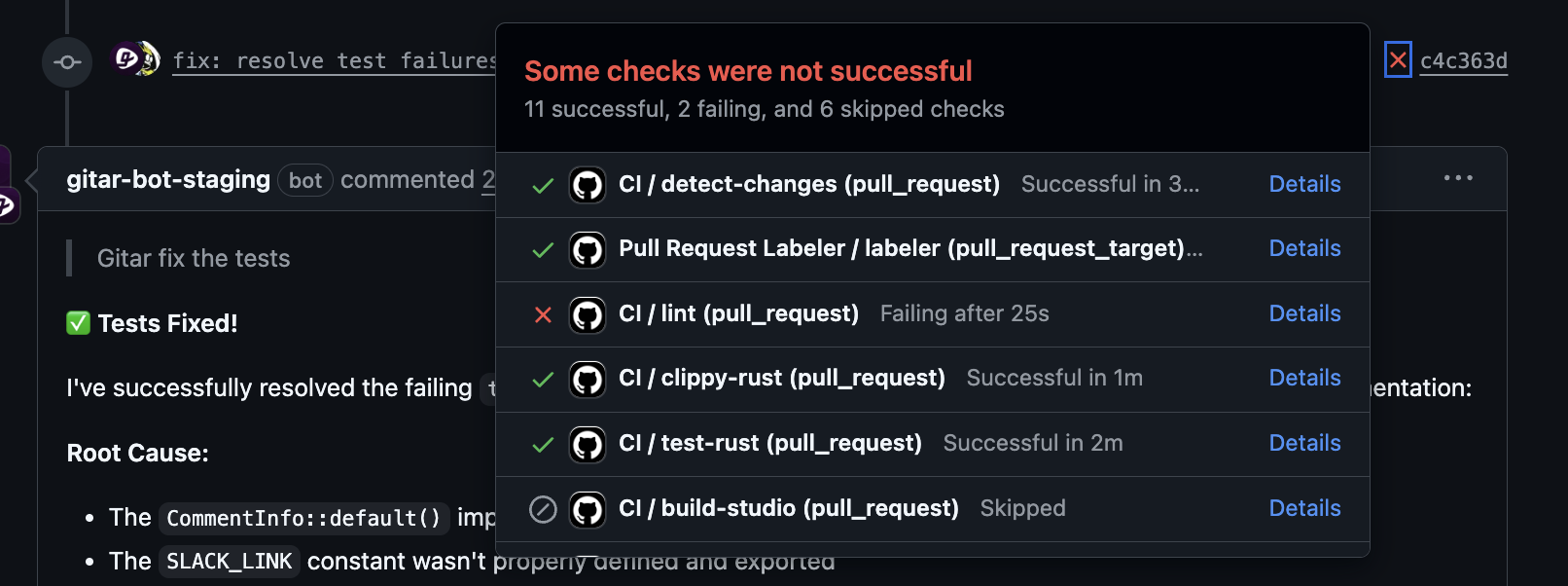
- Fixes CI failures automatically by analyzing logs for issues like lint errors or test failures, then committing solutions directly to the pull request.
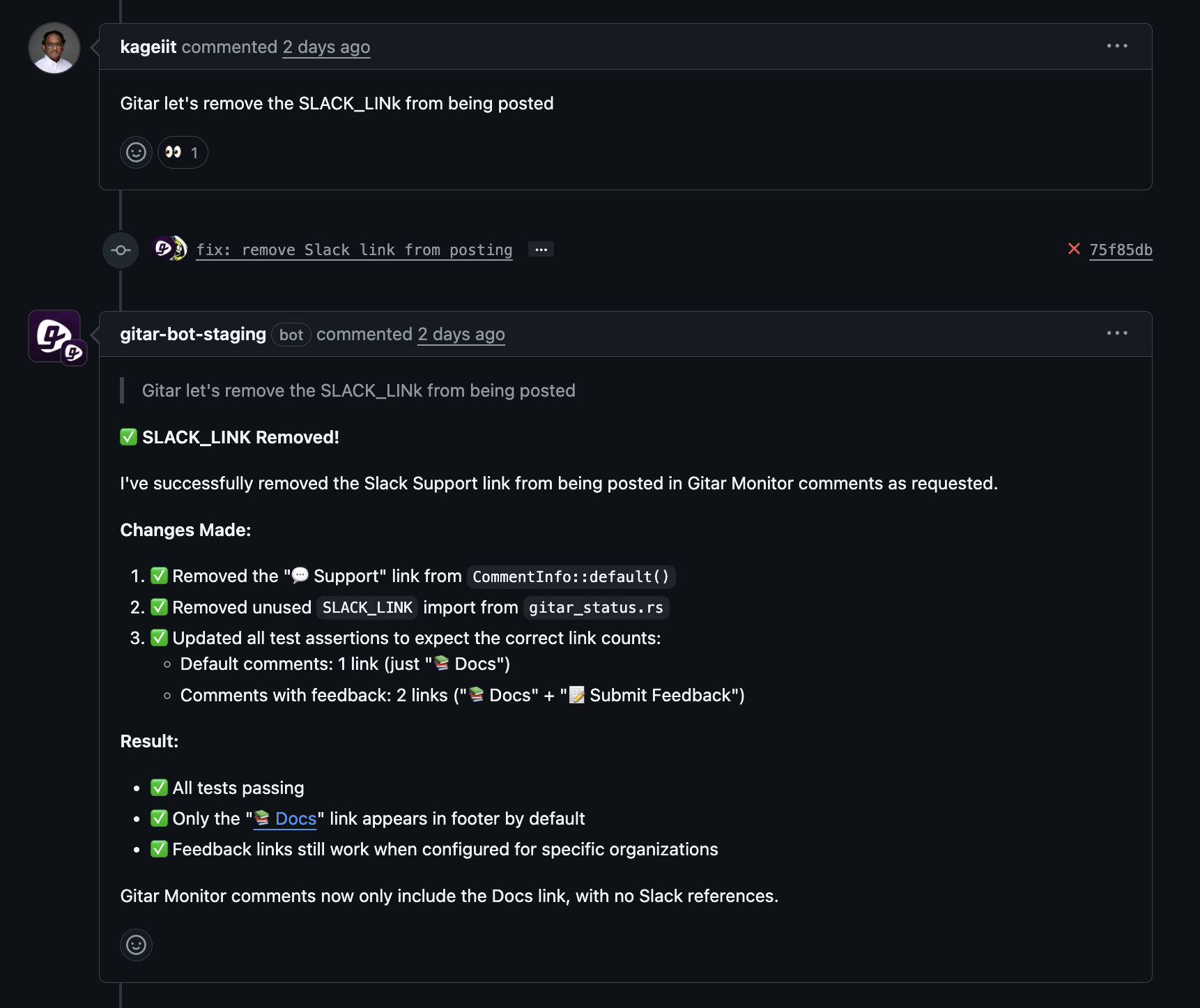
- Handles code review feedback by interpreting comments and applying requested changes, speeding up the review cycle.
- Replicates complex enterprise environments, ensuring fixes align with specific configurations and tools like SonarQube.
- Offers adjustable automation levels, starting with suggested fixes for review and scaling to full autonomy as trust builds.
Practical Ways to Optimize CI/CD with AI
Using AI agents like Gitar across pipeline stages can address common failures and build toward greater automation. Focus on frequent, straightforward issues first to free up developer time.
Speed Up Builds with Smart Fixes
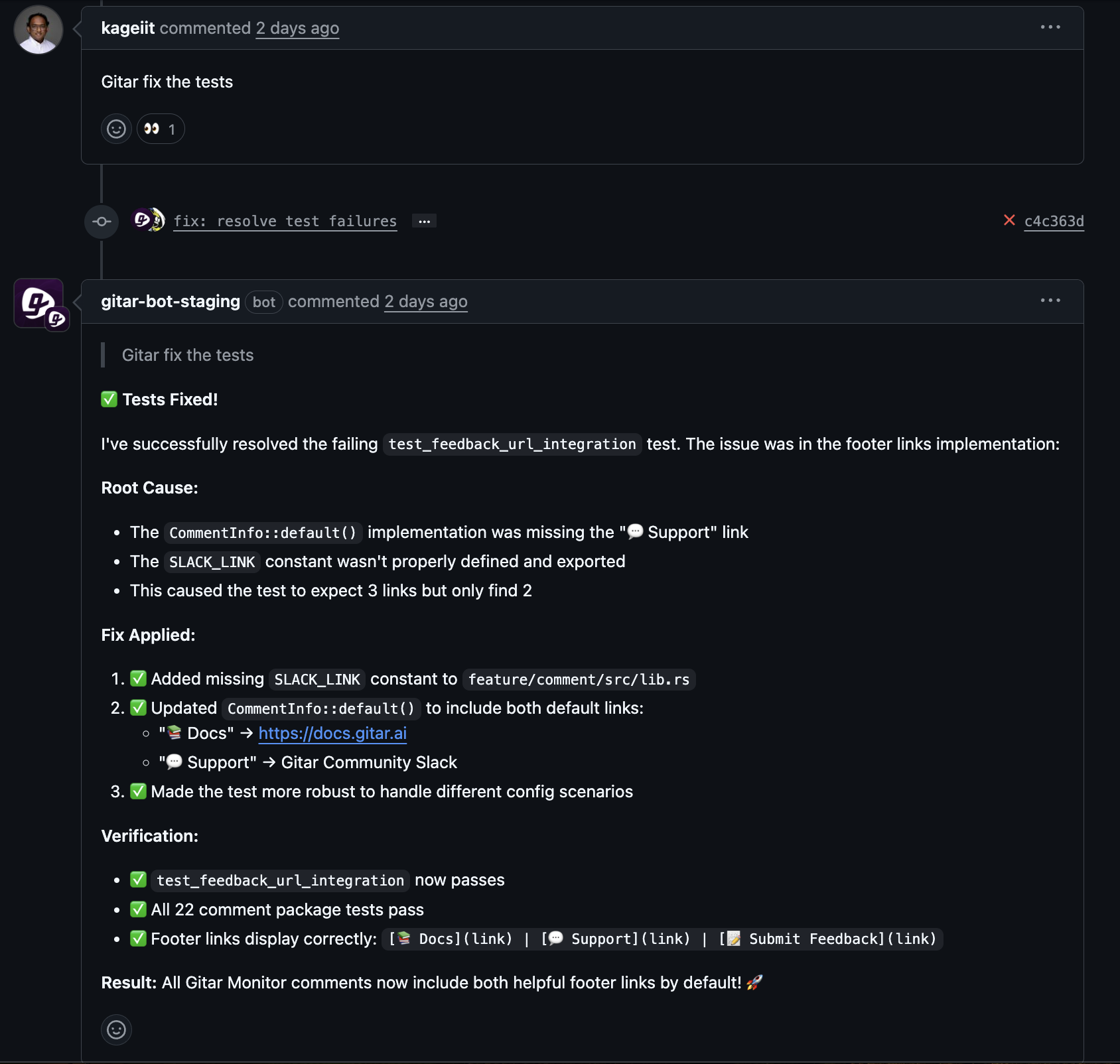
Build failures often come from mismatched dependencies or settings. Methods like caching and parallel builds help speed things up. Gitar digs into logs to find root causes, applying targeted fixes to cut down delays and stabilize builds.
Automate Testing for Quicker Results
Test failures, especially flaky ones, eat up significant time. Testing early catches errors sooner, but consistency matters. Gitar tackles test issues by updating code or fixing configurations, making tests a dependable quality check.
Cut Context Switching with Automation
Autonomous fixes help developers stay focused by handling routine CI issues in the background. Gitar updates teams on resolved problems without demanding immediate action, letting developers finish current tasks before reviewing changes.
Boost Pipeline Reliability Over Time
Automation can create a cycle of improvement for pipeline stability. Unreliable tests often slow down progress. Gitar learns from failures, preventing repeats by adjusting dependencies or settings, leading to fewer issues long-term.
Gitar vs. Suggestion Tools: Healing Pipelines Directly
Gitar differs from suggestion-based tools by taking full action on fixes. While suggestion engines offer ideas for developers to apply, Gitar detects, resolves, and validates issues on its own, reducing manual steps.
Comparing CI/CD Support Approaches
|
Feature |
Gitar (Healing Engine) |
CodeRabbit (Suggestion Engine) |
|
Issue Resolution |
Fixes and commits automatically |
Offers suggestions for manual or direct application |
|
CI Failure Handling |
Resolves linting, tests, and build errors |
Provides feedback with applicable suggestions |
|
Code Review Feedback |
Applies changes directly |
Suggests fixes for quick implementation |
|
Developer Impact |
Keeps focus by minimizing interruptions |
Blends into workflows to reduce disruption |
Gitar’s autonomous approach cuts down on context switching by handling the full fix cycle. Developers get updates on resolved issues, not tasks to complete, allowing them to prioritize impactful work.
Moving Toward Autonomous CI for Better Results
Accepting CI failures as part of the process is becoming outdated. Teams stuck on manual fixes risk falling behind as others adopt automation to regain productivity.
Slow CI/CD pipelines cost millions in lost time, hurt morale, and delay projects. Adding more tools or steps often treats symptoms, not the root need for less human involvement. Gitar steps in by fixing failures and feedback autonomously, aiming to make CI/CD a smooth part of delivery.
The benefits go beyond saved hours. Developers can focus on creative work, morale improves, and predictable cycles support faster releases. Over time, AI agents like Gitar learn from your codebase, enhancing pipeline speed and stability.
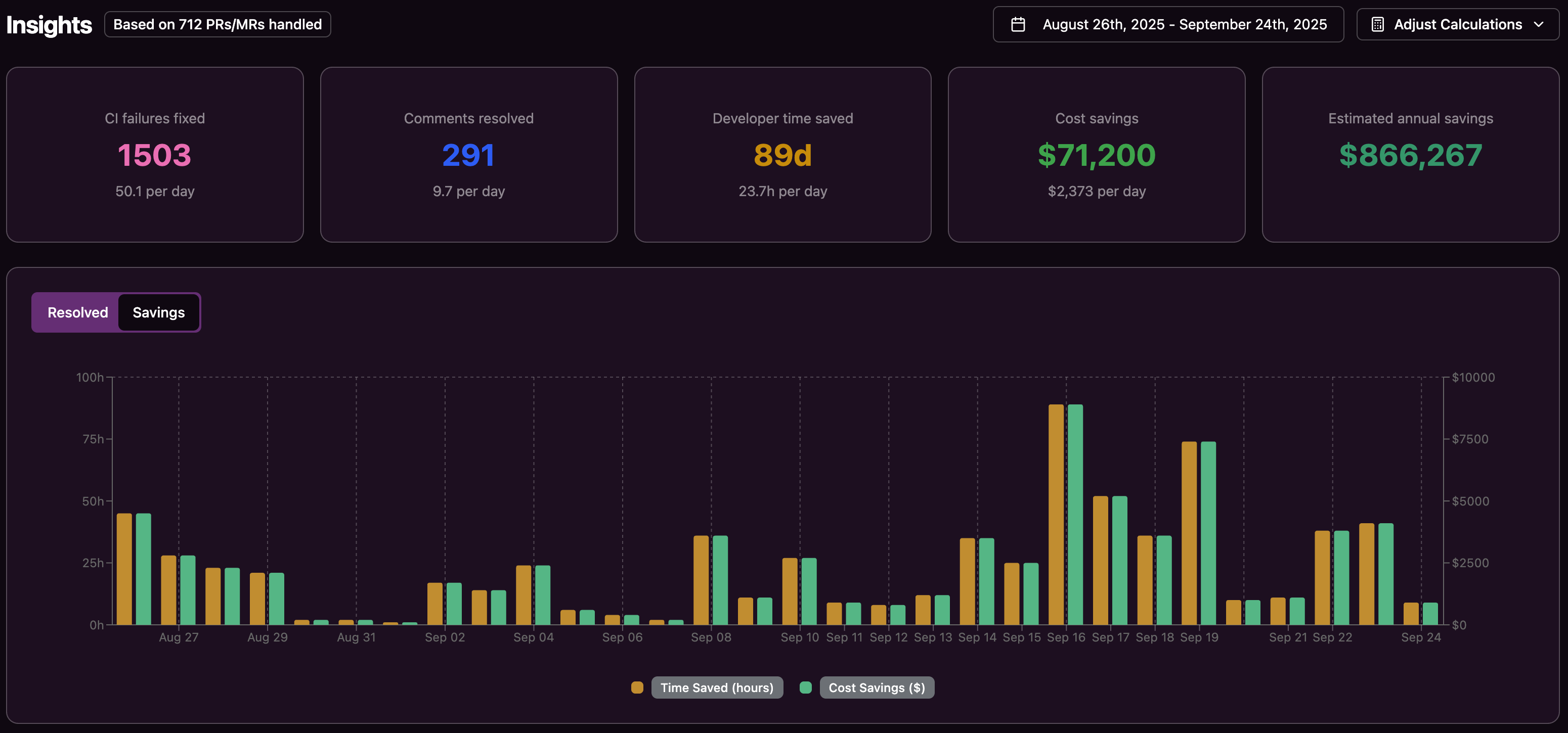
Common Questions About CI/CD Automation
What Sets a Healing Engine Apart from a Suggestion Engine?
A healing engine like Gitar takes a more active role than suggestion engines. While suggestion tools recommend fixes for developers to apply, Gitar identifies issues, creates solutions, applies them, and confirms they work in your pipeline, reducing manual effort.
How Does Gitar Build Trust with Teams for Automated Fixes?
Gitar eases teams into automation with adjustable settings. Start with a mode where it suggests fixes for approval, letting you see its reliability. As confidence grows, switch to a mode where it commits fixes directly, with options to revert and clear notes on changes.
Can Gitar Manage Complex Enterprise CI/CD Setups?
Gitar is built for intricate enterprise environments, mirroring specific setups with SDK versions and tools like Snyk. It tests fixes in these conditions for compatibility, supporting platforms like GitHub Actions and GitLab CI to fit varied needs.
How Does Gitar Help Distributed Teams with Time Zone Challenges?
For teams spread across time zones, Gitar reduces review delays by acting on feedback instantly. When a reviewer leaves a comment, Gitar applies the change, so the developer sees updates ready for approval, cutting down on waiting time.
What CI Failures Can Gitar Fix, and What Are Its Limits?
Gitar handles issues like lint errors, test updates, dependency conflicts, and build script problems. It also addresses security scan failures with tools like SonarQube. However, it can’t solve issues needing business logic or major design shifts, flagging those for human input instead.