
Patch management plays a vital role in keeping your CI/CD pipelines running smoothly and protecting developer productivity. Developers often spend up to 30% of their time tackling CI and code review issues, and 60% of companies face project delays due to CI pipeline failures. Let’s explore five practical patch management strategies to cut down on CI build failures, speed up code delivery, and create a more efficient development process. These steps can help you save time and focus on building great software.
Why Patch Management Matters for CI Stability
The Real Impact of CI Failures
CI failures cost developers about an hour each day, adding up to significant productivity losses. For a team of 20 developers, this could mean $1 million in lost productivity annually when factoring in fully loaded costs. Beyond engineering, these delays slow down product launches, reduce revenue, and weaken competitive positioning. Addressing CI stability through patch management is a critical step for any business aiming to stay efficient.
More Than Security: Solving CI Bottlenecks
While security updates are crucial, outdated tools, unpatched dependencies, and misconfigurations often lead to CI failures that interrupt developer focus and delay releases. With AI coding tools increasing code output, teams face more pull requests and tests to manage. The challenge has shifted from writing code to efficiently validating and merging it, making smart patch management essential.
Moving Toward Self-Healing CI Systems
A CI system that can automatically detect and fix build failures is the goal for modern teams. Automated patch management helps maintain development speed by quickly addressing vulnerabilities. This shift from manually fixing issues to proactive resolution marks a significant improvement in software delivery processes.
Gitar: Your Solution for Self-Healing CI
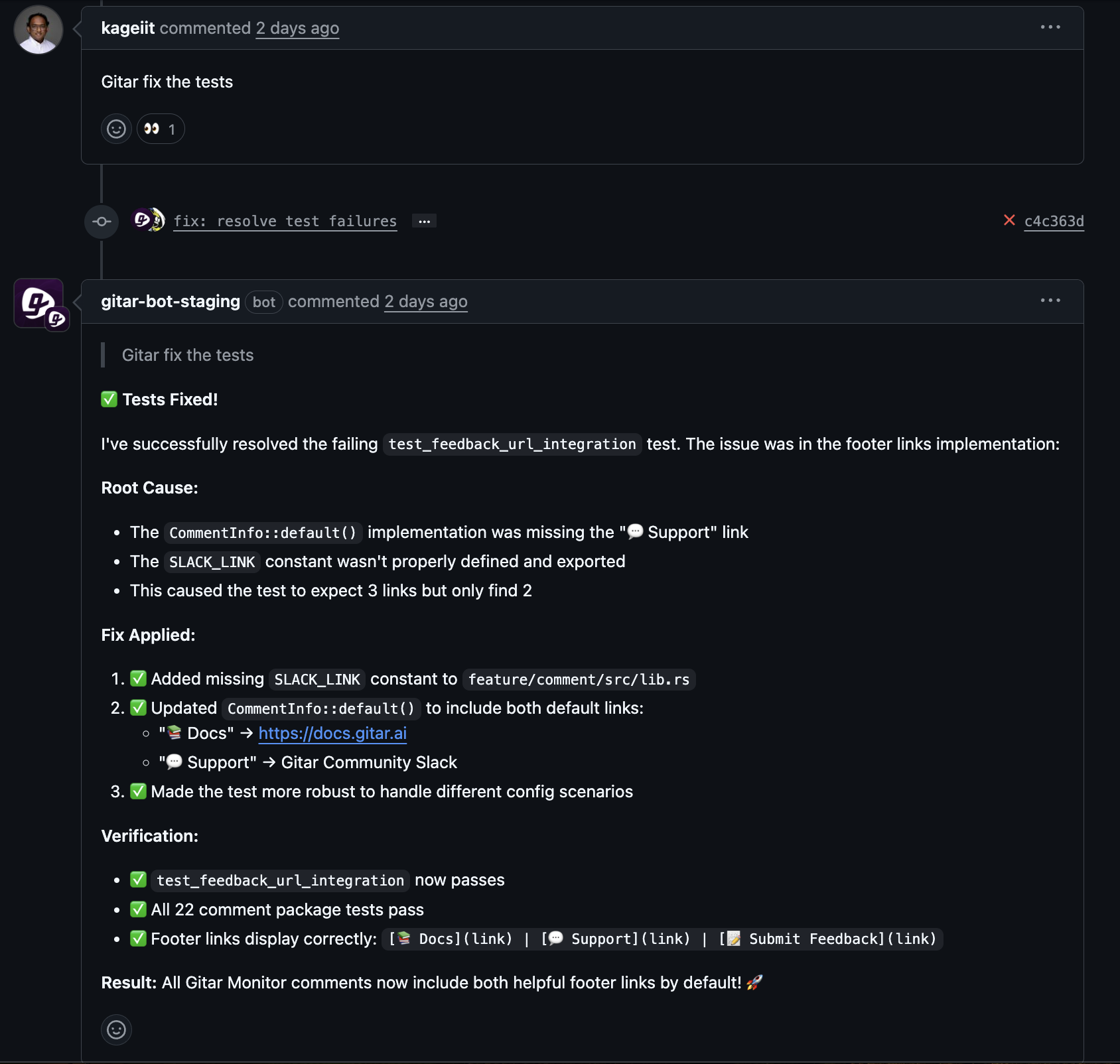
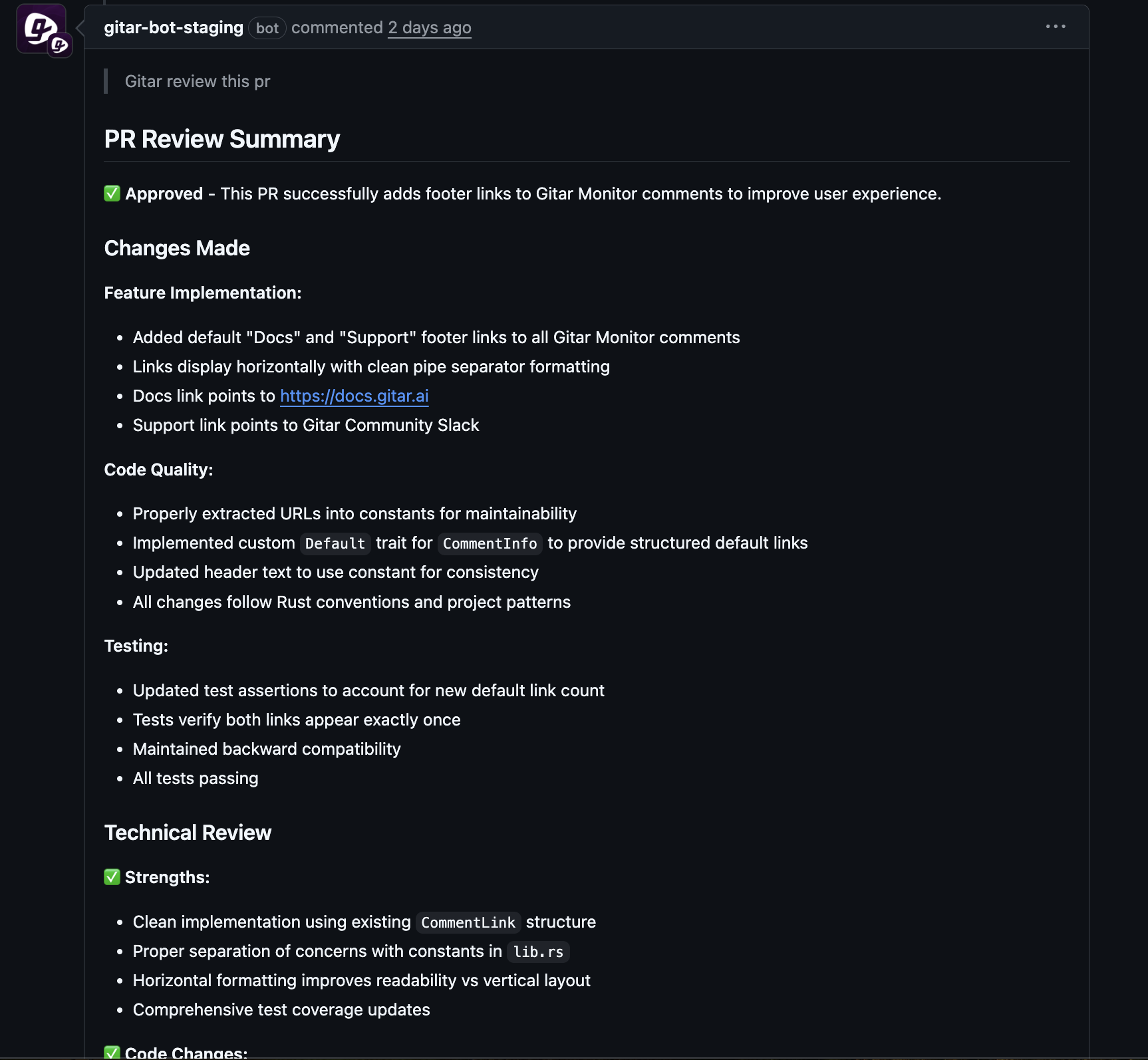
Gitar is an AI-powered agent designed to automatically fix failing CI pipelines and handle code review feedback. When a pull request receives a comment or a CI pipeline fails, Gitar steps in to analyze the issue, create a fix, and update the request with the solution. This saves developers hours of troubleshooting each day.
How Gitar Supports Patch Management
Here’s what Gitar brings to your workflow:
- Complete Issue Resolution: Gitar doesn’t just suggest fixes. It applies them, validates against CI workflows, and ensures builds pass before finalizing pull requests.
- Accurate Environment Matching: It replicates complex enterprise setups, including specific JDK versions and multi-SDK dependencies, to ensure reliable fixes.
- Instant CI Failure Fixes: Gitar resolves issues in real time, fully testing solutions to keep your builds green.
Install Gitar today to fix broken builds and deliver quality software faster.

5 Patch Management Practices to Stop CI Build Failures
1. Build a Centralized Inventory and Map Dependencies
Start with a clear inventory of all tech assets, like libraries, operating systems, containers, and virtual machines. Map their dependencies to spot potential conflicts before they disrupt CI builds. Keeping an updated inventory lets you track patch status and prevent dependency issues. This reduces manual fixes and helps avoid unexpected CI failures.
Without mapping dependencies, a small patch can trigger widespread issues in your pipeline due to hidden incompatibilities. By staying ahead of these risks, you can save hours of debugging time. For example, updating a library might break your testing framework, turning a quick update into a long troubleshooting session if you’re unprepared.
Implementation Tip: Use tools to automate asset tracking and dependency scanning. Connect these with your version control system to monitor files like package.json or requirements.txt. Set up scans to run on every commit to catch new dependencies and flag conflicts early.
2. Rank Patches by CI Impact, Not Just Security Risk
Security matters, but for CI stability, prioritize patches based on their effect on your build process. Ranking patches by severity, criticality, and system-wide impact helps balance risk and operational needs. Even a minor update can stop a key pipeline if it conflicts with other components.
Consider both vulnerability levels and real-world risks when prioritizing. Focusing on exploit potential alongside severity ensures you address the most pressing issues. With developers spending an hour daily on CI fixes, smart prioritization cuts down wasted time by tackling high-impact patches first.
Implementation Tip: Build a scoring system combining vulnerability severity, exploit risk, and CI impact on build or test stages. Categorize patches as critical for immediate action, high for 24-hour resolution, medium for weekly updates, or low for maintenance windows. Tools like Gitar can analyze CI logs to pinpoint frequent failure causes, guiding your decisions.
Gitar’s Role: By mirroring full enterprise setups and identifying CI failure patterns, Gitar provides insights to help prioritize patches based on actual build impact.
3. Set a Consistent Patch Schedule with Testing and Rollback Plans
Maintain a regular patch schedule during set maintenance windows to limit disruptions. A predictable cadence using automation keeps systems updated with minimal impact. Test patches in staging environments to confirm compatibility, and always have a rollback option ready for problematic updates.
This structured method avoids random patching that often causes new CI failures. It builds confidence that updates won’t interrupt critical workflows. Catching issues in staging can significantly reduce time spent fixing production pipeline problems.
Implementation Tip: Create staging environments matching production to test patches with full CI suites. Define rollback steps, automate recovery processes, and use blue/green or canary deployments when possible. Schedule updates during quiet periods and keep teams informed.
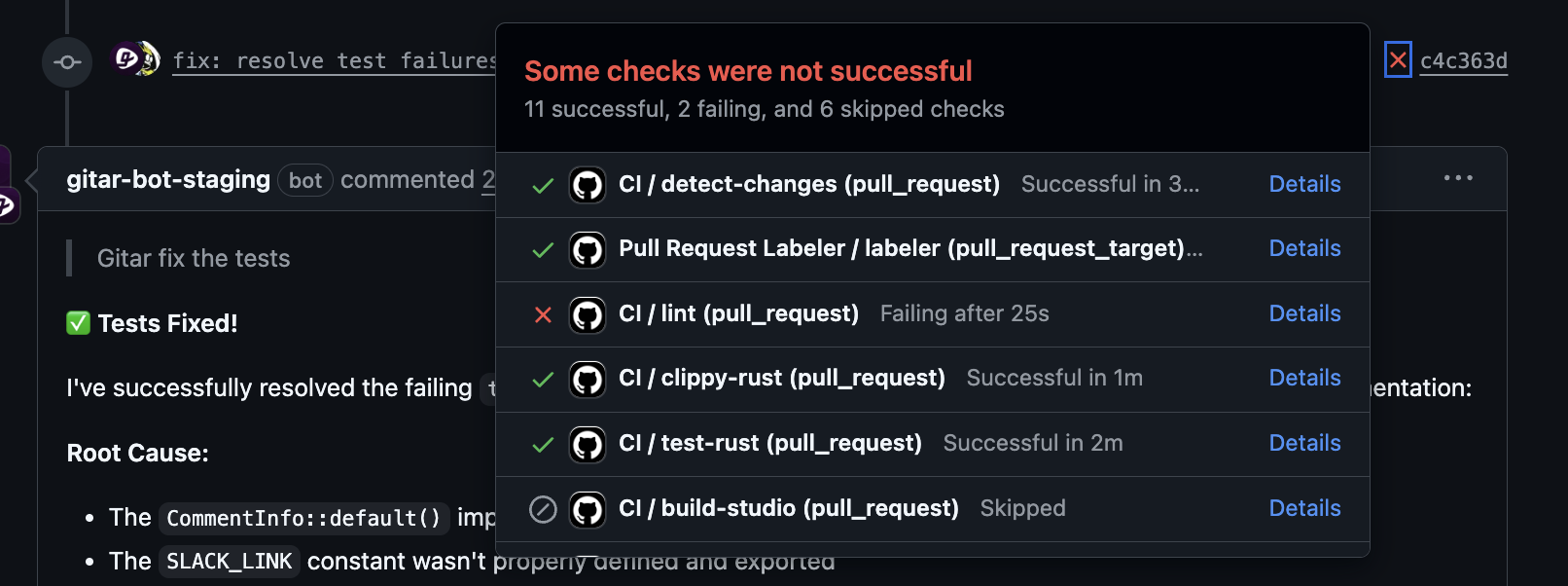
Gitar’s Role: If a patch fails in staging, Gitar can detect and fix the CI issue automatically, preventing larger problems down the line.
4. Automate Patch Deployment for Efficiency
Automation is essential for managing patches across large enterprise systems with diverse setups. Automated processes handle discovery, criticality assessment, scheduled rollouts, and reporting. This allows for constant scanning and quick updates while following your team’s policies.
Speeding up patch deployment with automation reduces security risks and CI interruptions. A shorter patch window minimizes exposure to threats and build issues. This supports early issue detection in the development cycle, avoiding costly delays later.
Implementation Tip: Use tools for centralized patch oversight and flexible scheduling, including emergency updates. Set up trusted patch sources, integrate with CI/CD pipelines, and ensure notifications keep everyone updated on deployment status.
Install Gitar now to automate build fixes and ship better software faster.
5. Connect Patch Management to a Self-Healing CI Pipeline
Integrating patch management with a CI pipeline that can fix itself is a game-changer. This setup doesn’t just identify failures from patches or updates; it actively resolves them. Your CI becomes a tool for maintaining green builds and smooth developer workflows.
This tackles the productivity drain from CI failures. When code is submitted, the system handles issues caused by patches, cutting down on context switching that wastes time and focus. Developers stay in their flow, spending less energy on manual fixes.
Implementation Tip: Use an AI agent like Gitar to monitor CI pipelines continuously. If a patch causes a failure, it analyzes logs, creates a fix for issues like dependency conflicts or linting errors, tests it against CI workflows, and applies it to the pull request. This builds a cycle where problems are resolved automatically.
Gitar’s Value: Gitar autonomously fixes CI failures, adapting to patches and environment shifts without constant human input. It offers a trust model that lets teams start with suggestion-only mode and move to auto-commits as they gain confidence, reducing interruptions and speeding up merges.
Comparing Patch Management and CI Stability Approaches
|
Approach |
Dependency Mapping |
Patch Rollout Speed |
CI Failure Resolution |
Developer Impact |
|
Manual Patch Management |
Irregular and incomplete |
Slow with frequent delays |
Manual fixes, high context switching |
Heavy workload, constant interruptions |
|
Automated Patch Management |
Basic automated tracking |
Faster with scheduled updates |
Detects issues, still needs developer input |
Less workload, some focus loss |
|
Gitar (Autonomous CI Healing) |
Full environment and dependency support |
Continuous, focused on CI issues |
Automatic fix creation and application |
Minimal workload, better focus |
Install Gitar now to fix broken builds and ship quality software faster.
Common Questions About Patch Management and CI
How Does Proactive Patch Management Help Prevent CI Failures?
Proactive patch management keeps CI builds stable by ensuring components like libraries and tools remain compatible and up to date. By tracking dependencies, testing patches in staging, and spotting conflicts early, you avoid updates that break pipelines. This includes maintaining asset inventories, following consistent patch schedules, and using automated testing to catch problems before production, saving developer time.
Do Automated Patch Tools Work in Complex Enterprise CI Setups?
Yes, many automated patch tools are built for enterprise-scale environments with diverse systems. When paired with Gitar, they support specific JDK versions, multi-SDK setups, and varied testing needs. Gitar mirrors full workflows to create targeted fixes, ensuring stability in complex CI environments across platforms like GitHub Actions, GitLab CI, and CircleCI.
What Happens If a Patch Breaks the CI Pipeline?
Integrating patch management with a self-healing CI pipeline addresses this issue. Staging environments and rollback options catch problematic patches early. If a failure occurs in production, Gitar can automatically detect it, analyze the cause, and apply fixes for issues like dependency conflicts or configuration errors. This minimizes downtime and manual fixing.
How Can You Measure the Value of These Patch Practices?
The value comes from time saved and productivity gained. A 20-developer team losing an hour daily on CI issues faces $1 million in annual productivity costs at $200 per hour. Using these practices with Gitar can cut this loss significantly. Other gains include faster releases, less developer stress, better code quality, and lower security risks, with improvements often visible within a month.
What Sets Self-Healing CI Apart From Traditional Patch Management?
Traditional patch management applies updates and relies on manual fixes for issues. A self-healing CI approach actively resolves problems caused by patches. Unlike standard methods that alert humans to act, Gitar identifies failure causes, creates fixes, tests them across CI workflows, and applies solutions, keeping builds green with minimal intervention.
Wrap-Up: Strengthen CI and Speed Up Delivery With Patch Management
Patch management isn’t just for security; it’s a core part of a reliable CI pipeline. Adopting these five practices—centralized inventories, impact-driven prioritization, consistent schedules with staging, automated rollouts, and self-healing CI integration—helps reduce build failures, ease developer workload, and boost innovation speed.
Moving from manual updates to automated CI support changes how teams deliver software. While each practice adds value on its own, combining them with tools like Gitar creates a seamless process from issue detection to resolution. This saves time on debugging and keeps developers focused.
For a CI system where patches don’t slow you down, tools that understand your full setup are key. Pairing proactive patch strategies with automation builds a development environment that balances security, stability, and speed.