
CI failures and delayed code reviews often slow down engineering teams, costing valuable time that could be spent on building new features. Automation offers a way to resolve these issues quickly and efficiently. Gitar steps in as a powerful tool, automatically fixing failing CI pipelines and addressing code review feedback to keep your team moving forward.
Why CI/CD Bottlenecks Slow Teams Down
Even with advanced CI/CD tools, many teams face persistent challenges that hinder productivity and delay software releases. These obstacles stem from the growing complexity of development processes. Here’s a closer look at the key issues Gitar helps solve.
Constant Context Switching Drains Focus
Pushing a pull request often leads to frustration when a build fails over a small issue, like a missing dependency or a formatting error. Developers then spend time digging through logs, switching back to their local setup, making fixes, and waiting for the pipeline to rerun.
This process isn’t just slow. It disrupts workflow, breaking concentration and pulling developers away from meaningful tasks. A quick fix that takes 30 minutes can end up costing an hour when you account for the mental effort of switching tasks.
For distributed teams, delays grow worse. A simple review comment between team members in different time zones can stretch a process from hours to days, especially when traditional tools only suggest fixes that still need manual work.
More Code, More Validation Challenges
AI coding tools help developers write code faster, but this creates a bottleneck during validation and merging. With more pull requests and tests to run, CI pipelines struggle to keep up with the volume, shifting the challenge from writing code to efficiently validating and integrating it.
Inefficiency Costs Time and Money
CI failures and review delays can consume up to 30% of a developer’s time, leading to significant productivity losses. For a team of 20 developers, this could mean $1 million in wasted costs annually. Beyond engineering, these delays slow time-to-market, frustrate customers, and contribute to developer burnout.
How Gitar Solves CI/CD Challenges with Automation
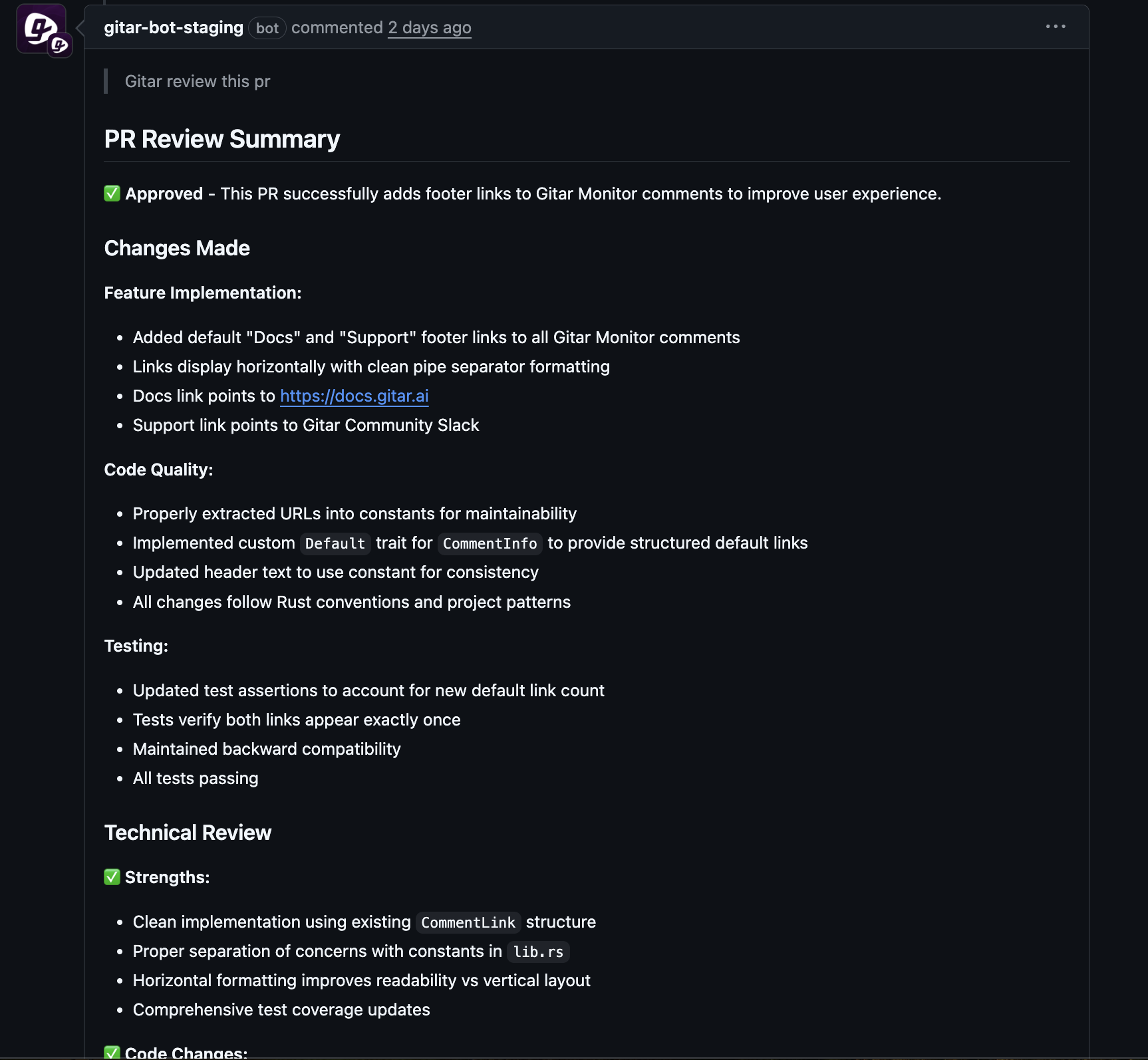
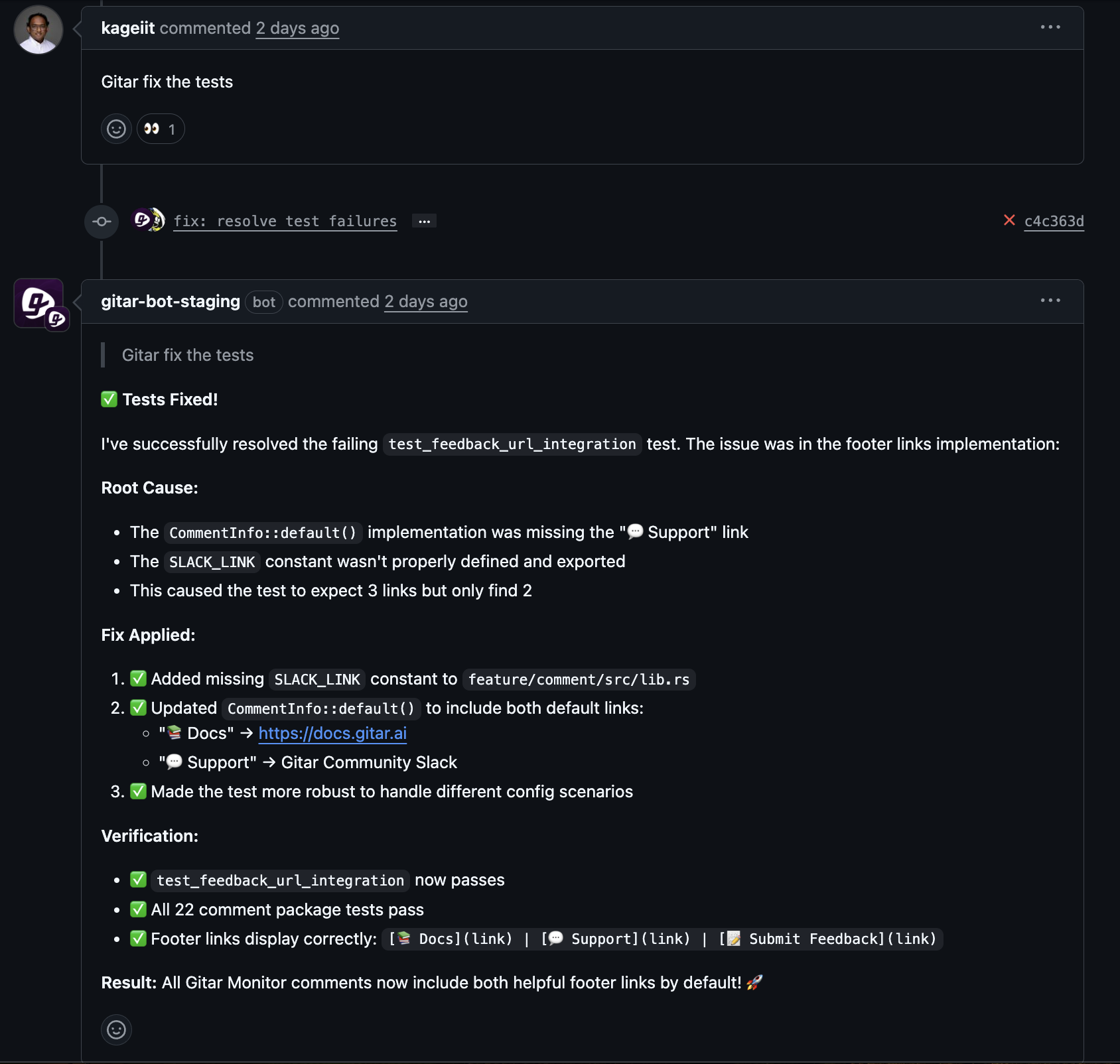
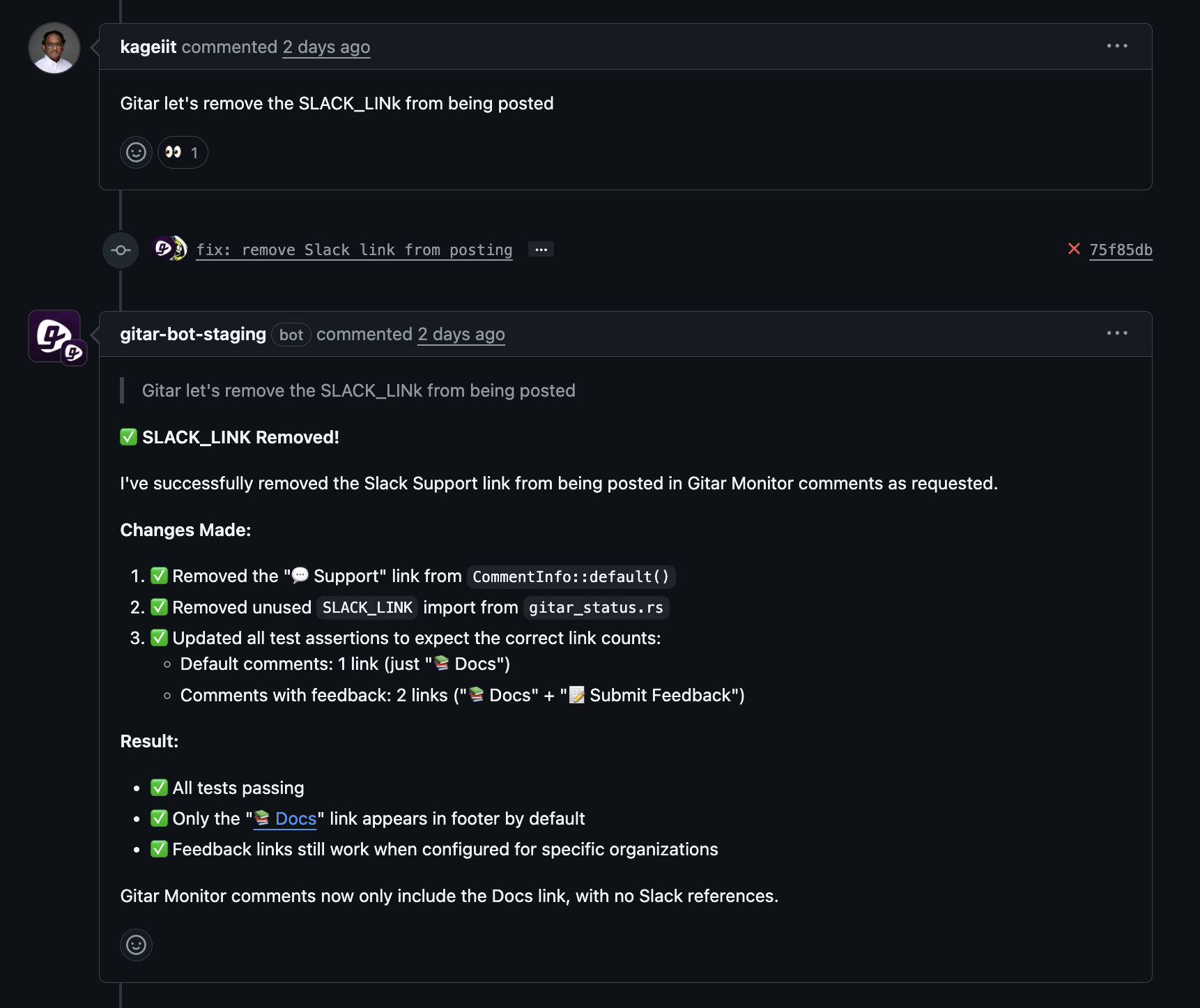
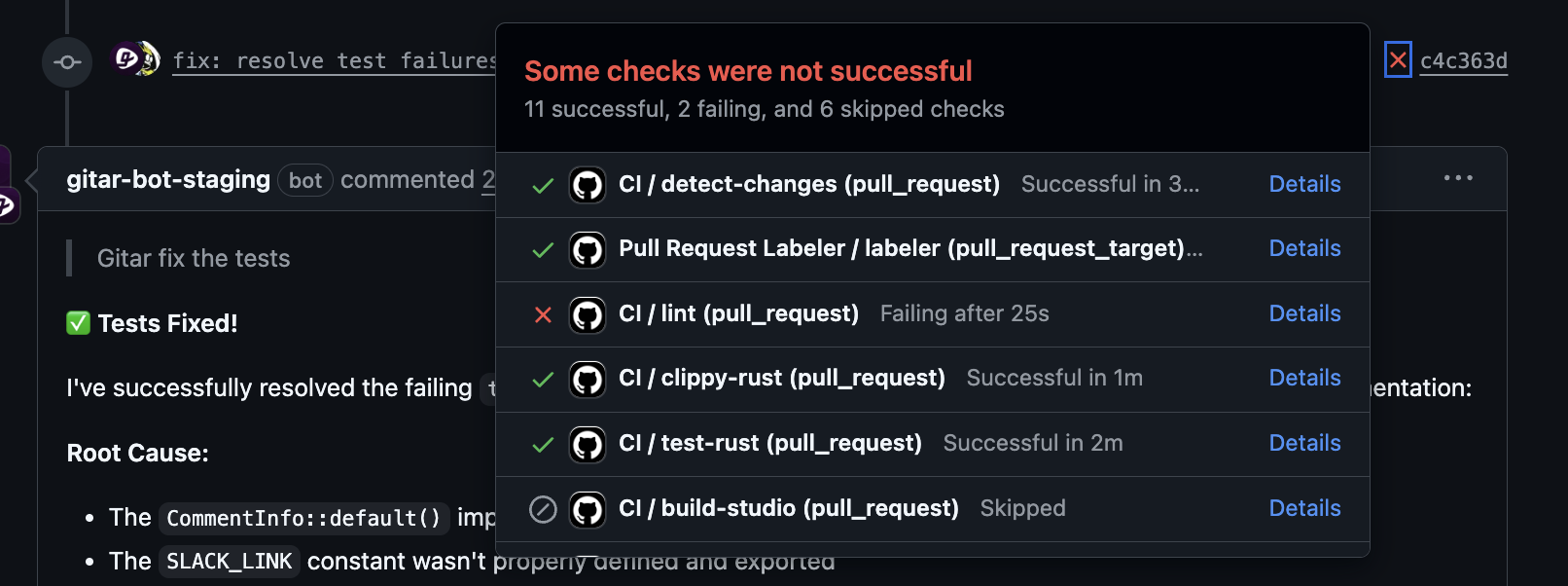
Gitar changes the game by moving from manual fixes to automated, intelligent CI solutions. It acts as a self-healing system, detecting and resolving pipeline failures without developer intervention. When a check fails, Gitar analyzes logs, identifies the cause, applies a fix, and commits it to the pull request branch, covering issues like linting errors, test failures, and build problems.
To build trust, Gitar offers two modes. In Conservative Mode, it suggests fixes for developers to approve. In Aggressive Mode, it commits fixes directly with rollback options, allowing teams to adjust automation based on their comfort level.

What Gitar Brings to Your CI/CD Workflow
Gitar leverages AI to streamline CI/CD processes, reducing manual effort and boosting efficiency. It serves as a critical tool for teams looking to automate repetitive tasks and maintain development speed.
Automated Fixes for Faster Resolutions
Gitar’s strength lies in its ability to fix CI failures on its own. When an issue pops up, it doesn’t just flag the problem. It creates a solution, tests it against the pipeline, and ensures all checks pass before finalizing the pull request. This handles everything from formatting errors to test updates and build issues, even in complex environments with specific SDK versions.
Keep Developers Focused on What Matters
By automating CI fixes, Gitar removes the need for developers to stop and debug pipeline issues. This helps maintain focus on feature development, preventing interruptions that break workflow. For distributed teams, Gitar can apply feedback overnight, so developers log in to find issues already resolved.
Save Costs with Proactive Automation
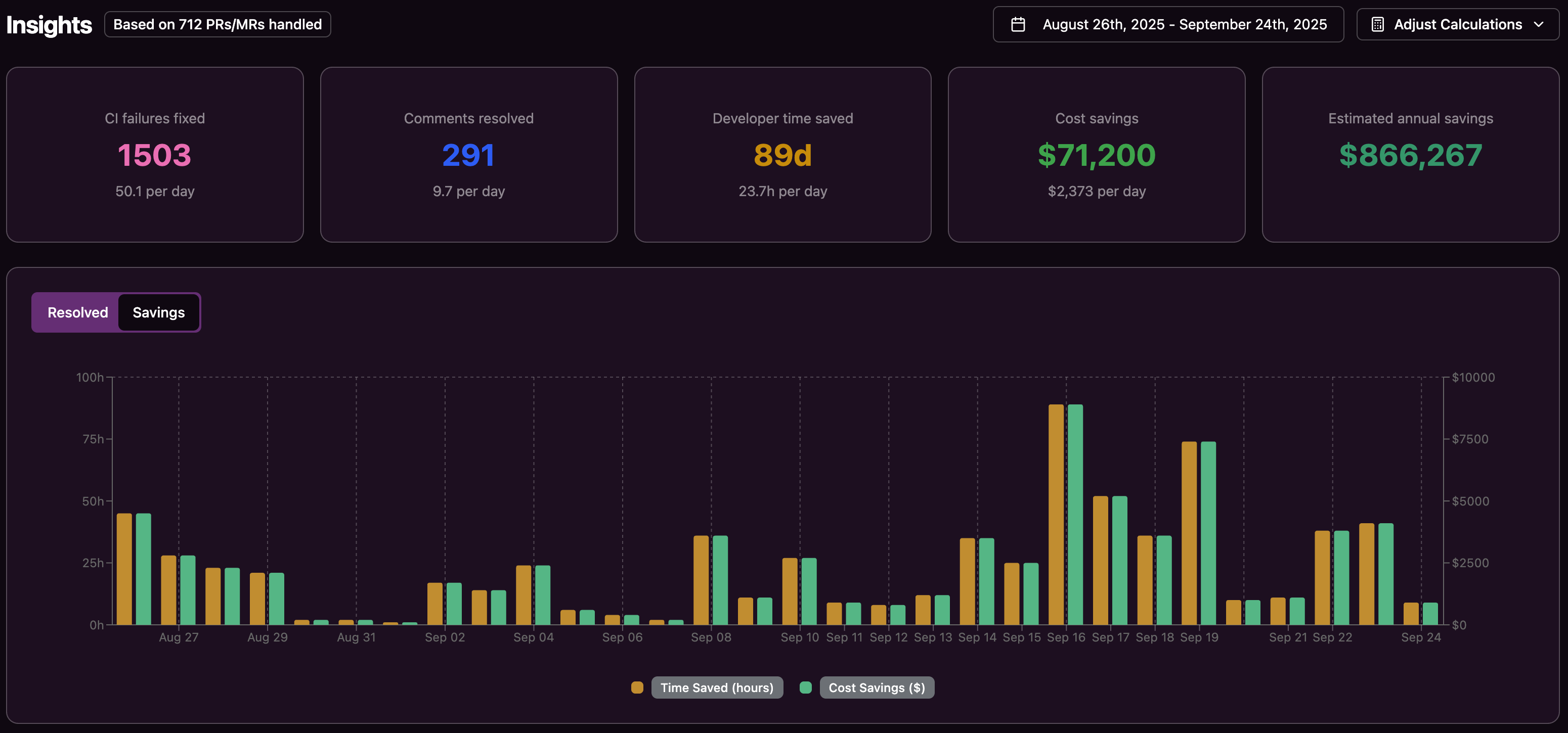
Gitar cuts down on operational expenses by handling CI failures automatically. For a team of 20 developers spending an hour daily on such issues, even automating half of those fixes could save around $500,000 yearly. This also boosts team morale and delivery speed.
Get to Know Gitar: Your CI Automation Partner
Gitar shifts CI/CD from a hands-on process to an automated, proactive system. It integrates with platforms like GitHub and GitLab, as well as CI tools such as GitHub Actions, CircleCI, and BuildKite, supporting various languages and setups.
Here’s what sets Gitar apart:
- Complete Fix Application: Gitar doesn’t just suggest fixes, it applies and validates them against the full pipeline.
- Environment Matching: It replicates complex setups for accurate solutions.
- Adjustable Automation: Start with suggestions and move to direct commits as trust grows.
- Time Zone Solutions: Fixes feedback across distributed teams without delays.
Install Gitar Today to Automate Your CI Workflow and see how it can improve your team’s efficiency.
Gitar vs. Traditional CI Tools: Key Differences
Gitar stands out by actively resolving issues instead of just reporting them. While standard CI tools require manual effort, Gitar automates the entire fix process, focusing on proactive solutions.
|
Feature/Capability |
Gitar |
Traditional CI Tools |
|
Action Taken |
Automatically applies and validates fixes |
Needs manual effort for fixes |
|
Environment Support |
Matches complex setups fully |
Limited to basic pipeline setups |
|
Flexibility |
Offers adjustable automation levels |
Relies on fixed settings |
This focus on automation lets Gitar handle routine issues, freeing developers to tackle only the complex challenges that need human input.
Common Questions About Gitar
How Does Gitar Handle CI Challenges Better?
Unlike standard CI tools that stop at identifying issues, Gitar applies fixes and validates them against the full pipeline, ensuring builds pass without manual effort.
Can Gitar Work in Complex CI Setups?
Yes, Gitar supports intricate environments by matching specific SDK versions and dependencies, delivering fixes that fit your exact workflow.
What Cost Savings Can Gitar Deliver?
For a 20-developer team, CI issues can cost $1 million yearly. By automating even half of these fixes, Gitar could save $500,000 while speeding up delivery.
How Is Gitar Different from Other AI Tools?
Many AI tools only suggest changes, leaving the work to developers. Gitar goes further by applying and validating fixes in your specific environment, with adjustable settings to match your needs.
Why Gitar Is the Future of CI/CD
Modern software development needs efficient solutions to handle growing complexity. As AI coding tools speed up development, validation becomes the new bottleneck. Gitar addresses this with automated CI fixes, helping teams focus on innovation instead of infrastructure.
Teams using Gitar see less time spent on CI issues, quicker merges, and happier developers. Most importantly, they can prioritize solving business challenges over debugging pipelines.
Try Gitar Now for Automated CI Fixes and experience how self-healing pipelines can boost your team’s productivity and speed up software delivery.