
Modern CI/CD systems and AI-assisted coding create complex challenges that traditional monitoring tools can’t handle. These older methods often miss issues until they slow down productivity. AI-driven tools, however, automatically detect and fix problems, keeping developer workflows smooth and efficient.
Why Traditional Monitoring Struggles with Modern CI/CD
Uncovering Hidden Costs in Reactive Monitoring
Traditional monitoring fails to catch small performance drops in complex CI/CD pipelines, leading to major delays over time. Gradual issues like increasing queue times or unstable builds often go unnoticed until they cause significant friction for developers.
For example, a daily 30-second increase in build queue times might not trigger alerts if each build stays within limits. Yet, across hundreds of builds, this adds hours of wait time, breaking developer focus and slowing team progress.
Legacy CI/CD systems make this worse with their rigid setups. Tightly linked CI and CD stages limit flexibility, often hiding bottlenecks until they disrupt the entire pipeline. When issues in one stage spread, finding the root cause becomes a complex task.
Slow pipelines also delay critical fixes. Longer resolution times for outages directly impact release speed and team output. For a team of 20 developers, these delays can cost around $1 million yearly due to lost productivity and constant interruptions.
Dealing with Fragmented Tools and Blind Spots
Today’s CI/CD setups use many specialized tools, each focused on a narrow task but missing the bigger picture. Disconnected tools for building, scanning, and monitoring create gaps in visibility, delaying the detection of system-wide issues.
These gaps hide problems that cross tool boundaries. A build might pass all checks but still slow down due to issues spanning multiple systems. With each tool using different metrics, connecting the dots requires a lot of manual work.
Audit trails add to the challenge. Without unified logs, diagnosing issues after an incident becomes difficult, leaving security risks and hindering early detection. Teams often struggle to piece together data from incompatible formats during a performance drop.
In enterprise settings, with added compliance and security tools, tracking changes gets even harder. Separate logs across tools make it tough to spot emerging problems or debug failures.
Navigating Performance Issues from AI-Assisted Coding
AI coding tools like GitHub Copilot speed up development but bring new performance issues that traditional monitoring can’t address. These tools often produce code with hidden inefficiencies.
AI-generated code can pass basic checks while introducing runtime slowdowns or inconsistent behavior across environments. For instance, such code might use inefficient methods or create dependencies that fail under specific conditions.
These tools also increase workload on CI/CD systems. More code means more pull requests and tests, straining monitoring setups built for lower volumes.
Environment differences cause further issues. Flaky test failures from mismatched setups often mislead or escape traditional monitoring. Code might run fine locally but struggle in CI due to varying resources or versions.
Ready to tackle CI performance challenges? Install Gitar now to automatically fix broken builds.
How AI-Driven Tools Create Self-Healing CI/CD Pipelines
AI tools shift CI/CD from reacting to failures to preventing them. They analyze issues, generate fixes, and apply solutions on their own. This turns a potential bottleneck into a system that boosts developer speed.
Detecting and Fixing Failures with AI Precision
Static thresholds in traditional monitoring often miss issues or create false alerts. AI tools change this by spotting and resolving CI problems without needing human input.
AI uses pattern-based detection to reduce false positives and pinpoint real performance drops. It catches subtle trends that human operators might overlook.
Real-time data on build times, error rates, and resource use helps AI spot issues and act before they worsen. This focus on resolution improves accuracy within CI setups.
Bringing Clear Visibility to Complex Systems
As CI/CD moves to microservices and decoupled designs, teams need tools that see across all parts of the system. Unified platforms combine data from various sources for actionable insights.
Advanced tools merge metrics and logs from different sources to catch performance issues early. This helps identify problems that cross system boundaries.
Decoupled setups offer flexibility for AI integration. Separated CI and CD stages allow targeted fixes without disrupting the whole pipeline. Issues get traced to specific areas for precise solutions.
Upgrade your CI/CD with smart automation. Install Gitar now to fix builds automatically.
Gitar: Your AI Agent for Fixing CI Issues
Unlike traditional tools that only alert you or suggest fixes, Gitar takes action. This autonomous AI diagnoses and resolves CI issues on its own, shifting your pipeline from constant troubleshooting to automatic repair.

Automating Fixes End-to-End with Gitar
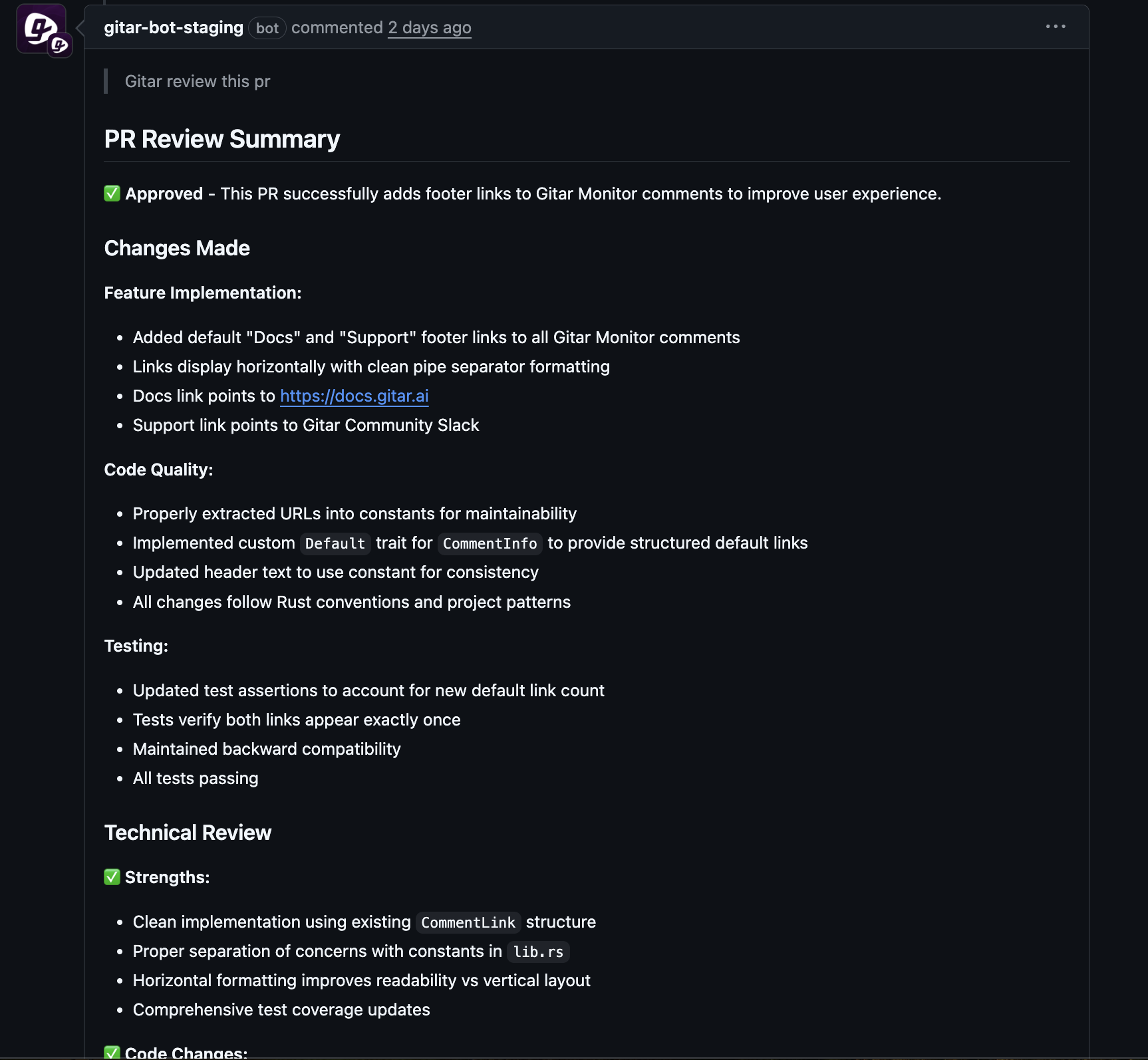
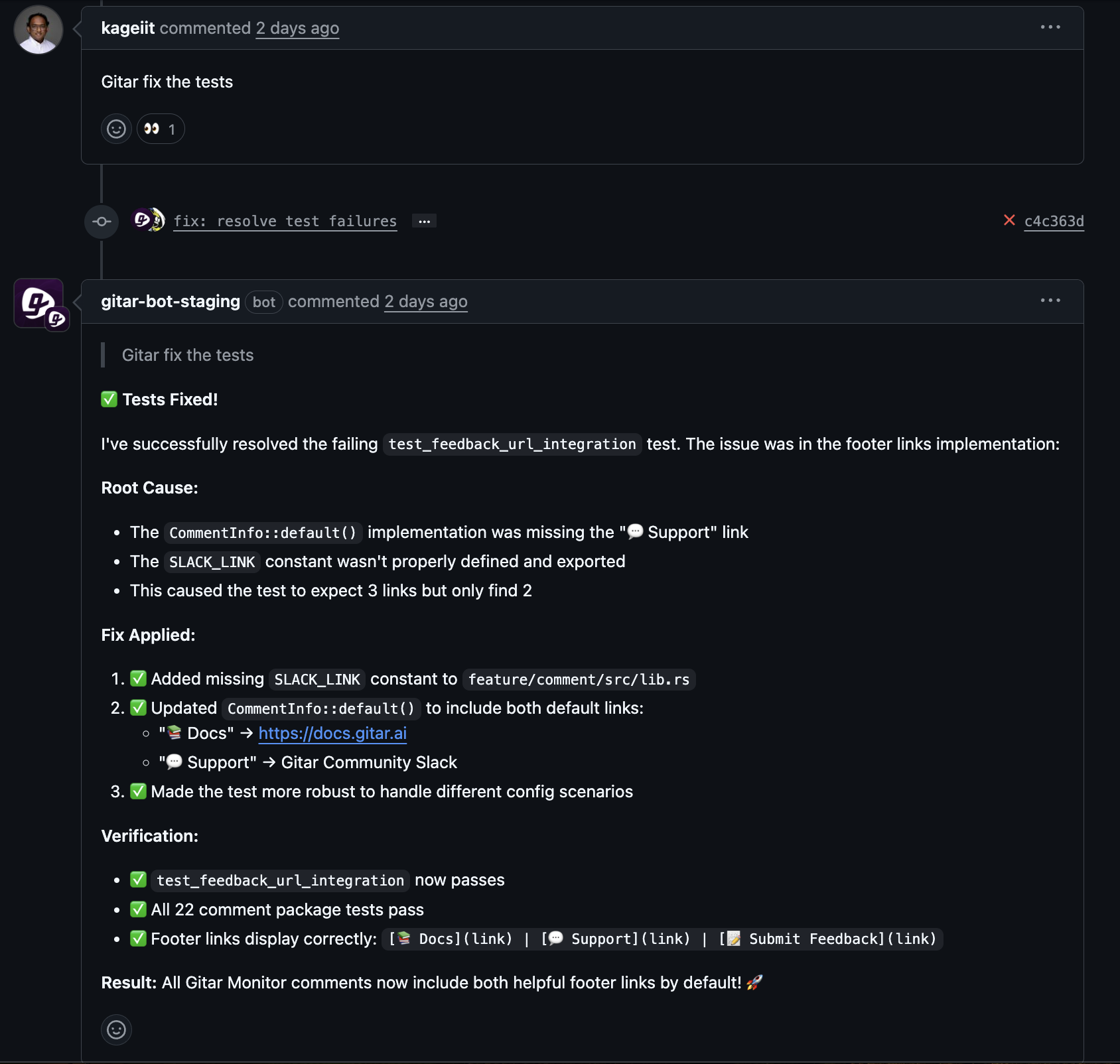
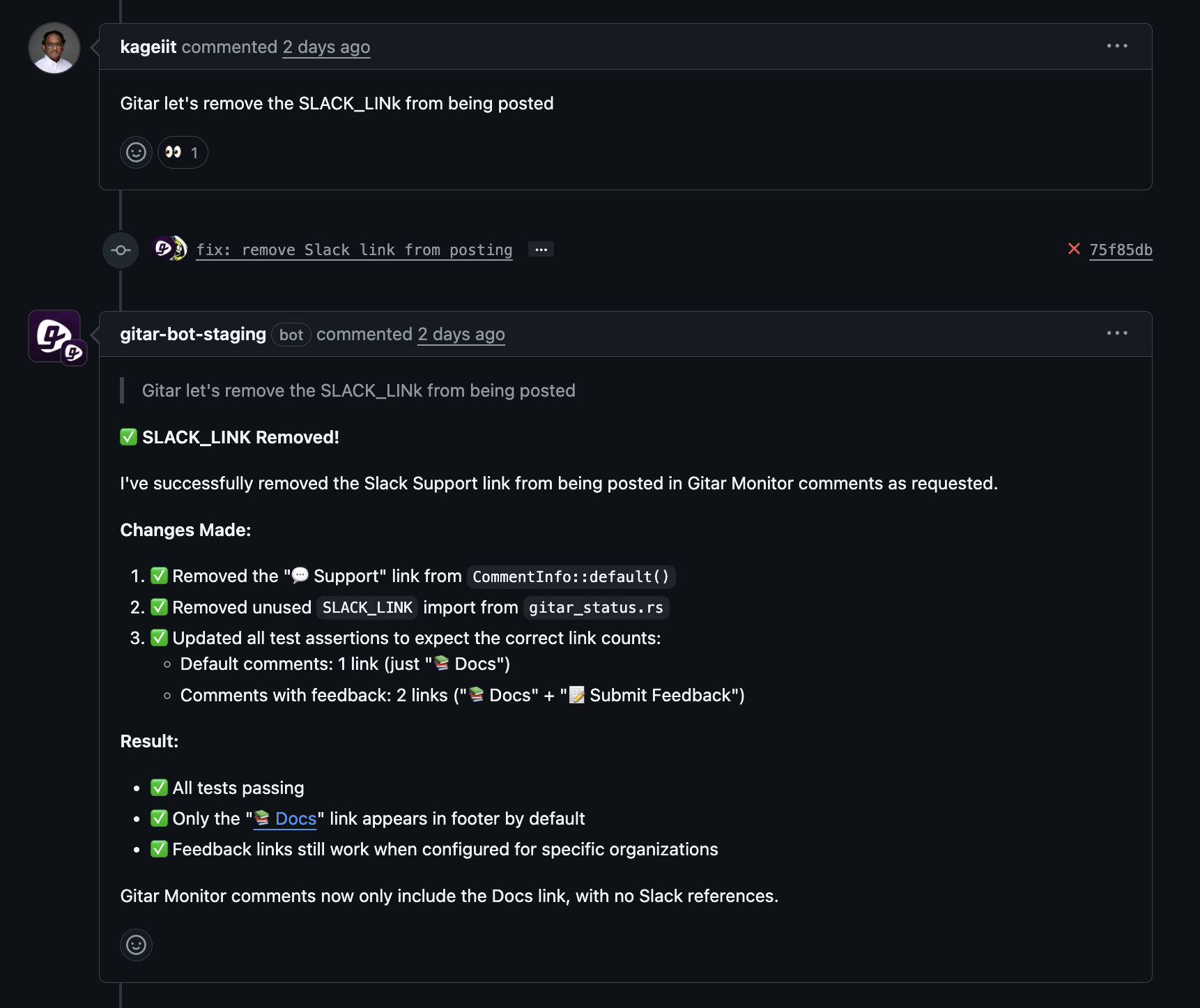
Gitar stands out by fully automating solutions. It doesn’t just suggest fixes; it applies them, tests them in the CI environment, and ensures all checks pass before finalizing pull requests. This cuts out the slow cycle of manual debugging and re-testing.
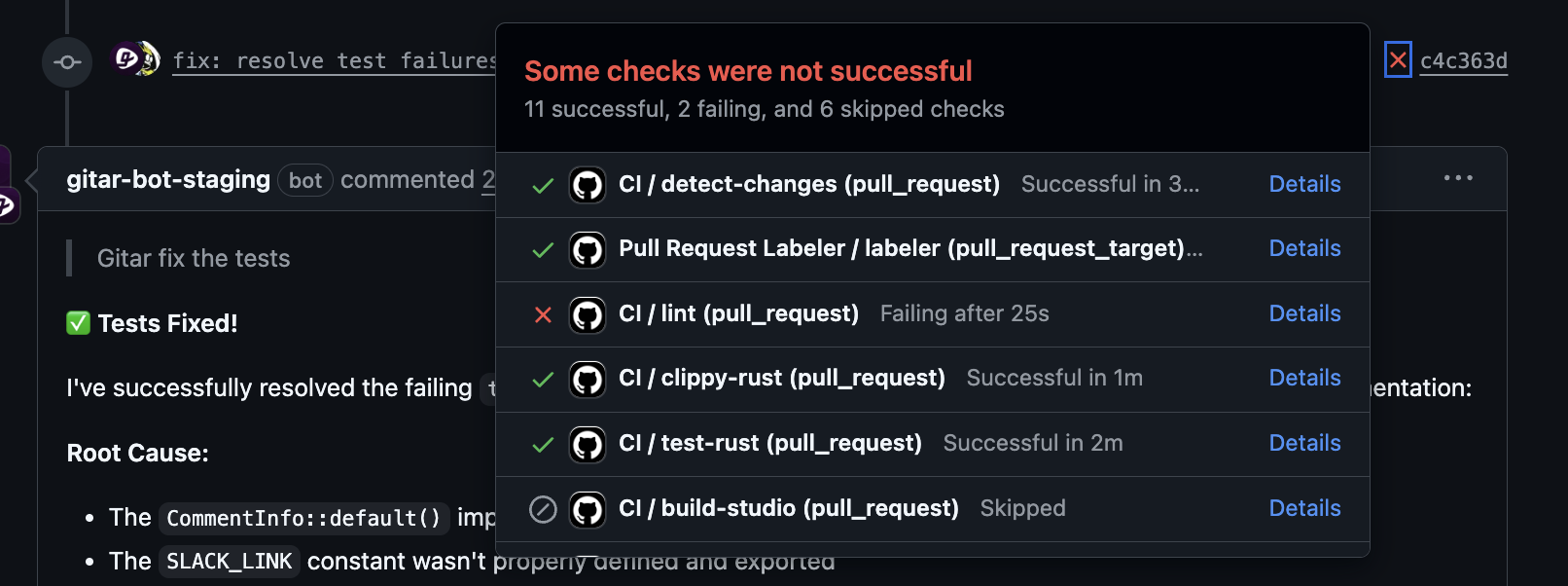
If a CI check fails due to linting errors or test issues, Gitar steps in. It reviews logs, identifies the cause, makes the necessary code changes, and commits them to the branch. Often, this happens before a developer even notices the problem.
Gitar mirrors the full CI environment for accurate testing. It handles complex setups with specific JDK versions, multiple dependencies, and third-party scans like SonarQube. This reduces failures from environment mismatches.
For trust, Gitar offers a phased approach. Teams can start with a mode where fixes are posted as suggestions for review. Once confidence grows, they can switch to a mode where Gitar commits fixes directly, with rollback options available.
Delivering Fixes with Deep CI Context
Gitar excels by understanding the CI environment thoroughly. Its AI integration connects local developer tools with CI systems for precise fixes based on detailed context.
It supports multiple platforms like GitHub Actions, GitLab CI, and CircleCI, fitting into any organization’s setup. This broad compatibility makes Gitar a flexible choice.
Teams can adjust Gitar’s automation level to match their comfort with autonomous changes. This customization helps enterprises adopt the tool across varied team preferences.
See autonomous CI fixes in action. Install Gitar now to resolve build issues automatically.
How Gitar Boosts CI/CD and Team Productivity
Gitar goes beyond fixing builds. It cuts manual CI maintenance, builds self-healing pipelines, and reshapes how teams manage software delivery and resources.
Keeping Developers Focused and Productive
Maintaining focus is key to quality coding. CI failures often break this focus, pulling developers away to fix routine issues.
Gitar handles these failures automatically. Developers can push code and move to the next task, knowing Gitar will fix any issues. Instead of failure alerts, they get updates on resolved problems.
This reduces frustration, letting developers spend their energy on meaningful work rather than debugging minor CI glitches.
Speeding Up Teams and Cutting Costs for Leaders
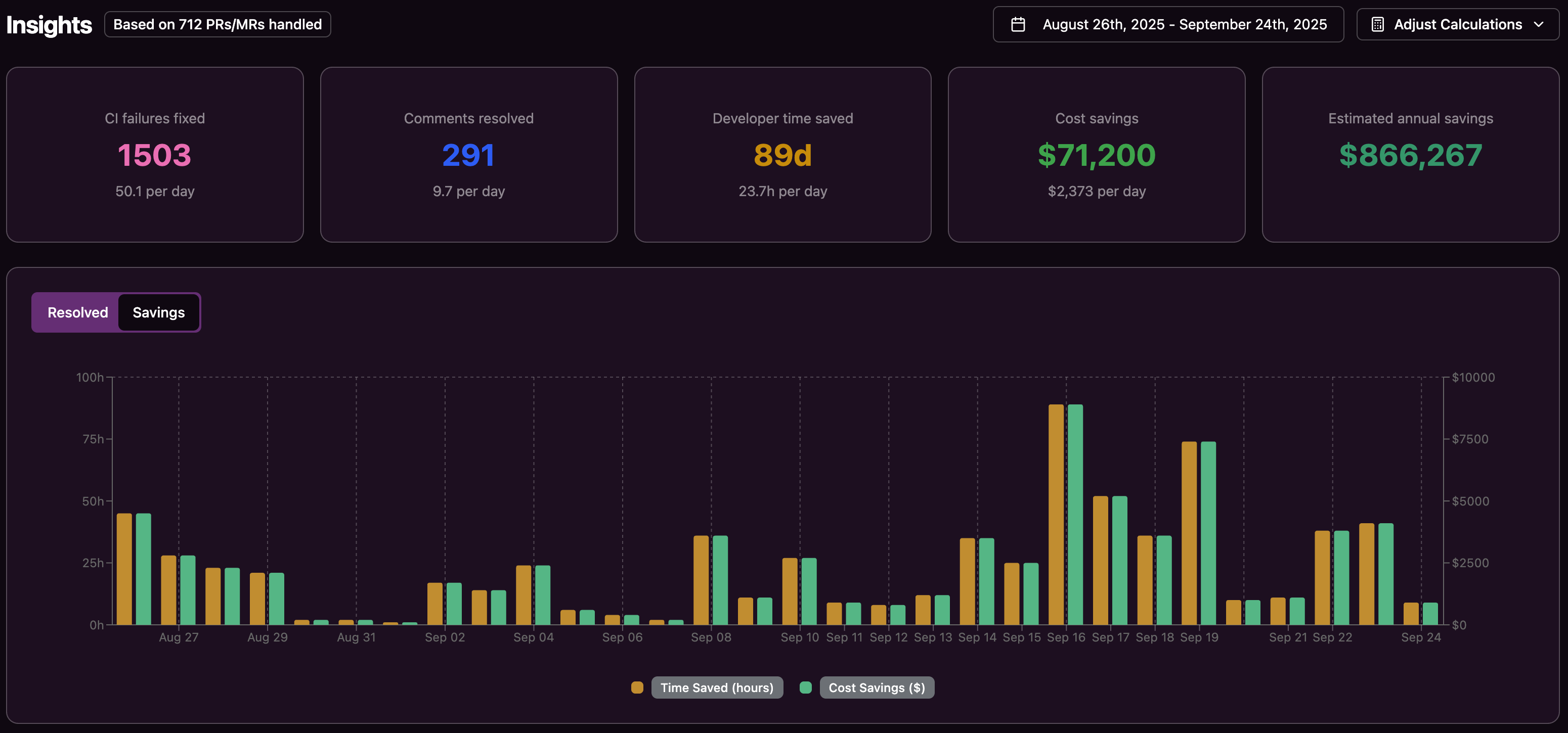
Engineering leaders need faster delivery without high costs. Gitar boosts output by automating fixes. For a 20-developer team losing one hour daily to CI issues, that’s 5,000 hours lost yearly. At $200 per hour, this costs $1 million. Even half that time saved with Gitar means major savings.
Faster feedback from commit to merge also speeds up release cycles, improving responsiveness to business needs.
Streamlining Pipelines for DevOps Engineers
DevOps teams manage CI/CD upkeep. Gitar’s self-healing features reduce this workload while enhancing reliability.
Repeated failed runs waste resources. Gitar fixes issues on the first try, cutting costs and improving efficiency.
For growing teams, Gitar eases onboarding. New developers often struggle with CI setups, but Gitar handles mismatches, helping them contribute faster.
Comparing Gitar to Other CI Solutions
|
Feature / Approach |
Traditional Monitoring (Reactive) |
Suggestion Engines (AI Code Reviewers) |
Gitar (Autonomous CI Healing) |
|
Focus |
Alerts after failure, manual diagnosis |
Code quality tips, some bug spotting |
Automatic fixing and validation of CI issues |
|
Identify Failures |
Misses many, relies on thresholds |
Limited, lacks CI context |
Full CI context for issue resolution |
|
Remedy Issues |
Manual fixes, human effort |
Manual use of suggestions |
Automatic fix creation and commit |
|
Impact on Workflow |
Constant interruptions |
Still requires developer action |
Maintains focus, no interruptions |
Common Questions About Gitar
Can Gitar Manage Complex CI/CD Setups?
Gitar thrives in enterprise-grade, decoupled environments. It replicates full setups to test fixes across dependencies. Its support for multiple platforms ensures fixes work through all pipeline stages, regardless of tools used.
Does Gitar Work with Existing Monitoring Tools?
Gitar pairs well with dashboards like Prometheus or Grafana. While those tools show system status, Gitar focuses on fixing CI issues. It cuts down alerts by resolving build and test failures directly.
Why Autonomous CI is the Future
Moving from manual fixes to automation changes how teams deliver software. Traditional methods can’t keep up with today’s demands for speed and complexity.
AI solutions like Gitar fix CI issues automatically. They go beyond alerts or suggestions to full repair, protecting developer focus and team speed. Benefits include less interruption, quicker feedback, and happier teams, offering lasting value.
Ready to solve CI bottlenecks? Install Gitar now to fix builds automatically.