
Key Takeaways
- AI coding tools boost productivity by 55% but flood teams with code, reaching 43.2M monthly GitHub PRs and 40% vulnerable Copilot code.
- Traditional CI pipelines buckle under AI-generated issues like indentation errors, version mismatches, and 4x higher duplication, which trigger red builds and slow reviews.
- Effective monitoring needs SAST/SCA, IaC scanning, anomaly detection, and context analysis, yet most tools still lack true automated remediation.
- Gitar delivers free AI code review, tracks AI modifications with CI context, and offers a 14-day autofix trial that resolves failures across GitHub, GitLab, and more.
- Teams using Gitar see 75% faster PR reviews and near-zero context switching—install Gitar free today for self-healing CI pipelines.
The 2026 AI Code Crisis Overwhelming CI and Reviews
AI-accelerated development now overwhelms existing review and CI systems. AI-powered developers showed 34.1% productivity increases in 2025, yet sprint velocities lag because validation and merging cannot keep up. Teams write code 3–5x faster, but they wait on reviews, red builds, and flaky pipelines.
Quality risks grow just as quickly. Roughly 40% of GitHub Copilot-generated programs contain vulnerabilities, and AI tools often miss SQL injection, buffer overflows, and other critical flaws. Code duplication has increased 4x with AI adoption, while logic and correctness issues appear 75% more often in AI-generated PRs.
CI failures from AI-generated code cluster around predictable patterns. Teams see indentation mistakes, missing configuration fields, outdated syntax, and version incompatibilities that slip past AI checks but break real builds. Developers then bounce between new work and CI triage, which slows delivery and burns focus.
Install Gitar now to automatically fix broken builds and ship higher quality software faster with free AI code review and a 14-day autofix trial.
How AI Code Risks Overload Modern CI Pipelines
AI-Specific Anomalies, Security Gaps, and Logic Errors
AI coding assistants introduce consistent weaknesses that monitoring must cover. Copilot struggles with interprocedural data flow, so it often misses complex security issues while still flagging noise. Cursor frequently produces subtle indentation problems or version mismatches that pass local checks but fail in shared CI environments.
These problems extend beyond isolated bugs. AI tools generate code that appears correct in a single file yet fails once integrated with authentication flows, database connections, or third-party APIs. The result is a steady stream of PRs that look fine in the editor but collapse in CI.
Monitoring Layers Required for AI-Heavy Codebases
Robust monitoring for AI-driven changes relies on several coordinated detection layers:
|
Component |
Purpose |
Example Tools |
|
SAST/SCA |
Vulnerability and duplication scanning |
SonarQube, Veracode |
|
IaC Scanning |
Infrastructure security risks |
Checkov, Terrascan |
|
Anomaly Detection |
Behavioral pattern analysis |
Cycode Cimon, Harness AI |
|
Context Analysis |
Cross-file impact assessment |
Greptile, CodeRabbit |
Most traditional monitoring stacks still stop at detection. They surface issues and sometimes provide suggestions, yet they rarely apply and validate fixes directly inside CI. Developers remain responsible for wiring changes, re-running pipelines, and confirming that complex builds still pass.
Why Gitar Stands Out for Monitoring and Fixing AI Code
Gitar closes the gap between detection and resolution by pairing monitoring with automated remediation. Competing tools often charge $15–30 per developer for partial coverage, while Gitar offers comprehensive code review for free plus a 14-day autofix trial that actively clears CI failures.
Gitar’s core strengths include AI monitoring for code modifications with full CI context, agents that repair lint errors and test failures, and a single-comment review that consolidates feedback. The platform supports GitHub, GitLab, CircleCI, and Buildkite, so teams can standardize workflows across multiple providers.
|
Feature |
Gitar (Free) |
CodeRabbit/Greptile (Paid) |
Cycode/Harness |
|
Autofix CI Failures |
Yes (14-day trial) |
Suggestions only |
Limited automation |
|
Green Build Guarantee |
Yes |
No |
No |
|
Cross-Platform Support |
Yes |
Multi-platform |
Broad coverage |
|
Single Comment Interface |
Yes |
Conversational |
No |
Install Gitar now to gain guaranteed CI fixes and remove the manual cleanup that many paid tools still leave on your plate.
Fast GitHub and GitLab Setup for Gitar-Powered CI
Teams can roll out Gitar with minimal setup. Install the Gitar GitHub App or GitLab integration and connect it to your existing CI workflows.
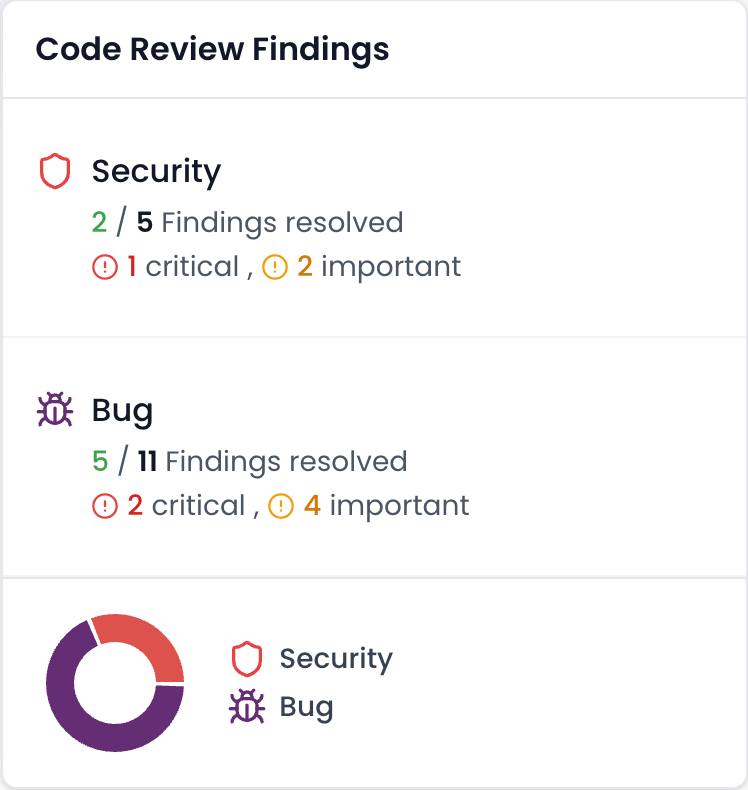
No account is required and no credit card is needed. Gitar immediately posts a dashboard-style comment on each PR, detects common AI-related issues such as lint violations, test failures, and build errors, and proposes or applies fixes. The system reads failure logs, crafts context-aware patches, validates them in your CI environment, and commits only verified corrections.
Enterprise deployments such as Pinterest highlight Gitar’s ability to scale. The platform handles more than 50 million lines of code and thousands of daily PRs while preserving the free tier’s core capabilities. Its architecture supports high-volume pipelines without sacrificing fix quality or response speed.
Self-Healing CI: How Gitar’s Agents Repair Failing Pipelines
Gitar delivers self-healing CI through a clear sequence of steps. The agents analyze CI failure logs, identify root causes, generate fixes with full repository context, validate those fixes in the real build environment, and auto-commit only when the pipeline turns green. This approach ensures changes work in production-like conditions, not just in isolated sandboxes.
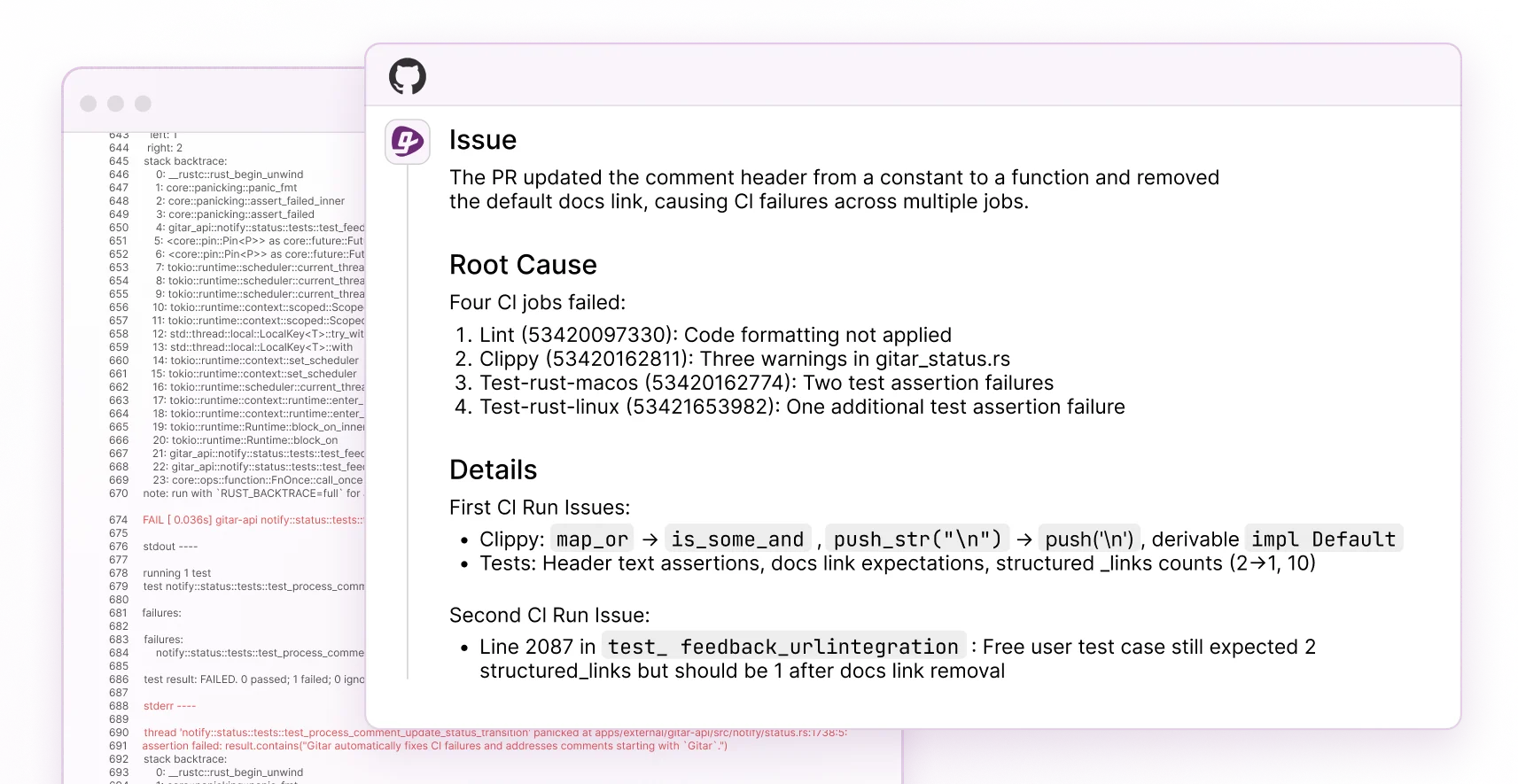
The ROI impact becomes clear once teams compare before-and-after metrics for AI-heavy workloads:
|
Metric |
Before Gitar |
After Gitar |
|
CI Debug Time/Developer |
1 hour/day |
15 minutes/day |
|
Annual Productivity Cost |
$1M (20-dev team) |
$250K |
|
Context Switch Interrupts |
Multiple daily |
Near-zero |
|
Tool Costs |
$450-900/month |
$0 (free tier) |
Teams using Gitar report 75% faster PR reviews and a sharp drop in context switching tied to CI failures. The platform fixes many issues before developers even notice them, which shifts CI management from reactive firefighting to proactive stability.
Proving ROI and Preparing CI for Autonomous DevOps
DevOps in 2026 increasingly centers on autonomous systems that predict and resolve problems. AI-driven self-healing infrastructure predicts failures with over 90% accuracy and autonomously resolves up to 80% of incidents, so proactive CI management now directly affects delivery speed.
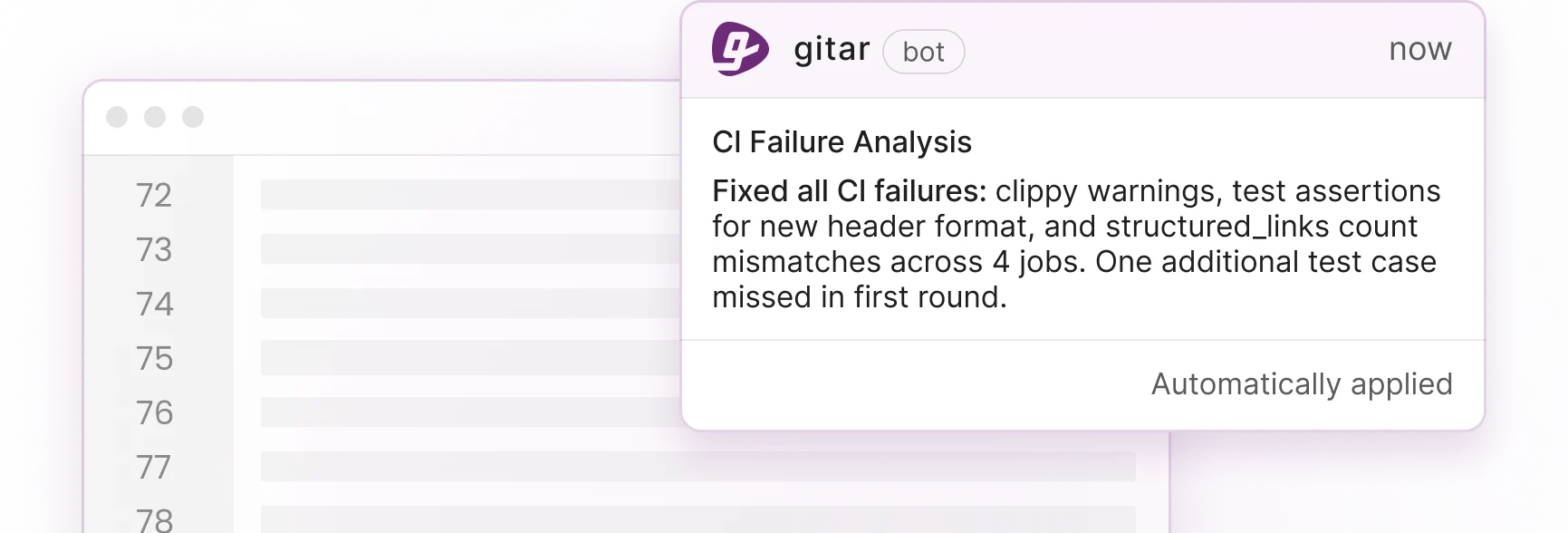
Gitar fits this direction with CI failure analysis paired with automated remediation. The platform extends monitoring beyond surface-level checks and catches issues that traditional tools often overlook.
Teams comparing monitoring options for AI-heavy codebases gain a clear advantage with Gitar’s mix of free comprehensive review, validated autofix, and cross-platform coverage. Suggestion-only tools still demand manual implementation and validation, which slows teams facing constant AI-generated changes.
Install Gitar now, automatically fix broken builds, start shipping higher quality software, faster and join teams already running self-healing CI pipelines.
Gitar FAQ: Safety, Accuracy, and Scale
How Gitar Spots Unrelated PR Failures
Gitar reviews full CI context, including build logs, environment variables, and dependency graphs, to separate code issues from infrastructure noise. Its deep context analysis flags flaky tests, network timeouts, and resource limits as non-code problems. Developers avoid chasing false leads, and autofix agents focus on genuine code-related failures.
How Gitar Protects Complex and Sensitive CI Environments
Gitar supports multiple deployment models to match security needs. The free tier runs in a secure managed cloud with zero data retention, while enterprise customers can run agents inside their own CI infrastructure with direct access to configs, secrets, and caches. Teams can begin in suggestion mode, approve every fix manually, and then enable auto-commit for trusted failure categories. The platform mirrors your build environment, including SDK versions and third-party dependencies, so fixes behave correctly in production.
How Gitar’s Autofix Success Compares to Alternatives
Gitar validates each fix against the actual CI environment before committing, which ensures that corrections pass real builds, not just unit tests. Competing tools such as CodeRabbit typically provide suggestions that engineers must apply and re-test themselves. Gitar’s generate-test-commit loop removes that manual burden and reduces uncertainty around whether a suggested change will truly fix the pipeline.
How the Free Model Stays Sustainable
Gitar treats code review as the foundation for trust, so it offers full PR analysis, security scanning, and bug detection for free with no seat limits or credit card. The 14-day autofix trial lets teams experience the complete healing engine. Revenue comes from advanced enterprise capabilities, analytics, and large-scale workflow automation, while core review features remain accessible to teams of any size.
How Gitar Handles Enterprise Scale and Complexity
Gitar’s architecture supports large enterprises with proven performance across 50+ million lines of code and thousands of PRs per day. The platform integrates with GitHub, GitLab, CircleCI, and Buildkite and supports languages such as Python, Go, JavaScript, TypeScript, Java, and Rust. Enterprise customers gain SOC 2 Type II and ISO 27001 compliance, on-premises agent deployment, and integrations with Jira, Slack, and Linear for end-to-end workflow coverage.
Conclusion: Remove the AI Code Bottleneck with Gitar
AI coding in 2026 creates a clear imbalance. Developers generate code faster than ever, while traditional CI and review processes struggle with the volume and complexity of AI-driven changes. Monitoring tools that only detect problems, without shipping validated fixes, keep teams stuck in the same bottleneck.
Gitar solves the full problem by combining free AI code review, intelligent monitoring of AI modifications, and self-healing CI agents. Teams gain faster delivery through automated fixes, fewer context switches, and guaranteed green builds, while avoiding the recurring costs of suggestion-only tools.
Install Gitar now, automatically fix broken builds, start shipping higher quality software, faster and move your development workflow from reactive cleanup to proactive, AI-powered efficiency.