
Efficient code reviews are vital for agile development, ensuring software quality and timely delivery. Asynchronous reviews offer flexibility, but they often cause delays and miscommunication, creating bottlenecks that slow down progress. Longer feedback loops in asynchronous reviews can stall development. This article dives into how Gitar, an AI-powered tool, tackles these issues by automating fixes and feedback, making asynchronous code reviews smoother and speeding up time-to-merge.
Why Asynchronous Code Reviews Slow Teams Down
Delays and Misunderstandings in Feedback
Asynchronous communication often leads to delays and misinterpretations since written feedback lacks the immediacy and tone of real-time discussion. Written messages in non-real-time settings can obscure tone and intent. Without vocal cues, feedback can seem unclear or critical, causing friction. Differences in coding style can be mistaken for bias during reviews.
If guidelines aren’t defined, personal opinions can overshadow objective critique, leading to conflicts. Undefined standards in reviews often result in subjective feedback. These misunderstandings turn technical discussions into personal disputes, slowing progress and straining team dynamics.
Context Switching Drains Productivity
Switching between coding tasks and addressing review feedback takes a toll on developers and reviewers. This constant interruption slows progress, raises error risks, and cuts productivity, especially for distributed teams across time zones. Frequent context switching during reviews burdens teams and delays work.
For example, a developer submits a pull request, shifts focus to another task, then must return days later to address feedback. This back-and-forth disrupts focus, turning quick fixes into time-consuming efforts as they revisit old code and interpret comments.
Impact on Team Morale and Delivery Speed
Harsh or unclear feedback in asynchronous reviews can harm morale, spark disagreements, and leave team members feeling disconnected. Negative feedback in reviews can damage team spirit. Non-real-time settings can increase feelings of isolation.
These issues delay feedback cycles, pushing back delivery timelines. Lack of immediate interaction heightens miscommunication risks. For teams with tight deadlines, such delays can lead to missed targets, growing technical debt, and frustrated stakeholders.
How AI Simplifies Asynchronous Code Reviews
Automating Feedback for Fewer Delays
AI tools can address communication gaps in asynchronous reviews by automating feedback and applying fixes directly. This cuts down on back-and-forth exchanges, letting teams focus on delivering value instead of getting stuck in review loops.
Unlike human reviewers whose attention varies with workload, AI delivers consistent input and action every time. This reliability reduces friction from delayed responses and helps developers move forward faster.
Try Gitar to simplify your asynchronous code reviews and ship software quicker
Self-Healing CI Speeds Up Validation
With code generation tools accelerating development, the real challenge now lies in validating and merging code efficiently. Self-healing CI, powered by AI, automatically detects issues, suggests fixes, and applies them, streamlining the process.
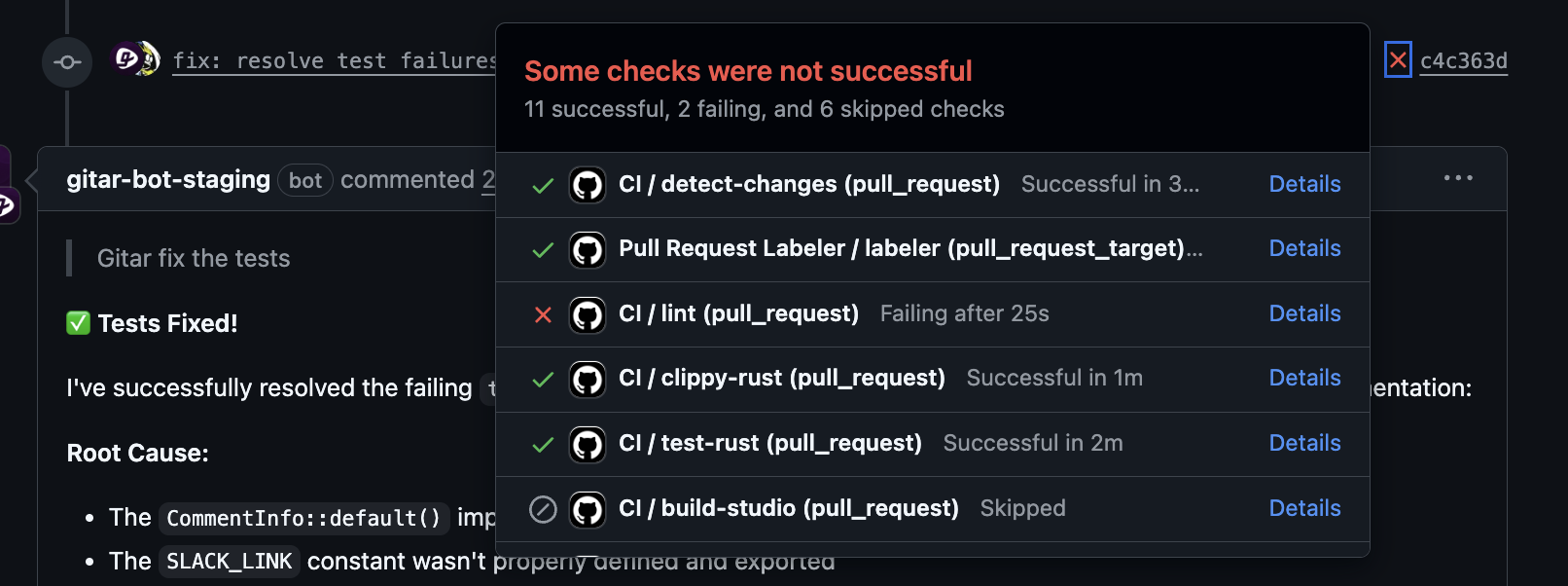
This goes beyond basic suggestions. AI actively implements changes, tests them against the full CI pipeline, and ensures builds pass before notifying the team. Developers save time on manual debugging and avoid repetitive interruptions.
Meet Gitar: AI That Streamlines Code Reviews
Gitar is an AI agent designed to improve asynchronous code reviews by automating fixes and feedback actions. Unlike tools that only suggest changes, Gitar acts as a healing engine, resolving CI issues and handling feedback so developers can focus on impactful tasks.

Here’s what Gitar offers for asynchronous reviews:
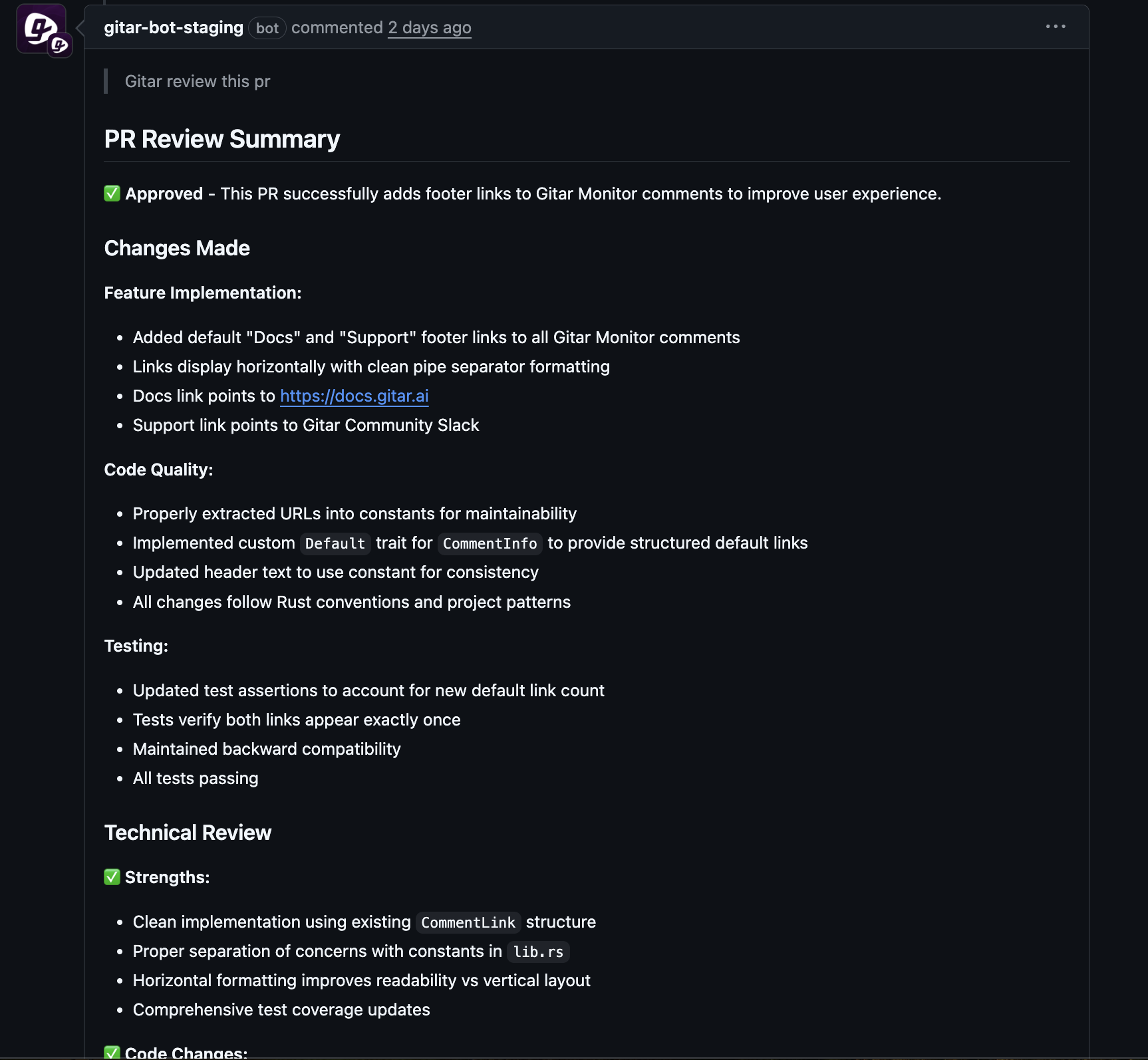
- Automated Initial Reviews: Tag Gitar for summaries of changes and technical analysis.
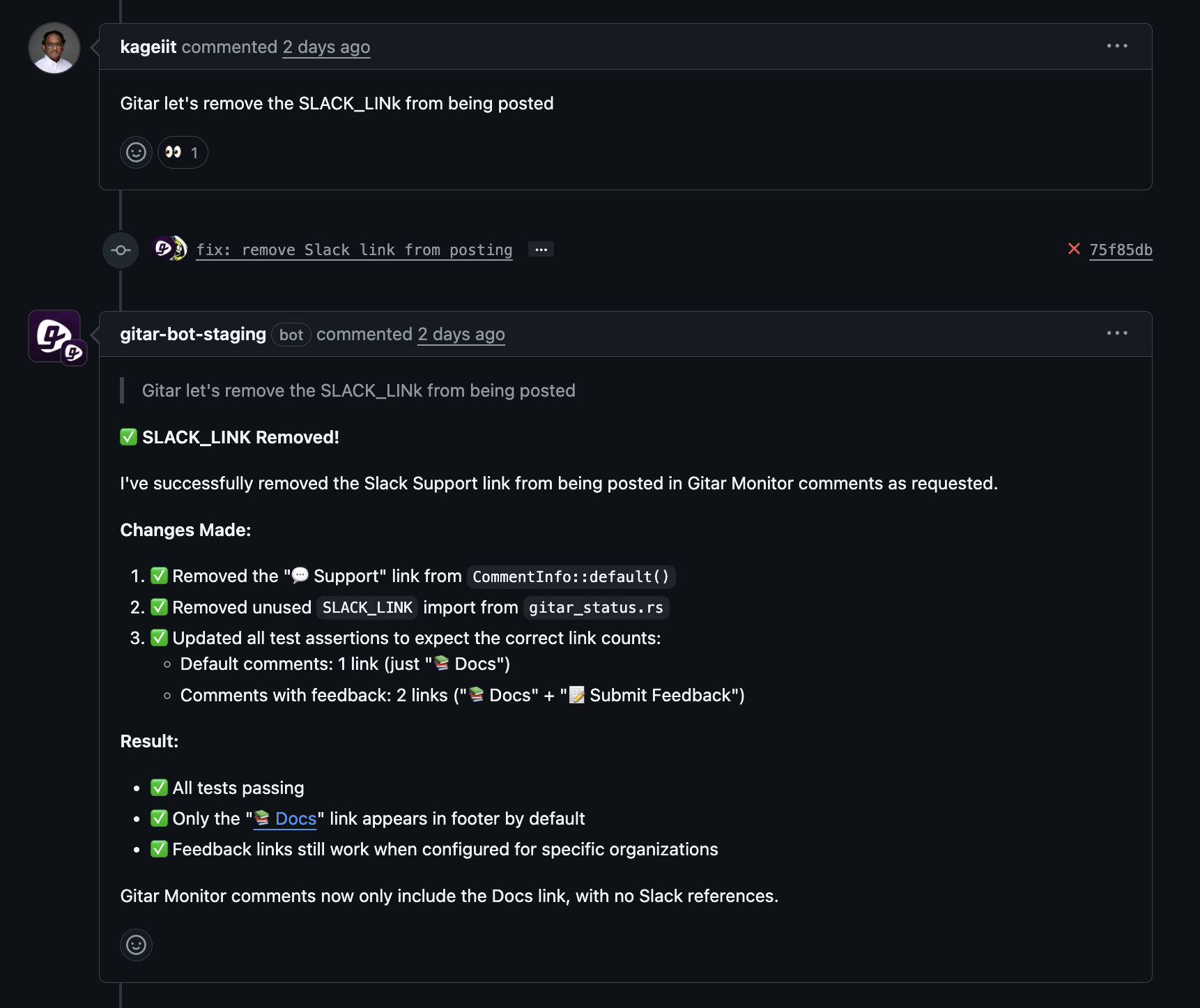
- Direct Feedback Action: Gitar applies reviewer comments, cutting down on manual exchanges.
- Time Zone Solutions: Fixes are implemented across time zones, reducing delays for global teams.
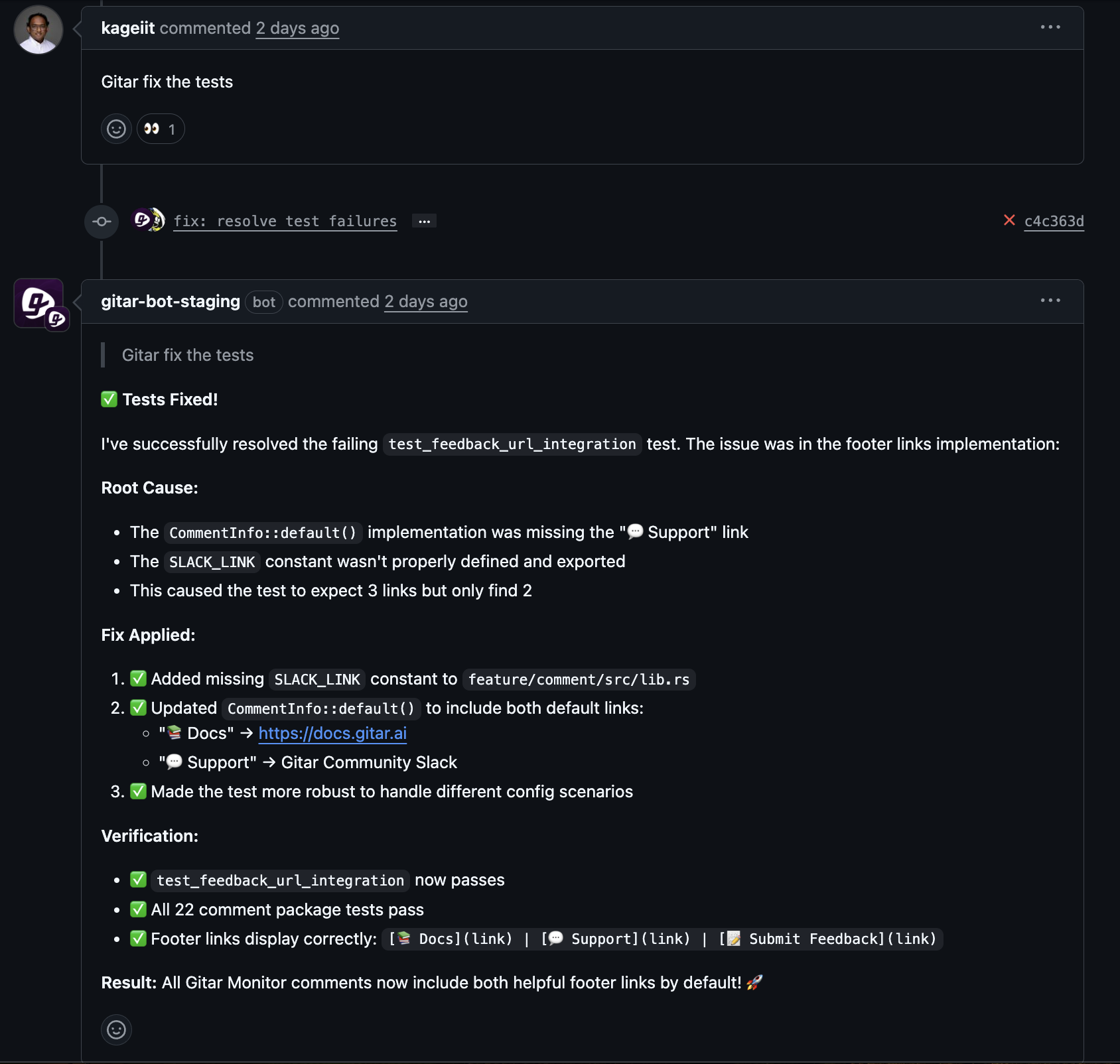
- Self-Healing CI: Automatically resolves lint errors, test failures, and build issues.
Gitar excels at interpreting feedback and turning it into code updates. For instance, if a reviewer requests removing a feature from a pull request, Gitar makes the change and explains it in a commit message.
Schedule a demo to see Gitar in action for asynchronous reviews
Key Ways Gitar Boosts Asynchronous Review Efficiency
Cutting Delays with Automated Feedback
Gitar reduces delays by directly applying feedback and fixing CI issues, minimizing manual communication. Extended feedback loops often slow down asynchronous reviews. This automation speeds up merging and improves team output.
For leaders, the financial impact is clear. A 20-developer team spending an hour daily on reviews and CI issues could lose $1 million yearly in productivity. Gitar recovers much of this time, helping teams deliver features sooner.
Speeding Up Time-to-Merge
By automating fixes and feedback, Gitar shortens review cycles. It cuts the mental load of switching tasks due to CI failures or manual updates, boosting productivity and helping teams meet deadlines with less technical debt.
Supporting Developer Focus
Gitar handles repetitive tasks like CI fixes, letting developers concentrate on solving complex problems. This reduces burnout and keeps engineers engaged by minimizing interruptions from routine debugging.
Unlike tools requiring manual input, Gitar’s automation ensures developers stay focused. Submitting a pull request becomes hassle-free, knowing common issues will be resolved without their intervention.
Healing Engines vs. Suggestion Tools
|
Feature / Tool Type |
Suggestion Tools |
Gitar (AI Agent) |
|
Primary Role |
Offers suggestions, analysis |
Fixes and implements directly |
|
Validation |
Developer manually checks if builds pass |
Tests against full CI for green builds |
|
Effort Needed |
Manual updates and re-reviews |
Little effort after feedback |
|
Context Switching |
Frequent interruptions |
Almost none |
Install Gitar to experience automated fixes for asynchronous reviews
How Teams Use Gitar for Real-World Results
Teams adopting Gitar often build trust in its automation over time, seeing clear benefits in their asynchronous review process.
It starts with Gitar introducing itself via a comment on pull requests, updating its status as it resolves issues. A common early win is when Gitar fixes a lint error with a clear explanation before the developer notices the problem.
For global teams, Gitar bridges time zone gaps. A reviewer can leave feedback, and Gitar applies fixes overnight. By morning, the developer sees the update ready for approval, avoiding typical delays.
Meeting Enterprise Needs: Security and Flexibility
Enterprises often worry about security, control, and scalability when adopting AI for code reviews. Gitar addresses these with customizable settings and strong integration options.
Teams can start with a cautious mode, where Gitar suggests fixes for approval with one click. As trust builds, they can switch to full automation with rollback options, keeping control while gaining efficiency.
Gitar supports complex setups by mirroring full CI workflows, including specific software versions and tools like SonarQube. This ensures fixes align with enterprise environments.
Compatibility across platforms like GitHub Actions, GitLab CI, and CircleCI makes Gitar adaptable for diverse enterprise toolsets, fitting seamlessly into varied workflows.
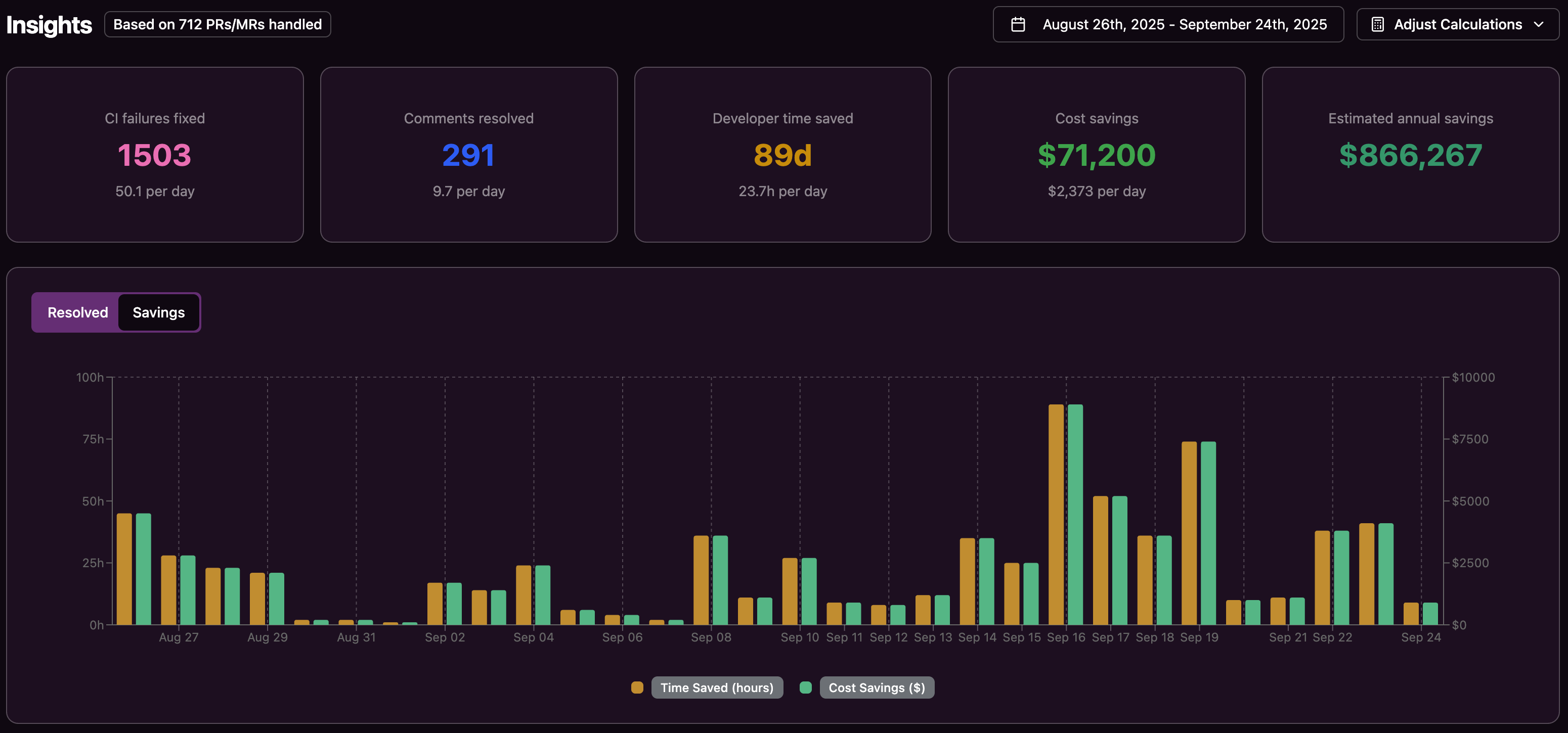
Tracking Gains: Productivity and ROI Metrics
Leaders can measure Gitar’s impact through metrics reflecting efficiency and productivity improvements.
Time-to-merge is a key indicator, showing how long it takes from commit to merge. Gitar often cuts this down by automating fixes and feedback resolution.
Another metric is context switching frequency. Before Gitar, developers faced repeated interruptions from CI issues. After, these drop as automation handles resolutions.
For cost savings, track reduced developer hours on CI debugging. At $200 per hour, these savings can add up significantly each year.
Common Questions About AI in Asynchronous Reviews
How Does Gitar Reduce Review Delays?
Gitar cuts wait times by automatically applying feedback and fixing CI errors, reducing manual exchanges. If a reviewer leaves a comment, Gitar can act on it immediately, keeping progress moving without delays for developer responses.
What If My Team Hesitates on Automated Fixes?
Gitar offers adjustable modes to build confidence. Start with a conservative setting where fixes are suggestions needing approval. Over time, shift to full automation with rollback options, ensuring control at every step.
Can Gitar Help with Time Zone Differences?
Yes, Gitar works across time zones by acting on feedback while team members are offline. A reviewer’s comment gets addressed overnight, so developers see completed fixes by the start of their day, minimizing delays.
How Does Gitar Differ from Other AI Tools?
Unlike tools that only suggest changes for manual application, Gitar fully automates fixes and validates them against CI pipelines. It manages the entire process from issue detection to resolution, cutting interruptions.
Does Gitar Fit Complex Enterprise Systems?
Gitar handles enterprise CI setups by matching specific software versions and integrating with tools like SonarQube. Fixes are tested in full pipelines, ensuring compatibility with unique infrastructure needs.
Wrapping Up: AI Is the Future of Asynchronous Reviews
Delays, miscommunication, and context switching plague asynchronous code reviews, slowing teams down. Remote reviews heighten risks of unclear feedback. These challenges grow for distributed teams with time zone barriers.
Gitar’s AI-driven automation offers a solution by handling fixes and feedback, speeding up merges, and freeing developers for creative work. Moving from suggestion tools to healing engines like Gitar addresses modern validation bottlenecks.
For leaders aiming to enhance review processes, Gitar turns inefficiencies into productivity gains, reducing the burden of manual tasks.
Step into faster, smoother asynchronous reviews with AI that drives efficiency.
Request a demo with Gitar to improve your code review workflow