
Asynchronous code reviews and CI failures slow down software development, draining time and delaying feature delivery on platforms like GitHub and GitLab. Despite the collaborative power of these tools, manual tasks in addressing feedback and fixing builds create significant bottlenecks. Teams often lose 20-40% of their productivity due to inefficient review processes, with pull requests averaging 4.4 days for feedback. Autonomous AI tools like Gitar offer a solution by automating these tasks, speeding up the path to reliable, merged code.
Why Manual Code Reviews & CI Failures Cost You Time
Delays from Time Zones in Distributed GitHub & GitLab Teams
Distributed teams face amplified delays in code reviews on GitHub and GitLab due to geographical separation. A developer in one city submits a pull request, then waits hours for feedback from teammates in another time zone. This stretches review cycles into days for even simple changes.
These delays add up quickly. Context switching rises by up to 30% when feedback is delayed, with each review round potentially taking another full day. A process that could wrap up in hours often drags on for a week across misaligned schedules.
Even with robust notification systems in GitHub and GitLab, human reviewers aren’t always available during key windows. This creates delays that disrupt sprints, release timelines, and team morale. Faster, clearer feedback significantly improves developer satisfaction in review processes.
CI/CD Interruptions Break Developer Focus
CI/CD pipelines on GitHub Actions or GitLab CI often fail due to linting errors, test issues, or build conflicts. These failures interrupt developers with a repetitive cycle: push code, see a failure, debug, fix, and push again.
The real cost isn’t just the time spent fixing issues, but the mental shift required. Switching from deep focus on a complex task to a minor formatting fix in GitHub Actions can take minutes to resolve, yet returning to a productive state might require much longer. This disruption slows down individual work and team progress.
Delays in code reviews and CI failures affect both personal workflow and overall team output. These interruptions don’t just delay single pull requests; they create broader bottlenecks across engineering groups.
Limits of Current AI Tools in GitHub & GitLab Workflows
Early AI tools for code reviews, such as CodeRabbit, help by spotting issues and suggesting fixes on GitHub and GitLab. They also support code generation and documentation within pull requests to aid developers directly.
However, these tools often stop at suggestions, leaving developers to manually apply and verify fixes, especially in complex setups. For distributed teams, this means time zone delays can persist despite AI assistance.
In enterprise environments with intricate CI setups, generic suggestions sometimes miss specific dependencies or build nuances in GitHub Actions or GitLab CI. This gap between suggestion and full resolution can limit the effectiveness of these tools.
Validation Lags Behind Faster Code Generation
AI-driven tools have sped up code writing, allowing developers to produce more in less time. Yet, validation and review processes in GitHub and GitLab often can’t match this pace for some teams. More code leads to more pull requests, tests, and potential CI failures.
This shift creates a bottleneck where validation, rather than writing, becomes the limiting factor. Without strong automation, teams face growing backlogs of unreviewed code and CI issues, reducing the benefits of faster coding as delays pile up before production.
Ready to speed up validation? Install Gitar now to fix builds automatically and deliver quality software faster.
How Autonomous AI Enhances GitHub & GitLab Workflows
Meet Gitar: AI That Fixes Code Quality & Delivery Issues
Gitar shifts the game from merely suggesting fixes to actively resolving issues in GitHub and GitLab workflows. As an autonomous AI agent, it tackles failing CI pipelines and code review feedback, saving developers hours of manual effort daily.

When a CI pipeline fails in GitHub Actions or GitLab CI, Gitar steps in instantly. It reviews failure logs, identifies the cause, creates a fix, applies it to the branch, and updates the pull request with details. Developers stay focused without needing to step in manually.
Key features of Gitar include:
- Complete Fix Automation: Gitar doesn’t just suggest; it commits fixes to GitHub or GitLab and validates them through full CI pipelines to confirm builds pass.
- Feedback Implementation: Reviewers leave natural language comments, and Gitar applies those changes directly.
- Environment Matching: It mirrors complex enterprise CI setups, handling specific SDKs, multi-language builds, and integrations like SonarQube.
- Time Zone Solutions: Gitar acts on feedback and failures anytime, ensuring pull requests progress even when team members are offline.
- Flexible Control Options: Teams choose between a cautious mode for suggested fixes or a hands-off mode for automatic commits with rollback options.
Gitar turns GitHub and GitLab into proactive systems that solve issues independently. See how Gitar can streamline your code reviews—request a demo today.
Ways Gitar Improves Code Reviews & CI Fixes
Automating Feedback Resolution in GitHub & GitLab
Standard code reviews involve constant back-and-forth on GitHub and GitLab. A reviewer comments on an issue, and the developer must pause other tasks to address it. For distributed teams, time zone gaps turn this into a multi-day process.
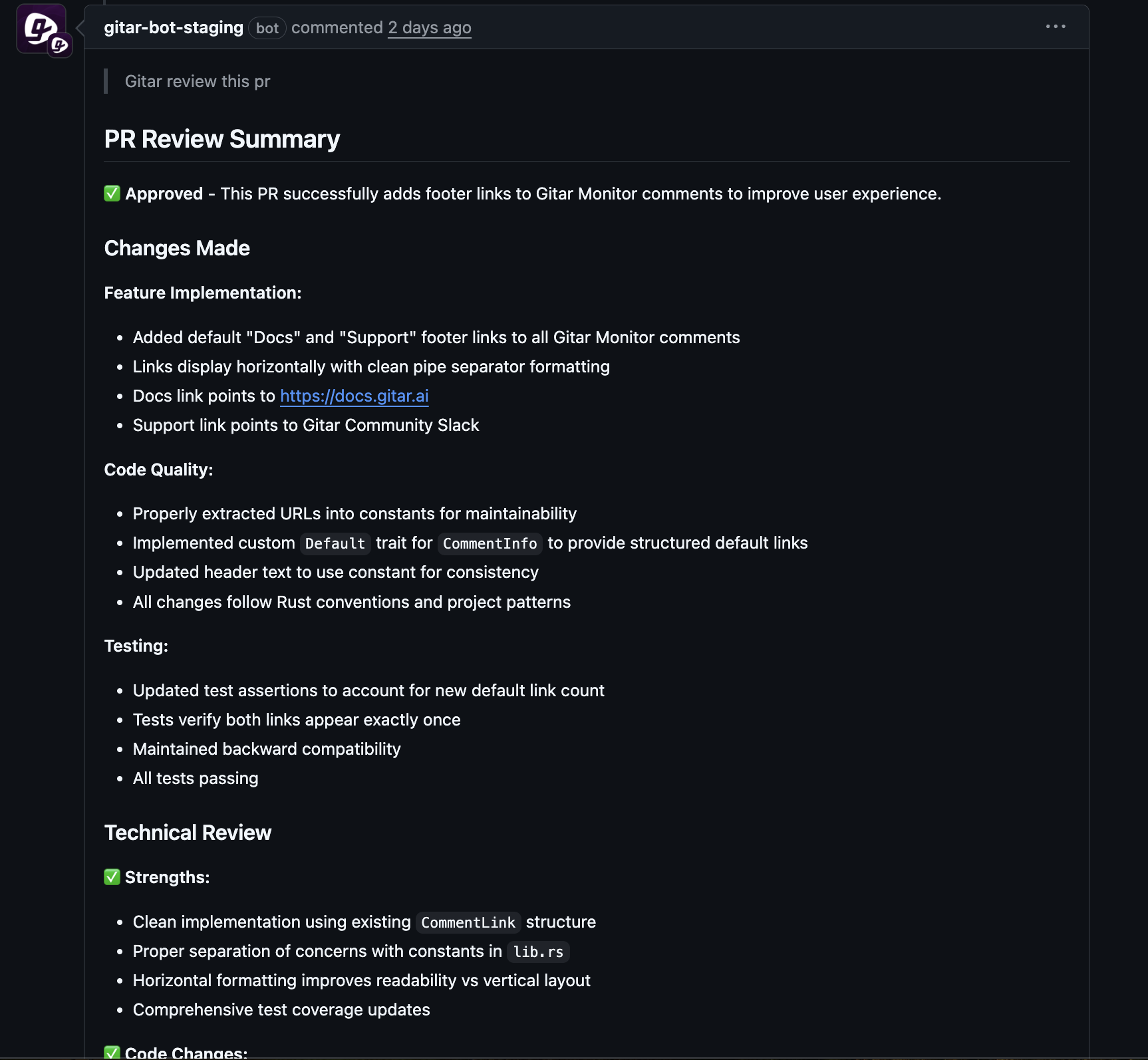
Gitar changes this by autonomously handling feedback. If a reviewer suggests removing a feature from a pull request, Gitar interprets the instruction, makes the change, and commits it with a clear update note.
This approach transforms reviews into a fluid interaction between humans and AI. Time zone differences in global teams often delay code reviews, causing frustration and stalled progress. Gitar addresses this by acting on feedback immediately, no matter when the original author is available.
For distributed teams, the benefit is clear. Feedback left in one time zone gets resolved by Gitar, so developers starting their day elsewhere find updated, CI-validated changes ready for review.
Fixing CI Failures Automatically in GitHub Actions & GitLab CI
CI failures, from linting issues to test errors, plague GitHub Actions and GitLab CI pipelines. Gitar resolves these by analyzing root causes and applying fixes, whether it’s adjusting code for style rules, updating test snapshots, or fixing dependency conflicts.
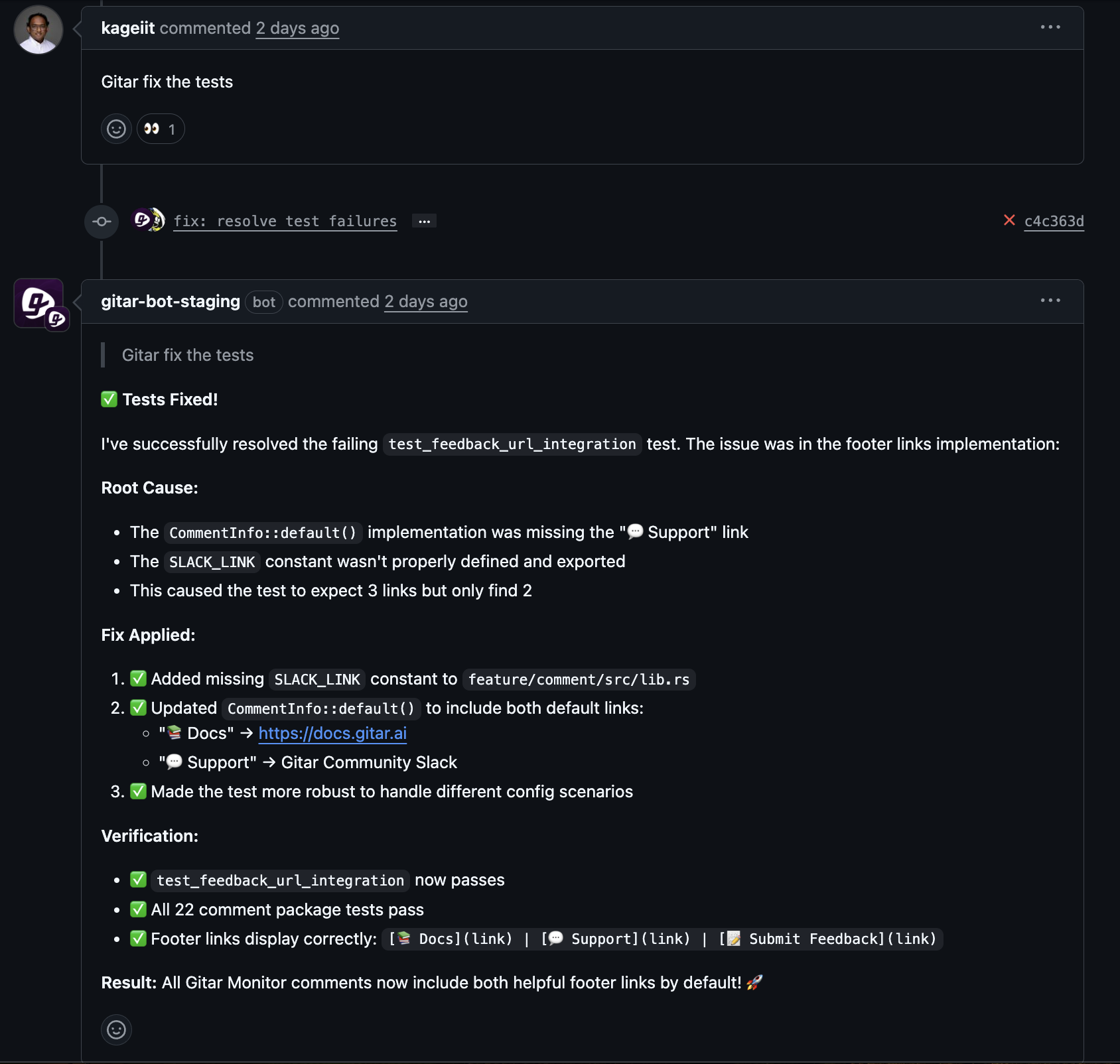
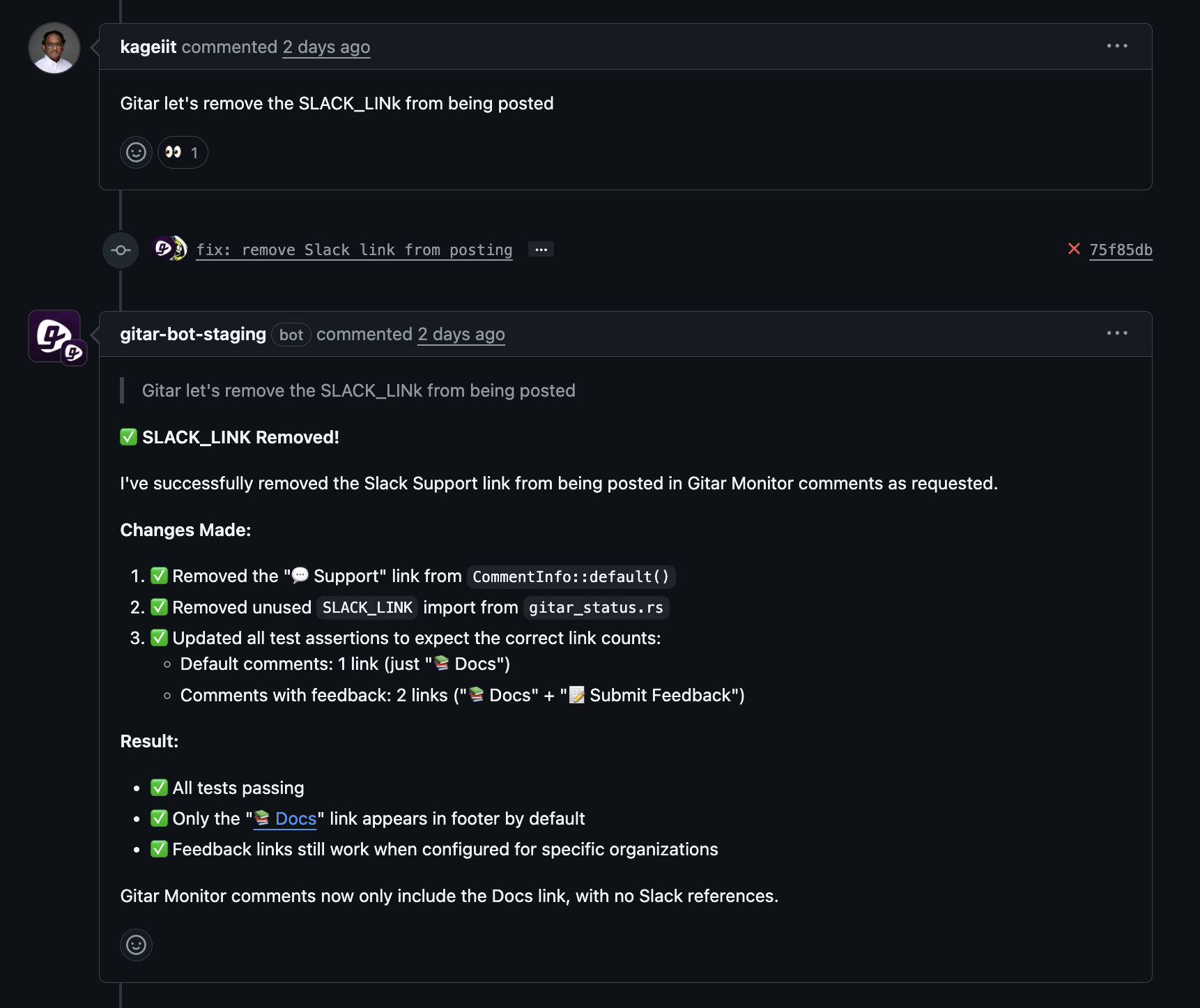
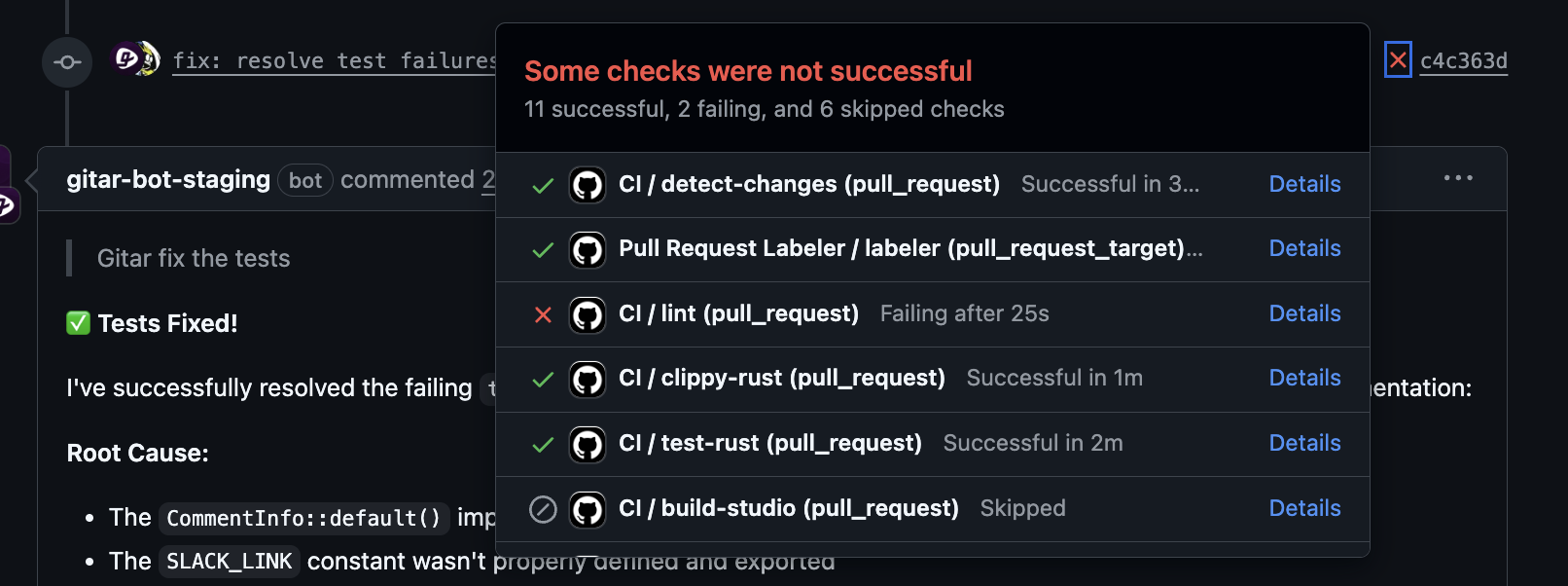
Developers can submit code knowing common issues will be handled without their input. This cuts down on interruptions from failed builds. Quick feedback and resolution boost developer satisfaction in review processes.
In enterprise setups with multi-stage CI pipelines, Gitar replicates the full environment to ensure fixes pass every step before committing changes.
Boosting Productivity by Reducing Manual Tasks
Automated CI fixes save more than just time on individual issues. Developers stay focused on building features when they know routine CI problems will be resolved without intervention. The mental burden of monitoring build status or anticipating failures drops significantly.
For engineering leaders, the financial impact is measurable. A 20-developer team losing an hour daily to CI and review tasks costs around $1 million yearly in productivity. Gitar reclaims much of this time, offering tangible returns while improving team morale.
Removing daily frustrations also lifts developer spirits. Less time spent on repetitive debugging means more satisfaction in their work.
Comparing Gitar to Other GitHub & GitLab Solutions
|
Feature Category |
Traditional Manual Process |
AI Suggestion Tools (e.g., CodeRabbit) |
Gitar (Autonomous Fix Agent) |
|
CI Failure Resolution |
Manual debugging, coding fix, commit, rerun CI |
Spots issues, offers suggestions, some implementation; may need manual steps |
Fixes, commits, validates against full CI in GitHub/GitLab for passing builds |
|
Feedback Implementation |
Developer manually applies changes, repeated communication |
Comments on issues, may require developer action at times |
Interprets and applies reviewer feedback directly in GitHub/GitLab |
|
Environment Awareness |
Developer’s local setup |
Often limited to general context |
Matches full enterprise CI setup for accurate fixes in GitHub/GitLab |
|
Time Zone Impact |
Significant delays from asynchronous reviews, averaging 4.4 days per PR |
Delays possible if human action is needed |
Minimizes delays by applying fixes in GitHub/GitLab while others are offline |
Install Gitar now to automate build fixes and ship quality software faster.
Common Questions About Gitar for GitHub & GitLab Automation
How Does Gitar Differ from AI Tools Like CodeRabbit?
AI tools like CodeRabbit help by identifying issues and suggesting fixes in GitHub and GitLab pull requests, sometimes offering direct support for implementation. However, developers may still need to step in manually to complete or validate certain fixes.
Gitar goes further as a fully autonomous agent. It not only identifies CI failures but also applies fixes, commits them, and confirms they work across the full pipeline. This removes the manual steps some tools leave behind, ensuring distributed teams don’t wait for developers across time zones to act.
Can Gitar Handle Our Complex CI Setup on GitHub & GitLab?
Gitar is built for complex enterprise CI environments. Many organizations use specific SDKs, multi-language builds, custom containers, and security tools like SonarQube. Gitar replicates your exact GitHub Actions or GitLab CI setup, including dependencies and configurations, to ensure fixes match your workflow.
It also supports various CI platforms beyond GitHub and GitLab, such as CircleCI and BuildKite. This flexibility suits organizations with mixed systems across projects or teams.
How Does Gitar Ensure Trust in Automated Fixes?
Building trust is key for automation, so Gitar offers adjustable control levels. Teams can start with a cautious mode, where fixes are suggested in GitHub or GitLab comments for review and one-click approval. This helps developers get comfortable with Gitar’s accuracy.
Over time, teams can switch to a fully automatic mode where Gitar commits fixes directly, always with detailed explanations in commit messages. If a fix causes issues, rollback options allow quick reversal, maintaining transparency and control.
Does Gitar Help with Distributed Team Review Delays?
Delays in distributed teams are a primary focus for Gitar, especially across time zones. Traditional workflows stall when feedback waits for a developer in a different region to respond hours later.
Gitar acts as an instant intermediary, applying reviewer feedback as soon as it’s posted. This keeps code reviews moving continuously, shortens cycles, and boosts team speed regardless of location.
Will Gitar Integrate with Our Current GitHub & GitLab Tools?
Gitar fits into existing GitHub and GitLab processes without needing workflow changes. As a GitHub App or GitLab integration, it monitors pull requests and CI pipelines, stepping in only for failures or when prompted via comments.
It respects branch protection, status checks, and approval rules, helping code pass quality gates efficiently without bypassing security. Teams control which repositories or fix types Gitar manages for tailored automation.
Why Autonomous AI Is the Future of GitHub & GitLab Efficiency
Software development today focuses on delivering working code faster, not just writing it. GitHub and GitLab improve team collaboration, but manual handling of feedback and CI failures still slows progress.
Autonomous AI like Gitar tackles these delays by fixing CI issues, applying review changes, and overcoming time zone barriers. This leads to quicker releases, better developer output, lower costs, and higher team satisfaction. Inefficient review processes cost teams 20-40% of their productivity, a loss Gitar helps recover.
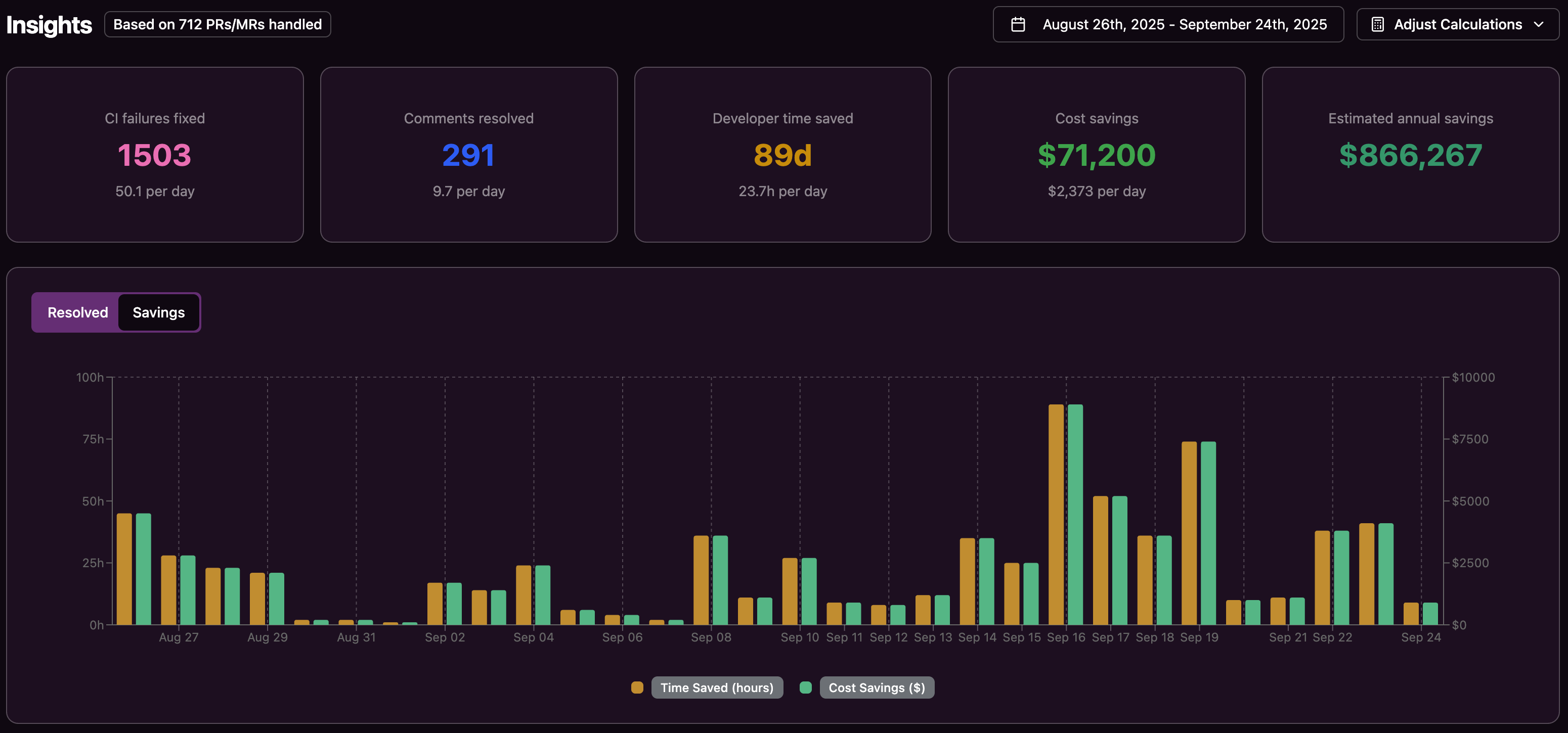
Moving to autonomous workflows is becoming standard. Teams starting with AI agents now will scale automation more effectively. Ready to cut CI failures and speed up reviews in GitHub & GitLab? Book a demo with Gitar today.