
CI/CD pipeline failures disrupt every software engineer’s workflow. You push a pull request expecting a smooth process, only to face a flood of error messages. Hours slip away as you debug, fix, and wait for the build to pass. These interruptions don’t just waste time, they break focus and delay critical work.
These failures cost more than frustration. They drain team productivity and impact business results. Autonomous AI offers a way forward by fixing issues automatically, helping teams deliver software faster and more reliably. Let’s explore how this approach works and why it matters.
Why CI/CD Failures Hurt Engineering Teams
Losing Focus and Productivity
CI/CD failures steal more than just time, they disrupt the mental focus developers need for complex tasks. When a build breaks, the effort to investigate errors and apply fixes pulls you away from meaningful work. This constant interruption prevents deep problem-solving and innovation.
The numbers reveal the true impact. Developers lose up to 17 hours per week on CI maintenance tasks. That’s nearly half a workweek spent on repetitive fixes instead of building features. Each failure compounds the problem, making it harder to regain momentum and complete tasks on time.
Beyond time, unreliable pipelines erode trust in tools. Developers start coding defensively, anticipating breaks instead of focusing on customer needs. This shift increases stress, lowers job satisfaction, and can even drive talented engineers to seek better environments.
Financial Impact of Broken Pipelines
CI/CD failures carry a hefty price tag for organizations. Direct costs include wasted compute resources and excess build minutes from repeated failures. These expenses add up quickly, especially in large teams with frequent builds.
Indirect costs hit even harder. About 60% of companies face project delays due to pipeline issues. These delays mean missed market opportunities, frustrated customers waiting for updates, and extra expenses as teams scramble to catch up. For a team of 20 developers, inefficiencies can cost up to $1 million annually when factoring in salaries, resources, and delayed deliveries.
The real loss is in missed innovation. Time spent debugging is time not spent on creating value or staying ahead of competitors. In industries where speed matters, these setbacks can affect long-term success.
Common Causes of CI/CD Failures
Pipeline failures often stem from specific issues that traditional methods struggle to address. Monolithic pipelines, misconfigurations, dependency conflicts, security test failures, and flaky tests are frequent culprits. Each type creates unique challenges for teams.
Monolithic pipelines fail as a whole when one part breaks, making it hard to pinpoint the issue. Error messages become overwhelming, and a small glitch can trigger costly rebuilds. Similarly, performance issues, security failures, and deployment errors often appear only in the CI environment, not during local testing, due to configuration differences.
Flaky tests frustrate teams the most. When tests fail without clear reasons, developers may ignore results or cut test coverage, risking bugs in production. Many of these problems trace back to early design choices that favored quick setup over long-term stability, leaving teams with brittle systems as projects grow.
Limits of Traditional Fixes
Most teams rely on manual debugging to handle CI/CD failures. A developer reviews logs, searches for solutions, and tests fixes, often repeating the cycle multiple times. This method doesn’t scale. Each fix demands individual effort, and lessons learned rarely prevent future issues.
Even AI suggestion tools fall short. They offer potential fixes, but developers still need to apply and validate them. This step keeps the interruption alive, as there’s no guarantee the suggestion will work in the specific environment. Traditional methods treat failures as one-off events, missing the chance to address recurring patterns or adapt to complex setups.
How Gitar Fixes CI/CD Failures with Autonomous AI
Gitar changes the game in CI/CD management. As an autonomous AI agent, it goes beyond identifying issues or suggesting fixes. It directly resolves pipeline failures, ensuring builds pass without pulling developers away from their work.
Instead of burdening teams with repetitive tasks, Gitar acts as a reliable partner. It handles routine fixes while offering control through adjustable settings, letting developers focus on creative challenges. Ready to see the difference? Install Gitar now and fix broken builds automatically.

Analyzing and Resolving Issues Automatically
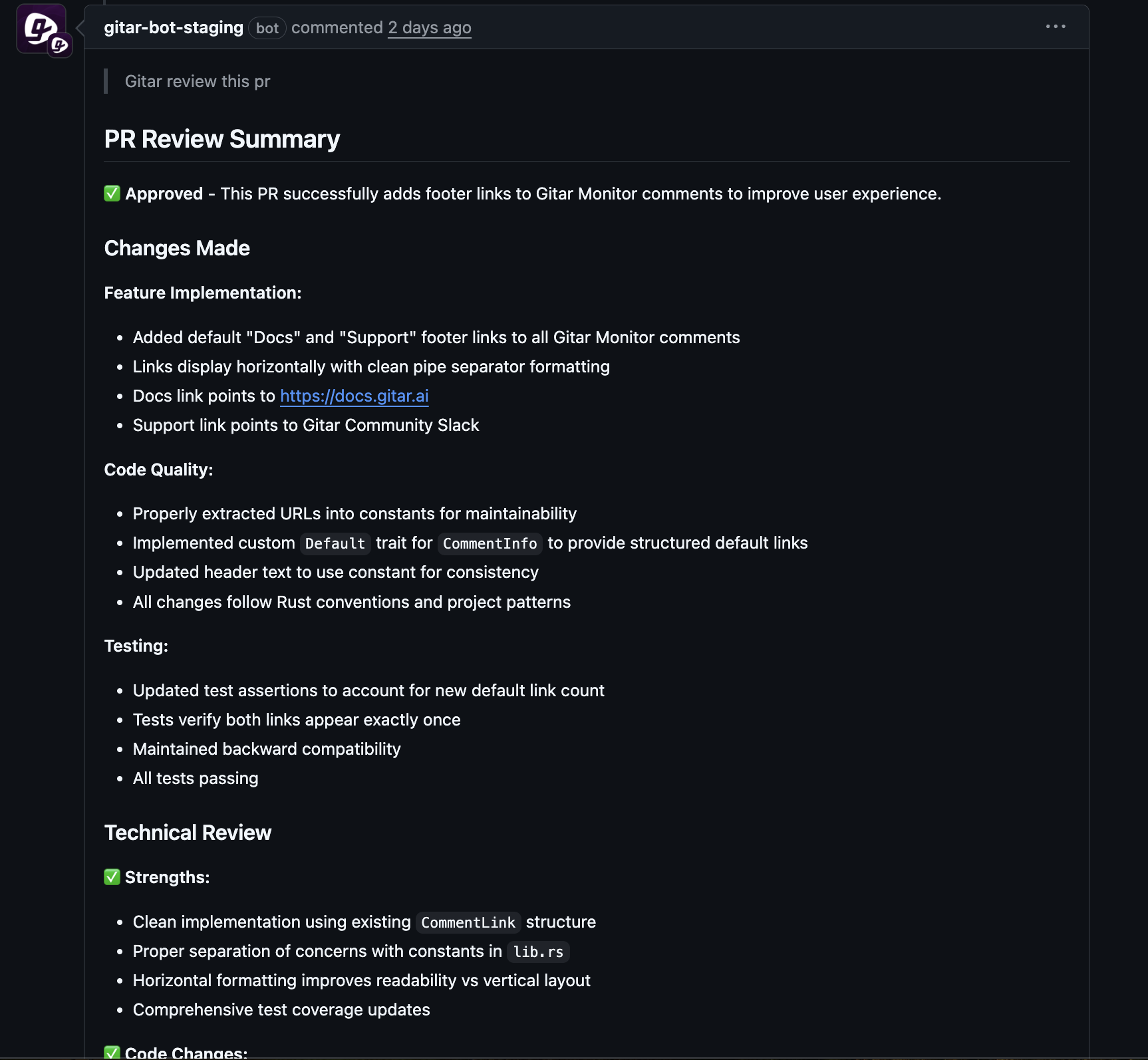
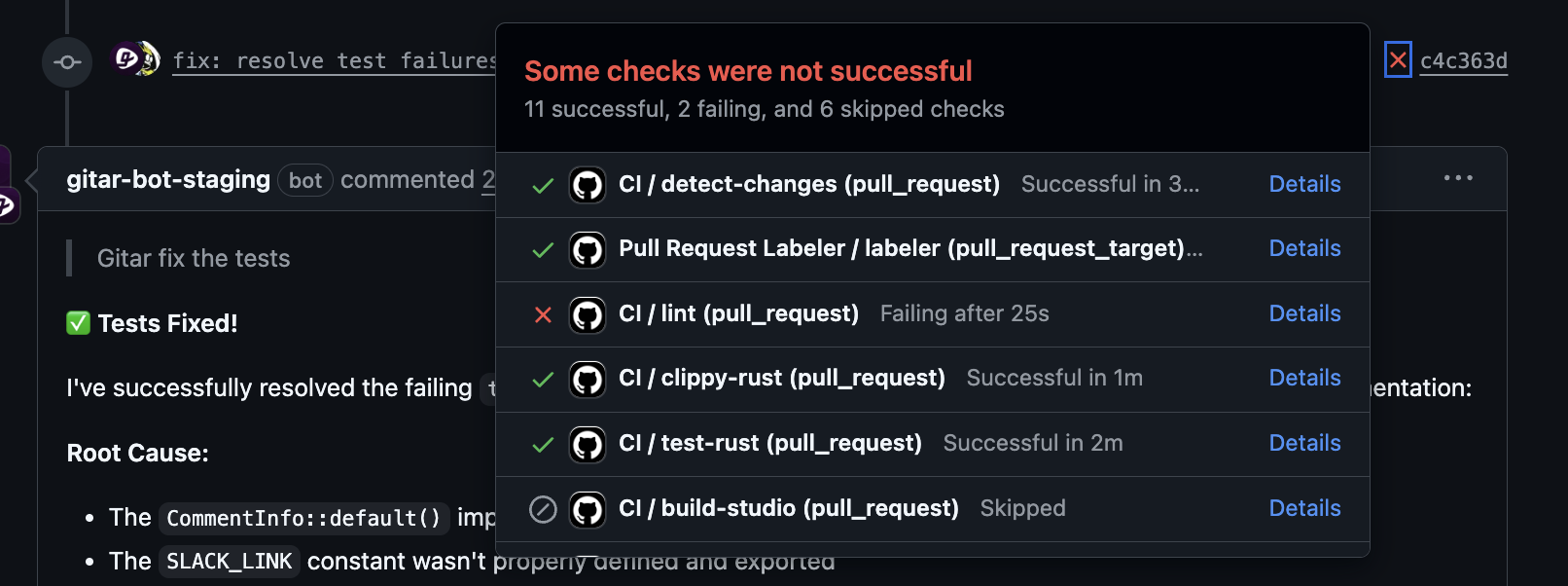
Gitar excels at spotting and fixing CI failures fast. When a build fails due to a linting error or broken test, Gitar dives into the error logs to find the root cause. It creates a solution, applies it, and commits the change to the pull request branch, getting the build back on track.
This covers common problems like formatting errors, test issues, and build failures from dependency conflicts. With Gitar, developers avoid interruptions from routine glitches. Teams can choose between a cautious mode, where fixes are suggested for approval, or a fully automated mode that commits changes directly with rollback options.
Turning Suggestions into Real Fixes
Unlike other AI tools that only recommend solutions, Gitar takes action. It analyzes the failure within the specific CI setup, ensuring the fix matches the environment’s unique constraints, like SDK versions or third-party tools. The solution is tested in context before being applied, avoiding new issues.
This automated process tackles linting errors, test failures, and configuration mismatches. By handling these tasks directly, Gitar frees developers from repetitive work, ensuring fixes are accurate and reliable every time.
Streamlining Code Reviews for Global Teams
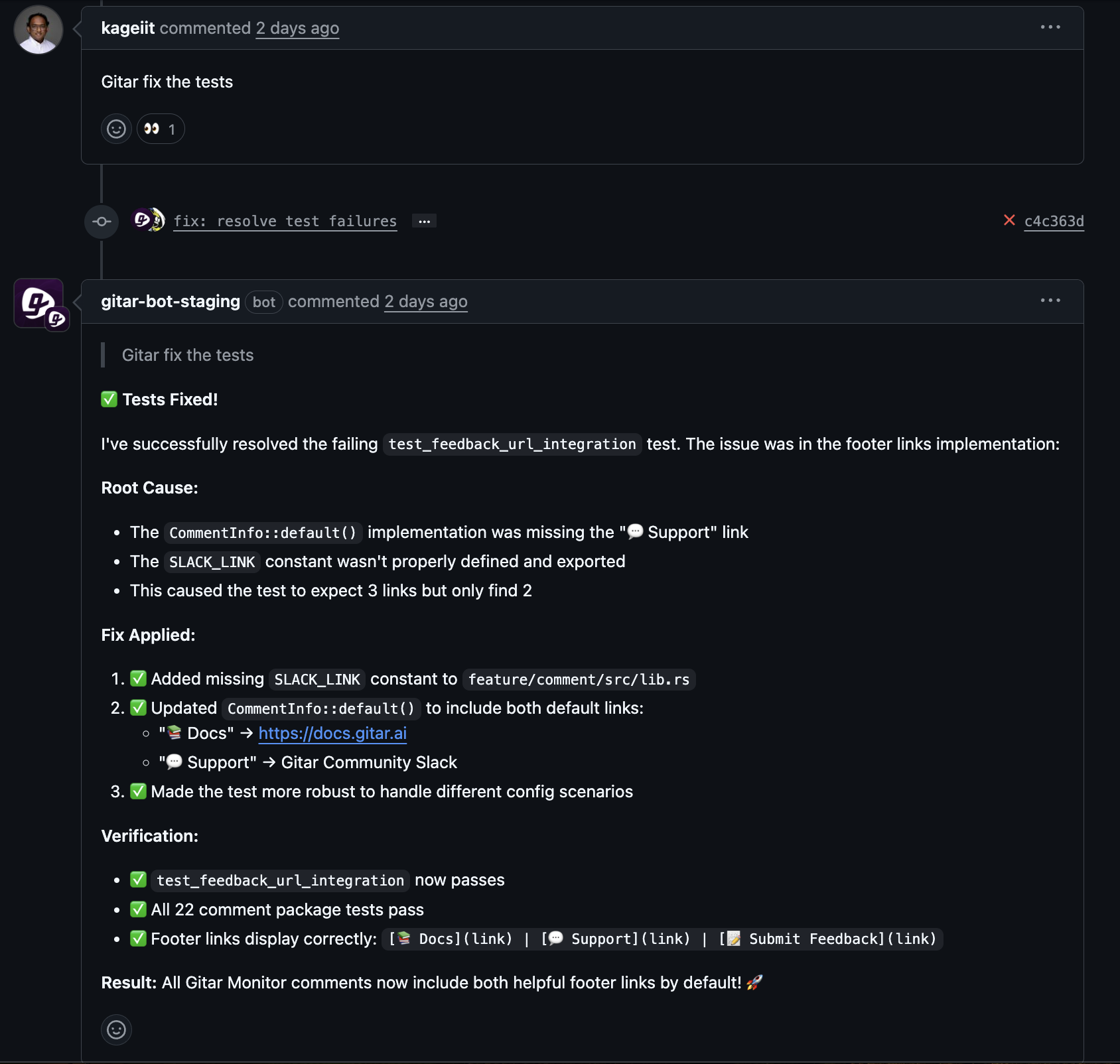
Gitar also supports distributed teams during code reviews. Reviewers can request AI-driven feedback or ask Gitar to apply specific changes via comments. A reviewer in one time zone can leave instructions, and Gitar ensures the update is ready when the developer logs in elsewhere, cutting delays across regions.
Experience this efficiency firsthand. Install Gitar now for self-healing CI.
Real Results: From CI Struggles to Smooth Delivery
Consider a team bogged down by CI failures before using Gitar. A developer would push code, get a failure alert, and spend time debugging instead of coding. Productivity took a hit with every interruption.
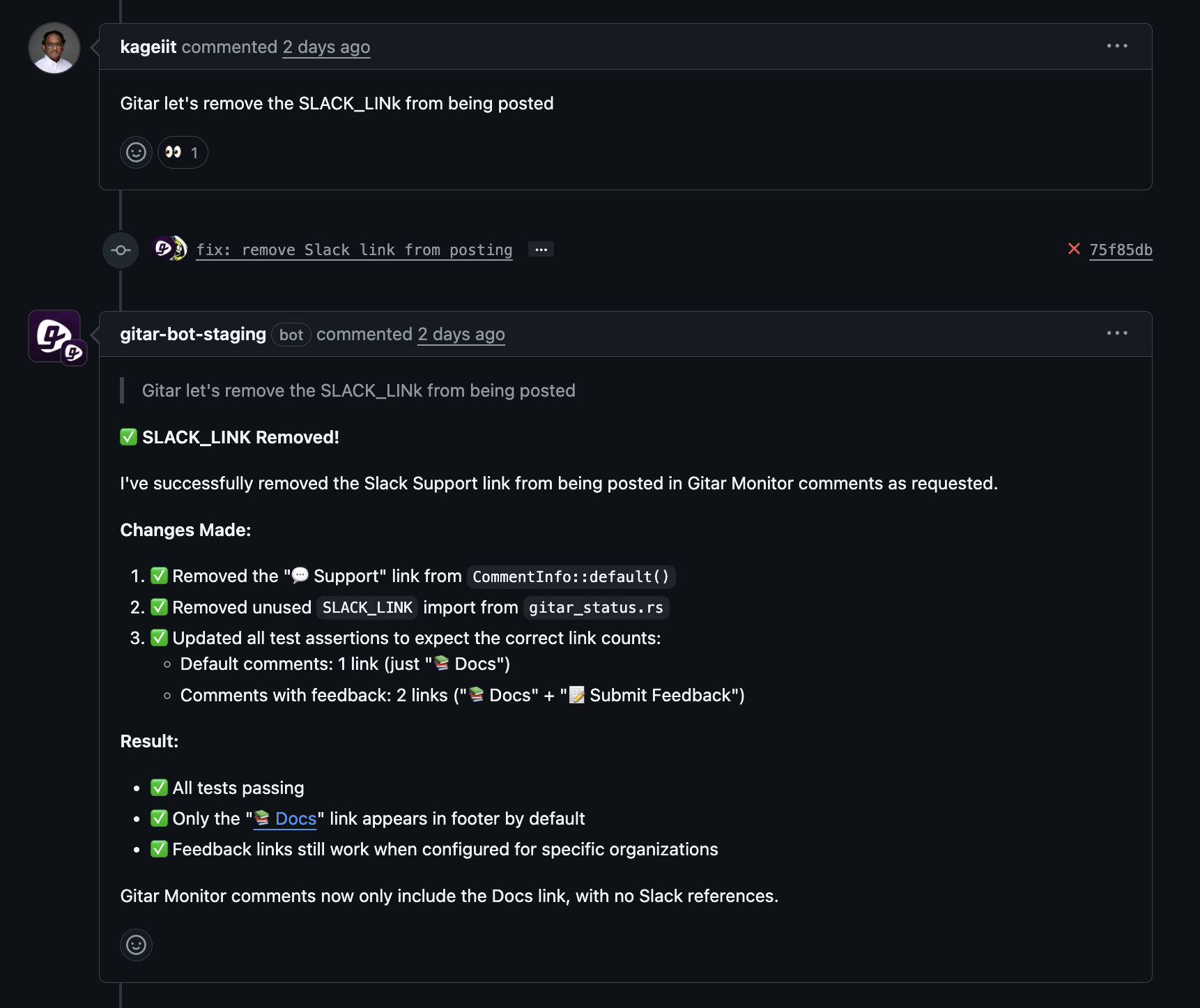
After installing Gitar, the process changed. A failure triggered an instant response. Gitar analyzed the issue, applied a fix, and notified the team the build was passing, all before the developer could react. Focus stayed intact, and work continued without delays.
Over weeks, merge times dropped, team morale improved, and feature delivery sped up. Developers tackled meaningful challenges while Gitar managed routine fixes in the background.
Manual Debugging vs. Gitar’s Efficiency
Manual debugging can’t keep up with growing teams or complex projects. Each failure demands time that doesn’t prevent future issues. Gitar automates resolutions, scaling effortlessly and saving effort from day one.
|
Aspect |
Manual Debugging |
Gitar (Autonomous AI) |
|
Failure Handling |
Manual effort, reactive fixes |
Automatic resolution, proactive action |
|
Developer Time |
Up to 1 hour daily on interruptions |
Focus preserved, minimal disruption |
|
Pipeline Stability |
Vulnerable to repeated failures |
Stronger through automated fixes |
Ready to save time? Let Gitar heal your pipelines automatically.
Key Questions About Fixing Pipeline Failures
How Does Gitar Tackle CI Failures?
Gitar automatically reviews error logs to pinpoint the cause of a CI failure. It generates a fix, applies it, and commits the change to the pull request branch. This handles issues like linting errors, test failures, and build problems, ensuring builds pass without developer input.
How Is Gitar Different from Other AI Tools?
Many AI tools only suggest fixes, leaving implementation and validation to developers. Gitar goes further by autonomously creating, applying, and testing fixes in the full CI context. This cuts interruptions and ensures the solution works as intended.
Can Gitar Manage Complex CI Setups?
Gitar thrives in intricate environments. It mirrors enterprise setups with specific SDKs, dependencies, and third-party tools, ensuring fixes fit the exact context. This reduces errors and maintains compliance in customized workflows.
What Cost Savings Can Teams Expect?
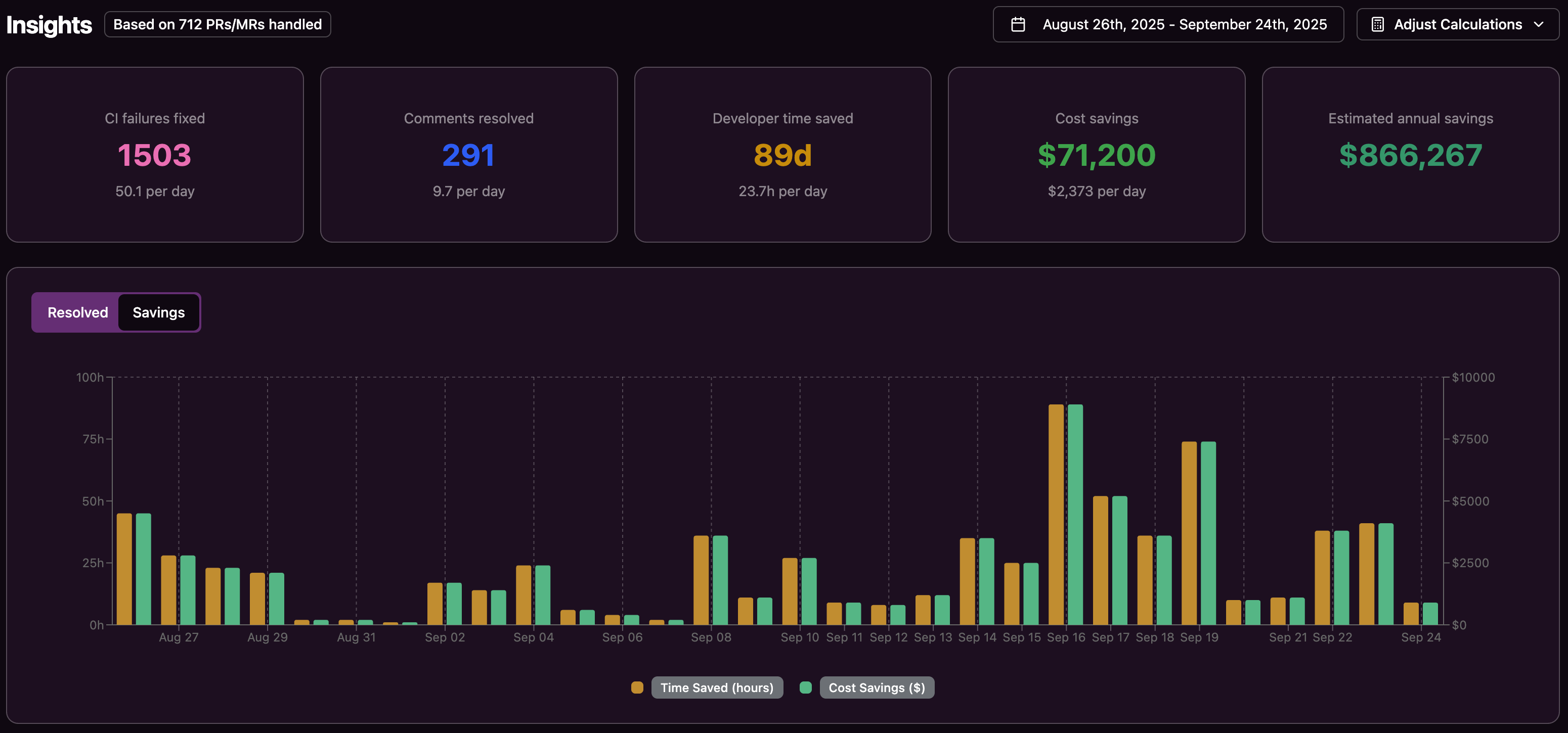
For a 20-developer team losing an hour daily to CI issues, annual losses can reach $1 million at $200 per hour. Even if Gitar resolves half of these, savings hit $500,000 yearly, alongside better morale and faster delivery. The value grows as automation builds trust.
How Does Gitar Address Security Needs?
Gitar prioritizes security with flexible settings. Teams can start with fixes as suggestions for review, shifting to full automation as confidence grows. It offers on-premise deployment, detailed logs for compliance, and aligns changes with company policies, strengthening overall security.
Build a Reliable CI/CD Pipeline Today
Moving from manual fixes to automated resolutions transforms software delivery. Gitar handles CI failures on its own, letting developers focus on innovation. Teams using it gain speed, reduce repetitive work, and produce dependable software.
Automation starts a positive cycle. As Gitar resolves issues, developers build better products faster. This focus sharpens competitive edges and meets market demands more effectively.
Take the first step to streamline your workflow. Book a demo with Gitar and see self-healing CI in action.