
Asynchronous code reviews often slow down teams, especially in remote or distributed setups. Unclear feedback, manual fixes, and constant back-and-forth eat up time, break developer focus, and delay critical merges. This can cost engineering teams significant productivity losses every year.
In today’s remote work environment, even small miscommunications, like a vague comment such as “make this cleaner,” can lead to hours of wasted effort. Developers struggle to interpret intent, and time zone differences turn quick fixes into multi-day delays, stalling pull requests (PRs) and slowing overall progress.
This article dives into the real costs of iterative clarification in code reviews and shows how Gitar, an autonomous AI tool, addresses these issues. By interpreting feedback, applying fixes, and validating changes automatically, Gitar streamlines the process, cuts delays, and boosts developer efficiency. Discover how Gitar can speed up your merges.
Why Iterative Clarification Hurts Team Productivity
Iterative clarification in asynchronous code reviews creates hidden costs that go beyond just time delays. These inefficiencies impact developer morale, team speed, and overall project outcomes in measurable ways.
How Vague Feedback Drains Developer Focus
Vague comments like “this needs work” or “refactor this” interrupt developers with unclear tasks. Such feedback often leaves authors guessing the reviewer’s intent, causing frustration and wasted effort. A quick 30-minute fix can turn into an hour of lost productivity when developers must switch contexts, reload past work, and interpret unclear instructions.
Each feedback loop adds to this mental overhead. A single PR might require multiple rounds of clarification, stretching a minor update into days of work. Across a team, this can consume 20 to 30 percent of development time, costing thousands in lost output even for smaller groups.
Time Zone Delays Stall Progress in Distributed Teams
Geographic spread worsens every delay in the review process. Factors like unclear ownership or large PRs often block progress, especially across time zones. A developer in one region submits a PR, but feedback from a reviewer elsewhere arrives after hours, stretching a simple exchange into 24 to 48 hours.
Even minor updates can get stuck in unnecessary detail due to these communication gaps. Small changes often face delays from asynchronous misalignment. This not only slows individual PRs but also creates dependency issues, stalling entire features or releases.
Meet Gitar: Automating Code Review Challenges
Gitar offers an AI-driven solution to eliminate manual iterative clarification in code reviews. Unlike tools that just flag issues, Gitar interprets feedback, implements fixes, and validates results, turning a slow process into an efficient, self-correcting system.

Understanding and Acting on Feedback Automatically
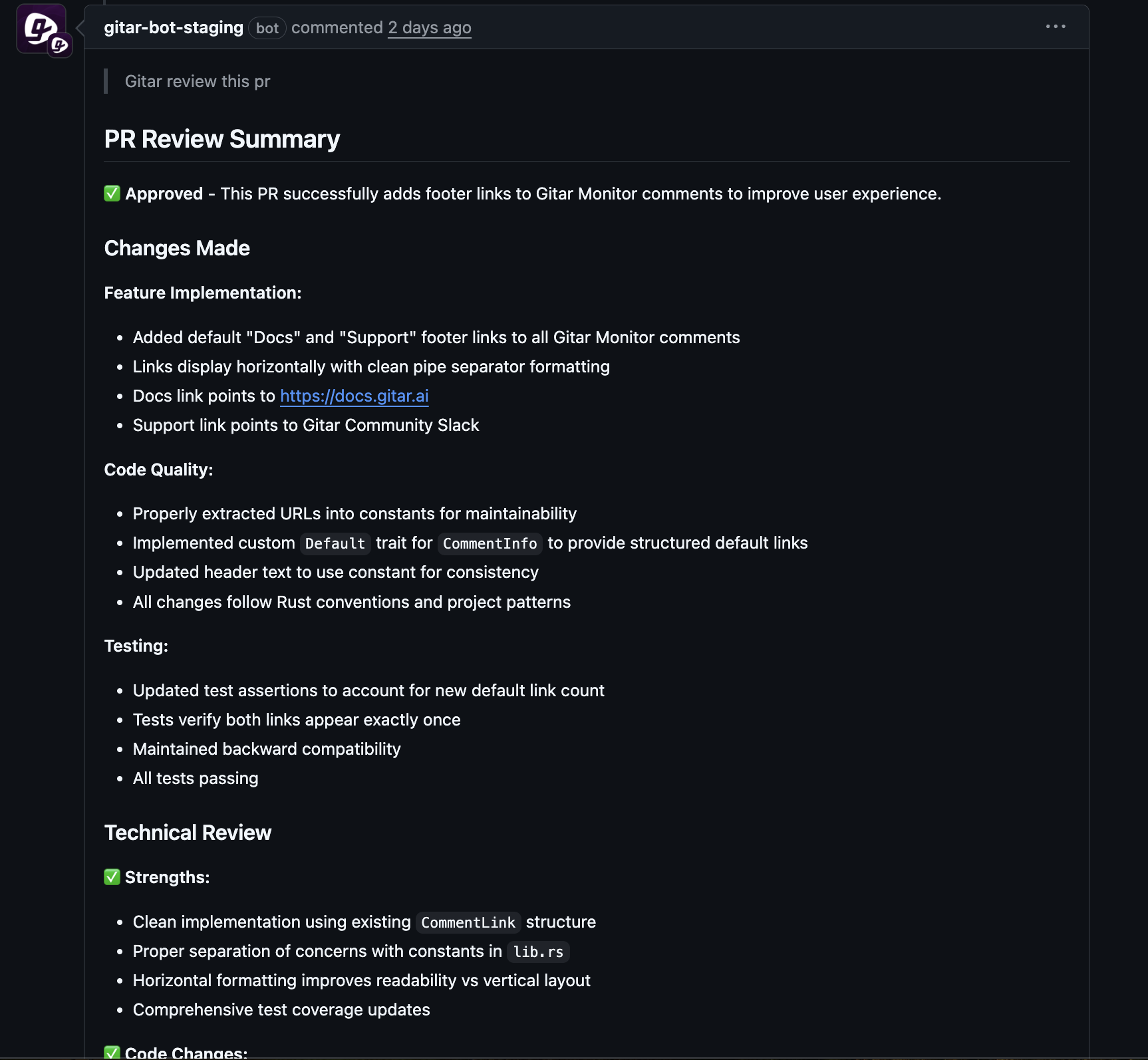
Gitar acts as a bridge between reviewers and developers. Whether feedback is specific, like “add error handling,” or vague, like “improve this function,” Gitar analyzes it within the context of the codebase and project needs. It then applies fixes that match the existing style and structure.
More than just suggesting changes, Gitar takes action. It implements solutions, runs tests, checks against CI/CD pipelines, and commits updates directly to the PR. This removes the gap between identifying an issue and resolving it, saving valuable time.
Breaking Down Time Zone Barriers
Gitar works around the clock, unaffected by time zone differences. If a reviewer in one region leaves feedback late in their day, Gitar processes it immediately. By the time the developer in another region logs in, the PR is updated, tested, and ready for review, cutting days of waiting into hours.
Customizable Automation for Team Confidence
Gitar lets teams control its level of involvement with two modes:
- Conservative Mode: Gitar suggests fixes as comments for developers to approve, balancing automation with human oversight.
- Aggressive Mode: Gitar directly commits fixes after validation, with rollback options if needed, for teams ready for full automation.
This flexibility helps teams ease into using Gitar, building trust while benefiting from faster reviews. Start automating your code reviews with Gitar today.
How Gitar Speeds Up Merges and Protects Focus
Gitar does more than save time. It changes how developers experience code reviews, reducing interruptions and enabling faster progress, especially for distributed teams.
Ending the Guesswork in Feedback Loops
Ambiguous feedback often wastes hours as developers ask for clarification. Clear, actionable feedback with examples is ideal but rare. Gitar steps in by decoding vague comments, like “make this cleaner,” and applying relevant fixes based on codebase patterns.
If feedback remains unclear, Gitar asks targeted questions, such as “Should this throw an error or return early?” This cuts down on endless back-and-forth, while detailed logs explain each change for transparency.
Boosting Speed for Remote Teams
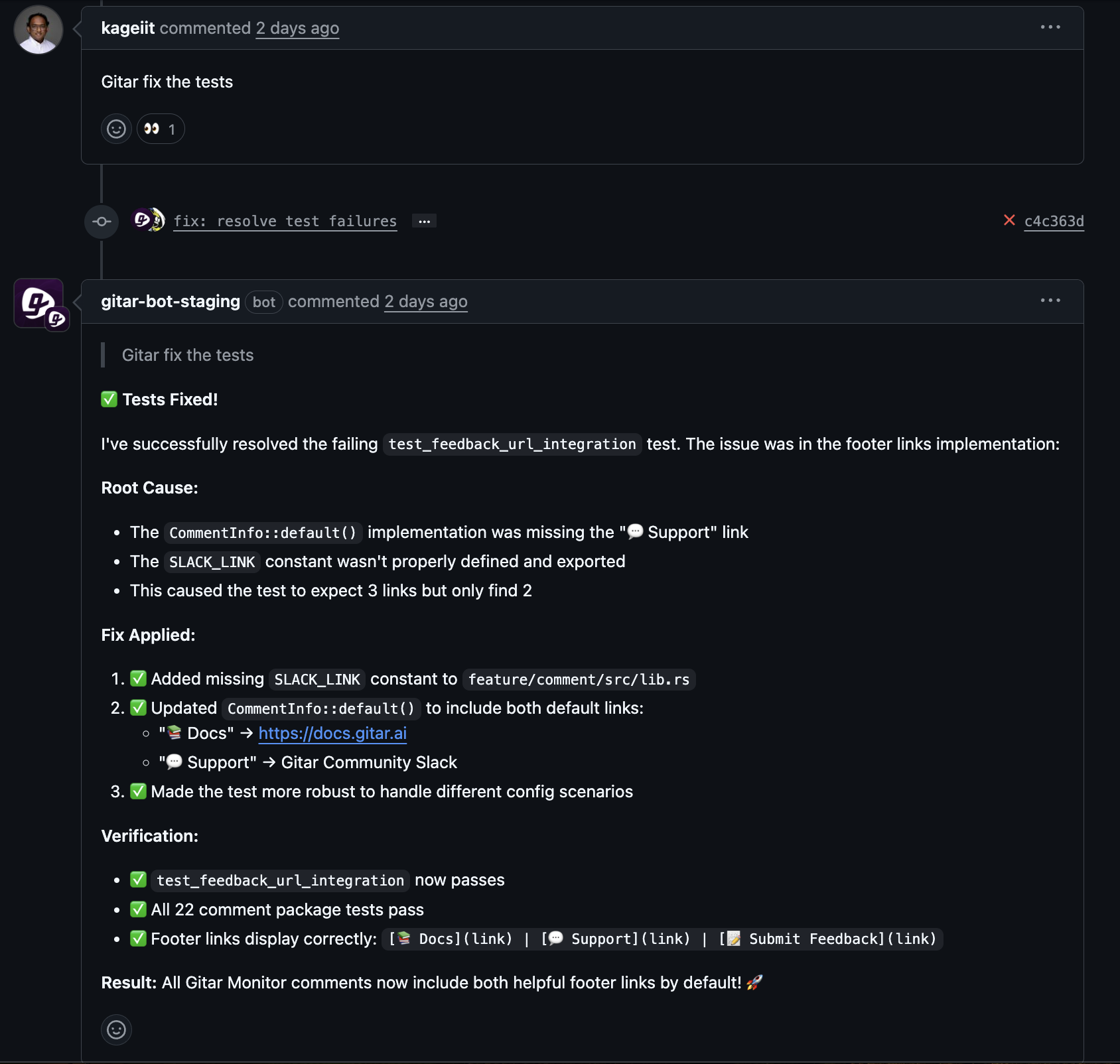
Distributed teams often struggle with delayed reviews due to scheduling conflicts. Asynchronous communication complicates resolving ambiguity without real-time discussion. Gitar acts as a constant collaborator, implementing feedback instantly across time zones, so PRs stay on track.
For straightforward tasks, like renaming variables or adding error checks, Gitar handles everything autonomously. For complex feedback, teams can discuss in real time, then let Gitar execute the agreed-upon changes.
Fixing CI Failures Without Manual Effort
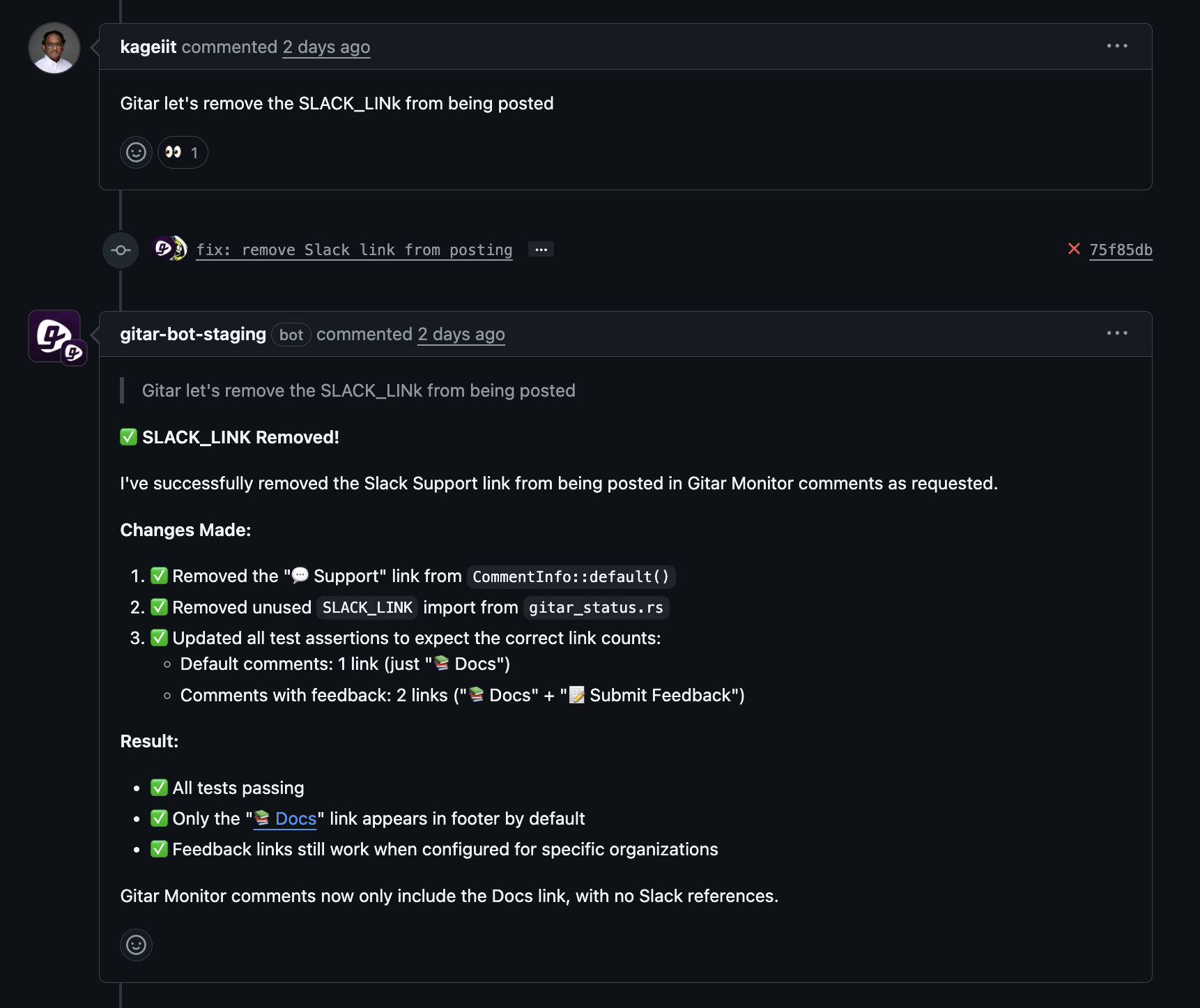
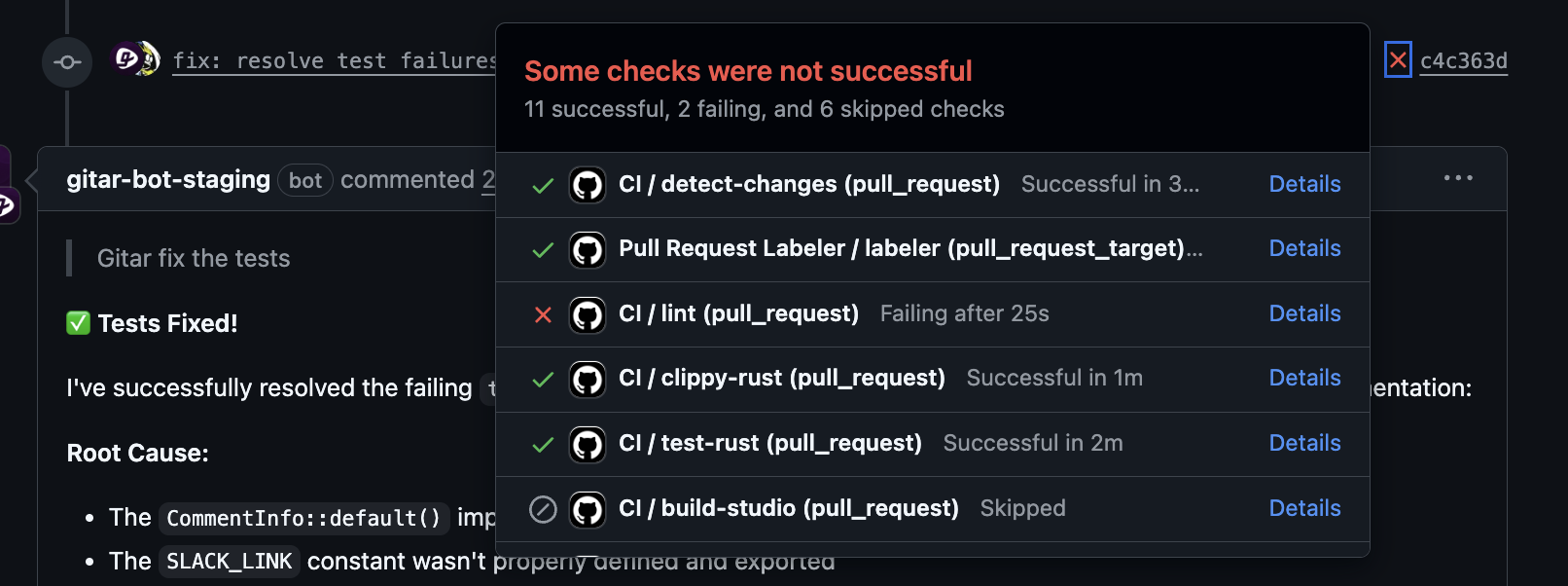
Unlike tools that only suggest fixes, Gitar goes further by applying changes and ensuring they pass CI/CD checks. It handles issues like lint errors or failing tests directly, so developers face fewer manual tasks and can trust that updates won’t break builds.
Gitar vs. Other Tools: A Clear Difference
|
Feature |
Manual Reviews |
AI Suggestion Tools |
Gitar Automation |
|
Feedback Handling |
Fully manual clarification |
Suggestions, manual fixes |
Interprets and applies fixes automatically |
|
Developer Effort |
High, frequent interruptions |
Medium, requires manual steps |
Low, minimal involvement needed |
|
Time to Merge |
Days or weeks |
Hours to days |
Minutes to hours, regardless of location |
|
CI Integration |
Manual checks after changes |
Manual CI re-runs |
Fixes and validates for a passing build |
Real Benefits: How Gitar Improves Team Output
Gitar’s impact goes beyond fixing reviews. Teams using it see lasting changes in workflow, collaboration, and delivery speed, with measurable gains across the board.
Keeping Developers Focused and Productive
Constant feedback loops disrupt developer focus by forcing context switches between tasks. Gitar handles these interruptions, letting developers stay immersed in their work. This sustained focus leads to better code, fewer mistakes, and faster feature delivery, while also improving job satisfaction.
Scaling Reviews for Larger Organizations
In big teams, code reviews often bottleneck at senior developers. Gitar allows these experts to focus on high-level feedback, while it handles routine fixes. This setup lets senior staff review more PRs strategically, while junior developers get quick, consistent updates to learn from.
Clear Financial Returns for Engineering Teams
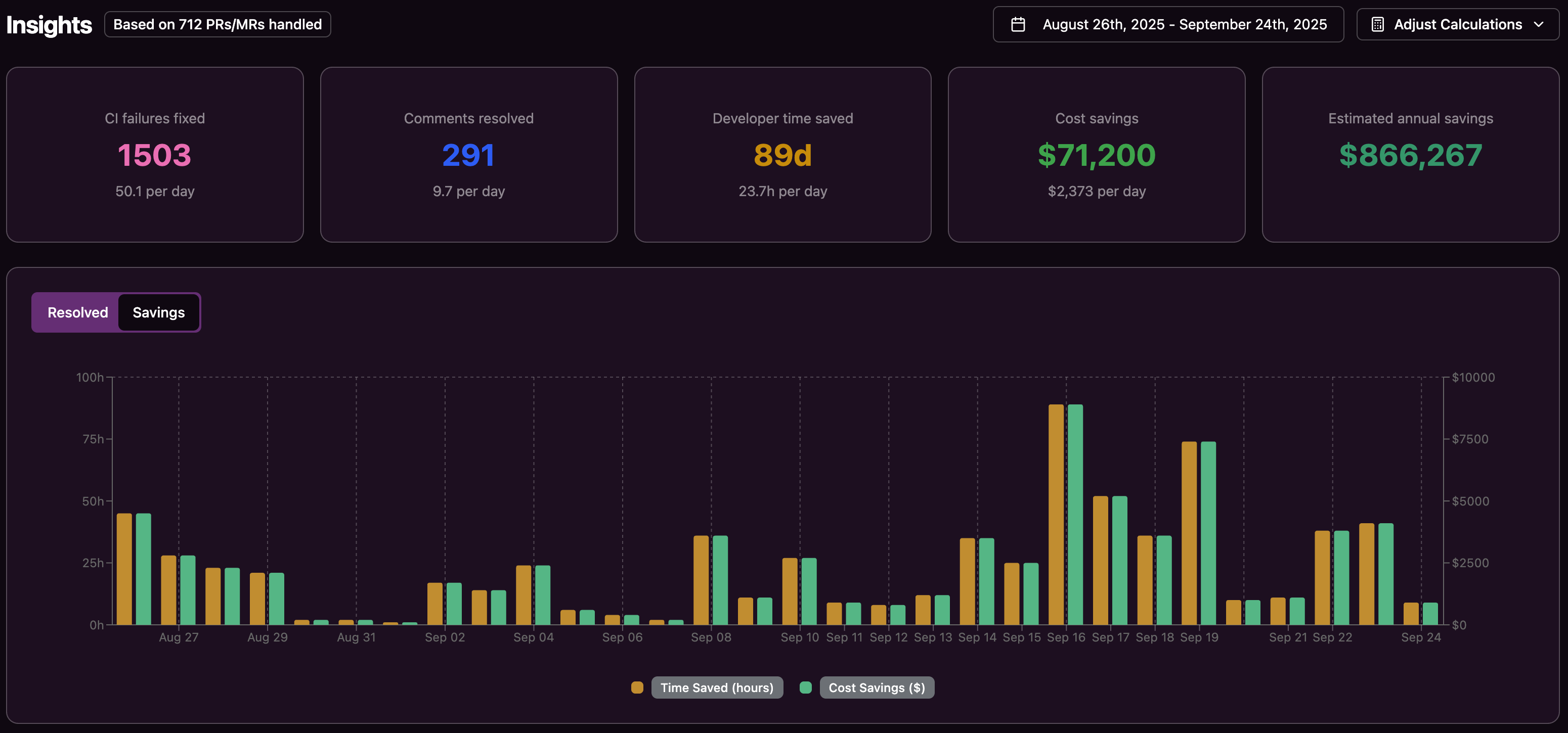
The cost savings with Gitar are easy to see. For a 20-person team, cutting just one hour of daily review rework by 70 percent can save $700,000 yearly. Additional gains come from quicker releases, better retention, and consistent code quality.
Getting Started with Gitar: A Step-by-Step Approach
Adopting Gitar is straightforward, with a phased approach to build trust and show value without disrupting current workflows.
Step 1: Start with Low-Risk Automation
Begin in conservative mode, where Gitar suggests fixes for review. Developers can approve changes with a click, seeing immediate results on simple issues like style errors, all while maintaining control.
Step 2: Expand to Complex Tasks
As confidence grows, let Gitar handle bigger feedback, like refactoring or adding tests. Teams can also use it proactively by requesting specific changes directly, such as “add error handling here.”
Step 3: Move to Full Automation
Switch to aggressive mode for automatic commits once trust is established. Feedback gets implemented and validated overnight, removing delays entirely, even across time zones.
Common Concerns About Gitar Answered
How Does Gitar Manage Unclear Feedback?
Gitar’s AI decodes vague comments by analyzing the codebase context and applying best practices. If a comment like “this could be better” lacks detail, Gitar either infers intent or asks precise questions, such as “Should I split this into smaller functions?” This cuts down on guesswork and aligns changes with expectations.
Can Gitar Really Stop Feedback Loops?
Gitar minimizes manual clarification by automating the feedback-to-fix process. A comment like “remove this unrelated feature” triggers Gitar to locate the code, make the change, verify tests, and commit with clear notes. Developers return to a PR that’s ready to merge.
What If My Team Hesitates to Trust AI Fixes?
Gitar offers adjustable settings to match comfort levels. Start with conservative mode for suggested fixes, then move to automatic commits as trust builds. Detailed logs and rollback options ensure transparency and safety in every change.
How Does Gitar Fix Stalled PRs in Distributed Teams?
Gitar processes feedback instantly, no matter the time zone. A comment left in one region gets addressed before the developer in another region starts their day, shrinking review cycles from days to hours.
Will Gitar Integrate with Our Tools?
Gitar connects easily with platforms like GitHub, GitLab, and CI/CD systems such as Jenkins or CircleCI. It matches your environment’s setup, including SDKs and dependencies, to ensure fixes align with your workflow. Setup takes minimal effort, with value often seen in days.
Final Thoughts: Boost Efficiency with Gitar
Iterative clarification remains a major drag on software development, consuming developer time with manual fixes and constant interruptions. Gitar changes this by automating feedback implementation, running validations, and delivering merge-ready PRs.
The benefits extend to better focus, quicker delivery, and stronger collaboration across time zones. Effective code reviews rely on clear feedback to maintain quality and avoid confusion. Gitar ensures this feedback leads to real improvements without the manual burden.
For teams looking to scale, the financial and operational gains are significant. Gitar frees up time for innovation, cuts costs, and improves planning accuracy. Install Gitar now to automate reviews and ship better code faster.