
Key Takeaways
- CI issues consume significant engineering time, with many teams losing hours each week to failed builds, log digging, and manual retries.
- Autonomous CI “healing” tools reduce context switching by diagnosing failures, applying fixes, and validating pipelines without manual intervention.
- Suggestion-focused tools such as AI code reviewers and static analysis support quality, but they still rely on developers to implement and verify most changes.
- A practical rollout strategy starts with low-risk suggestion modes, then moves toward higher automation as teams gain trust in CI intelligence.
- Teams that want autonomous CI fixes and fewer broken builds can use Gitar to automatically diagnose and repair CI failures inside existing workflows.
Why Autonomous CI Healing Matters for Deployment Speed
Modern software delivery depends on efficient CI/CD pipelines, yet developers waste up to 30% of their time on CI and code review issues. This loss contributes to project delays in roughly 60% of organizations where failing builds and manual troubleshooting slow work.
Traditional CI troubleshooting forces developers to push a commit, wait for a “sea of red,” parse logs, reproduce failures locally, apply fixes, then wait again for reruns. A quick code change can stretch into an hour once context switching and pipeline delays enter the picture.
Distributed teams feel this even more. Time zone gaps often turn simple review comments into multi-day cycles. AI-assisted coding tools increase throughput and pull requests, so CI failures appear more often unless teams add intelligence to the troubleshooting layer.
Teams that adopt autonomous CI healing tools shift from simple suggestions to full detection, repair, and validation. This change removes a persistent manual bottleneck and helps CI/CD pipelines support true continuous delivery.
The Top 5 Intelligent CI Troubleshooting Tools for Deployment Automation
Tool #1: Gitar for Autonomous CI Fixes
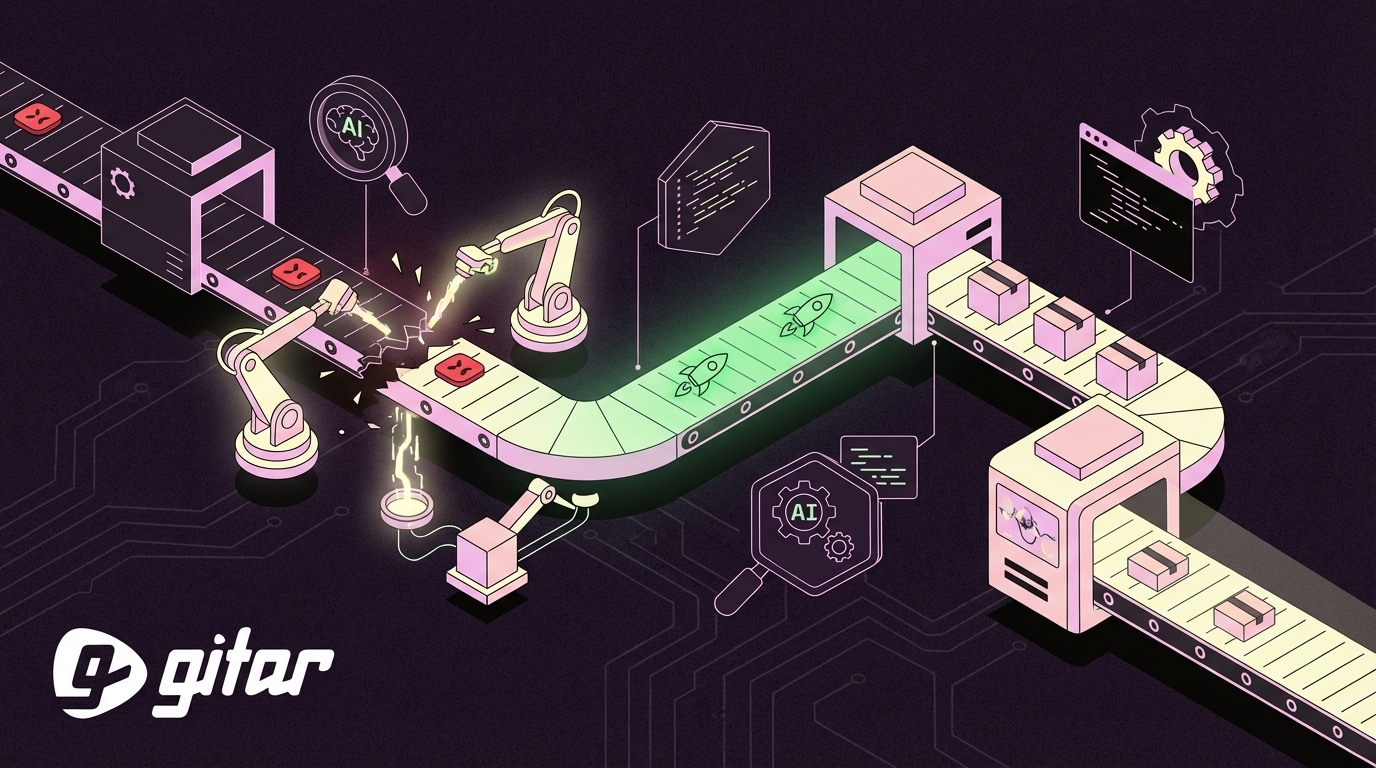
Gitar operates as an autonomous CI “healing engine.” The tool analyzes CI failures, identifies root causes, generates code-level fixes, applies them, and commits changes back to the pull request branch. This flow covers common failures such as lint and formatting issues, test failures, and build errors, so many pipelines recover without developer intervention.
Gitar also recreates complex enterprise environments, including specific SDK versions, multiple SDK combinations, and tools such as SonarQube and Snyk. That replication keeps fixes aligned with real-world build constraints instead of generic assumptions.
Teams can control trust and automation with configurable modes. Conservative mode posts fixes as patch suggestions that developers approve with one click. Aggressive mode commits changes directly once the team is comfortable with performance, with rollback options available. For distributed teams, reviewers can leave clear instructions, and Gitar implements changes so updates are ready when teammates come online.
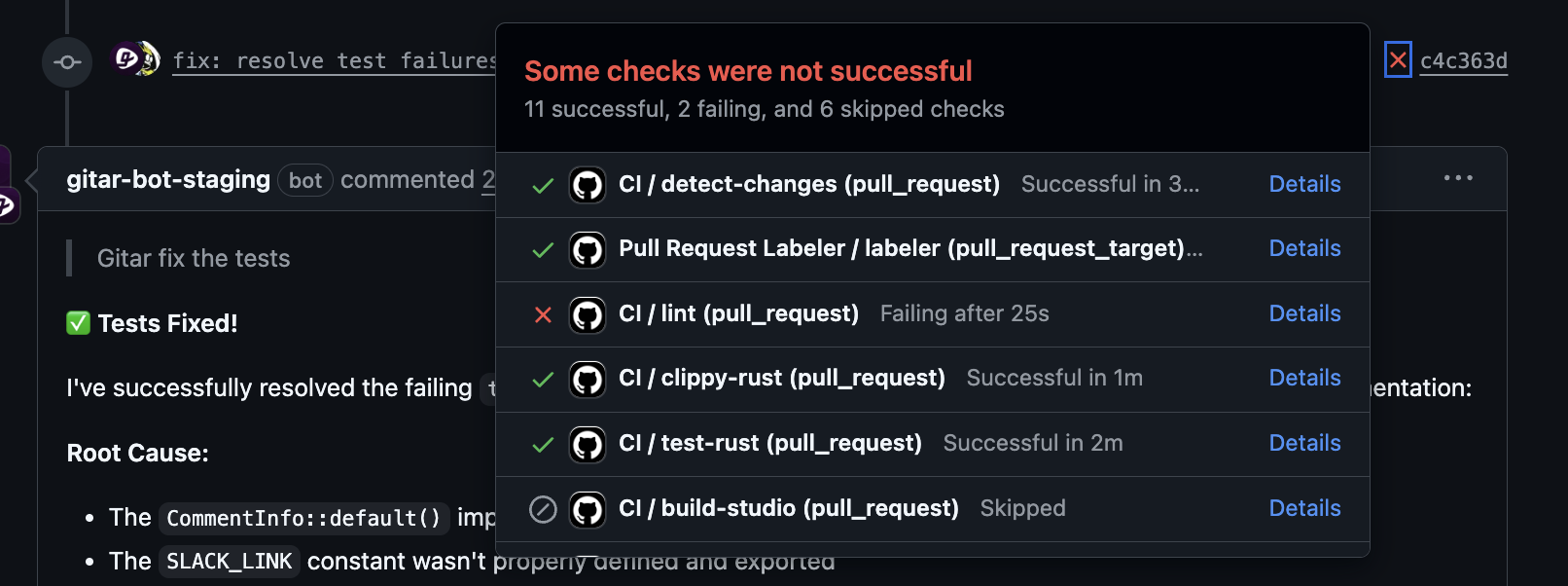
Teams that want autonomous remediation alongside existing CI providers can install Gitar to start reducing manual CI toil and broken builds.
Tool #2: AI Code Reviewers for Faster Feedback
AI code reviewers such as CodeRabbit focus on the review phase. These tools summarize pull requests, flag potential bugs, surface style violations, and suggest improvements directly in the diff. They help reviewers move faster and catch many issues before they reach production.
Some AI reviewers support one-click fixes or quick application of recommended changes. In many setups, developers still handle most edits and validation themselves, which limits the autonomy of the troubleshooting process but still reduces review time and mental overhead.
Tool #3: Big Model Integrations for CI (e.g., Claude for CI)
Large language model integrations bring general-purpose AI into CI workflows. Tools such as Claude for CI connect to GitHub or GitLab, review pull requests, run code searches, and trigger automated workflows for refactoring or testing.
These integrations often provide useful defaults with limited setup, then allow deeper customization through prompts or configuration. The engineering effort depends on how tailored the automation must be, but many teams use these tools as flexible assistants for code review and test strategy rather than full CI healers.
Tool #4: CI/CD Observability for Pipeline Bottlenecks
CI/CD observability platforms such as BuildKite Insights and DataDog CI Visibility highlight systemic issues in pipelines. These tools provide metrics on build duration, failure patterns, flaky tests, and resource usage so teams can see where time and reliability are lost.
Observability tools act as diagnostic aids rather than fixers. They show which steps fail most often or consume the most time, yet they do not modify code or pipeline configuration directly. Teams still need complementary solutions to apply and validate remediations.
Tool #5: Static Analysis with Auto-Fix for Early Quality Control
Static analysis tools such as ESLint or ktlint improve code quality before changes reach CI. These tools enforce formatting and style rules, catch certain structural problems, and often support auto-fix features that run locally or in pre-commit hooks.
Static analysis works well for consistent style and prevention of basic CI failures. Scope remains limited to predefined rules and some lightweight logic checks, so these tools do not usually resolve complex build issues, dependency conflicts, or nuanced test failures.
Healing Engines vs Suggestion Engines in CI Troubleshooting
|
Feature |
Gitar (Healing Engine) |
AI Code Reviewers |
Big Model Integrations |
CI Observability |
|
Autonomous Fixing |
Yes |
Partial (varies by tool) |
Varies by integration |
No |
|
Full Environment Replication |
Yes |
No |
Varies by integration |
N/A |
|
Code Review Feedback Actioning |
Yes |
Partial (varies by tool) |
Varies by integration |
No |
|
Context Switching Reduction |
High |
Medium (varies by tool) |
Medium (if well-built) |
Low |
The key difference lies in autonomy and validation. Suggestion engines generate insights and recommendations, yet they often depend on developers to implement and verify changes. Healing engines such as Gitar carry changes from detection through resolution and CI validation, which shortens recovery time when pipelines fail.
Teams interested in closing the loop from failure detection to verified fix can deploy Gitar as an automated CI remediation layer.

How to Add Intelligent CI Troubleshooting to Your Workflow
Implementation works best as a gradual rollout rather than an abrupt shift. Many teams start with suggestion-only modes, then move to higher automation for specific, low-risk failure types such as lint errors and flaky tests.
Tool choice should align with your existing stack. Favor options that integrate with your current CI providers such as GitHub Actions, GitLab CI, CircleCI, or BuildKite, and that understand your languages, frameworks, and security tools.
Teams can track impact with clear metrics: time-to-merge, number of failed builds per release, frequency of manual restarts, and developer satisfaction. In a 20-developer organization, even a small reduction in daily CI troubleshooting can reclaim hundreds of engineering hours each quarter.
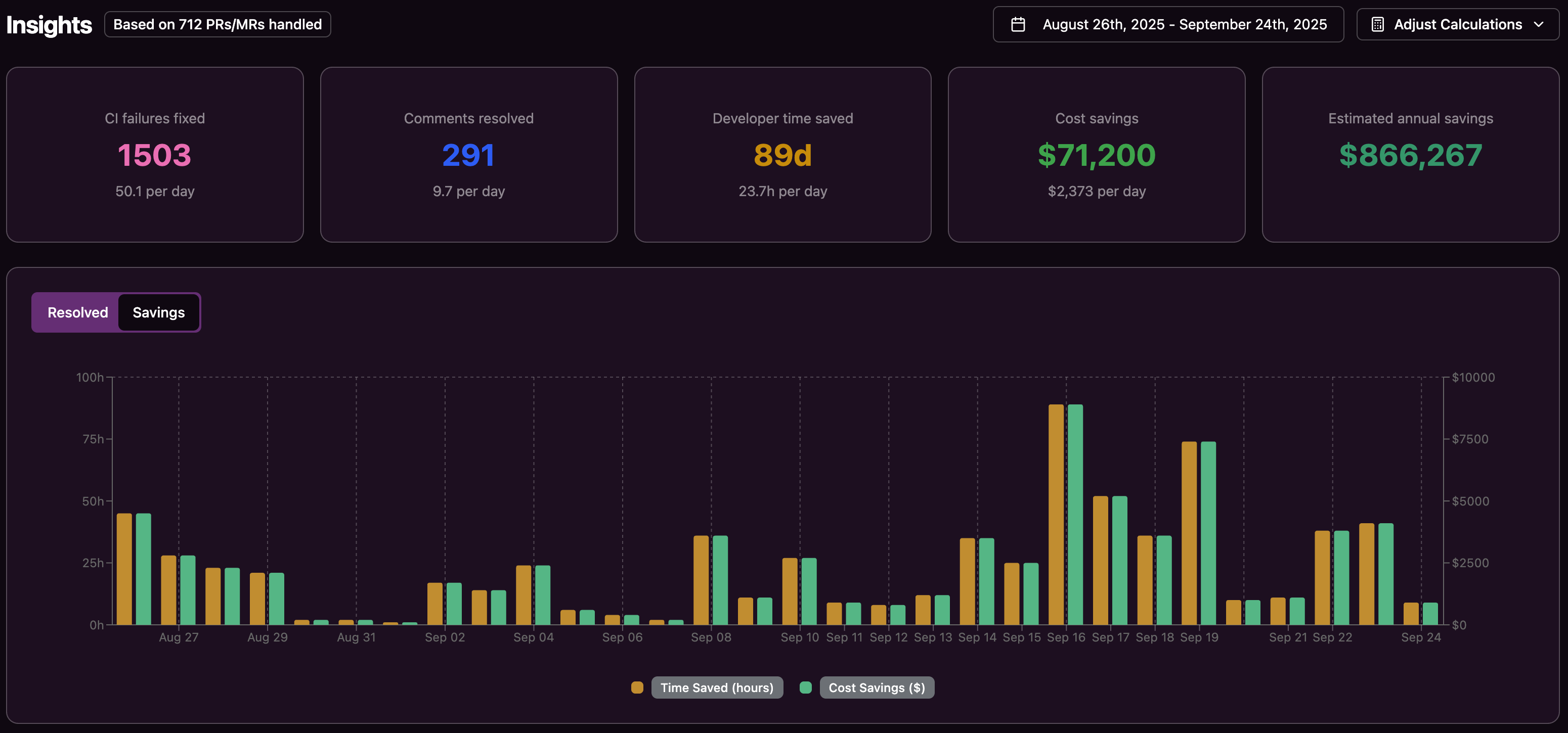
Teams that want a focused starting point can add Gitar to existing repositories and begin with conservative automation settings.
Frequently Asked Questions
How do intelligent CI troubleshooting tools handle complex enterprise environments?
Advanced tools such as Gitar recreate full enterprise environments, including SDK versions, multi-SDK dependencies, and integrations with platforms such as SonarQube and Snyk. This replication allows the system to debug and apply fixes in a setting that matches production pipelines.
Can teams rely on AI to fix code without unexpected side effects?
Teams manage risk by controlling how automation operates. Gitar, for example, lets teams begin with suggestion-only mode where every change requires human approval. Once results are consistent, teams can enable automatic commits for selected failure categories while keeping rollback options available.
How do intelligent CI troubleshooters differ from AI code reviewers?
AI code reviewers focus on analysis and guidance during pull request review. Intelligent CI troubleshooters also modify code, rerun checks, and verify that pipelines pass. Gitar sits in the latter category by applying and validating fixes rather than only commenting on them.
How do these tools help distributed teams ship faster?
Distributed teams gain value when CI tools act while people are offline. Reviewers can leave comments or instructions, and Gitar updates the pull request so colleagues in other time zones see green builds and applied suggestions when they return.
What is the ROI of intelligent CI troubleshooting?
A team of 20 developers that spends an hour per person each workday on CI and review friction can lose the equivalent of many full-time engineering months each year. Reducing that time even modestly through tools like Gitar often delivers meaningful cost savings and faster delivery cycles.
Conclusion: Use Autonomous CI Fixing as a Deployment Advantage
Intelligent CI troubleshooting shifts teams away from manual log inspection and repeated reruns toward automated detection, repair, and validation. Suggestion engines improve visibility into problems, yet true gains appear when tools also handle remediation.
Gitar provides autonomous CI fixing that reduces context switching, shortens time-to-merge, and respects complex enterprise environments through accurate environment replication and configurable trust levels.
Teams that want to reduce CI friction and keep developers focused on feature work rather than broken pipelines can install Gitar and begin automating common CI fixes in their 2026 delivery workflows.