
CI build failures drain engineering teams, costing time and delaying releases. This article dives into how Gitar, an autonomous AI agent, tackles these issues by automatically detecting and fixing problems in CI/CD pipelines. We’ll cover the challenges developers face, like pipeline failures and review delays, and show how Gitar reduces toil and speeds up software delivery.
Developers lose up to 30% of their time on CI issues and code reviews, a huge productivity hit. For a 20-person team, that’s about $1 million in lost output each year. As AI tools speed up coding, CI and reviews become the new bottlenecks, leading to more broken builds. Manual fixes and suggestion-only AI tools fall short. Autonomous solutions like Gitar step in to resolve issues without constant human input.
Why CI Build Failures Hurt Productivity and Delay Releases
What Unresolved CI/CD Issues Cost Your Team
CI build failures create hidden expenses for dev teams. A pull request failing due to a lint error or test issue forces developers to stop, switch tasks, decode error logs, fix the problem, and wait for the pipeline to rerun. A quick five-minute fix often stretches into an hour of lost focus.
Context switching adds a heavy toll. It takes about 23 minutes to refocus after an interruption, so a single CI failure can steal over an hour of productive time. For a 20-person team facing one failure per developer daily, that’s roughly $1 million in yearly productivity losses at typical salaries.
Beyond direct costs, failures slow feature rollouts and bug fixes, creating delays that ripple through projects. These setbacks can cost more in missed opportunities than the immediate time lost. Constantly troubleshooting also wears developers down, increasing burnout and turnover expenses.
Key Pain Points in CI/CD Pipelines
CI/CD pipelines face several obstacles that slow down development. Common issues include:
- Failing builds from lint errors, test issues, or dependencies, leading to long debugging sessions.
- Flaky tests that pass or fail randomly, wasting time on unnecessary retries and eroding trust in the system.
- Blocked progress when one team’s failure halts others, adding coordination delays.
- Dependency conflicts in large codebases with mixed languages and tools, often needing deep expertise to fix.
These friction points disrupt workflows and pull focus from core development tasks.
How CI Issues and Reviews Waste Developer Time
CI failures and code review delays eat up valuable hours. Developers spend too much time on logs and iterative fixes, which frustrates them and pulls attention from creative work.
Merge conflicts from inconsistent version control practices add to the burden, often requiring manual effort to sort out multiple changes. Misconfigured environments or test failures cause further delays, especially when builds take longer to run. Communication gaps between teams also slow resolutions, as context gets lost in back-and-forth discussions.
Meet Gitar: Autonomous AI to Streamline CI/CD Fixes
How Gitar Automatically Resolves CI Failures
Gitar shifts CI/CD problem-solving from manual effort to autonomous action. Unlike tools that only suggest fixes for developers to apply, Gitar detects issues like lint errors or test failures, analyzes logs, creates solutions, and commits them directly to the branch.

Here’s what sets Gitar apart:
- Complete resolution: Gitar applies fixes and validates them through the full CI process, ensuring builds pass without extra developer input.
- Environment accuracy: It mirrors complex enterprise setups, including dependencies and SDK versions, so fixes work in real workflows.
- Wide compatibility: Gitar supports multiple CI platforms, fitting seamlessly into varied tech stacks.
- Adjustable automation: Teams can start with suggestions and move to full auto-commits with rollback options, building trust over time.
- Review assistance: Gitar acts on reviewer feedback, making requested changes automatically, which helps distributed teams avoid delays.
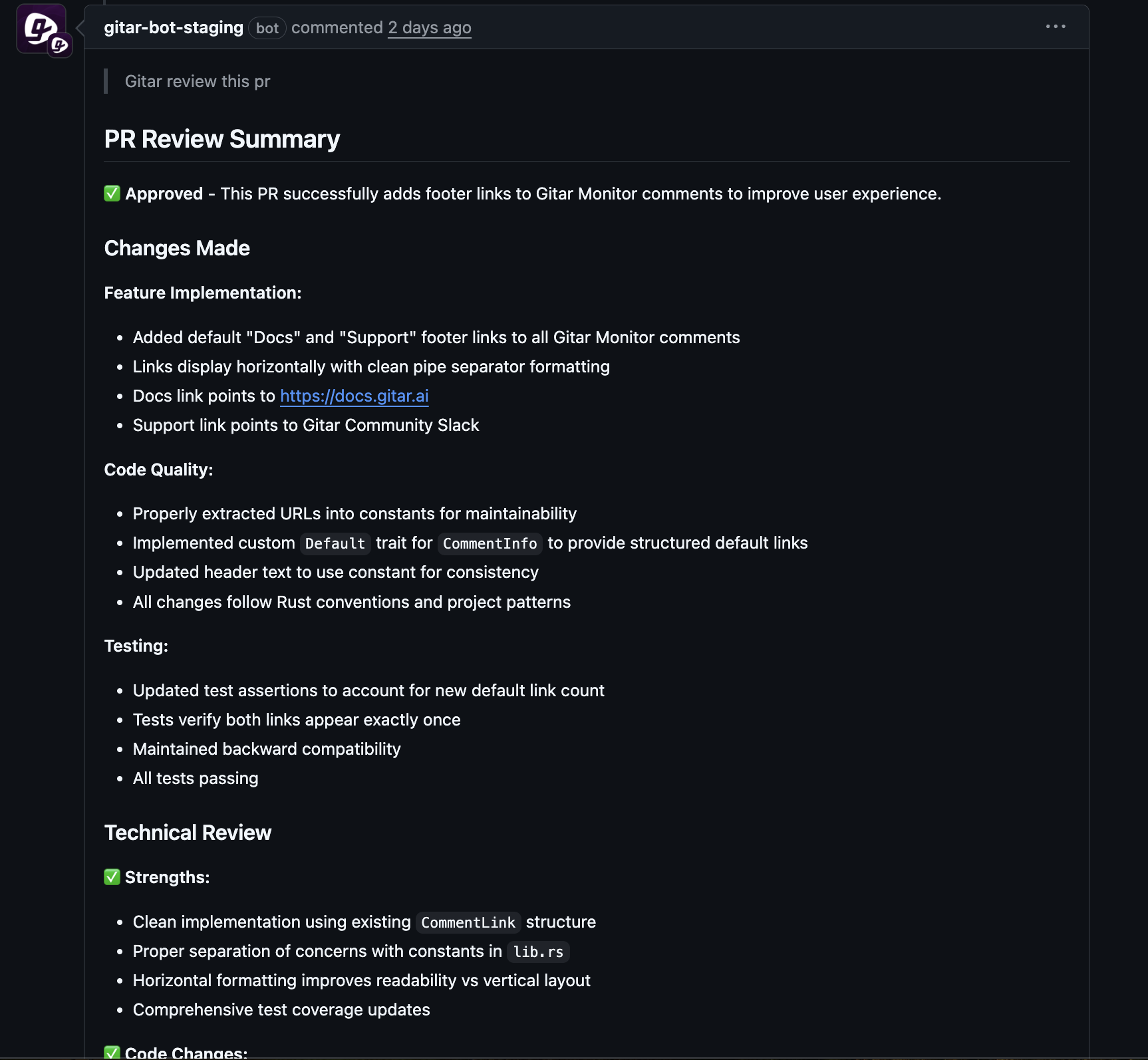
Stop spending hours on manual fixes or review cycles. Install Gitar to resolve broken builds and ship quality software faster.
Key Gains from Autonomous CI Fixes with Gitar
Keep Developers Focused by Cutting Context Switching
Developers thrive in a flow state, focusing deeply on complex tasks. CI failures break that focus, forcing them to switch gears. Gitar handles these issues automatically, letting developers stay on track without worrying about builds.
This change reduces stress significantly. Instead of dreading interruptions, developers submit pull requests and move to the next task, knowing routine problems get fixed in the background. Many find their builds already green and ready for review when they check back.
Less switching means more time for deep work, leading to better code and decisions. Teams using Gitar notice developers tackling bigger challenges instead of repetitive maintenance, boosting overall satisfaction.
Speed Up Delivery with Self-Healing Pipelines
Gitar’s instant fixes cut feedback loops and speed up merges. As AI coding tools help write code faster, CI becomes the bottleneck. Gitar addresses this by automatically resolving issues, keeping development on pace.
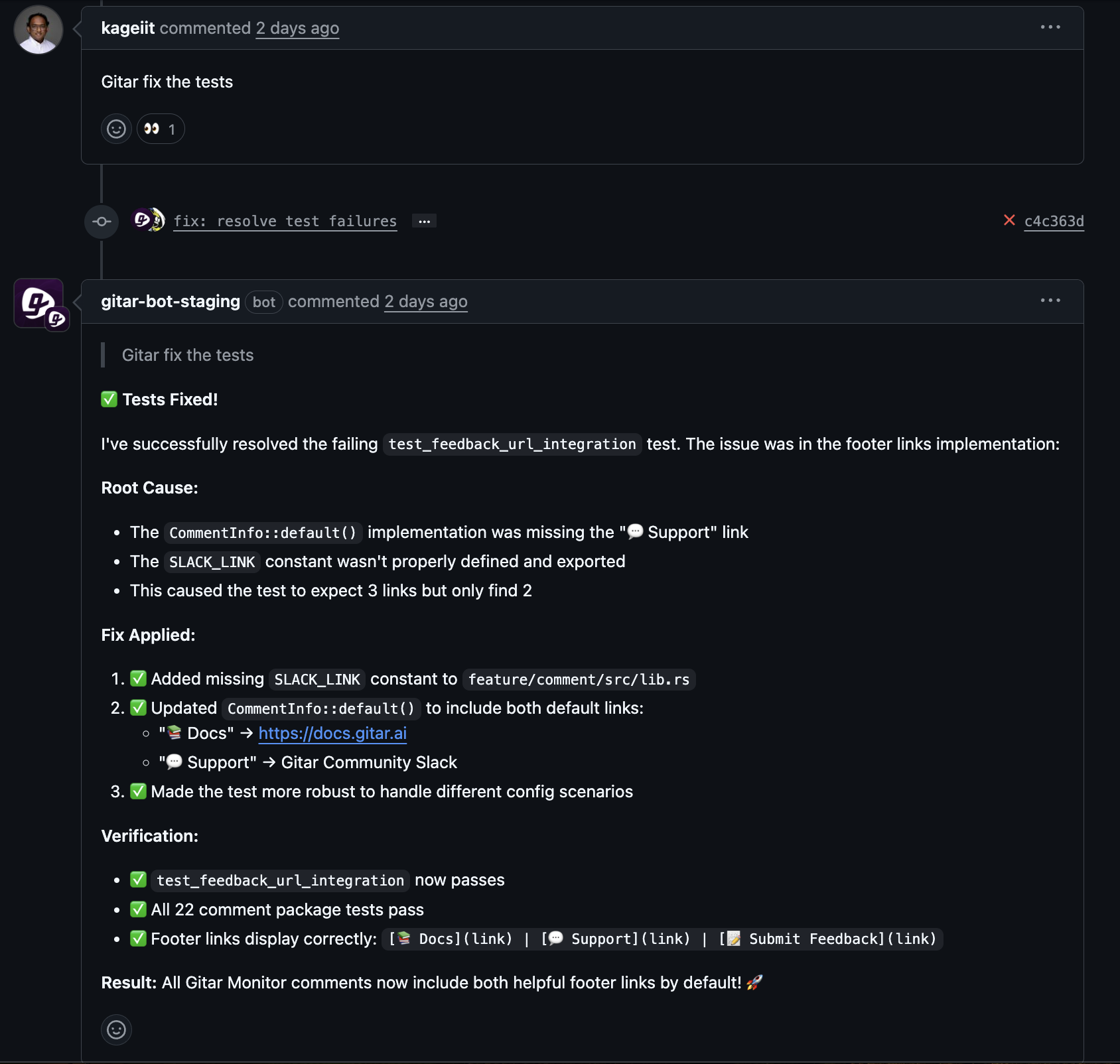
Self-healing CI changes how teams view builds. Failures become minor hiccups, not roadblocks. Teams push updates more often without fearing extra workload. In fast-paced settings, Gitar ensures small issues don’t stall entire groups, keeping main branches stable even during heavy coding sprints.
Faster merges lead to quicker release cycles. Issues get resolved right away instead of piling up, supporting steady deployments without last-minute scrambles to fix builds.
Boost Pipeline Reliability and Cut Costs
Gitar keeps builds green by fixing issues before they spiral, saving on CI rerun costs. Failed builds rack up expenses for compute resources, especially in large setups. Gitar cuts these by ensuring most builds pass after the first fix attempt.
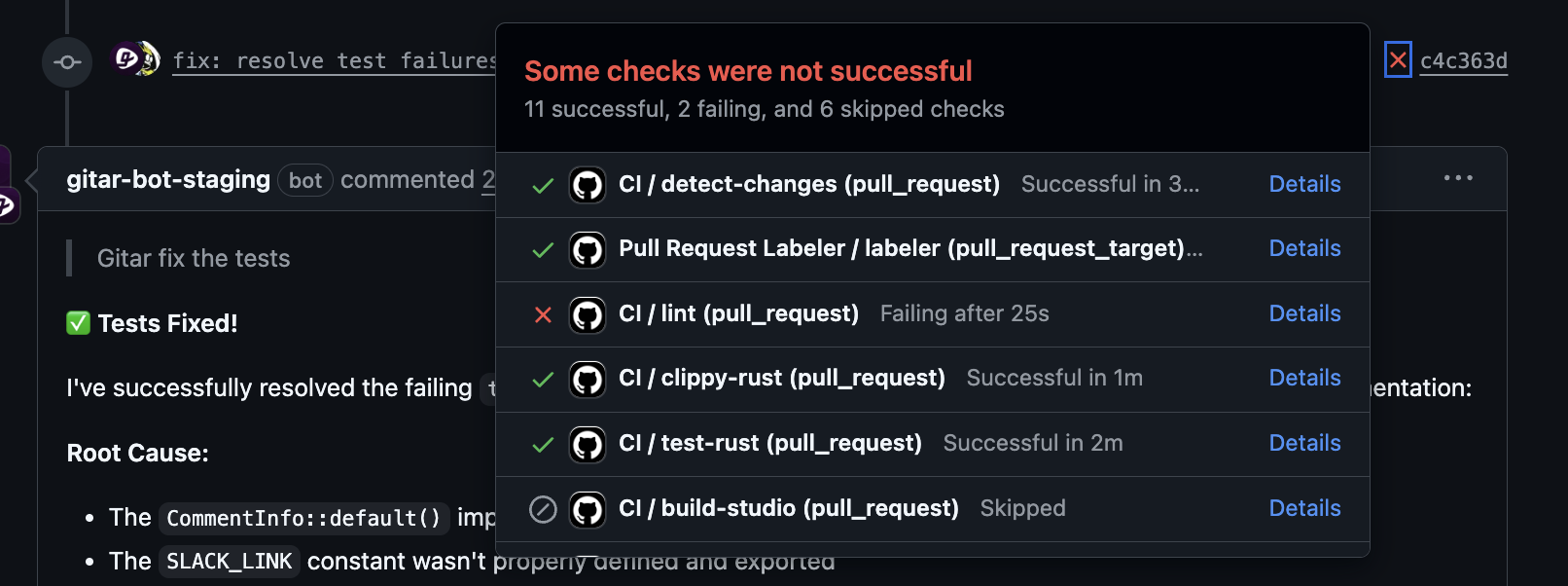
Reliability also improves as Gitar proactively handles maintenance tasks like dependency updates or flaky tests. This frees DevOps teams to focus on bigger improvements instead of constant firefighting. Over time, Gitar gets better at preventing recurring issues, strengthening the pipeline further.
Support Distributed Teams and Complex Setups
Distributed teams struggle with review delays across time zones. Gitar solves this by acting on feedback instantly. A reviewer in one region can leave comments, and Gitar updates the code overnight for the developer to check later, keeping work moving.
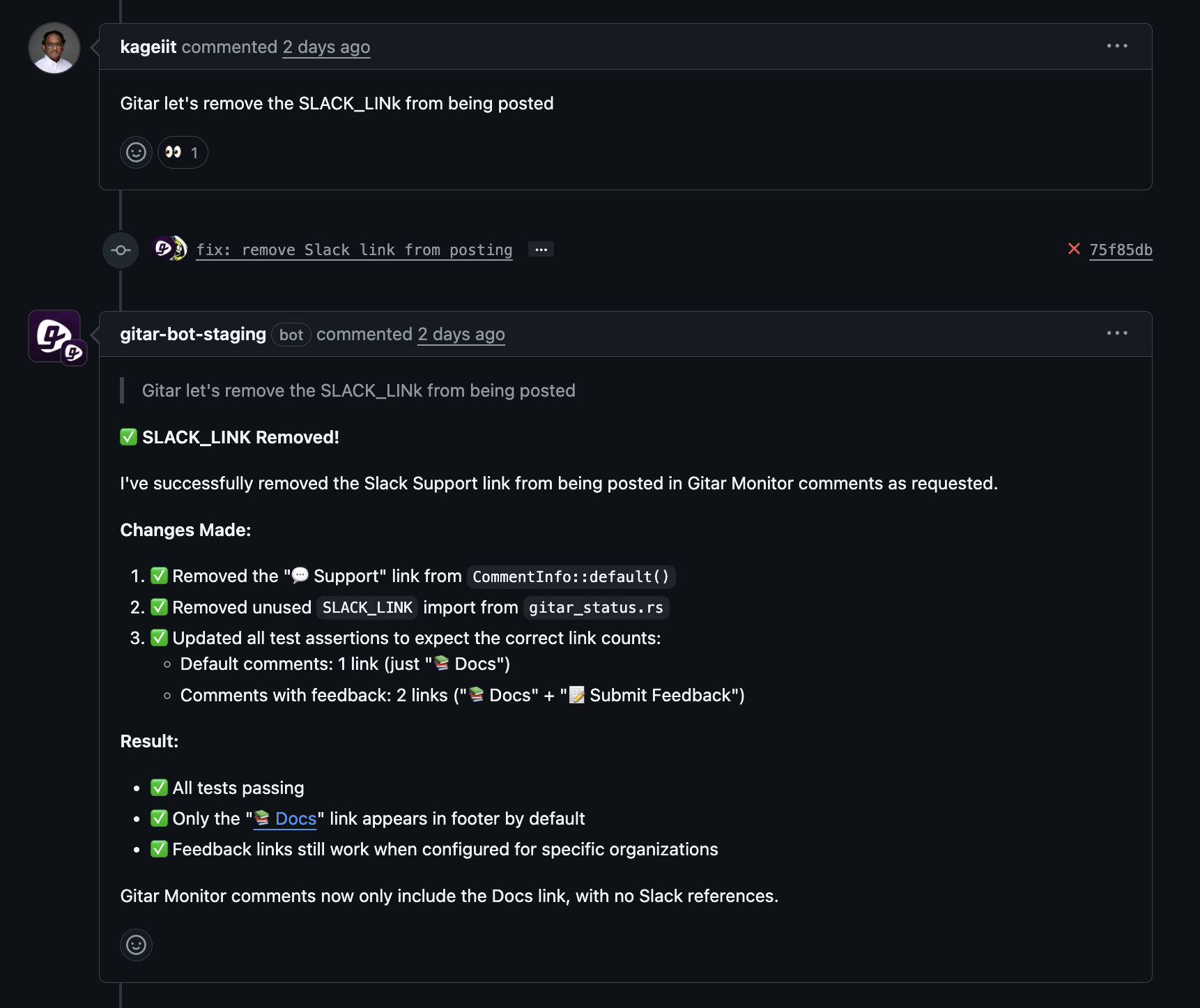
For complex enterprise environments, Gitar replicates full workflows, handling specific SDKs and dependencies. Fixes fit the real setup, avoiding failures that work in theory but break in practice. It also aligns with company standards, ensuring compliance while automating fixes.
How Gitar Stands Out Against Other CI/CD Tools
|
Feature |
Gitar (Healing Engine) |
Suggestion-Based AI Tools |
Traditional AI Code Reviewers |
Manual Work (Status Quo) |
|
Action |
Automatically applies and validates fixes, ensures passing builds |
Offers suggestions, needs manual effort to apply |
Gives analysis, limited auto-action |
Fully manual fixes and reruns |
|
Context |
Mirrors full CI environments for accurate fixes |
Limited to code style, low CI awareness |
Focused on Git platforms, not CI depth |
Depends on individual developer knowledge |
|
Autonomy |
Works independently with adjustable automation levels |
Needs developer input for every fix |
Requires oversight to implement changes |
Entirely manual effort |
|
Platforms |
Supports multiple CI/CD systems |
Often limited to specific Git providers |
Typically Git-focused only |
Works with any system manually |
Gitar’s healing approach fully resolves issues, unlike suggestion tools that leave validation to developers. This closes the gap where partial solutions still disrupt workflows, delivering ready-to-use fixes tailored to your setup.
Want to improve your CI/CD process? Install Gitar to fix builds automatically and ship better software faster.
Common Questions About Autonomous CI/CD with Gitar
How Does Gitar Ensure Security and Compliance?
Gitar meets enterprise security needs by integrating with scanning tools to keep fixes aligned with standards. It offers on-premise deployment for strict data control and adjustable automation, starting with manual approvals and scaling to auto-commits with easy rollbacks. Fixes follow existing approval workflows, maintaining oversight for regulated settings.
How Is Gitar Different from Tools Like GitHub Copilot?
GitHub Copilot helps write code, while Gitar focuses on fixing CI pipeline issues. As coding speeds up with AI, integration becomes the challenge. Gitar handles that by autonomously resolving build failures, complementing code tools without needing custom setups or extra developer input.
Can Gitar Handle Complex CI Environments?
Gitar is built for intricate enterprise setups. It replicates full CI workflows, including unique dependencies and tools, ensuring fixes match your environment. It adapts to specific failure patterns across projects, making it effective for diverse tech stacks in large organizations.
What Challenges Come with Adding AI to CI/CD Systems?
Integrating AI into CI/CD can be tricky with older systems, but Gitar eases this with support for major platforms like GitHub and GitLab. It offers cloud or on-premise options for data security and runs separately from builds to avoid extra costs or performance hits on your infrastructure.
How Does Gitar Avoid New Bugs in Fixes?
Gitar validates every fix against your full CI process, ensuring it passes all checks like tests and linting. It focuses on root causes for lasting solutions, includes rollback options, and improves over time by learning from your environment’s patterns, reducing risks of new issues.
Wrap-Up: Speed Up Delivery with Autonomous CI/CD
Engineering teams lose 30% of their time to CI failures and reviews, a problem manual methods and suggestion tools can’t fully solve. Gitar changes the game by turning pipelines into self-healing systems that fix issues on their own, cutting distractions and boosting focus.
For developers, Gitar frees up time for meaningful work. Leaders see clear returns with faster delivery and savings up to $1 million yearly for a 20-person team. DevOps gains from reduced pipeline upkeep and better reliability.
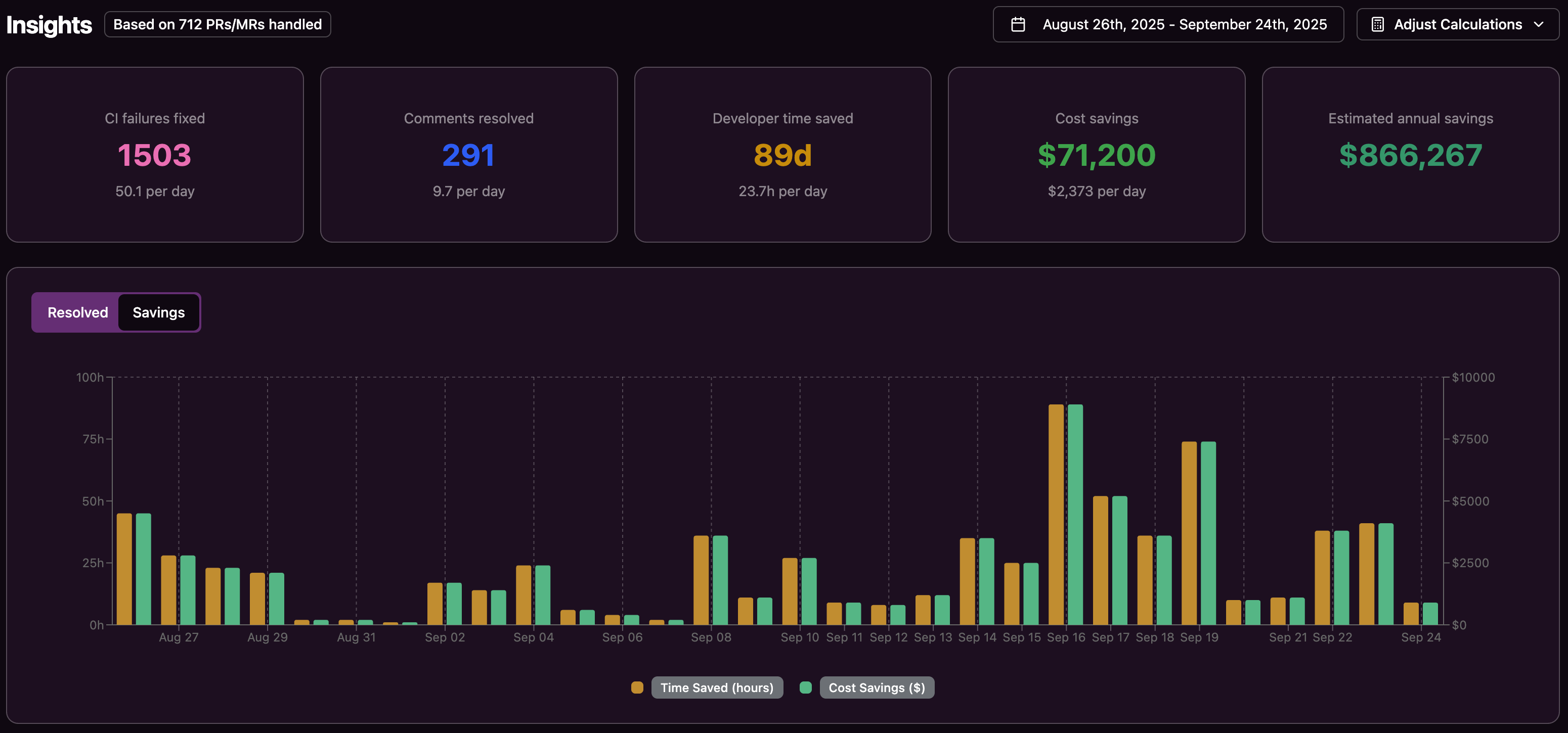
Teams report quicker merges, happier developers, lower CI costs, and steady integration even during busy periods. Gitar’s flexible trust settings let you automate at your own pace while keeping control.
As software demands grow, autonomous CI/CD offers a real edge. Don’t settle for tools that only suggest fixes. Choose a system that resolves them. Stop losing time on build failures. Install Gitar to automate fixes and deliver quality software faster.