
Last updated: January 27, 2026
Install Gitar now for free AI auto-fixes of CI fails and get instant green builds
Key Takeaways
- Integration testing onboarding focuses on helping new hires achieve Time to First Green Build in minutes using pre-configured Docker environments and automated CI pipelines.
- Effective practices include ship-ready local setups, Day 1 test failure simulations, and parallel test execution that build developer confidence quickly.
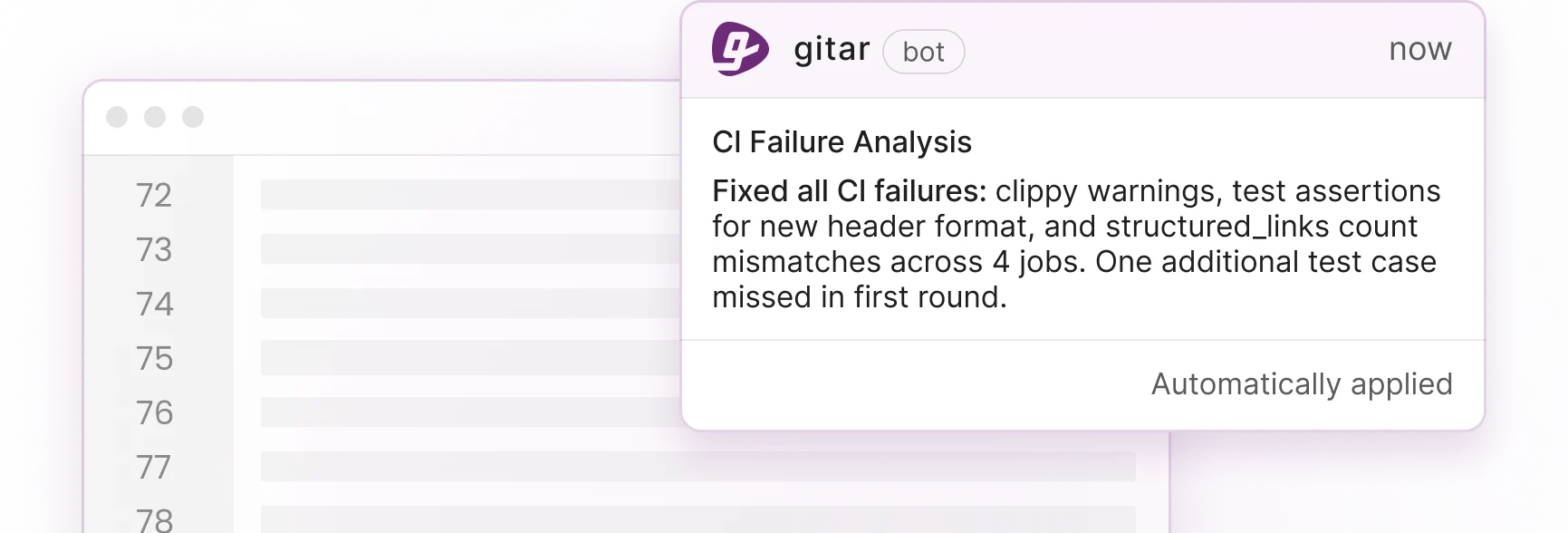
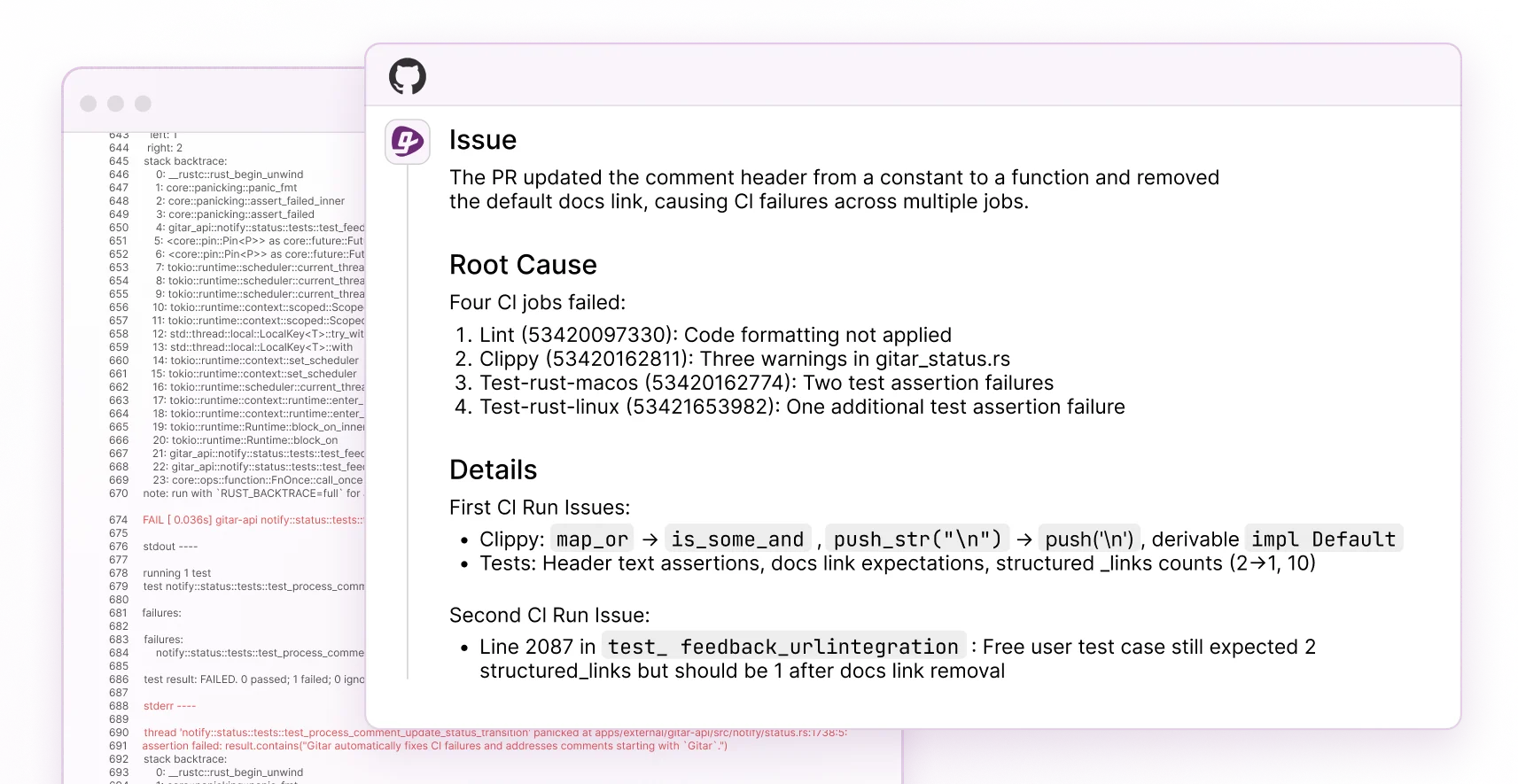
- Gitar AI delivers self-healing CI by analyzing and fixing failures such as lint errors and test breaks, so new hires get green builds without manual intervention.
- Track success with metrics like average time to first green PR and CI failure rates per new hire to uncover onboarding bottlenecks.
- Accelerate your team’s integration testing onboarding and remove CI failures by installing Gitar today for instant green builds.
Best Practice 1: Pre-Onboarding Ship-Ready Local Environments
Set up containerized development environments before new hires start. Create Docker Compose configurations that include all required services, databases, and API mocks. Top-down integration testing using stubs enables early prototype functionality. New developers see working systems immediately, which shortens the learning curve.
Use this pre-onboarding checklist:
- Docker Compose setup with all service dependencies
- Mock services for external APIs
- Database seeding scripts with realistic test data
- Environment variable templates for local and CI runs
Example docker-compose.yml structure:
version: ‘3.8’ services: api: build: . ports: – “3000:3000” depends_on: – database database: image: postgres:14 environment: POSTGRES_DB: testdb
Gitar analyzes CI failures caused by environment mismatches and configuration issues. It then generates fixes that reduce “works on my machine” problems that slow onboarding.
Best Practice 2: Day 1 Test Runs and Intentional Failure Simulation
Have new hires run the full integration test suite on Day 1 and trigger safe failures to learn the debugging flow. Starting integration testing early in the development process helps identify issues sooner. Early exposure to failures builds confidence with your tooling and CI pipeline.
Use this Day 1 checklist:
- Execute the complete integration test suite locally
- Simulate common failure scenarios in a controlled way
- Review CI pipeline configuration and key stages
- Practice debugging with logs, traces, and test reports
Integration tests should cover API contracts, data formats, error handling, and service interactions. Focus on end-to-end workflows instead of isolated components. Assign low-risk tasks that require running tests so new developers gain hands-on experience quickly.
GitHub Actions example for integration testing:
– name: Run Integration Tests run: | docker-compose up -d npm run test:integration docker-compose down
Best Practice 3: Core Self-Healing CI with Gitar for New Hires
Gitar.ai provides the most direct path to self-healing CI during onboarding. It offers free AI code review that analyzes and fixes CI failures so new hires see green builds quickly. Install in 30 seconds with no credit card required. This approach goes beyond CodeRabbit and Greptile, which only provide suggestions that still require manual work.
|
Feature |
Manual/Docker/IDPs |
CodeRabbit/Greptile |
Gitar |
|
Auto-Fix CI |
No |
No |
Yes (14-day free trial) |
|
Green Build Guarantee |
No |
No |
Yes |
|
Cost |
High |
$15-30/dev |
Free code review |
When CI fails because of lint errors, test failures, or build breaks, Gitar analyzes failure logs, generates validated fixes, and commits them. This workflow replaces the usual cycle of manual debugging, repeated fix attempts, and slow re-runs. New developers move from red to green builds in minutes instead of hours or days.
Best Practice 4: Cross-Team Test Ownership and Coordination Rules
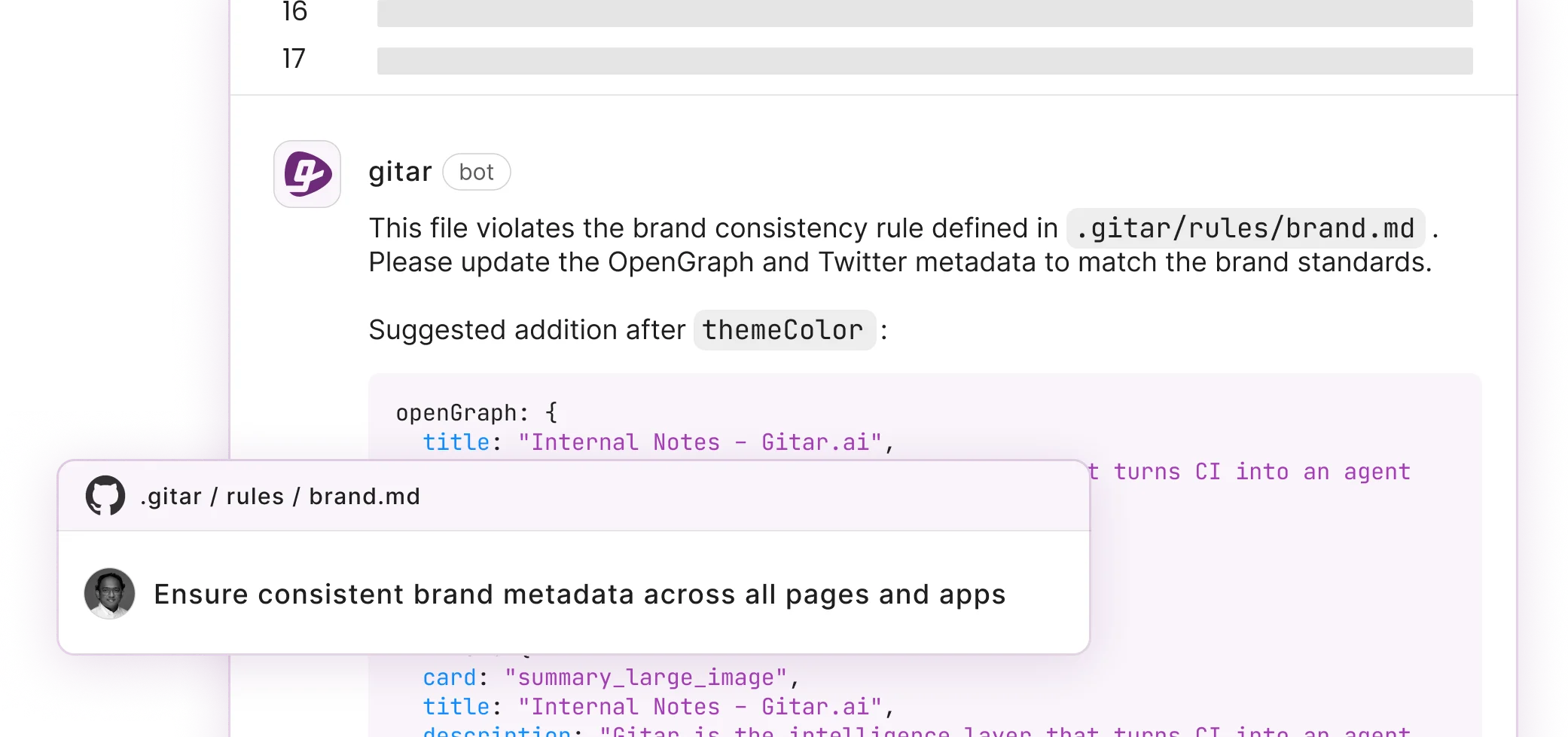
Define clear ownership and coordination rules so integration tests scale across teams. Implement natural language rules in .gitar/rules/ directories to automate workflow coordination. Testing in small batches improves efficiency and makes defect isolation easier. New hires then understand who owns which tests and services.
Use this organization checklist:
- Define team ownership boundaries for integration tests
- Create shared test data management strategies
- Establish patterns for parallel test execution
- Implement risk-based test prioritization for critical paths
Design test suites for parallel execution of independent tests to reduce overall CI runtime. Use containerized environments to keep tests isolated and avoid data conflicts between concurrent runs.
Best Practice 5: Metrics That Measure Time to First Green PR
Measure onboarding success with Time to First Green Build instead of traditional checklist completion. This outcome-based metric highlights friction in your integration testing process. It also reveals where new hires struggle with environment setup, test reliability, or CI configuration.
|
CI Readiness |
Manual Fit |
Gitar Fit |
|
High Flakiness |
Moderate |
Excellent |
|
Complex Dependencies |
Moderate |
Excellent |
|
Frequent Failures |
Moderate |
Excellent |
Track these key metrics:
- Average time from first commit to first green build
- Number of CI failures per new hire in the first week
- Percentage of failures that require manual intervention
- Developer satisfaction scores for the onboarding experience
Best Practice 6: Detect Unrelated PR Failures and Flaky Infrastructure
Use systems that separate code-related failures from infrastructure issues. Gitar’s unrelated PR failure detection saves engineering time by flagging failures that come from flaky tests, infrastructure problems, or dependency issues instead of the developer’s changes. New hires avoid chasing problems they did not create.
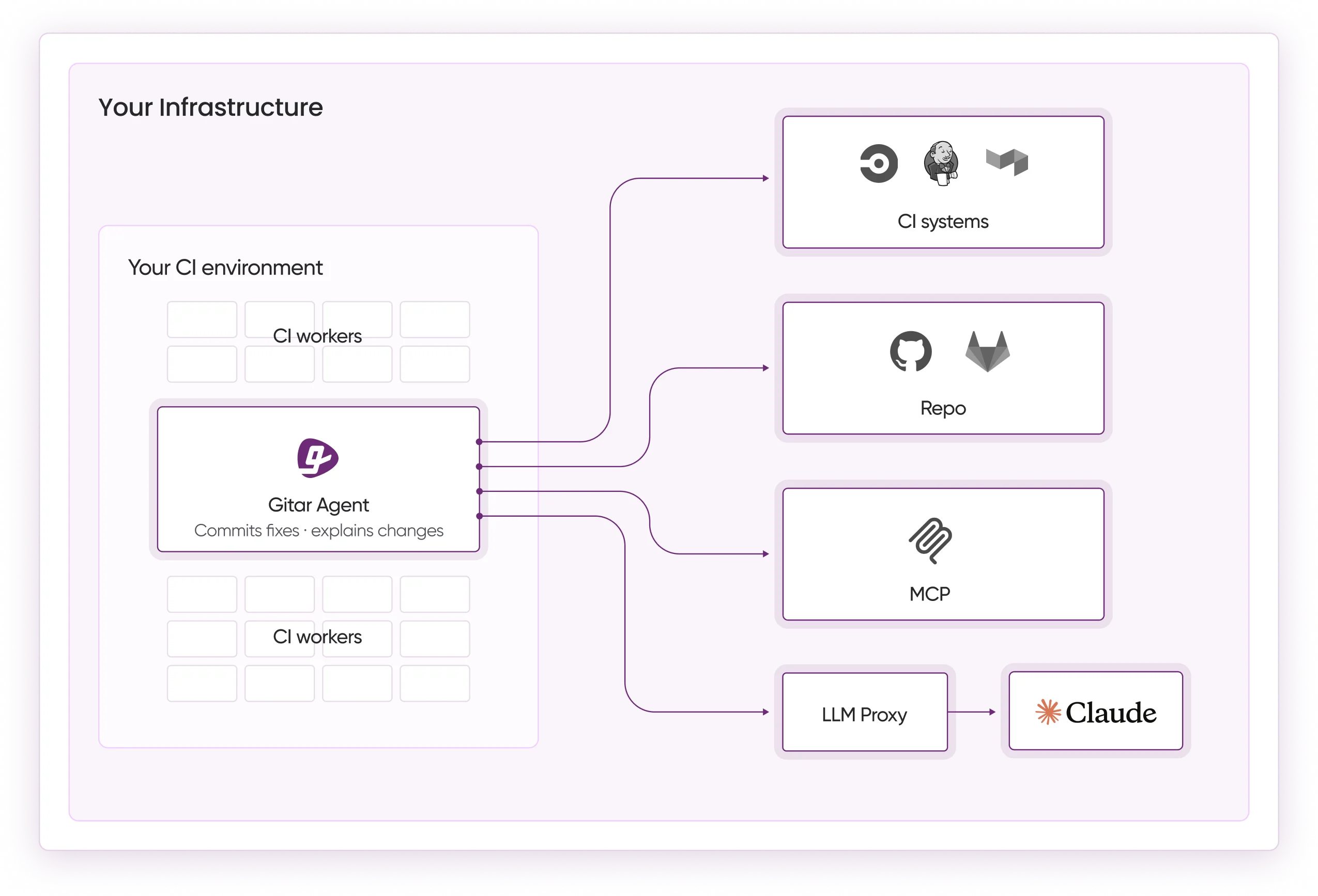
Watch for these common unrelated failure patterns:
- Network timeouts to external services
- Database connection pool exhaustion
- Test environment resource constraints
- Expired security certificates or tokens
Rely on automated integration tests instead of heavy documentation during AI-driven development surges. Automated integration tests provide consistent, frequent validation that scales better than human-maintained guides.
Implementation Phases for Gitar in Your CI
Phase 1: Installation
- Install the GitHub or GitLab app in about 30 seconds
- Skip account setup and credit card steps
- Receive immediate dashboard comments on new PRs
Phase 2: Trust Building
- Start in suggestion mode so your team can review fixes
- Observe automatic CI failure analysis on real PRs
- Use single-comment consolidation to reduce noise
Phase 3: Full Automation
- Enable auto-commit for validated fix types
- Configure natural language workflow rules per team
- Integrate with Jira, Slack, and Linear for full visibility
Frequently Asked Questions About Integration Testing Onboarding
What should integration tests cover?
Integration tests should focus on end-to-end workflows, error handling scenarios, and cross-service communication patterns. This coverage includes API contract validation, data format consistency, authentication flows, and failure recovery mechanisms. Unit tests verify individual components. Integration tests confirm that different parts of your system work together correctly under realistic conditions.
How should teams use top-down and bottom-up integration testing for onboarding?
Teams benefit from a hybrid approach that combines top-down and bottom-up strategies. Start with top-down testing that uses stubs so new hires see main functionality and user workflows early. Add bottom-up testing to validate foundational components and lower-level interactions. This balance gives new developers immediate context while still ensuring thorough coverage of system behavior.
How should teams organize integration tests across multiple services?
Organize tests by business capability instead of technical boundaries. Create parallel test suites that can run independently. Use shared test data management strategies and natural language rules for cross-team coordination. Containerized environments keep tests isolated while still reflecting realistic service interactions.
Is Gitar really free and what is the business model?
Gitar’s core code review functionality is free with no seat limits and no credit card requirements. The auto-fix features include a 14-day free trial. The business model focuses on advanced enterprise features and platform capabilities instead of basic code review. The return on investment from fewer CI failures and faster onboarding usually exceeds the cost of traditional paid alternatives.
How does Gitar handle complex CI environments?
Gitar handles complex setups by emulating your full environment, including specific SDK versions, multi-dependency builds, and third-party integrations. The enterprise tier runs agents inside your own CI infrastructure with access to your secrets and caches. This approach ensures that fixes work in your real production environment instead of isolated test scenarios.
Conclusion: Use Gitar to Scale Integration Testing Onboarding
Manual integration testing onboarding cannot keep up with AI-accelerated development workflows. Teams now face CI validation bottlenecks instead of code generation bottlenecks, which creates pressure for automated solutions that guarantee green builds without constant human effort.
Gitar removes common onboarding hurdles by fixing CI failures automatically, applying review feedback, and powering intelligent workflow automation. Competitors charge premium prices for suggestion engines that still require manual work. Gitar delivers complete automation for free at the code review layer.