
Key Takeaways
- Traditional error notifications often create interruptions, context switching, and alert fatigue, which reduce developer focus and slow delivery.
- Autonomous CI fixes turn many failures into background tasks by diagnosing issues, proposing changes, and validating results in the existing pipeline.
- Reliable automation depends on replicating real CI environments, including language versions, dependencies, and security or quality tooling.
- Configurable automation levels help teams adopt autonomous fixing safely, with clear controls for suggestions, commits, and rollbacks.
- Teams can use Gitar to reduce CI-related disruptions and keep developers in flow by enabling autonomous fixes in their existing workflows: Get started with Gitar.
The Hidden Costs: Why Traditional Error Notifications Create More Disruptions Than They Solve
Traditional error notification systems are passive. When a CI pipeline fails, teams receive an alert, and the real work starts only after the notification arrives. Developers can spend up to 30% of their time dealing with CI and code review issues, which turns alerts into a major productivity drain.
Context switching is a core hidden cost. When a failure appears, developers pause their current work, load error logs into memory, reason about the issue, and then implement and verify a fix. A short technical issue can expand into a long interruption, especially when it breaks a deep work session or requires several rounds of trial and error. Recurring pipeline failures compound this impact and keep teams in a reactive mode.
Alert fatigue adds another layer of disruption. Teams may receive notifications for linting problems, flaky or failing tests, dependency issues, and build errors. Each one demands the same manual pattern of investigation and fixing. Over time, notifications start to feel like noise instead of actionable information, and important issues may wait longer before anyone addresses them.
The core limitation remains the same. Even detailed, well-tuned alerts still require developers to stop, interpret, fix, and validate each issue. This structure guarantees disruption whenever a CI failure occurs and prevents error notifications from fully supporting uninterrupted, focused work.
The Evolution of Error Notifications: From Alerts to Autonomous Fixes with Gitar
Autonomous CI fixes shift the focus from passive alerts to active remediation. Gitar analyzes CI failures, proposes fixes, and can apply them directly to pull requests, which reduces the need for manual intervention on many common issues.
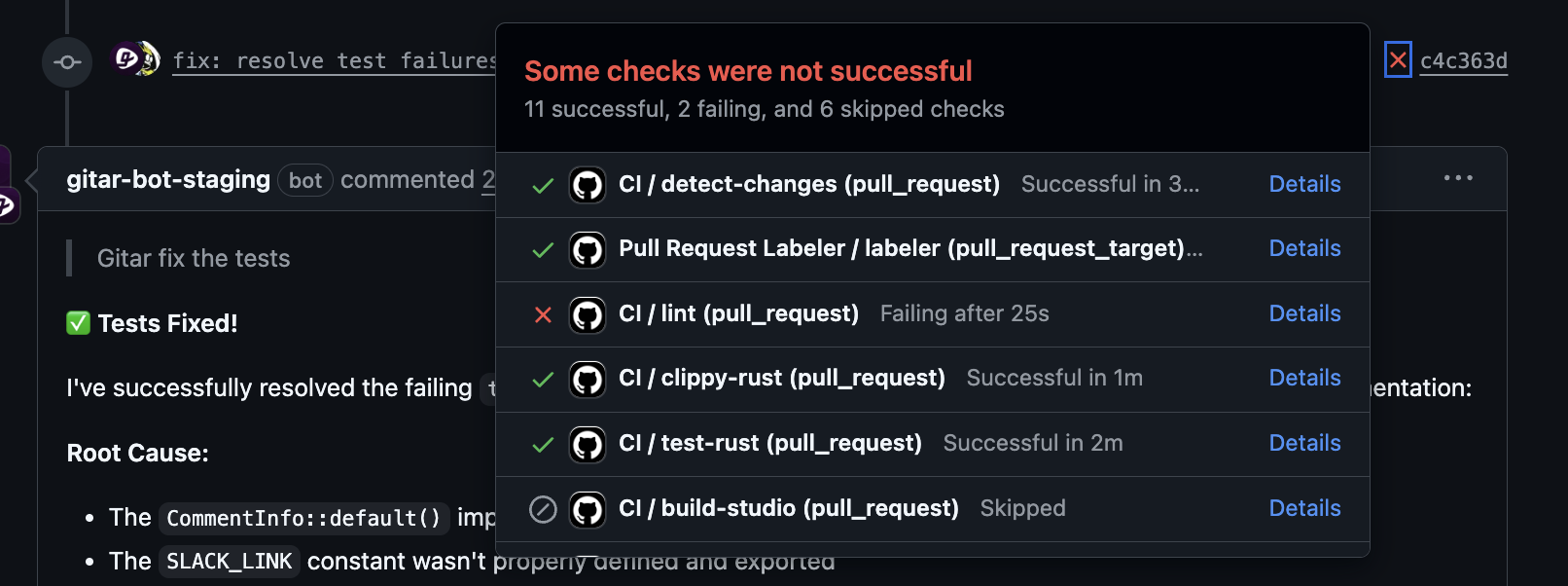
Autonomous CI failure resolution changes the standard notification workflow. When linting errors, test failures, or build issues appear, Gitar inspects logs and context, identifies root causes, generates code changes, and can commit them to the PR branch. Many failures are resolved before developers need to engage, which keeps workflows moving.
Full environment replication improves reliability. Gitar mirrors complex enterprise CI environments, including specific JDK or language versions, multi-SDK projects, tools such as SonarQube and Snyk, and custom build configurations. This context allows proposed fixes to align with real-world constraints instead of generic assumptions.
Real-time integration and cross-platform support enable consistent behavior across tooling. Gitar works with GitHub Actions, GitLab CI, CircleCI, BuildKite, and other common systems, so teams can apply one autonomous fixing model across different pipelines.
Configurable trust models keep teams in control. Conservative mode posts fixes as suggestions that require one-click approval. Aggressive mode allows direct commits, supported by rollback options. Teams can increase automation over time as they gain confidence in the quality of the generated fixes.
Integration into existing developer workflows reduces disruption instead of adding more alerts. Gitar operates in the background inside current PR and CI processes, so developers can keep working on their primary tasks while the system handles many pipeline failures.
Mastering Disruption: Key Pillars of Integrating Autonomous Error Notifications
From Alert to Action: Self-Healing Pipelines That Minimize Disruptions
Self-healing pipelines turn many alerts into automated actions. Gitar responds to common CI failures such as lint violations, unit test issues, and build errors, and then applies and validates fixes in the existing pipeline.
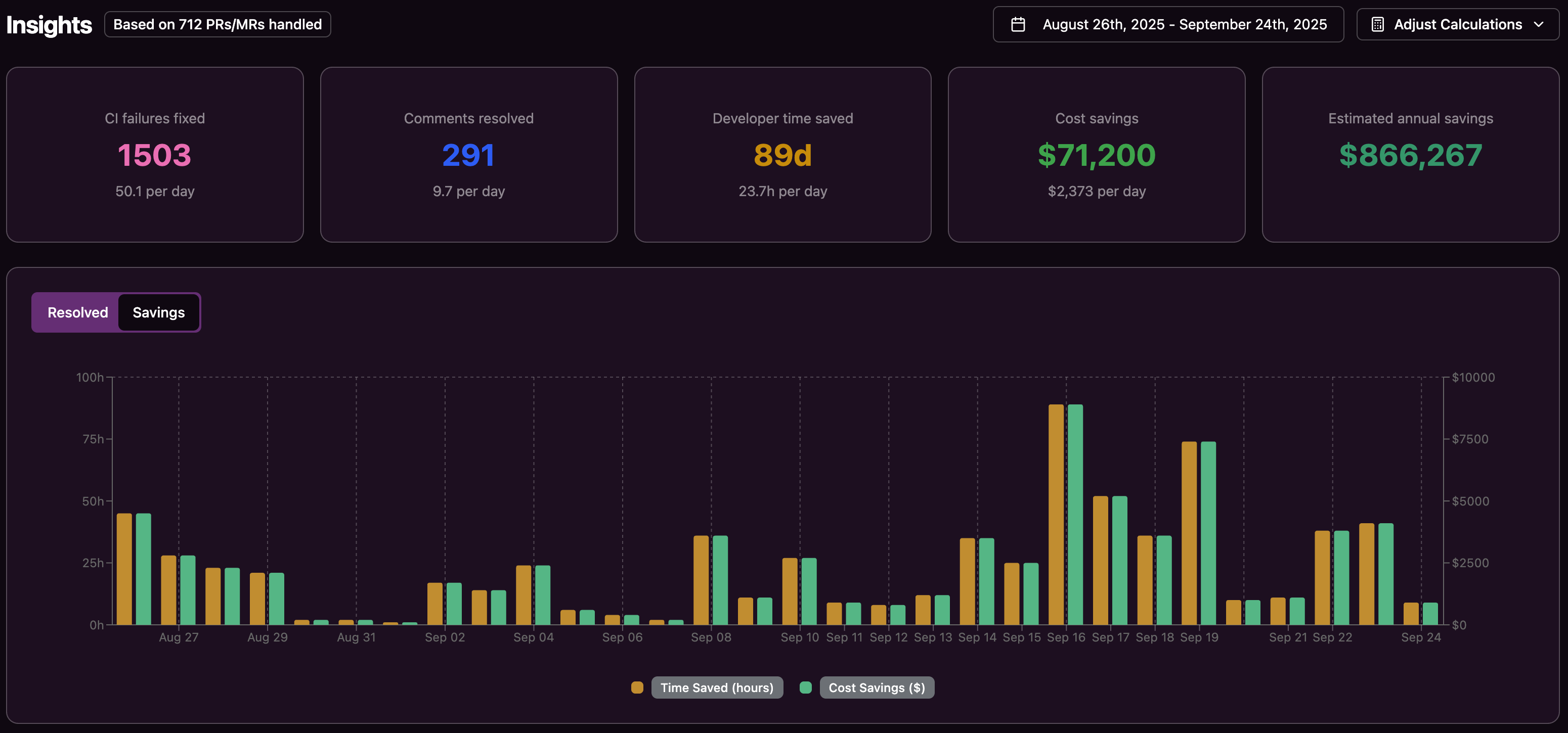
This model keeps many disruptions out of the developer’s immediate workflow. CI and CD pipeline failures contribute to project delays for a large share of companies, and faster automated resolution helps limit those delays. Teams spend more time on feature work and less time on firefighting CI issues.
Context is Essential: Replicating Enterprise Environments for Reliable Fixes
Reliable automation depends on real context. Gitar replicates enterprise CI environments, including language versions, build tools, dependency trees, security scanners, and quality gates. This approach increases the chance that fixes will compile, pass tests, and satisfy policy checks on the first attempt.
Gitar evaluates the full build context, from dependency management to test frameworks and deployment steps. Fixes are generated with awareness of that environment, which reduces the risk of partial or fragile solutions that need repeated manual cleanup.
Bridging Tooling Gaps: Unified Automation Across VCS and CI Platforms
Many teams work across multiple repositories, version control systems, and CI platforms. Gitar supports GitHub, GitLab, GitHub Actions, CircleCI, BuildKite, and similar tools, so teams can apply one autonomous error-handling approach across their ecosystem.
This consistency reduces fragmentation in how errors are reported and resolved. Instead of managing different rules and behaviors for each tool, teams gain a unified way to handle many failures automatically.
Building Trust: Configurable Automation That Respects Team Control
Adopting autonomous fixes works best when teams can adjust the level of automation. Gitar enables this through modes that range from suggestions only to fully automated commits, always with rollback paths.
Teams can begin with conservative settings, review suggested changes, and confirm that the fixes match their standards. Over time, teams can expand automation for common, low-risk issues while keeping manual review for sensitive areas or high-impact changes.
Reclaiming Developer Flow: Reducing Context Switching and Preserving Focus
Developer flow is a key resource. Each manual response to a CI notification interrupts that flow and introduces mental overhead. Gitar handles many failures in the background, which reduces the number of times developers must stop active work to debug pipelines.
This protection of focus supports more consistent delivery and helps reduce frustration from recurring, low-value interruptions. Teams can spend more time on design, architecture, and feature development, and less time repeating the same CI fixes.
Conclusion: Use Autonomous Fixes to Make Error Notifications Less Disruptive
Moving from passive error notifications to autonomous CI fixes changes how teams experience failures. Traditional systems rely on manual work for every issue, which turns pipelines into a recurring source of interruptions and delays.
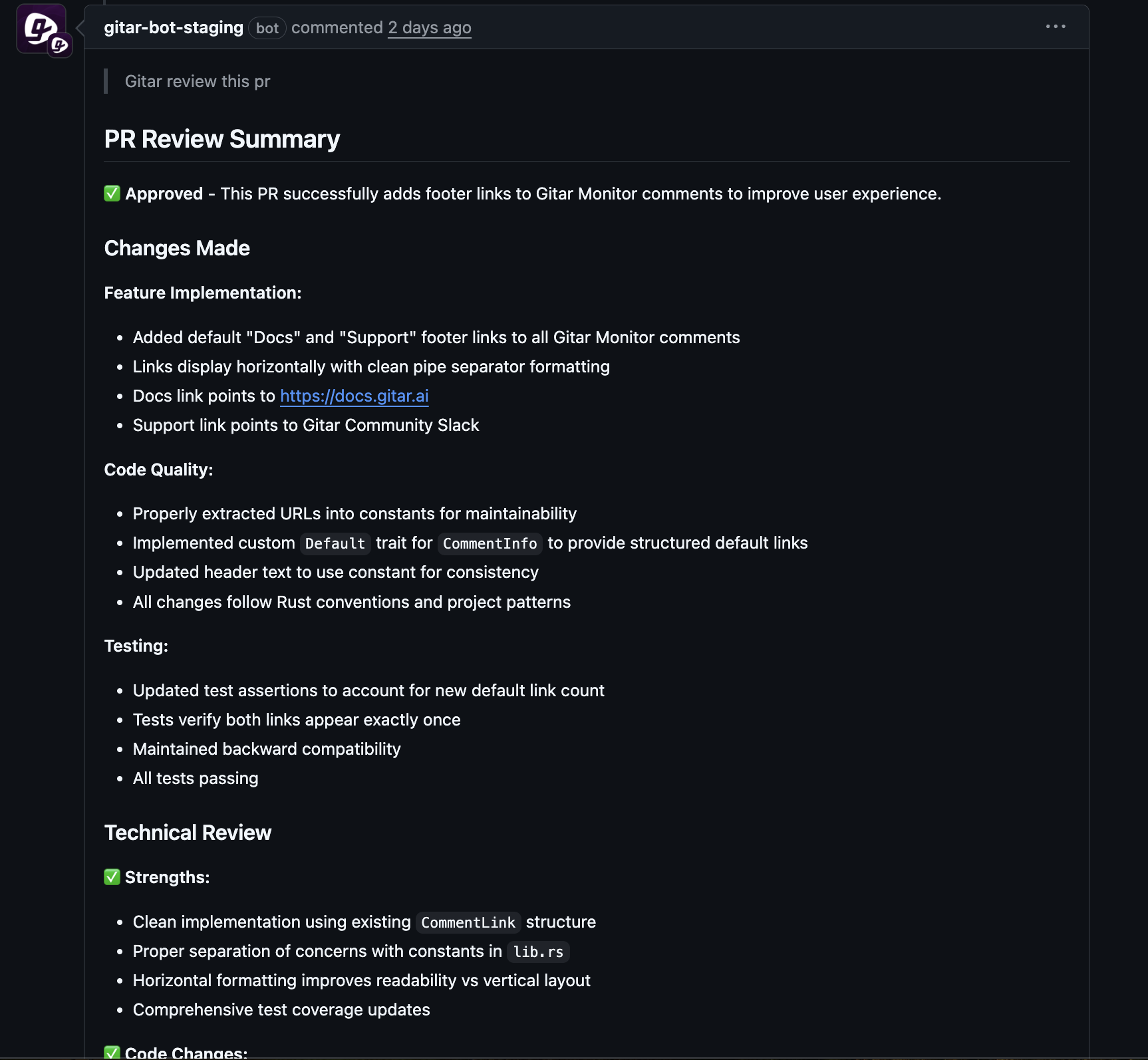
Gitar addresses this by analyzing failures, suggesting or applying code changes, and validating fixes in realistic CI environments. This approach reduces context switching, repetitive debugging, and time spent chasing the same classes of errors.
Teams that adopt autonomous CI fixes can shorten feedback loops, limit operational overhead, and maintain steadier development velocity as systems grow more complex. Developers gain more uninterrupted time for high-value work, while pipelines remain healthy and responsive.
Frequently Asked Questions (FAQ) About Integrating Robust Error Notifications
How does Gitar handle complex CI environments with unique dependencies to minimize disruptions?
Gitar supports complex enterprise CI environments by replicating full configurations, including specific JDK or language versions, multi-SDK setups, and integrations such as SonarQube and Snyk. This level of detail allows Gitar to propose fixes that respect existing workflows and policies, which helps resolve issues without introducing new instability.
How is Gitar different from AI code reviewers when the goal is to minimize disruptions?
AI code reviewers typically provide comments or suggestions that still require manual application and validation. Gitar functions as an autonomous fixing engine that can apply changes, run the full CI workflow, and confirm that builds pass. This reduces the need for developers to stop and perform the same mechanical tasks for each failure.
How can teams trust automated fixes while keeping disruptions low?
Gitar uses a configurable trust model. Teams can start in conservative mode, where Gitar offers suggested fixes that require explicit approval. After verifying the accuracy of these suggestions, teams can expand automation to allow direct commits with rollback options. This staged approach gives teams control over risk while still gaining the benefits of reduced manual effort.