
Failing CI builds and drawn-out code review cycles often slow down software development teams, eating into time that could be spent on creating value. This article explains how AI integration in CI/CD pipelines can solve these issues by automating fixes and speeding up the merge process. With tools like Gitar, developers can streamline workflows, reduce interruptions, and focus on meaningful work.
Why Traditional CI/CD Pipelines Hinder Developer Speed
The cycle of submitting a pull request, only to face build failures or style errors, wastes hours of developer time. After pushing code, a failed build from a missing dependency or a flaky test forces you to dig through logs, switch back to your local setup, make a small fix, and wait for the pipeline to rerun. This process disrupts focus and turns quick fixes into long delays.
Context switching adds to the problem. When a CI failure or review comment pulls you away from your current task, regaining focus takes far longer than the fix itself. A 30-minute issue can easily cost an hour of productive time due to the mental shift required.
These inefficiencies have a real business impact. Developers may spend up to 30% of their time on CI issues and code reviews, costing a team of 20 around $1 million yearly in lost productivity. Delays ripple out, slowing market delivery and increasing costs.
CI/CD pipeline failures often stem from misconfigured infrastructure, unreliable test setups, or poor automation coverage. When these occur, developers must manually troubleshoot and fix them, further breaking their workflow and slowing team progress.
For 60% of companies, CI failures are a key reason for project delays, stretching the time from commit to merge. This not only frustrates developers but also risks customer trust through inconsistent releases.
As tools like GitHub Copilot speed up code creation, the bottleneck shifts to validation and merging. More code means more pull requests, tests, and potential failures. This growing challenge calls for AI solutions focused on the post-commit stage to ensure quality and efficiency.
How AI Fixes Can Streamline Your CI/CD Process
Gitar tackles the frustration of failing CI builds and slow review cycles with an autonomous AI agent. When a pull request receives feedback or a pipeline fails, Gitar steps in to analyze the issue, generate a fix, and update the request automatically. This creates a hands-off, self-healing CI experience that keeps developers focused on their primary tasks.
Here’s what makes Gitar effective:
- Complete fix automation: Applies and tests fixes across full CI workflows to ensure builds pass.
- Environment matching: Replicates complex setups, including specific JDK versions and dependencies, for accurate solutions.
- Review feedback handling: Responds to human comments automatically, reducing delays across time zones.
- Flexible trust settings: Offers a cautious mode for reviewed suggestions or a faster mode for direct commits with rollback options.
- Wide compatibility: Works with GitHub Actions, GitLab CI, CircleCI, BuildKite, and more.
Install Gitar today to fix broken builds automatically and deliver quality software faster.

How Gitar Turns CI/CD into a Self-Healing Workflow
From Failure to Fix Without Developer Input
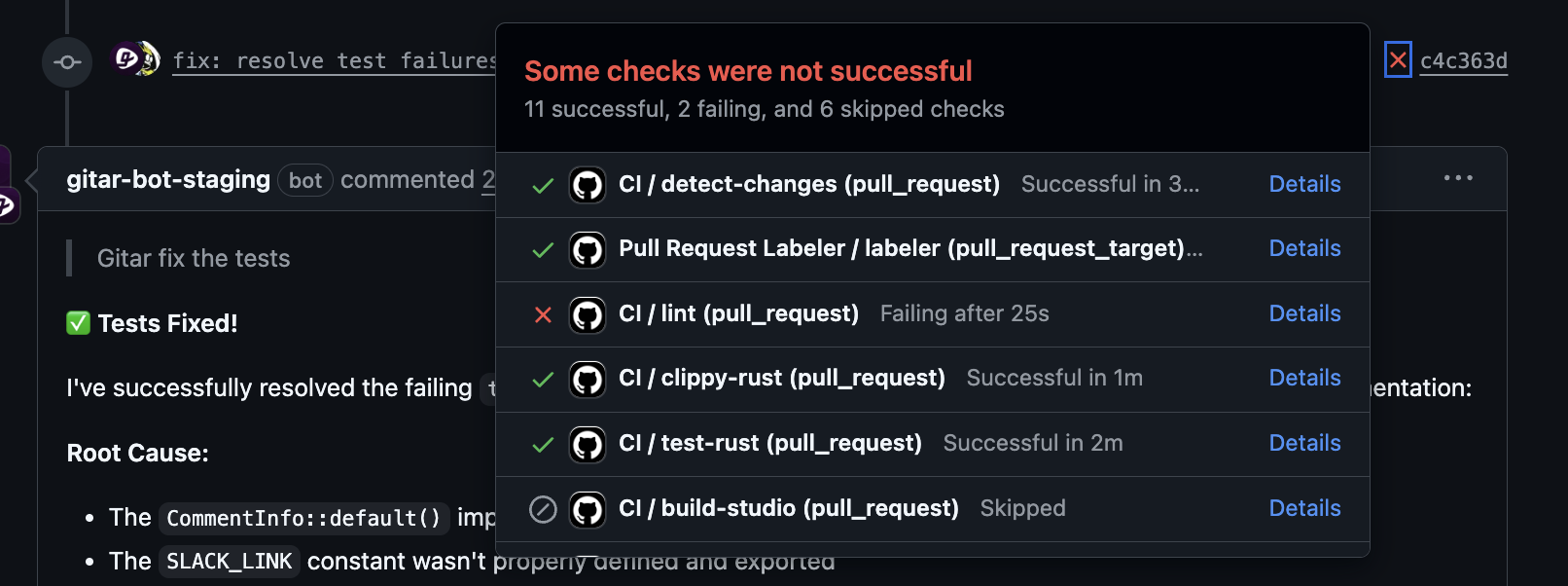
Normally, resolving a CI failure involves detecting the issue, notifying a developer, investigating logs, applying a fix, and rerunning the pipeline. This can take hours and disrupt multiple team members. Gitar changes this by handling resolutions on its own.
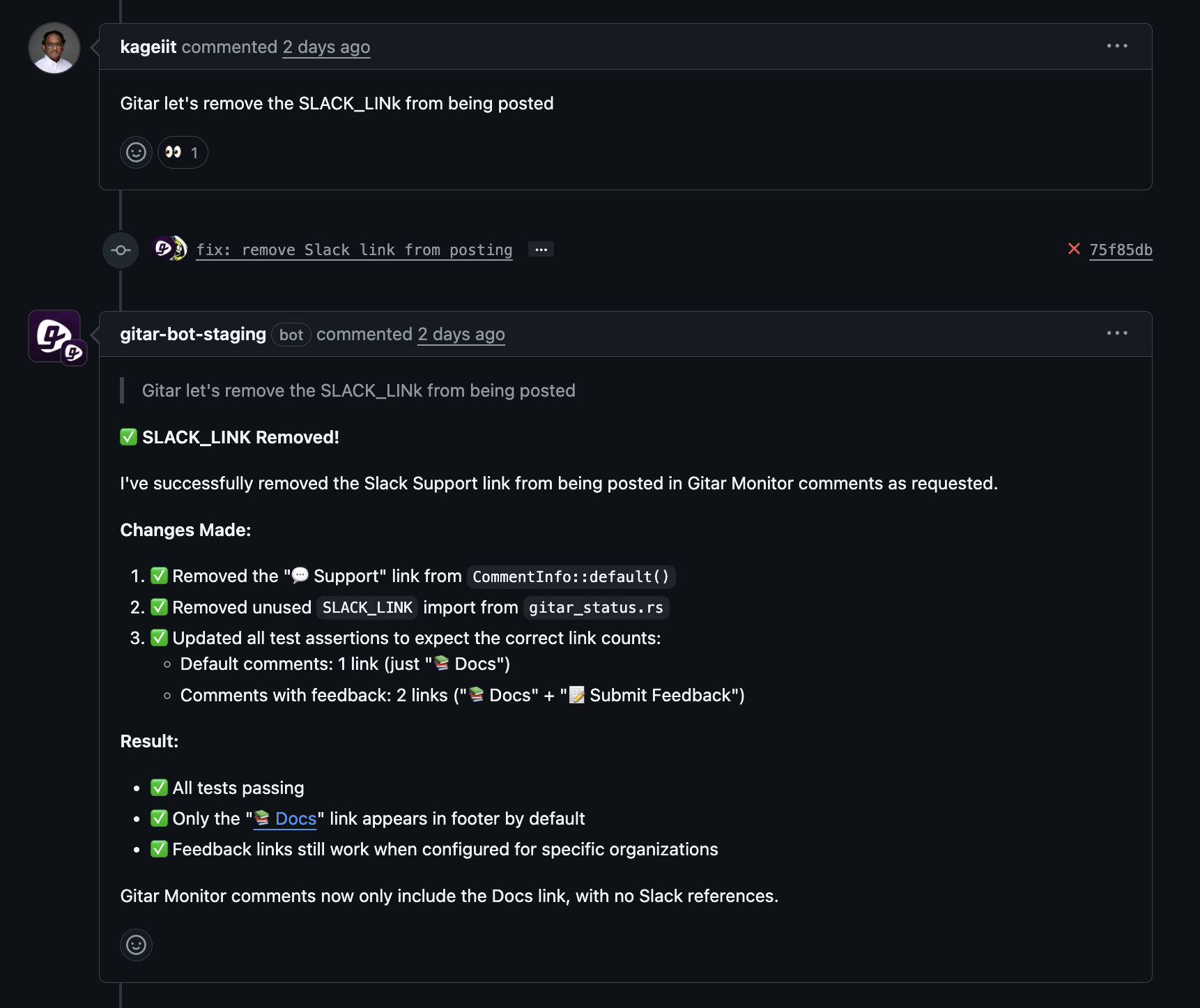
Generative AI can analyze logs, pinpoint failure causes, and apply fixes while learning from past issues for better results over time. Gitar uses this to assess CI failures instantly, identify the root cause, and commit a tailored fix.
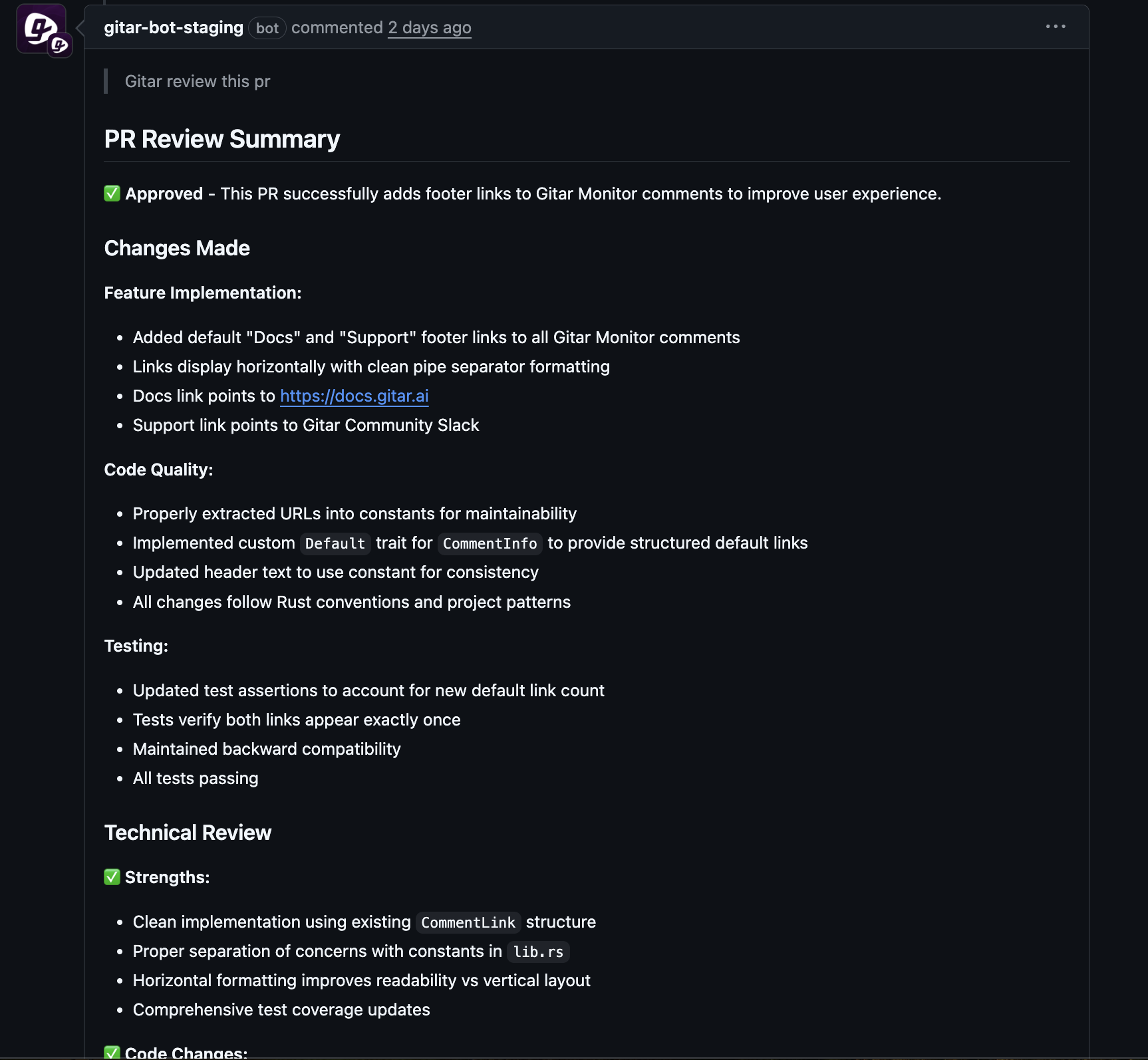
Whether it’s a lint error, a failed test, or a build script issue, Gitar reviews the logs, understands the problem in the context of your setup, and applies the right change directly to the pull request branch. This automation covers many common failure types, saving time and effort.
Keeping Developers Focused by Removing Interruptions
Gitar’s biggest value lies in preventing context switching. Instead of pulling developers away from their work to fix a CI issue, Gitar resolves it in the background. Often, developers see a failure fixed before they even notice it happened, preserving their focus.
Maintaining this focus is vital for productivity. The mental cost of switching tasks can turn a short fix into a major time loss. By handling these interruptions, Gitar helps developers stay in a flow state, leading to better code and innovative ideas.
Speeding Up Pull Request Merges for Distributed Teams
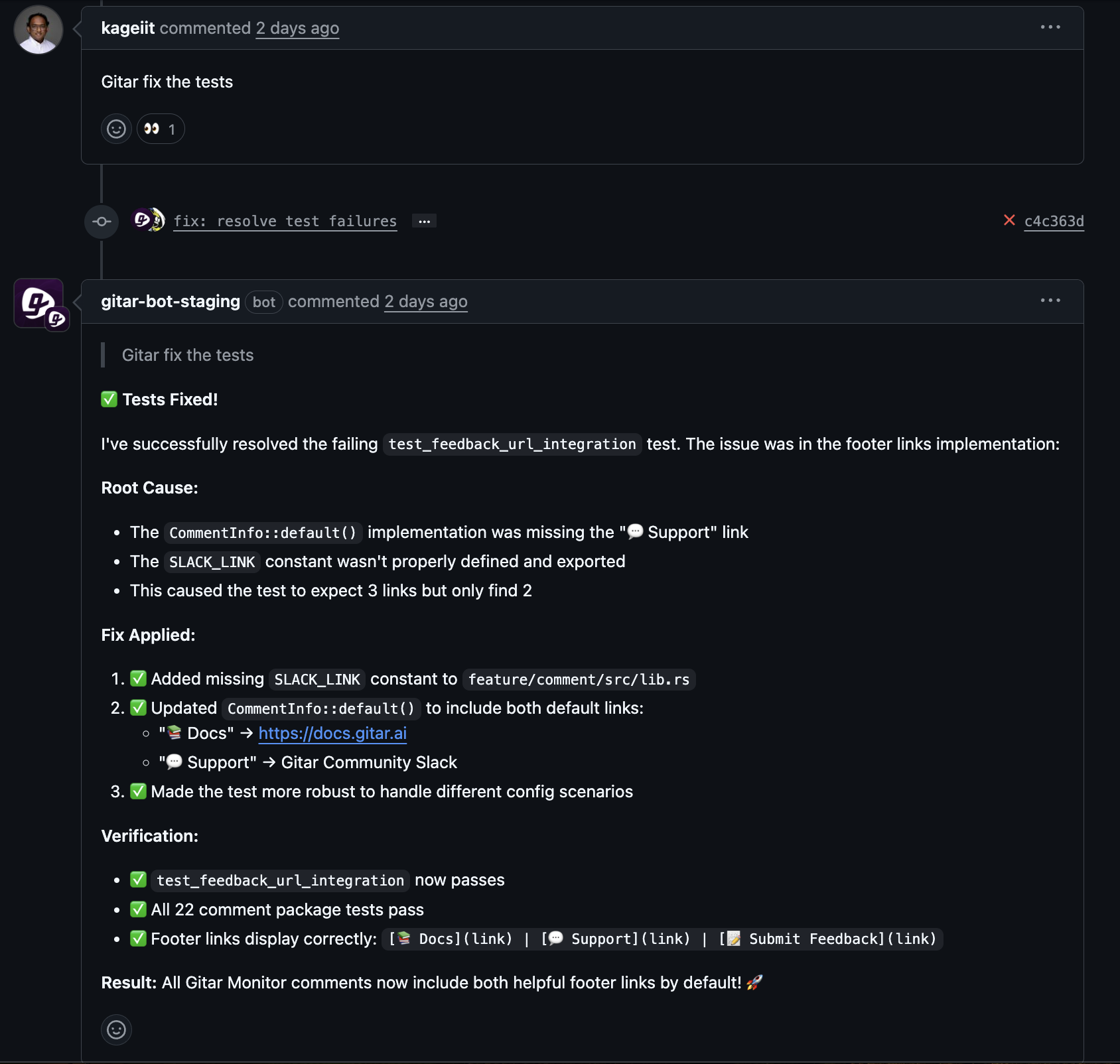
Code reviews can drag on, especially for teams across time zones. A simple exchange between developers in different regions can stretch over days. Gitar solves this by acting on feedback independently.
If a reviewer leaves a comment, Gitar can apply the requested changes, commit them with clear notes, and prepare the pull request for final approval. This cuts out delays, ensuring faster merges and better team efficiency.
Handling Complexity in Enterprise Environments
Enterprise CI setups often involve intricate dependencies and integrations that generic AI tools struggle with. Gitar stands out by fully replicating these environments for precise fixes.
Standardizing setups with infrastructure as code and strict dependency versions can prevent many CI failures. Gitar goes further by matching exact configurations, ensuring every fix aligns with your specific tools and requirements.
This detailed approach handles multi-language builds, specific SDK versions, and complex dependency chains. Fixes are tested against your actual setup, avoiding the compatibility issues common with less tailored AI tools.
Comparing Gitar to Manual Fixes and Other AI Tools
|
Feature |
Manual CI/CD Fixes |
AI Suggestion Tools |
Gitar (Autonomous AI Agent) |
|
Problem Diagnosis |
Manual, Time-Consuming |
Automated, Limited Context |
Automated, Full Context |
|
Fix Generation |
Manual, Error-Prone |
Suggestions Only |
Automated, Tested Fix |
|
Fix Validation |
Manual, Rerun CI |
Manual, Rerun CI |
Automated, Build Passes |
|
Context Switching |
High |
Moderate |
None |
Install Gitar now to automate fixes and ship better software faster.
Common Questions About AI in CI/CD
What Sets Gitar Apart from Other AI Code Tools?
Gitar functions as a self-healing engine, automatically applying and validating fixes in CI workflows to ensure successful builds. Unlike IDE assistants like GitHub Copilot, which help before commits, Gitar works post-commit on remote failures. This removes the need for manual troubleshooting, setting it apart from tools that still require developer action.
How Does Gitar Build Trust for Automated Fixes?
Gitar offers configurable settings to balance automation and control. In a cautious mode, it suggests fixes for review and approval, ideal for building confidence. Once comfortable, teams can switch to a faster mode where fixes are committed directly with rollback options, ensuring oversight and flexibility.
Can Gitar Manage Complex Enterprise CI/CD Setups?
Yes, Gitar is built for enterprise complexity. It mirrors your environment, including specific dependencies and integrations, to deliver compatible fixes. Supporting platforms like GitHub Actions, GitLab CI, and CircleCI, it handles multi-language builds and intricate setups effectively.
What Productivity Benefits Come from AI in CI/CD?
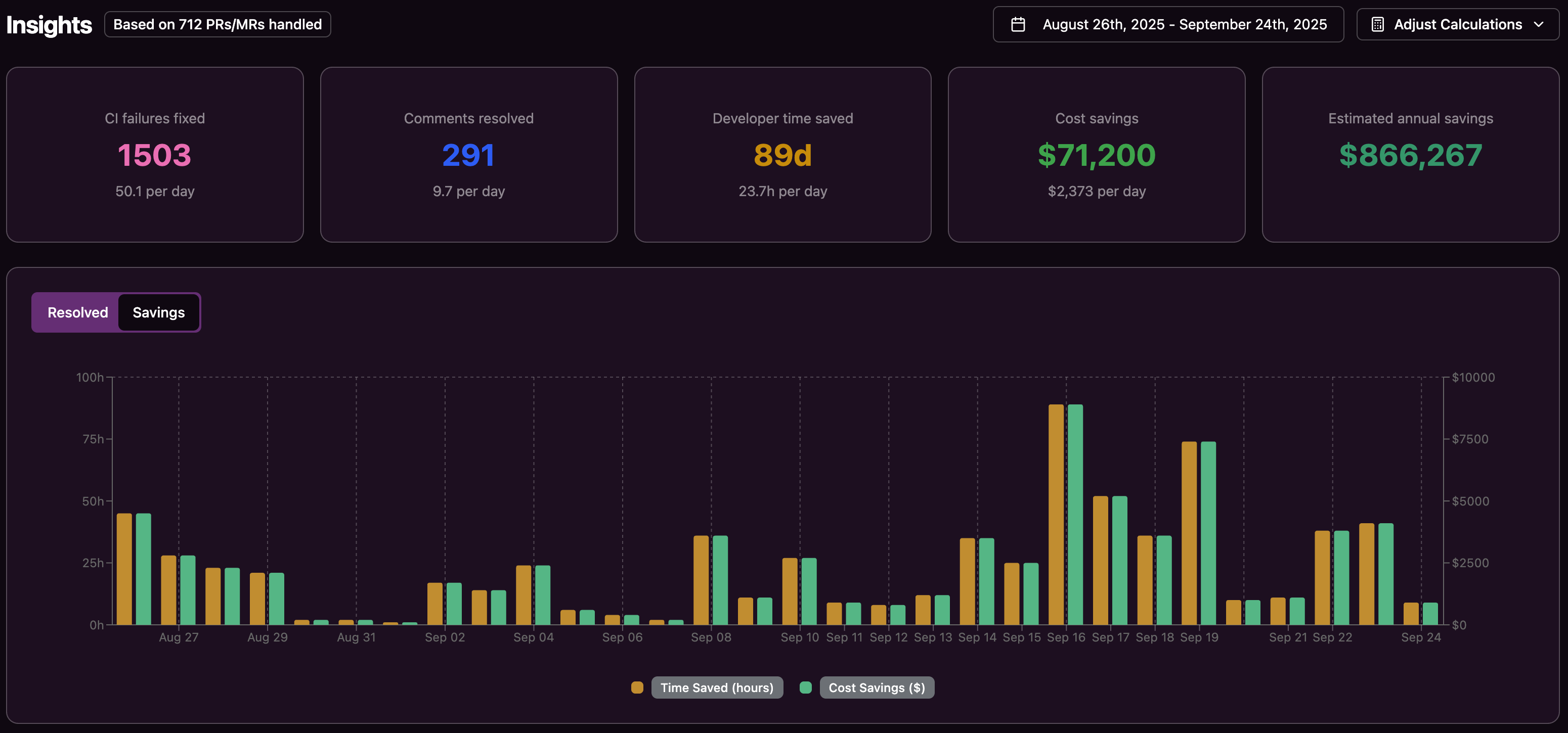
Automating CI/CD tasks saves significant time. Developers often lose an hour daily on failures and reviews, sometimes up to 30% of their workday. For a 20-developer team, Gitar can save around 5,000 hours annually, equating to about $1 million in productivity gains. It also reduces interruptions, boosting focus and satisfaction.
How Does AI Improve CI/CD Reliability?
AI enhances reliability by analyzing patterns to speed up fixes and stabilize pipelines. Gitar focuses on resolving failures as they happen, ensuring consistent delivery through immediate, automated solutions.
Boost Productivity and Speed with AI-Driven CI/CD
Manual CI/CD inefficiencies are unsustainable in today’s fast-paced software world. As AI coding tools increase code output, the validation and merging stages become critical choke points. Autonomous solutions like Gitar address this by automating fixes and reducing friction.
By cutting down time spent on debugging and context switching, Gitar lets teams focus on innovation and feature development. This shift from manual to automated operations lowers costs, speeds up delivery, and improves developer morale.
Teams using autonomous AI in CI/CD see clear gains in speed, quality, and satisfaction. With potential annual savings of $1 million for a 20-developer team, the return on investment is evident.
Ready to turn your CI/CD pipeline into a strength? Install Gitar now to automate fixes and deliver better software faster.