
Software development teams face a costly productivity challenge with manual CI pipeline failures and lengthy code review cycles. For a team of 20 developers, these inefficiencies can lead to a $1 million annual loss in productivity. Autonomous CI pipeline fixing offers a solution by turning this drain into a driver of efficiency. Tools like Gitar provide a clear return on investment through improved developer focus, faster delivery times, and lower operational costs.
Why Manual CI/CD Pipeline Fixes Cost You More Than You Think
How CI Failures Disrupt Developer Focus
CI failures often interrupt a developer’s workflow. Pushing a pull request only to encounter errors like linting issues or failing tests can turn a quick task into hours of debugging. Beyond the time spent fixing issues, these interruptions break the flow state, a critical mental space for solving complex problems.
Switching tasks to address CI issues carries a hidden cost. It often takes 15 to 25 minutes to regain focus after an interruption, so even a short fix can waste significant productive time. This delay compounds when distributed teams face additional lags due to time zone differences, stretching simple reviews into days and increasing frustration.
Over time, these disruptions lead to developer burnout, lower job satisfaction, and higher turnover, adding financial strain to the direct costs of lost productivity.
Discover how Gitar can automate fixes and keep your team focused.
Financial and Competitive Impact of CI Delays
CI/CD inefficiencies hit organizations hard in both direct costs and missed opportunities. Managing test environments and dealing with flaky tests or long run times creates major obstacles, driving up expenses for cloud resources and engineering effort.
Each failed CI build that needs a retry burns through computing power, a cost that multiplies in environments with frequent commits. Beyond this, delays in delivery can hurt market position. A feature held up by CI issues for even a week can give competitors an edge, potentially costing millions in lost revenue or partnerships.
What Is Autonomous CI Pipeline Fixing?
Autonomous CI pipeline fixing shifts the burden of resolving failures from developers to automated systems. These tools monitor pipelines, identify issues, and apply tested fixes without human input, addressing a key gap in workflows where AI-generated code still requires manual validation.
Unlike suggestion-based tools, autonomous systems handle the entire process, from applying fixes to verifying they pass CI checks. This cuts out uncertainty and extra work, giving teams confidence in their builds.
Key advantages include faster team output by reducing context switching, consistent code quality through standardized fixes, and lower infrastructure costs by avoiding repeated failed runs. Engineering leaders see measurable gains in productivity, quicker feature releases, and happier teams with less daily frustration.
How to Measure the ROI of Automating CI Fixes
Understanding Your Current CI/CD Costs
Calculating the return on autonomous CI fixing starts with assessing your existing losses. For a 20-developer team, spending just one hour daily on CI issues at a loaded cost of $200 per hour adds up to $1 million yearly in wasted productivity (20 developers x 1 hour x 250 days x $200).
Direct time loss is only part of the picture. Handling test environments and long execution times adds infrastructure expenses with every failed run. Invisible costs also pile up, like burnout from constant troubleshooting, slower onboarding for new hires, and delayed projects that miss market windows.
Key Savings from Autonomous CI Fixing
Here’s how automation directly cuts costs and boosts efficiency:
- Less Time Wasted: Tools like Gitar resolve CI failures automatically, freeing up hours previously spent on manual fixes for core development work.
- Faster Delivery: Streamlined CI/CD processes shorten the gap between coding and merging, speeding up feature releases, especially for distributed teams.
- Lower Infrastructure Costs: Optimized builds and caching reduce wasted resources, while quicker test execution cuts compute time.
- Better Team Morale: Reducing repetitive debugging tasks lets developers focus on meaningful work, improving satisfaction and retention.
Sample ROI Calculation with Gitar
For a 20-developer team losing 1 hour daily on CI issues, the numbers look like this:
- Total Time Lost: 20 developers x 1 hour x 250 days = 5,000 hours yearly
- Financial Impact: 5,000 hours x $200/hour = $1 million in productivity loss
- Savings with Gitar: At 50% effectiveness, Gitar could recover $500,000 annually while boosting team morale and speed.
See how much you can save with Gitar.
Meet Gitar: Your Solution for Autonomous CI Fixing
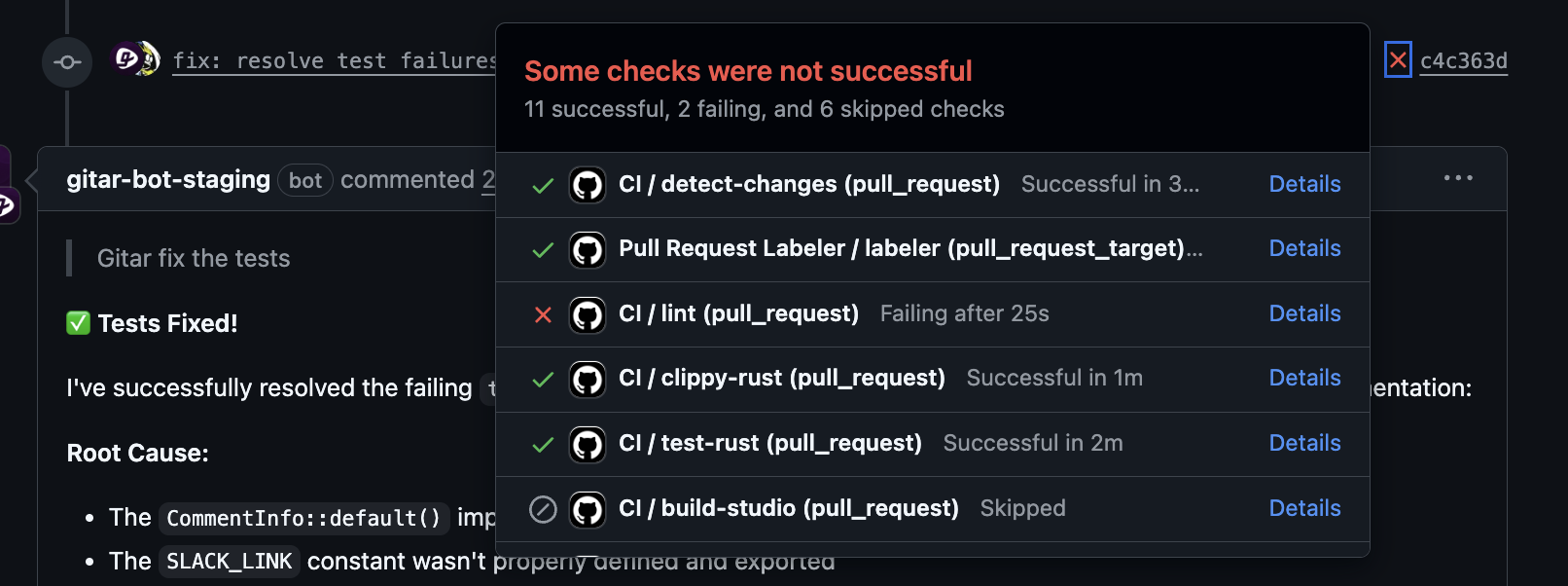
Gitar takes CI pipeline fixing to the next level by autonomously resolving issues without developer input. It analyzes failures, applies fixes, and confirms they pass CI workflows, delivering ready-to-merge builds.

Here’s what sets Gitar apart:
- Complete Automation: Fixes are applied and validated across full CI workflows for reliable results.
- Enterprise-Ready: Replicates complex environments with specific dependencies and third-party tools like SonarQube.
- Customizable Automation: Offers modes from cautious suggestions to full auto-commit with rollback options for flexibility.
- Time Zone Support: Acts on feedback instantly, cutting delays for global teams.
- Broad Compatibility: Integrates with GitHub Actions, GitLab CI, CircleCI, and more for diverse setups.
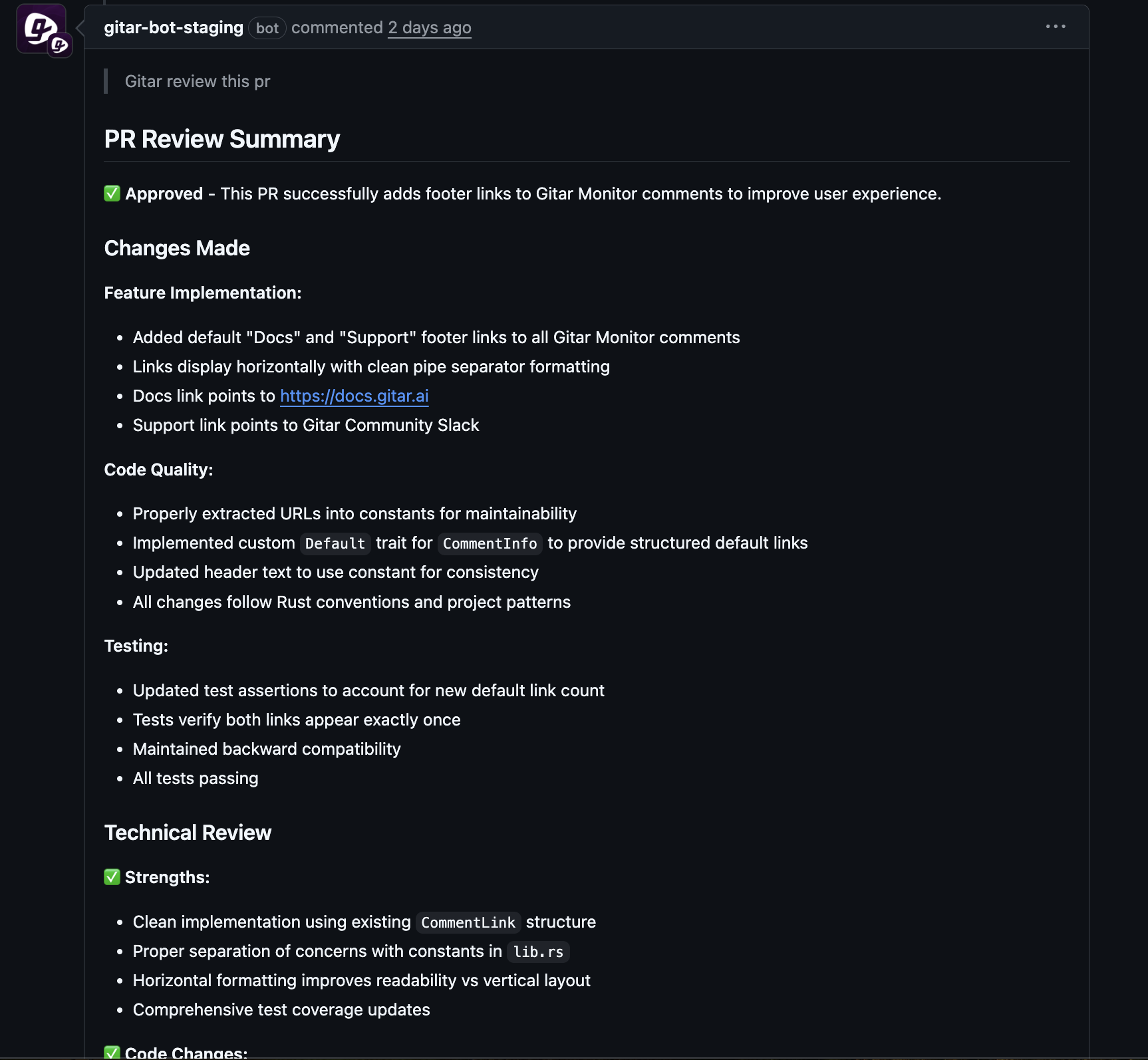
Getting started is simple. Authorize Gitar as a GitHub App, configure settings via a web dashboard, and begin with a suggestion mode to build trust before moving to full automation.
How Gitar Beats Manual Fixes and Other Tools
Gitar vs. Manual Debugging
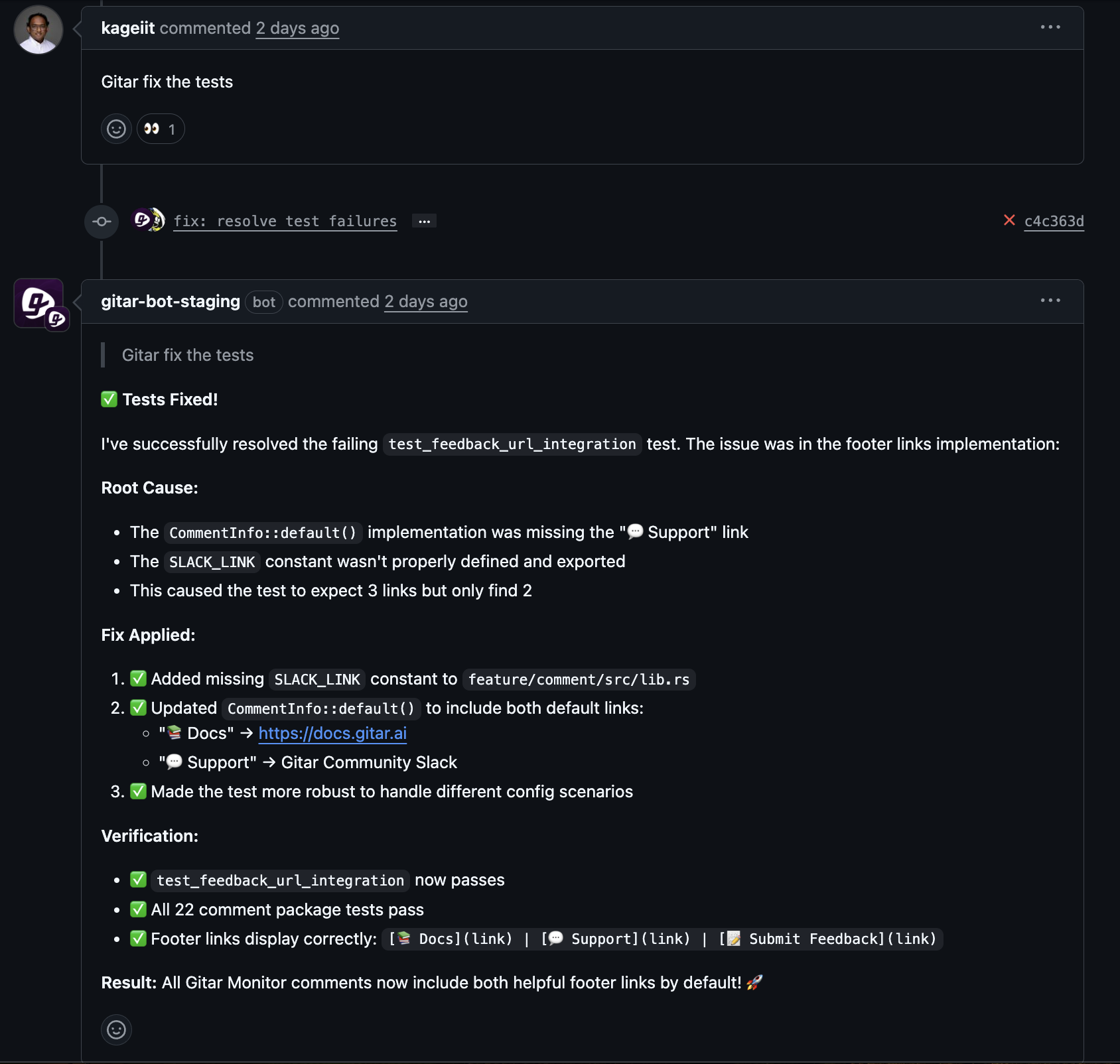
Manually resolving CI failures often takes 30 to 60 minutes per issue, pulling developers away from their work. Gitar automates this process, analyzing errors, applying fixes, and validating them in CI pipelines, so developers stay focused on their primary tasks.
Gitar vs. AI Code Review Tools
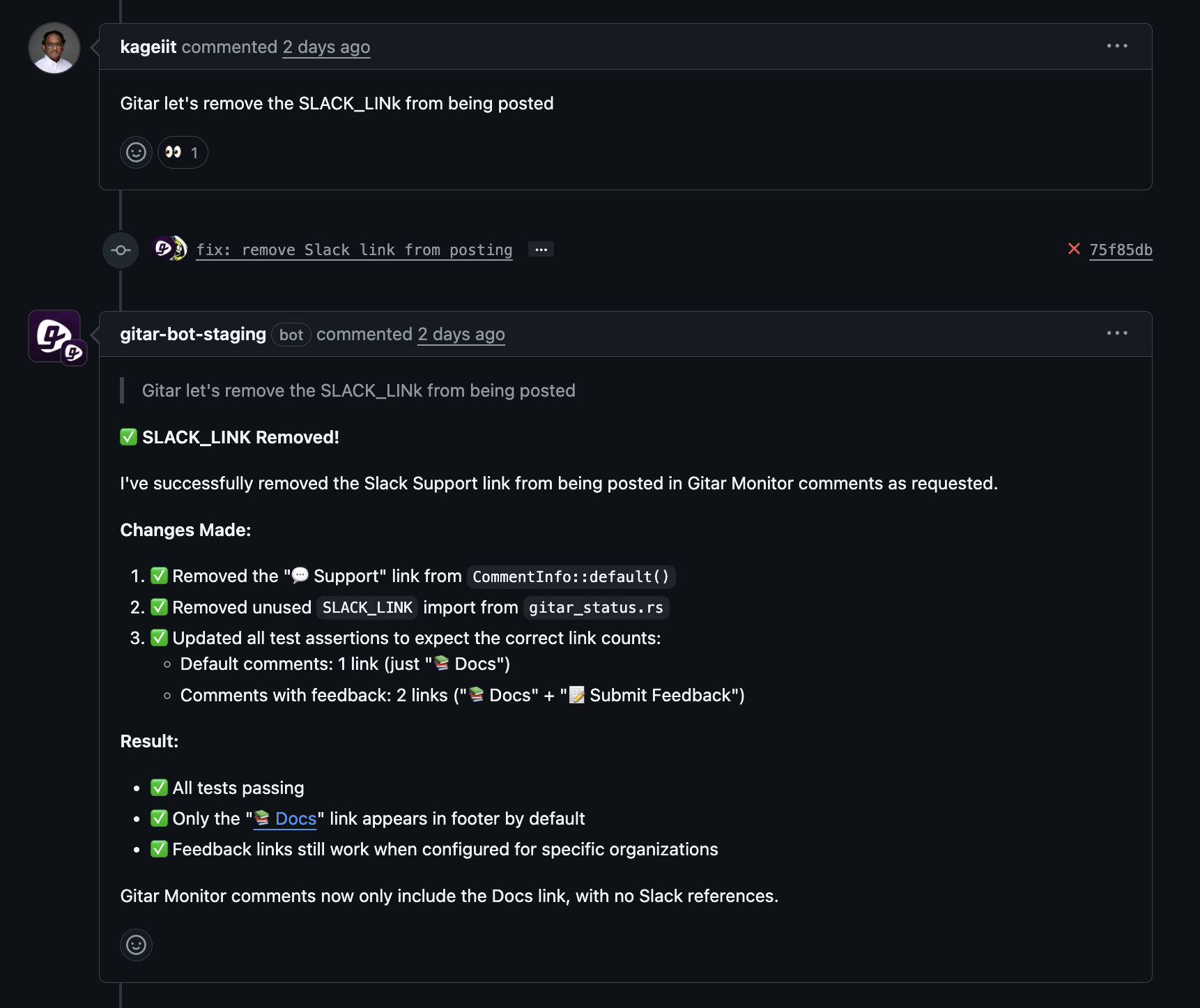
AI code review tools often stop at offering suggestions, leaving developers to implement and test fixes. Gitar goes further by applying changes and ensuring they pass CI checks, reducing the workload compared to tools focused only on recommendations.
Gitar vs. Custom AI Fixers
Custom AI solutions for CI fixing require significant setup and ongoing maintenance. Gitar, by contrast, integrates seamlessly into existing workflows, offering automated fixes without extra engineering effort or custom builds.
Comparison of Features
|
Feature |
Manual Fixes |
AI Review Tools |
Custom AI Fixers |
Gitar |
|
Resolution Type |
Manual by Developer |
Suggestions Only |
On-Demand, Often Manual |
Fully Automated |
|
Validation |
Manual |
None |
Partial or Manual |
Full CI Workflow |
|
Environment Awareness |
Developer-Dependent |
Limited |
Limited |
Full Enterprise Support |
|
Developer Disruption |
High |
Moderate |
Moderate |
Minimal |
Try Gitar today and automate your CI fixes.
Common Questions About ROI with Autonomous CI Fixing
How Soon Can We Expect Returns from Gitar?
Many teams notice immediate benefits, often within hours, as Gitar resolves the first CI failure. Measurable savings in developer time and faster merges typically show up within weeks, especially for teams with frequent pipeline issues.
Can Gitar Handle Our Unique CI Setup?
Gitar is built for complex enterprise systems, supporting specific SDKs, multi-language setups, and tools like SonarQube. Teams with intricate pipelines often see greater returns due to the higher frequency of issues Gitar can address.
What If We’re Concerned About Automated Fixes?
Gitar provides adjustable automation levels. Start with a suggestion mode for review and approval, then scale up to full automation with rollback options as trust builds, balancing control with efficiency.
How Does Gitar Fit Into Our Current Tools?
Gitar connects seamlessly with GitHub, GitLab, CircleCI, and others via standard APIs, requiring little setup. Most teams are up and running in hours, ensuring quick value without disrupting existing workflows.
Does Gitar Scale for Large Teams?
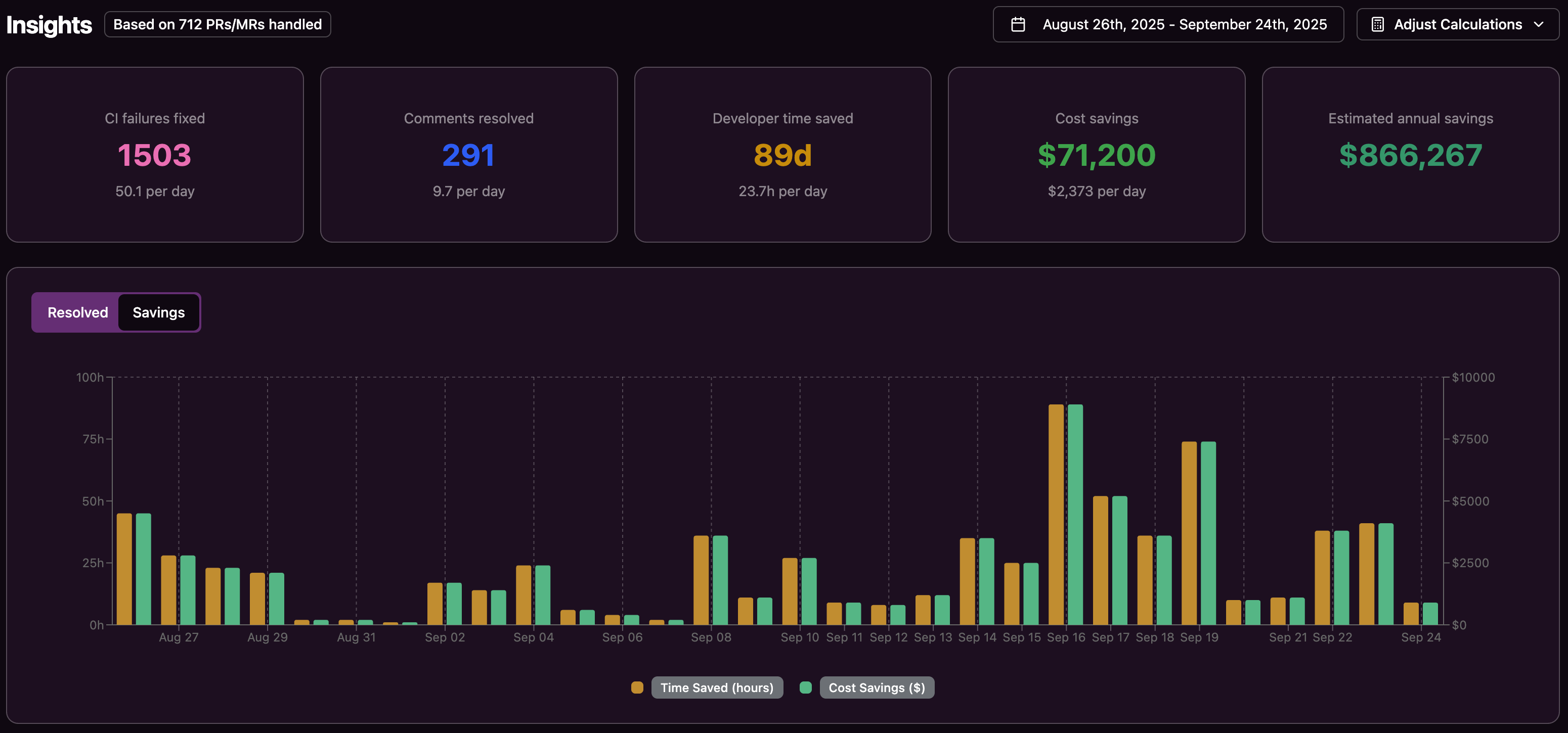
Gitar adapts to organizations of all sizes, from small startups to enterprises with hundreds of developers. Larger teams often see bigger savings due to amplified productivity gains, with dashboards to track metrics like time saved.
Why Autonomous CI Fixing Is a Smart Investment
Autonomous CI pipeline fixing offers substantial returns for development teams. A 20-developer team losing $1 million yearly to inefficiencies could recover half that amount with a 50% improvement from tools like Gitar, alongside better morale and work quality.
Beyond savings, clearer workflows and post-merge efficiency provide a competitive edge. Removing CI bottlenecks frees up resources for innovation and growth.
Adopting autonomous solutions like Gitar positions teams to scale effectively and maintain fast delivery in a competitive market. The upfront cost delivers ongoing value by turning inefficiencies into strengths.
Ready to boost your CI/CD efficiency? Install Gitar now to automate fixes and start seeing savings.