
Key Takeaways
- Unreliable CI/CD pipelines drain developer time, delay releases, and create hidden costs that can reach millions of dollars per year for mid-sized teams.
- Autonomous self-healing CI pipelines detect failures, diagnose root causes, and apply validated fixes, which reduces firefighting and protects developer focus.
- Organizations that adopt self-healing CI improve time-to-merge, reduce interruptions, and gain more value from AI-assisted coding tools.
- Gitar provides an autonomous CI healing engine with full environment replication, configurable trust levels, and analytics that support enterprise-scale adoption.
- Teams can start recovering lost engineering time today by installing Gitar at https://gitar.ai/fix and enabling autonomous CI fixing on their repositories.
The Critical Need for Autonomous Self-Healing CI in Modern Software Delivery
The High Cost of Traditional CI/CD Failures and Developer Toil
Traditional CI/CD pipelines often fail for predictable reasons, including build failures, test failures, environment drift, dependency issues, resource constraints, and configuration errors. Each of these failure modes interrupts developer flow and slows team velocity.
Many issues stem from how pipelines are set up and maintained. Weak CI/CD practices, limited training, flawed tests, and confusion between continuous delivery and continuous deployment create systemic inefficiencies. Environment mismatches between laptops and CI infrastructure keep the “it works on my machine” problem alive and force engineers into lengthy debugging cycles. Debugging and pipeline firefighting can consume up to 30% of developer time and contribute to delayed projects for 60% of companies, which can translate into roughly $1 million in annual productivity loss for a 20-developer team.
What Is an Autonomous Self-Healing CI Pipeline?
An autonomous self-healing CI pipeline automatically detects failures, identifies likely root causes, generates code changes, and validates fixes across the full CI workflow without manual intervention. The goal is a resilient, self-correcting system that keeps builds green and reduces the need for reactive debugging.
Effective self-healing requires three core capabilities: intelligent failure analysis, environment-aware code generation, and comprehensive validation. These capabilities allow the system to address issues such as flaky tests caused by race conditions, resource contention, external dependencies, ordering problems, and incomplete cleanup. Unlike suggestion-only tools, autonomous systems both propose and implement fixes, which removes the context switching that typically slows developers.
Strategic Benefits: Why Self-Healing CI Matters for Engineering Leaders
Boost Developer Productivity and Morale
Self-healing CI reduces repetitive toil so developers can focus on design, feature work, and higher-value problem solving. Engineers spend less time reading log files, re-running tests, and manually implementing small fixes. This shift improves morale and helps reduce burnout linked to constant interruptions and build failures.
The financial impact scales quickly. If a 20-developer team loses about $1 million per year to CI and review inefficiencies, reclaiming even half of that time creates meaningful ROI while improving day-to-day developer experience.
Accelerate Time-to-Market and Improve Reliability
AI-assisted coding tools such as GitHub Copilot and Cursor increase the volume of new code, but validation and merging often become new bottlenecks. Autonomous self-healing CI helps teams keep pace by clearing routine failures quickly, shortening time-to-merge, and reducing the risk that higher code volume leads to unstable pipelines.
Teams that maintain reliable, fast CI gain more value from AI-generated code and ship changes with greater confidence.
Gitar: A Practical Path to Self-Healing CI
Core Capabilities for Autonomous Fixing
Gitar functions as an autonomous AI agent focused on CI pipeline healing. It moves beyond highlighting problems and takes responsibility for applying and validating fixes inside your real environment.
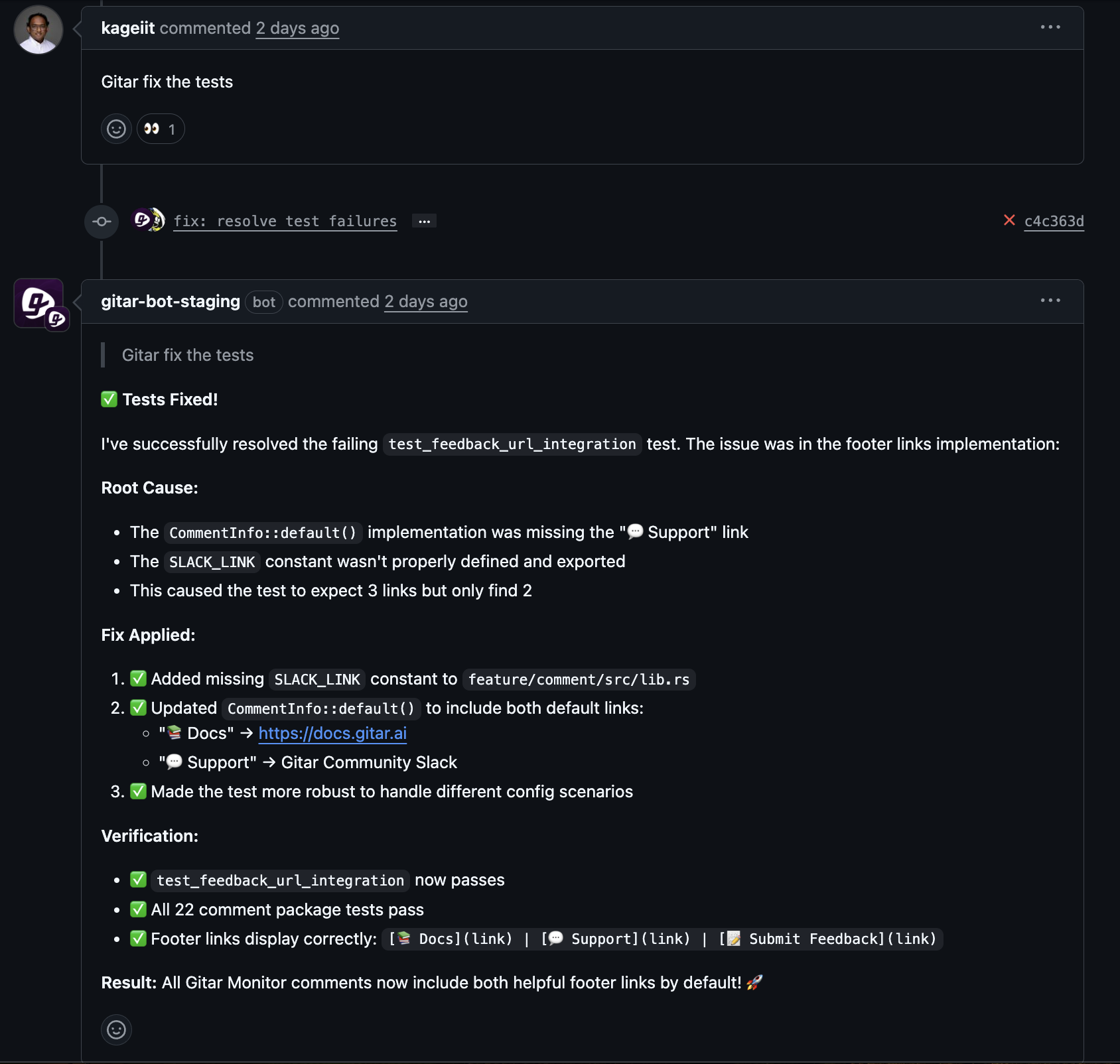
End-to-end fixing: When checks such as npm run lint, pytest, or build jobs fail, Gitar inspects logs, identifies likely root causes, generates targeted code changes, and commits fixes back to the pull request branch. This covers lint issues, test failures, and many build and dependency problems.
Full environment replication: Enterprise CI often depends on specific JDK versions, multiple SDKs, and tools such as SonarQube or Snyk. Gitar replicates these workflows so fixes are generated with accurate context instead of generic assumptions.
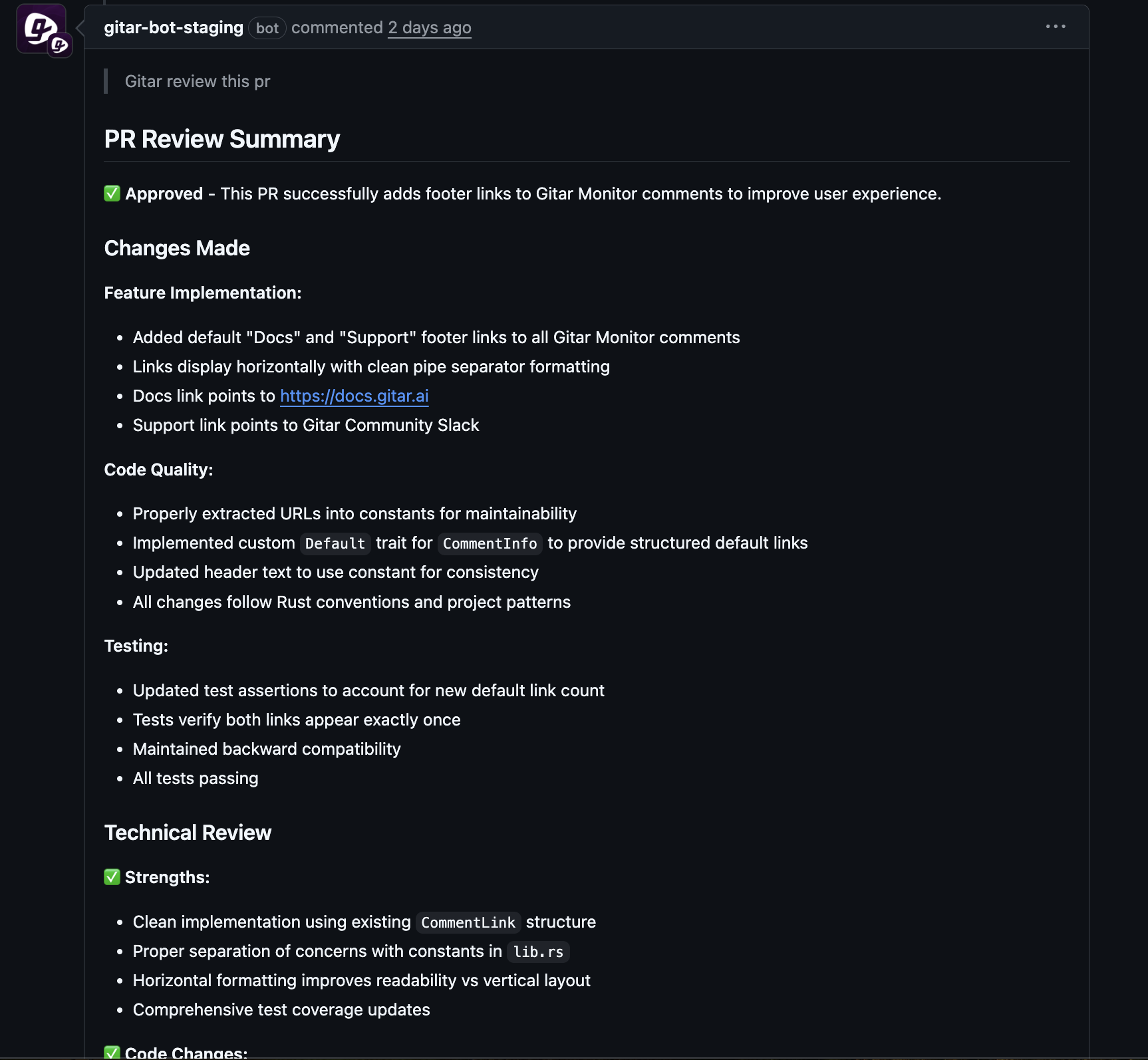
Configurable trust model: Teams can start in conservative “suggestion” mode, where Gitar proposes patches for human review and one-click approval. As confidence grows, they can move selected repositories or check types into more aggressive auto-commit mode, while retaining rollback controls.
Intelligent code review support: Reviewers can leave implementation requests that Gitar executes, which reduces back-and-forth and helps distributed teams avoid time zone delays.
The “Aha” Moment for Teams
Teams usually feel the impact when they see a failing build fixed and committed before anyone has time to open the logs. Instead of dropping current work to chase CI issues, developers stay in flow while Gitar handles routine failures in the background.
Request a Gitar demo to see autonomous CI healing running on real pull requests.
Implementing Self-Healing CI with Gitar
From First Install to Confident Automation
Adoption begins with a quick readiness check: which pipelines fail most often, how much time engineers spend fixing them, and how open the team is to automation. Installation uses a GitHub App on selected repositories plus a web dashboard to define initial conservative settings.
Gitar then connects to existing CI systems such as GitHub Actions, CircleCI, BuildKite, or GitLab CI. Teams typically start with suggestion-only mode on a few repositories and focus on low-risk fixes, building trust by reviewing and merging Gitar’s patches.
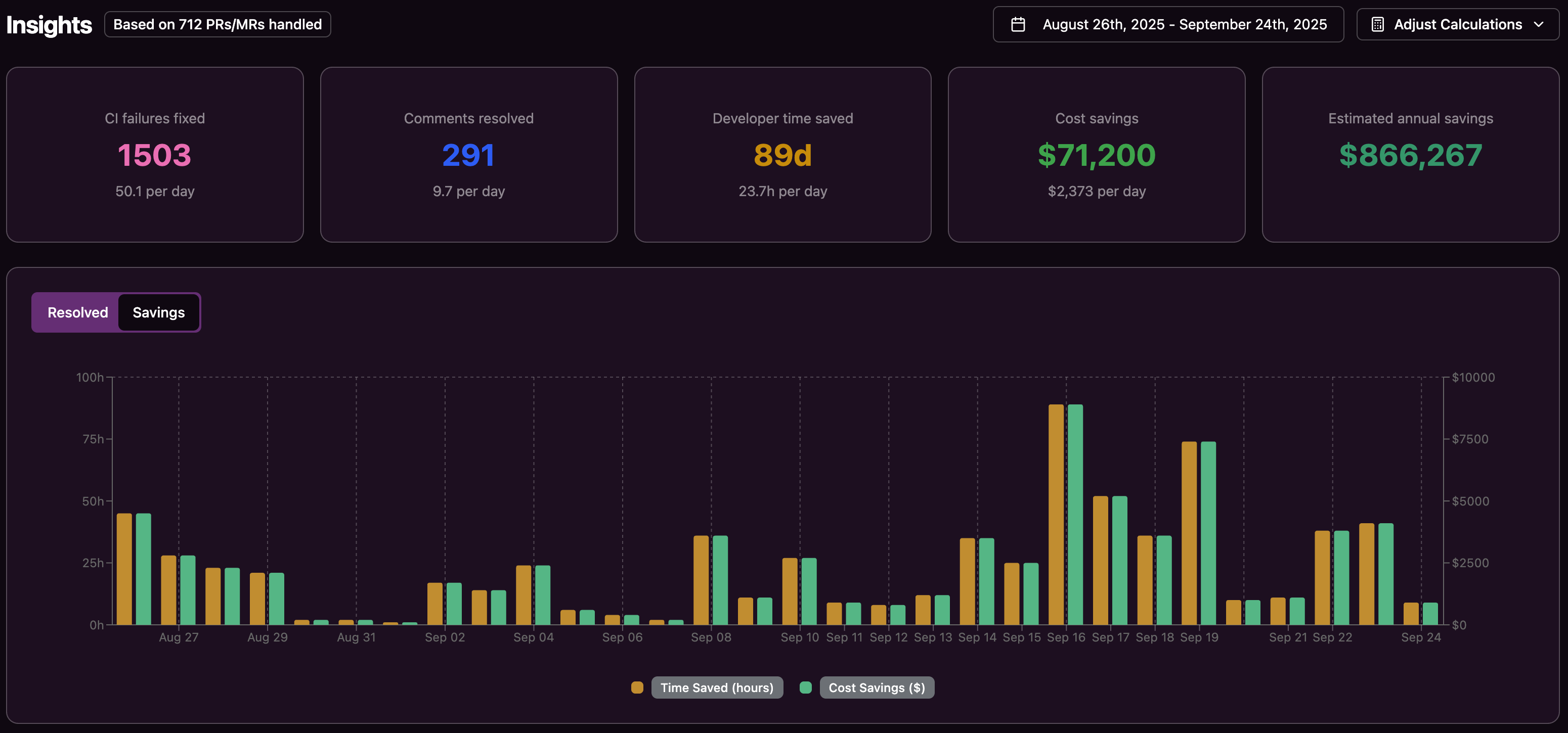
As automated fixes succeed across linting, tests, and builds, teams measure time saved and reduced interruptions. Many organizations then expand coverage and enable auto-commit mode for specific checks, while keeping monitoring dashboards and rollbacks in place for safety.
Mature deployments use Gitar to implement review feedback, support distributed teams, and integrate analytics with engineering leadership reporting.
Navigating the Autonomous CI Landscape
Healing Engines vs. Suggestion-Only Tools
Tools in the CI space fall into two broad groups. Healing engines apply and validate fixes autonomously. Suggestion engines surface problems or proposed patches but rely on developers to implement and verify changes.
Gitar operates as a healing engine that understands environment context, runs in real pipelines, and targets green builds with minimal developer interruption. This approach differs from AI reviewers such as CodeRabbit or generic “big model” prompts wired into CI, which often provide helpful guidance but still require manual follow-through.
|
Feature / Solution |
Gitar (Healing Engine) |
AI Reviewers |
Generic LLM in CI |
Manual Status Quo |
|
Issue Resolution |
Autonomous fix and validate |
Suggestions or partial fixes |
DIY prompts and scripts |
Fully manual |
|
Environment Context |
Full CI replication |
Limited |
Custom setup required |
Human knowledge |
|
Time-to-Fix |
Minutes |
Variable |
Hours |
Hours or days |
|
Developer Interruption |
Low |
Moderate |
High |
Very high |
Install Gitar to evaluate autonomous CI healing alongside existing review tools.
Common Pitfalls to Avoid
Teams sometimes optimize CI for speed at the expense of reliability. Missing or weak quality gates allow issues to move through pipelines without enough validation, which creates work later in the lifecycle. Others leave failed builds in queues instead of addressing underlying causes, slowing progress and hiding systemic problems.
Overly broad test suites on every commit also cause problems. Running full end-to-end tests on every change often increases cycle time without proportional quality gains. Security checks create similar friction when treated purely as post-deployment audits rather than integrated steps in the CI pipeline, as highlighted in DevSecOps best practice discussions. Self-healing CI works best when pipelines have clear gates, right-sized tests, and well-integrated security.
Frequently Asked Questions (FAQ) about Self-Healing CI Pipelines
What constitutes a self-healing CI pipeline?
A self-healing CI pipeline automatically detects failures, diagnoses causes, applies corrective code changes, and re-runs checks to confirm success, all with minimal or no manual intervention.
Can self-healing CI pipelines work with complex enterprise setups?
Modern self-healing solutions such as Gitar support multi-SDK builds, pinned dependency versions, and tools like SonarQube or Snyk by replicating real CI environments and respecting existing policies and workflows.
How much control do teams retain when using autonomous fixing?
Teams define where and how automation runs. They can use suggestion-only mode, require approvals for specific change types, enable auto-commit for low-risk fixes, and review detailed logs of every automated action.
Conclusion: Make CI More Reliable and Free Developers to Build
Unreliable CI pipelines create hidden costs in lost time, delayed releases, and reduced developer satisfaction. Autonomous self-healing CI addresses these problems by turning failure resolution into a background process rather than a recurring team-wide disruption.
Gitar gives engineering leaders a practical way to adopt self-healing CI with environment-aware fixing, configurable trust levels, and enterprise-ready integration. Teams that embrace this approach recover meaningful engineering time, improve delivery reliability, and create a better development experience.
Get started with Gitar to increase CI reliability and return focus to core product work.