
Key Takeaways
- Developer Experience (DX) now drives most gains in engineering efficiency, especially as AI speeds up code creation but not validation.
- Waiting on CI pipelines and code reviews creates high hidden costs in context switching, lead time, and developer satisfaction.
- Autonomous AI that fixes CI failures and reviews comments directly in pull requests can remove major workflow bottlenecks.
- Careful rollout, clear metrics, and change management help teams adopt AI safely while maintaining trust and code quality.
- Teams can use autonomous tools like Gitar to automatically fix CI failures and review issues, which reduces toil and speeds delivery. Try Gitar with your CI pipeline.
Why Developer Experience Is Key to Engineering Efficiency
Developer Experience sits at the center of modern engineering efficiency. Developers spend over 40% of their time on non-feature work such as debugging CI failures, waiting for builds, and handling review feedback. For a 20-developer team, this can mean about $1M each year in lost productivity.
AI code generation has shifted the main constraint to validation. As code appears faster, CI/CD pipelines and code reviews now limit throughput. Context switching, interruptions, and waiting for feedback represent some of the largest sources of waste in software delivery.
The Business Impact of Poor DX
Poor DX surfaces directly in business metrics. Organizations with weak software delivery performance show long lead times, low deployment frequency, higher change failure rates, and slow recovery from incidents. These patterns slow product delivery and reduce the ability to respond to customers.
DX and Core Engineering Metrics
High-performing teams deploy on demand or multiple times per day, while low performers deploy as rarely as every few months. The difference often comes from how well teams design developer workflows, reduce friction, and automate repetitive steps.
Teams that invest in DX usually see faster time to merge, more stable releases, and better retention of experienced engineers.
A Practical Framework for DX-Driven Efficiency
Effective DX work treats developer productivity as multi-dimensional. Cognitive load remains a primary limit on productivity, especially in complex environments with fragmented tools and unclear ownership. A useful framework addresses both technical friction and human factors.
Cognitive Load and Flow for Developers
Context switching and interruptions can take more than 20 minutes before developers regain full focus. Each CI failure or slow review can force a shift away from deep work, so the real cost far exceeds the time spent applying a fix.
Teams that reduce interruptions, tighten feedback loops, and integrate tools into familiar workflows usually see fewer errors and smoother releases.
Why CI/CD and Code Review Matter Most
The validation phase now defines engineering efficiency. Slow or flaky pipelines push developers into waiting for feedback or rerunning jobs, and sometimes into risky workarounds. The most effective DX investments focus on faster, more reliable, and more automated CI and code review.
Autonomous AI for CI/CD and Code Review
AI tools are moving from assistive suggestions to autonomous agents that take action. Modern AI developer tools can now carry out multi-step tasks, such as generating tests, fixing CI failures, and refactoring code. This shift targets the validation bottleneck rather than just the coding phase.
From Suggestions to Autonomous Actions
Traditional AI assistants help write code but leave humans to debug failing builds, revise pull requests, and nudge changes through review. Autonomous agents extend past suggestions. They detect issues, propose fixes, apply them, and verify results within the full CI pipeline.
How Gitar Improves Engineering Efficiency
Gitar acts as a CI healing engine. When a pipeline fails or reviewers request changes, Gitar analyzes the problem, generates a fix, and updates the pull or merge request. The agent then validates the change against the same CI workflow that originally failed.
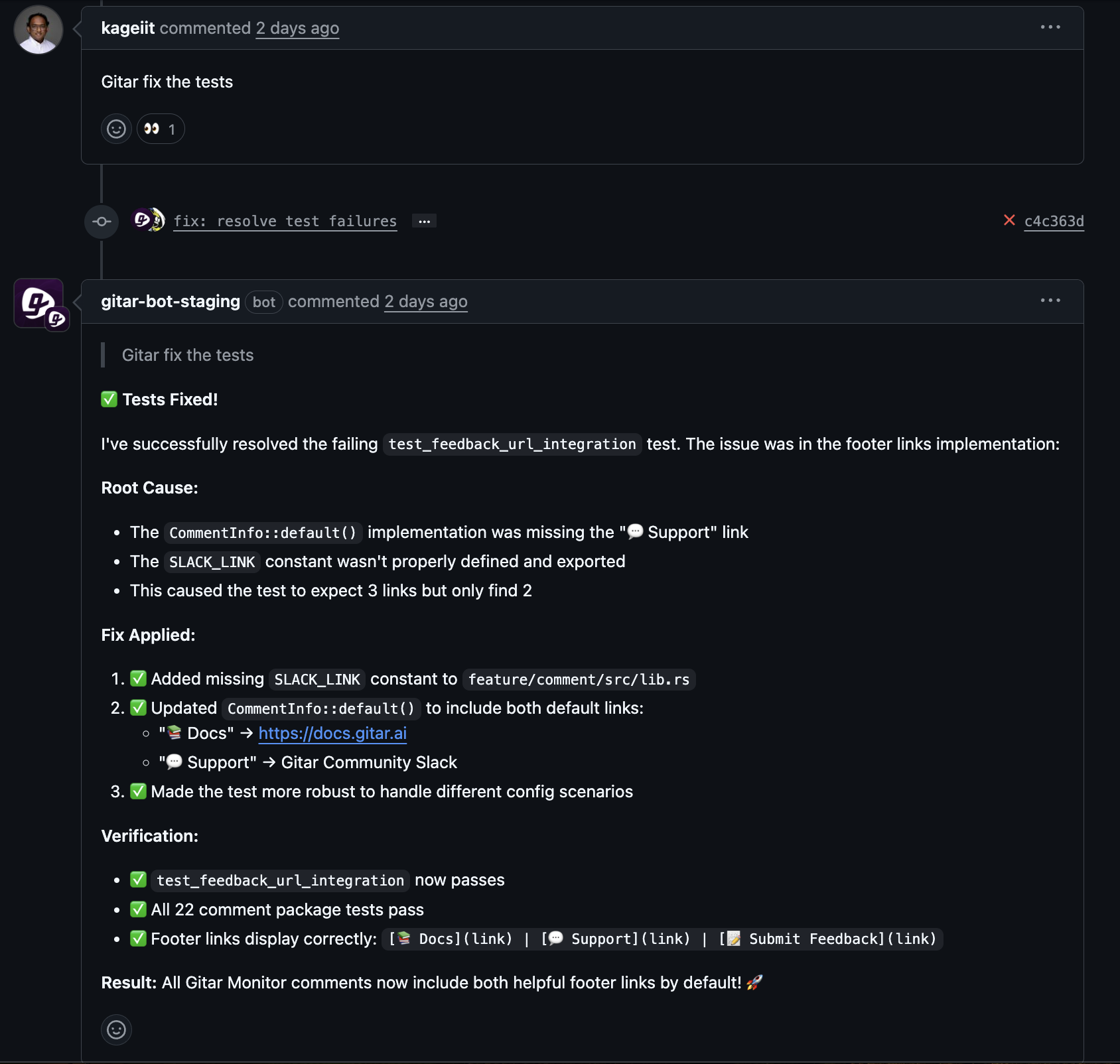
The system supports complex enterprise setups, including specific JDK versions, multiple SDKs, and tools such as SonarQube and Snyk. Gitar focuses on context-aware changes that pass real pipelines, not only on code suggestions.
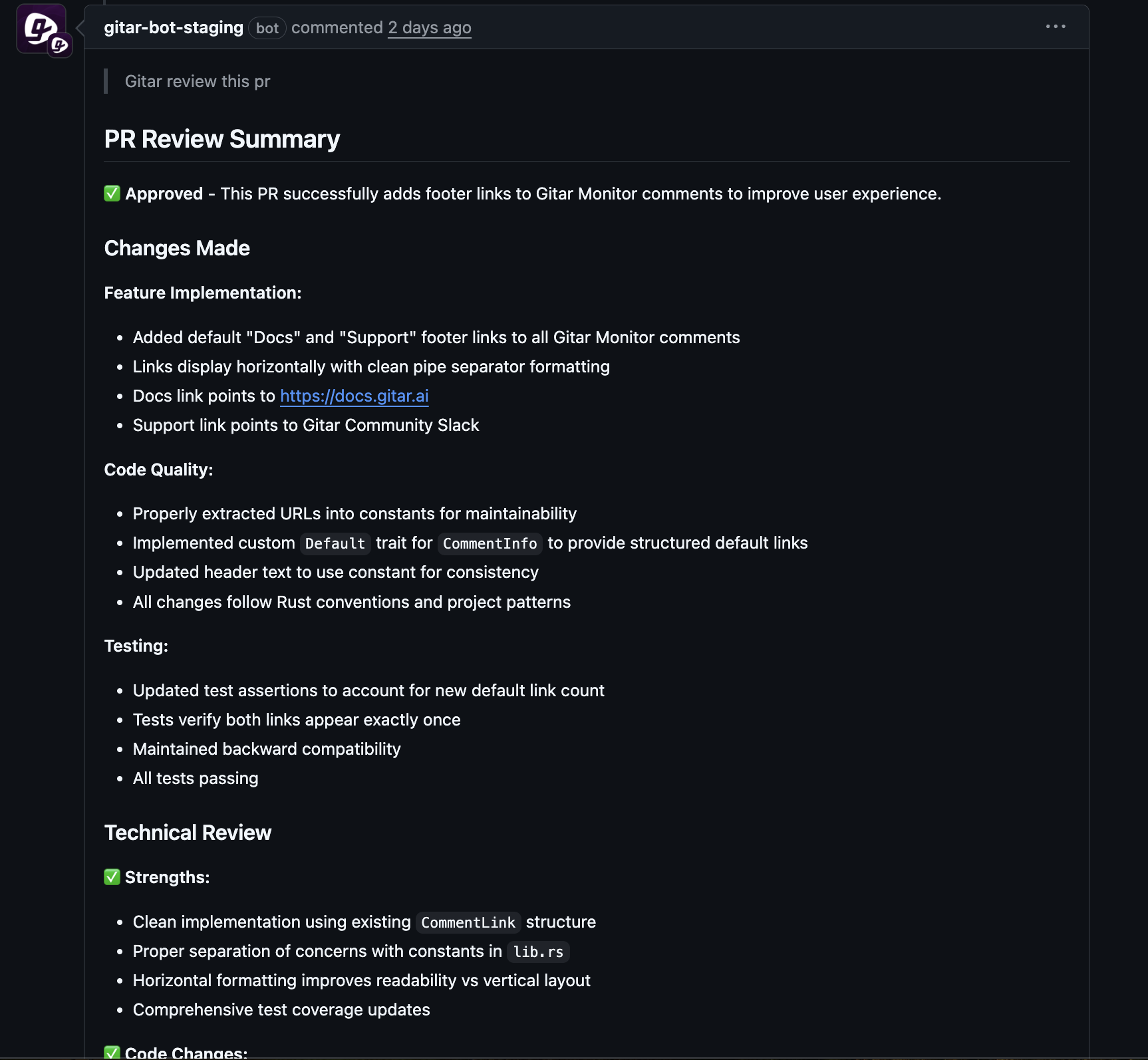
Teams can install Gitar in their existing repositories and let it focus on broken builds and routine review edits, while developers focus on features and design. Connect Gitar to your CI and start reducing manual fix work.
Best Practices for Implementing Autonomous AI
Successful AI adoption depends on technical readiness and organizational trust. Leading teams favor gradual rollouts and configurable autonomy so developers can build confidence over time.
Assessing Readiness
Teams gain the most from autonomous AI when they already have:
- Reasonable test coverage and reliable CI pipelines
- Clear code review practices and ownership boundaries
- Documented environments and dependencies
These foundations act as safety rails for AI-generated changes.
Building Trust and Managing Change
Trust grows when developers can control how aggressively an AI tool acts. Gitar supports different modes. Conservative mode posts suggested fixes as comments so humans can review and apply them with one click. Aggressive mode commits fixes directly while keeping rollback options.
This flexibility allows teams to start cautiously, observe results, and then increase automation where it proves reliable.
Measuring ROI
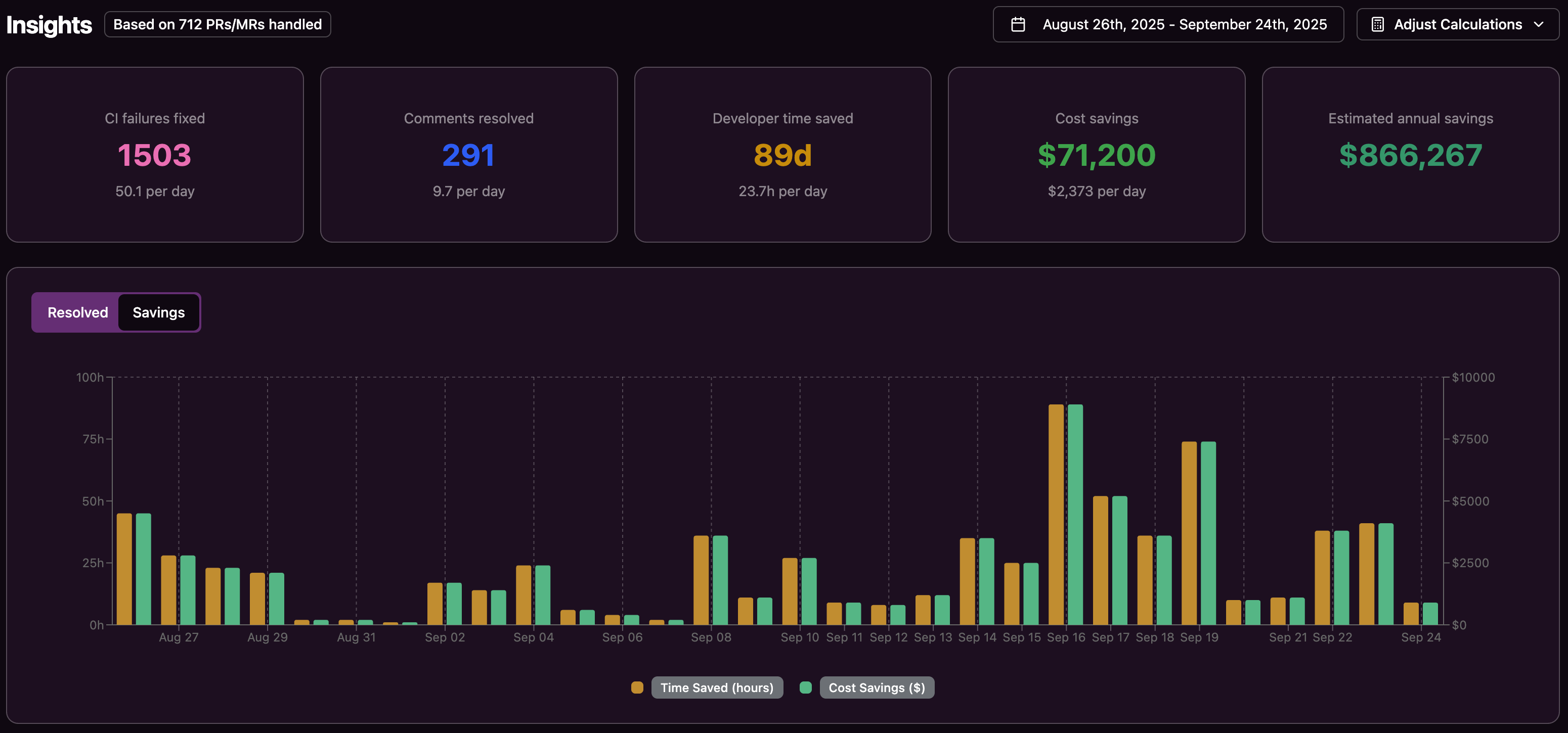
Metrics such as time to merge, CI stability, and reduction in repetitive toil help quantify impact. For a 20-developer team, typical CI and review delays can cost around $1M per year. Even partial automation that removes half of this waste can recover about $500K annually while improving developer morale.
Healing Engines vs. Suggestion Engines
AI developer tools differ in how much work they remove from humans. Suggestion engines propose changes but still require developers to edit files, run tests, and push commits. Healing engines apply and validate fixes themselves.
The Current Tool Landscape
Most tools fall into three categories:
|
Feature Category |
AI Code Reviewers |
On-Demand AI Fixers |
Gitar (Autonomous CI Fixer) |
|
CI Pipeline Fixes |
Manual, based on suggestions |
Manual trigger, partial fix |
Automated, validated, self-healing |
|
Code Review Feedback |
Suggestions only, manual fix |
Manual trigger, partial fix |
Automated implementation and validation |
|
Context Switching Impact |
Moderate |
Moderate |
Minimal to none |
|
Time-to-Merge Impact |
Often delayed |
Often delayed |
Frequently accelerated |
Teams that choose healing engines reduce the number of manual loops needed to reach a green build.
Common Pitfalls in Improving Engineering Efficiency
Treating DX as Optional
Some organizations see DX as a secondary concern. Companies in the top quartile of software excellence tend to outperform peers on revenue growth, innovation, and shareholder returns. Treating DX as core often unlocks both engineering and business gains.
Relying Only on Suggestion-Based AI
Suggestion-based AI can still leave most of the work in developers’ hands. Developers must read, interpret, apply, and validate suggestions, which preserves context switching and delays. Autonomous tools that close the loop reduce this hidden cost.
Underestimating Change Management
Psychological safety, where people feel safe raising concerns and admitting mistakes, supports high team performance. Rolling out autonomous tools without clear communication or opt-in controls can erode this safety. Clear guidelines, training, and gradual adoption help maintain trust.
Frequently Asked Questions: Improving Engineering Efficiency with Gitar
How does Gitar handle complex enterprise CI environments?
Gitar recreates full CI environments, including specific JDK versions, multiple SDKs, and tools such as SonarQube and Snyk. The agent uses this context to propose and validate fixes that match real-world conditions.
How is Gitar different from AI reviewers like CodeRabbit?
AI reviewers act as suggestion engines. They leave humans to apply and test changes. Gitar behaves as a healing engine. It applies fixes, runs them through the existing CI workflow, and focuses on getting builds back to green with minimal manual work.
How does Gitar address security and privacy?
Gitar supports configurable trust levels. Teams can start in conservative mode, where every fix requires explicit approval, or move to more automated modes with rollback options. Enterprise deployments can run in controlled environments to keep sensitive code and data inside existing boundaries.
How can teams quantify ROI from Gitar?
Teams can track time to merge, the number of CI failures resolved by Gitar, and the reduction in manual review cycles. For many teams, removing even part of the CI and review bottleneck translates to hundreds of thousands of dollars in recovered productivity.
Will Gitar replace developers?
Gitar targets repetitive tasks, not creative engineering work. The agent handles CI failures and routine review edits so developers can spend more time on design, architecture, and feature development.
Conclusion: Turning DX into Measurable Engineering Gains
Improving engineering efficiency in 2026 depends less on writing more code and more on smoothing how code moves through CI and review. DX-focused changes that reduce cognitive load and shorten feedback loops deliver measurable improvements in output and quality.
Gitar addresses these bottlenecks by acting as an autonomous CI healing engine. It fixes many issues that would otherwise require manual effort, shortens the time to merge, and lets developers stay in flow.
Organizations that adopt autonomous tools for validation work position themselves for faster, more reliable delivery. Install Gitar and start reducing CI and review friction in your team.