
Key Takeaways
- AI coding tools increase code generation 3-5x, but PR review times have jumped 91% because of manual fix cycles for CI failures and feedback.
- Gitar’s free healing engine auto-fixes lint errors, test failures, and reviewer comments, delivering green builds without manual intervention.
- Teams implement Gitar in four phases: 30-second install, trust-building suggestions, auto-commit, and scaling with rules and integrations.
- Gitar outperforms paid tools like CodeRabbit ($15-30 per developer) by offering unlimited free review, a single dashboard UX, and validated fixes instead of noisy suggestions.
- Teams cut 75% of manual fixes and save more than $375K annually; install Gitar free today to unlock instant code review automation.
The 2026 PR Bottleneck and the Case for Code Review Automation
AI coding adoption has pushed GitHub activity to 82 million monthly pushes. Lines of code per developer grew from 4,450 to 7,839 in 2025 because of AI tools, while 41% of all code is now AI-generated. This surge in code volume creates a clear cascade: more PRs, more tests, more potential failures, and longer review cycles.
Most teams respond with AI review tools that analyze PRs and leave suggestions in comments. These tools trap developers in manual implementation cycles, where they read suggestions, apply fixes, push commits, wait for CI, and then wait again for re-review. Teams pay $15-30 per developer each month for tools that still demand manual work, which funds incremental improvements instead of real transformation.
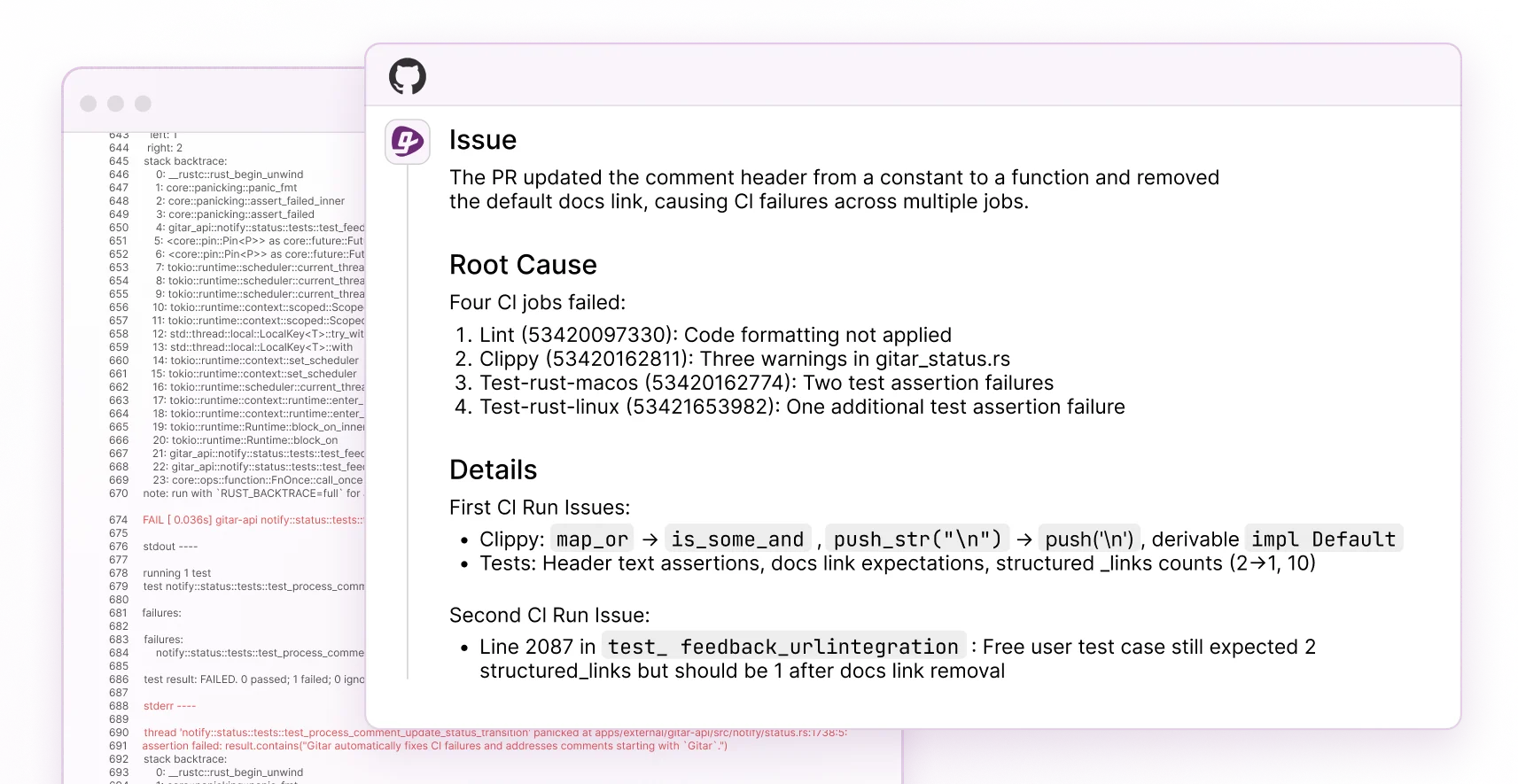
Gitar replaces this pattern with a healing engine approach. When CI fails because of lint errors, test failures, or build breaks, Gitar analyzes failure logs, generates validated fixes, and commits them automatically. When reviewers leave feedback, Gitar implements the requested changes directly. This creates automation that delivers guaranteed resolution instead of hope-based suggestions.
Step 1: Set Clear Automation Goals and Choose Gitar
Effective code review automation starts with specific objectives such as day-one green builds, a 75% reduction in manual fixes, and higher team velocity. Tool selection directly affects these outcomes, so feature depth and cost structure matter.
| Tool | Pricing | Auto-Fix CI/Review | Single Comment UX |
|---|---|---|---|
| Gitar | Free code review (unlimited); Autofix 14-day free trial | Yes (healing) | Yes |
| CodeRabbit | $15-30/dev | No (suggestions) | No (noisy) |
| Greptile | $30/dev | No | No |
Gitar delivers unlimited free code review, a 14-day free trial for autofix, natural language rules, and validated fixes. Competing tools rely on suggestion engines that scatter inline comments across diffs and flood teams with notifications without resolving issues. Organizations implementing AI code review see a 70% reduction in review time, and healing engines extend this benefit by guaranteeing outcomes instead of leaving work unfinished.
Get started free with Gitar’s code review automation, no credit card required.
Step 2: Install Gitar Fast and Build Trust in Suggestions
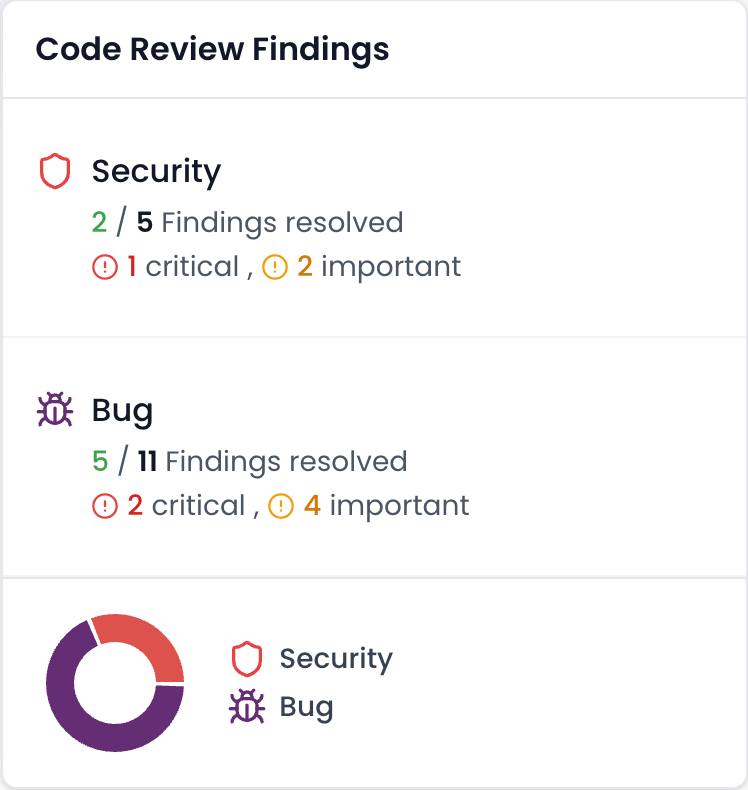
Phase 1 starts with a 30-second installation through the GitHub App or GitLab integration. No account creation or credit card is required. Gitar immediately posts a dashboard comment on each PR, consolidating all findings in one place and updating that comment as checks run, which removes notification spam from scattered inline comments.
Phase 2 centers on trust building through suggestion mode. Teams review and approve Gitar’s proposed fixes for lint errors, test failures, and build breaks. This supervised workflow proves fix quality before teams enable full automation.
GitHub Actions integration uses this YAML configuration:
- name: Gitar Review uses: gitar-ai/action@v1 with: github-token: ${{ secrets.GITHUB_TOKEN }}CircleCI integration follows a similar pattern with orb-based configuration. The workflow remains consistent across platforms. A push triggers Gitar analysis, and Gitar updates the single dashboard comment with consolidated findings. This approach reduces cognitive load compared with competitor tools that generate constant notification floods.
Step 3: Turn On Auto-Commit and Scale With Rules and Integrations
Phase 3 activates auto-commit functionality after teams establish trust in Gitar’s fixes. Natural language rules in .gitar/rules/*.md files control workflow automation without complex YAML syntax. Here is an example security rule:
--- title: "Security Review" when: "PRs modifying authentication or encryption code" actions: "Assign security team and add label" ---Phase 4 expands usage with analytics, Jira integration, and Slack notifications. GitLab CI integration uses similar webhook-based patterns with pipeline-specific configurations. The platform delivers day-one green builds by applying validated fixes directly to failing branches.
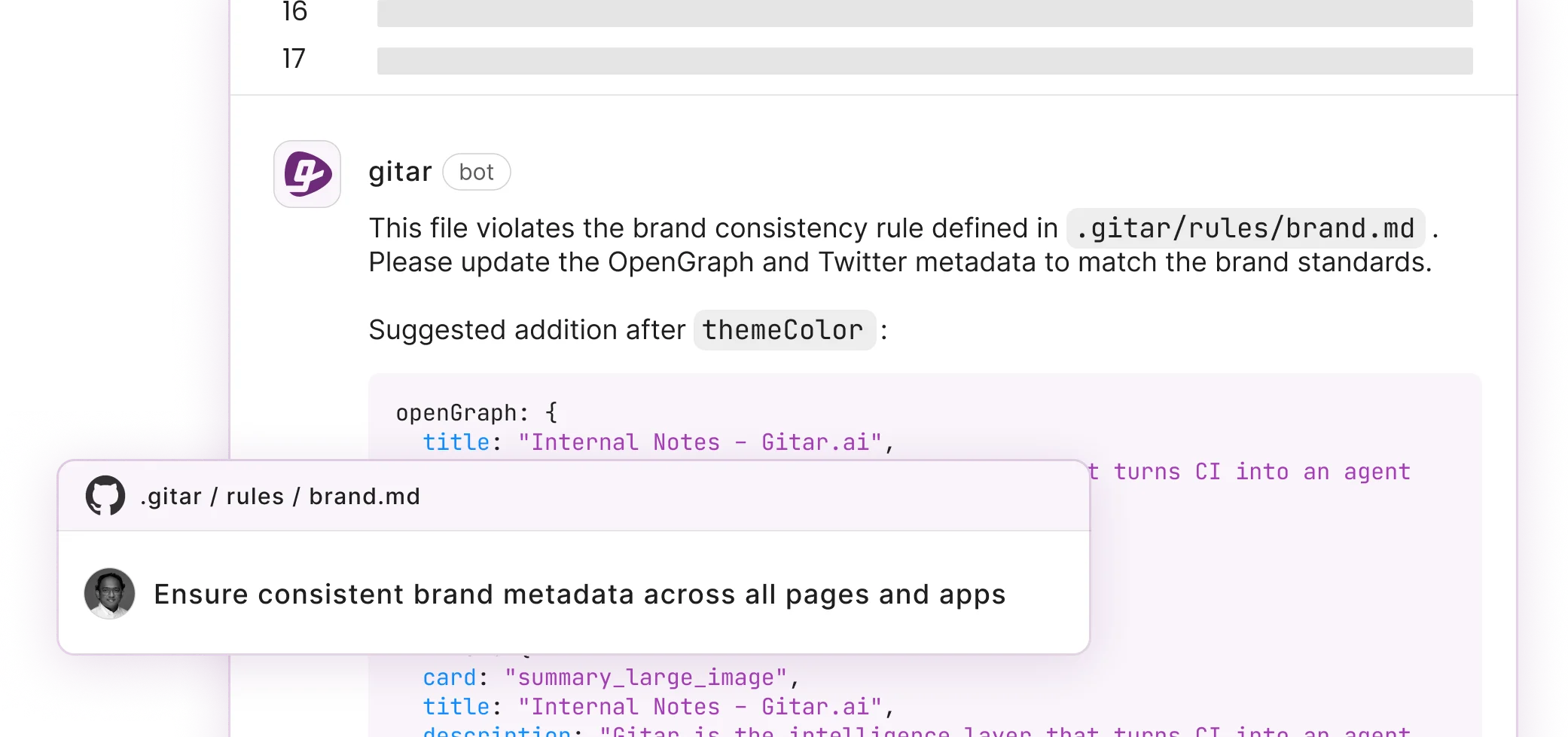
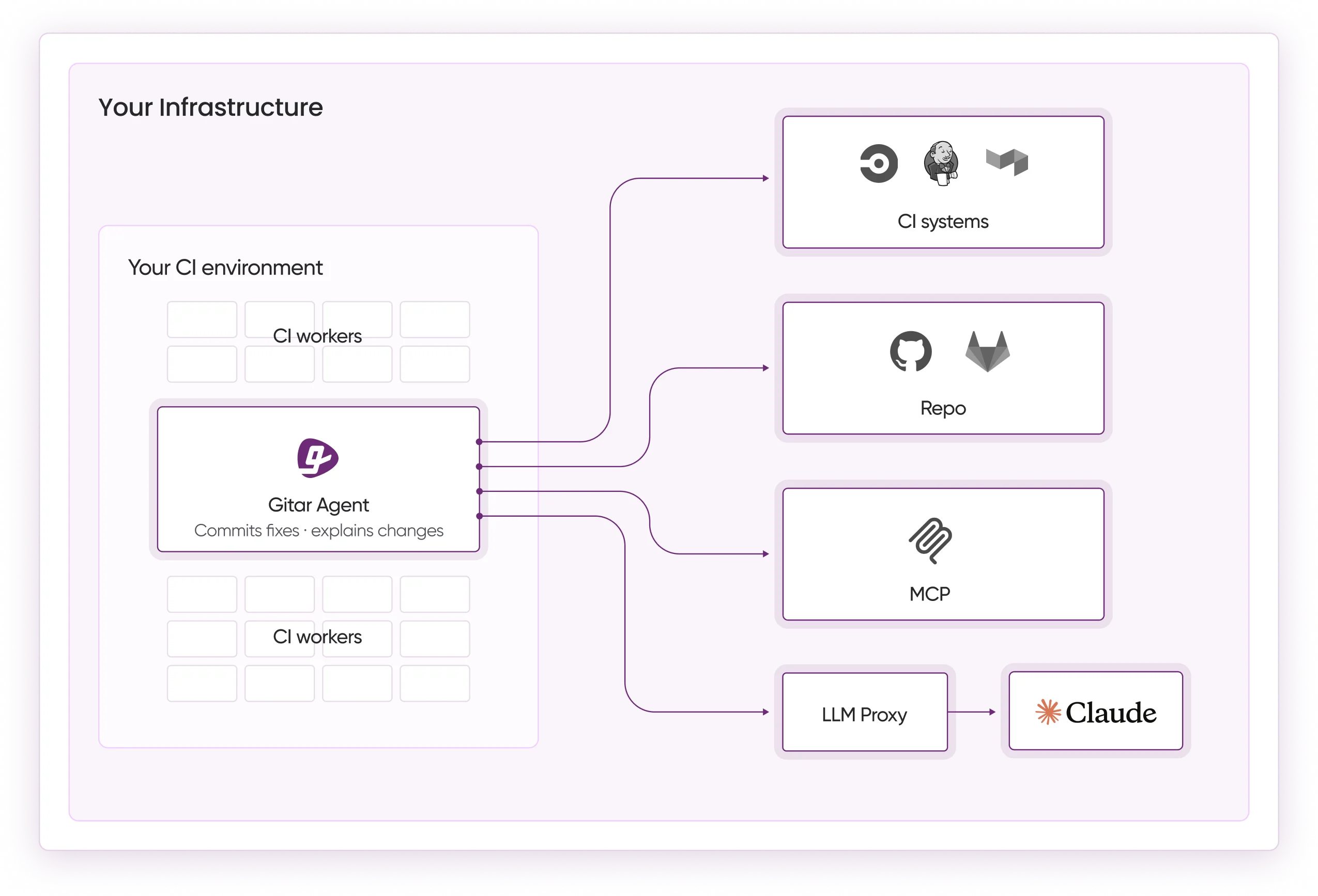
Enterprise deployments can run Gitar agents inside existing CI infrastructure. This setup preserves access to configurations, secrets, and caches while ensuring that no code leaves organizational boundaries.
Step 4: Quantify ROI and Address Common Concerns
Teams implementing AI code review automation see payback within 3-6 months because of fewer production issues and faster time-to-market. For a 20-developer team, the ROI model shows substantial savings.
| Metric | Before Gitar | After Gitar |
|---|---|---|
| CI/Review Time/Dev/Day | 1 hour | 15 minutes |
| Annual Cost | $1M | $250K |
| Tool Cost/Month | $450-900 | $0 |
Fortune 500 organizations report $85,000 annual savings per 10 developers with 35% code quality improvements. Even at 50% of that effectiveness, Gitar delivers $375K in annual savings while removing tool subscription costs entirely.
Teams often raise concerns about free tools and automated commits. Gitar’s business model treats code review as a commoditized entry point and builds revenue from broader platform capabilities. Trust grows through configurable automation levels, where teams start in suggestion mode and then enable auto-commit for specific failure types once they feel confident.
Frequently Asked Questions
Which free AI code review tool stands out in 2026?
Gitar stands out by providing unlimited free code review with auto-fix capabilities, while competitors like CodeRabbit and Greptile charge $15-30 per developer for suggestion-only tools. Gitar’s healing engine validates and commits fixes automatically, which delivers green builds instead of leaving manual implementation to developers.
How Gitar automatically fixes CI failures
Gitar analyzes CI failure logs to identify root causes, then generates code fixes using full codebase context. It validates these fixes against the actual CI environment and commits working solutions automatically. This process runs without manual intervention and keeps teams informed through a single dashboard comment.
How Gitar compares directly to CodeRabbit
CodeRabbit charges $15-30 per developer for suggestion comments that still require manual implementation. Gitar offers free code review with automatic fix application, CI integration, and a single-comment UX that reduces notification noise. The core difference lies in healing that resolves issues versus suggesting changes that developers must still apply.
How Gitar cuts notification noise during reviews
Gitar uses a single dashboard comment that updates in place and consolidates all findings, including CI analysis, review feedback, and rule evaluations. When Gitar applies fixes, resolved items collapse automatically inside that comment. This approach removes scattered inline comments and the notification floods that other tools generate.
How to stay in control of automated commits
Gitar supports configurable automation levels so teams can control how aggressively it commits changes. You can start in suggestion mode and approve every fix to build confidence. Over time, you can enable auto-commit for specific failure types such as lint errors or test fixes. Gitar validates all fixes against your actual CI environment before committing, so you retain control while still gaining automation benefits.
Conclusion: Turn Gitar Into Your Dev Intelligence Foundation
This code review automation guide outlines a practical framework for solving the 2026 post-AI coding bottleneck. Competing tools charge premium prices for basic commentary, while Gitar treats code review as a commodity and uses it as the base for a broader development intelligence platform.
The four-phase implementation of installation, trust building, automation, and scaling moves teams from manual fix cycles to guaranteed green builds. Code review automation then becomes the gateway to workflow automation, deep analytics, and CI that behaves like an intelligent agent platform.