
CI/CD in GitLab aims to deliver fast, dependable deployments, but pipeline failures and lengthy code review cycles often slow teams down. AI integration, through tools like Gitar, offers a way to fix these issues by automating resolutions and creating a smoother, self-healing CI/CD process. This article explores how such solutions can save developer time and speed up delivery in your GitLab setup.
Common GitLab CI/CD Challenges Slowing Teams Down
Context Switching Drains Productivity
Submitting a merge request often leads to frustration when builds fail over small issues like missing dependencies or style errors. Developers must then dig through logs, switch back to their local setup, make fixes, and wait for the pipeline to rerun. This cycle disrupts focus and turns minor fixes into significant time sinks.
Even when moving to a new task after submitting a merge request, a CI failure or feedback pulls you back, breaking concentration. This constant shift in focus wastes valuable time, often turning a quick 30-minute fix into an hour or more of lost productivity due to mental overhead.
On average, developers spend about an hour daily fixing CI issues and addressing review feedback, with some estimates showing this can account for up to 30% of their workday. For a team of 20, this equates to roughly $1 million in lost value each year.
Scaling Issues with Increased Code Volume
Tools like GitHub Copilot help developers write code faster, boosting output. However, this increased volume can strain GitLab CI environments, leading to longer wait times, more frequent failures, and delayed development cycles if validation and merging processes don’t keep up.
Efficient integration remains essential. Without it, teams face bottlenecks that hinder the benefits of faster code generation in GitLab setups.
Delays Affect Delivery and Team Morale
CI failures and review delays in GitLab slow down project timelines and team progress while impacting developer satisfaction. This friction affects more than just engineering, causing slower market delivery that can lead to significant revenue losses and competitive disadvantages.
Manually debugging issues and constantly switching tasks also contribute to burnout. When developers spend more time battling tools than creating features, both efficiency and job satisfaction suffer.
Meet Gitar: AI for Automated GitLab CI/CD Fixes
Gitar enhances GitLab CI/CD by automatically handling CI failures and code review feedback. Unlike tools that only suggest fixes, Gitar identifies issues, creates solutions, applies them, and confirms they work, all within your GitLab system.

Here’s what Gitar brings to your workflow:
- Complete issue resolution, including validation, not just suggestions.
- Accurate handling of complex enterprise GitLab CI setups.
- Direct response to code review comments within merge requests.
- Customizable settings, from cautious suggestions to automatic commits.
- Smooth operation within GitLab merge requests without disruption.
Install Gitar to fix broken builds and deliver quality software faster.
How Gitar Solves Key GitLab Development Issues
Eliminating Manual Debugging of CI Failures
Deciphering unclear logs and repeatedly fixing pipeline issues in GitLab consumes hours of developer time. This repetitive process disrupts workflow and kills momentum.
Gitar tackles this by analyzing CI logs as failures happen, pinpointing the cause, creating fixes for errors like linting or test issues, and committing them to the branch. This self-healing approach cuts out manual effort, letting developers stay focused.
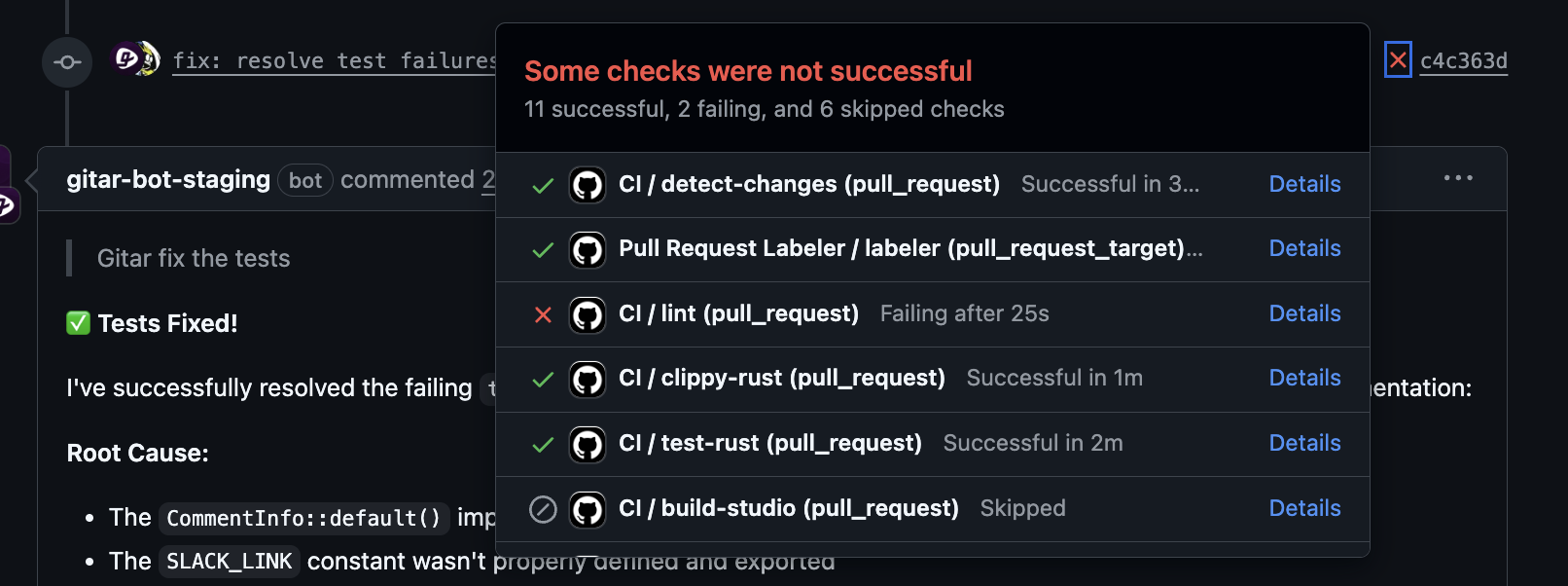
Unlike tools that only offer suggestions, Gitar tests its fixes against your full GitLab CI environment to ensure they’re reliable before finalizing them.
Speeding Up Code Review Cycles
Manual feedback in code reviews often causes delays, especially for teams spread across time zones. A simple exchange between developers in different regions can stretch a short task into days of waiting.
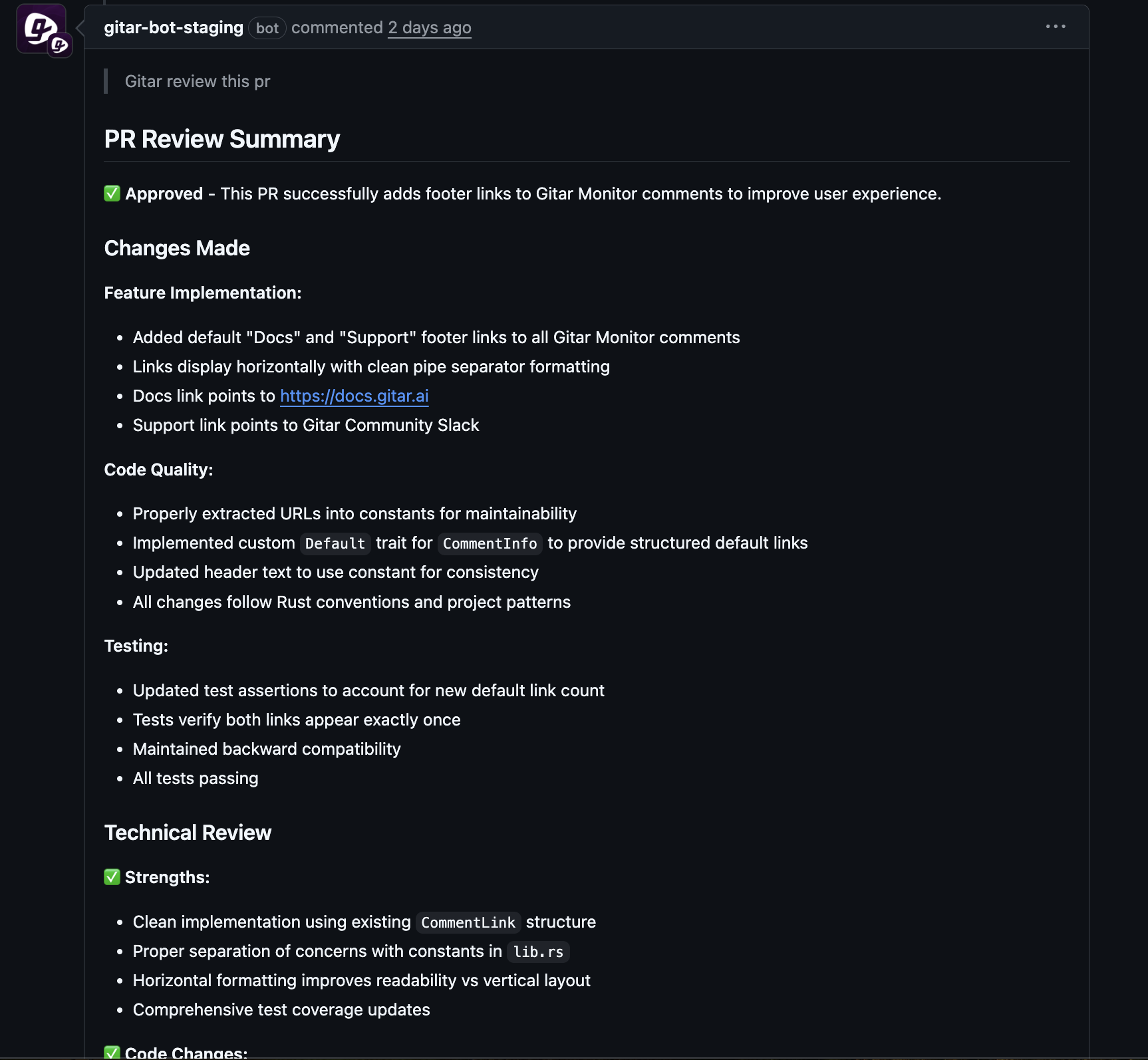
Gitar streamlines this by acting on reviewer comments directly. When feedback is left, Gitar interprets it, makes the requested changes, and commits them with a clear explanation. This means the original developer sees the updates ready for approval the next time they log in, keeping progress moving despite time differences.
Handling Complex GitLab CI Setups
Enterprise GitLab CI environments often include intricate dependencies and third-party tools that generic AI struggles to manage effectively.
Gitar addresses this by fully replicating your setup, including specific software versions and tools like SonarQube or Snyk. This ensures fixes are tailored to your unique configuration, reducing guesswork and repeated attempts that simpler tools often require.
Reducing Costs and Boosting Efficiency
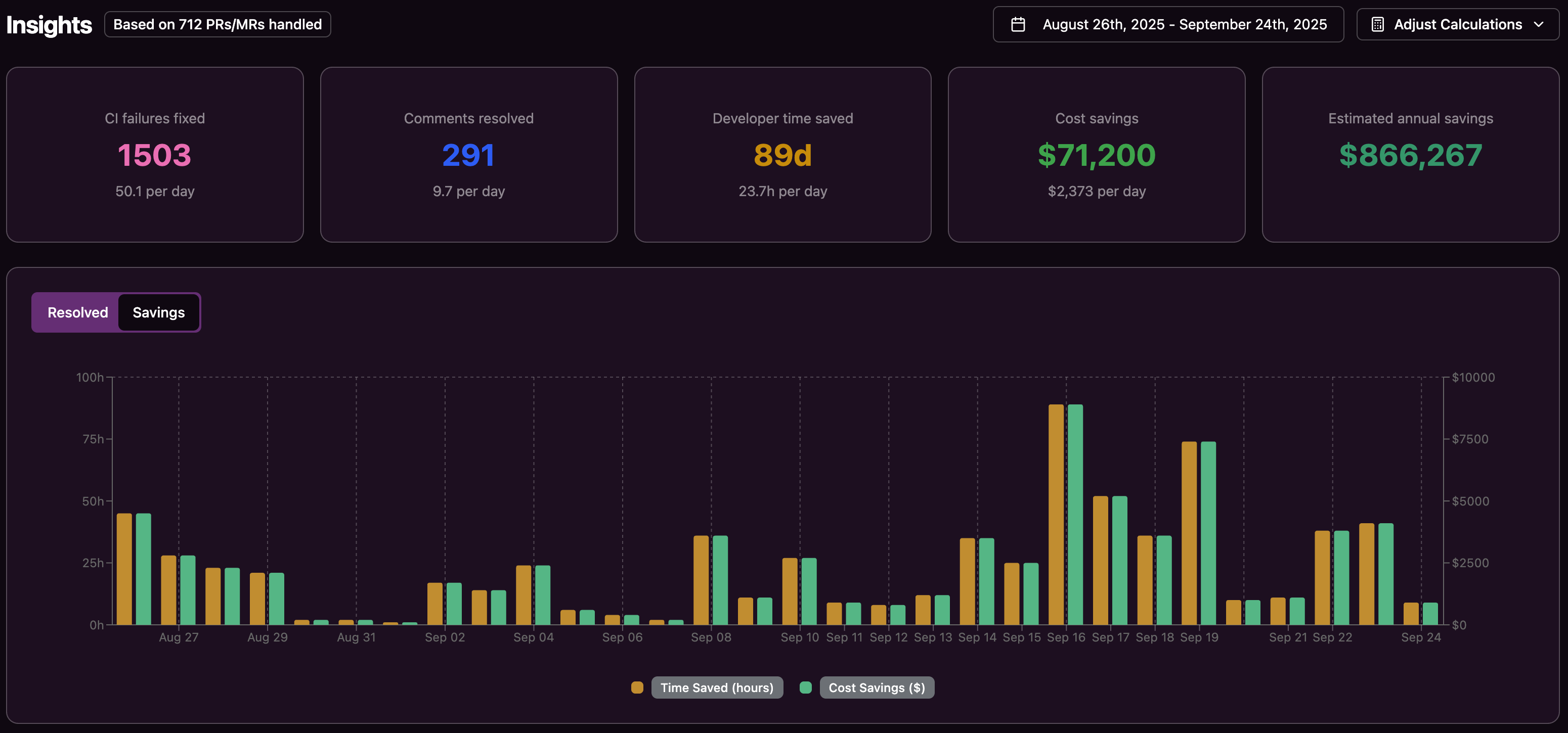
For a team of 20 developers, productivity losses from CI/CD issues can cost up to $1 million annually due to wasted time and delayed output.
Gitar cuts these costs by automating repetitive tasks in GitLab workflows. Even if it resolves just half of the issues, a 20-person team could save $500,000 a year. Beyond savings, it also improves developer satisfaction by reducing tedious manual work.
Comparing Gitar to Other AI Tools in GitLab
Many AI tools offer suggestions for CI/CD issues, but Gitar goes further by automatically resolving them. Here’s how it stacks up:
|
Feature |
Gitar (Automated AI) |
AI Review Tools (e.g., CodeRabbit) |
Manual Process |
|
CI Failure Handling |
Automatically diagnoses, applies, and validates fixes in GitLab CI. |
Offers fix suggestions; developers must apply and test them. |
Developers debug, fix, and rerun pipelines manually. |
|
Code Review Response |
Directly implements changes from feedback in GitLab MRs. |
Suggests edits; implementation often remains manual. |
Developers analyze and apply feedback by hand. |
|
Environment Awareness |
Fully mirrors complex GitLab CI setups for precise fixes. |
Limited grasp of specific CI configurations. |
Relies on developer knowledge, risking mismatches. |
|
Developer Disruption |
Reduces interruptions by handling issues independently. |
Still requires focus shifts to apply suggestions. |
Causes frequent, workflow-breaking interruptions. |
Gitar’s core strength is in acting as a resolution tool, not just a suggestion provider. It handles fixes end-to-end within your GitLab environment, saving time and effort compared to other options.
Install Gitar to automate fixes and ship better software faster.
Answers to Common Questions About Gitar in GitLab
How Does Gitar Manage Unique GitLab CI Dependencies?
Gitar adapts to complex enterprise CI setups by mirroring specific configurations, including software versions and tools like SonarQube. This ensures fixes are accurate, even for custom environments, unlike broader AI tools with limited context.
Is It Secure to Allow AI to Commit Fixes in GitLab?
Gitar offers adjustable settings for control over its actions. Teams can start with a mode where it only suggests fixes for review. As confidence grows, you can allow direct commits, always with the option to revert changes, keeping your GitLab repositories safe.
How Does Gitar Help Distributed Teams with Reviews?
For teams across time zones, Gitar acts on reviewer feedback independently. A comment left by a reviewer is addressed by Gitar, with changes ready for the developer to approve later. This cuts down on delays and keeps work flowing.
What Makes Gitar Different from Other AI Tools?
While many AI tools suggest solutions, Gitar takes action by applying and validating fixes within your GitLab CI setup. This hands-on approach reduces manual workload compared to tools that leave implementation to developers.
Can Gitar Work with Existing GitLab Tools?
Yes, Gitar integrates with your current GitLab CI tools and third-party services like Snyk. It fully understands your setup, ensuring compatibility and effective fixes without disrupting your processes.
Boost GitLab Efficiency with Automated AI
CI/CD issues and code review delays in GitLab drain productivity, costing teams significant time and resources each year. Tools that only suggest fixes still require manual effort, falling short of solving the core problem.
Gitar changes this by automating fixes for pipeline failures and feedback, allowing developers to focus on building rather than troubleshooting. This creates a smoother workflow in GitLab, helping teams deliver faster.
With Gitar, developers stay in their creative zone, leaders see better project speed, and organizations gain a quicker path to market.
Install Gitar today to automate builds and improve software delivery.