
CI pipeline failures slow down engineering teams, creating bottlenecks that hurt productivity. Unresolved builds often pile up, delaying progress and wasting time. Manual debugging pulls developers away from building features, costing hours of effort. Autonomous AI agents like Gitar change this by detecting, fixing, and validating solutions automatically. This article shows how Gitar streamlines the process, cuts debugging time, and helps teams ship code faster.
Why Manual CI Failure Analysis Costs More Than You Think
CI pipeline failures do more than just break builds, they disrupt entire workflows. Even in complex development setups, issues are bound to happen. The real problem comes when teams spend excessive time troubleshooting manually, draining resources and delaying delivery.
Different types of CI failures create specific challenges for engineers. Here are the most common ones:
- Flaky Tests: These tests pass or fail randomly, making them hard to diagnose. Their inconsistency often ties to timing issues or environment differences, requiring detailed investigation.
- Build Errors and Misconfigurations: Issues like outdated scripts or incompatible tool versions cause frequent headaches. Navigating complex dependencies to find the error takes significant effort. Syntax mistakes or environment setup problems add to the challenge.
- Environment and Dependency Conflicts: Mismatched variables or libraries slow down resolution. Understanding system interactions to fix these issues is often time-intensive.
- Infrastructure and Deployment Issues: Errors in Terraform or Kubernetes setups create complex problems. Misconfigurations or missing credentials demand expertise across multiple areas.
Beyond technical hurdles, these failures disrupt developers’ focus. Constantly switching between code, logs, and configs breaks their workflow. This loss of focus reduces efficiency and increases frustration.
The financial hit is significant. Developers may spend up to 30% of their time on CI and code review issues. For a team of 20, this can mean around $1 million in lost productivity each year when accounting for engineering costs.
Install Gitar now to fix broken builds automatically and ship better software faster.
Gitar: Your Solution for Self-Healing CI Pipelines
Gitar offers a new approach to CI failure resolution by turning pipelines into self-healing systems. As an autonomous AI agent, it cuts down manual debugging and keeps workflows moving smoothly.
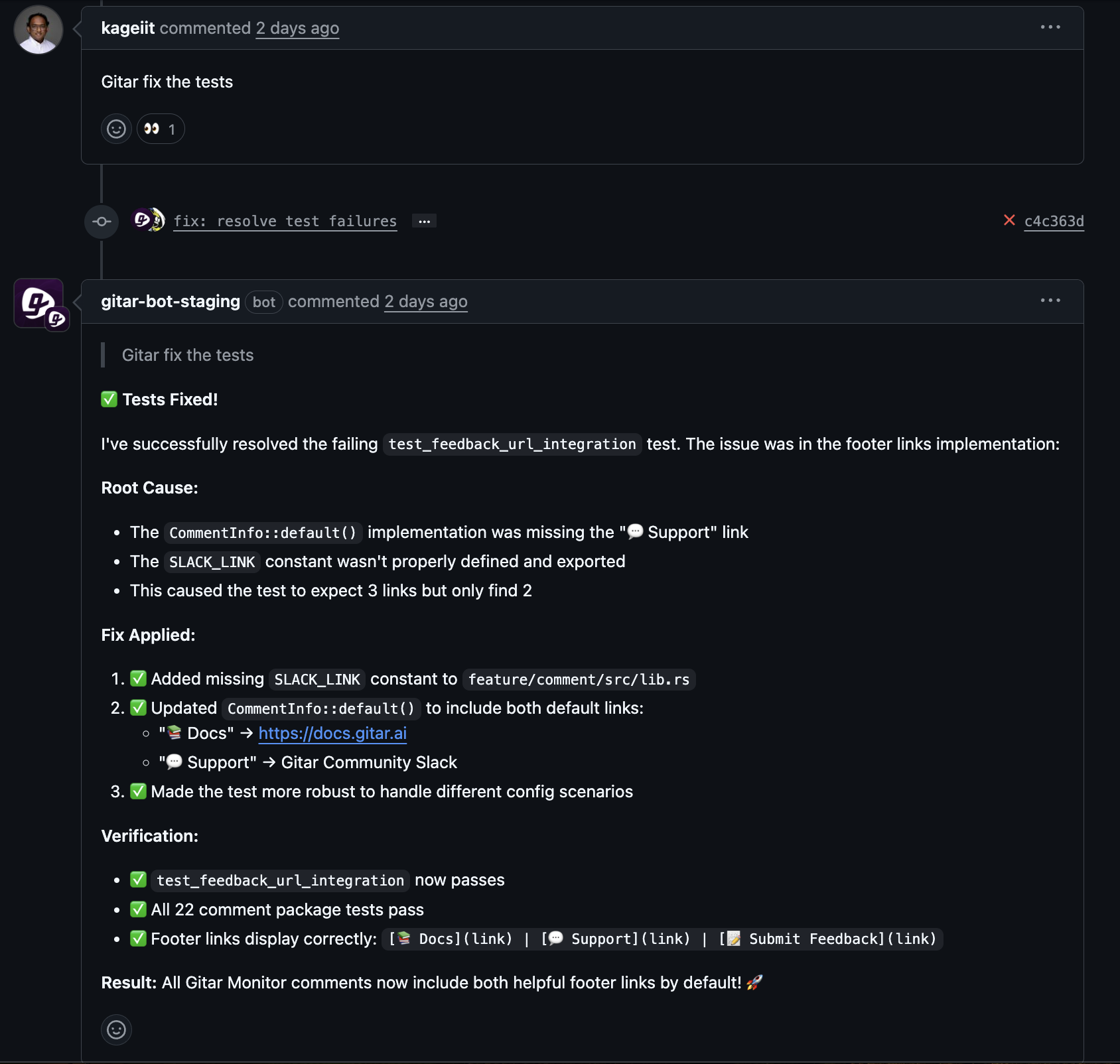
Unlike tools that only suggest fixes, Gitar manages the entire process. When a pipeline fails, it gets notified, analyzes logs, creates a fix, tests it in the CI environment, and commits the solution to the pull request, often without any developer input.

Gitar’s key features tackle critical aspects of CI failure resolution:
- Complete Fix Application: Gitar doesn’t just suggest changes, it applies them and ensures they pass all CI checks before finalizing pull requests.
- Environment Matching: It replicates enterprise setups, including specific JDK versions, dependencies, and tools like SonarQube, ensuring fixes work in real conditions.
- Platform Compatibility: Gitar supports GitHub Actions, GitLab CI, CircleCI, and BuildKite, so teams can use it without changing their existing systems.
- Code Review Support: Reviewers can ask Gitar to act on feedback directly, speeding up PR approvals, especially for distributed teams.
Fix CI failures automatically with Gitar. Book a demo today.
How Gitar Fixes CI Failures Beyond Just Suggestions
Automatic Analysis and Code Updates
Gitar automates failure analysis, outperforming manual methods. It reviews logs to fix issues like linting errors, test failures, or build problems by generating the needed code changes.
For style violations, Gitar adjusts formatting. For build issues, it corrects dependencies or scripts. For test failures, it updates snapshots or assertions. This differs from manual work, where developers must dig through code, configs, and logs to find answers. Gitar combines data to deliver fixes directly.
Handling Complex Environments
Gitar addresses tricky CI issues tied to environment differences. Problems with variables often need specific context to solve correctly. By matching enterprise setups with exact SDKs, dependencies, and tool integrations, Gitar tests fixes in the right conditions, ensuring reliability across contexts.
Healing Engine vs. Suggestion Tools
Gitar stands out from typical AI tools by acting as a healing engine, not just a suggestion provider. Many tools offer ideas for fixes but leave implementation and testing to developers. Gitar applies and verifies solutions, closing the gap between finding and fixing issues.
Here’s how Gitar compares to other methods:
|
Capability |
Gitar (Healing Engine) |
AI Suggestion Tools |
Manual Debugging |
|
Root Cause Detection |
Automatic with environment context |
Automatic with limited context |
Manual log analysis |
|
Solution Application |
Automatic fix and validation |
Suggestions needing manual work |
Manual coding and testing |
|
Developer Input |
Optional with trust settings |
Required for all steps |
Required throughout |
|
Validation Process |
Automatic in full CI setup |
Developer’s responsibility |
Manual testing |
Boost Engineering Speed with Gitar’s ROI
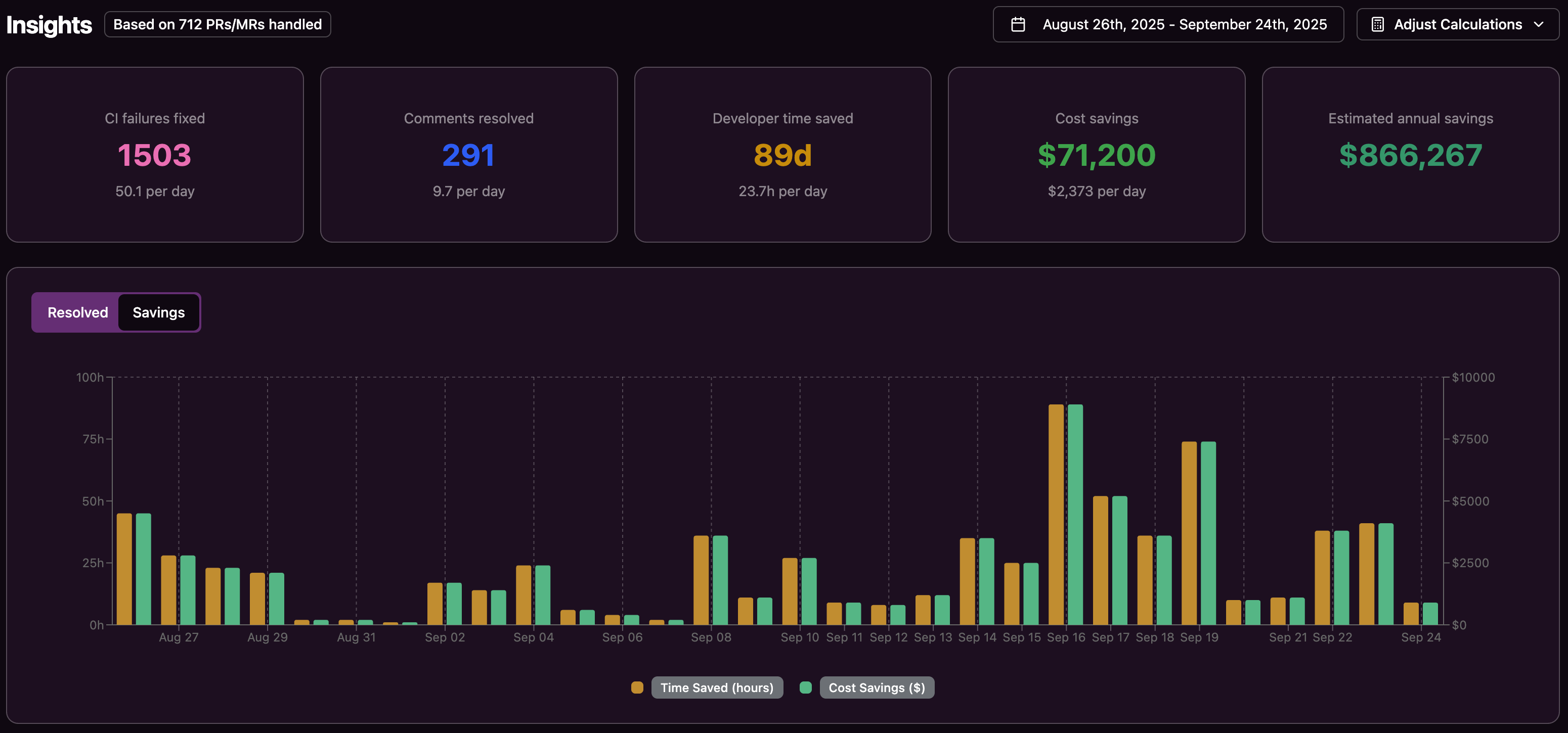
CI failures cost more than just time, they hit your bottom line. Developers losing 30% of their day to CI and review issues adds up fast. For a 20-person team, one hour daily on debugging equals 5,000 hours yearly. At $200 per hour, that’s $1 million in lost productivity.
Gitar’s automated fixes provide clear returns in several ways:
- Faster Releases: Automatic fixes remove delays, speeding up development cycles.
- Better Developer Focus: Reducing tedious debugging helps teams stay productive and engaged.
- Lower Costs: Savings come from less idle time, quicker resolutions, and fewer deployment delays.
Even at half effectiveness, Gitar could save a 20-person team $500,000 yearly while boosting satisfaction and delivery speed.
Install Gitar now to fix broken builds and ship quality software faster.
Common Questions About Autonomous CI Healing
How Does Gitar Resolve CI Failures?
Gitar mirrors full enterprise setups, including specific JDK versions and tools like SonarQube. This detailed context lets it fix errors like syntax issues or failing tests. Unlike generic AI tools, Gitar understands your build environment for accurate solutions.
How Is Gitar Different from Other AI Tools for CI Fixes?
Most AI tools suggest fixes but stop there, requiring manual steps. Gitar goes further by applying and testing solutions in your CI environment, ensuring builds pass without extra effort.
What If I’m Not Ready to Trust AI with Code Fixes?
Gitar offers adjustable trust settings. Start with a mode where it suggests fixes for approval with one click. As confidence grows, switch to automatic commits with rollback options. This keeps you in control while showing transparency in changes.
Can Gitar Work with Our Complex CI/CD Setup?
Gitar is built for enterprise needs. It handles multi-SDK builds, custom setups, and integrations with security tools. No matter your Docker configs or scripts, Gitar ensures fixes match your specific environment.
Does Gitar Fit into Our Current Workflow?
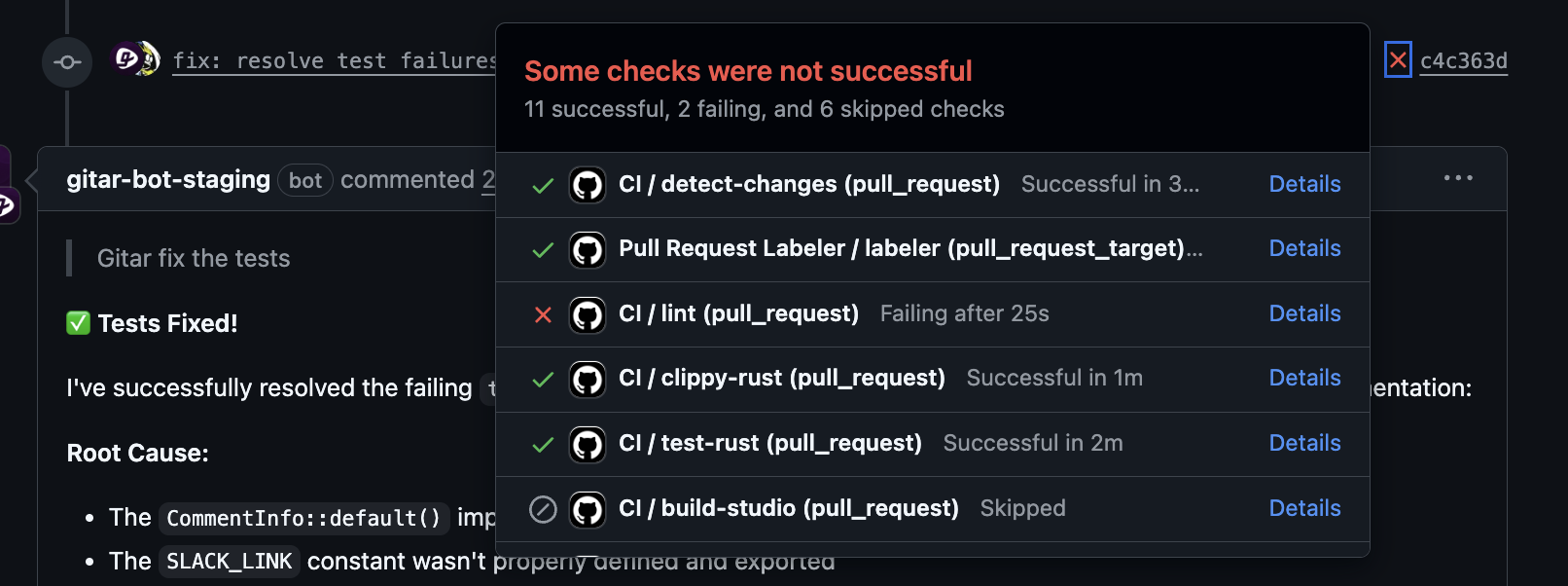
Gitar works with your existing CI/CD setup across platforms like GitHub Actions and CircleCI. It adds itself to pull requests with status updates on fixes or comments. Your team keeps its process while gaining automatic issue resolution.
End Slow CI Failure Resolution with Gitar
Manual debugging of CI test failures remains a major drag on software development. While AI has improved code suggestions, the step from spotting issues to fixing them still costs teams valuable time.
Gitar changes this by making CI pipelines self-healing. It doesn’t just point out problems, it implements and tests fixes, cutting down on manual work and wasted effort.
The numbers don’t lie: teams lose up to 30% of their time on debugging and reviews. Gitar recovers this, letting developers focus on creating features instead of battling infrastructure.
For leaders aiming to maximize team output, Gitar shifts development from AI-supported to AI-driven. It reduces the overhead holding back peak performance.
Ready to fix CI failures automatically and boost engineering speed? Request a demo of Gitar today.