
Written by: Ali-Reza Adl-Tabatabai, Founder and CEO, Gitar
Key Takeaways
- AI tools now write 41% of code, yet PR review times have surged 91%, creating a serious delivery bottleneck.
- Qodo PR Agent automates GitHub PR reviews through installation, config files, and LLM analysis, then returns suggestions and premium auto-fixes.
- Key limitations include scattered notifications, complex setup for non-GitHub platforms, and no free-tier CI failure resolution or auto-applies.
- Gitar outperforms Qodo with single-comment feedback, guaranteed CI fixes, cross-platform support, and significant daily time savings for each developer.
- Teams that upgrade to Gitar’s healing engine gain autonomous code fixes that keep builds green without manual intervention.
Qodo PR Agent Installation and Setup for GitHub-Centric Teams
Qodo PR Agent requires several configuration steps that expose its strong focus on GitHub as the primary provider.
- Install from GitHub Marketplace: Navigate to the qodo-ai/pr-agent repository and install the GitHub App to your repositories.
- Configure Repository Settings: Create a .github/pr-agent.yml file in your repository root with configurations such as model selection and review triggers.
- Set Token Permissions: Grant the GitHub App permissions for reading code, posting comments, and accessing PR metadata. This step often triggers permission errors in enterprise environments.
- Enable Auto-Review: Configure pr_commands = [“/review”] in the Qodo Merge app settings to trigger automatic reviews on every PR.
This setup process highlights Qodo’s primary limitation. The tool supports multiple git providers, yet configuration becomes complex and fragile in non-GitHub environments. For a smoother experience across GitHub, GitLab, and major CI providers, review Gitar’s integration setup guides.
How Qodo PR Agent Reviews Pull Requests
Qodo’s review workflow shows where the tool helps and where it still leaves work for developers.
- Trigger Activation: Reviews start either from a manual /review comment or automatically when a PR is created or updated.
- Code Compression: For large PRs, Qodo compresses content to fit within token limits, which can remove context around complex changes.
- LLM Analysis: Configurable LLM models analyze the code changes and infer potential issues.
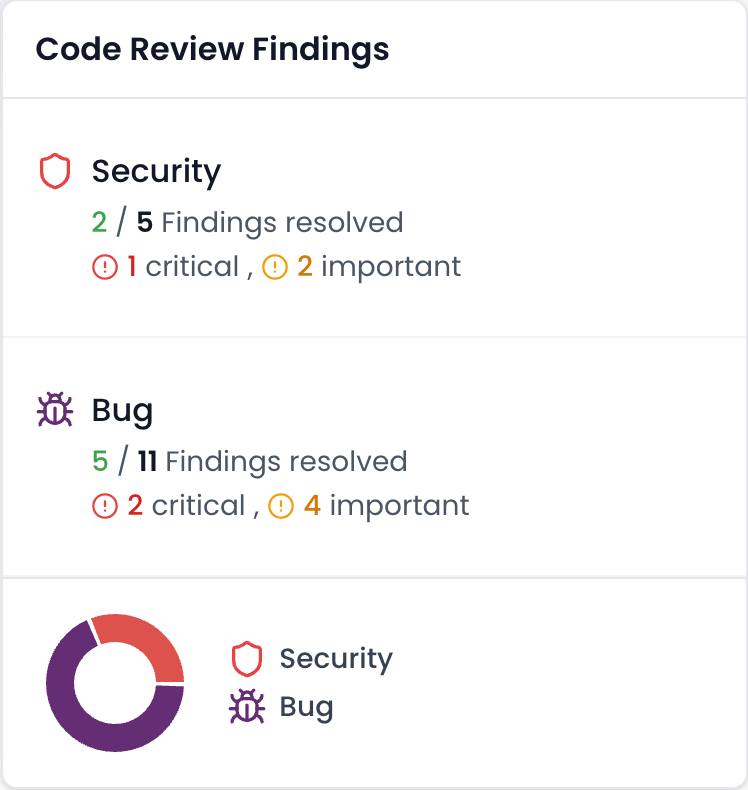
- Comment Generation: Qodo posts inline comments and a summary review, grouping findings by severity.
- Chat Mode: Developers can use /ask commands for follow-up questions on specific code sections.
- Review Suggestions: The tool explains potential issues and offers remediation guidance as text suggestions.
- Automated Improvements: Premium tools such as /improve and /implement generate ready-to-commit fixes automatically.
The review tool scans PR code changes and generates feedback that supports human reviewers, yet free users still receive suggestions instead of applied fixes. This design keeps basic setups dependent on manual implementation work.
Handling Large PRs and Compression Tradeoffs
Qodo uses compression algorithms with adaptive context preservation to handle large PRs within model token limits. The system prioritizes changed lines and nearby context to keep reviews focused on relevant code. Compression still risks losing information about complex dependencies or architectural patterns, which can reduce review quality for large or tightly coupled codebases.
Custom Models, Configs, and Advanced Review Tuning
Advanced users can switch between Claude and GPT models, define custom review criteria through extra_instructions, and adjust parameters such as num_max_findings (default 3). These options help teams tune tone, depth, and focus of reviews. They do not, however, remove the core limitation that basic automation stops at suggestions rather than fully validated fixes.
Qodo PR Agent Limitations in 2026
Real-world usage reveals significant gaps in Qodo’s fit for modern development workflows. The most fundamental limitation is that the tool operates primarily as a suggestion engine in its free tier, which leaves developers responsible for manually applying recommended changes. This manual implementation requirement becomes even more painful when combined with GitHub Actions integration issues such as dependency errors and HTTP 422 errors when publishing suggestions, which introduce additional friction in CI/CD environments.
The notification problem compounds these issues. Unlike platforms that consolidate feedback into a single updating comment, Qodo scatters inline comments across the diff and triggers many separate alerts. This pattern floods inboxes with dozens of notifications per PR. Teams report that AI tools for code review are pretty good but not good enough, and Qodo’s noisy, suggestion-heavy approach illustrates that concern in practice.
Premium features introduce some CI integration, yet free users still lack automated resolution for build failures, tests, or lint errors. AI-generated code now creates roughly 75% more logic bugs, so this gap turns into a measurable productivity drain as teams chase failures that automation could resolve.
Qodo vs. Gitar: From Suggestions to Verified Fixes
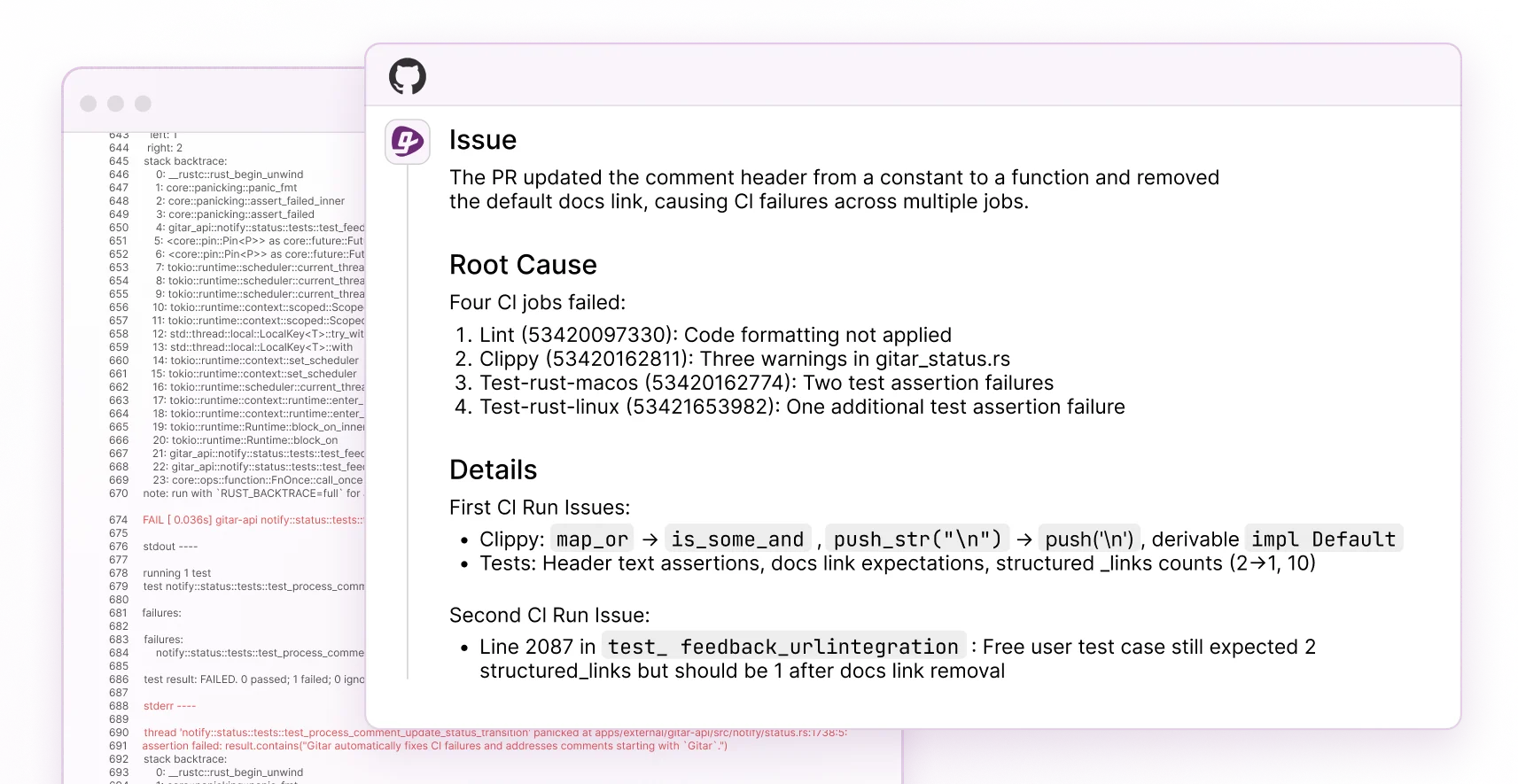
Qodo relies on suggestion-first workflows, while Gitar focuses on verified fixes that keep pipelines green. This difference becomes clear when comparing core capabilities. The table below shows that Gitar includes automated fixes and CI failure resolution in its base experience, while Qodo reserves similar automation for premium tiers.
|
Capability |
Qodo PR Agent |
Gitar Healing Engine |
|
PR summaries/inline comments |
Yes (scattered notifications) |
Yes (single clean comment) |
|
Auto-apply fixes |
Premium only |
Yes |
|
CI failure analysis/fix |
Premium only |
Yes (guarantees green builds) |
|
Cross-platform support |
Multiple providers (GitHub/GitLab/etc.) |
GitHub/GitLab/CircleCI/Buildkite |
|
Notification management |
Multiple per PR |
Single updating dashboard |
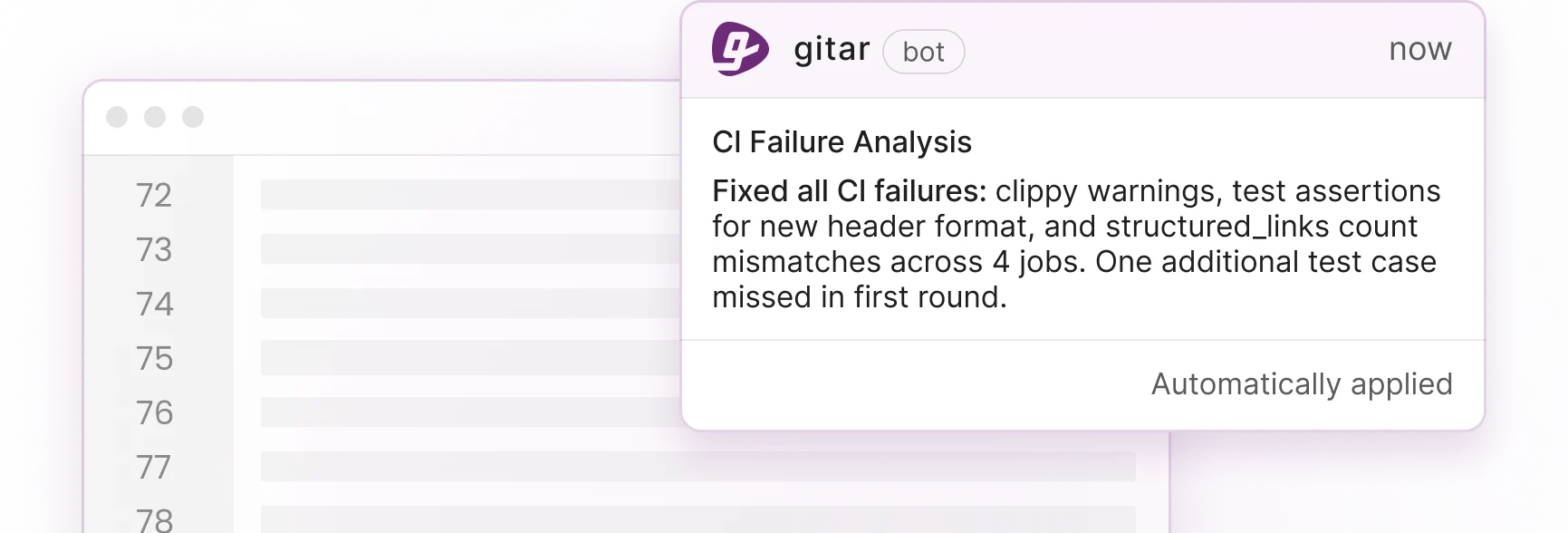
These feature differences translate directly into time savings. The ROI difference is substantial. Teams using Gitar’s healing engine save an average of 45 minutes per developer per day by removing the manual implementation cycle entirely. When CI fails, Gitar analyzes failure logs, generates validated fixes, and commits them while developers continue feature work. For a deeper breakdown of these workflows, explore the Gitar workflow and healing guides.
Try Gitar’s auto-fix capabilities free for 14 days to experience the difference between suggestion-only reviews and actual automation. The trial includes full access to auto-fix features, CI healing, and cross-platform integrations, which lets teams test the complete platform in real pipelines.
When Gitar Becomes the Better Choice
Gitar becomes the stronger option once your team feels the pain of manual cleanup around AI reviews. Common triggers include CI failures that demand repeated investigation, review feedback that takes several cycles to implement correctly, and notification fatigue from scattered AI comments. Production teams in these situations need tools that deliver working fixes instead of more suggestions to process.
Gitar’s healing engine validates every fix against your actual CI environment before committing, which keeps builds green instead of relying on hopeful implementations. This validation-first approach works because Gitar operates as a platform that extends beyond review to include workflow automation, deep analytics, and intelligent CI management. These capabilities go beyond the suggestion-only approach discussed earlier and address the full lifecycle of code quality and delivery.
Teams that want to remove development bottlenecks, not just comment on them, benefit most from this shift. Install Gitar for autonomous code review and CI healing and let the system apply fixes automatically while your developers focus on shipping features.
Frequently Asked Questions
How does Qodo PR Agent handle different programming languages and frameworks?
Qodo PR Agent supports multiple programming languages including Python, JavaScript, TypeScript, Java, and others through its underlying LLM models. The tool analyzes code syntax and patterns regardless of language, though effectiveness varies with framework complexity and project structure. Language support covers analysis and premium automated improvements, yet complex multi-language projects still require careful human validation.
What are the main differences between Qodo’s free tier and paid plans?
Qodo’s free tier includes 75 credits per month, which limits how many PR reviews a team can run. Paid plans, which start around $15 per month, increase credit limits, improve processing priority, unlock more configuration options, and add premium automation tools. Free users receive primarily suggestions, while paid users gain access to auto-implementation features.
Can Qodo PR Agent integrate with CI/CD pipelines beyond GitHub Actions?
Qodo PR Agent supports multiple git providers and offers premium CI feedback integration. GitHub remains the primary focus, yet the tool also provides webhooks and Actions-style support for GitLab, Bitbucket, Azure DevOps, and other platforms. Enterprise teams with multi-platform workflows often encounter complex setup steps and additional maintenance overhead.
How accurate are Qodo PR Agent’s code review suggestions compared to human reviewers?
Qodo PR Agent’s accuracy depends heavily on code complexity and available context. The tool performs well at catching common issues such as style violations, straightforward bugs, and many security vulnerabilities. It struggles more with architectural decisions, business logic validation, and complex system interactions that require deep domain knowledge. Premium CI features help validate some suggestions, but human reviewers still need to oversee critical changes.
What happens when Qodo PR Agent encounters very large pull requests?
For very large PRs, Qodo applies compression algorithms with adaptive context to fit code changes within model token limits. The process prioritizes changed lines and nearby context so the model can focus on the most relevant sections. Extremely large or intricate PRs may still require multiple review cycles and additional human passes to cover all potential issues thoroughly.