
Key Takeaways
- Self-healing CI reduces manual toil, lowers mean time to recovery, and keeps builds green across complex pipelines.
- Autonomous CI fixers extend beyond AI suggestion tools by diagnosing failures, applying changes, and validating full workflows.
- Successful adoption depends on cultural readiness, a clear trust model, and measurable ROI tied to productivity and delivery speed.
- Teams avoid common pitfalls by accounting for environment complexity, governance, and the limits of suggestion-only tools.
- Gitar provides an autonomous CI fixer that applies and validates fixes for failing pipelines and code review feedback; you can start now at Gitar.
Why Self-Healing CI Improves Delivery Speed and Reliability
Manual CI/CD fixes do not scale and often slow down delivery. A 20-person engineering team that spends about one hour per day on CI issues can lose roughly $1M per year in productivity, and around 60% of companies report delayed projects due to these issues. These delays compound as teams grow and systems expand.
AI coding assistants speed up code creation, but CI validation and merging remain key constraints. The main bottleneck has shifted from writing code to integration and verification. Self-healing CI systems diagnose failures, propose fixes, apply changes, and re-run pipelines. This approach reduces manual effort, increases throughput, and allows teams to scale delivery without scaling headcount at the same rate.
Large organizations often run many pipelines across services and repositories. A single breakage can stall multiple teams and pull senior engineers into reactive work. Poor pipeline design and unclear ownership add further delay and increase mean time to recovery. Install Gitar to automatically fix broken builds and keep software delivery on track.
How CI/CD Automation Is Moving Beyond Suggestion Engines
Most current CI/CD tools operate as suggestion engines. They analyze pull requests, flag issues, and surface recommendations. Some allow one-click application of changes, but they still rely on developers to own the full fix-and-validate loop. This pattern often keeps the right-shift bottleneck in place.
Autonomous AI agents in CI/CD extend this model. These agents can:
- Diagnose CI failures and identify likely root causes
- Modify code or configuration to address the issue
- Re-run CI workflows to confirm that the fix works
- Update pull requests and respond to review feedback
This shift from script-based automation to decision-centric orchestration reduces the need for human intervention on routine issues. Engineers can then focus on complex problems, architectural work, and continuous improvement instead of repetitive CI debugging.
How Gitar Supports Green Build Acceleration
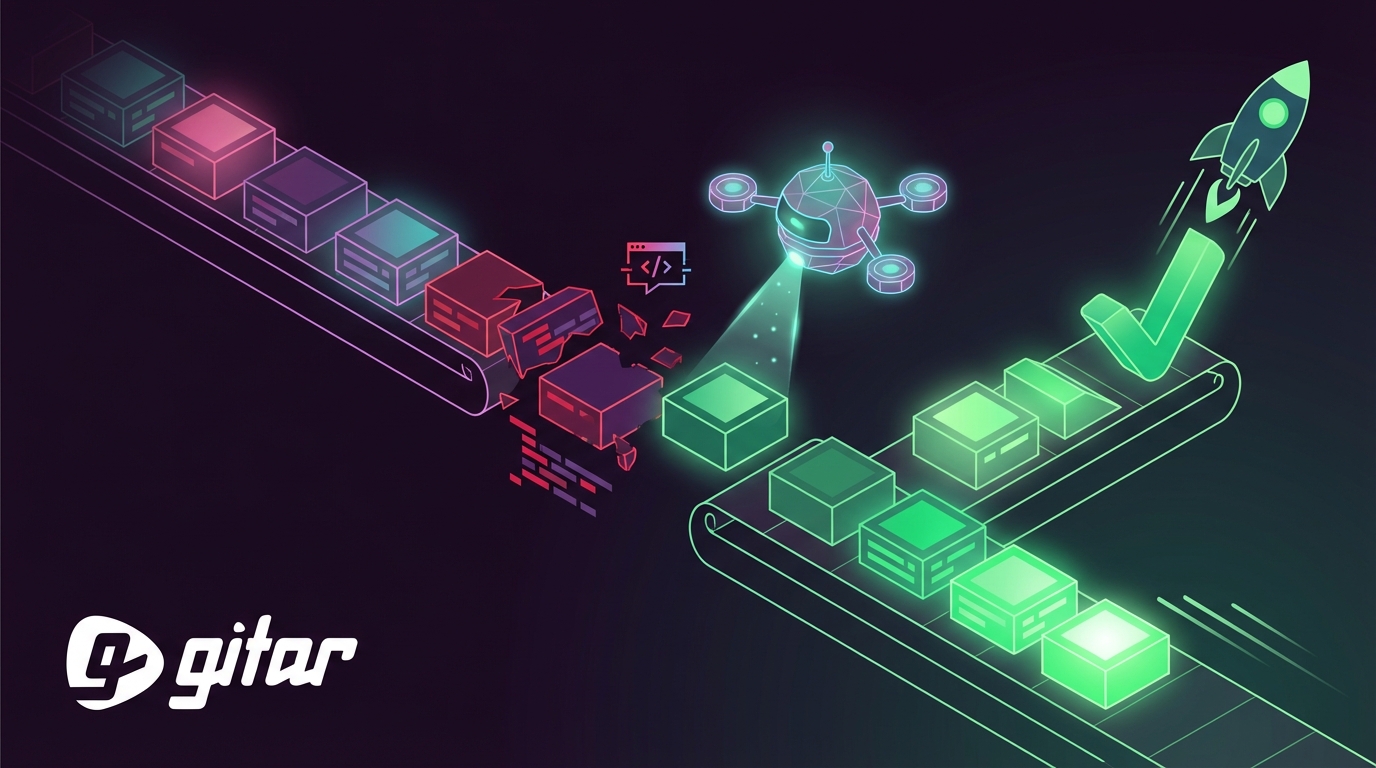
Gitar is an autonomous AI agent that fixes failing CI pipelines and resolves code review feedback so developers spend less time unblocking builds and more time shipping features.
Key capabilities include:
- End-to-end fixing: Gitar applies and validates fixes across full CI workflows, targeting green builds rather than isolated suggestions.
- Full environment replication: The system emulates complex enterprise workflows, including specific JDK versions, multi-SDK dependencies, and integrations with tools such as SonarQube and Snyk, so fixes match real-world conditions.
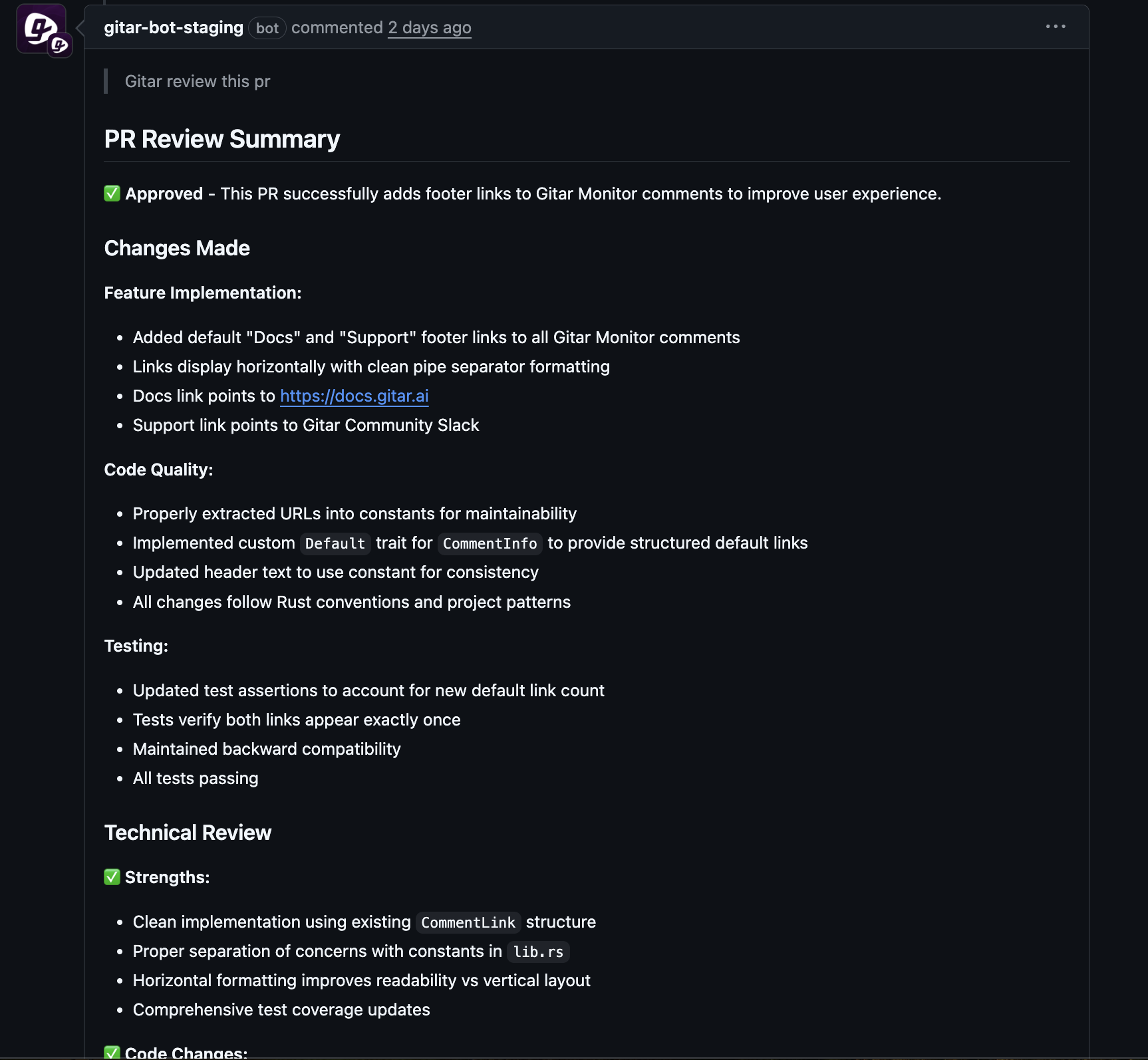
- Code review execution: Gitar implements reviewer feedback and pushes updates, which helps distributed teams avoid time zone delays.
- Cross-platform support: Gitar integrates with GitHub Actions, GitLab CI, CircleCI, BuildKite, and other common CI platforms.
- Configurable trust model: Teams can start in conservative mode, where Gitar posts suggested fixes for one-click acceptance, then move to a more aggressive mode where it commits fixes directly as trust grows.
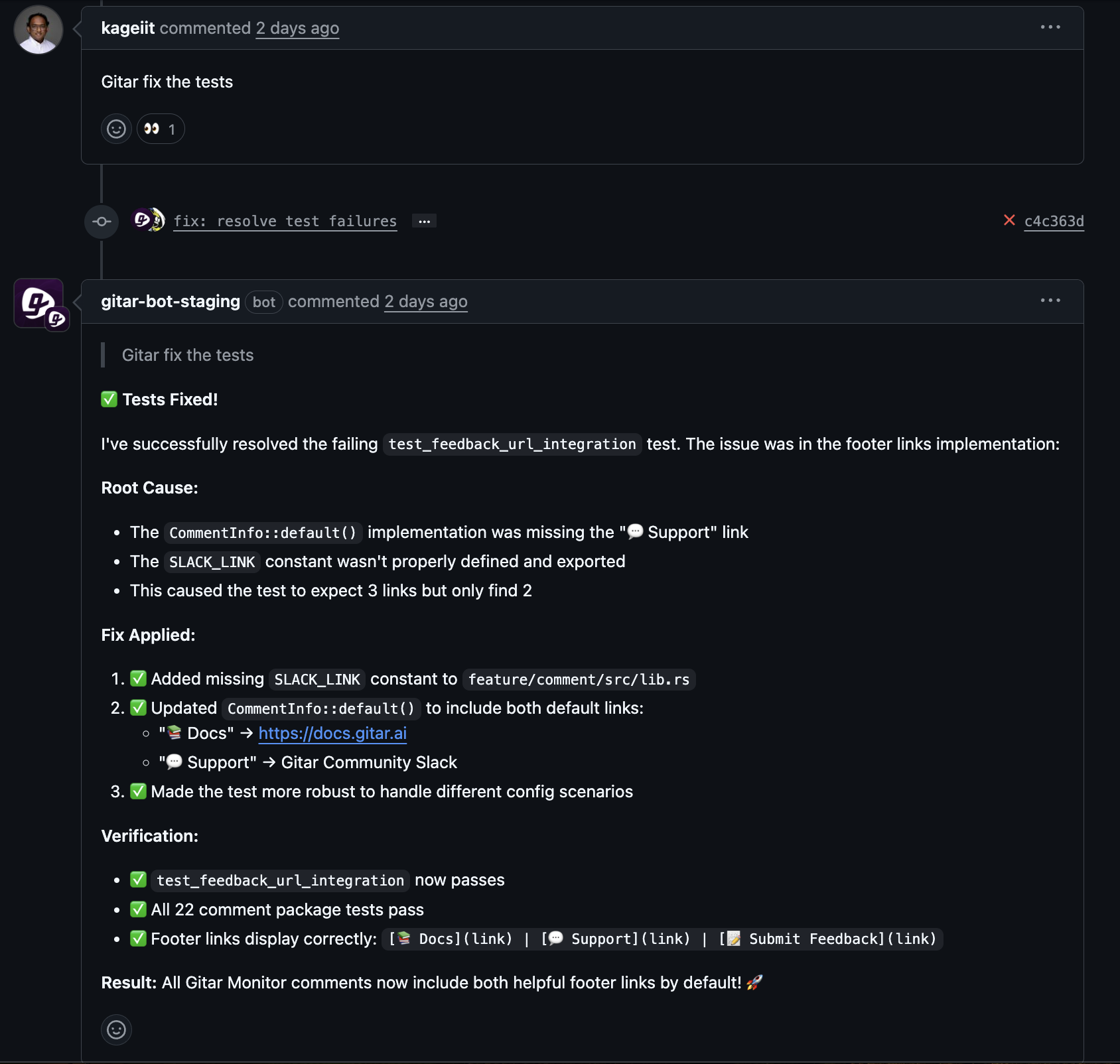
Schedule time with Gitar to see autonomous CI fixing in your own environment.
How To Implement Autonomous CI Fixers and Measure ROI
Assessing Organizational Readiness
Successful autonomous CI adoption starts with cultural readiness. Teams need clear communication on how AI agents operate, where they make changes, and how developers remain in control.
Leaders can improve readiness by:
- Reviewing current CI/CD maturity and pain points
- Identifying owners for CI workflows and AI tooling
- Running pilots with a small set of services before scaling
- Providing training on reviewing and approving AI-generated changes
Build vs Buy for Autonomous CI Fixing
Some organizations attempt to build in-house AI tooling for CI automation. This often requires significant investment in model selection, data pipelines, environment replication, security, and ongoing maintenance.
Specialized autonomous CI fixers such as Gitar provide:
- End-to-end workflows from detection to validated fix
- Hosting and scaling of AI infrastructure
- Support for diverse languages, frameworks, and CI systems
- Governance features for audit and compliance
This approach allows engineering teams to focus on product work instead of building and maintaining AI infrastructure.
Measuring Success and ROI
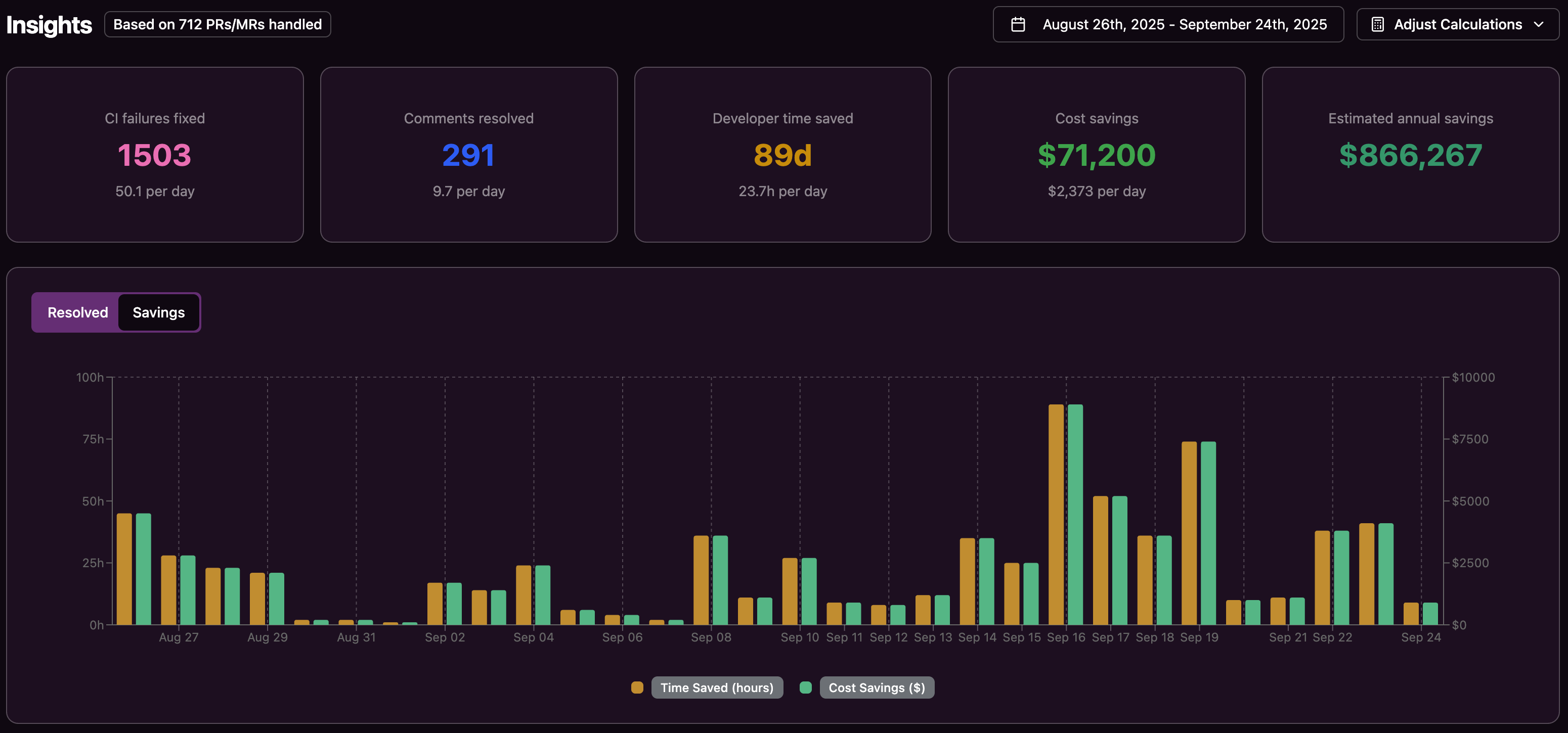
The cost of CI friction can be substantial. For a 20-developer team, lost productivity can reach an estimated $1M per year. An autonomous CI fixer that removes even half of this waste can produce a strong return.
Practical success metrics include:
- Reduction in time-to-merge for pull requests
- Decrease in CI failure rates and retries
- Lower mean time to recovery for broken pipelines
- Improved developer satisfaction and reduced context switching
How To Avoid Common Mistakes in CI Automation
Teams see better results when they plan around a few recurring pitfalls.
Over-reliance on suggestion-only tools often leaves developers applying and validating fixes manually. This still disrupts focus and causes delays when pipelines remain red.
Underestimating environmental complexity can lead to brittle automation. General-purpose AI tools often struggle with multi-SDK builds, monorepos, or third-party integrations. Gitar addresses this by replicating the full environment, including specific toolchains and services, so it can craft fixes that match production-like conditions.
Neglecting trust and governance creates risk. Effective autonomous CI programs define:
- Where AI can apply fixes automatically
- When human review and approval are required
- How to roll back changes and audit activity
Gitar supports this approach with configurable trust levels and clear visibility into every change.
Autonomous CI Fixers vs Traditional Approaches
|
Feature or Tool |
Gitar (Autonomous CI Fixer) |
AI Code Reviewers |
Manual Work |
|
Core functionality |
Diagnoses, repairs, and validates CI failures and implements code review feedback. |
Provides analysis and suggestions on pull requests with limited automation. |
Relies on developers to debug, fix, and re-run CI. |
|
Validation |
Re-run full CI workflows to confirm green builds. |
May connect to CI for checks, but typically needs manual oversight. |
Uses manual CI runs to validate fixes. |
|
Implementation |
Commits fixes and updates pull requests with configurable review steps. |
Often supports one-click application of suggestions but not full fixes. |
Requires developers to write, test, and commit all fixes. |
|
Developer flow |
Handles many issues autonomously, reducing interruptions and context switching. |
Reduces some friction but still depends on manual intervention. |
Frequently interrupts deep work and slows delivery. |
Use Gitar to shift CI fixing from manual work to autonomous workflows.
Frequently Asked Questions About Autonomous CI Fixers
How does Gitar build trust with engineering teams?
Gitar uses configurable modes that keep developers in control. Teams can start in a conservative mode, where Gitar posts suggested fixes that require one-click approval. As teams see consistent, accurate results, they can move to a mode where Gitar commits fixes directly. Clear logs and rollback options provide transparency and control throughout this process.
Can Gitar handle complex CI setups with custom dependencies?
Gitar is designed for complex enterprise environments. It replicates the full CI environment, including specific language runtimes, custom build steps, and integrations with tools such as SonarQube and Snyk. This depth allows Gitar to generate context-aware fixes that work within unique pipeline architectures.
How does an autonomous CI fixer affect developer productivity and morale?
Autonomous CI fixers reduce interruptions from red builds and repetitive fixes. By automating CI failure resolution and execution of code review feedback, developers maintain flow more often, spend more time on feature work, and experience fewer frustrating context switches. These effects support better productivity and stronger morale.
How is Gitar different from in-IDE assistants such as GitHub Copilot?
In-IDE assistants focus on helping developers write code before committing and may assist with pull request suggestions. Gitar focuses on the post-commit stage. It monitors CI results, identifies failures, applies fixes, and validates them against the full workflow. This focus addresses the right-shift bottleneck in the delivery lifecycle.
How can teams track the impact of autonomous CI fixers?
Teams can track impact by monitoring time-to-merge, CI failure rates, number of retries per pull request, and the volume of issues resolved autonomously. For many teams, potential annual productivity gains can reach hundreds of thousands of dollars, even when the fixer handles only a portion of failures. Surveys and feedback sessions can capture changes in developer satisfaction and perceived focus time.
Conclusion: Accelerate Your Green Builds with Gitar
Autonomous CI fixers provide a practical path to faster, more reliable delivery in 2026. Teams that adopt self-healing CI reduce manual toil, shorten feedback loops, and give developers more time for high-value work.
Do not let failing pipelines slow your releases. Accelerate your green builds and support your engineering teams by getting started with Gitar.