
Written by: Ali-Reza Adl-Tabatabai, Founder and CEO, Gitar
Key Takeaways
- AI-generated PRs have increased review times by 91% despite 98% more merges, shifting bottlenecks to validation and fixing.
- Graphite’s stacked PRs and Diamond AI reduce toil by 20-30% with fast reviews but require manual fixes and are GitHub-only.
- VSCode extensions like Claude Code and Cline offer IDE-integrated suggestions but lack CI integration and auto-apply capabilities.
- Gitar’s healing engine automatically resolves CI failures, implements review feedback, and guarantees green builds across multiple VCS/CI platforms.
- Teams save up to $750K annually with Gitar—see how much your team could save with a 14-day trial.
Evaluation Criteria for AI Code Review in PR Floods
AI-generated code has changed how teams must evaluate review tools. Average PRs per engineer increased 113% when AI adoption went from 0% to 100%, while AI-coauthored PRs have ~1.7× more issues than human PRs, and incidents per pull request increased 23.5% year-over-year. Traditional suggestion-based tools cannot handle this volume effectively. The table below highlights the critical gap: Graphite and VSCode extensions surface suggestions, while Gitar delivers autonomous fixes that remove manual implementation work.
|
Feature |
Graphite |
VSCode Extensions |
Gitar |
|
Auto-Fix Capability |
Suggestions only |
Manual inline |
Yes (heals CI/review) |
|
CI Integration |
Buildkite/GitHub Actions |
None |
Full (GitHub/GitLab/CircleCI) |
|
Notification Cleanliness |
Stacked but multi-comment |
Inline spam |
Single dashboard comment |
|
Setup Ease |
Workflow change |
Extension install |
GitHub App/GitLab integration |
|
Cross-Platform |
GitHub-only |
IDE-agnostic |
Multi-VCS/CI |
|
ROI (PR Floods) |
20-30% toil cut |
20% |
Guaranteed green builds |
For Gitar’s full CI integration details, see the Gitar documentation.
Graphite Deep Dive: Stacked PRs with Diamond AI
Graphite’s core strength is stacked pull requests, which break work into small, atomic PRs that improve review speed and quality. Graphite analysis shows ideal PR size is 50 lines, improving time-to-review, time-to-merge, and comments-per-line as PRs get smaller. Shopify reported 33% more PRs merged per developer and 75% of PRs flowing through Graphite after adoption.
Pros: Graphite Agent provides comprehensive AI code reviews with ~3% unhelpful comment rate and reviews completed in under 90 seconds. The platform enables independent reviews of small batches while work continues unblocked, and teams like Vercel and Snowflake use this pattern. Developers act on Graphite’s flags 55% of the time versus 49% for human reviewers.
Cons: Graphite is GitHub-only and has no CI healing capabilities. Diamond AI provides contextualized feedback with repo understanding, but teams must adopt stacked PR conventions, which can feel heavy for traditional workflows. Manual fixes remain necessary for all suggestions.
Top 5 VSCode AI Extensions for Code Review
VSCode extensions provide IDE-integrated AI assistance but still fall short on automated fixes and CI integration.
1. GitHub Copilot/Chat: Real-time AI code completion and inline feedback during typing. Excels in real-time suggestions and complements agentic tools. Cons: Manual implementation required, no CI context.
2. Claude Code: Context-aware coding with full repo analysis. Acts as a pair programmer with “Explain” and “Summarize diff” commands for reviewing changes. Pros: Conversational iterative prompts, strong Cursor alternative, multi-file edits. Cons: Limited PR workflow integration.
3. Cline: Open-source autonomous agent with full audit trail. Delivers low API costs ($1 for complex tasks) with user approval before changes. Pros: Cost-effective, transparent tracking. Cons: Requires manual approval for every change.
4. AI Toolkit: Supports building production-ready AI agents within VSCode. Pros: Agent pipeline capabilities. Cons: No PR-specific review features.
5. CodeRabbit/Bito: PR summaries and inline comments ($15-30/seat). Pros: Comprehensive analysis. Cons: Notification spam, expensive for suggestion-only functionality.
Graphite vs VSCode: Matrix Comparison and Gitar’s Advantage
Graphite and VSCode extensions share the same core limitation: they suggest fixes but do not implement them. This pattern creates a suggestion trap where teams pay premium prices for tools that still require manual work. The comparison below quantifies this gap across four critical dimensions and shows how Gitar’s auto-apply and CI auto-resolve capabilities differ from competitors’ manual workflows.
|
Feature |
Graphite |
VSCode Avg |
Gitar |
|
Auto-Apply Fixes |
No |
No |
Yes (validates/commits) |
|
CI Auto-Resolve |
Partial |
No |
Yes (green builds) |
|
PR Volume Handling |
Stacks (20-30%) |
Inline (20%) |
Healing engine |
|
Cost/ROI |
$40/user |
$15-30/user |
14-day trial free |
Gitar’s healing engine represents a fundamental architectural difference. When CI fails, whether from a lint error, test failure, build break, or similar issue, Gitar analyzes the failure logs, generates a code fix with full codebase context, validates that the fix works, and commits it automatically. This approach replaces hope-based automation with validated, working fixes (see documentation for deeper technical details).
Experience validated, working fixes with Gitar’s healing engine.
2026 Benchmarks and Real-World ROI
Industry benchmarks quantify the current productivity crisis. Productivity gains from AI tools often vanish because teams rework incorrect answers or code and apply manual fixes. As noted earlier, the quality gap in AI-generated code, with incidents up 23.5% per PR, drives this productivity drain.
In 5-PR flood scenarios, Graphite and VSCode extensions deliver 20-30% toil reduction through better suggestions and workflows. Gitar removes the manual fix loop with its healing engine. For a 20-developer team spending 1 hour daily on CI and review issues, Gitar reduces this to about 15 minutes per day per developer. That shift translates to $750K annual savings, moving from roughly $1M in productivity loss to about $250K.
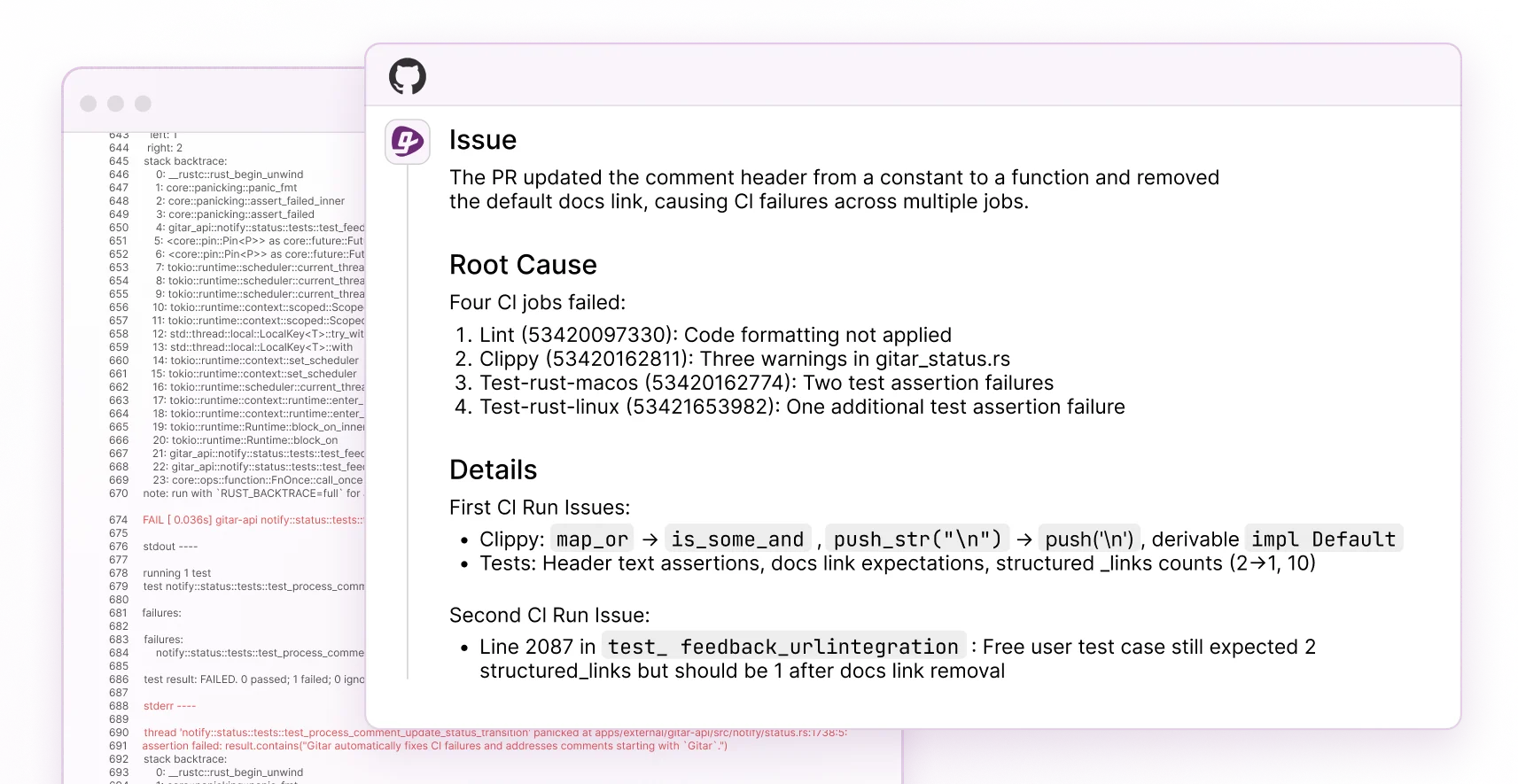
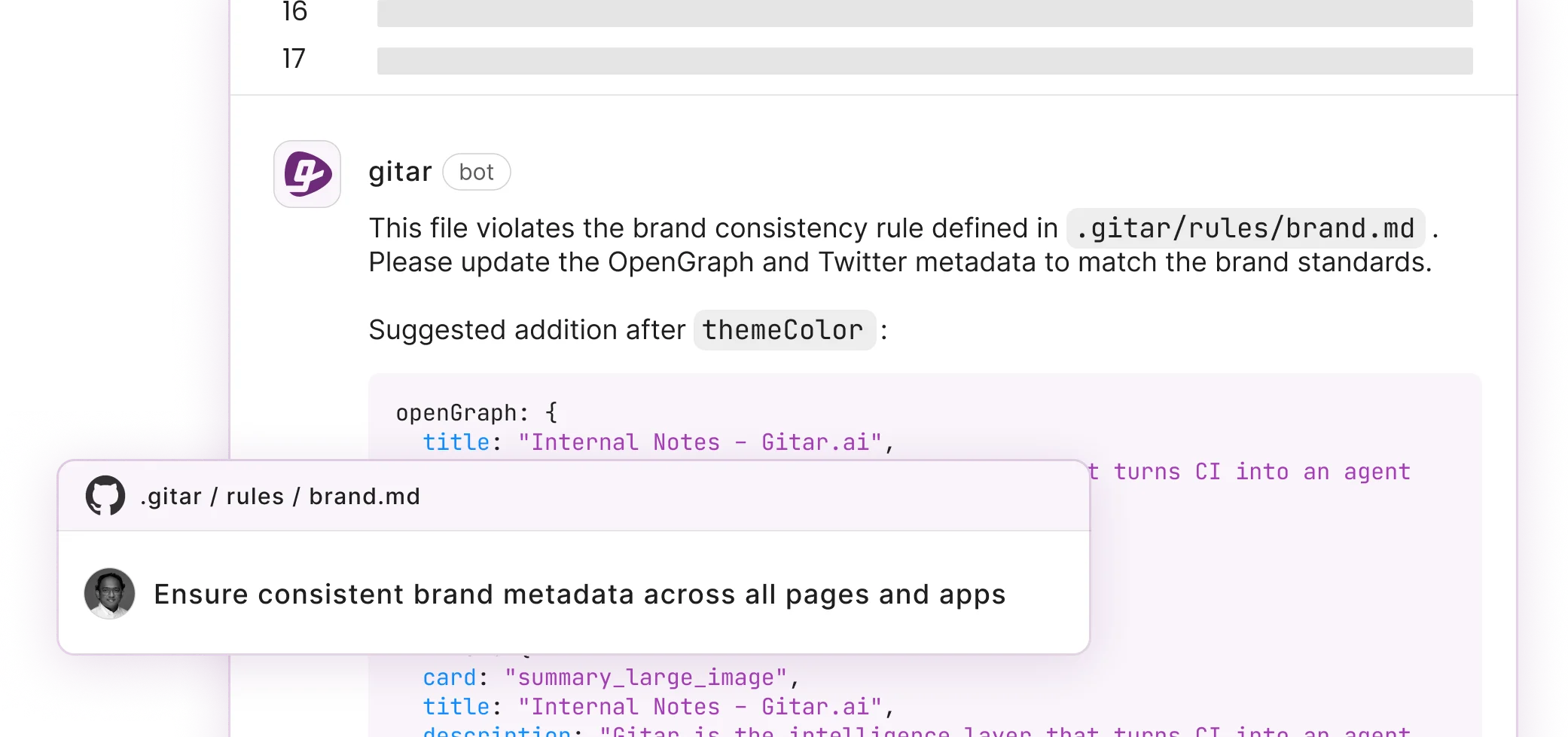
Beyond direct time savings, Gitar reduces adoption friction through design choices that address common automation concerns. Natural language rules remove YAML complexity and make policies accessible to non-DevOps team members. Jira and Slack integrations provide cross-platform context so fixes align with real project requirements. Trust phases enable gradual automation adoption and let teams verify behavior before moving to full autonomy. This learning approach, where the platform builds hierarchical memory of team patterns, means Gitar gets smarter over time while competitors start fresh on every PR (full setup guide available in the docs).
Tool Selection Guide by Team Size and PR Volume
Teams can select the right tool by matching capabilities to team size and PR volume.
- Solo developers: VSCode extensions (Claude Code, Cline) for IDE-integrated assistance.
- Growing teams (5-20 developers): Graphite for workflow discipline and stacked PR adoption.
- PR-flooded teams (20+ developers): Gitar for autonomous fixes and CI healing.
The key differentiator is simple: fixes, not flags. Suggestion engines charge premium prices for commentary that still requires manual implementation. Autonomous platforms deliver working solutions instead of extra review noise.
Is Graphite AI-powered for code review?
Graphite includes Diamond AI for automated code review with comprehensive analysis and sub-5% negative feedback rates. However, it only provides suggestions that require manual implementation, with no auto-apply or CI healing capabilities.
What is the best AI extension for VSCode in 2026?
Claude Code leads for context-aware refactoring and repo-wide analysis, while Cline excels for cost-effective autonomous agents with user approval workflows. GitHub Copilot remains strong for real-time completion but lacks review-specific features.
Can Gitar automatically fix CI failures?
Gitar’s healing engine automatically analyzes CI failure logs, generates validated fixes, and commits them to your PR. This coverage includes lint errors, test failures, build breaks, and dependency issues across GitHub Actions, GitLab CI, CircleCI, and Buildkite (see documentation for full details).
How does Gitar compare to CodeRabbit and Greptile pricing?
CodeRabbit charges $15 per developer and Greptile charges $30 per developer for suggestion-only tools. Gitar offers a 14-day free trial of the full Team Plan with auto-fix capabilities so teams can prove ROI before any payment commitment.
What makes Gitar different from other AI code review tools?
Gitar functions as a healing engine, not a suggestion engine. While competitors leave comments that require manual work, Gitar automatically implements fixes, validates them against CI, and guarantees green builds. The single dashboard comment approach reduces notification spam while still providing comprehensive analysis (see documentation for deeper examples).
Conclusion: Move from Suggestions to Autonomous Fixes with Gitar
Suggestion engines no longer meet the demands of the AI-generated PR flood. Graphite’s stacked workflows and VSCode extensions like Copilot improve developer experience but still keep teams stuck in manual fix cycles. Agentic quality control becomes standard in 2026, with AI agents handling entire implementation workflows including debugging failures.
Gitar represents the next evolution: autonomous review with guaranteed fixes. While competitors charge $15-30 per seat for commentary, Gitar’s healing engine removes the manual work entirely. The 14-day Team Plan trial demonstrates the difference between suggestion engines and a platform that delivers working solutions.
Make the shift from suggestions to autonomous fixes—try Gitar free for 14 days. Experience the complete development intelligence platform that goes beyond review to actual code healing. For implementation details, visit the Gitar documentation.