
Key Takeaways
- AI coding tools like Copilot increased code generation 3-5x, but PR review times rose 91% as traditional workflows became overloaded.
- Traditional manual reviews create reviewer fatigue and delays. Graphite’s stacked PRs speed merges but lack auto-fixes and CI integration, while costing $30 per user each month.
- Gitar delivers free AI code reviews with PR summaries, inline suggestions, and multi-platform support (GitHub, GitLab, CircleCI), unlike Graphite’s GitHub-only support.
- Gitar’s autofix engine analyzes CI failures, generates validated fixes, and commits them, which guarantees green builds and saves teams about $1M per year in productivity.
- Teams that switch to Gitar remove post-AI bottlenecks with free unlimited repos, a single-comment dashboard, and simple migration from Graphite or manual reviews.
Why Manual Code Review Breaks Under AI Scale
Manual code reviews on GitHub PRs and GitLab MRs now struggle to keep up with AI-accelerated development in 2026. The “AI-Generated Code Tsunami” shows humans cannot reliably review hundreds or thousands of lines for subtle flaws. Traditional workflows buckle under reviewer fatigue, timezone gaps, and constant notification pings.
Recent data highlights the scale of this pressure. GitHub reports a 29% year-over-year increase in merged pull requests, and Greptile’s State of AI Coding report shows median PR size grew 33% in 2025. Reviewers now spend more time validating AI-generated code than writing it, which turns reviews into the main bottleneck for shipping features.
What Developers Say About Review Friction
Engineering teams describe the same pain pattern across forums and retros. Reviewers spend over an hour per PR, bounce between tools and notifications, and wait across timezones for basic feedback. Focus on tiny issues like variable names or spacing slows delivery and drains energy. Fatigued reviewers request more rounds of changes, so merges take longer and morale drops.
How Graphite Speeds Stacked PRs
Graphite presents itself as an AI-powered code review platform built around stacked pull requests that accelerate development. Shopify reported 33% more PRs merged per developer after adopting Graphite stacked PRs, and Asana saw engineers save 7 hours weekly while shipping 21% more code.
Graphite’s Diamond AI offers fast feedback with a strong change implementation rate and cuts pull request feedback loops from over an hour to about 90 seconds. Clear tradeoffs remain. Graphite supports only GitHub, does not apply fixes automatically, costs $30 per user each month, and faces context window limits that struggle with very large pull requests.
Core Capability Comparison: Traditional, Graphite, and Gitar
Key differences between traditional manual reviews, Graphite’s AI suggestions, and Gitar’s autofix model appear clearly in a side-by-side comparison.
|
Capability |
Traditional (GitHub/GitLab) |
Graphite |
Gitar |
|
PR Summaries |
Manual |
AI |
Free AI |
|
Inline Suggestions |
Manual |
AI |
Free AI |
|
Auto-Apply Fixes |
No |
No |
14-day free trial |
|
CI Failure Analysis |
No |
Limited |
Yes |
|
Green Build Guarantee |
No |
No |
Yes |
|
Pricing |
Free (manual) |
$30/user/month |
Free code review |
|
Platform Support |
Multi |
GitHub-only |
GitHub/GitLab/CircleCI/Buildkite |
Graphite improves merge speed with stacked PRs but stops at suggestions. It does not connect deeply to CI or apply fixes automatically, so teams still implement changes by hand and hope they pass in real pipelines.
Gitar’s Autofix Model: From Detection to Guaranteed Fix
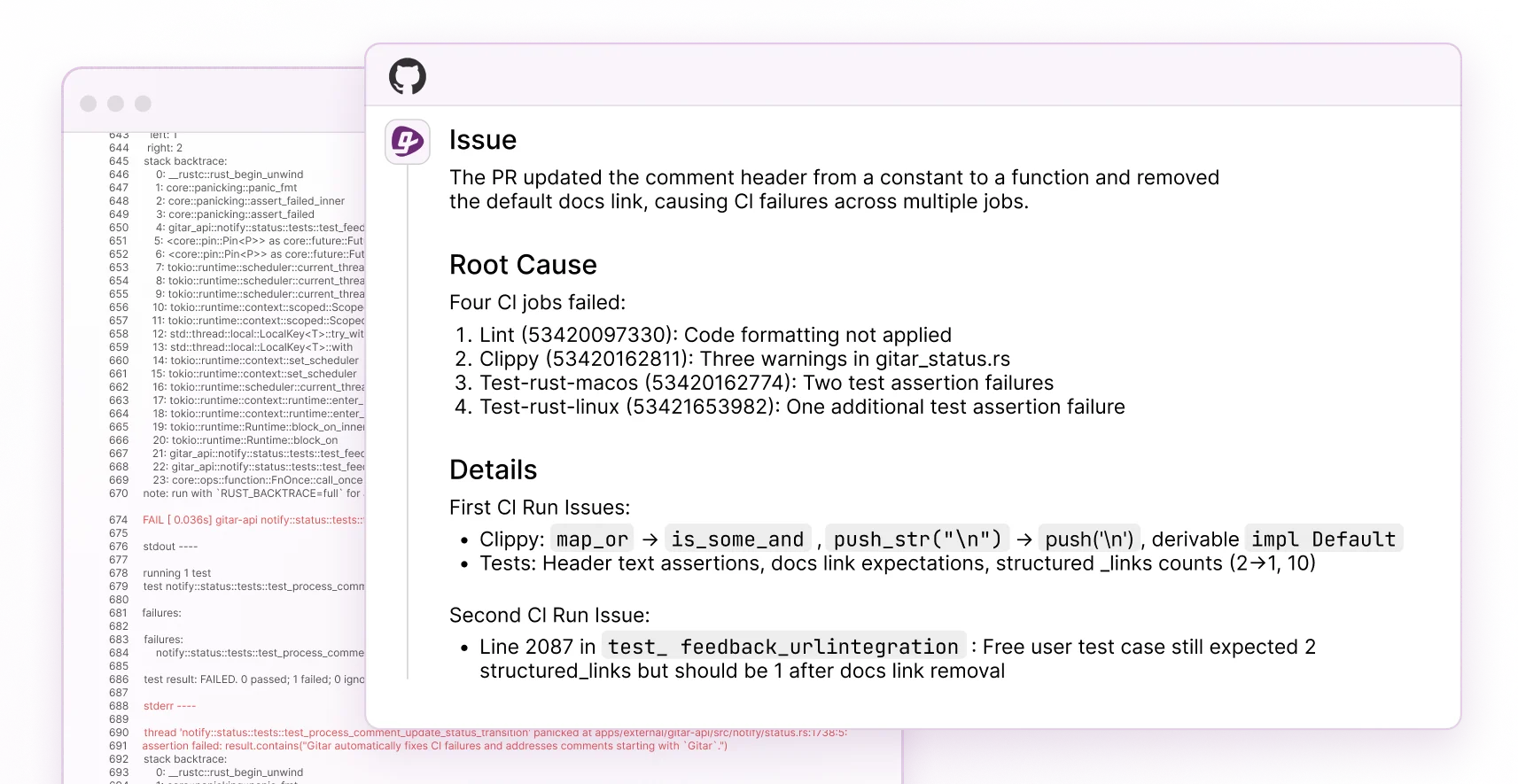
Gitar closes the gap between finding problems and shipping working fixes. When CI fails with lint errors, test failures, or build breaks, Gitar reads the failure logs, proposes fixes, validates them, and commits the changes automatically. This healing engine replaces suggestion-only workflows that leave developers to guess, patch, and rerun CI repeatedly.
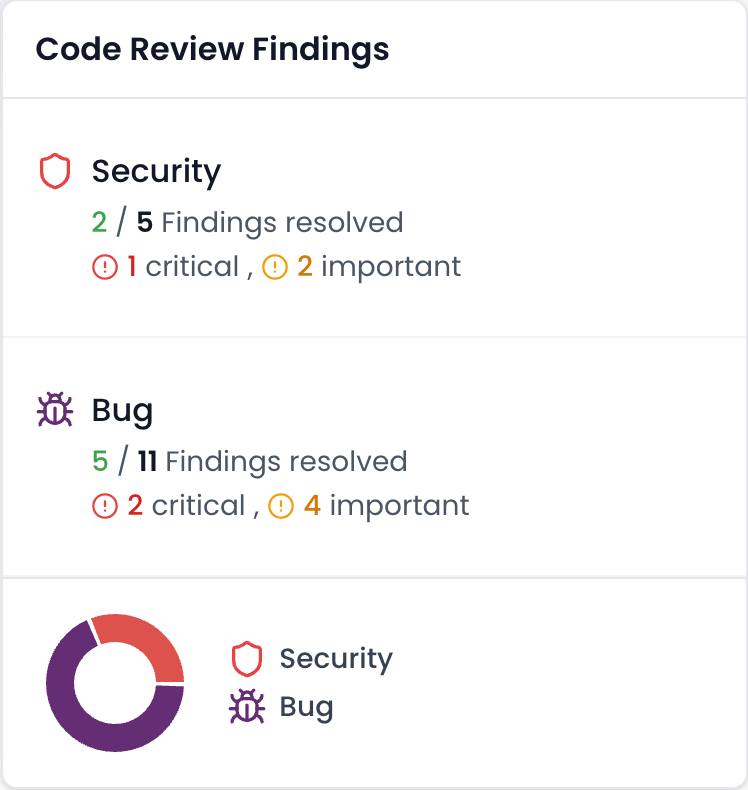
Gitar also simplifies how feedback appears. The single-comment interface gathers CI analysis, review feedback, and rule checks into one live-updating dashboard comment, which cuts notification noise. Teams report that Gitar’s summaries stay shorter and clearer than alternatives because the system filters aggressively for signal over noise.
2026 Results: How Gitar Delivers $1M in Annual Savings
Benchmarks from real teams show how automated fixes outperform suggestion-only tools in both time and cost.
|
Metric |
Before Gitar |
After Gitar |
Annual Savings |
|
Time on CI/review issues |
1 hour/day/dev |
~15 min/day/dev |
$750K (20-dev team) |
|
Tool costs |
$450-900/month |
$0 |
$5.4K-10.8K |
|
Context switching |
Multiple/day |
Near-zero |
$250K productivity |
Cursor AI cuts individual developer time by 55%, and teams using AI code review tools see 42-48% better bug detection. Gitar adds autofix on top of these gains while avoiding per-seat fees. The Graphite ROI calculator shows a 4-6 month payback window and 300-500% first-year ROI from speed alone, yet Gitar delivers similar or greater impact without recurring review costs.
Step-by-Step Migration from Traditional or Graphite to Gitar
Teams can adopt Gitar through a simple four-phase rollout. First, install the GitHub App or GitLab integration in about 30 seconds with no account setup. Next, run in suggestion mode so reviewers can inspect and approve proposed fixes. Then enable automation for trusted categories such as lint issues and failing tests. Finally, expand into repository rules, analytics, and Jira or Slack integrations to automate the full development workflow.
Decision Guide: Matching Tools to Team Needs
Different team profiles benefit from different review approaches, so this matrix helps clarify the fit.
|
Team Profile |
Traditional |
Graphite |
Gitar |
|
Small teams (<10 devs) |
✓ Simple |
✗ Expensive |
✓ Free + autofix |
|
High CI complexity |
✗ Manual fixes |
✗ No CI context |
✓ Healing engine |
|
Multi-platform (GitLab/CircleCI) |
✓ Native support |
✗ GitHub-only |
✓ Cross-platform |
|
Budget constraints |
✓ Free manual |
✗ $30/user/month |
✓ Free AI |
Why Gitar Becomes the Default Choice
The 2026 environment rewards tools that apply fixes, not just suggest them. Traditional manual reviews cannot keep pace with AI-generated code volume, and Graphite’s stacked PRs improve speed without closing the fix implementation gap. Gitar’s free healing engine gives teams both fast reviews and reliable green builds.
Engineering leaders who want to remove the post-AI coding bottleneck gain a clear path forward with Gitar.
Frequently Asked Questions
How Gitar’s Autofix Capability Compares to Graphite’s AI Suggestions
Graphite delivers AI suggestions and feedback through Diamond AI with a strong implementation rate, but developers still apply changes manually. They must push new commits and wait to see whether CI passes. Gitar’s autofix engine reads CI failures, generates fixes, validates them, and commits directly to the PR. This removes the manual step and ensures that fixes succeed in the actual CI environment instead of remaining untested recommendations.
Why Gitar’s Code Review Is Free While Others Charge $15-30 per Developer
Gitar treats code review as a baseline capability that earns developer trust rather than the main product. Many competitors charge for basic PR analysis and suggestions, while Gitar focuses its business model on advanced analytics, enterprise workflows, custom integrations, and CI-as-an-agent infrastructure. Free code review with unlimited repositories and no seat limits lets Gitar deliver strong value and build a foundation for deeper development intelligence.
How Gitar Handles Complex, Multi-Platform CI Environments
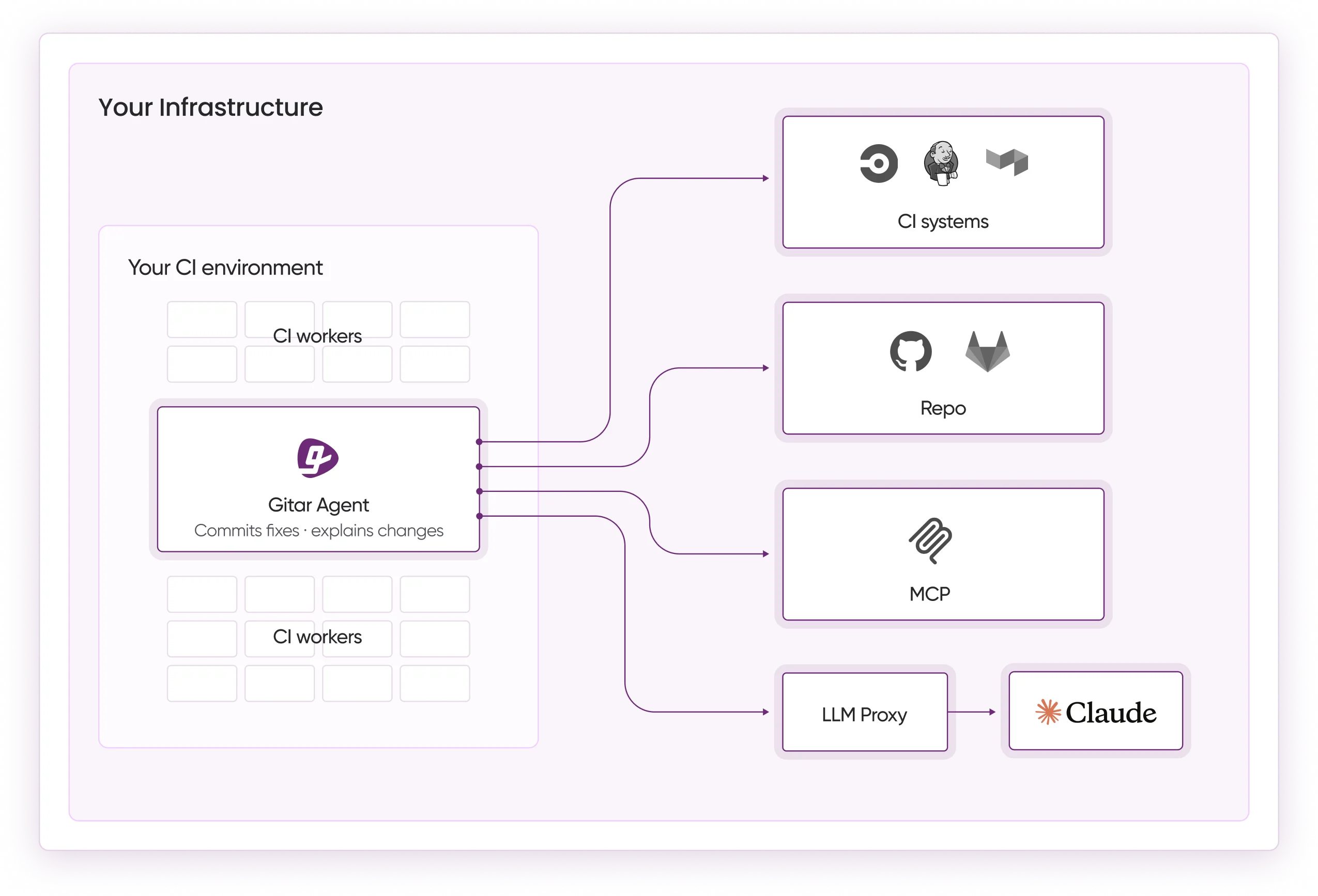
Gitar supports GitHub, GitLab, CircleCI, Buildkite, and other major platforms, which avoids Graphite’s GitHub-only restriction. The system emulates full CI environments, including SDK versions, multi-dependency builds, and third-party scans. Enterprise customers can run Gitar agents directly inside their CI pipelines with access to secrets and caches, so fixes match production behavior. This rich CI context enables Gitar to guarantee green builds instead of offering only possible fixes.
How the Single-Comment Experience Reduces Notification Fatigue
Traditional AI review tools scatter inline comments across diffs and generate many notifications per push. Developer inboxes quickly fill with noise. Gitar rolls CI analysis, review feedback, security checks, and rule results into one dashboard comment that updates in place. Resolved items collapse automatically after you push fixes, which keeps the thread clean and centralizes all review context. Developers stay focused on coding instead of chasing scattered alerts.
What the Migration Process Looks Like from Graphite or Traditional Reviews
Migration to Gitar follows a gradual, low-risk path. Teams first install the GitHub App or GitLab integration in under a minute without creating new accounts. They then run Gitar in suggestion mode alongside current tools to compare quality and build trust. After that, they enable auto-commit for specific failure types such as lint issues or test failures. Finally, they roll out custom repository rules, analytics dashboards, and workflow integrations, which lets them adopt automation without disrupting existing delivery cycles.