
Written by: Ali-Reza Adl-Tabatabai, Founder and CEO, Gitar
Key Takeaways for Busy Engineering Teams
- Graphite speeds stacked PR workflows and reviews but lacks true auto-fix and CI healing.
- CodeRabbit catches more bugs and supports multiple platforms, yet still creates notification noise and manual fix work.
- Both tools rely on comments instead of changes, contributing to 91% longer PR review times amid AI code floods and up to $1M in annual productivity loss.
- Gitar’s Healing Engine applies fixes, heals CI failures, and guarantees green builds on paid plans, delivering proven $750K annual savings.
- Teams can move from suggestions to shipped fixes with Gitar’s 14-day free Team Plan trial for automated code healing and faster releases.
Graphite AI Code Review Overview (Is Graphite AI-Powered?)
Graphite is an AI-powered code review platform that uses the Graphite Agent for context-aware suggestions and stacked pull request workflows. The platform focuses on breaking changes into small, dependent PRs that enable reviews in under 90 seconds with a sub-5% negative feedback rate.
Graphite’s core capabilities include stacked pull requests, AI-driven feedback with full codebase understanding, stack-aware merge queues for parallel testing, and GitHub-only integration. However, independent benchmarks show Graphite with limited bug detection rates.
Pros:
- Atomic PR workflows improve review speed
- Low false positive rate (sub-5% unhelpful feedback)
- Clean interface superior to GitHub’s native UI
Cons:
- One-click fixes still require user confirmation
- Limited critical bug detection per benchmarks
- GitHub-only platform limitations
- Premium pricing at $40/user/month
CodeRabbit AI Code Review Deep Dive
CodeRabbit provides AI code review with codebase-aware analysis, line-by-line suggestions, and real-time chat. The platform integrates with GitHub, GitLab, and Bitbucket, with pricing from $15-30 per seat monthly. CodeRabbit shows strong bug detection in benchmarks.
Key features include one-click fix suggestions aligned with coding guidelines, code flow visualization, automated release notes, PR summaries with sequence diagrams, and integration with static analyzers and security tools. CodeRabbit combines static analyzers, linters, and security tools with generative AI for broad coverage.
Pros:
- Broad language and platform support
- Stronger bug detection compared to Graphite
- Configurable review depth and custom rules
- Interactive chat interface for clarifications
Cons:
- Notification spam from excessive inline comments
- No auto-apply or full CI failure resolution
- False positives require manual filtering
With both tools’ individual strengths and limitations mapped, direct benchmarks show how they perform head-to-head in real workflows.
Graphite vs CodeRabbit: Head-to-Head Benchmarks for PR Review
The following benchmarks highlight differences in bug detection, automation, and CI handling across Graphite, CodeRabbit, and Gitar.
|
Metric |
Graphite |
CodeRabbit |
Gitar |
|
Bug Detection Rate |
~18% overall per benchmarks |
~46% overall per benchmarks |
Guarantees green builds (Trial/Team) |
|
Critical Bug Catch |
Limited |
Strong |
Validated fixes |
|
Auto-Fix Capability |
Partial (one-click) |
No |
Yes (Trial/Team) |
|
CI Integration |
Limited |
PR-triggered reviews |
Full healing |
Both tools miss many logic bugs according to analyses, which helps explain why teams still see the review delays mentioned earlier despite AI adoption. This gap has real cost impact: for a 20-developer team, comment-driven tools cost $450-900 monthly for feedback that still requires manual implementation, compared to Gitar’s demonstrated ROI through automated fixes that remove that manual work.
The 2026 landscape includes 82 million monthly pushes on GitHub, with teams coding 3-5 times faster while sprint velocities stay flat because review and CI remain the bottleneck.
User Reviews & Reddit Insights on Graphite and CodeRabbit
Developer forums reveal consistent pain points with both platforms. CodeRabbit users report notification overwhelm, with one r/devops discussion highlighting how “CodeRabbit generates too many comments, cluttering the GitHub timeline and creating review fatigue.” The platform’s configurability helps reduce noise but often requires significant setup time.
Graphite receives praise for its clean interface and stacked PR approach, with users appreciating the fast review speeds mentioned earlier. However, the GitHub-only limitation and comment-focused workflow leave developers manually implementing fixes. Teams value Graphite’s low false positive rate but question the premium pricing for what still functions as a commenting system.
Both platforms share the core limitation of requiring manual work after AI analysis. Users consistently request auto-fix capabilities and better CI integration, gaps that Gitar addresses with its single-comment approach and Healing Engine architecture.
These user-reported gaps, especially the need for auto-fix and stronger CI integration, define where Gitar’s design diverges from analysis-only tools.
Why Gitar Crushes the Competition: The Healing Engine
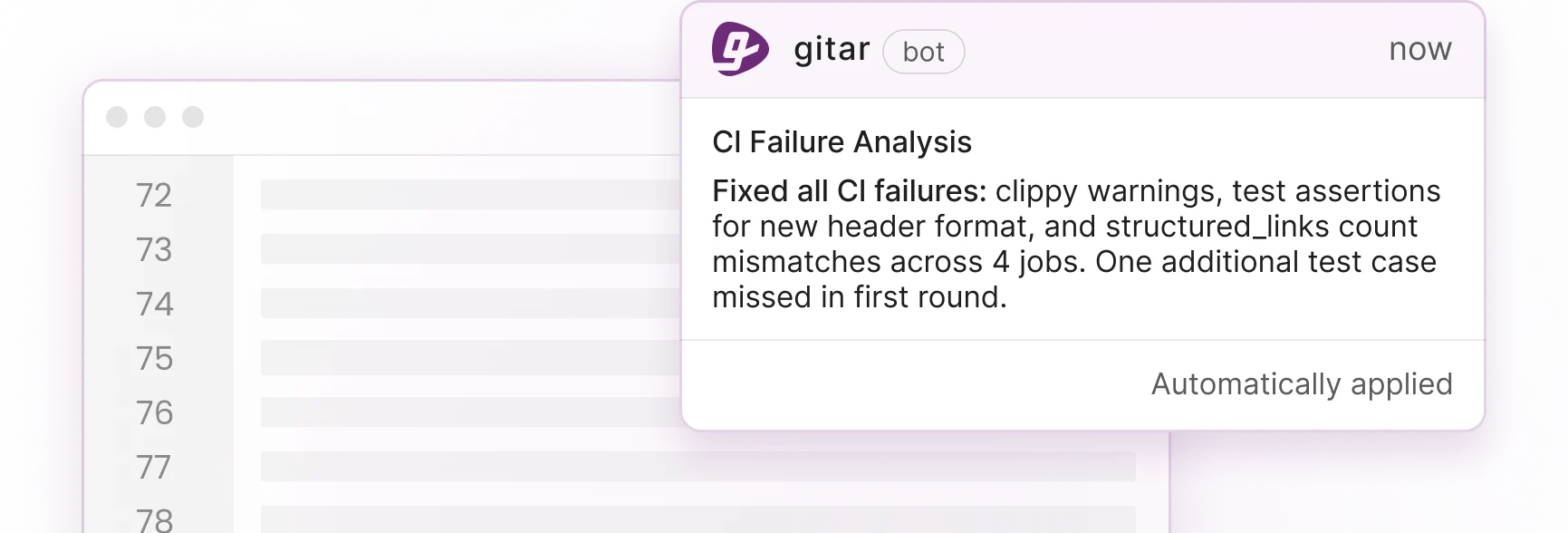
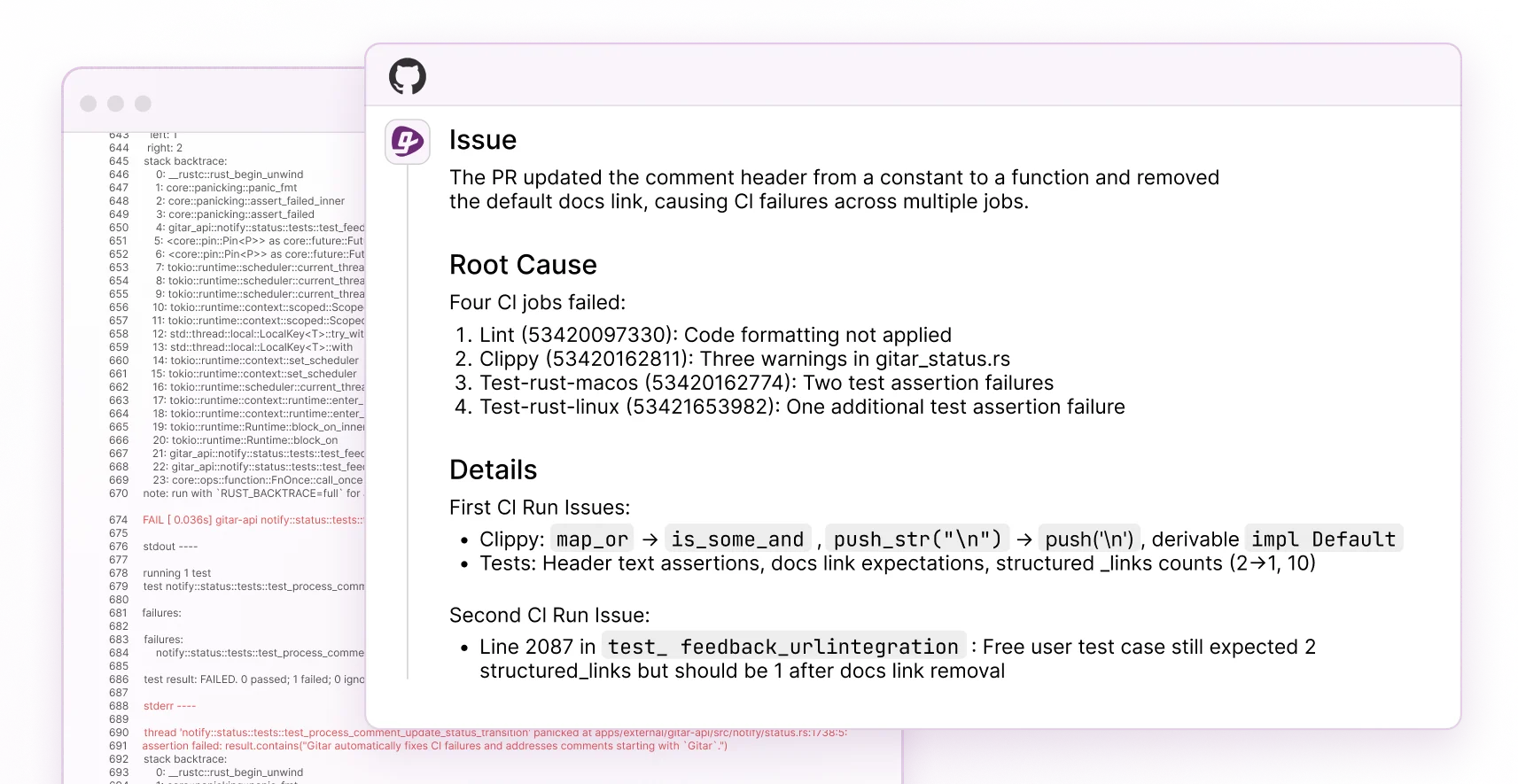
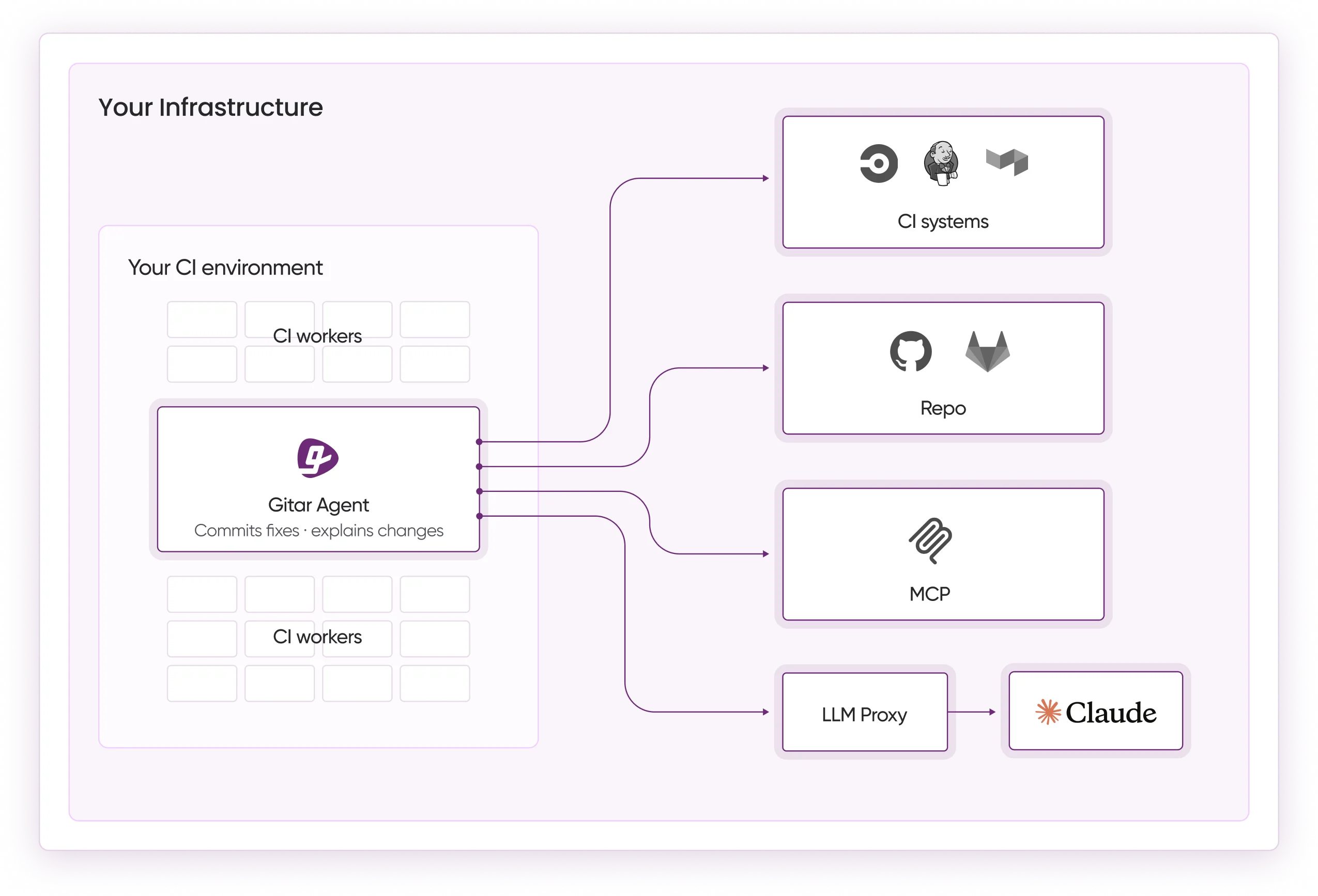
Gitar turns code review from commentary into shipped fixes through its Healing Engine, which auto-fixes CI failures, implements review feedback, and validates changes before committing. When lint errors, test failures, or build breaks occur, Gitar analyzes failure logs to understand the root cause, then generates fixes using full codebase context so the change fits the broader system. Before committing, it validates these solutions in isolation to confirm they work, and only then commits the verified fix automatically. For more details, see the Gitar documentation.
These capabilities translate into concrete feature differences that separate Gitar from tools that only leave comments.
|
Capability |
Graphite |
CodeRabbit |
Gitar |
|
Auto-Apply Fixes |
No |
No |
Yes (Trial/Team) |
|
CI Failure Analysis |
No |
No |
Yes |
|
Green Build Guarantee |
No |
No |
Yes |
|
Workflow Automation |
Limited |
No |
Yes |
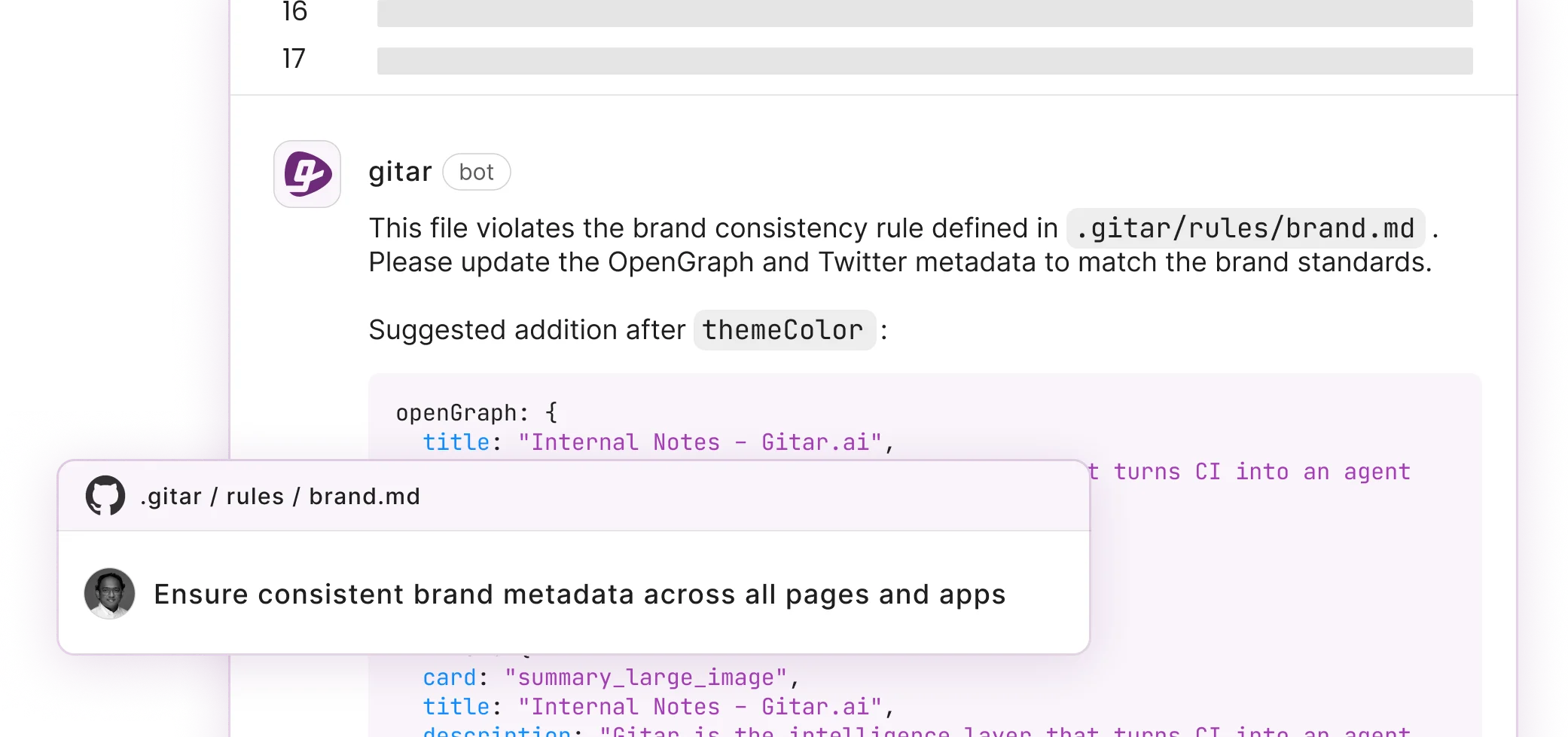
Real scenarios show Gitar’s advantage in practice. Timezone-based test failures get corrected automatically, security vulnerabilities receive validated patches, and performance issues get tuned without developer intervention. The platform uses natural language rules instead of complex YAML, so teams can define automation without deep CI scripting expertise. Detailed documentation and integration guides are available at docs.gitar.ai.
Decision Framework: Choosing AI Code Review in 2026
Use this framework to match your primary use case with the tool that fits your workflow and automation needs.
|
Use Case |
Recommendation |
Reasoning |
|
Basic PR Summaries |
CodeRabbit |
Lower cost, multi-platform |
|
Stacked Workflows |
Graphite |
GitHub-focused teams |
|
Auto-Fix & Scale |
Gitar |
Healing Engine, ROI proven |
The verdict for 2026 is clear: suggestion engines like Graphite and CodeRabbit served the pre-AI era when code volume was manageable, but today’s PR flood driven by AI code generation requires autonomous solutions that can keep pace. Teams paying $15-40 per developer monthly for comments that still require manual work are solving yesterday’s problems with yesterday’s tools while the real constraint has shifted to implementation bottlenecks.
Gitar represents the next evolution, moving teams from code review to code healing. The 14-day Team Plan trial removes risk and demonstrates ROI through measurable productivity gains instead of minor review speedups.
Start your 14-day Team Plan trial and eliminate PR bottlenecks with automated fixes.
Frequently Asked Questions
Is Graphite better than CodeRabbit for AI code review?
Both tools excel in different areas. Graphite shines with stacked PR workflows and clean GitHub integration, achieving sub-90-second review times with low false positives and one-click fixes. CodeRabbit delivers stronger bug detection and multi-platform support across GitHub, GitLab, and Bitbucket. However, both remain primarily comment-driven tools that require manual steps for fixes, which makes them incomplete for teams facing dramatic increases in PR review time from AI-generated code volume.
What is the main difference between suggestion engines and healing engines?
Suggestion engines like Graphite and CodeRabbit analyze code and leave comments describing potential issues or improvements. Developers must then manually implement these suggestions, push new commits, and hope the fixes work. Healing engines like Gitar go beyond analysis to automatically implement fixes, validate them against CI systems, and commit working solutions. This removes the manual toil that keeps suggestion engines costly despite their $15-40 monthly per-developer pricing.
Can Gitar replace both Graphite and CodeRabbit?
Yes, Gitar provides the core functionality of both platforms, including PR summaries, inline suggestions, and code analysis, while adding auto-fix capabilities, CI failure healing, and workflow automation. The platform supports GitHub, GitLab, CircleCI, and Buildkite with natural language rule configuration instead of complex YAML. Teams can evaluate a full replacement through Gitar’s 14-day free Team Plan trial, which includes unlimited repositories and no seat limits during the trial period.
How does auto-fix technology actually work in practice?
Auto-fix technology analyzes failure logs from CI systems to understand root causes, generates code fixes using full codebase context, validates solutions in isolated environments, and commits working changes automatically. For example, when a lint error occurs, the system identifies the specific rule violation, generates the corrected code, tests it against the same linting rules, and commits the fix if validation passes. This process runs without developer intervention and turns red builds green before developers even notice failures occurred.
What ROI can teams expect from switching to auto-fix code review?
Teams usually see significant productivity improvements when moving from suggestion-only tools to auto-fix platforms. A 20-developer team spending 1 hour daily on CI and review issues costs approximately $1 million annually in lost productivity. Auto-fix technology can reduce this to about 15 minutes daily, saving $750,000 yearly while cutting context switching and notification fatigue. The ROI becomes visible within the first sprint as developers spend less time on manual fixes and more time on feature delivery.