
Written by: Ali-Reza Adl-Tabatabai, Founder and CEO, Gitar
Key Takeaways
- Graphite can deliver 2x merge velocity and 33% more PRs for teams like Shopify that fully commit to stacked PR workflows.
- A steep Git learning curve and partial adoption often create workflow chaos and trigger team pushback in 2026 rollouts.
- Graphite does not auto-fix CI failures, so developers still implement suggestions manually instead of relying on a healing engine.
- GitHub-only support blocks teams that work in GitLab or Bitbucket from using Graphite across all repositories.
- Gitar increases velocity with automatic CI fixes while keeping your existing workflows intact.
How Graphite Works: Stacked PRs and AI Review
Graphite combines two core capabilities: stacked pull requests and AI-powered code review through its Diamond Agent, now called Graphite Agent. The stacked PR workflow lets developers create dependent PRs without waiting for upstream merges. Teams can move large features forward in smaller, parallel chunks instead of one massive branch.
The platform integrates exclusively with GitHub and supports both terminal and browser workflows. Developers who prefer the command line use CLI tools such as gt create and gt submit –ai. Others rely on a web interface that consolidates PR information into a single vertical page, which simplifies review and navigation.
To support these workflows, Graphite Agent provides one-click fixes, resolves CI failures inline, and includes a merge queue that keeps stacked PRs moving. These features help teams that already embrace stacked workflows keep their pipelines unblocked.
Cursor acquired Graphite in December 2025. Despite that change in ownership, Graphite continues as an independent product. The acquisition focuses on deeper editor integrations planned throughout 2026, which should tighten the connection between the editor, stacks, and AI review.
Top 2026 Graphite Pros: Real Wins from Shopify, Asana, and Others
1. Shopify’s Velocity Breakthrough
Shopify reported 33% more PRs merged per developer after adopting Graphite, with 75% of PRs now going through Graphite. This result stands out as one of the clearest documented velocity improvements in 2026 for teams that fully embrace stacked PRs.
2. Asana’s Time Savings
Asana engineers saved 7 hours weekly, shipped 21% more code, and cut median PR size by 11% using Graphite’s stacked PRs. Smaller PRs and parallel workstreams translated into measurable productivity gains for their engineering teams.
3. Enterprise Stack Management
Engineers at Vercel, Snowflake, and The Browser Company maintain stacks of 5–10 PRs each under roughly 200 lines. This pattern keeps reviews independent and manageable while allowing ongoing work to continue without blocking on a single large PR.
4. Faster, Cleaner UI for Reviews
Software engineer David Gomes found Graphite’s UI loads pages about 10x faster than GitHub’s. Graphite still shows the entire code diff while GitHub often limits the initial view to summaries, which makes Graphite feel more responsive during heavy review days.
5. Shorter Merge Times for Committed Teams
Teams that commit to stacked workflows report median PR merge time dropping from 24 hours to about 90 minutes. This improvement depends on consistent use of stacks and shared conventions across the team.
To experience similar merge speed gains without changing your Git habits, try Gitar’s 14-day Team Plan trial and see how automatic CI fixes streamline your pipeline.
Graphite Pitfalls Ranked: 2026 Challenges and Reddit Feedback
1. Steep Learning Curve and Team Pushback
The most common 2026 complaint centers on Git workflow complexity. Teams describe “revolt” scenarios where developers resist stacked PR conventions. Partial adoption then creates more chaos than benefit because some developers use stacks while others stay on traditional branching.
2. All-or-Nothing Adoption Requirements
Without workflow discipline and stacked PR conventions, Graphite feels heavier than lightweight reviewer bots due to added implementation cost. This implementation overhead includes learning advanced Git workflows, defining new conventions, and managing stacks across many contributors. These costs only pay off when the entire team commits, so half-hearted adoption delivers negative ROI as teams carry the overhead without achieving the promised velocity.
3. GitHub-Only Limitation
Graphite’s functionality is currently restricted to GitHub, making it less versatile for teams using other platforms like GitLab or Bitbucket. Mixed-environment organizations cannot standardize on Graphite across all repos, which complicates tooling strategy.
4. No Auto-Fix Guarantee
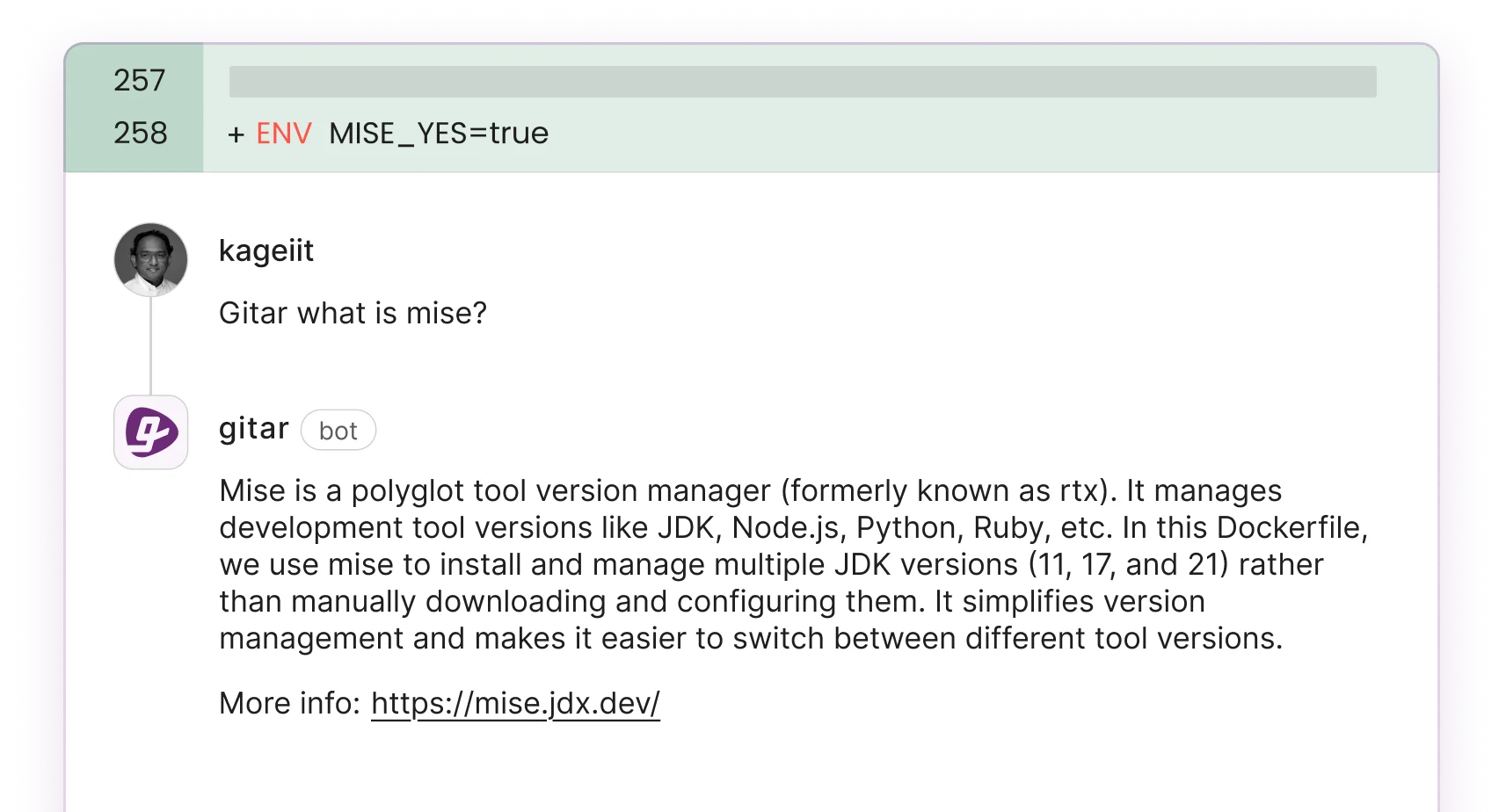
Graphite suggests changes but does not guarantee that those changes pass CI. Unlike healing engines that validate fixes against your CI pipeline, Graphite still expects developers to apply and verify most fixes manually.
What Reddit Users Report About Graphite PR Reviews
Reddit discussions describe Graphite as “velocity if committed, hell otherwise.” That phrase captures the split in user experience. Teams that align on stacked workflows report transformational productivity gains and smoother reviews. Teams that struggle with adoption describe notification overload, confusing stack states, and workflow disruption that outweighs the benefits.
Graphite vs. Top Alternatives: 2026 Switches with Gitar at #1
#1 Gitar – Healing Engine for Automatic Fixes
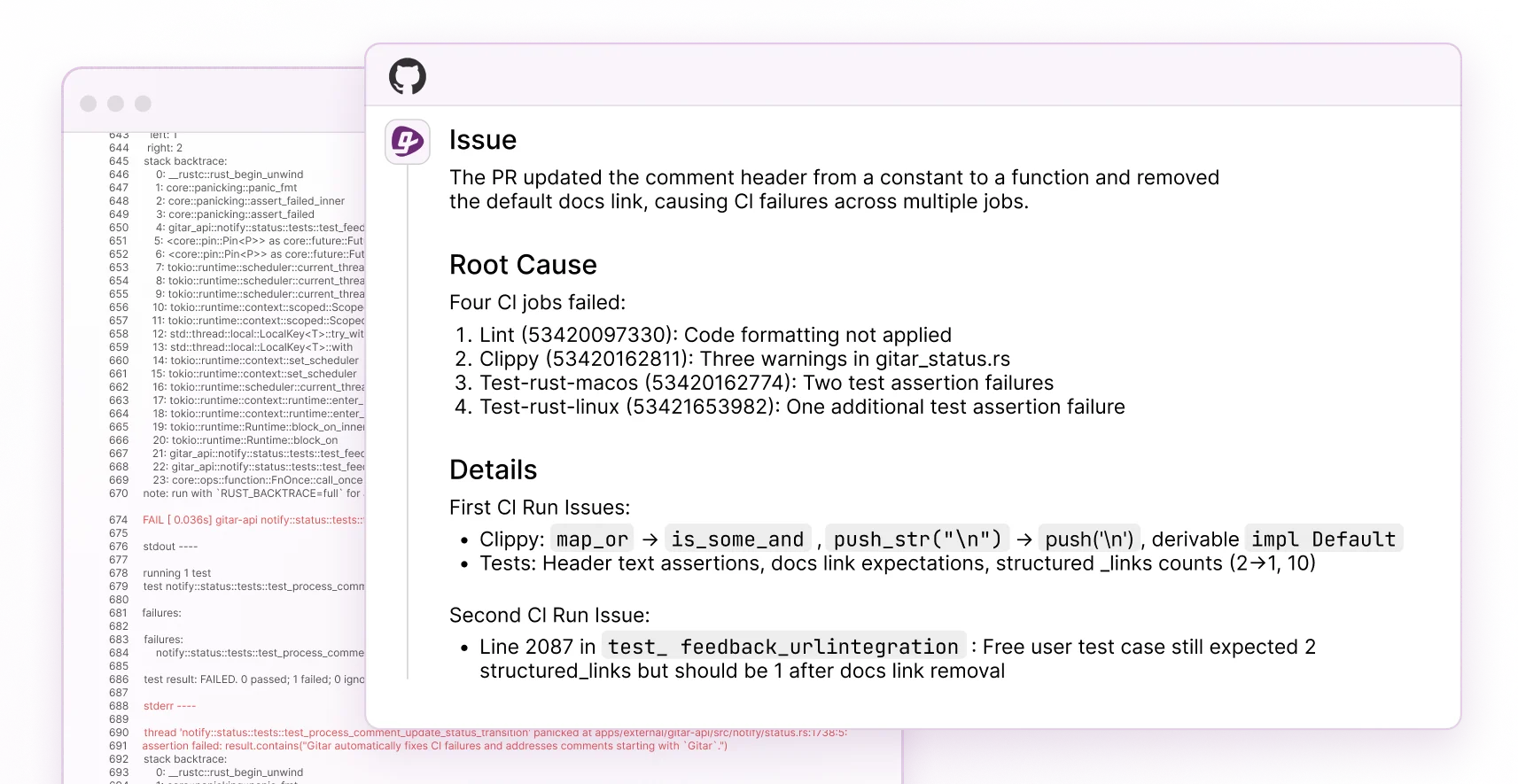
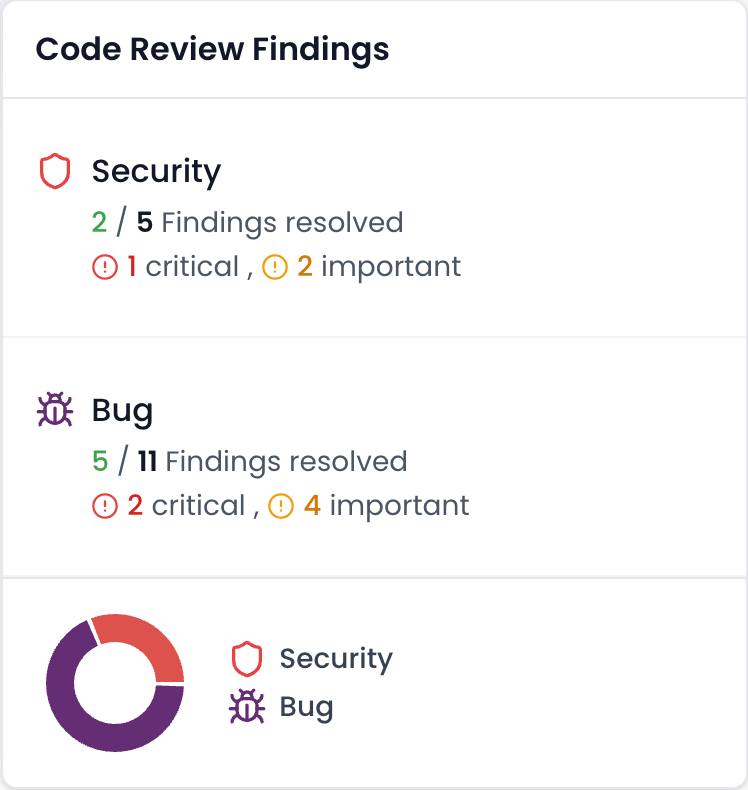
Unlike suggestion-only tools, Gitar automatically fixes CI failures, applies review feedback, and commits working changes back to your PRs. The platform includes a comprehensive 14-day free trial of its Team Plan with full PR analysis, security scanning, bug detection, performance review, and auto-fix for your entire team, with no seat limits during the trial. See the Gitar documentation for setup details and examples.
#2 CodeRabbit – Full Codebase Analysis
CodeRabbit provides one-click fixes and multi-platform support. It analyzes changes against the entire codebase using code graph and AST techniques. This approach improves context awareness, although it can still miss some systemic issues in very complex architectures.
#3 Greptile – Deep Analysis with More False Positives
Greptile offers full-codebase analysis through repository indexing. Independent evaluations report the highest false positive rate among these tools, which means teams spend more time filtering out noisy suggestions.
The table below highlights the key capability gap. Graphite and CodeRabbit suggest fixes and sometimes apply small changes, while Gitar validates and commits working solutions through its CI-aware healing engine.
|
Capability |
Graphite |
Gitar |
CodeRabbit |
|
Stacked PRs |
✓ Native |
✓ Compatible |
✗ No |
|
AI Suggestions |
✓ Agent |
✓ Advanced |
✓ Basic |
|
Auto-Fix CI |
✗ Manual |
✓ Guaranteed |
✗ Manual |
|
Platform Support |
GitHub Only |
Multi-Platform |
Multi-Platform |
Gitar addresses Graphite’s core limitation by validating and applying fixes instead of only suggesting them. Start the 14-day Team Plan trial to access auto-fixes, the healing engine, and workflow automation without Graphite’s learning curve overhead.
2026 Graphite Adoption Guide and a Practical Migration Path to Gitar
Graphite Success Requirements
- Full team commitment to stacked workflows across all active repositories.
- Comfort with advanced Git workflows for every developer on the team.
- A GitHub-exclusive or GitHub-primary development environment.
- Willingness to keep implementing AI suggestions manually instead of relying on auto-fix guarantees.
If your team lacks any of these prerequisites, especially Git expertise or GitHub exclusivity, Graphite’s adoption friction often outweighs its benefits. In those cases, Gitar offers an escape route by removing these barriers while still improving merge speed.
Escape Route: Switch to Gitar
- Complete the 30-second installation via the GitHub or GitLab app to connect Gitar to your repositories.
- After installation, Gitar immediately starts analyzing every PR and automatically fixing CI failures and review comments.
- Shape its behavior with natural language rules in .gitar/rules/*.md, using the patterns described in the Gitar documentation.
- Rely on the healing engine, which validates each change against your CI environment and keeps builds green without manual intervention.
For a 20-developer team, Gitar can save roughly $750K in annual productivity. This estimate assumes a reduction in CI and review firefighting from about 1 hour per day per developer to around 15 minutes.
Frequently Asked Questions
How does Graphite AI code review compare to Gitar?
Graphite Agent provides suggestions and maintains a 55% developer response rate, but developers still apply those suggestions manually. Gitar’s healing engine automatically fixes CI failures, validates solutions against your actual build environment, and keeps builds green without manual work. The key difference is the automation depth described earlier: Graphite suggests, Gitar executes.
What is the Graphite stacked PRs learning curve like?
The learning curve is steep and varies by team. Success requires full adoption across all developers, strong Git workflow skills, and commitment to new branching conventions. Teams report “revolt” situations when only part of the team adopts stacks. Productivity often dips for weeks or months before improvements appear.
What are the best Graphite pull request tool alternatives for auto-fixes?
Gitar ranks first for teams that need working fixes rather than suggestions. The 14-day Team Plan trial mentioned above includes full auto-fix capabilities, CI healing, and workflow automation without forcing a workflow overhaul. CodeRabbit and Greptile provide suggestions and some assistance but still rely on manual implementation for final fixes.
What are common Graphite code review challenges?
Graphite does not include CI healing, so developers still implement and validate fixes themselves. The GitHub-only limitation excludes teams that rely on GitLab or Bitbucket. Stacked PR adoption demands full team buy-in, or the workflow becomes chaotic. Notification management grows complex with large stacks, and manual work remains even with AI suggestions.
How effective is the Graphite Git workflow for monorepos?
Stacked PRs work well in monorepos where large features require multiple dependent changes. Teams at Vercel and Snowflake successfully manage stacks of 5–10 PRs under 200 lines each, which keeps reviews small and focused. The tradeoff is higher Git complexity and the need for full team adoption. Gitar delivers similar benefits around faster merges and fewer broken builds, but with lower implementation barriers and automatic conflict resolution.
Conclusion: When Graphite Fits and When Gitar Wins
2026 Graphite experiences show a clear pattern. Fully committed teams gain significant velocity, while partial adoption often results in confusion and frustration. The stacked PR workflow and AI Agent can deliver real productivity improvements, yet the learning curve and GitHub-only focus limit where Graphite fits.
Teams that want faster delivery without major workflow changes tend to favor Gitar. Its healing engine provides the frictionless velocity gains that come from automatic fixes instead of suggestions, and it validates changes against your CI to keep builds reliably green. Setup guides and rule examples in the Gitar documentation make it straightforward to roll out.
Ready for autonomous code review and self-healing CI? Install Gitar and let the healing engine handle broken builds while your team focuses on shipping features.