
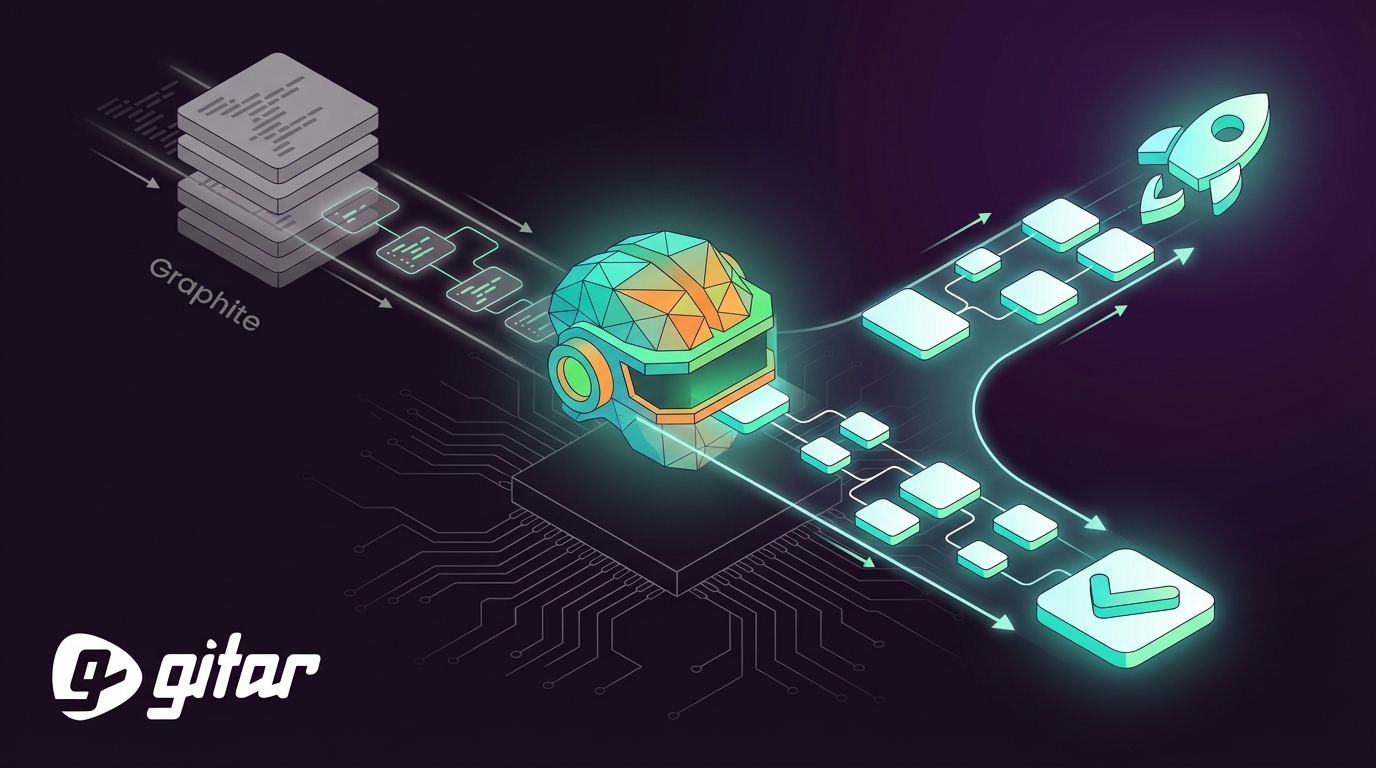
Written by: Ali-Reza Adl-Tabatabai, Founder and CEO, Gitar
Key Takeaways
- Graphite’s stacked PR workflow falls behind 2026’s AI-driven code surge, where review time increased 91% and 22% of merged code is AI-authored.
- Gitar ranks as the #1 alternative with autonomous healing that auto-fixes CI failures, implements feedback, and commits validated changes instead of only suggesting edits.
- Competitors such as CodeRabbit and Greptile deliver fast feedback or deep context but lack Gitar’s auto-apply fixes, CI-level healing, and green build guarantees.
- Teams save $750K annually for 20 developers by cutting CI and review time from 1 hour to 15 minutes per day, based on 8.1M PR benchmarks.
- Teams can experience autonomous code healing with Gitar’s 14-day Team Plan trial, the leading Graphite alternative for consistently green builds.
How We Ranked These Graphite Alternatives
We ranked AI code review platforms on four criteria: autonomous fixing, CI integration depth, pricing clarity, and measurable ROI. Our analysis uses LinearB’s 2026 benchmarks covering 8.1 million PRs, The Pragmatic Engineer’s survey of 906 software engineers, and Gitar’s documentation on CI failure analysis. We focused on post-Copilot realities where AI-coauthored PRs show 1.7x more issues than human-only PRs, which increases pressure on review workflows.
#1 Gitar: Autonomous Healing for CI and Code Review
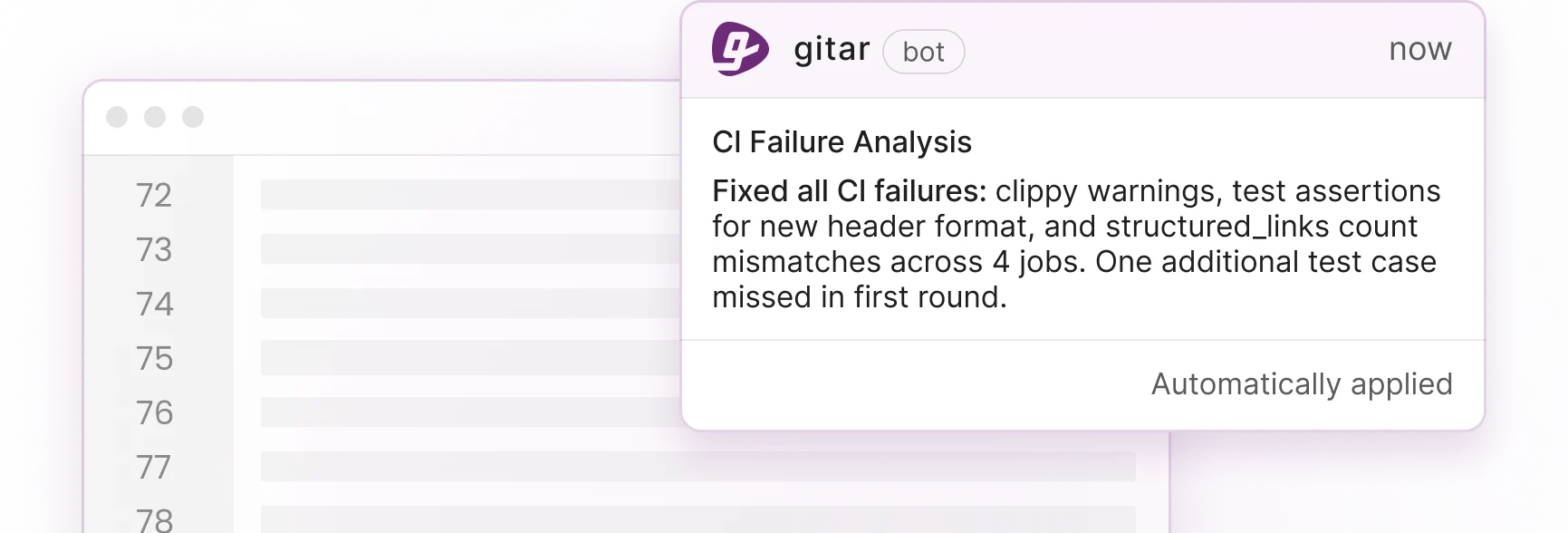
Gitar turns code review into autonomous problem resolution instead of comment threads. Graphite manages stacked PRs, while Gitar’s healing engine fixes CI failures, applies review feedback, and commits validated changes directly.
Core capabilities center on CI failure analysis that deduplicates failures across multiple jobs, surfaces root causes without log diving, and updates information in real time. This analysis works because the platform maintains full context from PR creation to merge and keeps CI green while finding and fixing root causes inside your CI environment.
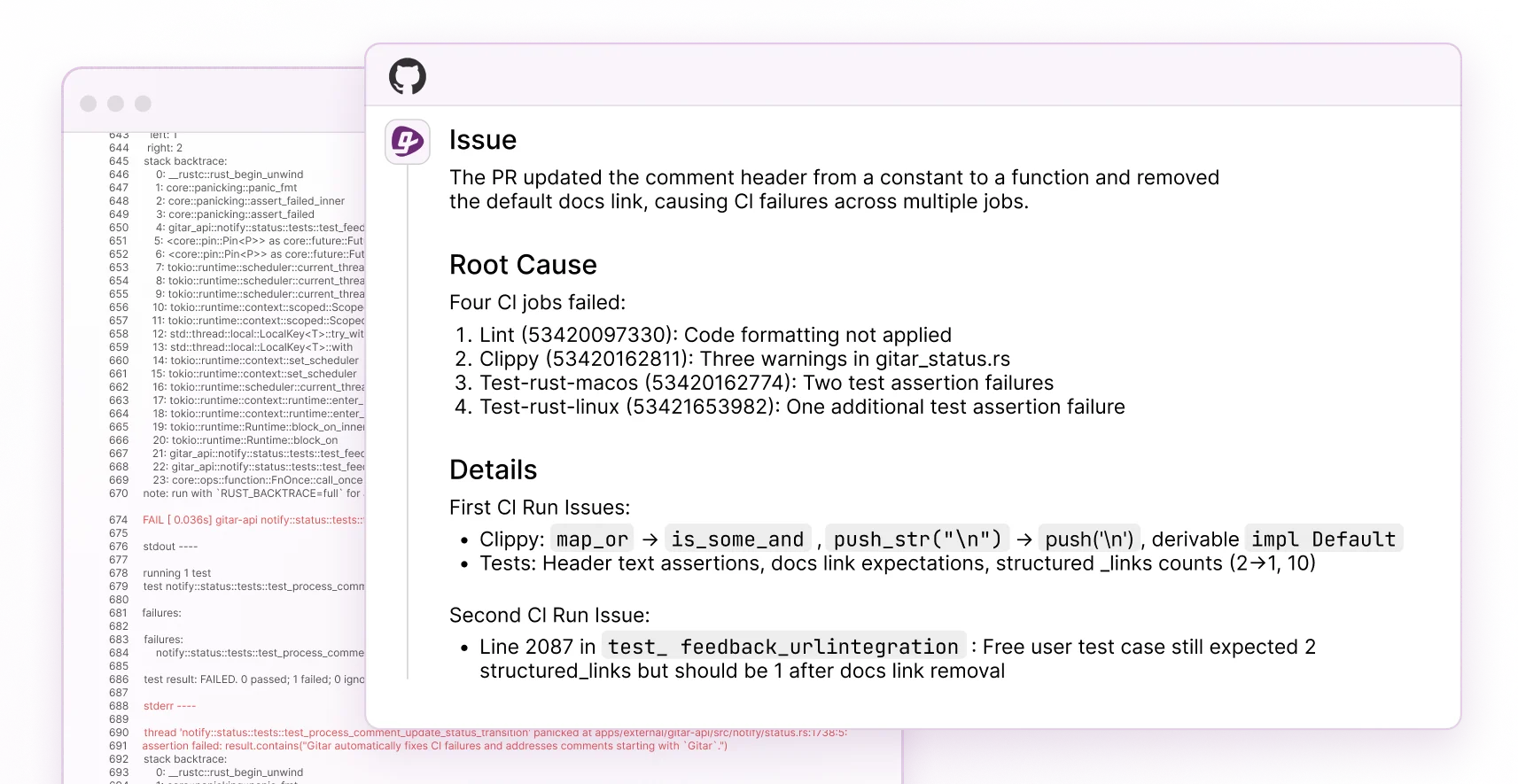
Setup finishes in about 30 seconds through a GitHub App installation. The 14-day Team Plan trial unlocks auto-fix capabilities, custom repository rules, and Jira, Slack, and Linear integrations with no per-seat limits during evaluation.
Gitar’s pricing model removes the $15–30 per developer monthly fees that competitors charge, which produces $750K in annual savings for a 20-developer team. These savings come from cutting CI and review friction from 1 hour per day to 15 minutes per developer, time reclaimed through validated fixes that avoid repeated back-and-forth.
Beyond cost, Gitar’s single dashboard comments reduce notification spam, and natural language workflow automation streamlines everyday development tasks. This combination extends the product from code review into a broader development intelligence layer with analytics and cross-platform integrations.
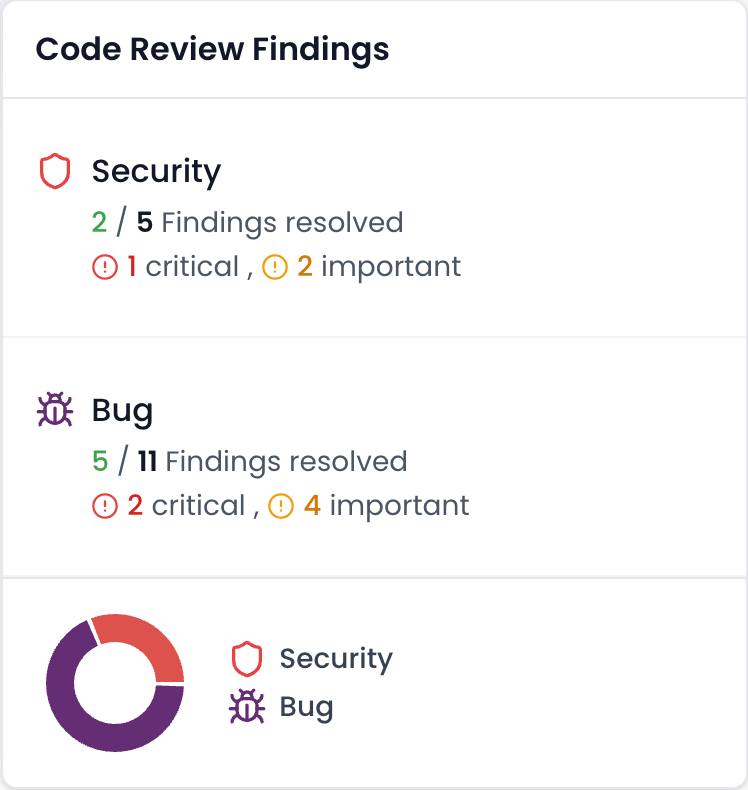
Gitar works best for CTOs and senior developers who need to remove velocity bottlenecks in GitHub, GitLab, or CircleCI environments where delays compound across teams. Engineering groups report significant time savings from unrelated PR failure detection and autonomous fix application.
Ready to eliminate your velocity bottlenecks? Start your 14-day Team Plan trial and let autonomous healing fix broken builds automatically.
#2 CodeRabbit: Fast Line-by-Line Feedback for Smaller Teams
While Gitar leads with autonomous fixing, CodeRabbit ranks second for teams that prioritize review speed over automation. CodeRabbit provides rapid AI code reviews that fit best for small teams with fewer than 100 developers.
Benchmarks from January 2026 show the platform caught all three hidden bugs across 88 files but scored 1/5 on completeness, which means it surfaced issues but offered limited depth. Features include PR summaries, real-time web queries for documentation context, and support for more than 40 linters.
The same benchmark set notes that customers cut manual review effort by more than 50 percent and shorten review cycles by up to 80 percent. These gains come from fast inline suggestions rather than autonomous fixes.
Pricing ranges from $12 to $30 per developer each month. The Lite tier omits workflow controls such as merge gating and Jira integration, so teams often upgrade to the Pro tier for enterprise needs.
CodeRabbit’s strengths include speed and broad linter coverage. Its limitations include suggestion-only output without auto-apply capabilities and notification noise from scattered inline comments, which keeps it behind Gitar for automation-focused teams.
#3 Greptile: Deep Repository Context and Analysis
For teams that need deeper codebase understanding instead of pure speed, Greptile offers the most comprehensive repository analysis in this list. Greptile excels at codebase-wide investigation through full repository indexing and multi-hop analysis.
Benchmarks from January 2026 show it caught all bugs on the second CLI integration run, which highlights strong detection once indexing completes. Features include code graph analysis for dependency tracking, hierarchical context management, and specialized bug detection for large repositories.
Pricing starts at $30 per developer monthly with discounts for annual commitments. Open-source projects may qualify for free usage, and enterprises can choose self-hosting options.
Greptile’s strengths include high bug detection rates and deep codebase understanding. Its limitations include suggestion-only output without fix validation, higher false positive rates in independent tests, and no CI integration for automated resolution, which keeps it below Gitar and CodeRabbit in this ranking.
#4 Qodo: Multi-Repo Architecture for Large Enterprises
Qodo ranks fourth because it focuses on enterprise environments with many repositories and complex systems. It targets organizations that need system-level review across multiple services rather than single-repo analysis.
The platform differentiates itself from diff-first tools like Copilot Review through its enterprise architecture. Features include cross-repo context analysis, enterprise security compliance, and workflow integration for large engineering teams.
Pricing follows custom enterprise models based on team size and repository count. Qodo usually requires more setup and onboarding effort than lighter alternatives such as Gitar or CodeRabbit.
Qodo’s strengths include enterprise-grade security and strong multi-repo capabilities. Its limitations include suggestion-only output, complex onboarding, and no autonomous CI fixing, which places it below Gitar’s automation-first approach.
#5 Ellipsis: Architectural and Senior-Level Review
Ellipsis ranks fifth because it focuses on senior-level analysis of architecture and design decisions instead of speed or automation. It suits teams that value deep architectural feedback and are comfortable with slower review cycles.
Features include architectural pattern analysis, design pattern recognition, and feedback that mirrors senior developer reviews. The platform integrates with standard Git workflows and common CI systems.
Pricing follows per-developer models similar to other tools, with enterprise tiers for larger organizations. Free trials allow teams to evaluate its architectural insights before committing.
Ellipsis stands out for sophisticated analysis depth and architecture-focused insights. Its slower reviews, suggestion-only output, and lack of automated fix application keep it behind tools that directly resolve issues.
#6 Aikido Security: Security-First Code Review
Aikido Security ranks sixth as a specialized option for security-focused teams. It concentrates on vulnerability detection inside existing code review workflows rather than general code quality.
The platform integrates with GitHub, GitLab, Bitbucket, and major CI systems such as Jenkins. Features include OWASP Top 10 vulnerability scanning, security compliance checks, and IDE integrations including VS Code.
Pricing depends on scanning volume and team size. Enterprise plans add compliance reporting and advanced threat detection features.
Aikido’s strengths include deep security expertise and broad vulnerability coverage. Its narrow focus, suggestion-only remediation, and limited general code quality analysis place it below broader platforms in this ranking.
#7 BugBot: GitHub-Centric PR Reviews
BugBot ranks seventh as a strong choice for GitHub-only teams that want tighter PR integration. It focuses on GitHub workflows rather than multi-platform coverage.
The platform reviews more than 2 million PRs monthly with eight parallel review passes. Features include GitHub PR optimizations, parallel review processing, and links to editors such as Cursor for applying fixes.
Discord’s engineering team reports that BugBot finds real bugs even on human-approved PRs, which shows strong detection in production environments.
Pricing requires a BugBot subscription at $40 per user each month plus a Cursor subscription. A 14-day free trial lets teams test the combined workflow.
BugBot’s strengths include deep GitHub integration and high bug detection rates. Its GitHub-only support, requirement for Cursor, and suggestion-only output without autonomous fixing make it less flexible than Gitar for cross-platform teams.
See the difference autonomous fixing makes: Try Gitar’s Team Plan trial and watch it resolve issues that suggestion-only tools leave for your team.
Side-by-Side Comparison Table: Top 4 Platforms
The table below compares the four most feature-complete platforms. Ellipsis, Aikido Security, and BugBot are excluded because they focus on architecture, security-only scanning, and GitHub-only support rather than broad autonomous fixing.
|
Feature |
Gitar |
CodeRabbit |
Greptile |
Qodo |
|
PR Summaries |
Yes |
Yes |
Yes |
Yes |
|
Inline Suggestions |
Yes |
Yes |
Yes |
Yes |
|
Auto-Apply Fixes |
Yes |
No |
No |
No |
|
CI Failure Auto-Fix |
Yes |
No |
No |
No |
|
Green Build Guarantee |
Yes (Trial/Team) |
No |
No |
No |
|
GitHub Support |
Yes |
Yes |
Yes |
Yes |
|
GitLab Support |
Yes |
Yes |
Yes |
Yes |
|
Free Trial |
14-day Team Plan |
Free tier |
Open source |
Custom |
|
Starting Price |
Trial first |
$12/dev/month |
$30/dev/month |
Enterprise |
Key Considerations and Tradeoffs for Graphite Replacements
Different personas value different aspects of Graphite alternatives. Individual developers care most about fatigue reduction and notification control, while engineering leaders focus on ROI and team velocity. DevOps teams prioritize CI integration depth and YAML workflow compatibility.
Migrating from Graphite requires evaluating both setup complexity and total cost of ownership. Gitar’s zero-setup GitHub App contrasts with complex enterprise onboarding from some competitors, while its autonomous fixing delivers the same $750K savings potential mentioned earlier compared with $450–900 monthly fees for suggestion-only tools.
This cost-benefit view addresses a common objection: “We already use CodeRabbit.” Teams discover that suggestion engines still require manual implementation and do not remove the core bottleneck of fixing issues. Gitar’s trial model proves the value of autonomous fixing before any financial commitment, while many competitors charge premium prices for incremental improvements.
Reddit discussions often highlight the strongest free AI code review trials. Gitar’s trial period provides full feature access, while many free tiers from competitors restrict advanced capabilities.
Frequently Asked Questions
What’s the difference between Graphite and Gitar for code review?
Graphite focuses on stacked PR workflow management and organizes PRs with AI feedback. Gitar provides autonomous healing that fixes CI failures, implements review feedback, and commits validated fixes. Graphite streamlines PR organization, while Gitar removes the manual work of addressing review findings and CI problems.
Which AI code review tool offers the best free trial?
Gitar offers the most comprehensive free trial with 14 days of full Team Plan access, including auto-fix capabilities, CI integration, and unlimited team members. CodeRabbit provides a limited free tier with basic PR summaries, while Greptile offers free access only for open-source projects. Most other tools require payment before unlocking advanced features.
How do CodeRabbit, Greptile, and Gitar compare for bug detection?
CodeRabbit excels at speed but scored 1/5 on completeness in 2026 benchmarks. Greptile achieves the highest bug catch rate through full codebase indexing but also generates more false positives. Gitar focuses on actionable fixes instead of raw detection, automatically resolving identified issues and validating solutions against CI systems.
What integrations do the best Graphite alternatives support?
Gitar integrates with GitHub, GitLab, CircleCI, Buildkite, Jira, Slack, and Linear for workflow automation. CodeRabbit supports GitHub, GitLab, Bitbucket, and Azure along with more than 40 linters. Greptile focuses on GitHub and GitLab with CLI integration. Most alternatives lack the deep CI integration required for true autonomous fixing.
What ROI can teams expect from AI code review automation?
Teams report the savings detailed earlier, $750K annually for 20-developer teams, by cutting CI and review friction from 1 hour to 15 minutes per developer each day. The LinearB benchmarks referenced earlier show that half of PRs sit idle for more than 50 percent of their lifespan, while autonomous fixing reduces this idle time. The biggest ROI shift comes from moving away from suggestion tools that cost $15–30 per developer monthly toward platforms that actually resolve issues automatically.
Conclusion: Gitar Solves 2026’s PR Bottleneck
Gitar’s autonomous healing engine outperforms traditional Graphite alternatives by fixing code instead of only suggesting changes. Competitors often charge premium prices for commentary, while Gitar’s trial period proves value through validated fixes and reduced manual work.
Start shipping higher-quality software faster: Claim your 14-day Team Plan trial and experience autonomous fixes that competing Graphite alternatives cannot match.