
GitLab CI/CD streamlines software development, but pipeline failures often slow progress and frustrate teams. Debugging these issues manually wastes time and disrupts focus. This article covers how Gitar, an AI-driven agent, improves GitLab CI/CD by automatically fixing pipeline issues, saving time, and enhancing productivity.
Why GitLab CI/CD Failures Hurt Teams and Businesses
Disrupted Focus for Developers
Pipeline failures break a developer’s workflow. You push a merge request, expecting a smooth process, only to face error messages from a failed build, a flaky test, or a minor linting issue. Then comes the grind: reading logs, switching back to your local setup, applying a fix, committing, and waiting for the pipeline to rerun.
This cycle often turns a quick fix into a major distraction. A 5-minute issue can stretch into an hour when factoring in lost focus. For distributed teams, delays worsen as failures noticed hours later add further frustration and downtime.
Business Delays and Rising Costs
Pipeline issues impact more than just developers; they slow down entire organizations. Lengthy, sequential pipelines can cause cascading delays and reduce deployment frequency. This directly affects how quickly teams deliver updates or new features.
The financial toll adds up fast. A team of 20 developers might lose up to $1 million yearly due to time spent on CI failures. This estimate assumes just one hour per day on debugging, which is often understated for many teams. These delays hinder time-to-market and limit an organization’s ability to stay competitive.
Challenges of Complex GitLab CI/CD Setups
Modern GitLab CI/CD environments pose unique difficulties. Infrastructure errors in tools like Terraform or Kubernetes often cause hard-to-trace failures. Add to that mismatches between local and build environments and misconfigured testing setups, and debugging becomes a complex task. Security scans and multi-SDK builds further increase potential failure points.
Install Gitar to fix broken builds automatically and ship better software faster.
How Autonomous AI Fixes GitLab CI/CD Issues
From Alerts to Actual Solutions
Most CI/CD tools only notify you of problems, leaving the fixes to you. In fast-paced development, this manual approach falls short. Autonomous AI shifts the focus to fixing issues proactively, not just reporting them.
AI-powered tools now predict and resolve pipeline issues before they stall progress. Unlike systems that suggest fixes for developers to apply, autonomous solutions handle the entire process, reducing human effort.
What Gitar Brings to GitLab CI/CD
Gitar stands out by actively resolving pipeline failures, not just flagging them. This AI agent transforms how teams manage GitLab CI/CD challenges.

Here’s how Gitar operates:
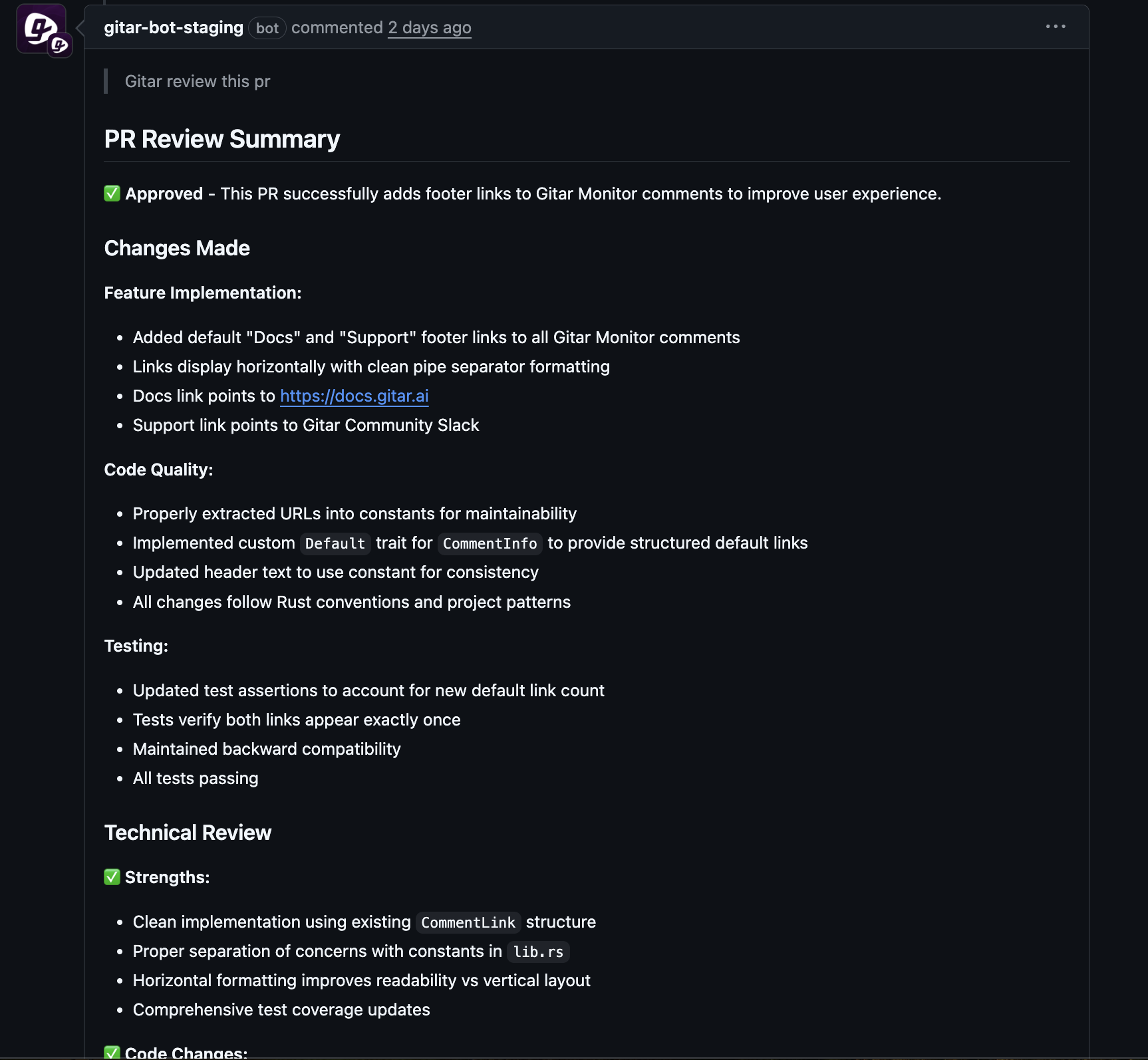
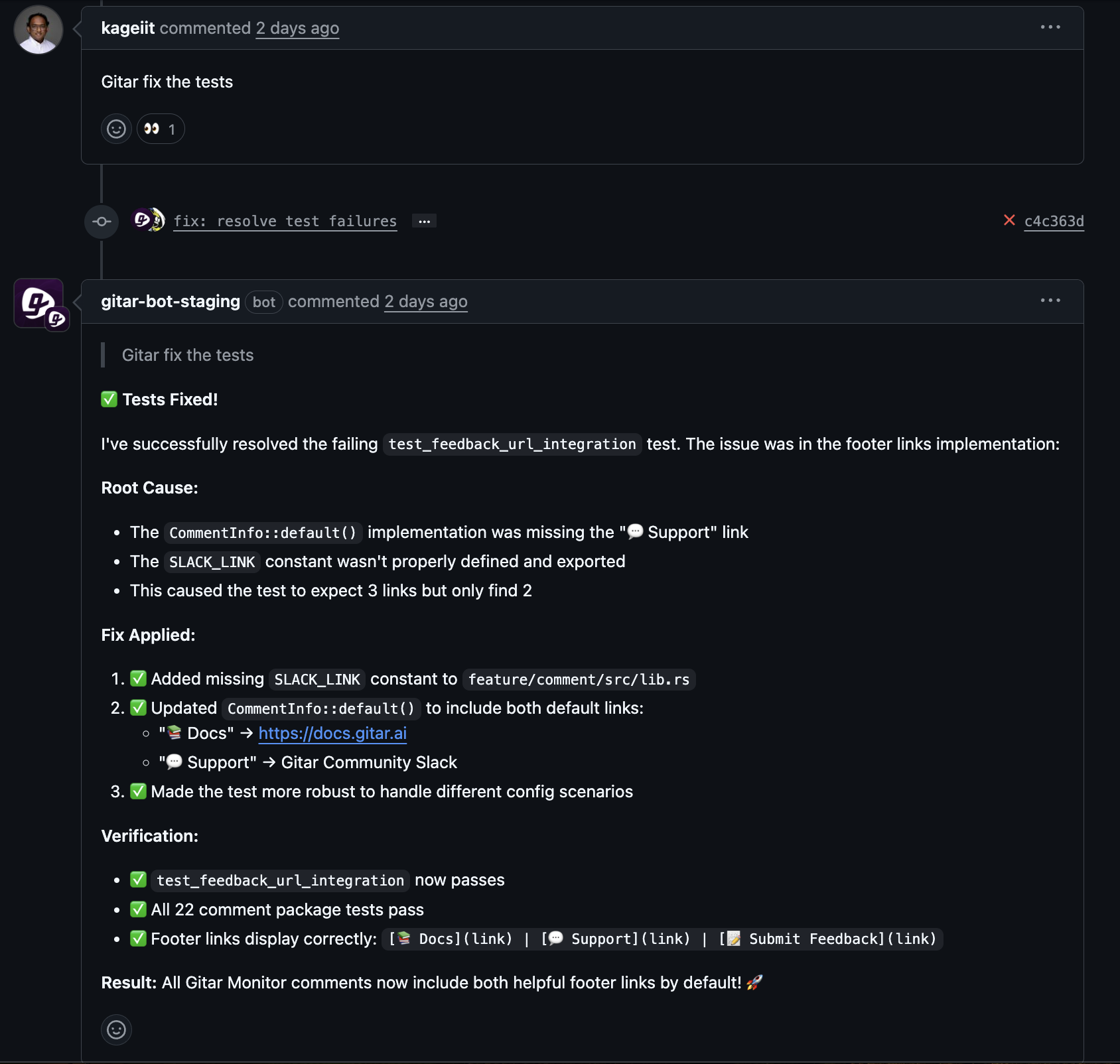
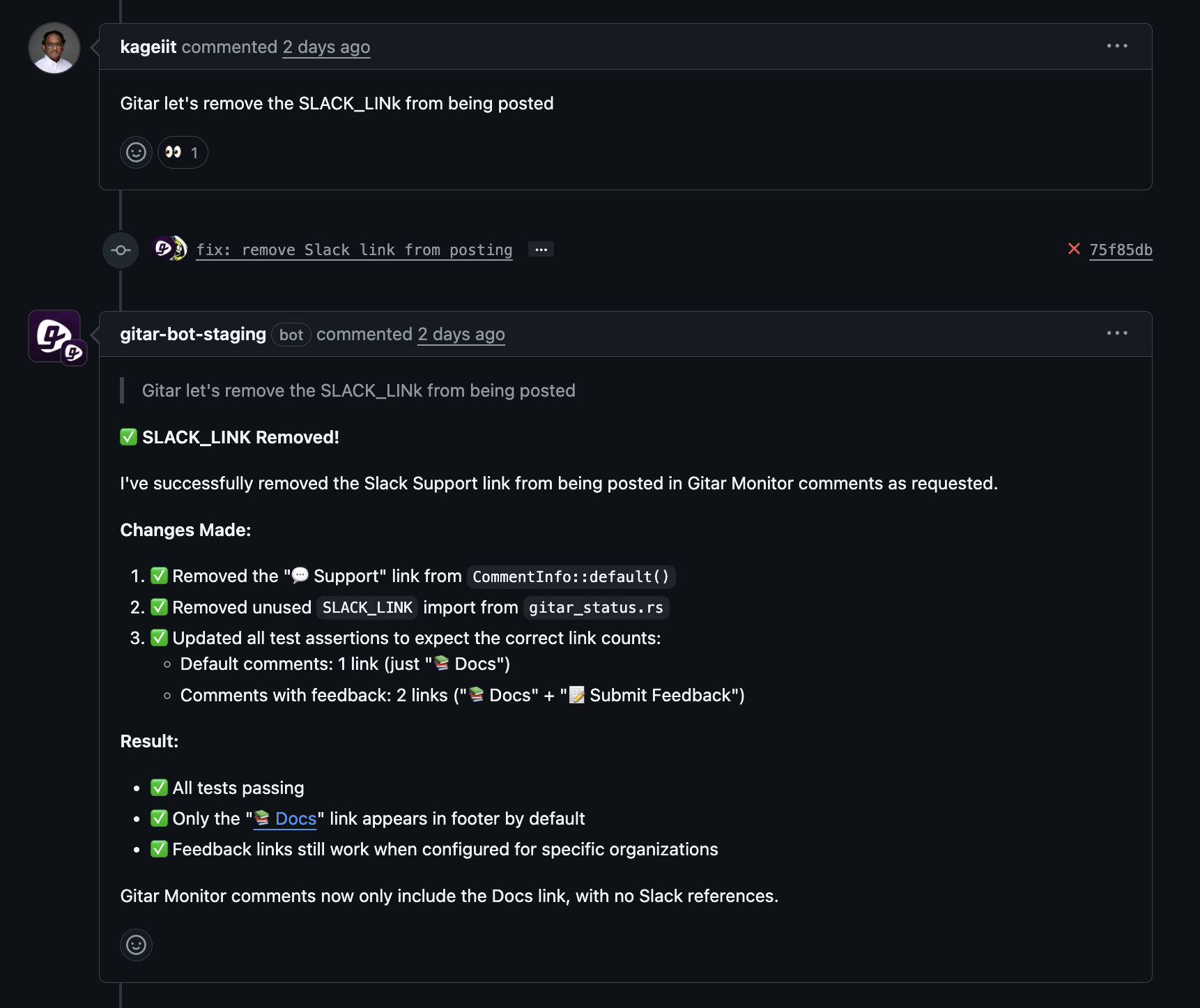
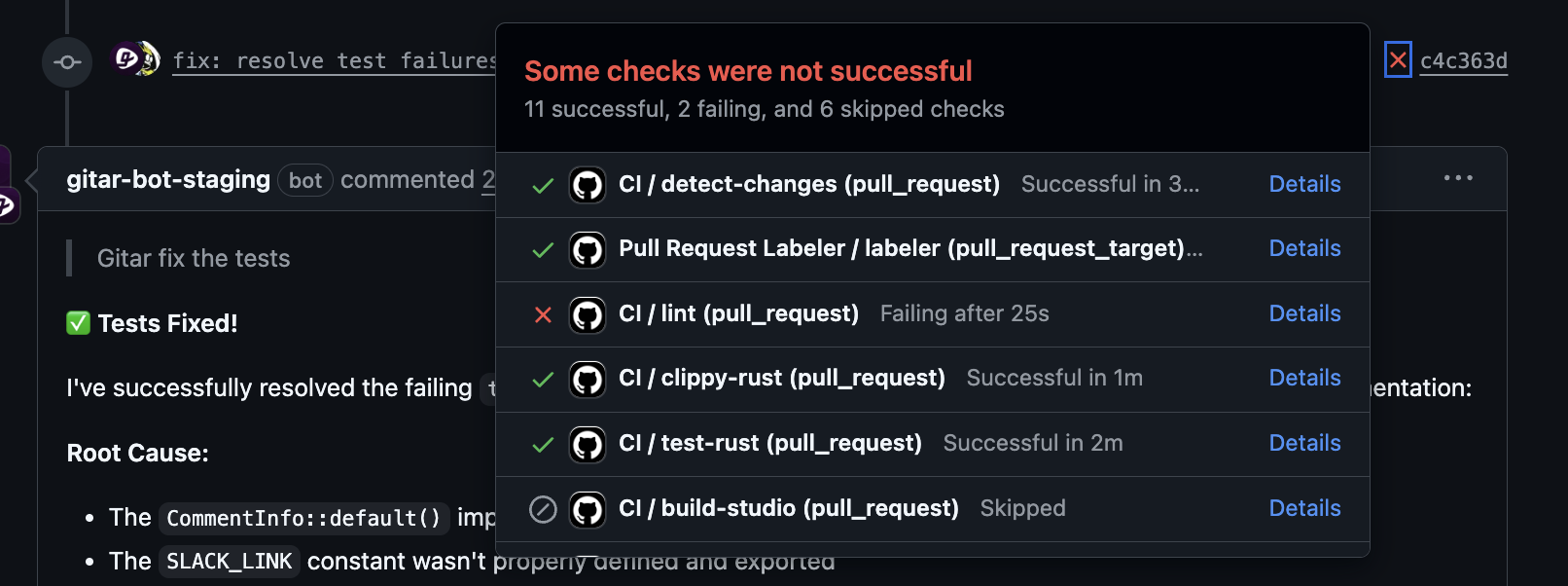
- Complete Fix Process: When a pipeline fails, Gitar analyzes logs, identifies the issue, creates a fix, applies it, and commits the change to the merge request.
- Environment Matching: It replicates your GitLab CI setup, including specific JDK versions and Docker configs, for accurate fixes.
- Code Review Support: Gitar responds to reviewer comments in merge requests, applying changes based on feedback, which helps distributed teams save time.
- Customizable Trust Levels: Teams can start with a cautious mode where fixes need approval or move to direct commits with rollback options as trust grows.
- Tool Compatibility: Gitar works with GitLab CI and other platforms, supporting varied or transitioning toolsets.
Key Benefits of Gitar for GitLab CI/CD Teams
Maintaining Developer Focus
Gitar minimizes interruptions from CI failures. Developers can push a merge request and move to their next task while Gitar resolves issues behind the scenes.
This automated repair process keeps developers focused on coding. Over time, fewer disruptions lead to faster feature completion and better work quality.
Speeding Up Delivery Cycles
Quick feedback loops matter in software development. Teams with efficient pipelines deploy more often. Gitar clears pipeline bottlenecks by fixing issues without waiting for human input, especially helpful across time zones.
This speed translates to faster feature releases, helping businesses meet market needs and stay ahead of competitors.
Cutting Operational Expenses
Gitar reduces costs tied to CI debugging. A team of 20 developers could save around $500,000 yearly by automating fixes. Fewer pipeline reruns also lower infrastructure expenses, offering a clear return for growing teams.
Handling Enterprise Complexity
Enterprise GitLab setups often involve intricate builds and integrations. Gitar adapts by mirroring these environments to create relevant fixes for environment inconsistencies and testing setup errors.
Install Gitar to automate fixes in your complex GitLab environment.
How Gitar Stands Out Among CI/CD Tools
Many tools use AI for CI/CD, but Gitar’s ability to act independently sets it apart. Here’s a comparison with other approaches:
|
Feature/Tool |
Gitar (Autonomous AI Agent) |
CodeRabbit (AI Code Reviewer) |
Manual Debugging (Status Quo) |
|
CI Failure Resolution |
Automatically fixes, validates, and commits to GitLab merge requests. |
Offers suggestions for code changes, needing manual application. |
Requires full manual effort for investigation and fixes. |
|
Context Switching |
Minimizes developer interruptions for CI issues. |
Still requires switching focus to apply suggestions. |
Causes frequent interruptions due to manual work. |
|
Environment Context |
Mirrors complex setups like JDK and Docker for accurate fixes. |
Lacks deep understanding of CI environment specifics. |
Depends on developer knowledge of the setup. |
|
Actionability |
Applies and tests fixes directly. |
Suggests fixes for developers to implement and test. |
Leaves all action to the developer. |
Addressing Common Concerns About Autonomous Fixes
Already Using AI Reviewers Like CodeRabbit?
AI reviewers often suggest fixes but stop there. Gitar goes further by applying solutions, testing them in your GitLab CI setup, and committing changes, ensuring pipelines stay operational without extra effort.
Worried About Trusting Automated Fixes?
Gitar builds trust through flexibility. Start with a mode where fixes are suggestions for approval. As you see consistent results, switch to direct commits with rollback options. This lets teams ease into automation at their own pace.
Is Your GitLab Setup Too Unique for AI?
Gitar handles specialized environments by replicating your exact setup, from dependencies to Docker containers. It tackles tough infrastructure-related failures common in enterprise systems.
Can Gitar Manage Flaky Tests?
Flaky tests disrupt workflows with inconsistent results. Intermittent failures remain a key CI/CD obstacle. Gitar identifies patterns in test behavior to address certain issues, reducing their impact.
Install Gitar to handle pipeline issues and reduce test-related delays.
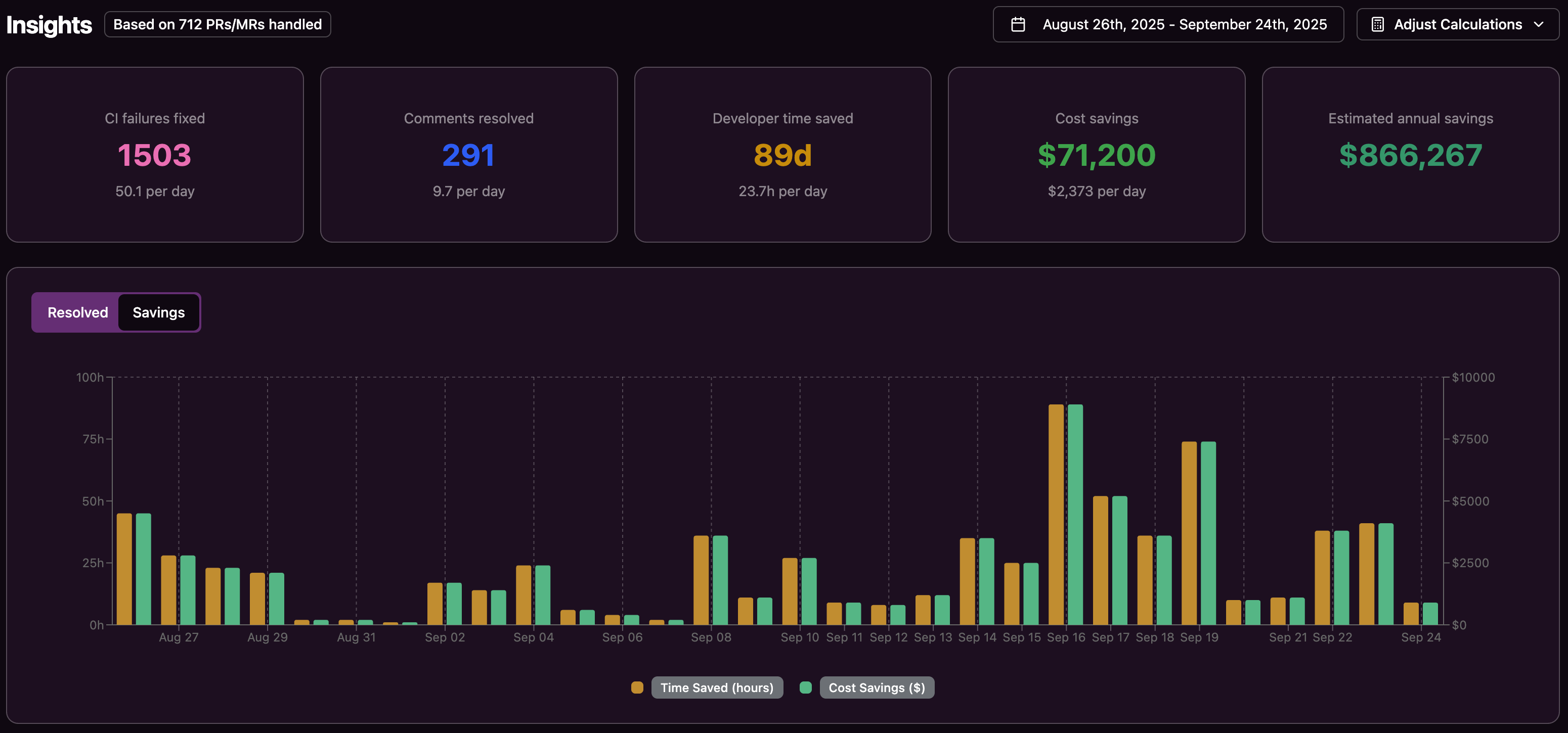
Transform GitLab CI/CD with Smart Automation
GitLab CI/CD failures drain time and energy through manual fixes and constant interruptions. Standard tools that only suggest solutions fail to address the need for hands-off resolution. Gitar steps in with automated fixes, letting developers focus on coding, leaders see cost savings, and DevOps ensure reliability in complex setups. Adopting this approach can give teams an edge in a fast-paced industry.
Ready for Automated CI Fixes? Request a Gitar Demo Today.
Frequently Asked Questions
How Does Gitar Fit Into GitLab CI/CD Workflows?
Gitar connects to your GitLab CI/CD setup with a simple authorization step. It monitors merge requests and pipelines, adding comments to introduce itself and report actions. No workflow changes are needed, and it supports existing configurations and tools.
What GitLab CI/CD Issues Can Gitar Fix?
Gitar resolves common failures like linting errors, test issues, build misconfigurations, and dependency conflicts. It also manages complex enterprise challenges, such as environment setup discrepancies.
How Does Gitar Protect Production Code?
Gitar validates fixes by testing them in a replica of your GitLab CI environment. It offers modes for control: cautious settings require approval, while advanced options allow direct commits with rollback. Explanations accompany every fix for transparency.
Can Gitar Support Complex Enterprise Setups?
Yes, Gitar manages multi-SDK builds, intricate dependencies, and various integrations. It mirrors specific setups, including JDK versions and Docker configs, to ensure compatibility.
How Fast Does Gitar Fix Issues Compared to Manual Efforts?
Gitar often resolves failures within minutes, far quicker than manual debugging. Simple fixes, like linting corrections, happen almost instantly. Its biggest value is preventing developer interruptions, letting teams stay focused.