
Key Takeaways
- Manual CI/CD troubleshooting, flaky tests, and review delays consume a large share of developer time and reduce overall pipeline success rates.
- Autonomous CI systems can detect, fix, and validate many pipeline failures, which increases reliability and reduces interruptions for engineers.
- Effective adoption of autonomous CI requires a clear readiness assessment, phased rollout, and metrics that track time saved and fewer failed builds.
- Engineering leaders benefit from comparing autonomous healing engines with suggestion-only tools and manual approaches to match their risk and scale needs.
- Gitar provides autonomous CI fixes that raise pipeline success rates and cut manual work; install it at https://gitar.ai/fix to see it in your pipelines.
Hidden costs of manual pipeline management
Many engineering organizations still rely on manual intervention when pipelines fail. Developers can waste up to 30% of their time dealing with issues related to CI and code review, which becomes a significant productivity drain as teams grow. That lost time creates a strategic bottleneck that lowers pipeline success rates and slows delivery.
For a 20-developer team, pipeline-related inefficiencies can cost about $1 million each year in lost productivity. These costs come from time lost to context switching when fixing broken builds, delays in time-to-market, and lower overall team velocity. Pipeline failures are a primary cause of delayed projects for 60% of companies, which weakens market responsiveness and opens space for faster competitors.
Teams that adopt AI-assisted coding often generate more code in less time, yet validation and merging still depend on manual effort. That creates a right-shift bottleneck, where work piles up in the CI and review stages. Engineering leaders need pipeline success rate improvement solutions that keep pace with this higher code volume instead of pushing more burden onto developers.
Install Gitar to automatically fix broken builds and improve your pipeline success rates.
How autonomous CI improves pipeline success rates
CI/CD has evolved from manual deployments to automated builds and then to AI-assisted code suggestions. In 2026, many teams will explore autonomous pipeline management, where systems not only suggest fixes but also implement and validate them. This shift moves CI from reactive fire-fighting toward proactive and continuous stabilization.
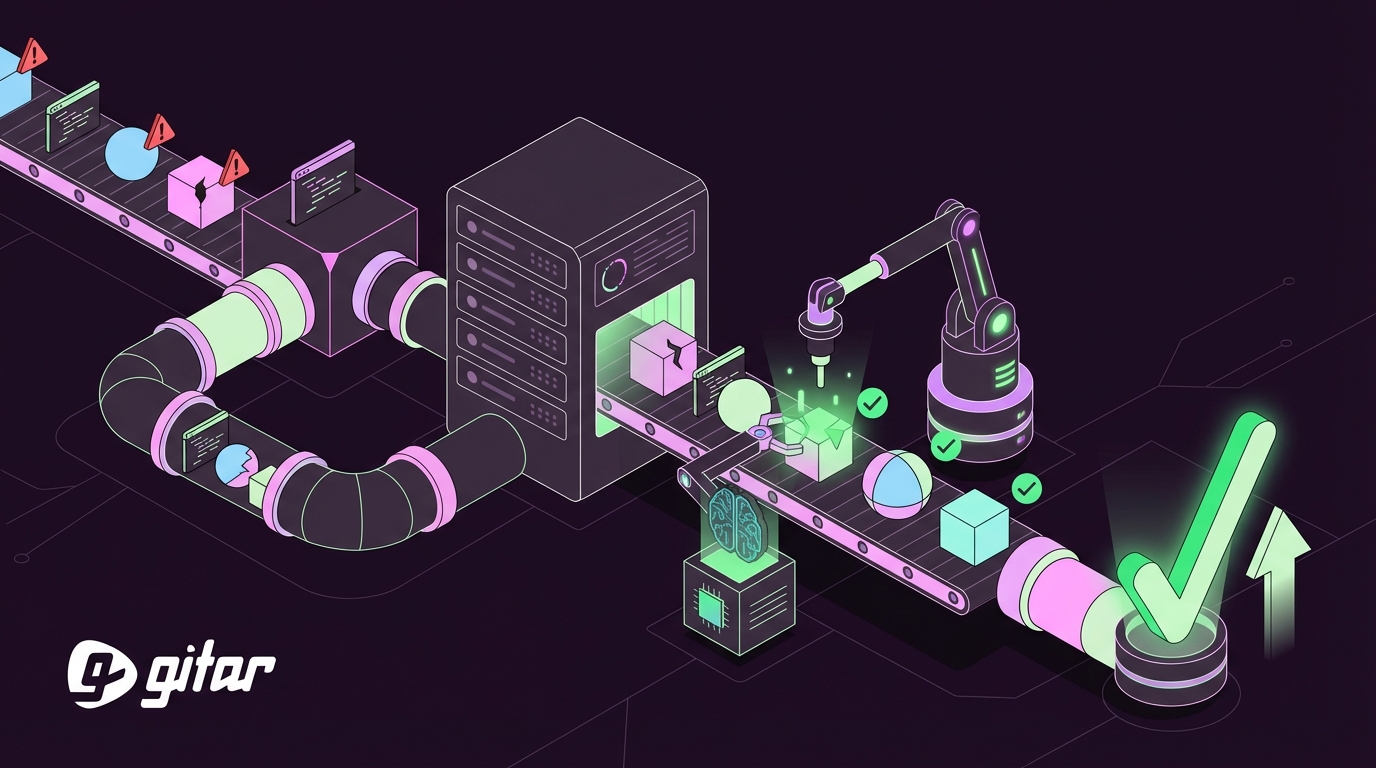
Autonomous pipeline success rate improvement solutions treat CI as self-healing infrastructure. Instead of leaving developers to apply every suggested fix, these systems detect failures, propose changes, run checks, and update pipelines with minimal human intervention. That approach addresses the core challenge of modern development: rising code volume that must still pass reliable validation.
Market pressure continues to favor teams that ship frequently and recover quickly from failures. Autonomous CI aims to reduce pipeline-related interruptions, shorten time to green builds, and maintain consistent deployment frequency. Stable and predictable pipelines, in turn, support faster iteration and more reliable product delivery.
Strategic framework for adopting autonomous CI
Readiness assessment for autonomous pipeline fixes
Successful adoption starts with a clear assessment of team and tooling readiness. Leaders should review current pipeline maturity, comfort with automation, and how easily new systems can integrate into the existing toolchain. Organizations with established CI/CD practices that now struggle with scale usually see the strongest early benefits.
Useful readiness indicators include high developer time spent on pipeline issues, frequent context switches caused by broken builds, and measurable delays in feature delivery tied to CI. Distributed teams across time zones often gain extra value because autonomous fixes can run while parts of the team are offline, reducing handoff delays.
Building trust in autonomous fixes
Trust is central to any move toward autonomous pipeline management. Teams tend to adopt automation more effectively when they can increase autonomy in stages. Practical pipeline success rate improvement solutions support configurable levels, from suggest-only modes to full autonomous fixes.
Teams often follow a phased path. First, the system suggests fixes while engineers review results. Next, developers approve fixes with a quick confirmation step. Finally, teams enable autonomous commits with clear logging and rollback options. This progression maintains human oversight while gradually proving the reliability of automated changes.
Measuring ROI and impact on pipeline success
Engineering leaders need clear metrics to justify investment and track impact. Helpful baselines include pipeline failure frequency, average time to resolution, and developer hours spent per week on CI issues. The table below illustrates how quickly these costs can grow at modest team sizes.
| Metric | Annual Cost (20-Dev Team) | Impact on Pipeline Success |
|—|—|—|
| Developer Hours Lost (CI/CR) | 5,000+ hours | Direct decrease in pipeline success rate |
| Estimated Financial Cost | $1,000,000+ | Significant operational inefficiency |
| Time-to-Market Delays Impact | Millions in lost revenue | Reduces competitive advantage & agility |
After rollout, teams can track autonomous fix success rates, fewer interruptions per developer, and improvements in lead time from code to deployment. Consistent reduction in manual CI work and faster recovery from failures signal a strong ROI.
Gitar: Autonomous CI for higher pipeline success
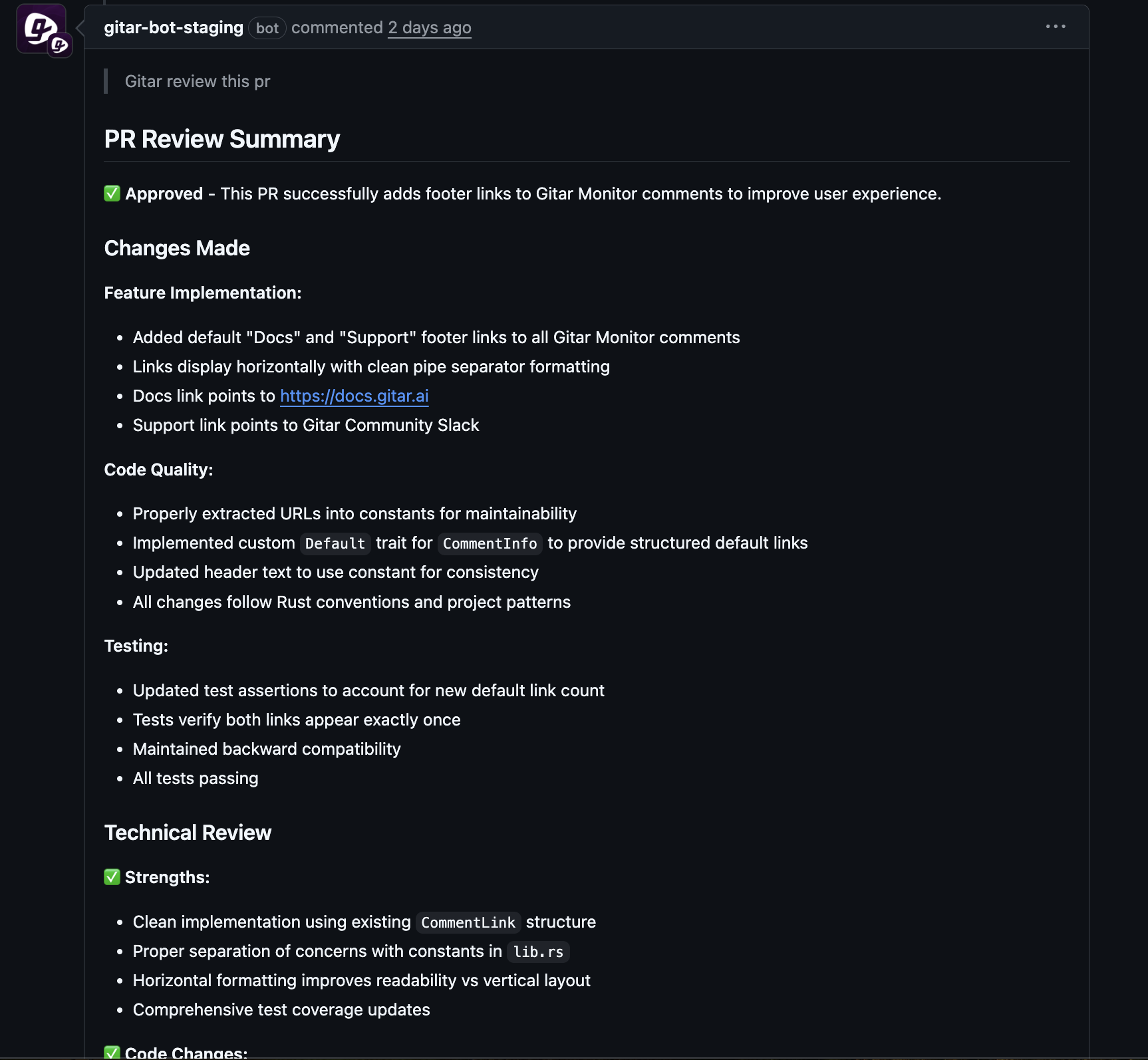
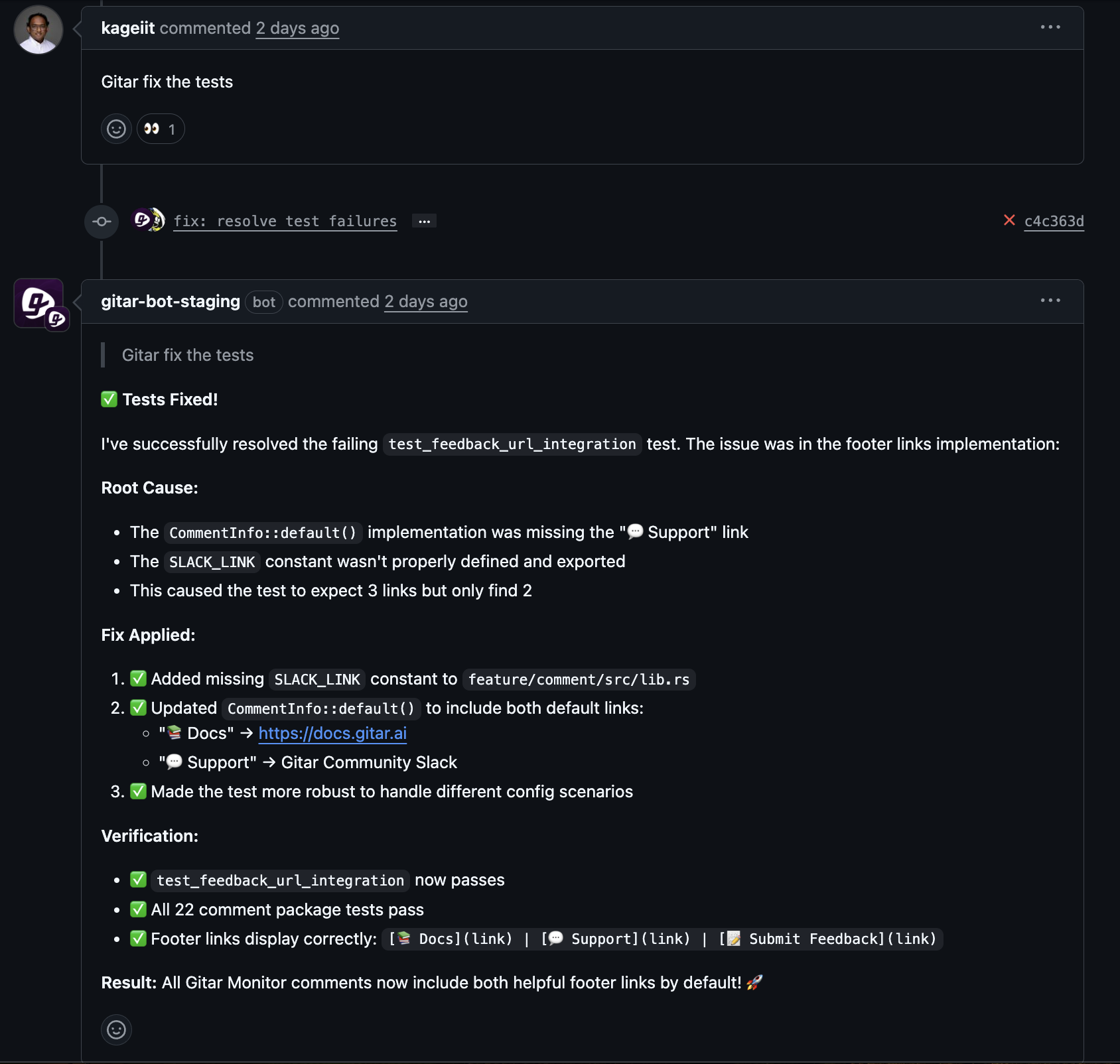
Gitar provides autonomous pipeline management designed to address common CI failure patterns. Instead of stopping at suggestions, Gitar acts as a healing engine that detects failures, diagnoses issues, and applies validated fixes in the context of your environment.
The value extends to self-healing CI/CD infrastructure that adapts to real project conditions and complex enterprise setups. Key capabilities that influence pipeline success rates include:
- Full environment replication: Emulates complex workflows, specific SDK versions, multi-platform dependencies, and third-party integrations so fixes run in the same conditions as your pipelines.
- Cross-platform support: Integrates with GitHub Actions, GitLab CI, CircleCI, BuildKite, and other major CI platforms rather than locking into a single ecosystem.
- Action-oriented architecture: Implements, validates, and commits fixes autonomously with configurable levels of automation, not just problem identification.
- Intelligent code review assistant: Addresses routine reviewer feedback, which speeds merge requests and keeps pipelines moving.
- Configurable trust models: Let teams start in suggestion mode, then move to automatic fixes as confidence grows.
Request a Gitar demo to see how autonomous CI can improve your pipeline success rates.
Comparing pipeline success solutions
Pipeline success rate improvement strategies generally fall into four categories: autonomous healing engines, AI suggestion tools, custom LLM integrations, and fully manual processes. Each option carries different tradeoffs in effort, scale, and risk.
| Feature | Gitar (Autonomous Healing) | AI Suggestion Tools | DIY LLM Integration | Manual Resolution |
|—|—|—|—|—|
| Pipeline Integration | Full autonomous resolution | Suggestions requiring manual work | Custom build required | No automation |
| Failure Resolution | Autonomous fixes with validation | Manual implementation needed | Manual trigger and validation | Complete manual process |
| Environmental Context | Full enterprise environment replication | Limited context awareness | User-defined, error-prone setup | Human intelligence adapts fully |
| Automated Implementation | Yes, configurable autonomy levels | Varies by tool, some offer automated commits | No native automation | No automation whatsoever |
Teams that want consistent pipeline success at scale often prefer autonomous healing, since suggestion-only tools still rely on engineer time to apply changes. DIY LLM setups can offer flexibility but usually require significant ongoing maintenance and expertise.
Common pitfalls when rolling out pipeline success tools
Many teams underestimate the organizational change required for autonomous CI. Technical integration alone rarely delivers full value if developers do not understand or trust the system. Clear guidelines, visibility into changes, and a staged rollout help reduce this risk.
Over-customization during early deployment creates another common problem. Highly customized workflows can introduce fragility and slow down benefits. Most organizations see better results when they begin with standard configurations, then adjust based on real-world usage and metrics.
Resource planning also matters. Autonomous systems still need thoughtful configuration management, policy decisions, and periodic review. Assigning clear ownership for CI health ensures that pipeline success rate improvement remains an ongoing priority rather than a one-time project.
Next steps to improve pipeline success in 2026
Autonomous infrastructure now plays a central role in efficient software delivery. Engineering leaders who invest in pipeline success rate improvement solutions can reduce failure-driven delays, increase deployment confidence, and let developers focus more on product work.
Gitar offers a practical path to autonomous pipeline management by turning manual CI maintenance into a self-healing process. Teams that adopt Gitar can reclaim time, improve reliability, and support faster iteration across their codebase.
Request a Gitar demo to see how autonomous CI fixes can improve your pipeline success rates in 2026.