
Written by: Ali-Reza Adl-Tabatabai, Founder and CEO, Gitar
Key Takeaways: Why Gitar Beats Suggestion-Only GitLab Tools
- AI coding tools generate code 3-5x faster, yet GitLab PR review times increased 91% because CI validation still blocks merges.
- Gitar leads GitLab alternatives with an autonomous healing engine that analyzes failures, generates fixes, and auto-commits validated changes for reliably green builds.
- Alternatives like CodeRabbit, GitLab Duo, and others only suggest changes, so developers still implement fixes manually and never reach true CI autonomy.
- Gitar supports GitLab, GitHub Actions, CircleCI, and Buildkite, uses a single updating comment, and includes a 14-day free Team Plan trial with unlimited access.
- Teams save $750K+ annually in productivity; calculate your team’s ROI with a free 14-day trial to fix CI failures autonomously and reclaim velocity.
How We Ranked GitLab AI Code Review Alternatives
Our 2026 evaluation criteria prioritized autonomous fix validation over suggestion-only systems. We assessed CI integration capabilities, auto-commit rates based on Propel F-score benchmarks, GitLab compatibility, pricing models, migration ease, multi-platform support, and security features. We used vendor documentation, independent benchmarks, and GitLab community feedback as primary sources. The focus stayed on platforms that deliver green-build guarantees instead of manual suggestion workflows.
Top 7 GitLab Alternatives for Autonomous AI Code Review That Fixes CI
1. Gitar: Healing Engine That Fixes GitLab CI Autonomously
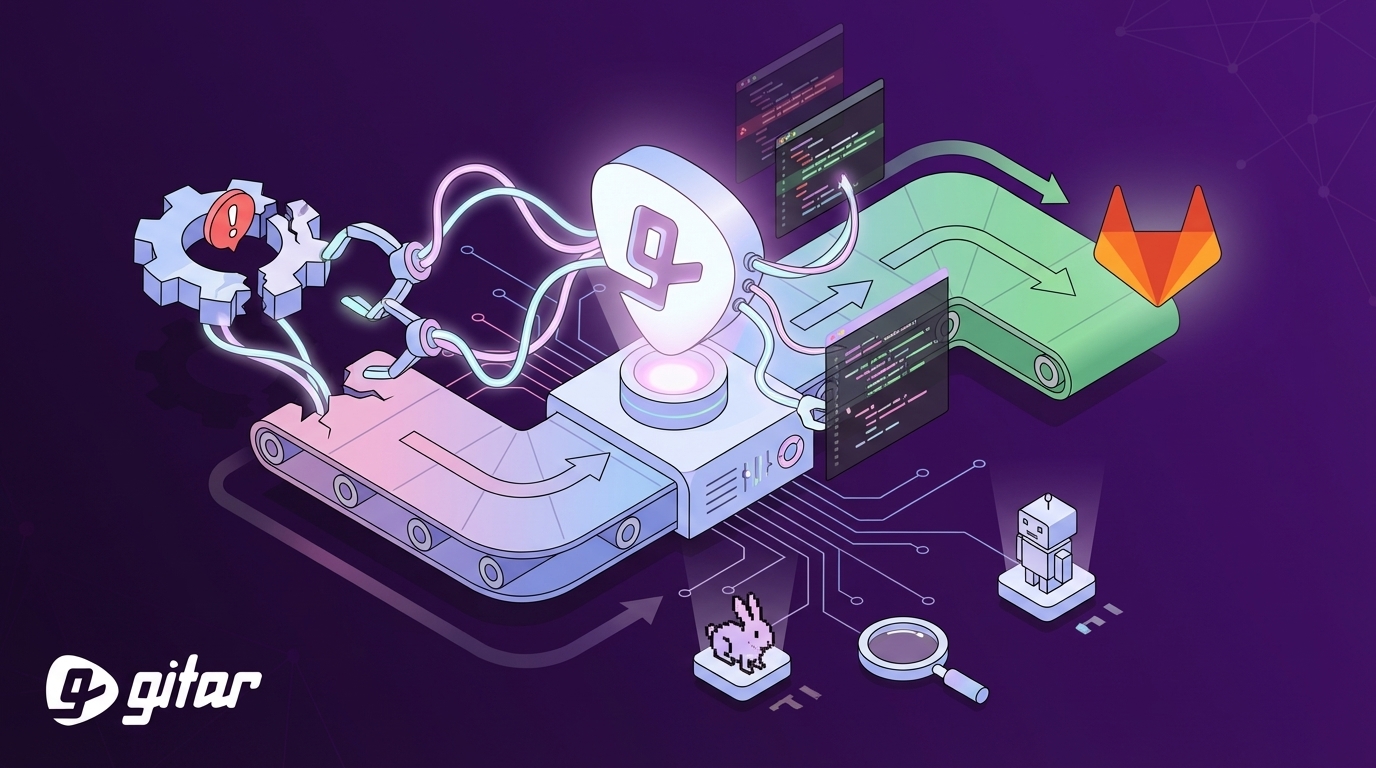
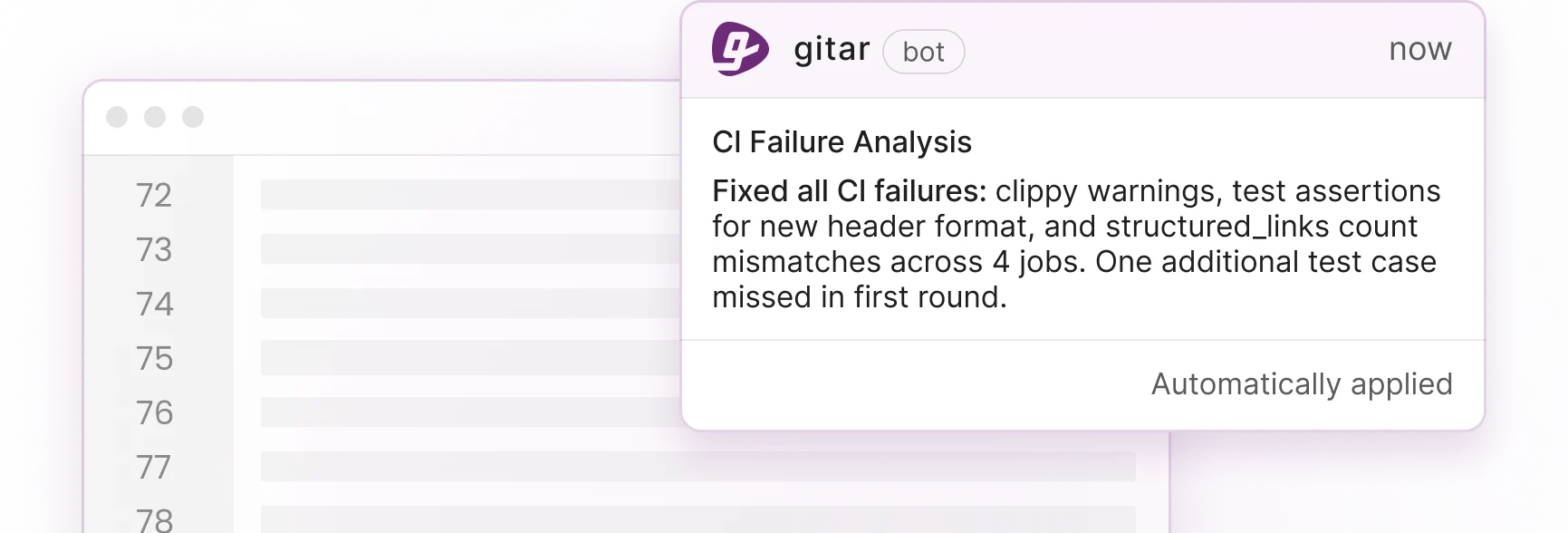
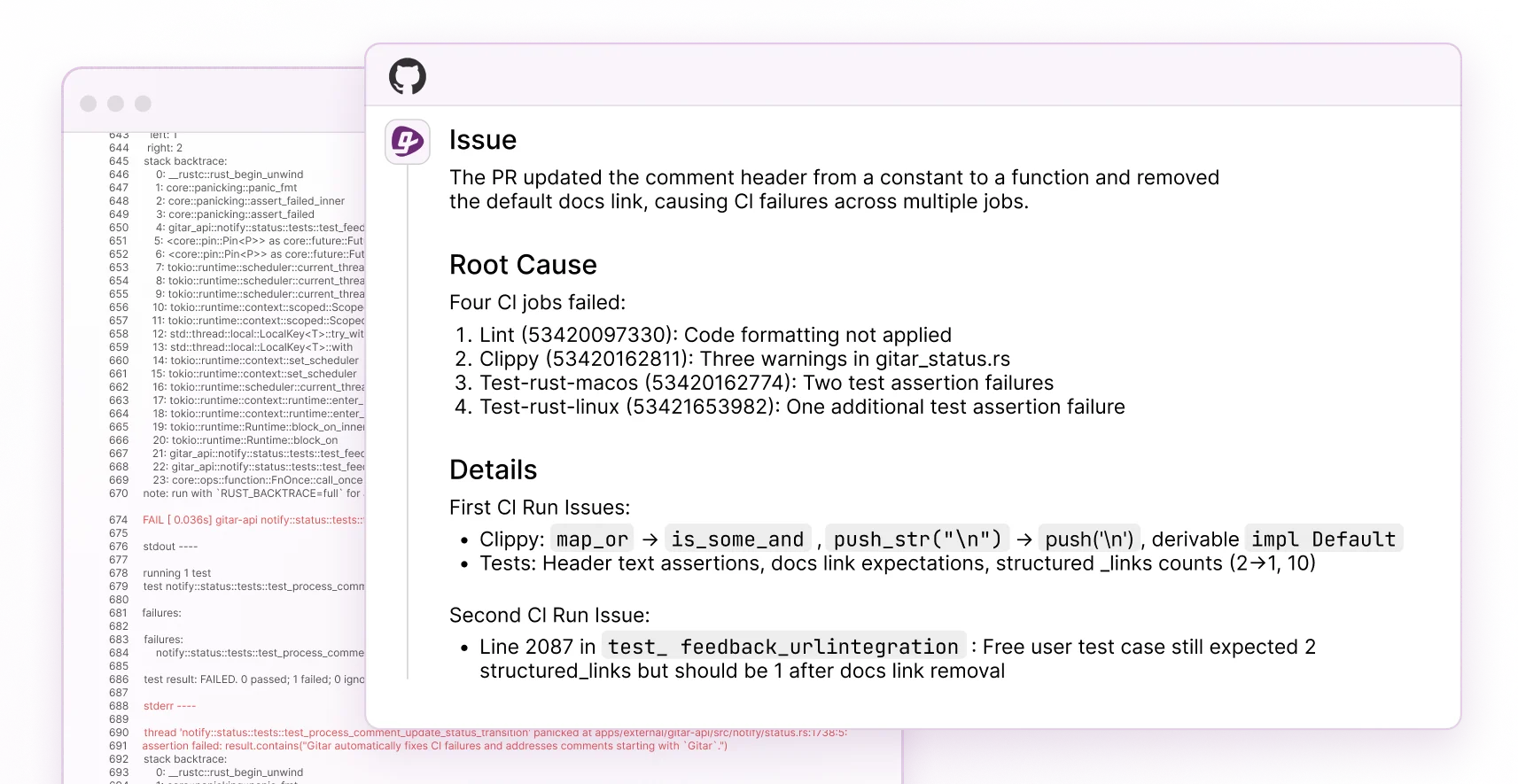
Gitar converts CI failures into automatic resolutions through its healing engine architecture. When GitLab CI fails because of lint errors, test failures, or build breaks, Gitar analyzes failure logs, generates validated fixes with full codebase context, and commits corrections directly to your merge request. Competing tools only suggest fixes, while Gitar guarantees green builds through validated auto-commits.
This autonomous approach translates into five core capabilities that distinguish Gitar from suggestion-only alternatives:
- Autonomous CI log analysis and root cause identification
- Auto-fix generation with environment validation
- Single updating comment interface, which prevents notification spam
- Native Jira and Slack integrations for workflow context
- Multi-platform support across GitLab CI, GitHub Actions, CircleCI, and Buildkite
GitLab integration works with minimal configuration. Pricing includes a comprehensive 14-day Team Plan trial with unlimited users and repositories. This setup suits GitLab teams that require guaranteed CI resolution without manual intervention. Start your 14-day Team Plan trial.
2. CodeRabbit: Multi-Platform Suggestions with One-Click Fixes
CodeRabbit provides AI-enhanced code reviews across GitHub, GitLab, Bitbucket, and Azure DevOps. The platform analyzes merge requests for security vulnerabilities, logic issues, and performance problems, then posts structured feedback with suggested fixes. CodeRabbit supports GitLab integration with real-time bug detection and customizable settings.
Limitations include suggestion-only fixes that require manual implementation and GitHub-biased feature development. Pricing ranges from $15 to $30 per developer monthly. The platform does not provide autonomous CI auto-fix capabilities for failed builds.
3. Qodo: Configurable Agents Without Auto-Commit
Qodo offers configurable AI agents for code review with customizable rule sets and team-specific configurations. The platform provides detailed analysis of code changes, security risks, and CI failure validation through tools like Qodo Merge’s CI Feedback. Qodo does not include auto-commit functionality.
4. Greptile: Bug Detection with False Positive Issues
Greptile delivers full-codebase indexing for comprehensive bug detection. Independent evaluations show Greptile offers the highest bug detection but also the highest false positive rate. The platform integrates into merge requests with risk explanations and minimal fix suggestions but cannot autonomously resolve CI failures.
5. GitLab Duo: Native but Suggestions-Only
GitLab Duo provides native AI assistance across merge requests and CI pipelines, including code review, vulnerability explanation, and pipeline troubleshooting. GitLab Duo offers AI-assisted code review and CI/CD troubleshooting natively in GitLab but remains limited to suggestions without autonomous fixes. It works exclusively within GitLab environments and adds extra cost as an add-on.
6. Bito: Open-Source with Manual Implementation
Bito offers open-source AI code review capabilities with a free tier. The platform provides code analysis and suggestions but requires manual implementation of all fixes. GitLab integration remains limited and does not include CI auto-fix functionality.
7. Tembo: Proactive Analysis with Autonomous CI Capabilities
Tembo provides proactive code analysis with early issue detection capabilities and autonomous CI failure resolution for workflows like GitHub Actions. The platform offers detailed code insights but has limited GitLab integration.
Side-by-Side Comparison of GitLab AI Code Review Tools
The table below highlights the critical difference between autonomous fixing and suggestion-only workflows. Only Gitar validates and commits fixes directly, while alternatives require manual implementation of every change.
|
Tool |
GitLab CI Auto-Fix |
MR Comment Style |
Pricing |
Multi-Platform ROI |
|
Gitar |
Yes (Validates/Commits) |
Single Updating |
14-Day Free Trial |
Multi-Platform/$750K Savings |
|
CodeRabbit |
No (Suggests Only) |
Multiple Inline |
$15-30/Developer |
Limited/Manual Work |
|
Greptile |
No (Suggests Only) |
Multiple Inline |
$30/Developer |
GitHub-Focused/High False Positives |
|
GitLab Duo |
No (Suggests Only) |
Native Comments |
Add-on Cost |
GitLab-Only/Limited |
GitLab Migration & Setup Guide for Gitar
Migrating to Gitar requires minimal configuration changes to existing GitLab workflows. The process follows four phases designed to build team confidence progressively.
1. Install Gitar via GitLab integration documentation to establish the connection between your CI environment and Gitar’s healing engine.
2. After installation, configure GitLab integration for healing triggers so Gitar knows which failure types to monitor.
3. With monitoring active, configure auto-fix mode by starting in suggestion mode. This approach lets your team review Gitar’s proposed fixes before you enable auto-commit for validated fix types.
4. Progress through migration phases at your own pace: begin with suggestions only, then approve fixes manually, next enable selective auto-commit for low-risk changes such as lint errors, and finally activate full autonomous healing once trust is established.
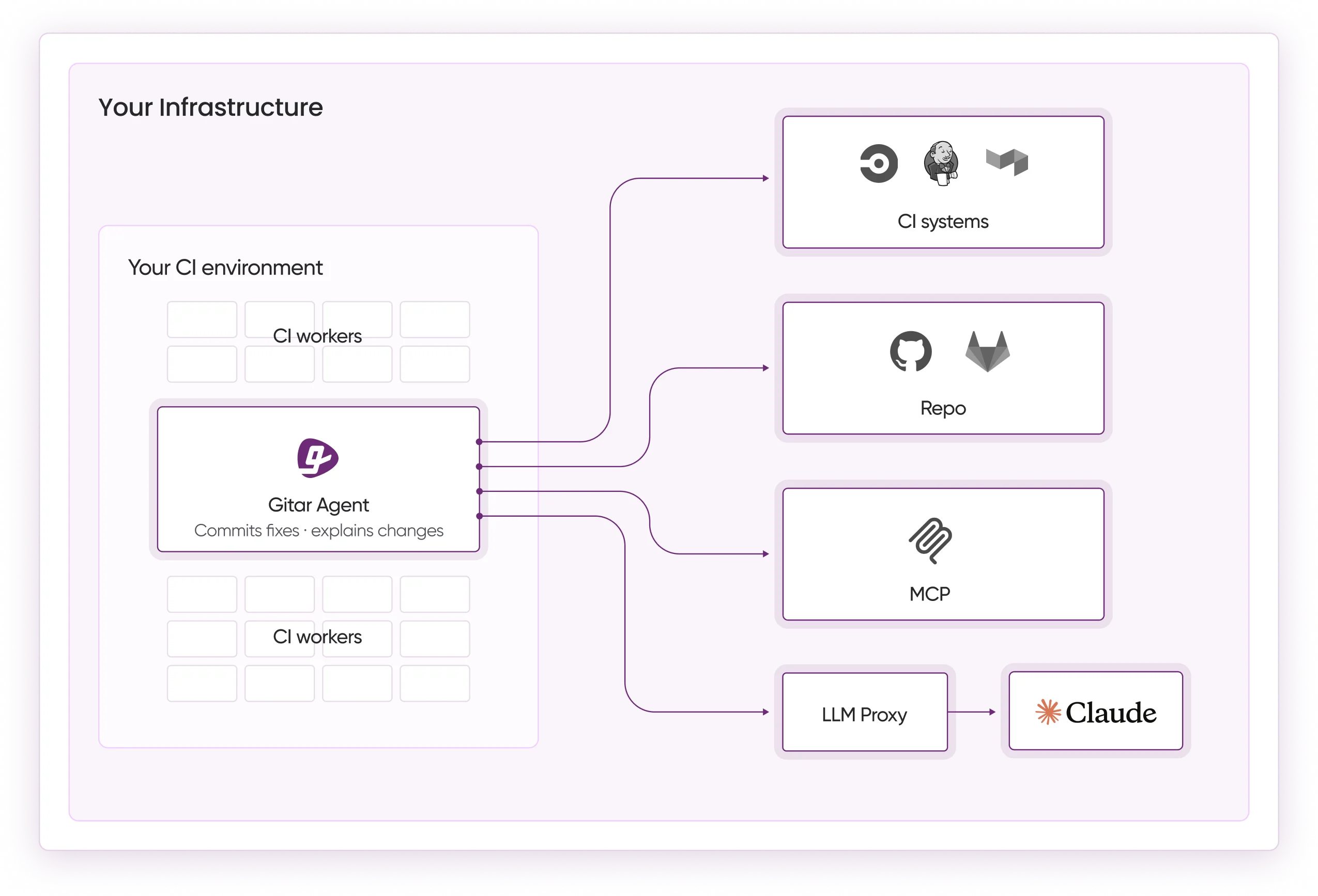
On-premise deployments run Gitar agents within your CI environment with full access to configs, secrets, and caches. This setup maximizes context and maintains security compliance.
Key ROI Considerations and Tradeoffs for GitLab CI AI Review
Engineering leaders, DevOps engineers, and GitLab CI maintainers face distinct ROI calculations when they evaluate autonomous AI code review. AI-powered tools for pipeline troubleshooting reduce resolution time from hours to minutes, which directly improves team productivity.
For a 20-developer team, manual CI failure resolution costs approximately 45 minutes per developer daily. As noted earlier, this $750K annual productivity drain can be eliminated through autonomous healing. Gitar’s autonomous healing engine removes this overhead through validated auto-fixes and delivers measurable ROI that exceeds the cost of suggestion-only alternatives that charge $15 to $30 per seat monthly.
See the ROI difference with a free 14-day trial.
FAQs: Autonomous AI Code Review for GitLab
Does Gitar fix GitLab CI failures autonomously?
Yes, Gitar’s healing engine autonomously analyzes CI failure logs, generates validated fixes with full codebase context, and commits corrections directly to your GitLab merge requests. Unlike suggestion-only tools, Gitar guarantees green builds through validated auto-commits that are tested against your actual CI environment before application.
How do I migrate from GitLab Duo to Gitar?
Migration uses a phased YAML configuration swap in your .gitlab-ci.yml file. Start by adding Gitar’s healing stage alongside existing GitLab Duo configurations. Then transition from suggestion mode to autonomous fixing as your team builds trust with the platform. Most teams complete the process in 2 to 4 weeks.
Does Gitar offer a free trial?
Yes, Gitar provides the trial mentioned throughout this article, which includes full access to autonomous fixing capabilities so you can measure velocity improvements before committing to a paid plan.
How does Gitar compare to CodeRabbit for GitLab workflows?
Gitar provides autonomous CI auto-fixes with validated commits, while CodeRabbit offers suggestion-only reviews that require manual implementation. Gitar’s single updating comment reduces notification noise compared to CodeRabbit’s multiple inline comments. For GitLab teams, Gitar delivers guaranteed green builds instead of CodeRabbit’s manual fix workflow.
What security controls exist for automated commits?
Gitar offers configurable security controls including approval workflows, fix type restrictions, and environment-specific rules. Teams can start in suggestion mode, then enable auto-commit for specific failure types such as lint errors, and gradually expand automation as trust builds. Enterprise deployments run agents within your infrastructure, with no code leaving your environment.
Conclusion: Reclaim GitLab Velocity with Autonomous CI Fixing
GitLab CI failures and merge request backlogs continue to slow development velocity even as AI adoption grows. Suggestion-only tools like GitLab Duo and CodeRabbit keep teams in manual work cycles that erase productivity gains from AI coding assistants. Gitar’s healing engine stands alone in delivering autonomous CI fixes with validated auto-commits and guarantees green builds across GitLab and multi-platform environments.
Experience autonomous CI fixing free for 14 days to see the difference between suggestions and solutions and reclaim your team’s velocity with AI code review that actually fixes CI.