
Key Takeaways
- AI code generation speeds up development 3–5x, yet PR review times increased 91%, creating a serious delivery bottleneck.
- Most GitHub AI code review tools leave suggestions that require manual edits, while Gitar auto-commits validated fixes during its 14-day Team Plan trial.
- Gitar connects directly to GitHub, sets up in about one minute, and supports all major CI systems without external API keys.
- CodeRabbit, GitHub Copilot, and PR-Agent excel at analysis but do not provide true auto-fix workflows with CI validation.
- Teams ship faster sprints and more green builds with Gitar. Start your 14-day Gitar Team Plan trial today.
How We Tested AI Code Review Auto-Fix Tools
Our 2026 evaluation focused on tools that commit real fixes instead of leaving suggestions in comments. We measured each tool’s ability to resolve CI failures automatically, validate fixes in real build environments, integrate cleanly with GitHub PRs, and run without external API keys. Success rates came from fixes that produced passing CI checks. We paid close attention to setup complexity, private repository support, and privacy controls. Testing combined hands-on benchmarks, GitHub Marketplace data, and developer community feedback.
Quick Comparison of Auto-Fix Features
|
Tool |
Auto-Fix CI Failures |
GitHub PR Integration |
Free Tier Limits |
Setup Time |
|
Gitar |
Yes (Trial/Team) |
Seamless |
14-day Team Plan trial |
~1 minute (install GitHub App) |
|
CodeRabbit |
Partial (Suggestions) |
Yes |
$15/month after free |
5 minutes |
|
GitHub Copilot |
No |
Native |
Requires subscription |
2 minutes |
|
PR-Agent |
No |
Yes |
Self-hosted or SaaS options |
15+ minutes |
8 GitHub AI Review Tools That Actually Fix Code in 2026
1. Gitar: Auto-Fix Engine With CI Validation
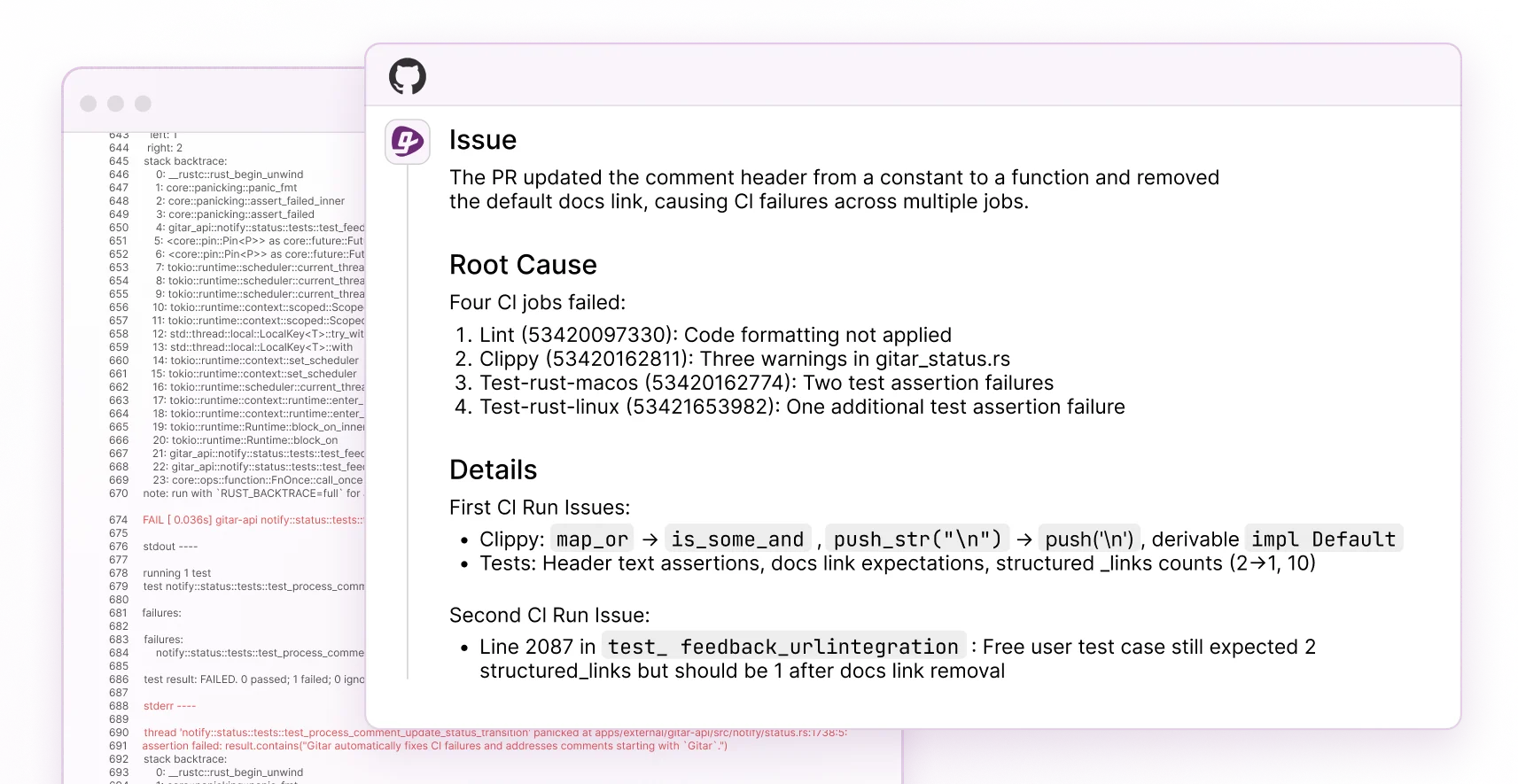
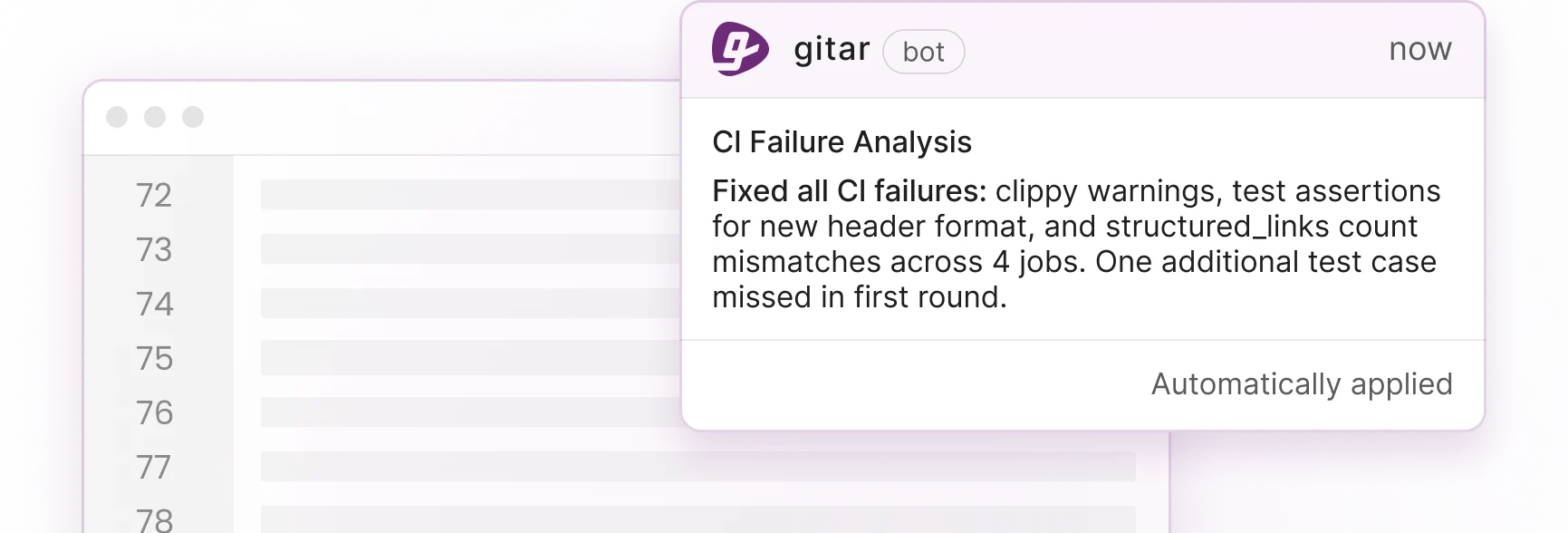
Gitar acts as an AI code review platform with a healing engine during its 14-day Team Plan trial. When CI fails from lint errors, test failures, or build breaks, Gitar analyzes the failure logs, generates validated fixes, and commits them directly to your PR. See the Gitar documentation for details on auto-fix behavior.
Setup stays simple and fast. Install the GitHub App, start your 14-day Team Plan trial, and Gitar begins posting consolidated dashboard comments on PRs. This approach replaces the notification spam common with other tools. The platform supports all major languages and integrates with GitHub Actions, GitLab CI, CircleCI, and Buildkite. See the Gitar documentation for integration guides.
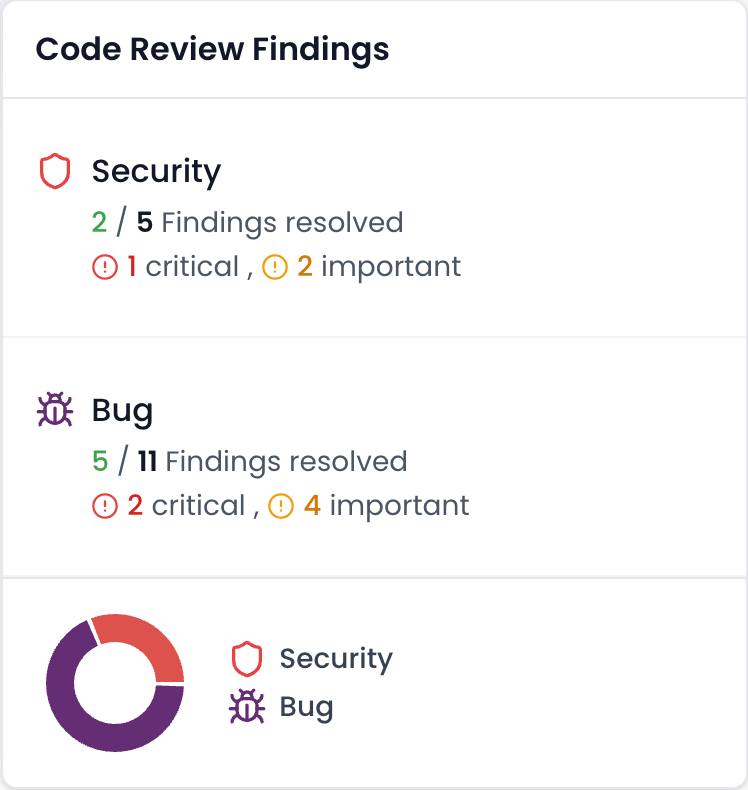
Pros: Actual auto-fixes with CI validation (Trial/Team), single clean comment interface, natural language workflow rules, comprehensive 14-day trial, Jira and Slack integration.
Cons: Newer platform with a smaller community than long-established tools.
Ideal for: Teams that want real automation, less manual review work, and more consistent green builds.
Install Gitar now to fix broken builds automatically and ship higher quality software faster.
2. CodeRabbit: Popular Suggestion-Based Reviewer
CodeRabbit is the most widely installed AI code review app on GitHub and GitLab. It offers line-by-line comments with severity rankings and one-click fixes on new PRs. The tool provides structured feedback and integrates with more than 40 linters and SAST scanners, yet it still behaves mainly as a suggestion engine instead of delivering validated auto-fixes.
Installation requires connecting your GitHub repository and configuring review settings. CodeRabbit supports GitHub, GitLab, Bitbucket, and Azure DevOps and offers self-hosted options for enterprises with over 500 seats.
Pros: Broad platform support, mature ecosystem, enterprise self-hosting choices.
Cons: $15–30 per developer each month after the free tier, suggestions still need manual edits, no CI context for validating fixes.
Ideal for: Teams comfortable with suggestion-based workflows that want established tooling and can budget for it.
3. GitHub Copilot Code Review: Native but Suggestion-Only
GitHub Copilot Code Review has processed over 60 million reviews since its April 2025 launch. The tool assigns itself as a reviewer, leaves inline comments with suggested fixes, and integrates CodeQL and ESLint for security scanning. It focuses on surface-level diff analysis and often lacks the deep codebase context needed for complex fixes.
Setup stays minimal for existing Copilot subscribers. You enable the code review feature in repository settings and start receiving comments. The tool integrates natively with GitHub’s interface but does not analyze CI failures.
Pros: Native GitHub integration, almost no extra setup for Copilot users, large and active user base.
Cons: Requires a Copilot subscription, medium false positive rate, no automated fix application.
Ideal for: Teams already using GitHub Copilot that want basic review assistance inside GitHub.
4. Greptile: Deep Analysis Without Auto-Fixes
Greptile integrates directly into GitHub pull requests, posting structured review comments automatically and running deep full codebase analysis. It excels at flagging control-flow problems and explaining risks. It still works through suggestions instead of automated fixes.
Installation involves connecting your GitHub repository and granting permissions. Greptile needs repository access for its comprehensive analysis, which can raise privacy concerns on sensitive projects.
Pros: Strong codebase understanding, clear risk explanations, broad analysis coverage.
Cons: Highest false positive rate among evaluated tools, $30 per developer pricing, suggestion-only workflow.
Ideal for: Teams that value deep analysis more than automated fixes.
5. PR-Agent: Self-Hosted Control for Private Code
PR-Agent supports self-hosting and SaaS options, using Ollama for local models without external API keys. This model gives complete data sovereignty and works well with private repositories, which appeals to security-focused teams.
Setup requires deploying the agent on your infrastructure or using existing integrations, then configuring GitHub webhooks. This design maximizes privacy control but demands significant DevOps expertise and ongoing maintenance.
Pros: Full data sovereignty, no external API dependencies, strong support for private repositories.
Cons: Complex setup with infrastructure management, no automated fix application, continuous maintenance overhead.
Ideal for: Teams with strong DevOps skills that prioritize data privacy over ease of use.
Start your 14-day Gitar Team Plan trial to get automated fixes without managing extra infrastructure.
6. villesau/ai-codereviewer: Lightweight GitHub Action
This open-source GitHub Action delivers AI-powered code reviews through OpenAI’s API. It stays lightweight and easy to configure but needs external API keys and works as a suggestion engine instead of providing automated fixes.
Setup involves adding the GitHub Action to your workflow file and configuring OpenAI API credentials in repository secrets. The tool runs on every PR but lacks CI context for validated fixes.
Pros: Open source, simple GitHub Actions integration, low overhead.
Cons: Requires an OpenAI API key, suggestion-only behavior, no CI failure analysis.
Ideal for: Teams that want basic AI review help with minimal setup effort.
7. Snyk Code: Security-Focused Reviews
Snyk Code targets security vulnerability detection in code reviews and offers free scanning for open source projects. It delivers strong security analysis but does not handle general code quality fixes or CI failure resolution.
Installation requires connecting your GitHub repository to Snyk’s platform and configuring security rules. The tool integrates with GitHub’s security tab while operating separately from CI workflows.
Pros: Strong security focus, free access for open source, proven security expertise.
Cons: Limited to security issues, no general code fixes, separate platform to manage.
Ideal for: Teams that prioritize security scanning over full code review automation.
8. Bito AI Code Review Agent: Deep PR Analysis
Bito AI Code Review Agent offers GitHub setup for PR reviews with deep analysis of logic errors, security, and performance. It provides robust integration but may lack some consolidated CI interfaces available in other tools.
Setup involves installing the GitHub App and configuring review preferences. Bito works through PR comments with one-click fix suggestions and supports multiple VCS platforms.
Pros: Deep context-aware analysis, one-click fixes, multi-VCS support and integrations.
Cons: Separate platform access, may need extra configuration for advanced workflows.
Ideal for: Teams that want comprehensive AI review with some automation features.
How To Choose the Right AI Code Review Tool
Teams should match AI code review tools to their needs around privacy, scale, and automation depth. Tools that validate fixes instead of only suggesting them matter more. Self-hosted options like PR-Agent give data sovereignty at the cost of complexity and maintenance.
Many teams that want quick productivity gains can use Gitar’s 14-day trial to experience validated auto-fixes without upfront commitment. Start your 14-day Gitar Team Plan trial and track the impact on development velocity.
Frequently Asked Questions About AI Code Review
Best Free GitHub AI Tool That Auto-Fixes CI Failures
Gitar provides full auto-fix capabilities through its 14-day Team Plan trial. Unlike suggestion-only tools, Gitar analyzes CI failure logs, generates validated fixes, and commits them directly to your PRs. The platform supports major CI systems, including GitHub Actions, GitLab CI, CircleCI, and Buildkite.
GitHub AI Code Review Tools Without API Keys
Several tools avoid external API key management. PR-Agent supports self-hosted deployment with local Ollama models, which gives complete data sovereignty without external API calls. Gitar’s trial needs no API key configuration, since you only install the GitHub App. GitHub Copilot Code Review runs natively inside GitHub for existing subscribers without extra API setup.
How Gitar Compares to CodeRabbit for Automated Fixes
Gitar and CodeRabbit differ most in automation depth. CodeRabbit offers structured suggestions and one-click fixes but still needs manual implementation and does not validate fixes against CI. Gitar’s healing engine on Trial and Team plans analyzes failures, generates fixes, validates them in your build environment, and commits working solutions.
Typical Setup Time for Private Repository Integration
Setup time depends on tool complexity. Gitar usually takes about one minute, since you install the GitHub App and start your trial. CodeRabbit averages around five minutes for repository connection and configuration. Self-hosted tools like PR-Agent often require 15 minutes or more for infrastructure deployment and webhook setup. GitHub Copilot Code Review takes about two minutes for existing subscribers to enable the feature.
How To Measure ROI From AI Code Review Automation
Teams can measure ROI by tracking time saved on manual review work, faster CI resolution, and fewer context switches. A 20-developer team can lose up to $1M per year from CI and review friction without automation. Gitar’s 14-day Team Plan trial offers automated fix application so teams can measure concrete productivity gains before paying. Key metrics include shorter PR review cycles, faster CI failure resolution, and higher sprint velocity.
Conclusion: Move From Suggestions to Healing
The shift from suggestion engines to healing engines marks the next stage of AI code review. Tools like CodeRabbit and GitHub Copilot provide useful analysis but still depend on humans to apply suggested fixes. Many current AI-powered code review tools feel noisy, rigid, or disconnected from real developer workflows, so they do not fully solve the review bottleneck created by AI-accelerated code generation.
Gitar’s model of fixing CI failures automatically, validating solutions, and committing working code delivers a step change in development automation. The 14-day Team Plan trial gives risk-free access so teams can feel the difference between tools that suggest and tools that heal code. For teams overwhelmed by PR backlogs from rapid AI-generated changes, choosing between paid suggestions and validated auto-fixes becomes straightforward.
Start your 14-day Gitar Team Plan trial today to fix broken builds automatically and ship higher quality software faster. Experience what modern GitHub AI code review looks like when the tool actually fixes code.