
Key Takeaways
- Gitar ranks #1 as a free enterprise AI code review tool with auto-fix for CI failures and guaranteed green builds.
- Most competitors such as CodeRabbit and Greptile only suggest fixes, require manual changes, and start at $15-30 per developer monthly.
- Gitar supports GitHub, GitLab, CircleCI, and scales to 50M+ lines of code with 30-second setup and unlimited free repositories.
- Auto-fix features analyze failure logs, validate solutions, and auto-commit to PRs, which cuts cycle time by 24% for AI-native teams.
- Enterprise teams save $375K+ annually in productivity; install Gitar now for free AI code review with auto-fix trial.
How We Ranked These AI Code Review Platforms
Our evaluation focuses on healing depth, pricing, scalability, integrations, ROI, and cross-platform support. Healing depth favors tools that auto-commit fixes and validate against CI over suggestion-only tools. Pricing prioritizes free or low-friction entry for enterprise teams.
Scalability requires support for 50M+ lines of code and high PR volume. Integrations cover CI, version control, Jira, and Slack. ROI draws on time savings and reduced manual review effort. Analysis incorporates 2026 benchmarks showing mature AI-native teams achieving 24% reduction in median cycle time.
We reviewed vendor documentation and enterprise gap analysis from real-world testing. We then validated performance claims through customer case studies, including Pinterest-scale deployments.
Top 7 Enterprise Real-Time AI Code Review Tools
1. Gitar – Free auto-fixes CI failures and review feedback for guaranteed green builds
2. CodeRabbit – $15+/developer suggestion-based reviews with PR summaries
3. Greptile – $30/developer codebase context reviews with learning capabilities
4. SonarQube AI – Static analysis with basic AI-powered issue detection
5. GitHub Copilot Workspace – PR suggestions integrated with Microsoft ecosystem
6. Bito – IDE-focused code review with limited CI integration
7. Qodo – Agentic patches with security-focused enterprise workflows
#1 Gitar – Free Enterprise AI Code Review with Auto-Fix
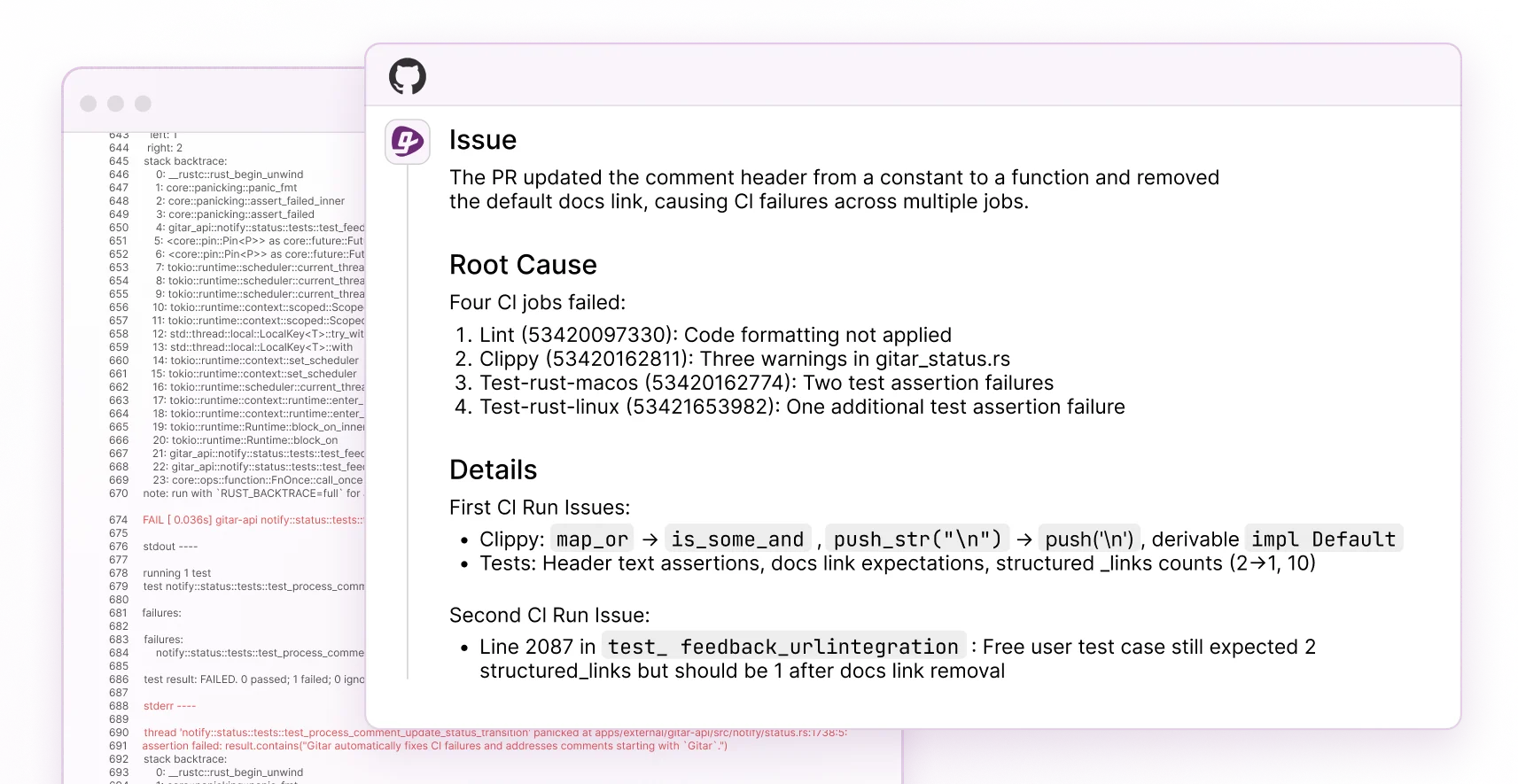
Gitar functions as a free enterprise real-time AI code review tool that actually fixes problems. When CI checks fail, such as lint errors, test failures, or build breaks, Gitar analyzes failure logs and generates validated fixes. It then commits those fixes automatically to your PR, with auto-fix features available through a 14-day free trial.
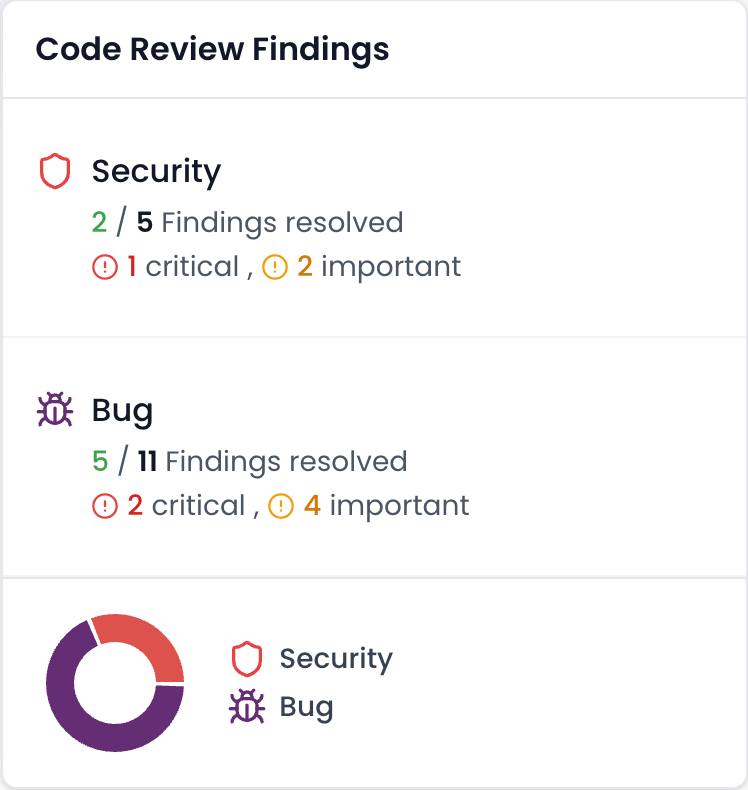
Key Features: Single-comment dashboard that updates in place, natural language repository rules, automatic CI failure healing, review feedback implementation, and cross-platform support for GitHub, GitLab, CircleCI, and Buildkite.
Setup: Complete installation in about 30 seconds through a GitHub App or GitLab integration. No account or credit card is required.
Pricing: Code review remains completely free with unlimited repositories and users. Auto-fix features include a 14-day free trial.
Strengths: Guarantees green builds through validated fixes, reduces notification spam with consolidated comments, and scales to 50M+ lines of code, validated at Pinterest scale. The platform also extends beyond review into workflow automation and analytics.
Best For: Enterprise teams that want free, comprehensive code review with real problem resolution instead of suggestion-only tools.
Install Gitar now, get free AI code review with auto-fix capabilities.
#2 CodeRabbit – AI-Powered PR Analysis
CodeRabbit delivers fast AI code reviews with inline suggestions and PR summaries. The tool focuses on identifying issues and recommending changes, while engineers still implement fixes manually.
Key Features: Inline editor suggestions, PR comment generation, example fixes rendered next to code, and GitHub integration.
Setup: Requires repository indexing time and currently supports GitHub only.
Pricing: Pro tier starts at $24 per month, with custom pricing for Enterprise plans.
Strengths: Generates reviews quickly and provides thorough PR analysis.
Limitations: Lacks CI context for failure analysis and uses a suggestion-only model that needs manual fixes. Enterprise testing revealed critical gaps in complex bug detection scenarios.
Best For: Teams that prefer suggestion-based workflows and do not mind implementing fixes themselves.
#3 Greptile – Codebase Context Reviews
Greptile focuses on AI PR reviews with full codebase context and learning from team feedback. The platform emphasizes understanding entire systems instead of only file-level changes.
Key Features: Full codebase graph analysis, runtime-level insights, cross-file impact analysis, and learning from reviewer feedback.
Setup: Uses an API-centric model that requires integration configuration.
Pricing: Costs $30 per developer each month.
Strengths: Provides deep codebase understanding and adaptive learning capabilities.
Limitations: Offers fewer integrations than some competitors, has developing AI features, and shows limited enterprise adoption so far.
Best For: Teams that value deep codebase context more than immediate automatic fix implementation.
Install Gitar now to automatically fix broken builds and ship higher quality software faster.
#4 SonarQube AI – Static Analysis with AI Support
SonarQube AI combines static analysis with AI-powered issue detection and focuses on code quality metrics and security vulnerabilities.
Key Features: Static code analysis, security vulnerability detection, code quality metrics, and compliance reporting.
Setup: Requires server deployment for enterprise installations.
Pricing: Community edition is free, while commercial licenses unlock advanced features.
Strengths: Offers a mature static analysis engine and comprehensive security scanning.
Limitations: Does not implement automatic fixes to PRs and relies on a traditional rule-based approach that AI features enhance.
Best For: Organizations that need comprehensive static analysis with AI augmentation.
#5 GitHub Copilot Workspace – Deep Microsoft Integration
GitHub Copilot Workspace extends Copilot from inline suggestions to PR-level guidance and workspace-wide code understanding inside the Microsoft ecosystem.
Key Features: PR suggestions, workspace-wide context, Microsoft ecosystem integration, and file or diff level analysis.
Setup: Integrates directly with GitHub and Visual Studio environments.
Pricing: Included within GitHub Copilot subscription tiers.
Strengths: Delivers seamless Microsoft ecosystem integration and a familiar Copilot interface.
Limitations: Uses a suggestion-only model and does not validate fixes against CI systems.
Best For: Microsoft-centric development teams already using GitHub Copilot.
#6 Bito – IDE-Centered Code Review
Bito offers PR-integrated code review that centers on developer workflow inside IDEs and across repositories.
Key Features: PR integration, developer workflow support, and a strong focus on the coding environment.
Setup: Requires IDE plugin installation and configuration.
Pricing: Uses a freemium model with paid tiers for advanced capabilities.
Strengths: Provides strong IDE integration and a developer-friendly interface.
Limitations: Delivers limited CI integration and focuses on review workflows instead of full CI or CD pipeline healing.
Best For: Individual developers who want integrated review capabilities inside their IDE.
#7 Qodo – Security-First Agentic Reviews
Qodo supports agentic workflows for enterprise code review with a strong focus on security analysis, CI signals, and test impact assessment. It also offers one-click remediation patches.
Key Features: Agentic workflows, security policy validation, test generation, multi-model support, and remediation patch generation.
Setup: Requires enterprise integration and security policy configuration.
Pricing: Uses enterprise-focused custom pricing.
Strengths: Delivers strong security coverage, automated PR validation, and broad enterprise workflow integration.
Limitations: Involves complex setup, uses an enterprise-only pricing model, and remains less accessible for smaller teams.
Best For: Large enterprises with complex security needs and dedicated DevSecOps teams.
Side-by-Side Comparison Table
| Feature | Gitar | CodeRabbit | Greptile |
|---|---|---|---|
| PR Summary | ✓ Free | ✓ Paid | ✓ Paid |
| Inline Suggestions | ✓ Free | ✓ Paid | ✓ Paid |
| Auto-Apply Fixes | ✓ 14-day trial | ✗ | ✗ |
| CI Failure Analysis | ✓ | ✗ | ✗ |
| Green Build Guarantee | ✓ | ✗ | ✗ |
| Pricing | Free | $24+/dev | $30/dev |
| GitHub/GitLab/CI | ✓ All | GitHub only | Limited |
| Enterprise Scale | 50M+ LOC | Unknown | Developing |
ROI, Trade-offs, and Buyer Considerations
Engineering leaders should evaluate tools across three personas: individual engineers, engineering leaders, and DevOps teams. Individual engineers want fewer context switches and less manual rework. Leaders need measurable velocity gains and clear ROI.
DevOps teams look for self-healing CI capabilities that reduce firefighting. For a 20-developer team, productivity losses from AI-generated code issues and review bottlenecks can reach $1M annually. Gitar’s auto-fix capabilities can cut this to about $250K by resolving CI failures and implementing review feedback automatically.
Even if teams only realize 50% of that impact, they still save about $375K annually while avoiding $450-900 in monthly tool costs from competitors. This combination of savings and free core review features creates a strong financial case.
Common objections include concerns about free tool sustainability, automated commit trust, and complex CI environments. Gitar funds itself through enterprise features beyond basic review and offers configurable approval workflows for automated commits.
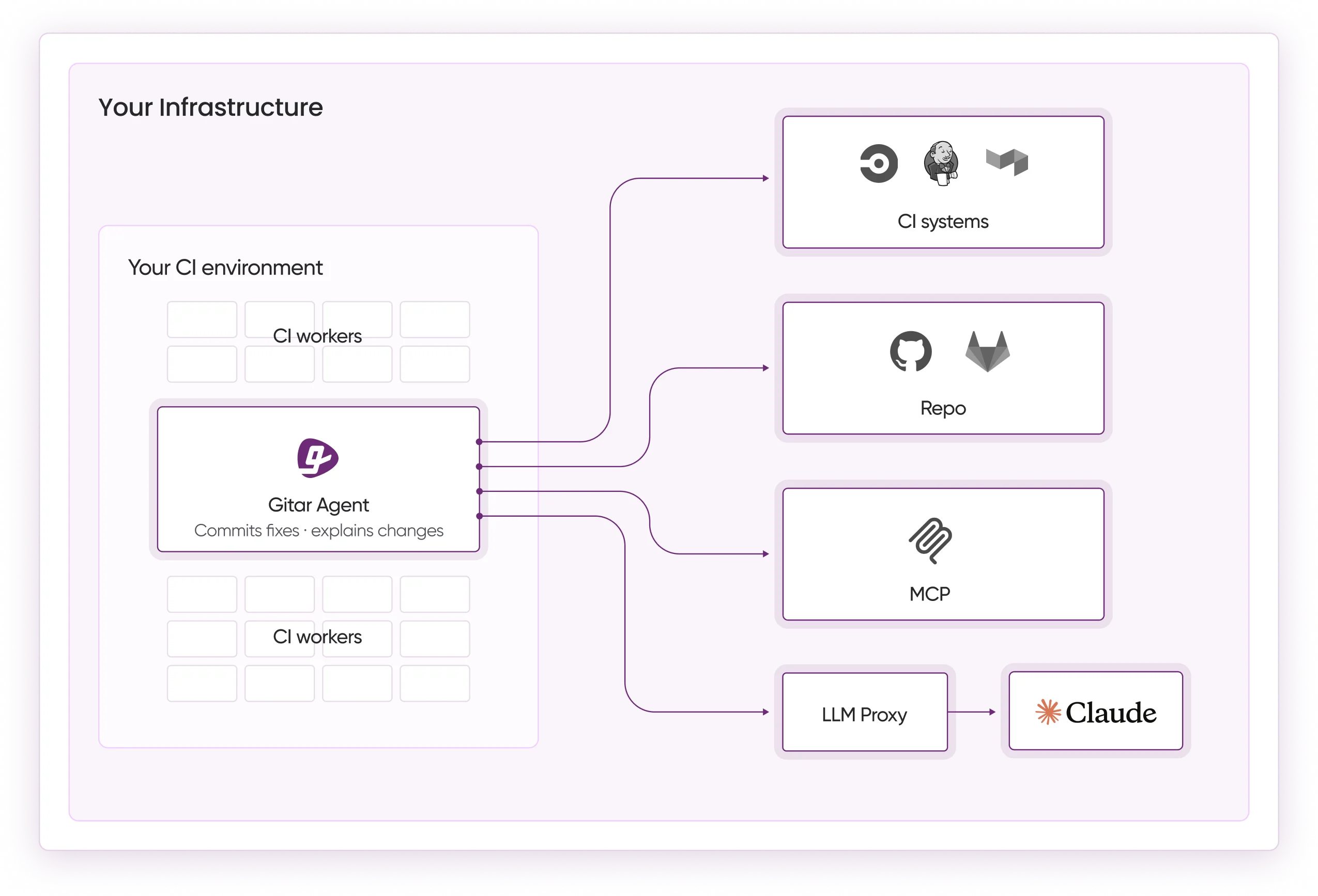
The platform also emulates full CI environments, including SDK versions and dependencies. Enterprise deployment options run agents inside customer CI infrastructure, which preserves security and control.
Install Gitar now and start shipping higher quality software faster.
Frequently Asked Questions
Best Free AI Code Review Tool for Enterprise Teams
Gitar currently leads as a free enterprise AI code review tool with unlimited repositories, users, and full PR analysis. Competing tools charge $15-30 per developer for suggestion-only features. Gitar adds auto-fix with CI validation and green build guarantees, available through a 14-day free trial.
The platform scales to 50M+ lines of code and supports GitHub, GitLab, CircleCI, and Buildkite. This combination of scale, integrations, and free access makes it attractive for large teams.
Availability of True Auto-Fix in AI Code Review Tools
Most AI code review tools only provide suggestions that engineers must apply manually. Gitar offers true auto-fix capabilities that analyze CI failures, generate validated solutions, and automatically commit fixes to PRs, with auto-fix available through a 14-day free trial.
This healing engine model guarantees green builds instead of leaving developers with a backlog of suggested changes. Teams can experience automated fix implementation directly during the trial period.
Comparison of CodeRabbit and Gitar for AI Code Reviews
CodeRabbit focuses on fast AI-generated suggestions and PR summaries but remains suggestion-only and requires manual fixes. Gitar delivers similar review capabilities for free and adds automatic fix application, CI failure analysis, and green build guarantees, with auto-fix available through a 14-day free trial.
CodeRabbit costs $24 or more per developer each month. Gitar keeps core review features free and offers optional paid auto-fix capabilities, which shifts the cost-benefit balance.
Enterprise AI Code Review Tools with CI Integration
Gitar excels at CI integration and supports GitHub Actions, GitLab CI, CircleCI, and Buildkite. It performs automatic failure analysis and fix implementation inside these environments.
Most competitors such as CodeRabbit and Greptile lack deep CI context and focus only on code-level suggestions. Gitar’s enterprise deployment option runs agents inside customer CI infrastructure, with access to configurations, secrets, and caches for validated fixes.
Handling Large Codebases and High PR Volumes
Enterprise-scale AI code review requires support for millions of lines of code and thousands of daily PRs. Gitar has demonstrated this scale through Pinterest validation at more than 50M lines of code and thousands of PRs per day.
The platform’s single-comment approach reduces notification noise, while hierarchical memory systems maintain context across PRs, repositories, and organizations. Many competitors lack proven enterprise-scale validation and struggle with high-volume workloads.
Conclusion and Next Steps
The 2026 enterprise AI code review market separates suggestion engines from healing engines that resolve issues. Gitar stands out as a leading free solution with real auto-fix capabilities, which makes it a strong choice for teams that want measurable productivity gains instead of more comments.
Install Gitar now to automatically fix broken builds and ship faster.