
Written by: Ali-Reza Adl-Tabatabai, Founder and CEO, Gitar
Key Takeaways: Claude Code Review Alternatives That Actually Fix Your CI
-
AI code generation tools increased code review time by 91% and PR sizes by 154%, so teams now need tools that auto-fix problems instead of adding more comments.
-
Gitar ranks #1 with guaranteed green builds through its healing engine, 30-second GitHub App setup, and a 14-day Team Plan trial that supports GitHub, GitLab, and major CI systems.
-
Open-source options like Cline, Aider, and OpenCode offer flexibility and high usage ceilings but lack CI auto-fixing, so teams must wire up pipelines manually and pay separate API costs.
-
Self-hosted tools demand 6–13 weeks of setup and ongoing maintenance, while cloud platforms like Gitar deliver validated fixes quickly with no infrastructure to manage.
-
Teams save about 45 minutes per developer per day with Gitar’s automated CI healing. Start your 14-day trial to see similar gains in your own pipeline.
How To Test Alternatives Against Your CI
Focus your evaluation on auto-fix validation, CI healing, setup time under five minutes, high-usage tiers, broad GitHub and GitLab coverage, and noise reduction. The strongest tools plug into your existing workflows and raise build success rates in a measurable way.
Include real-world failures such as lint errors, broken tests, and dependency conflicts in your tests. Many tools advertise “AI-powered” reviews, but only add suggestions, so prioritize platforms that validate fixes against your actual CI environment. Advanced platforms like Gitar added CI failure analysis in October 2025, which analyzes failures and posts validated fixes in a single dashboard comment.
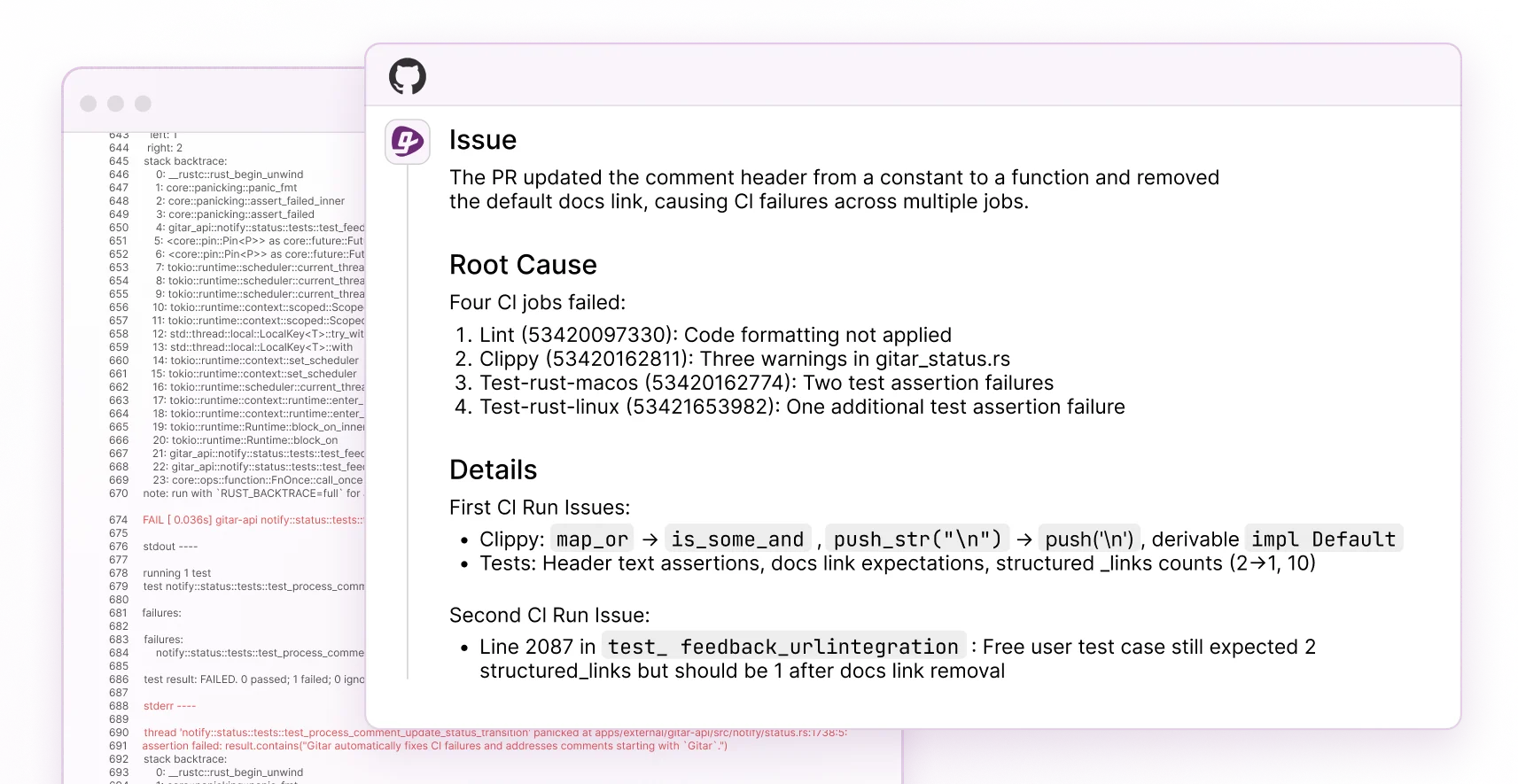
Account for total cost of ownership, not just sticker price. Self-hosted solutions require 6–13 weeks of setup plus 0.25–0.5 FTE for maintenance, while cloud platforms deliver value immediately with professional support. Applying these criteria to the current market highlights ten tools that stand out for auto-fixing strength and impact on team productivity.
Top 10 Claude Code Review Alternatives for 2026
These are the leading AI code review alternatives to Claude Code Review for 2026, ranked by auto-fixing capabilities and impact on developer throughput:
1. Gitar – 14-day Team Plan trial with CI and PR auto-fixing through a healing engine, no seat limits
2. Cline – Open-source VS Code extension with bring-your-own-key model support
3. Aider – Terminal CLI with native Git integration and multi-model support
4. OpenCode – Open-source CLI supporting 75+ LLM providers with offline options
5. Continue.dev – IDE extension with Ollama integration for local models
6. Gemini CLI – Google’s terminal agent with a 1M token context window
7. Ollama Local – Self-hosted LLM deployment for privacy-focused teams
8. PR-Agent – Open-source GitHub Actions integration with air-gapped options
9. Refact.ai – Self-hosted coding assistant with review features
10. SonarQube CE – Rule-based static analysis with CI/CD integration
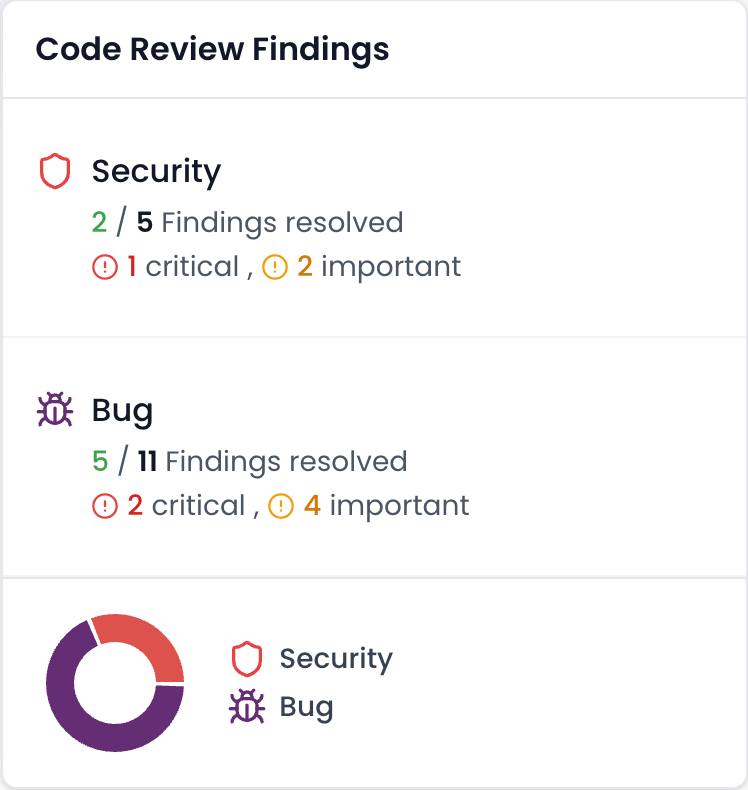
Try Gitar as your Claude alternative and see CI auto-fixes in your next sprint.
#1 Gitar: Claude Alternative With Guaranteed Green Builds
Gitar is the only platform in this list that guarantees green builds through a dedicated healing engine. Instead of leaving comments, Gitar analyzes CI failures, generates validated fixes, and commits those changes directly to your pull requests. All findings appear in a single living dashboard comment, which cuts notification noise while still keeping updates in real time.
Setup takes about 30 seconds through a GitHub App installation and immediately unlocks the full Team Plan during your 14-day trial. This quick start enables integration with GitHub, GitLab, CircleCI, and Buildkite, where Gitar’s natural language workflow automation begins working right away. Teams then see faster velocity from automated lint fixes, test repairs, and dependency updates that land before developers even notice failures.
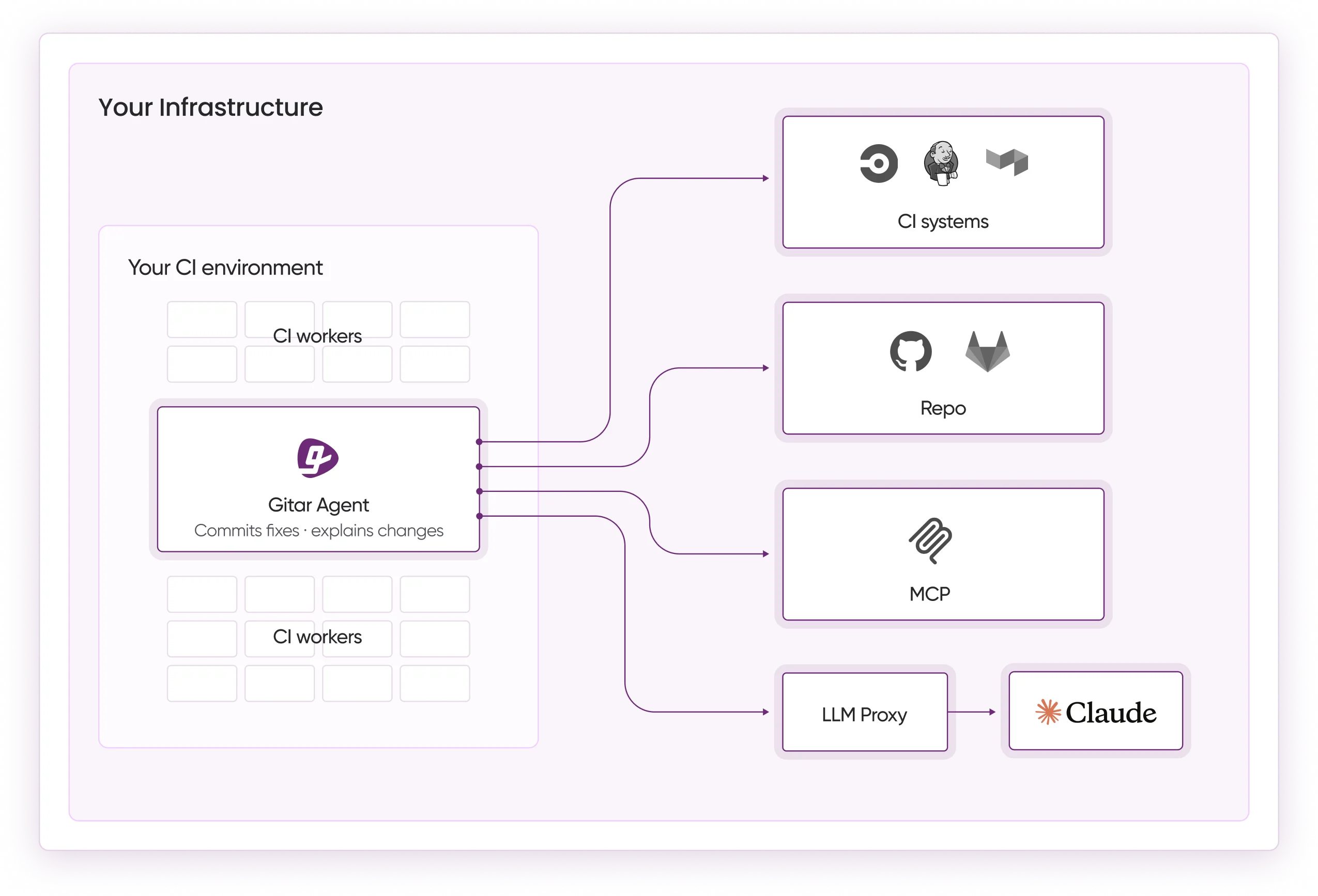
Strengths: Guaranteed build fixes, minimal setup, 14-day Team Plan trial, broad CI coverage
Limitations: Cloud deployment only, focused on team workflows rather than solo use
Ideal for: Development teams that want immediate productivity gains without managing infrastructure
#2 Cline: Claude-Like VS Code Extension
Cline delivers Claude-style assistance inside VS Code through a fully open-source extension. It supports bring-your-own-key setups for providers like OpenAI, Anthropic, and Google, so teams keep control over model choice and inference costs.
You install Cline from the VS Code marketplace and then configure your preferred provider. Cline works well with terminal-first CLI workflows and offers high usage potential through pay-as-you-go APIs. It does not integrate with CI pipelines directly, so developers must apply suggested fixes by hand.
Strengths: Open-source, no vendor lock-in, strong terminal integration
Limitations: No CI auto-fix, manual application of changes, separate API charges
Ideal for: Individual developers who prefer CLI workflows and direct API management
#3 Aider: Terminal-First Git Workflow
Aider, with 39,000+ GitHub stars as of 2026, focuses on Git-heavy refactoring where every AI-generated edit becomes a Git commit with a clear message. It supports more than 100 programming languages and maps your entire repository for context-aware suggestions. You can compare its capabilities against Gitar’s CI benchmarks using the documentation.
Installation uses a simple pip install aider command and gives immediate access to terminal-based editing. Teams pay LLM API costs unless they run local models, which can work well when existing AI infrastructure is already in place. Aider shines for large refactors but does not include dedicated CI failure analysis.
Strengths: Automatic Git commits, broad language coverage, repository-wide context
Limitations: API expenses, no CI integration, terminal-only interface
Ideal for: Developers who center their workflow on Git and large-scale refactors
#4 OpenCode: Multi-Provider Open Source Stack
OpenCode, with 95,000+ GitHub stars as of March 2026, supports more than 75 LLM providers, including fully local offline models through a dual-agent design. It offers LSP integration for real-time diagnostics and MCP support for external tools, which enables deep CI and CD wiring for teams willing to configure it.
Setup involves cloning the repository and wiring your chosen model provider. OpenCode does not charge license fees beyond hardware, so usage can scale with your infrastructure. The tradeoff is a terminal-centric configuration experience and no built-in fix validation for CI failures.
Strengths: Broad provider support, offline operation, real-time diagnostics
Limitations: Terminal-heavy setup, no automatic fix validation, steeper learning curve
Ideal for: Technical teams that need maximum flexibility and offline workflows
Install Gitar to get validated CI fixes without complex terminal setup.
#5 Continue.dev: IDE Extension With Local Models
Continue, with 20,000+ GitHub stars as of 2026, brings AI assistance into VS Code and JetBrains through inline completions, chat panels, and natural language edits. It supports any LLM backend, including local Ollama models for teams that want stronger privacy.
You install the extension and then choose your model configuration. Continue excels at IDE-native workflows and offers shared configs for teams, but it does not automate CI. Local models can introduce latency on weaker hardware, so the experience works best for individual contributors with capable machines.
Strengths: Deep IDE integration, local model support, privacy-friendly options
Limitations: No CI automation, performance tied to hardware
Ideal for: Individual developers who value privacy and editor-centric workflows
#6 Gemini CLI: Google Terminal Agent for Large Codebases
Google’s Gemini CLI provides no-cost access to the Gemini 3.1 Pro model with a 1 million token context window. It includes shell commands that connect to CI and CD workflows and reached 78% on SWE-bench Verified, which suits small teams managing large repositories. You can compare setup and limits using Gitar’s documentation guidelines.
Setup requires installing the CLI and authenticating with Google Cloud. Gemini CLI offers 1,000 requests per day on this tier and handles complex codebases well. It still expects developers to apply fixes manually and does not provide automated CI healing.
Strengths: Huge context window, no-cost tier, strong benchmark scores
Limitations: Manual fix application, daily request caps, dependence on Google Cloud
Ideal for: Teams comfortable with Google tooling and terminal workflows
#7 Ollama Local: On-Prem Privacy for AI Models
Ollama supports local deployment of language models for teams that require strict data privacy and control. It offers different model sizes and high usage potential without API invoices, but it needs substantial hardware such as 16 GB or more of RAM and preferably a GPU.
Setup includes installing Ollama and downloading your chosen models. This approach delivers strong privacy and predictable costs while demanding significant infrastructure and ongoing maintenance. Performance depends heavily on hardware and model choice.
Strengths: Full data privacy, no external API costs, high usage potential
Limitations: Heavy hardware needs, maintenance burden
Ideal for: Organizations with strict compliance rules and robust infrastructure
Skip infrastructure complexity and try Gitar’s 30-second setup to see auto-fixes in action.
#8 PR-Agent: GitHub Actions for AI Reviews
PR-Agent, with 10,500 GitHub stars and a v0.32 release in February 2026, integrates with GitHub Actions and supports self-hosted Ollama for air-gapped reviews. It offers high usage potential without API costs when local models work correctly, although configuration remains challenging.
Setup involves configuring GitHub Actions and deploying models. Unresolved configuration bugs have blocked reliable local model deployment for more than four months as of March 2026, which pushes setup time into the 6–13 week range and requires at least 8 GB of VRAM.
Strengths: Open source, GitHub Actions integration, air-gapped options
Limitations: Configuration instability, long setup, hardware demands
Ideal for: Teams with strong DevOps skills and time for troubleshooting
#9 Refact.ai Tier: Self-Hosted Coding Assistant
Refact.ai offers self-hosted AI coding assistance with secondary review features. It supports private deployment and multiple model configurations so teams can tune behavior to their environment. Setup requires careful infrastructure planning and ongoing maintenance.
The tool delivers reasonable completions and basic review checks but lacks the deep CI integration and auto-fixing found in dedicated review platforms. Teams must weigh privacy gains against reduced automation and higher operational overhead.
Strengths: Self-hosted privacy, flexible deployment, strong team control
Limitations: Limited review depth, maintenance needs, complex setup
Ideal for: Teams that value privacy more than advanced automation
#10 SonarQube CE: Rule-Based Quality Gates
SonarQube Community Edition runs static analysis across 21 languages with GitHub integration through CI and CD pipelines. It relies on predictable rules rather than AI but still gives small teams dependable quality gates.
Setup includes wiring SonarQube into CI and defining quality gate thresholds. It enforces rules consistently but cannot match the contextual understanding or adaptive behavior of AI review engines. Many teams use it alongside, not instead of, intelligent tools.
Strengths: Predictable results, mature ecosystem
Limitations: No AI, limited context awareness, rule-only checks
Ideal for: Teams that need consistent quality gates to complement AI review tools
Move beyond rule-only analysis and try Gitar’s contextual AI healing with a 14-day trial.
Claude Code Review Alternatives: Quick Comparison
|
Tool |
Auto-Fix/CI |
Git/CI Integrations |
Limits/Setup |
|---|---|---|---|
|
Gitar |
Yes/Yes |
GitHub, GitLab, CircleCI, Buildkite |
14-day Team Plan trial/30 seconds |
|
Cline |
No/No |
VS Code, Git |
High usage/API costs |
|
Aider |
No/No |
Git, Terminal |
High usage/API costs |
|
OpenCode |
No/Limited |
LSP, MCP |
High usage/Complex setup |
Claude Code Review Alternatives on Reddit: What Devs Complain About
Developer communities frequently cite setup complexity and lack of automated fixes as the main problems with current tools. Teams report that about 33% of AI suggestions are irrelevant, and manual application of those suggestions erodes any productivity gains.
GitHub activity shows strong adoption for tools like Aider and OpenCode, yet many enterprise teams now favor platforms that avoid do-it-yourself infrastructure. Gitar addresses these concerns with SOC2 compliance, professional support, and guaranteed fix validation, which gives enterprises reliability without the burden of self-hosted stacks.
Total cost of ownership analysis shows that open-source tools can appear cheaper at first, but hidden setup, maintenance, and debugging costs often exceed managed platform pricing. Teams can save around $1M per year by removing manual CI fixes and cutting context switching interruptions.
FAQs
What’s the best Claude Code Review alternative for CI auto-fixes?
Gitar offers the most complete CI auto-fixing through a healing engine that analyzes failures, generates validated fixes, and commits them to pull requests. The 14-day Team Plan trial includes unlimited access to these auto-fixing features without extra setup or infrastructure work.
How do I set up Gitar’s trial?
Install the Gitar GitHub App in about 30 seconds to start your 14-day Team Plan trial. You then gain full access to auto-fixing, custom rules, and all supported integrations without providing a credit card.
What are the differences between tiers and paid plans?
The 14-day trial unlocks the full Team Plan, including unlimited users, auto-fix features, CI failure analysis, PR summaries, developer insights, and integrations with Linear, Jira, and Slack. Enterprise plans add agents that run inside your CI pipeline for maximum security and context.
Does Gitar integrate with Jira and Slack?
Yes, Gitar integrates with Jira for ticket context, Slack for notifications and coordination, and Linear for project tracking. These links keep context flowing across your development workflow.
How do I measure ROI from AI code review tools?
Track CI failure reduction, PR review time, context switching interruptions, and developer satisfaction. Many teams see about 45 minutes of daily time savings per developer from automated fixes and fewer manual interventions.
Can I switch from CodeRabbit or other suggestion-based tools?
You can install the Gitar GitHub App alongside existing tools and compare suggestion-based reviews with auto-fixing in the same repos. Most teams disable older tools within days after seeing guaranteed build fixes replace manual implementation work.
Conclusion: Choosing a Claude Code Review Alternative That Fixes Builds
AI code review tools now fall into two groups: suggestion engines that leave work for developers and healing engines that ship working fixes. Open-source options like Aider and OpenCode give technical teams flexibility, while platforms like Gitar deliver faster results through validated auto-fixing and tight CI integration.
Teams facing post-AI bottlenecks must choose between complex infrastructure and immediate outcomes. Testing Gitar’s healing engine first shows the difference between more comments and actual green builds.