
Written by: Ali-Reza Adl-Tabatabai, Founder and CEO, Gitar
Key Takeaways
-
AI testing tools raise code coverage from 50–70% to 80%+ in CI pipelines by automating unit tests, E2E tests, and self-healing.
-
Gitar focuses on full CI auto-fix and AI code review for JavaScript, Python, and Java in GitHub Actions and GitLab CI, with a 14-day Team Plan trial.
-
Qodo, Keploy, Testsigma, and GitHub Copilot support IDE unit tests, API regression, no-code E2E flows, and test scaffolding across common stacks.
-
Evaluate tools by trial access without seat limits, 20–50% coverage lift benchmarks, setup under 5 minutes, native CI integrations, and auto-healing depth.
How To Evaluate AI Testing Tools for 80%+ Coverage
Focus on concrete outcomes when you evaluate AI testing tools for sustained coverage gains. Look for trial access without seat limits, documented coverage lift benchmarks of 20–50%, setup time under 5 minutes, native CI integrations with GitHub Actions, GitLab CI, and CircleCI, support for your primary languages such as JavaScript, Python, Java, or Go, and auto-healing that fixes broken tests automatically.
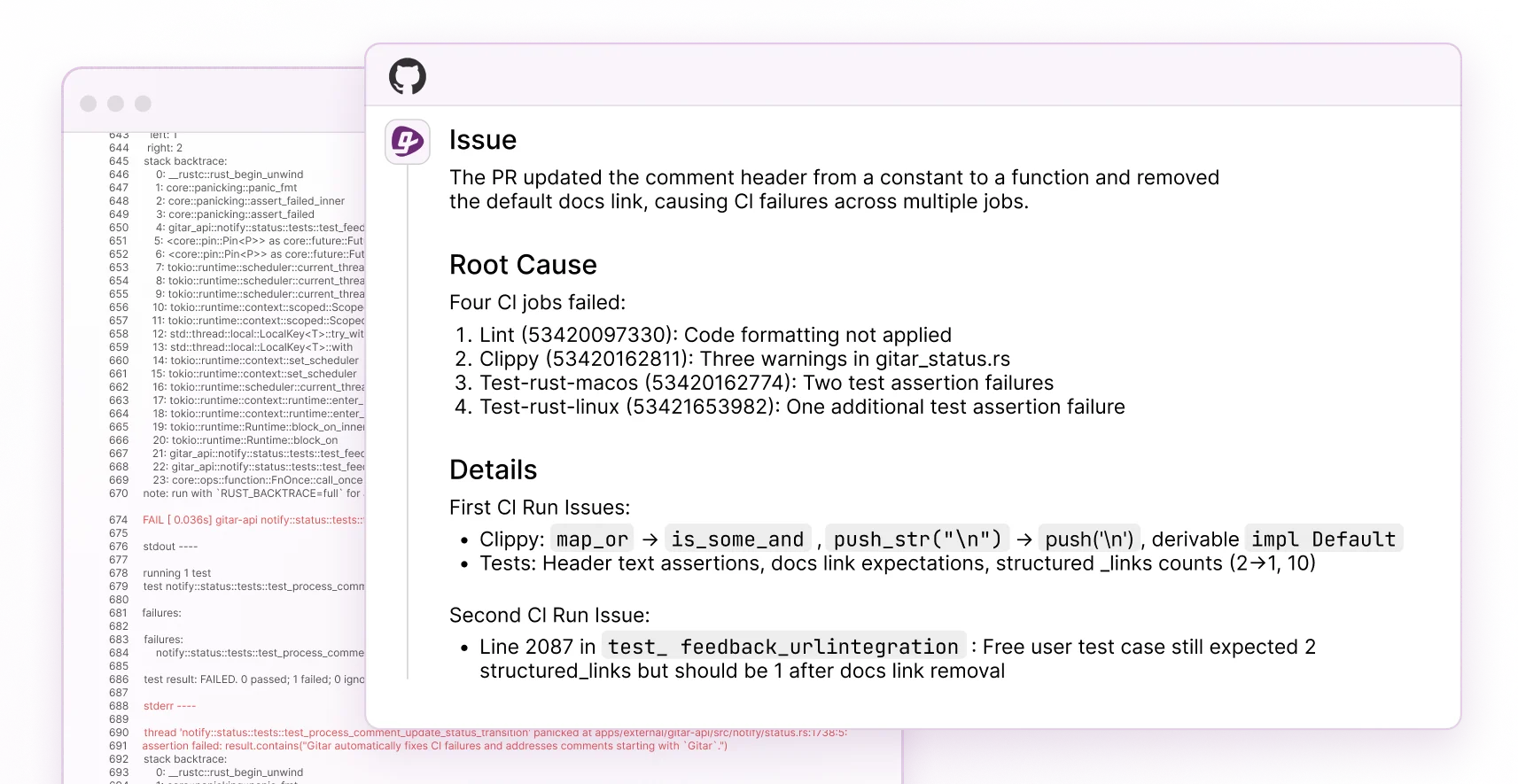
Run each tool in your own repository so you can measure real coverage improvements, not just vendor claims. Gitar added CI failure analysis in October 2025, which analyzes failures and surfaces insights that update as new commits land. Combine these hands-on results with GitHub stars, vendor documentation quality, and 2026 benchmark data so you can validate your short list from several independent angles.
Best AI Tools for Unit Test Generation
Unit test generation tools read function signatures, types, dependencies, and logic, then create test suites that cover edge cases and boundary conditions beyond happy paths. These tools form the base layer of an 80%+ coverage strategy because they protect core logic where most defects originate.
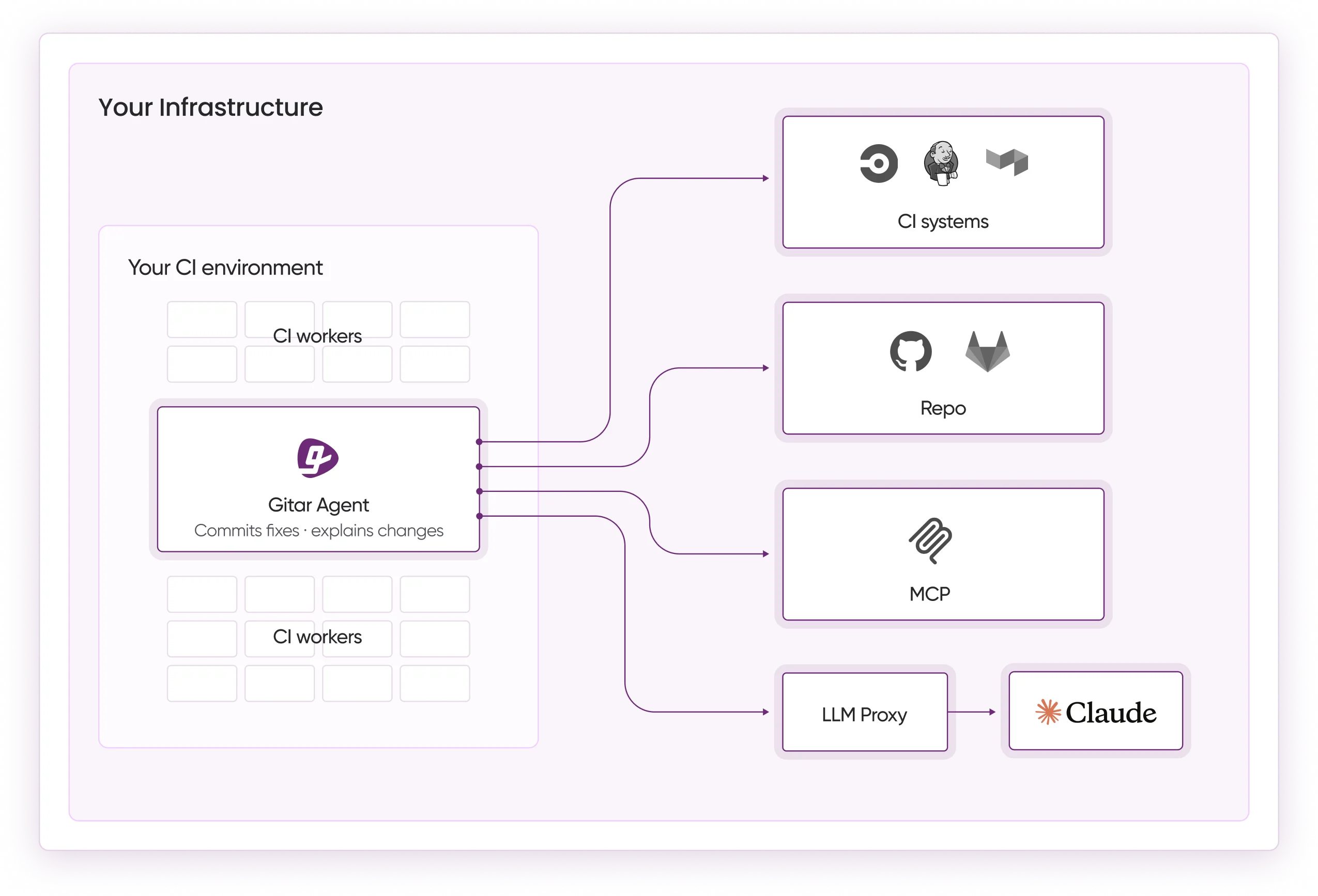
Apply the evaluation criteria here first and start with Gitar’s 14-day trial for AI code review and CI auto-fix that runs inside your actual pipeline. The platform maintains full context from pull request creation through merge, traces root causes of failures, generates fixes, and validates them against your CI environment so you keep the main branch green. See the Gitar documentation for details on this end-to-end workflow.
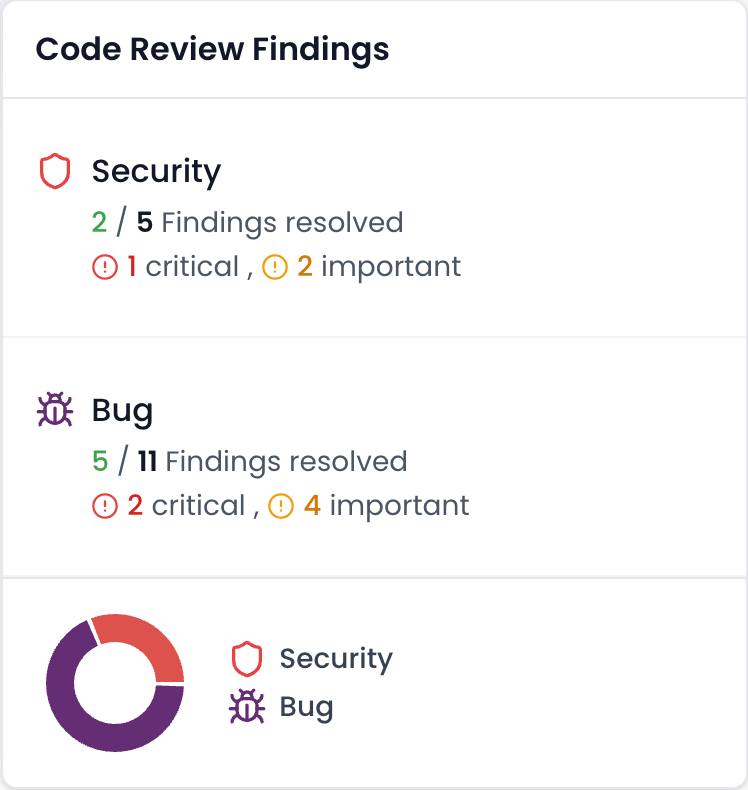
Qodo provides unit test generation for individual developers through IDE plugins for VS Code and JetBrains, supporting Python, JavaScript, TypeScript, and Java. The individual tier includes 75 credits per month, which suits solo developers, while team plans start at $19 per user each month for collaborative use.
Diffblue Cover focuses on enterprise Java and automatically generates JUnit tests for Java applications. It targets complex business logic and aims for broad coverage of critical flows in large Java services.
The comparison below highlights how these three tools differ in coverage lift, language focus, and trial limits so you can match them to your stack and rollout plan.
|
Tool |
Coverage Lift |
Languages |
Trial Limits |
|---|---|---|---|
|
Gitar |
N/A |
Multi-language |
14-day full trial |
|
Qodo |
30-40% |
Python, JS, Java |
75 credits/month |
|
Diffblue |
25-35% |
Java only |
Limited trial |
Low-Code AI Tools for E2E and API Journeys
Low-code end-to-end testing tools use natural language and visual AI so teams can create user journey tests without deep scripting skills. These tools complement unit tests by validating full workflows across UI, API, and data layers.
Gitar’s trial focuses on AI code review and CI failure auto-fixing with full CI context, so fixes reflect your real deployment environment instead of a narrow sandbox. This context helps teams keep complex integration and E2E suites stable as services evolve.
Testsigma’s community edition offers cloud-based no-code E2E automation for web, mobile, and API testing. Atto AI converts natural language descriptions into automated steps, and self-healing locators adapt to UI changes so teams spend less time updating selectors.
Keploy generates API regression tests from captured live traffic for Go, Java, Node.js, and Python services. The open-source tool handles deduplication, filters noisy non-deterministic fields, and connects directly to CI/CD pipelines without usage caps.
The table below summarizes test types, setup time, and CI integration so you can align each tool with your release workflow.
|
Tool |
Test Types |
Setup Time |
CI Integration |
|---|---|---|---|
|
Gitar |
CI auto-fix |
<2 minutes |
Native all platforms |
|
Testsigma |
Web, Mobile, API |
<5 minutes |
Jenkins, GitLab |
|
Keploy |
API regression |
<3 minutes |
All major CI/CD |
Self-Healing AI Test Tools for Stable Pipelines
Traditional test automation maintenance consumes 60–80% of QA effort because UI changes constantly break locators. Self-healing AI updates elements automatically and can cut maintenance work by about 85%.
Gitar’s healing engine extends this idea from UI elements to full CI runs. It fixes CI failures, including test failures, validates each fix inside CI, and keeps builds green without manual triage for every broken run.
mabl’s 14-day trial offers ML-based adaptation and auto-healing for E2E tests across web, mobile, and API layers. It recommends tests based on code changes and uses visual change detection with ML comparison to catch UI regressions.
Testim’s Community plan uses Smart Locators that analyze hundreds of DOM attributes so tests adapt to UI changes while remaining compatible with Selenium-based cross-browser testing.
The next table compares healing scope, maintenance reduction, and trial terms so you can estimate long-term upkeep savings.
|
Tool |
Healing Scope |
Maintenance Reduction |
Trial Period |
|---|---|---|---|
|
Gitar |
Full CI context |
N/A |
14 days |
|
mabl |
UI elements |
85% |
14 days |
|
Testim |
DOM attributes |
80% |
Limited runs |
AI Analytics for Coverage and Failure Insights
Coverage analytics tools reveal how effective your tests are, highlight gaps, and point to specific areas where additional tests will reduce risk. These insights help you move from raw coverage numbers to meaningful quality signals.
Gitar’s analytics dashboard groups CI failures by category, flags infrastructure issues, and surfaces recurring patterns so platform teams can refine their testing strategy and pipeline configuration.
Katalon Studio includes AI-suggested test optimization and visual testing with AI comparison. It supports end-to-end testing for web, mobile, API, and desktop applications and integrates with CI/CD tools such as Jenkins and Git.
Codecov tracks coverage over time and uses AI-powered insights to identify critical gaps, then suggests high-impact areas for new or stronger tests.
AI Coding Assistants Focused on Tests
AI coding assistants plug into IDEs and code review workflows to generate test scaffolding and suggest improvements while developers write or review code. These assistants help teams keep test creation close to daily development work.
Gitar provides specialized AI code review with CI context and auto-fixes that address test failures and coding issues based on your repository’s patterns. This context-aware approach connects code suggestions directly to pipeline health.
GitHub Copilot integrates into IDEs such as VS Code and JetBrains and generates unit, integration, or E2E test scaffolding in frameworks like Playwright, Cypress, and Jest using repository context. The service offers a basic tier at no cost with additional premium features.
JetBrains AI Assistant focuses on test generation for JVM projects, producing JUnit tests that match existing patterns, including mock dependencies and assertion styles.
Coverage Benchmarks and Practical Implementation
Teams reach meaningful coverage gains by establishing a baseline, rolling out tools in stages, and tracking coverage over several sprints. AI testing tools can accelerate coverage by 10x or more by generating tests from requirements, user stories, or observed behavior.
The table below compares nine tools across coverage lift, setup time, and CI support so you can balance impact against rollout friction.
|
Tool |
Coverage Lift |
Setup Time |
CI Support |
|---|---|---|---|
|
Gitar |
N/A |
<2 min |
All platforms |
|
Qodo |
30-40% |
<5 min |
IDE-based |
|
Keploy |
25-35% |
<3 min |
Native |
|
Testsigma |
20-30% |
<5 min |
Jenkins, GitLab |
|
GitHub Copilot |
15-25% |
Instant |
Via IDE |
|
mabl |
25-40% |
<10 min |
Native |
|
Testim |
20-35% |
<5 min |
GitHub, GitLab |
|
Katalon |
15-30% |
<10 min |
Jenkins, Git |
|
Diffblue |
25-35% |
<5 min |
Maven, Gradle |
Industry benchmarks show that 70% coverage often fails to catch enough defects because line coverage alone does not confirm that tests assert correct behavior. Aim for 80%+ coverage and pair it with AI-generated mutation testing so you can validate that tests detect real bugs instead of only executing code paths.
Key Considerations and Common Limitations
Most tools restrict functionality in lower tiers through usage caps or limited CI integrations, which can slow adoption in larger teams. Qodo’s tier with 75 credits per month works well for individuals but can constrain teams that run frequent test generations across several services.
Gitar’s 14-day Team Plan trial takes a different approach by exposing full auto-fix capabilities, custom rules, and all integrations from day one. This access lets teams measure impact on sprint velocity and failure rates before they decide on a paid rollout.
Frequently Asked Questions
Is there any AI tool for automation testing?
Multiple AI tools automate test generation and maintenance across the stack. Gitar offers a comprehensive 14-day Team Plan trial with AI code review, CI failure auto-fixing, and workflow automation. Qodo focuses on unit tests in IDEs, Keploy targets API testing, and Testsigma supports no-code E2E automation.
What is the best AI for coding tests?
Gitar delivers AI code review and CI-validated auto-fixes for test failures and code issues across supported languages. Qodo works best for unit test generation inside IDEs, while Keploy specializes in API regression testing from live traffic. Your CI environment and primary test types should guide the final choice.
Are there open-source AI testing tools?
Yes, Keploy is fully open-source for API test generation, and Testsigma offers an open-source community edition. Gitar provides a full-featured trial that includes enterprise capabilities usually reserved for paid plans, which makes serious evaluation possible without immediate budget approval.
Can AI tools improve code coverage for existing projects?
AI tools can significantly increase coverage for existing codebases by scanning untested paths and generating targeted test suites. Gitar’s AI code review analyzes pull requests with full repository context and flags issues, including potential coverage gaps, before changes merge.
Is 70% test coverage good enough?
Basic industry standards often cite 70% coverage, yet modern applications benefit from 80%+ coverage supported by mutation testing and thorough edge case validation. Higher coverage reduces production bugs and increases deployment confidence in CI/CD environments where automated tests act as the main quality gate.
Next Steps for Sustained 80%+ Coverage
AI tools unlock major coverage gains, but sustained 80%+ coverage depends on automated healing and enforcement inside CI pipelines. Gitar’s healing engine keeps CI green as code changes by fixing failures, validating each change in CI, and reducing the need for manual intervention on every broken run.