
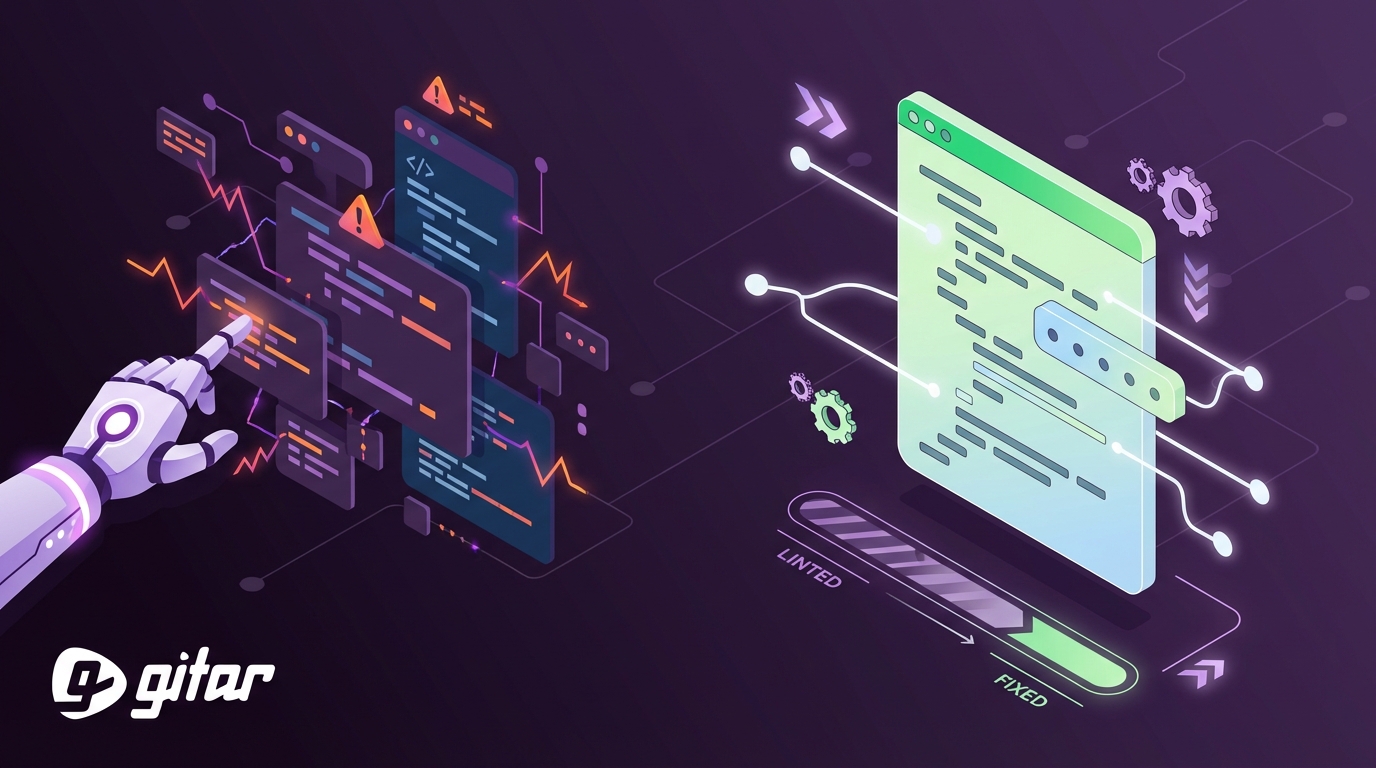
Key Takeaways
- AI coding tools increase development speed 3–5x, yet lint and CI issues still consume 30% of developer time and slow sprints.
- Gitar ranks #1 in 2026 as the leading free AI tool for automatic lint detection, validated fixing, and direct CI commits.
- Unlike ESLint’s manual fixes or competitors’ suggestions, Gitar reads CI logs, validates in your full environment, and auto-commits working solutions.
- Gitar supports JS, TS, Python, Go, Java, and Rust across GitHub Actions, GitLab CI, and CircleCI, with free forever review and a 14-day autofix trial that can save teams over $750K each year.
- Install Gitar now for free to remove manual lint fixing and ship higher-quality code faster.
The Top 5 Free AI Tools for Automatic Lint Detection & Fixing in 2026 (Gitar #1)
|
Tool |
Detection |
Auto-Fix |
CI Commit |
Free Tier |
|
1. Gitar |
Yes |
Yes (Validated) |
Yes |
Forever Review + 14-day Autofix Trial |
|
2. Aider |
Yes |
Yes (CLI) |
Manual |
Open Source (API Key Required) |
|
3. Windsurf |
Yes |
Yes |
No |
50 Chats + 2K Completions |
|
4. Cursor AI |
Yes |
Yes (Inline/Agent) |
No |
Limited Free Tier |
Aider is an open-source AI coding tool that supports automatic lint and style cleanups as part of maintenance work, but it requires users to supply their own API key and manually run tests before merge. Windsurf offers autonomous capabilities like running tests and fixing errors automatically, but it limits free users to 50 agent interactions each month.
Gitar stands apart with unlimited free code review that uses a single dashboard comment, which cuts notification spam while still giving full CI failure analysis and validated auto-fixes during the 14-day trial.
Why Gitar Is the Leading Free AI Code Fixer Tool
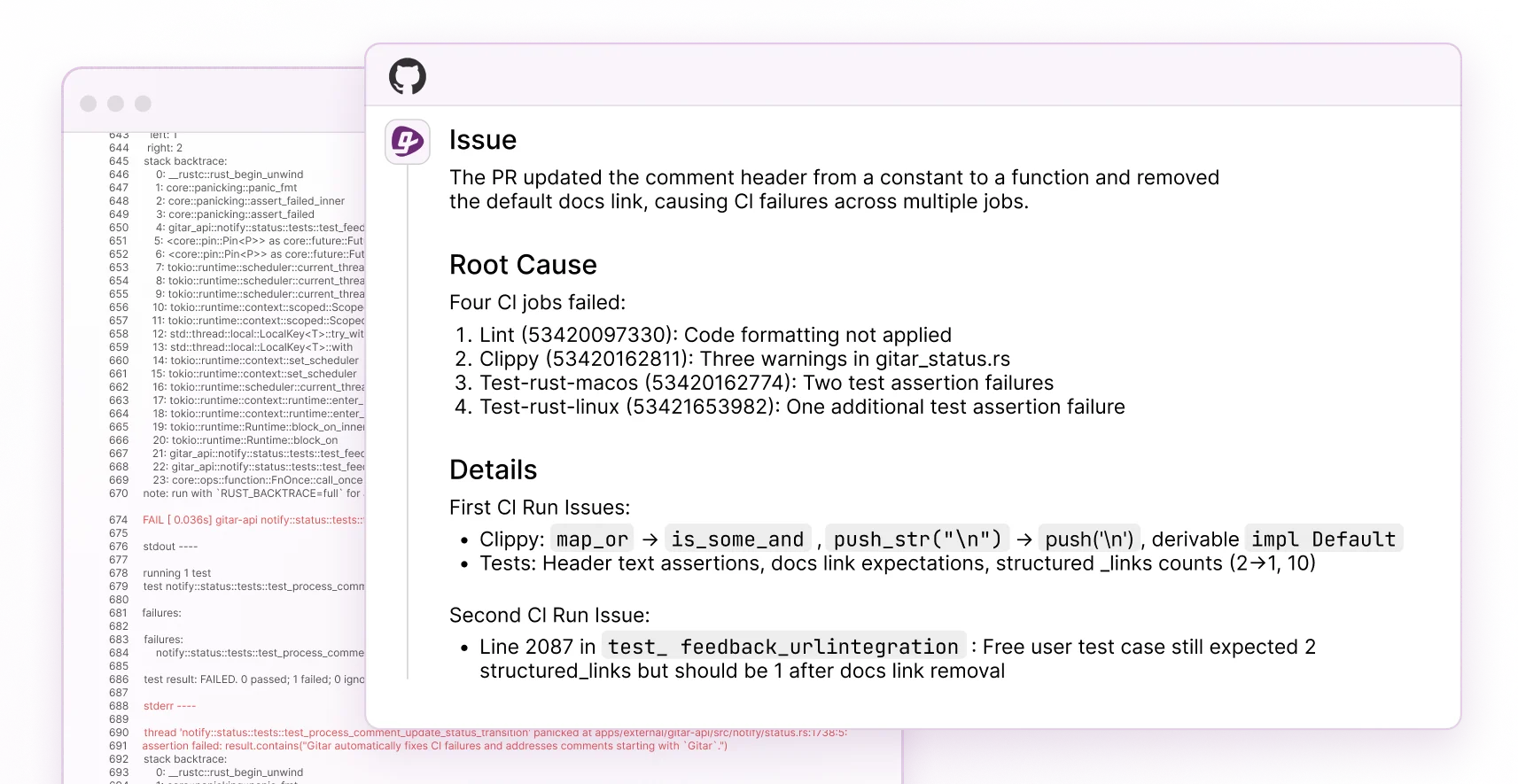
Gitar reads CI logs to find root causes, generates fixes with full codebase context, validates solutions in your real build environment, and then commits working fixes automatically. Competing tools often charge $15–30 per developer for suggestions, while Gitar delivers concrete value through:
- Complete CI integration across GitHub Actions, GitLab CI, CircleCI, and Buildkite
- Support for JavaScript, TypeScript, Python, Go, Java, and Rust
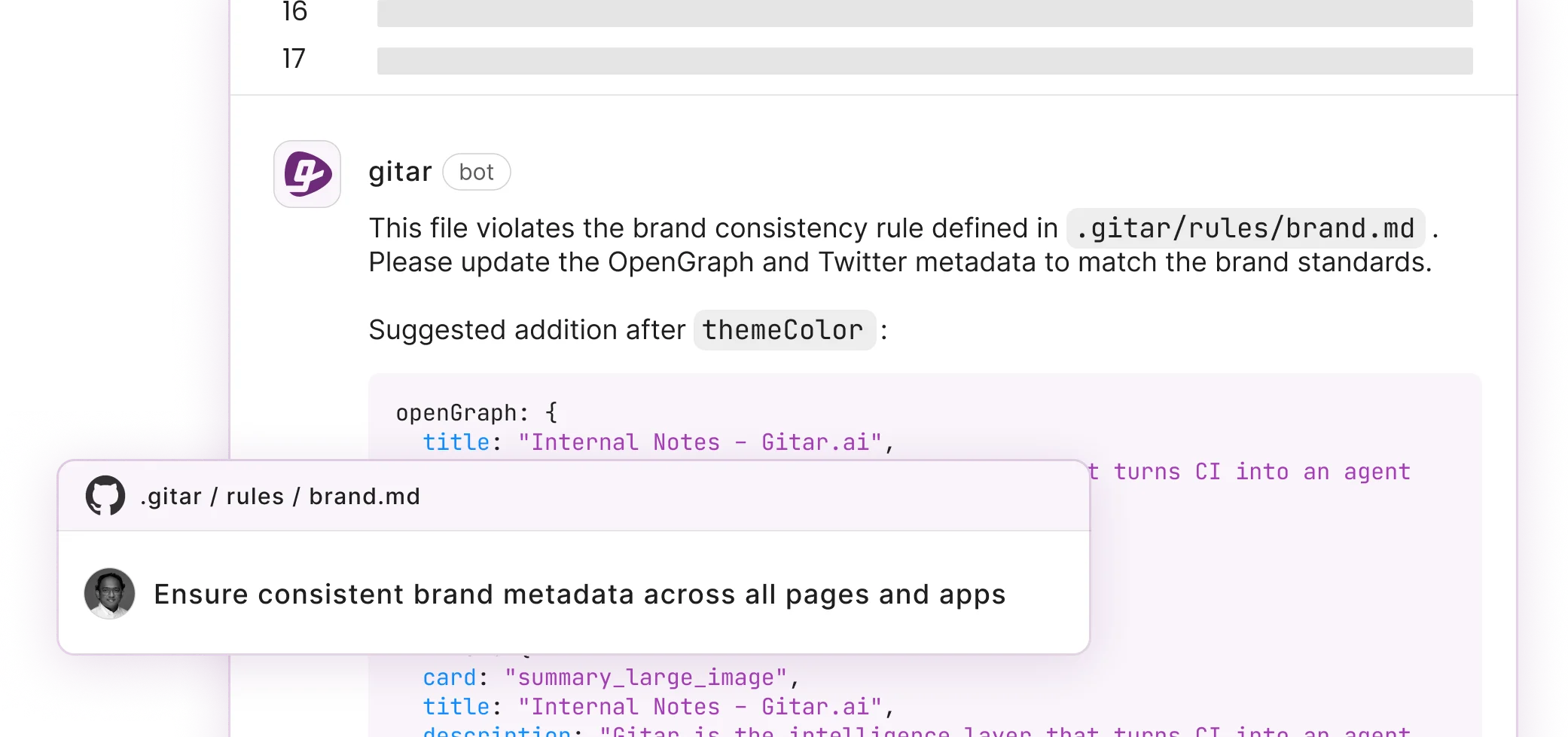
- Natural language rule configuration that avoids complex YAML files
- A single updating comment instead of noisy notification streams
- Enterprise-scale validation proven at companies like Pinterest with more than 50 million lines of code
Cursor AI offers advanced code analysis capabilities, mainly through inline edits and agent mode. Gitar removes manual steps by committing validated fixes directly to your branch.
Quick Start: Install Gitar and Auto-Fix Lint Issues Without Context Switching
You can start using Gitar in about 30 seconds:
- Install the GitHub App: Visit gitar.ai and click “Install”, with no credit card required.
- Push a PR with lint failures: Keep your existing workflow exactly as it is.
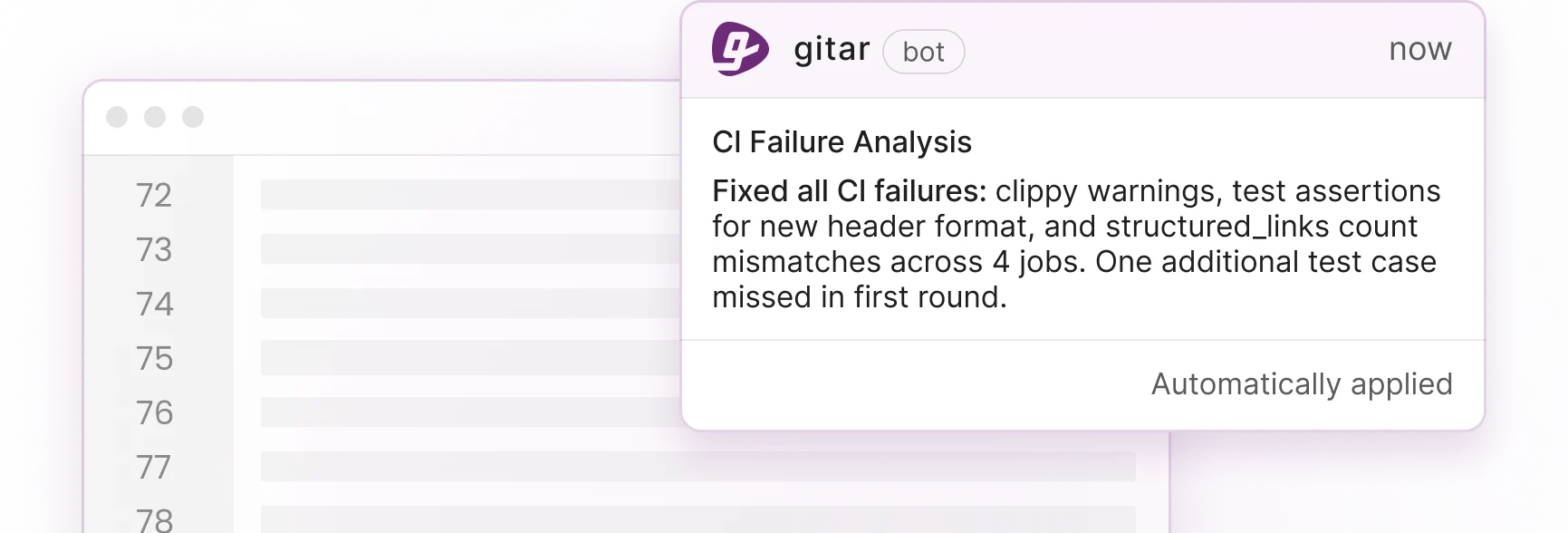
- Watch Gitar analyze: A single dashboard comment appears with a complete analysis.
- Enable auto-fix: During your 14-day trial, Gitar commits validated fixes automatically.
Consider a simple workflow. Your AI-generated code triggers an ESLint error for missing semicolons and unused variables. Traditional tools flag these issues and leave you to fix them by hand. Gitar analyzes the failure, generates corrected code, validates that it passes your linting rules, and commits the fix while you stay focused on other tasks.
Gitar vs. ESLint and SonarLint
|
Capability |
Gitar |
ESLint |
SonarLint |
|
Auto CI Fix |
Yes |
Manual –fix |
IDE Quick Fixes |
|
Validation |
Full CI Environment |
Local Only |
Local + Connected Mode |
|
Commit Integration |
Automatic |
Manual |
Manual |
Automated Linting in Practice with Gitar
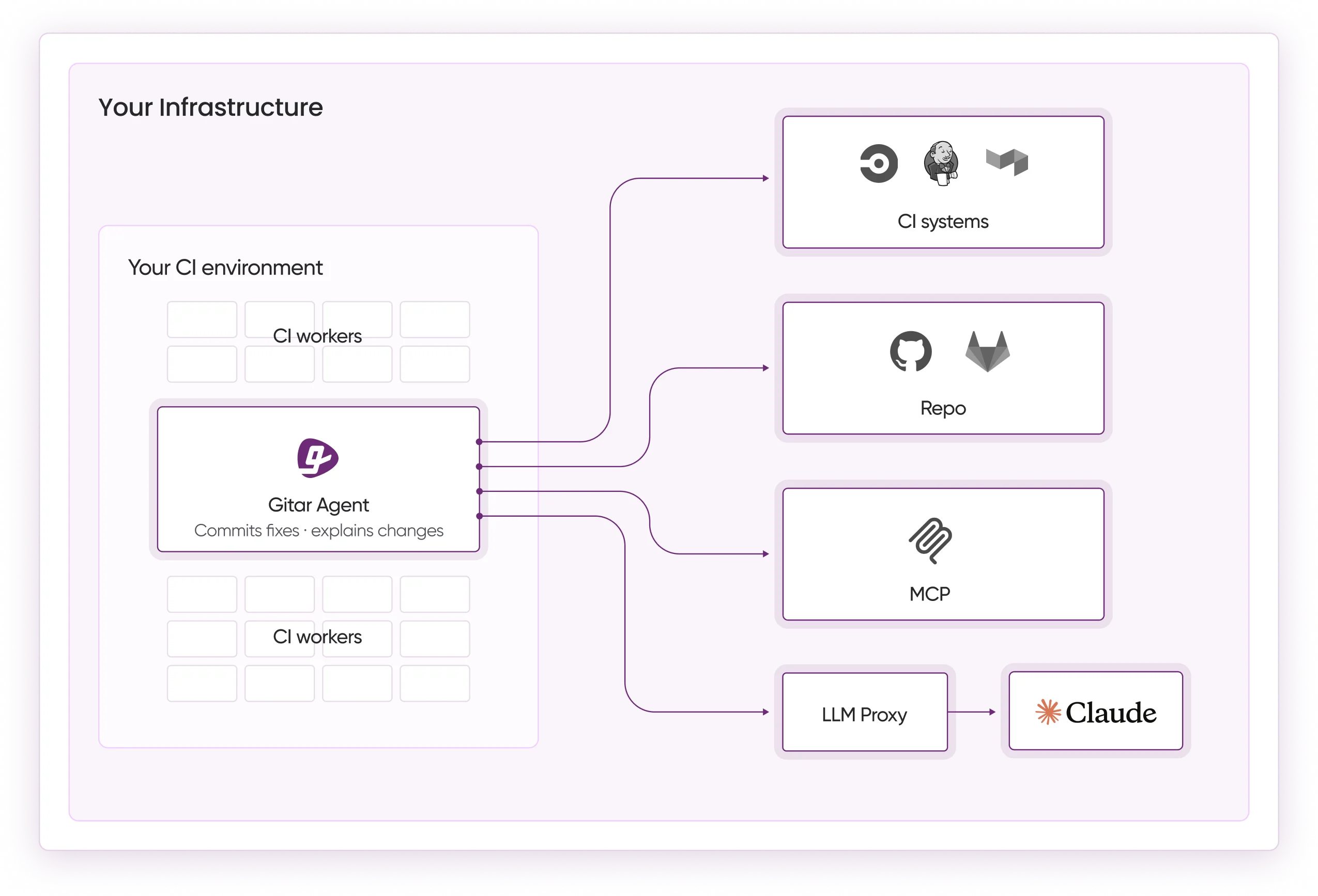
Gitar emulates your complete CI environment, including SDK versions, dependency configurations, and third-party integrations. This approach ensures fixes work in production, not just in isolated tests. The tool keeps context across your entire codebase, learns patterns, and improves accuracy over time.
Install Gitar now to experience automatic lint fixing that consistently delivers working builds.
How Gitar Compares to Traditional Linters and AI Competitors
|
Feature |
Gitar |
CodeRabbit |
Greptile |
|
Pricing |
Free Review |
$15-30/seat |
$30/seat |
|
Auto-Fix |
Yes (Validated) |
Suggestions Only |
Suggestions Only |
|
CI Integration |
Full Analysis |
Limited |
None |
|
Comment Style |
Single Dashboard |
Inline Spam |
Inline Spam |
Cursor AI offers advanced inline editing and agent capabilities, mainly for IDE workflows. Gitar focuses on CI automation and delivers green builds without extra developer effort.
ROI: Time and Cost Savings for Real Teams
A 20-developer team can see a major productivity gain with Gitar.
|
Metric |
Before Gitar |
After Gitar |
|
Daily CI/Lint Time |
1 hour per developer |
15 minutes per developer |
|
Annual Productivity Cost |
$1,000,000 |
$250,000 |
|
Tool Costs |
$450-900/month |
$0 |
|
Context Switching |
Multiple daily interrupts |
Near zero |
AI tools can reduce cycle time by 3.5 hours per developer, which creates large savings when applied to lint fixing and CI resolution workflows.
Conclusion: Replace the Lint-to-Merge Grind with Automation
The AI coding era requires tools that match fast code generation with equally fast validation and fixing. Traditional linters and high-priced suggestion engines still trap developers in manual workflows. Gitar delivers a fully automated solution for lint issue detection and fixing.
Free unlimited code review, validated auto-fixes, and deep CI integration position Gitar as a strong choice for teams that want to maintain velocity in the post-AI development landscape. The 14-day auto-fix trial shows the difference between simple suggestions and production-ready solutions.
Install Gitar now, automatically repair broken builds, and start shipping higher-quality software faster.
FAQs
Which AI is best for fixing code?
Gitar currently leads the market for automatic code fixing because it validates fixes against your actual CI environment before committing them. Competing tools often stop at suggestions, while Gitar ensures fixes work in production by emulating your complete build pipeline, including dependencies, configurations, and third-party integrations. The tool learns your codebase patterns over time, which improves accuracy and reduces false positives.
Is there a free code checker?
Gitar offers a completely free code checker with unlimited repositories and users. The free tier includes full PR analysis, security scanning, bug detection, and performance review without seat limits or credit card requirements. Auto-fix features use a 14-day trial, but the core code checking capability stays free forever, so teams of any size can use it.
Can linting be automated in CI pipelines?
Linting can be fully automated in CI pipelines with Gitar. The tool analyzes CI failure logs, generates targeted fixes, validates them against your build environment, and commits working solutions directly to your pull requests. This automation removes the manual cycle of running linters, applying fixes, and waiting to see if the next build passes. The workflow runs across GitHub Actions, GitLab CI, CircleCI, and Buildkite.
How does automatic lint fixing compare to manual ESLint –fix?
Manual ESLint –fix handles basic formatting and simple rule violations on your local machine, which still requires developers to run commands, review changes, and commit fixes by hand. Gitar’s automatic lint fixing analyzes complex CI failures, understands codebase context, validates fixes in your complete build environment, and commits solutions automatically. This process catches issues that local linting can miss and ensures fixes work in your real deployment pipeline.
What’s the ROI of using AI for lint fixing?
Teams usually see a large reduction in time spent on lint-related CI failures, which translates into meaningful cost savings. A 20-developer team that spends one hour each day on CI issues can cut that time to about 15 minutes per developer with Gitar, saving roughly $750K each year. Reduced context switching and lower notification fatigue also improve developer satisfaction and productivity beyond the direct time savings.