
Written by: Ali-Reza Adl-Tabatabai, Founder and CEO, Gitar
Key Takeaways
- git-lrc uses the free Gemini API to review every commit, analyzing only staged diffs for privacy with a 60-second setup.
- GitHub Actions, the VSCode CodeRabbit extension, self-hosted Ollama with PR-Agent, and direct Gemini hooks add more free per-commit review choices with different setup effort.
- Free tools focus on suggestions and leave teams to apply fixes manually, which slows delivery and clutters CI pipelines.
- Gitar’s 14-day Team Plan trial adds auto-fixes, CI healing, green build guarantees, and full automation that free tools do not provide.
- Use Gitar’s free trial when your team needs automatic fixes, faster green builds, and more reliable software delivery.
Top Completely Free Tools for Git Commit Review
#1: git-lrc – Free Gemini AI Reviews on Every Commit
git-lrc provides unlimited AI code review directly in your git workflow. It analyzes only staged diffs without uploading full repositories. Setup takes under 60 seconds.
1. Install via npm: npm install -g git-lrc
2. Get a free Gemini API key from Google AI Studio
3. Configure with YAML:
api_key: your_gemini_key model: gemini-2.0-flash severity_threshold: medium
Key advantages include practical unlimited usage within Gemini’s 5-15 RPM and 100-1000 RPD free tier limits, local privacy because only diffs are analyzed, and pre-push hook integration. The tool displays GitHub-style diffs in your browser with inline AI comments and severity tags.
Limitations: No auto-fix capabilities, manual implementation of suggestions, and reliance on Gemini API availability. These constraints mean developers still spend time applying changes and resolving issues that the AI only points out.
For teams needing auto-fixes and CI integration beyond git-lrc’s suggestions, see how Gitar’s comprehensive documentation shows automation that removes most manual implementation work.
#2-5: Four More Free Per-Commit Options
Here are 4 additional free ways to implement AI code review for every git commit.
2. GitHub Actions YAML Workflow
Trigger AI reviews on every push with this workflow configuration:
name: AI Code Review on: [push, pull_request] jobs: review: runs-on: ubuntu-latest steps: – uses: actions/checkout@v4 – name: AI Review uses: cirolini/genai-code-review@v1 with: openai_api_key: ${{ secrets.OPENAI_API_KEY }}
This workflow integrates directly with GitHub’s CI/CD pipeline and runs reviews whenever code is pushed or a pull request opens. It executes on GitHub’s servers, can enforce checks before merges, and centralizes feedback in pull requests instead of local terminals. Compared with git-lrc’s local pre-push hook, this approach shifts review enforcement into your shared CI environment.
3. VSCode CodeRabbit Extension
The free tier provides a limited number of monthly reviews with IDE integration. Developers receive immediate feedback while coding, which helps catch issues before commits. This option suits individuals or small teams that want inline suggestions without changing CI pipelines.
4. Self-hosted Ollama/PR-Agent
PR-Agent with Ollama models offers complete data sovereignty through self-hosting. It supports GitHub and GitLab with git hook integration for commit-level reviews. Teams control models, infrastructure, and data residency, which fits strict compliance requirements but requires more DevOps effort.
5. Direct Gemini API Hooks
Custom scripts can call Gemini’s free tier for tailored review logic and team-specific rules. This option gives full control over prompts, severity thresholds, and integration points, but it also demands engineering time to build and maintain the scripts.
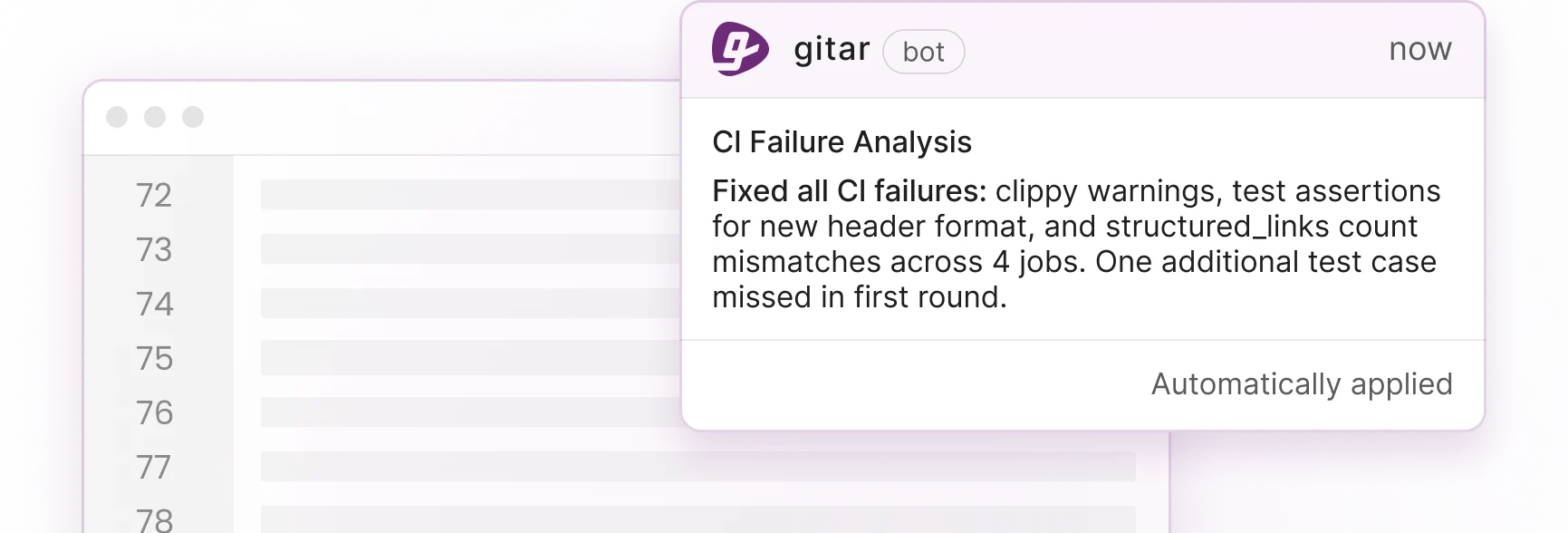
These options provide useful AI feedback but stop at suggestions and basic checks. They do not apply fixes, heal failing pipelines, or guarantee green builds for the team. Try Gitar’s 14-day trial to see how automatic fixes remove the manual implementation bottleneck that free tools leave in place.
Why Gitar’s Paid Trial Outperforms All Free Tools for Every Commit
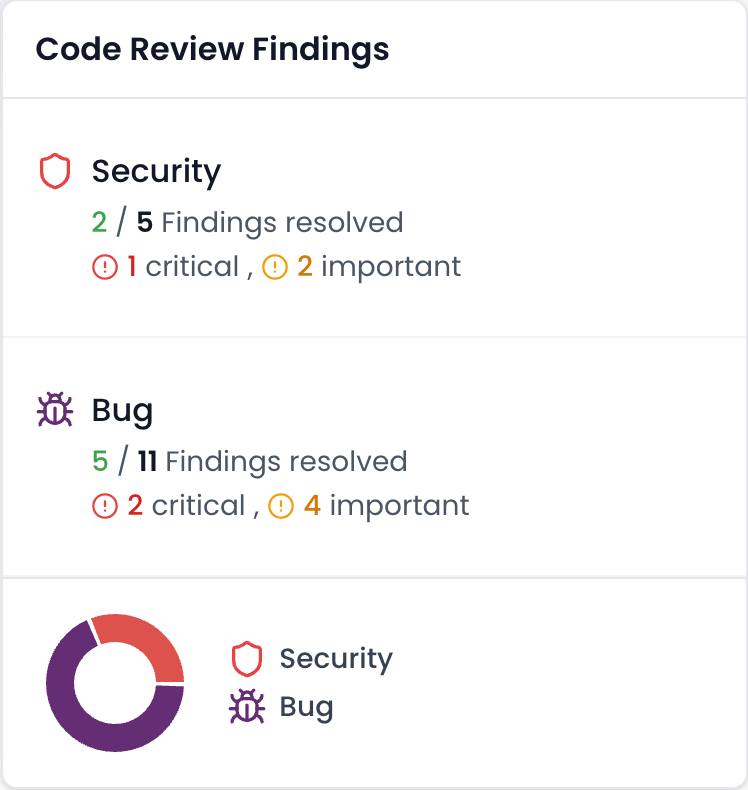
Gitar’s 14-day Team Plan trial gives teams unlimited access to advanced automation that free tools cannot match. Instead of only suggesting changes, Gitar applies fixes automatically, validates them against CI, and backs this with green build guarantees through its healing engine. You can review the full setup steps and feature list in the Gitar documentation.
The following table shows how Gitar’s trial compares with leading free alternatives across key automation features.
|
Feature |
git-lrc |
CodeRabbit |
Gitar Trial |
|
PR Summaries |
Basic |
Yes |
Yes |
|
Auto-Apply Fixes |
No |
No |
Yes |
|
CI Auto-Fix |
No |
No |
Yes |
|
Green Guarantee |
No |
No |
Yes |
Setup takes about 30 seconds through the GitHub App installation. Once installed, Gitar follows a four-phase approach that gradually increases automation. Teams start with installation, then build trust in suggestion mode, then enable automation, and finally expand into analytics and custom workflows.
This phased rollout connects directly to measurable productivity gains. ROI calculations show a 20-developer team can save about $750K annually when CI and review issues drop from 1 hour per day to 15 minutes per day for each developer. Gitar also uses a single updating comment pattern, which reduces notification noise while still providing complete analysis in one place.
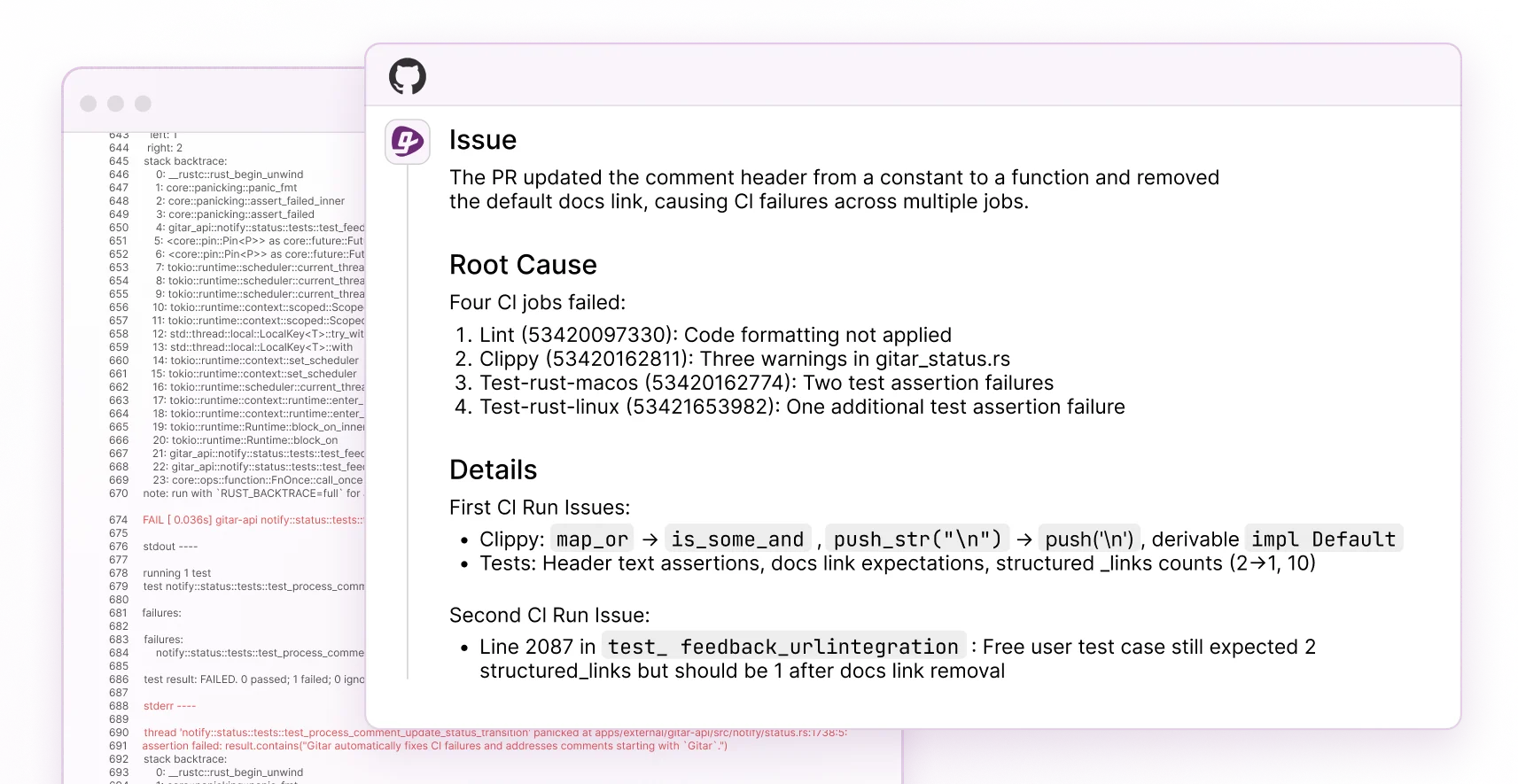
Start your free Team Plan trial to access auto-fixes, CI healing, and green build guarantees across unlimited repositories.
2026 Comparison Matrix and Benchmarks
This comparison matrix highlights setup time and core automation capabilities across popular tools, then connects those differences to real benchmark results.
|
Tool |
Setup Time |
Auto-Fix |
CI Integration |
|
git-lrc |
60 seconds |
No |
Limited |
|
GitHub Actions |
2-4 hours |
No |
Native |
|
Ollama/PR-Agent |
30 minutes |
No |
Custom |
|
Gitar Trial |
30 seconds |
Yes |
Full |
Internal 2026 benchmarks show that Gitar fixes 91% more issues autonomously than suggestion-only tools. Free tools excel at basic feedback but still require developers to implement changes, while Gitar’s healing engine validates fixes against real CI environments and updates code automatically.
This automation gap explains why developer forums often describe frustration with “unlimited review” tools that hit API limits or demand complex self-hosting. These tools still leave developers doing the actual fixing work. Gitar’s trial removes those concerns with enterprise-grade infrastructure and no repository upload requirements.
Beyond performance and reliability, privacy and deployment model also play a central role when you choose an AI code review platform.
Key Deployment Choices and Privacy Tips
Teams should choose between free forever options like git-lrc or self-hosted Ollama and trial-to-pro platforms like Gitar based on automation needs and compliance rules. For maximum privacy, local tools such as Ollama-based PR-Agent keep all data on-premises. Cloud solutions trade some control for stronger integrations, easier maintenance, and faster feature updates.
Gitar supports GitHub, GitLab, CircleCI, and Buildkite with end-to-end workflow automation that spans review, CI, and ticketing. The platform’s hierarchical memory system learns team patterns over time, which improves suggestions while still respecting repository boundaries and privacy controls.
Experience the difference between AI suggestions and real automated fixes by starting Gitar’s free trial.
Frequently Asked Questions
How do you set up git-lrc for free AI code review?
Install git-lrc globally with npm, obtain a free Gemini API key from Google AI Studio, and configure the YAML file with your API key and preferred model. The tool integrates as a pre-push hook, analyzes staged diffs, and displays results in your browser with GitHub-style formatting and inline AI comments.
What does Gitar’s free trial include?
The 14-day Team Plan trial provides unlimited users, repositories, auto-fix capabilities, CI failure resolution, PR summaries, deep code review, developer insights, and integrations with GitHub Actions, GitLab Pipelines, Buildkite, CircleCI, Linear, Jira, and Slack. You can start the trial without a credit card.
Are there truly unlimited free AI commit reviews available?
git-lrc offers unlimited reviews within Gemini API’s free tier limits of 5-15 RPM and 100-1000 RPD. Self-hosted solutions like Ollama with PR-Agent provide practical unlimited usage as long as you supply compute resources. Cloud-based free tiers usually include monthly limits or move to paid plans for sustained usage.
How does CodeRabbit compare to git-lrc for commit reviews?
CodeRabbit focuses on pull request level analysis with subscription pricing, while git-lrc provides commit-level reviews using free Gemini API access. CodeRabbit offers a more polished interface and team features but requires payment. git-lrc remains completely free and uses a browser-based diff viewer with basic functionality.
Does Gitar actually work on every single commit?
Gitar connects to your version control system and provides comprehensive AI code review on pull requests and related commits. The platform applies auto-fixes for CI failures, implements review suggestions, and maintains context across your entire development workflow so each change benefits from prior knowledge.
Conclusion
Teams can start with free tools like git-lrc to get basic AI feedback on every commit, then move to Gitar’s trial when they need healing automation that actually fixes code and guarantees green builds. The productivity gains from automated CI resolution and implemented review suggestions quickly outweigh the limits of suggestion-only tools.
Begin your 14-day Gitar trial to shift from manual code review implementation to fully automated CI healing across all your repositories.