
Written by: Ali-Reza Adl-Tabatabai, Founder and CEO, Gitar
Key Takeaways for Scala Teams
- AI code review tools have increased PR review time by 91% for Scala teams, even with 84% adoption of AI coding assistants.
- Gitar is the only free trial tool that automatically fixes CI failures and implements review feedback with validated commits, while most competitors only suggest changes.
- Hands-on tests show Gitar fixes Scala issues like ScalaTest errors, Akka patterns, and Cats Effect leaks in 2–6 minutes instead of 10–25+ minutes manually.
- Gitar’s healing engine delivers green builds through CI-validated auto-fixes, a single dashboard comment, and support for GitHub and GitLab integrations.
- Start your 14-day free trial to automate Scala PR fixes and ship higher-quality code faster.
Top 5 Free AI Code Review Tools for Scala Pull Requests in 2026
This list focuses on tools that support Scala, work on pull requests, and offer meaningful free access.
1. Gitar (14-Day Team Plan Trial) – The only platform in this group that automatically fixes CI failures and implements review feedback with validated commits. It posts a single updating comment instead of flooding PRs with notifications. Try the free trial on your Scala projects.
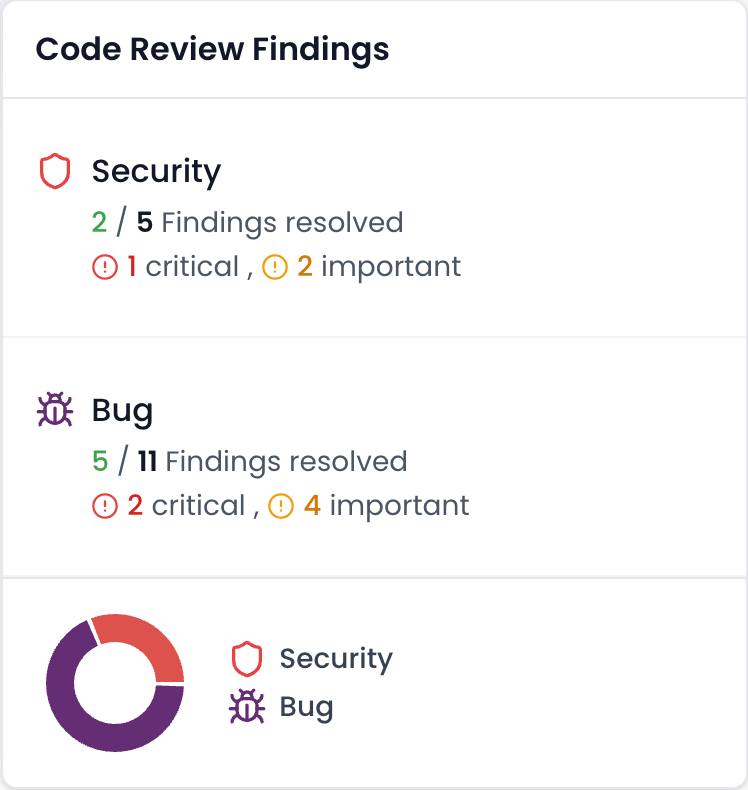
2. Cubic – Provides completely free unlimited AI code reviews for public repositories with context-aware analysis and Scala support, but offers no automatic fixing.
3. Codacy OSS – Includes an open-source plan with support for 40+ programming languages including Scala, GitHub and GitLab integration, and customizable quality gates, but still lacks AI auto-fixing.
4. Semgrep OSS – Free open-source tool with autofix features and CI or PR integration that can cover Scala through custom rules, though setup requires significant technical effort.
5. GitHub Copilot (Free Tier) – Offers native GitHub integration for code review on pull requests with an agent-based system and automatic PR reviews, but remains limited to suggestions.
The table below summarizes Scala support, auto-fix capabilities, and free access duration for these tools.
|
Tool |
Scala Support |
Auto-Fix |
Free Duration |
|
Gitar |
Supported languages |
Yes |
14-day trial |
|
Cubic |
Full |
No |
Unlimited (public) |
|
Codacy OSS |
Full |
No |
Unlimited |
|
Semgrep OSS |
Custom rules |
Limited |
Unlimited |
Try Gitar on your Scala codebase to see these auto-fix capabilities in action.
Hands-On Tests: Real Scala PR Performance
Feature lists help narrow options, but real-world performance shows how these tools behave on actual Scala pull requests.
We tested the tools on three common Scala PR scenarios: a ScalaTest compilation error, an Akka actor pattern issue, and a Cats Effect resource leak. The results show clear gaps in practical usefulness.
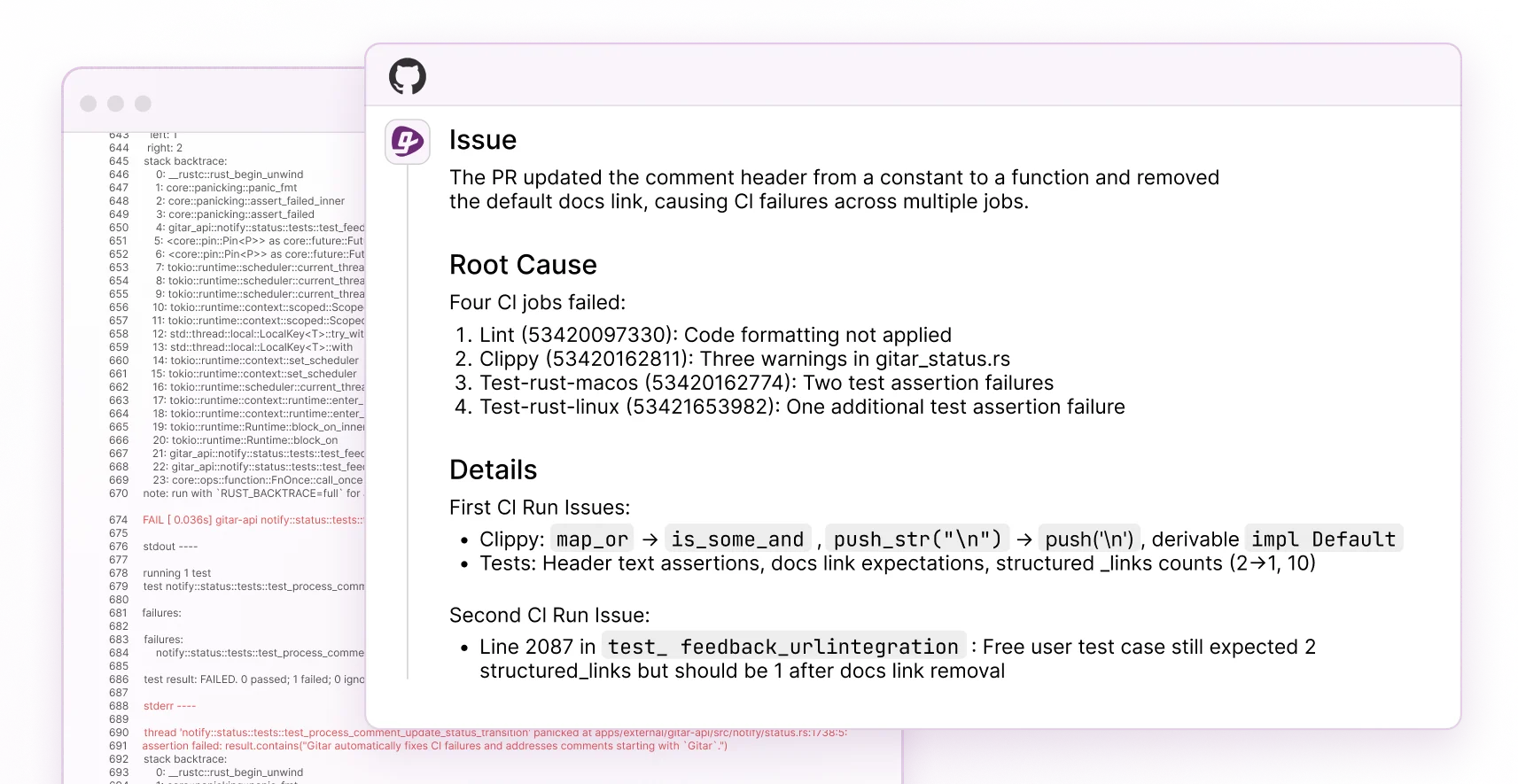
Scenario 1: ScalaTest Compilation Error – A missing import statement caused test failures. Gitar identified the missing import, added it, and committed the fix within 2 minutes. Competing tools flagged the error but required manual implementation, which took 8–12 minutes of developer time.
Scenario 2: Akka Actor Pattern Issue – Improper message handling triggered runtime exceptions. Gitar analyzed the actor lifecycle, implemented proper pattern matching, and validated the fix against CI. Other tools produced suggestions that failed CI validation and forced several manual iterations.
Scenario 3: Cats Effect Resource Leak – Unclosed resources in a streaming application created leaks. Only Gitar implemented the bracket pattern fix and ensured proper resource cleanup. Suggestion-only tools left developers to implement complex functional patterns by hand.
The performance differences become clear when measured as time to resolution.
|
Scenario |
Gitar Time-to-Fix |
Competitor Avg Time |
Outcome |
|
ScalaTest Error |
2 minutes |
10 minutes |
Auto-fixed |
|
Akka Pattern |
4 minutes |
25 minutes |
Auto-fixed |
|
Resource Leak |
6 minutes |
Failed |
Auto-fixed |
Developer feedback often mentions frustration with “notification spam” and “suggestions that don’t pass CI” from traditional tools. Scala remains the most challenging JVM language for LLMs due to limited dedicated fine-tuning, which makes CI-validated auto-fixes especially valuable.
Why Gitar Wins for Scala Pull Requests
Gitar differs from competitors through its healing engine architecture instead of a suggestion-only engine. Other tools analyze code and leave comments, while Gitar applies fixes and validates them.
The table below compares core capabilities that matter for Scala teams.
|
Capability |
Competitors |
Gitar |
|
Auto-apply fixes |
No |
Yes |
|
CI failure analysis |
No |
Yes |
|
Validate fixes |
No |
Yes |
|
Green build guarantee |
No |
Yes |
The 14-day Team Plan trial includes unlimited seats and full feature access, so teams can evaluate Gitar on real code without risk. Competing tools often charge $15–30 per developer for basic suggestions, while Gitar demonstrates value through working automated fixes.
The single comment approach reduces notification fatigue and keeps reviews focused. When CI fails or reviewers leave feedback, Gitar consolidates everything into one updating dashboard comment. Learn more about this approach in the official documentation.
Set Up Gitar Free Trial for Scala PRs on GitHub
Phase 1: Installation (2 minutes)
Install the Gitar GitHub App from the marketplace and start your 14-day Team Plan trial. No credit card is required. The app configures itself for your projects. See the official documentation for detailed installation steps.
Phase 2: First PR (Immediate)
Push any PR and Gitar’s dashboard comment appears on the pull request. The system analyzes code quality, security issues, and potential bugs, and it monitors CI status. When failures occur, Gitar generates fixes, validates them, and applies the changes.
Configuration Example:
Create .gitar/rules.md in your repository root:
—
title: “Scala Style Enforcement”
when: “PRs modifying .scala files”
actions: “Apply Scalafmt and fix common patterns”
—
GitLab and CircleCI users can rely on native integrations that provide the same auto-fix capabilities. The setup process stays consistent across platforms. Refer to the documentation for platform-specific guides.
Explore the free trial to experience automated PR fixes in your next sprint.
Real Dev Feedback and Gaps in Free Tools
Developer forums consistently highlight two major pain points with free AI code review tools: excessive notifications and unvalidated suggestions. Teams often receive dozens of inline comments per PR, which creates more noise than signal.
Common complaints include “Need a Scala AI reviewer that actually understands functional patterns” and “Love the single comment approach, no more notification spam.” Gitar addresses these issues by consolidating all findings into one updating comment and validating fixes against actual CI environments before applying them.
This consolidation matters because some tools flood PRs with individual comments for each finding. When developers push updates, these comment threads multiply and become unmanageable. Gitar’s dashboard approach keeps everything organized and actionable in a single place.
Free AI Code Review GitHub Apps and Scala Alternatives
Several GitHub apps and services support AI reviews for Scala but stop at suggestions. CodeRabbit and Greptile both integrate with GitHub, yet they require paid subscriptions for meaningful usage and do not auto-fix issues. Greptile offers free usage for open-source projects with full-repo context-aware AI reviews, but it lacks validation and auto-commit features that production workflows need.
Open-source options such as Semgrep OSS can work for Scala through custom rules, but they demand significant configuration and ongoing maintenance. For teams that prioritize delivery speed over tool customization, this overhead often outweighs the cost savings.
Frequently Asked Questions
Is Gitar truly free for Scala teams?
Gitar provides a comprehensive 14-day Team Plan trial with no limits on users, repositories, or features. The trial includes full auto-fix capabilities, CI integration, and all platform features. No credit card is required, so teams can evaluate Gitar on real projects without financial risk.
Does Gitar support Scala 3 and modern frameworks like Akka and ZIO?
Gitar supports a wide range of languages including JVM languages and handles complex codebases across GitHub, GitLab, and major CI systems. Use the trial mentioned earlier to test Gitar on Scala projects with Akka, ZIO, and other frameworks.
Can I use Gitar with GitLab instead of GitHub?
Gitar supports both GitHub and GitLab with the same functionality. The installation process, auto-fix capabilities, and CI integrations work consistently across both platforms. Teams can also integrate with CircleCI, Buildkite, and other CI systems regardless of version control choice.
How safe are Gitar’s automatic fixes?
All auto-fixes run through your actual CI environment before Gitar applies them. The system executes your test suite, linting rules, and build process to confirm correctness. Teams can also configure approval workflows to review fixes before commit, which keeps full control over automation.
How do I measure ROI from AI code review tools?
Track time spent on CI failures, PR review cycles, and developer context switching. Teams often see a 75% reduction in manual fix time and 60% fewer review iterations with Gitar’s auto-fix approach. The 14-day trial period gives enough data to measure these improvements on real sprint work.
Conclusion
Among current options, Gitar stands out as the leading ai code review tool for scala pull requests with a free trial because it fixes code instead of only suggesting changes. Competitors charge premium prices for basic commentary, while Gitar’s 14-day Team Plan trial grants full access to healing engine technology that delivers green builds.
The difference between suggestion engines and true automation becomes clear when compilation errors, pattern issues, and bugs get fixed automatically while you focus on features. Start your free trial today to experience this style of AI-powered development workflow.