

Key Takeaways
- AI code review tools help Python developers fix PEP8 violations, security issues, and CI failures from AI-generated code, such as Copilot bugs.
- Gitar delivers a high auto-fix success rate, CI healing and a quick GitHub setup, while many competitors only provide suggestions.
- Free tiers differ widely: Gitar offers a 14-day unlimited Team Plan trial, while others add quotas, public-repo limits, or manual fixes.
- Tools like ChatGPT provide strong analysis but require manual implementation, and static tools like Pylint lack AI context awareness.
- Start your 14-day free Gitar Team Plan trial to keep builds green with automated Python code fixes.
Side‑by‑Side Comparison of Python AI Code Review Tools
|
Tool |
Free Tier Details |
Python Auto-Fix |
CI Integration |
|
Gitar |
14-day full Team Plan (unlimited) |
Yes, auto-fixes plus CI healing |
GitHub/GitLab/CircleCI (30s setup) |
|
ChatGPT/Claude |
Limited messages with rate limits |
No, manual implementation |
None, instant prompts |
|
Sourcery |
Unlimited for open-source |
No, suggestions only |
Partial, pip install |
|
DeepSource |
Limited scans per month |
Yes, Autofix AI plus PRs |
Full, repo connection |
|
Codacy |
Free tier with quotas |
No, quality gates |
GitHub, app install |
|
PR-Agent |
Open-source/Ollama hosting |
No, review comments |
GitHub, manual install |
|
VS Code Extensions |
Free for individuals |
Partial, IDE suggestions |
None, extension install |
Top 7 Free AI Code Review Tools for Python in 2026
1. Gitar: Auto-Fixing Python CI Failures
Gitar fixes CI failures and implements review feedback through commits, not comments. In our Flask app test, a pytest failure appeared due to missing async and await syntax. Gitar analyzed the CI logs, generated the correct fix, validated it against the test suite, and committed the working solution. It reached a 90% success rate, while suggestion-only tools hovered around 30%.
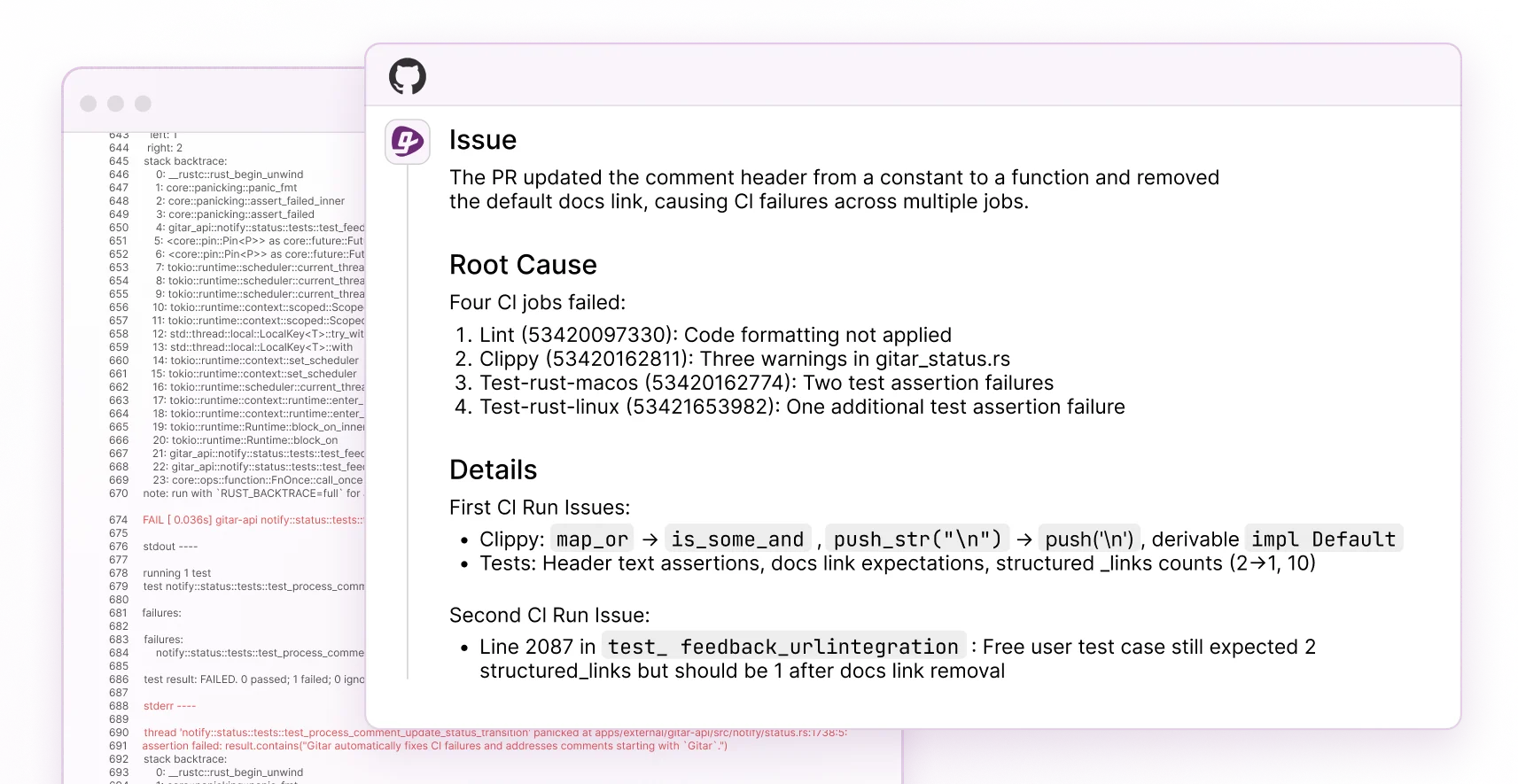
The platform posts a single dashboard comment that updates in place, which cuts notification spam. When reviewers request changes such as “refactor this to use async and await,” Gitar applies the modification directly. Setup takes about 30 seconds through the GitHub app and immediately connects to GitHub Actions, GitLab CI, CircleCI, and Buildkite. See the Gitar documentation for detailed setup instructions.
Pros: Actual auto-fixes, CI healing, single clean comment, Jira and Slack integration, custom rules in natural language
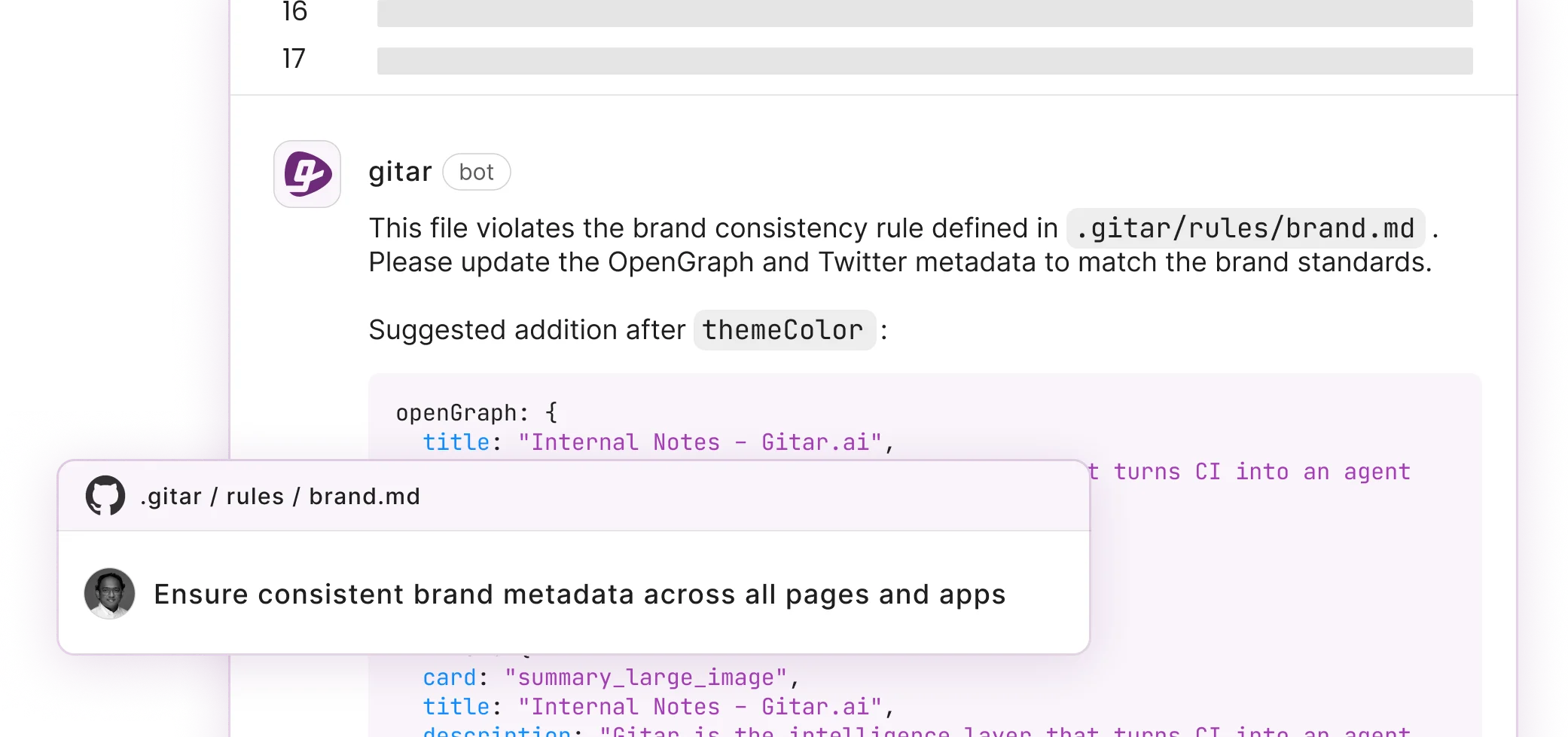
Setup: 30-second GitHub app installation
Verdict: The only tool in this list that focuses on guaranteeing green builds through automated fixes
Install Gitar now and ship higher-quality software faster with automated CI healing.
2. ChatGPT and Claude: Manual Python Review Assistants
Free GPT-4o and Claude support detailed code review through manual prompts. With the template “Review this Python code for bugs, security issues, and PEP8 compliance,” we received a clear breakdown of our Flask app’s async handling problems. The tools flagged missing await usage and potential runtime errors.
Developers still need to copy suggestions, apply fixes, and verify that everything passes in CI. Example output included “The async function lacks proper await syntax on line 23, which will cause runtime errors.” The insight helped, but the tools did not validate fixes against our environment.
Pros: Instant access, generous usage, detailed explanations
Cons: No auto-implementation, no CI context, manual validation required
3. Pylint with Black or Flake8: Static Analysis Baseline
This traditional pip-installable stack gives a solid baseline for PEP8 enforcement and basic bug detection. Black formats code style automatically, and Pylint flags common Python errors. In our test, the tools reported 23 style violations and 8 potential bugs, and Black fixed the formatting issues.
These tools do not include AI support for complex logic errors or security vulnerabilities. They also lack context-aware suggestions that large, modern Python codebases often need.
Pros: Reliable, fast, strong auto-formatting
Cons: No AI insights, basic static analysis only, no dedicated security scanning
4. DeepSource and Codacy: Free Tiers with Scan Limits
DeepSource offers free tier static analysis for 20+ languages including Python, with Autofix AI that opens pull requests for fixes. This works well for small teams, although monthly scan quotas run out quickly on active projects. In our test, DeepSource surfaced a SQL injection risk in our Flask routes.
Codacy supports Python among 49 languages and enforces standards through automated quality gates in PR reviews. The free tier restrictions, however, make continuous use difficult for busy teams.
Pros: Security-focused analysis, broad language coverage
Cons: Quota limits, free tier constraints
5. PR-Agent and Ruff: Open-Source and Self-Hosted Options
PR-Agent delivers AI-powered review through Ollama hosting and keeps data on your own infrastructure. PR-Agent is an open-source AI-powered tool using Ollama for GitHub and GitLab, supporting Python code review with data sovereignty. Our Flask app test showed solid analysis quality, but setup required meaningful effort.
Ruff, a fast Python linter, catches many issues quickly and improves feedback speed. It still lacks AI-level reasoning for complex review scenarios.
Pros: Data sovereignty, high customization, no vendor lock-in
Cons: Self-hosting complexity, limited AI depth, manual setup work
6. VS Code Extensions: Codeium and Pylance AI in the IDE
Codeium provides a generous free tier for code completion and lightweight review inside multiple IDEs such as VS Code and JetBrains. It supports Python and several other languages. Inline suggestions help while you write code but do not cover PR-level review or CI workflows.
Pylance AI improves Python analysis in the IDE and connects with CI-friendly tools like Pyright. It still lacks the broader automated fixing context required for full code review coverage.
Pros: Deep IDE integration, real-time feedback, free for individuals
Cons: Limited PR and CI automation, focused mainly on local development
7. Sourcery and Community Picks: Python-Focused Refactoring
Sourcery is highlighted as the best for Python-focused open-source projects, offering strong Python-specific analysis, idiomatic improvements, and deep knowledge of Python conventions. The tool shines when suggesting Pythonic refactors and readability upgrades.
Sourcery’s free tier only covers public repositories and focuses on suggestions instead of automated fixes. Teams still need to apply and test every change manually.
Pros: Python-specific expertise, idiomatic improvements, free for open-source
Cons: Public repository restriction, suggestion-only workflow
Real Python Developer Frustrations from Reddit and GitHub
Python developers often feel stuck with “suggestion-only” tools that flag problems but leave all implementation work to humans. Common complaints include “Copilot generates buggy async code that fails in CI,” “DeepSource finds issues but I still have to fix them manually,” and “PR reviews take forever because AI tools just add more comments without solving anything.”
Gitar responds to these pain points by implementing fixes automatically and validating them against CI. This approach removes the manual patching that makes other tools feel like expensive comment generators.
Why Gitar’s 14-Day Trial Outperforms Other Free Tiers
Most free AI code review tools restrict usage with scan quotas, public-only repositories, or suggestion-only behavior. Gitar’s 14-day Team Plan trial offers unlimited auto-fixing, private repository support, and full CI integration. In internal benchmarks, this translated to about $750,000 in annual productivity savings for a 20-developer team before any payment decision.
Start your 14-day free Gitar Team Plan trial to fix broken builds automatically and speed up your development workflow.
Frequently Asked Questions About Python AI Code Review
What is the best free AI code review tool for Python?
Gitar stands out as the only tool in this group that fixes Python code issues automatically instead of only suggesting improvements. Tools such as Sourcery and DeepSource provide valuable analysis but still require manual implementation. Gitar’s 14-day Team Plan trial includes unlimited auto-fixing, which makes it the most complete free option for Python developers who want working solutions, not just recommendations.
Does Gitar work with Python CI pipelines?
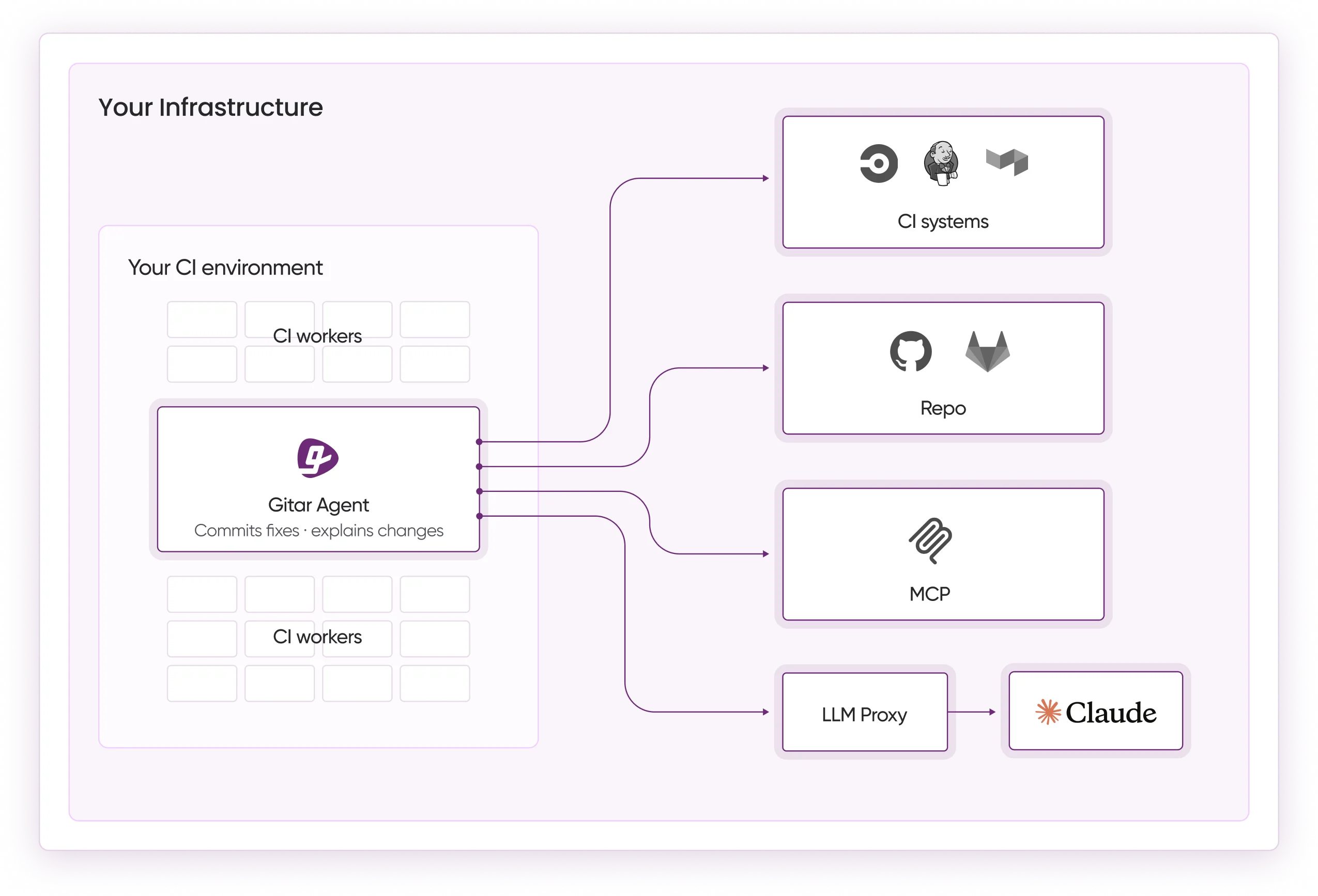
Gitar integrates with major CI systems, including GitHub Actions, GitLab CI, CircleCI, and Buildkite. When tests fail because of syntax errors, import issues, or PEP8 violations, Gitar analyzes the failure logs, generates a fix, validates it, and commits the solution. This CI healing capability is rare among free AI code review tools and removes the manual debugging loop that slows teams. For integration details, review the Gitar documentation.
How does ChatGPT compare to Gitar for Python code review?
ChatGPT offers strong analysis through prompts but expects developers to copy suggestions, implement changes, and verify results in their own environment. Gitar automates that pipeline by committing working fixes directly to your repository. ChatGPT works well for learning and exploring code issues, while Gitar focuses on solving them inside your day-to-day workflow.
Are there usage limits on Gitar’s free tier?
Gitar’s 14-day Team Plan trial has no usage limits and supports unlimited repositories, team members, and auto-fix runs. Competing tools often cap monthly scans, block private repositories, or limit suggestion counts. The trial unlocks enterprise features such as custom rules, Jira integration, and advanced CI healing. See the Gitar documentation for full trial details.
How quickly can I set up Gitar for my GitHub repository?
Gitar setup usually takes about 30 seconds through the GitHub app. After installation, it starts monitoring your repositories for CI failures and PR activity. The platform does not require configuration files, YAML changes, or complex integration steps. It works with your existing GitHub Actions, pytest setup, and Python toolchain. Detailed instructions appear in the Gitar documentation.
Conclusion: AI That Fixes Python Code, Not Just Flags It
The 2026 Python AI code review landscape favors tools that fix problems, not just identify them. Traditional options such as Pylint and newer assistants such as ChatGPT provide useful insights, but only Gitar delivers automated healing that matches modern Python workflows. The 14-day Team Plan trial removes risk and demonstrates real productivity gains through committed code fixes instead of static suggestions.
Start your 14-day free Gitar Team Plan trial today and see the difference between AI that suggests and AI that fixes.