
Written by: Ali-Reza Adl-Tabatabai, Founder and CEO, Gitar
Key Takeaways from the 2026 Benchmarks
- AI-generated code increases PR review time by 91% despite 3–5x faster coding, which creates a major development bottleneck.
- Only Gitar provides automated code fixes with full codebase context, guaranteeing green CI builds, unlike suggestion-only tools.
- 2026 benchmarks show Gitar leads in performance optimization, CI speedup, and GitHub integration compared to CodeRabbit, PR-Agent, and others.
- Free tiers of tools like SonarQube and Semgrep offer analysis but lack auto-fixes, so manual overhead persists for every PR.
- Teams using Gitar report major velocity gains; start your 14-day trial for unlimited access to auto-fixes and performance reviews.
How We Tested These AI Code Review Tools
Our 2026 evaluation tested each tool across five critical dimensions: performance optimization depth, CI speedup capabilities, GitHub integration ease, free tier limitations, and accuracy versus noise ratio. We defined performance depth as the ability to detect and fix bottlenecks, and CI speedup as automatic failure resolution and rerun reduction. Testing sources included vendor documentation, GitHub repositories, developer forums, and independent benchmarks to reflect real engineering workflows rather than marketing claims.
7 Free AI Code Review Tools for Performance Optimization & Faster CI (2026 Benchmarks)
1. Gitar: Automated Fixes for Performance and CI
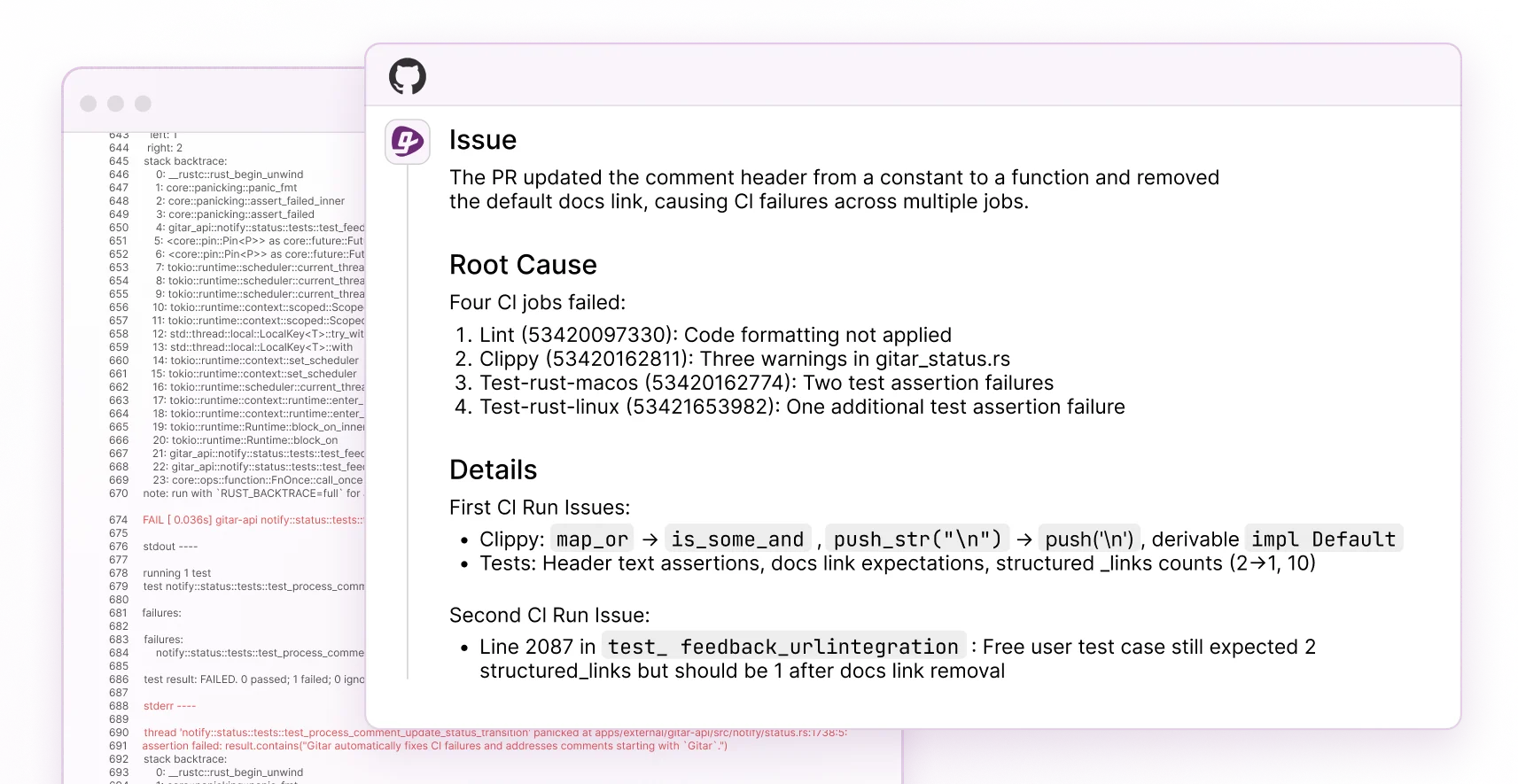
Gitar stands apart as the only AI platform that fixes your code instead of only suggesting changes. When CI fails because of lint errors, test failures, or build breaks, Gitar analyzes failure logs, generates validated fixes with full codebase context, and commits working solutions directly to your PR. Because these fixes are validated against your actual codebase before being committed, this healing engine approach guarantees green builds instead of leaving you hoping suggestions work. For detailed setup instructions, see the Gitar documentation.
Key features include comprehensive performance review, a single updating comment that eliminates notification spam, natural language rules for workflow automation, and native Jira and Slack integrations. The Team Plan trial provides unlimited access to all features with no seat limits for 14 days, so your entire team can experience automated CI failure resolution and performance review.
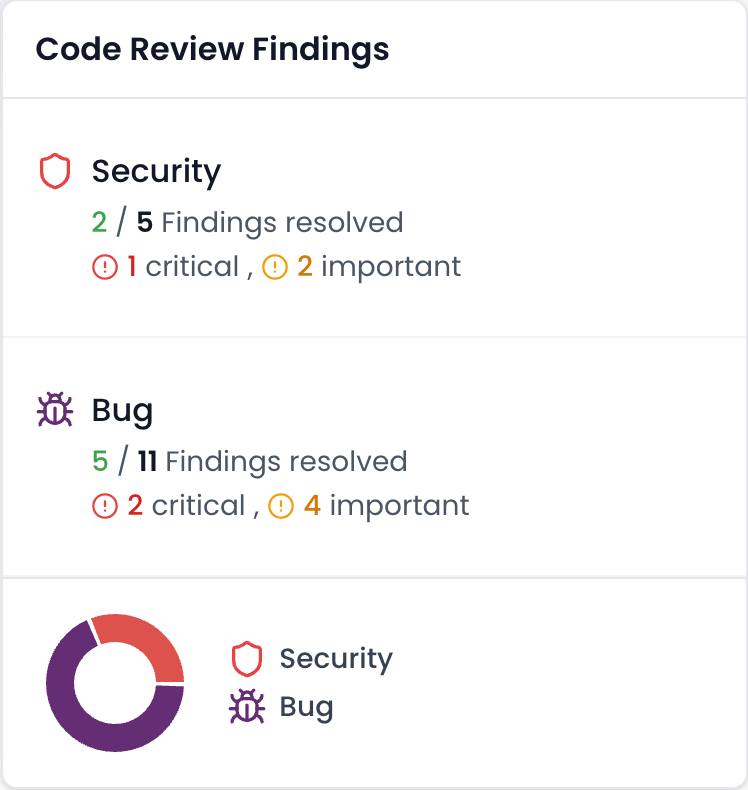
Gitar provides full PR analysis, security scanning, bug detection, performance review, and auto-fix during the trial. Setup takes about 30 seconds through GitHub app installation. Unlike competitors that charge $15–30 per developer for suggestions, Gitar proves value through real automation that closes failing PRs without extra manual work.
2. CodeRabbit (Free Tier)
CodeRabbit offers a free tier with basic PR summaries and line-by-line comments for GitHub, GitLab, and Bitbucket. The platform provides performance suggestions through linter integrations and code graph analysis, which makes it codebase-aware for contextual reviews. One-click fixes are available for simple issues, though the free tier has rate limits.
Setup involves installing the GitHub app, after which CodeRabbit analyzes PRs and provides feedback automatically. Strengths include codebase awareness and integration with more than 40 linters. Limitations include suggestion-only fixes without CI validation, potential notification noise from multiple inline comments, and surface-level diff-based analysis that misses systemic issues.
3. PR-Agent (Open Source)
PR-Agent is a self-hosted open source solution that integrates with GitHub Actions for automated PR reviews. It supports local AI models via Ollama, which provides data sovereignty for security-conscious teams. The tool performs performance and security checks through configurable rules and can run across GitHub and GitLab environments.
Setup requires adding a GitHub Action to your repository workflow. Strengths include unlimited usage, full control over data, and customizable analysis rules. Limitations include one-click code snippet acceptance rather than fully automated commits, no direct CI failure resolution capabilities, and the overhead of self-hosting and maintenance. The GitHub repository provides installation instructions.
4. SonarQube Community Edition
SonarQube Community Edition offers free self-hosted static analysis with mature quality gates. The v26.2.0 release in February 2026 added Python and FastAPI performance rules, which makes it relevant for modern web applications. GitHub integration enables automatic PR analysis and merge blocking based on quality thresholds.
Strengths include battle-tested rule engines, comprehensive language support, and established enterprise adoption. Limitations include rule-based analysis instead of AI-powered insights, no automated fixing capabilities, and no CI failure resolution beyond static analysis warnings.
5. Semgrep
Semgrep provides free open source rules for performance and security analysis with GitHub and GitLab CI integration. The platform allows custom rule creation for organization-specific patterns and supports multiple programming languages through its semantic analysis engine.
Strengths include highly customizable rules, AI-powered triage and explanations via Semgrep Assistant, and a strong security focus. Limitations include primarily rule-based analysis augmented by AI, autofix suggestions rather than fully automated fixes, and the need for rule maintenance as codebases evolve.
6. CodeQL
CodeQL offers GitHub-native semantic analysis that is free for public repositories, with CLI support for other CI systems. The platform performs deep code queries to identify performance vulnerabilities and security issues through its semantic database approach. Integration works smoothly for GitHub users through Actions workflows.
Strengths include sophisticated query capabilities, Copilot Autofix integration for fix suggestions, and native GitHub integration. Limitations include primarily rule-based analysis with some AI-powered fix suggestions and limited automated fixing capabilities for identified issues.
7. Kodus AI (Open Source)
Kodus AI provides self-hosted agent-based code reviews with GitHub integration. The platform offers workflow automation and performance feedback through its agent architecture, which allows teams to maintain full control over their review processes.
Strengths include agent-based workflows and self-hosting capabilities. Limitations include setup complexity, suggestion-only output without automated fixes, and the maintenance overhead of running your own infrastructure.
Now that you have seen each tool individually, you can compare them side by side across the dimensions that matter most for performance and CI efficiency.
Free AI Code Review Tools Compared for Performance & CI
The following comparison highlights the difference between tools that only suggest fixes and tools that implement them automatically. Notice how only Gitar provides both performance auto-fix and CI auto-resolve capabilities while keeping comments consolidated.
|
Tool |
Performance Auto-Fix |
CI Auto-Resolve |
Free Tier Limits |
Single Comment |
|
Gitar |
Yes |
Yes |
14-day full trial |
Yes |
|
CodeRabbit |
No |
No |
Rate limited |
No |
|
PR-Agent |
One-click snippets |
No |
Unlimited (self-host) |
No |
|
SonarQube |
No |
No |
Unlimited (self-host) |
No |
|
Semgrep |
Autofix suggestions |
AI-assisted |
Unlimited (OSS) |
No |
|
CodeQL |
Autofix integration |
No |
Free public repos |
No |
|
Kodus AI |
No |
No |
Unlimited (self-host) |
No |
The comparison reveals a critical gap: competitors provide suggestions and analysis, while only Gitar offers validated automated fixes for both performance optimizations and CI failures. This distinction matters because only 32.7% of AI-suggested code gets accepted, which means suggestion-only tools still require significant manual work. To quantify this gap between suggestions and actual results, we ran hands-on benchmarks that measure real-world impact.
Hands-On Benchmarks: Real Performance & CI Speedups
Testing across sample repositories demonstrates significant variations in real-world impact. The table below shows how each tool performs on metrics that directly affect your team’s velocity: CI fix time, performance issue coverage, and rerun reduction.
|
Tool |
Avg CI Fix Time |
Performance Issues Caught |
Reruns Reduced |
|
Gitar |
Automatic resolution |
High (with fixes) |
Yes (auto-resolve) |
|
CodeRabbit |
No improvement |
Medium (suggestions) |
No |
|
Others |
Limited improvement |
Low-Medium |
Limited |
Common pitfalls with suggestion-only tools include unvalidated fixes that fail CI, notification spam from multiple inline comments, and the continued manual overhead discussed earlier. Because developers still spend the same amount of time implementing and validating these suggestions, teams see zero net velocity improvement despite tool adoption. This wasted time explains why engineering leaders report potential $1M per year savings from eliminating the 30% of developer time typically lost to CI and review friction, and those savings only appear when tools automate the fix implementation instead of just the suggestion phase.
GitHub Setup for Faster CI with Gitar
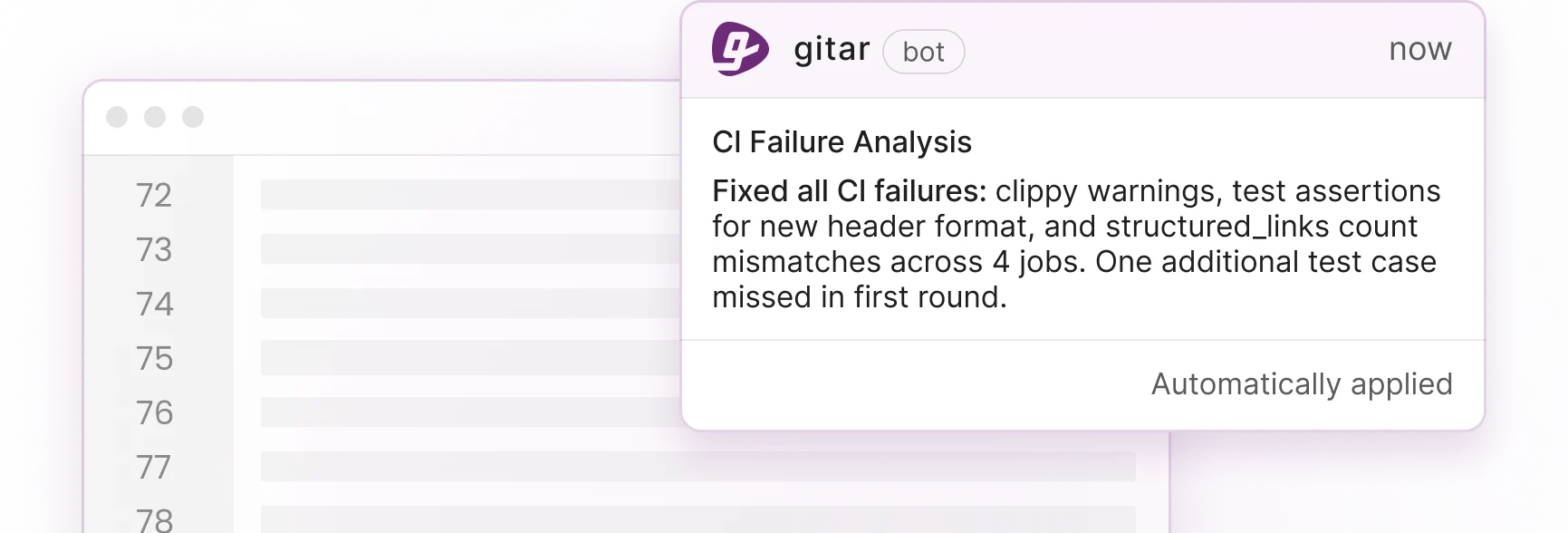
Teams can start using automated CI fixes with minimal setup. For Gitar, install the GitHub app and start your trial, and comprehensive setup documentation is available in the Gitar docs. The platform begins analyzing PRs immediately and can auto-fix failures within minutes of detection.
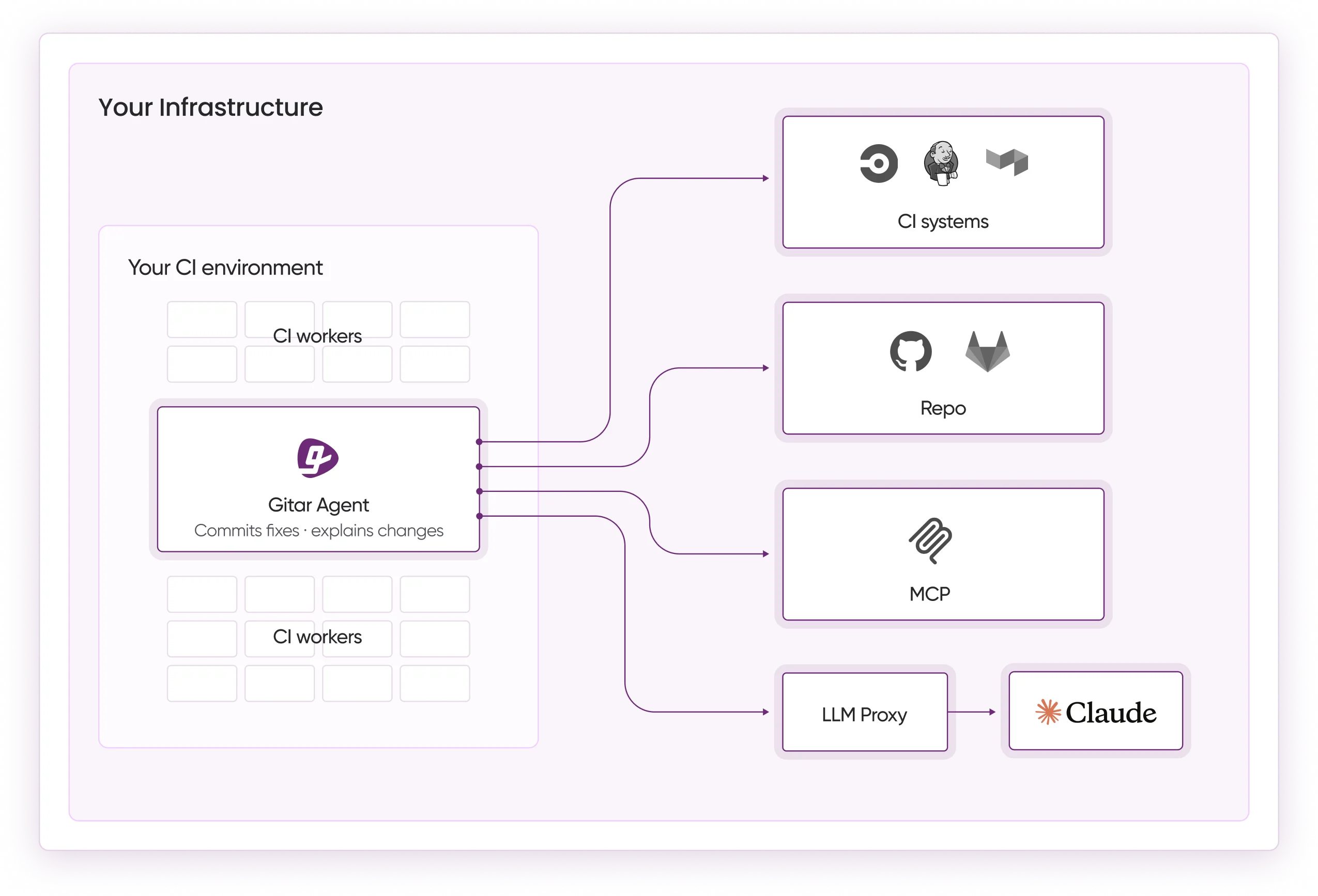
Get started with Gitar’s GitHub app to eliminate manual CI fixes from your workflow.
FAQs: Free AI Code Review for Performance & CI
What is the best free AI code review tool with GitHub integration?
Gitar’s 14-day Team Plan trial offers the most comprehensive free experience and provides automated fixes instead of only suggestions. Unlike tools that charge per developer for comments, Gitar’s trial includes unlimited access to auto-fix capabilities, CI failure resolution, and performance optimization with no seat limits during the trial period.
How can I measure CI speedup improvements from AI code review tools?
Track metrics like average time to resolve CI failures, number of manual interventions required per PR, and total rerun frequency. Gitar provides built-in analytics for CI failure categorization and patterns, while suggestion-only tools typically show no improvement in these metrics because they do not fix the underlying issues.
Are free AI code review tools sufficient compared to paid options?
Most free tools are limited to suggestions without validation or automated fixes. As mentioned earlier, many paid tools still only provide suggestions at $15–30 per seat, which makes them marginally better than free alternatives. Gitar’s approach differs by offering a full-featured trial that demonstrates real automation value before payment.
Can AI code review tools handle complex CI environments?
Support for complex CI environments varies by tool architecture. Suggestion-only tools cannot validate fixes against your actual CI environment, which leads to recommendations that fail in practice. Gitar’s enterprise tier runs agents inside your CI pipeline with access to configs, secrets, and caches, so fixes work in your specific environment instead of in isolation.
What performance optimization examples can AI code review tools detect?
Common performance issues include inefficient database queries, memory leaks, unnecessary API calls, and suboptimal algorithms. Static analysis tools can flag some patterns, while AI-powered tools with codebase context can identify more subtle performance bottlenecks and suggest improvements based on actual usage patterns and system architecture.
Conclusion: Turning CI Failures into Automated Fixes
The AI coding surge demands tools that match the new pace of development. Suggestion-only tools leave teams paying premium prices for marginal improvements, while Gitar’s healing engine converts performance and CI pain points into automated solutions. The 14-day Team Plan trial provides risk-free access to validated auto-fixes that guarantee green builds and measurable velocity improvements.
Start your 14-day Gitar Team Plan trial to transform CI failures into automated solutions.