
Written by: Ali-Reza Adl-Tabatabai, Founder and CEO, Gitar
Key Takeaways for Node.js Teams
- Gitar currently leads AI code review options for Node.js by fixing CI failures automatically and validating commits during its 14-day free Team Plan trial.
- CodeRabbit delivers strong line-by-line reviews for Node.js but stops at suggestions, so developers still apply fixes manually.
- Open-source tools like PR-Agent allow deep customization for Node.js workflows but add API costs and complex setup while still lacking automatic repair.
- Static analysis platforms such as SonarCloud flag Node.js issues reliably yet focus on detection and advice instead of full remediation.
- Most free tiers limit you to suggestions only, while Gitar’s 14-day trial provides complete auto-fixing for Node.js pull requests and consistently green builds.
How We Tested These Node.js Code Review Tools
We evaluated each tool using Node.js-specific criteria such as native JavaScript and TypeScript support, GitHub integration quality, pull request analysis depth, CI failure auto-fixing, and notification handling. Our test repository mirrored real production scenarios with async and await refactors, Jest test failures, and npm audit vulnerabilities. Reddit discussions show rising interest in AI code review for Node.js in 2026, and GitHub Octoverse data reports 518.7 million pull requests merged in 2025, a 29% year-over-year increase that pushes teams toward automated review.
Top 7 Free AI Code Review Tools for Node.js
#1 Gitar: 14-Day Trial That Fixes Node.js Builds for You
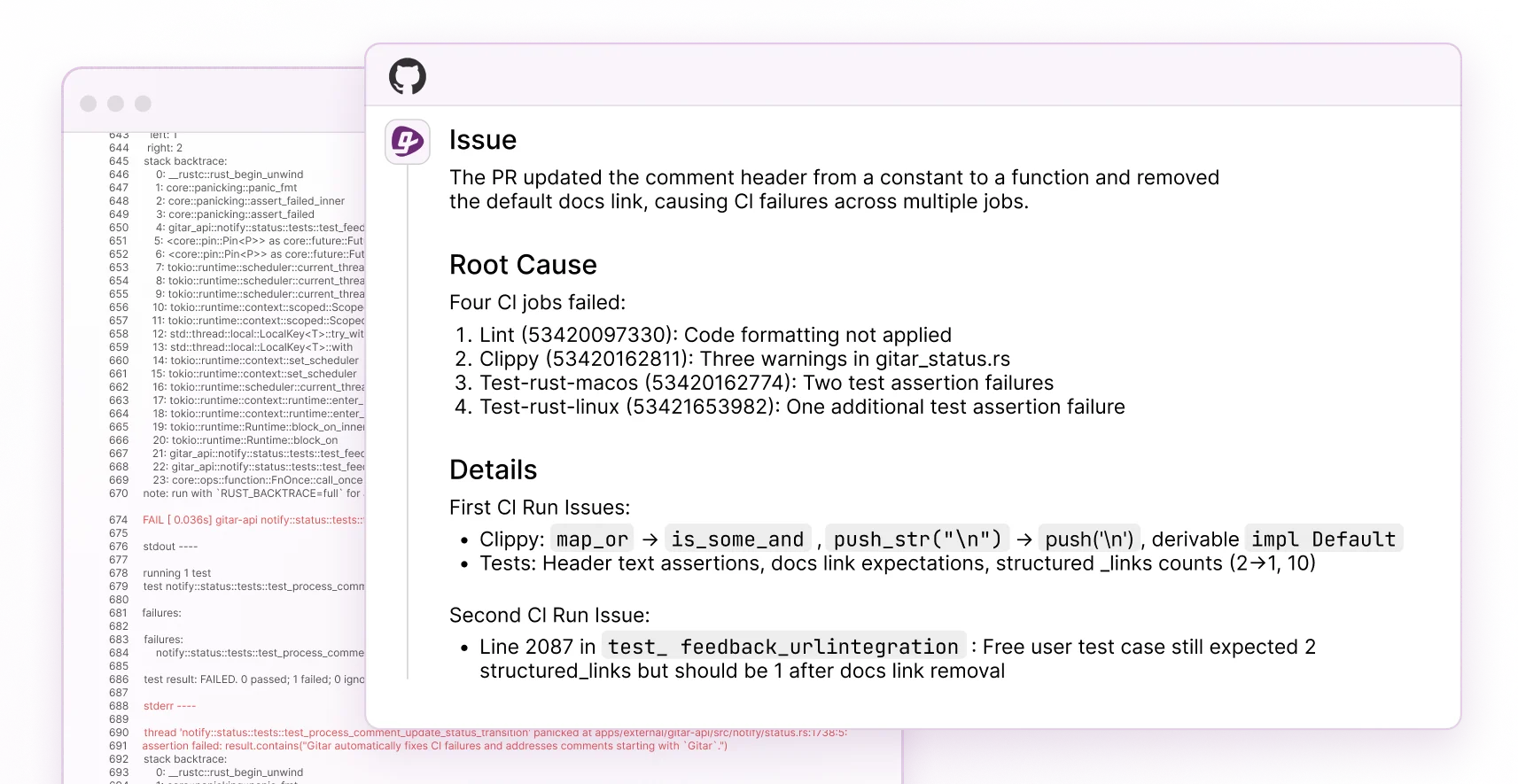
Gitar replaces suggestion-only code review with a system that resolves CI failures and applies reviewer feedback automatically. Competing tools leave comments that still require manual edits, while Gitar analyzes failing builds, generates tested fixes, and commits them directly to your pull request. To get started, install the GitHub App from docs.gitar.ai, connect your repository, and let Gitar repair async errors, test failures, and ESLint violations without extra configuration.
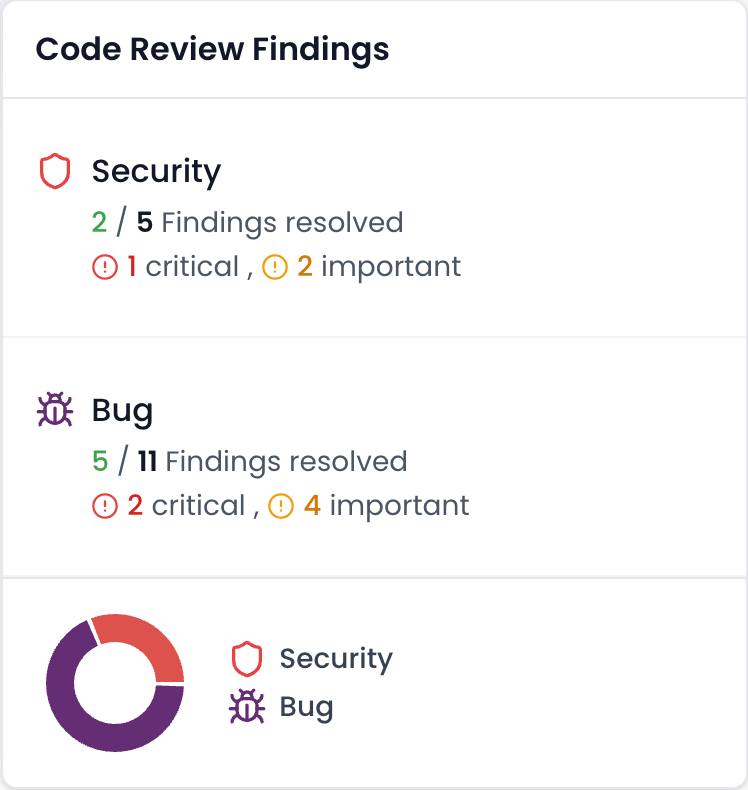
During testing, Gitar caught a security flaw in Copilot-generated code that the original assistant missed, then added a fix with proper input validation. The platform consolidates all findings into a single, updating dashboard comment instead of scattered inline notes, which reduces notification fatigue for reviewers. This consolidation works because Gitar validates each change against your CI pipeline before committing, which keeps builds green and prevents broken fixes from landing. Teams can refine this automation with natural language workflow rules that match their review policies.
The trial mentioned above includes custom rules and integrations with Slack and Jira in addition to the core auto-fix features. Start your 14-day trial to see automatic build fixing in your own Node.js projects.
#2 CodeRabbit for Detailed Node.js PR Reviews
CodeRabbit offers thorough pull request analysis with line-by-line reviews and summaries that work well for Node.js codebases. Code Rabbit provides line-by-line code reviews, PR summaries, learns from feedback, supports test generation and documentation in PRs. The GitHub integration installs quickly and provides contextual suggestions for Express routes, async patterns, and dependency management.
Despite these analytical strengths, CodeRabbit’s approach has clear limits for teams that want automation. The tool presents recommendations but does not apply them, so developers still implement changes manually and hope they resolve CI failures. The system can also create notification overload by posting many inline comments on a single pull request. The free tier runs as a trial, after which pricing moves to roughly $15 to $30 per seat each month.
#3 Open-Source GitHub Actions for AI Review
PR-Agent is an open-source AI-powered code review tool supporting GitHub and GitLab with self-hosting, using Ollama models. These do-it-yourself options rely on YAML configuration and API key management but give teams full control over Node.js workflows. During testing, open-source actions delivered basic code analysis and comments yet did not repair failing CI pipelines when builds broke.
Setup grows more complex as teams add custom rules, and ongoing API usage can cost more than commercial subscriptions. The free tier covers the open-source software itself, while OpenAI or similar API charges still apply. If you feel stuck managing YAML files and unpredictable API bills, try Gitar’s zero-config setup with built-in CI healing.
#4 SonarCloud and ChatGPT-Based Workflows
SonarCloud delivers static analysis for Node.js security issues and code quality problems, including AI features like CodeFix for targeted suggestions and Code Assurance for checking AI-generated code. npm audit, integrated into Node.js, offers automated fixes for vulnerabilities in dependencies via the npm audit fix command. These tools detect issues such as SQL injection risks and unused variables with high accuracy.
Most of this ecosystem focuses on detection and advice rather than full automatic remediation across an entire pull request. ChatGPT-based workflows add another layer of friction because developers copy and paste code into chats, which does not scale for team review processes.
#5 Greptile for Large Node.js Codebases
Greptile offers deep full codebase analysis with GitHub and GitLab support and handles Node.js monorepos with strong contextual understanding. The tool shines when mapping complex Express architectures and microservices patterns across many files. Greptile still acts as a suggestion engine, though, without validating fixes or applying them to branches.
Tests showed higher false positive rates than several alternatives, which can slow teams that already face review overload. Pricing starts at about $30 per developer each month after a limited free option for open-source projects.
#6 Reddit and GitHub Community Bots
Bugbot (Cursor’s AI code review agent) reviews pull requests for Node.js projects and integrates easily for Cursor users. Community-recommended GitHub bots provide basic pull request analysis for many Node.js repositories. Setup usually involves GitHub Actions configuration and webhook tuning.
These bots cover fundamental checks but rarely include tight CI integration or automatic fixing. Free access depends on each bot, and the setup effort often outweighs the benefits for professional teams. When you want production-ready automation instead of hobby bots, use Gitar to turn failing Node.js builds into passing ones automatically.
#7 Codacy Free Tier and Coding Assistants
Codeium is the best free option with unlimited autocomplete, AI chat, multi-file editing, 70+ languages including Node.js. These tools function as coding assistants rather than dedicated review platforms. They provide basic pull request insights through IDE integrations.
Coverage for full Node.js applications remains shallow because they focus on individual files instead of complete pull requests. This limits their value for teams that need repository-wide review and CI-aware automation.
Comparison Table: Auto-Fix vs Suggestion-Only Tools
The following table summarizes how each tool handles free access, Node.js support, and CI failure fixing so you can quickly see which platforms only comment on problems and which ones repair them.
|
Tool |
Free Tier Duration/Limits |
Node.js Support |
Auto-Fix CI Fails |
|
Gitar |
14-day Team Plan (full, no seats) |
Full (Express/tests/vulns) |
Yes (validates/commits) |
|
CodeRabbit |
Trial ($15/seat after) |
Good |
No |
|
Open-Source Actions |
OSS (API costs) |
Basic |
No |
|
SonarCloud |
Unlimited free |
Static |
No |
|
Greptile |
Limited ($30/seat) |
Good |
No |
|
Reddit Bots |
Free (setup) |
Varies |
No |
|
Codacy |
Free tier |
Basic |
No |
Key Considerations and Node.js ROI
Node.js teams experience productivity increases of 30 to 50 percent with AI tools, but this amplifies challenges in reviewing AI-generated code at scale. This productivity paradox means AI helps you write code faster while review and CI triage slow the team down. Automated fixing addresses that gap by handling repetitive repair work.
For teams that worry about trusting automated commits, Gitar provides configurable approval workflows. You can start in suggestion mode to build confidence, then gradually enable auto-commit for specific failure types as trust grows. A 20-developer team that spends one hour each day on CI and review issues faces roughly $1 million in annual productivity loss, and Gitar’s automation can cut that by about 85 percent.
Many readers also ask whether CodeRabbit works for Node.js. It does, but it focuses on suggestions and lacks the auto-fix capabilities that Gitar uses to keep builds green.
Frequently Asked Questions
What is the best free AI code review tool for Node.js GitHub pull requests?
Gitar’s 14-day Team Plan trial currently offers the most complete AI code review experience for Node.js projects. Unlike tools that only comment on problems, Gitar fixes CI failures, applies reviewer feedback, and validates every change against your test suite. The trial supports unlimited users, full auto-fix features, and integrations with Jest, ESLint, and npm audit.
How does CodeRabbit compare to Gitar for Node.js development?
CodeRabbit delivers strong analysis and suggestions for Node.js repositories but leaves implementation to developers. Gitar extends beyond suggestions by applying fixes, checking them against CI, and keeping builds green. While CodeRabbit charges about $15 to $30 per seat for suggestion-focused features, Gitar’s trial gives teams access to full automation, including CI healing and workflow integration.
How do I set up AI code review on my Node.js repository?
For Gitar, install the GitHub App from the documentation at docs.gitar.ai, connect your Node.js repository, and start your 14-day Team Plan trial. Setup finishes in under 30 seconds with no manual configuration. Gitar detects your Node.js stack, hooks into existing CI pipelines, and begins AI code review with auto-fix capabilities immediately.
Do free tiers include automatic code fixing?
Most free AI code review tiers provide suggestions without applying changes. Gitar’s 14-day Team Plan trial stands out by offering full auto-fix capabilities during the free period, including CI failure repair, reviewer feedback implementation, and validated commits. Teams can experience the complete automation workflow before deciding on a paid plan.
Does Gitar integrate with Node.js CI pipelines?
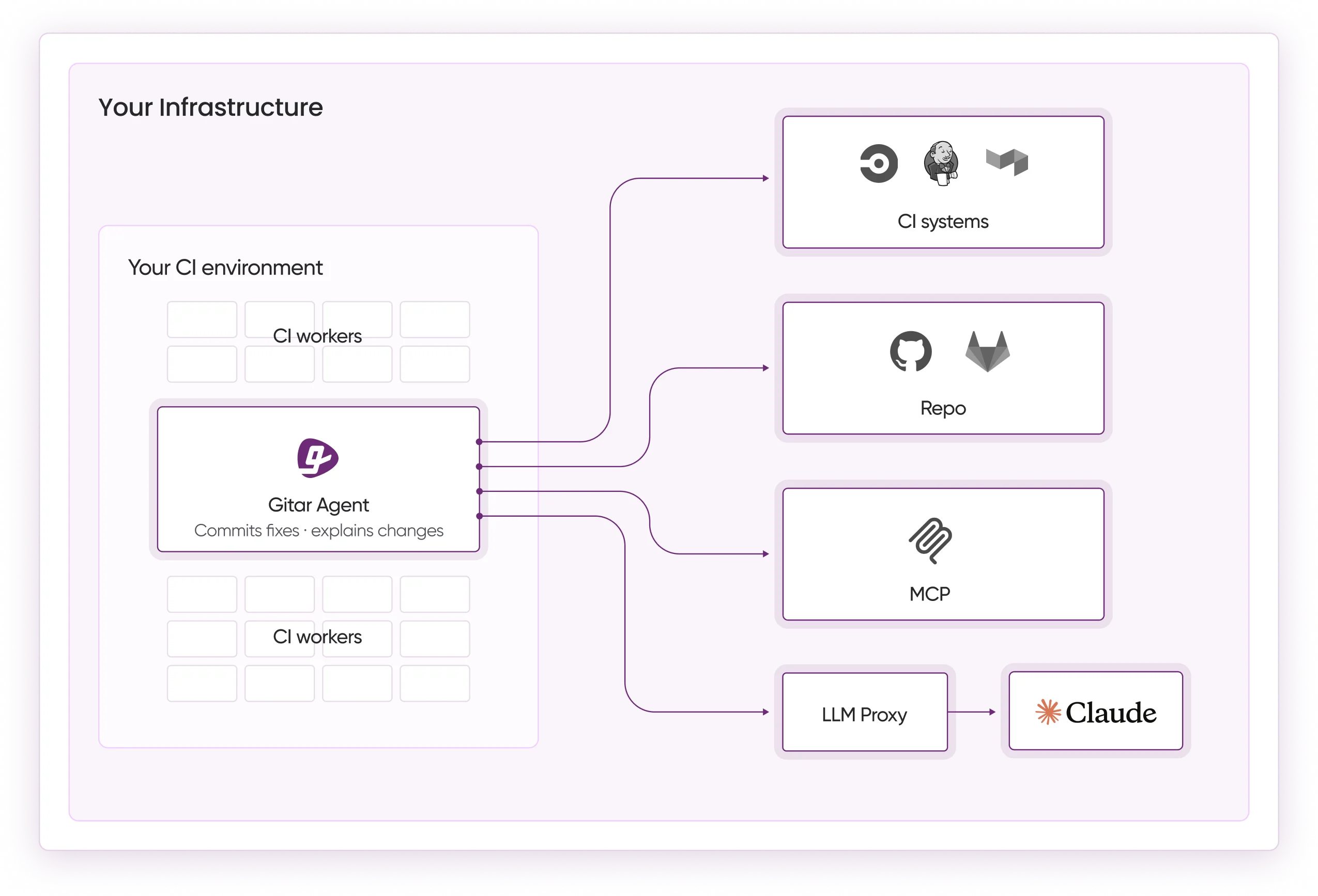
Yes, Gitar supports major CI platforms such as GitHub Actions, CircleCI, GitLab CI, and Buildkite. For Node.js projects, Gitar connects to npm scripts, Jest test runners, ESLint configurations, and security scanners. The platform validates fixes across your full CI pipeline so auto-commits land as green builds.
Conclusion: Moving from Suggestions to Self-Healing Node.js CI
AI code review in 2026 increasingly rewards tools that repair problems instead of just pointing them out. Traditional platforms still focus on analysis, while Gitar’s healing engine delivers the automatic resolution described earlier and shifts teams from manual fix cycles to mostly autonomous green builds. Start your Gitar trial to see how automatic CI healing changes day-to-day Node.js development.