
Written by: Ali-Reza Adl-Tabatabai, Founder and CEO, Gitar
Key Takeaways for Monorepo Teams
- AI code review tools often miss context in large monorepos because they cannot track cross-package dependencies in free tiers.
- Gitar’s 14-day unlimited Team Plan trial gives full access to auto-fixing, CI validation, and hierarchical memory for private repos over 500K lines.
- CodeRabbit’s free tier focuses on public OSS repos and suggestions only, so teams still implement every fix manually.
- Greptile and Windsurf add useful analysis, but token limits and partial CI coverage prevent full monorepo healing.
- Teams save $750K per year in productivity with Gitar’s auto-fixing; try the Team Plan free for 14 days to see the impact on your builds.
Monorepo Challenges in 2026
Large monorepos create problems that traditional AI code review tools rarely solve well. AI agents struggle to track modular applications across many repos in a monorepo and often miss APIs or dependencies in other modules. Most free tiers focus on public repositories and lack the context window required for reliable cross-package analysis.
The surge in AI-generated code increases these challenges. Qodo’s 2025 State of AI Code Quality survey reports that 65% of developers say AI assistants miss relevant context during critical tasks. This gap hurts monorepos with complex inter-service dependencies the most. Traditional suggestion engines still leave developers to implement fixes manually, which creates bottlenecks instead of relief. To identify which tools actually solve these monorepo issues, we developed a focused evaluation framework.
How We Evaluated AI Code Review Tools
We evaluated AI code review tools using monorepo scalability criteria. These criteria included context window size for cross-package awareness, free tier depth for private repositories without seat limits, auto-fix coverage for CI failures, GitHub and GitLab support, setup complexity, and 2026 benchmarks with repositories exceeding 500,000 lines of code. Our analysis combines hands-on testing with community feedback from developer surveys and tool comparisons.
Top 4 Free AI Code Review Tools for Large Monorepos in 2026
|
Tool |
Free Tier Limits |
Monorepo Context |
Auto-Fix CI Failures |
Setup Time |
|
Gitar |
14-day Team Plan unlimited |
Hierarchical memory |
Yes (validates/commits) |
30 seconds |
|
CodeRabbit |
OSS public-only |
PR diff + linters |
No |
5 minutes |
|
Greptile |
Token caps/trial limits |
Repository graph analysis |
No |
10 minutes |
|
Windsurf |
Unlimited autocomplete |
Repository context |
Lint & build fixes |
2-4 minutes |
Gitar: Healing Engine for Private Monorepos
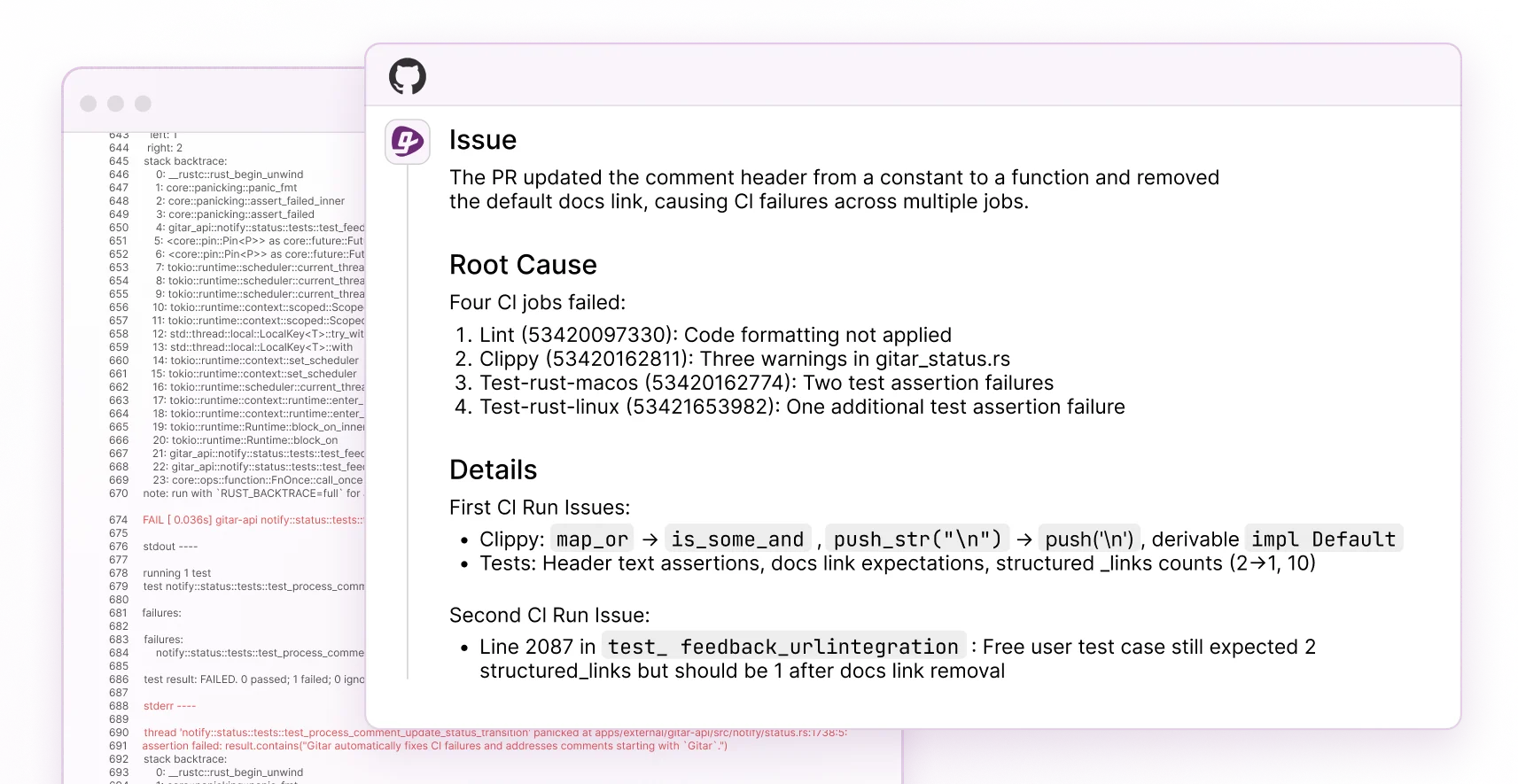
Gitar stands apart by offering a comprehensive 14-day unlimited Team Plan trial. The platform’s healing engine automatically fixes CI failures, validates fixes against your build environment, and commits working solutions. Unlike suggestion engines, Gitar’s hierarchical memory system maintains context per-line, per-PR, and per-repository.
Key features include CI validation, natural language rules, and Jira and Slack integrations. Setup requires only 30 seconds through the GitHub or GitLab app installation. Experience Gitar’s auto-fixing with a 14-day trial that focuses on delivering green builds.
CodeRabbit: OSS-Focused with Private Limitations
CodeRabbit is the most widely installed AI code review app on GitHub and GitLab, with over 2 million repositories connected. The free tier restricts usage to public repositories only, which limits value for private monorepos. The tool provides PR summaries and inline suggestions but offers no auto-fixing, so teams still apply every recommendation by hand.
Greptile: Deep Analysis with Token Constraints
Greptile delivers deep codebase analysis using the full repository graph for context awareness, which suits large monorepos with complex dependencies. Token caps and trial limits restrict usage for large-scale private repositories. The tool excels at dependency analysis but focuses on suggestions only and does not implement fixes automatically.
Windsurf: Unlimited Autocomplete with Auto-Fix Features
Windsurf offers fully free unlimited autocomplete, chat assistance, and repository context across 70+ languages for individuals. The unlimited model appeals to budget-conscious teams. Windsurf adds auto-fix features such as lint fixing and build issue resolution alongside code generation, but it still lacks full CI integration for PR-level auto-fixing.
Compare Gitar’s auto-fixing to suggestion-only tools during your free 14-day trial period.
Free AI Code Review for Large Monorepos: Gitar Trial Setup
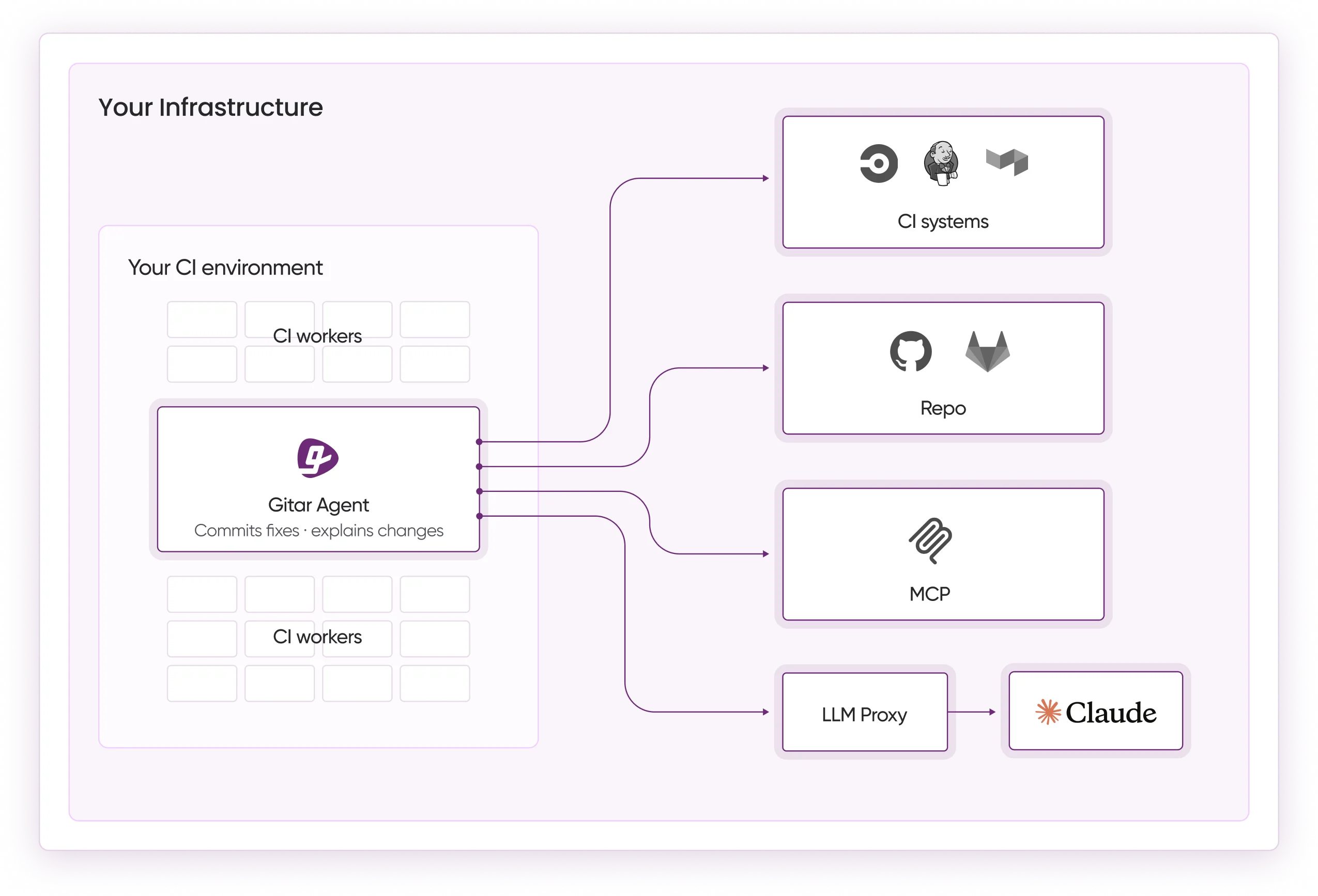
The installation process mentioned earlier walks you through three simple steps. First, install the GitHub or GitLab app from your repository settings to connect your code. Once connected, enable the 14-day Team Plan trial with no seat limits so every developer can participate. Finally, create a test PR to see CI auto-fixing in action within a few minutes.
The platform immediately begins analyzing your codebase context and building hierarchical memory for future reviews. Detailed setup instructions guide you through integration with existing CI/CD pipelines including GitHub Actions, GitLab CI, CircleCI, and Buildkite. Teams typically see their first automated CI fix within the first day of trial usage.
OSS Free Tiers vs Unlimited Trials for Monorepos
OSS free tiers and unlimited trials deliver very different ROI for private monorepos. Traditional free tiers restrict access to public repositories, provide no automated fixes, and offer limited context awareness. Unlimited trials like Gitar’s Team Plan expose full enterprise features without restrictions so teams can measure impact on real workloads.
|
Metric |
OSS/Suggestions |
Gitar Trial |
|
Private Monorepos |
No |
Yes |
|
Auto-Fix ROI |
$0 |
$750k/year |
|
Cross-Package Context |
Limited |
Full hierarchical |
|
CI Integration |
None |
Complete |
For a 20-developer team, manual CI fixes consume about 1 hour per developer per day. Gitar’s auto-fixing reduces this to 15 minutes and delivers the productivity savings mentioned earlier while also cutting context switching interruptions.
Key Considerations for Monorepo AI Code Review
Teams selecting AI code review tools for large monorepos should prioritize unlimited trials over restrictive free tiers. Engineering leaders need clear data on velocity improvements and developer satisfaction. Individual contributors care most about reducing toil and context switching during everyday work.
Integration complexity with existing toolchains also matters. Tools that require extensive YAML configuration or custom scripting create long-term maintenance overhead. Natural language rule systems and single-click installations give busy engineering teams faster time-to-value when they already manage many competing priorities.
Conclusion: Why Gitar Leads Free Monorepo Code Review
The best free AI code review option for large monorepos in 2026 is Gitar’s unlimited 14-day Team Plan trial. The trial delivers comprehensive auto-fixing capabilities that suggestion-only tools cannot match. Competitors often charge premium prices for basic commentary, while Gitar offers full-access trials so teams can prove ROI through measurable productivity gains.
Experience Gitar’s auto-fixing with a 14-day trial and see the difference between a healing engine and a suggestion engine in your own CI pipeline.
Frequently Asked Questions
What is the best free AI code review for GitHub monorepos?
Gitar’s 14-day unlimited Team Plan trial provides the most comprehensive free access for GitHub monorepos. The trial includes auto-fixing capabilities, cross-package context awareness, and CI integration without seat limits. Unlike OSS-focused tools that restrict private repository access, Gitar’s trial includes full enterprise features designed for large-scale private monorepos.
Does Gitar handle large private repositories effectively?
Yes, Gitar supports unlimited public and private repositories during the 14-day Team Plan trial. Its hierarchical memory system maintains context per-line, per-PR, per-repo, and per-org. The platform’s architecture addresses the scalability challenges of large private repositories through persistent context management.
Which free AI code review tools offer auto-fixing capabilities?
Gitar is the only tool providing auto-fixing capabilities in its free trial tier. Competitors such as CodeRabbit and Greptile offer suggestions and analysis but still require manual implementation of all fixes. Gitar’s healing engine automatically validates fixes against CI environments and commits working solutions, which removes the manual work that limits suggestion engines.
How does Gitar compare to CodeRabbit for monorepos?
Gitar provides auto-fixing and CI integration, while CodeRabbit’s free tier restricts access to public repositories only. For private monorepos, Gitar’s trial offers unlimited access with comprehensive context awareness. CodeRabbit requires paid plans for private repository support and focuses on suggestions without automated implementation.
What is the setup time for AI code review in GitLab?
Gitar’s GitLab integration requires about 30 seconds through the app installation process and immediately enables AI code review with auto-fixing capabilities. The platform connects to GitLab CI pipelines automatically and needs no additional configuration or YAML changes before it begins analyzing merge requests and fixing CI failures.