
Written by: Ali-Reza Adl-Tabatabai, Founder and CEO, Gitar
Key Takeaways for AI PR Auto-Fix Tools
- AI coding tools speed up development 3-5x but increase PR volume by 30-154%, creating review bottlenecks that can cost teams up to $1M annually in lost velocity.
- SWE-PRBench shows AI models detect only 15-31% of real PR issues, with acceptance rates around 30%, so tools must validate fixes against CI for reliable green builds.
- Gitar leads this list with validated auto-fixes, full CI integration, and a 14-day Team Plan trial, while suggestion-only tools like Greptile or Refact.ai still rely on manual fixes.
- Evaluate tools by fix success rate, setup time under 5 minutes, low comment noise, and ROI such as shrinking review cycles from 8-24 hours to minutes.
- Start automating PR fixes and guaranteeing green builds today by activating Gitar’s auto-fix engine.
How to Test Free AI Code Refactoring Tools for PR Fixes
Focus your testing on whether tools validate fixes against CI, how quickly they install, which integrations they support, how noisy their comments are, and how much time they save per PR. SWE-PRBench shows AI models achieve only 15-31% detection rates on real pull request issues, with acceptance rates around 30%, so CI-based validation becomes non‑negotiable.
Run a simple, repeatable test across tools. Clone a repository, introduce lint errors or test failures, then measure each tool’s speed and accuracy in producing working fixes. Confirm that each proposed fix runs through your actual CI environment and passes before any commit. Review Gitar’s release notes for concrete examples of CI failure analysis and auto-fix behavior.
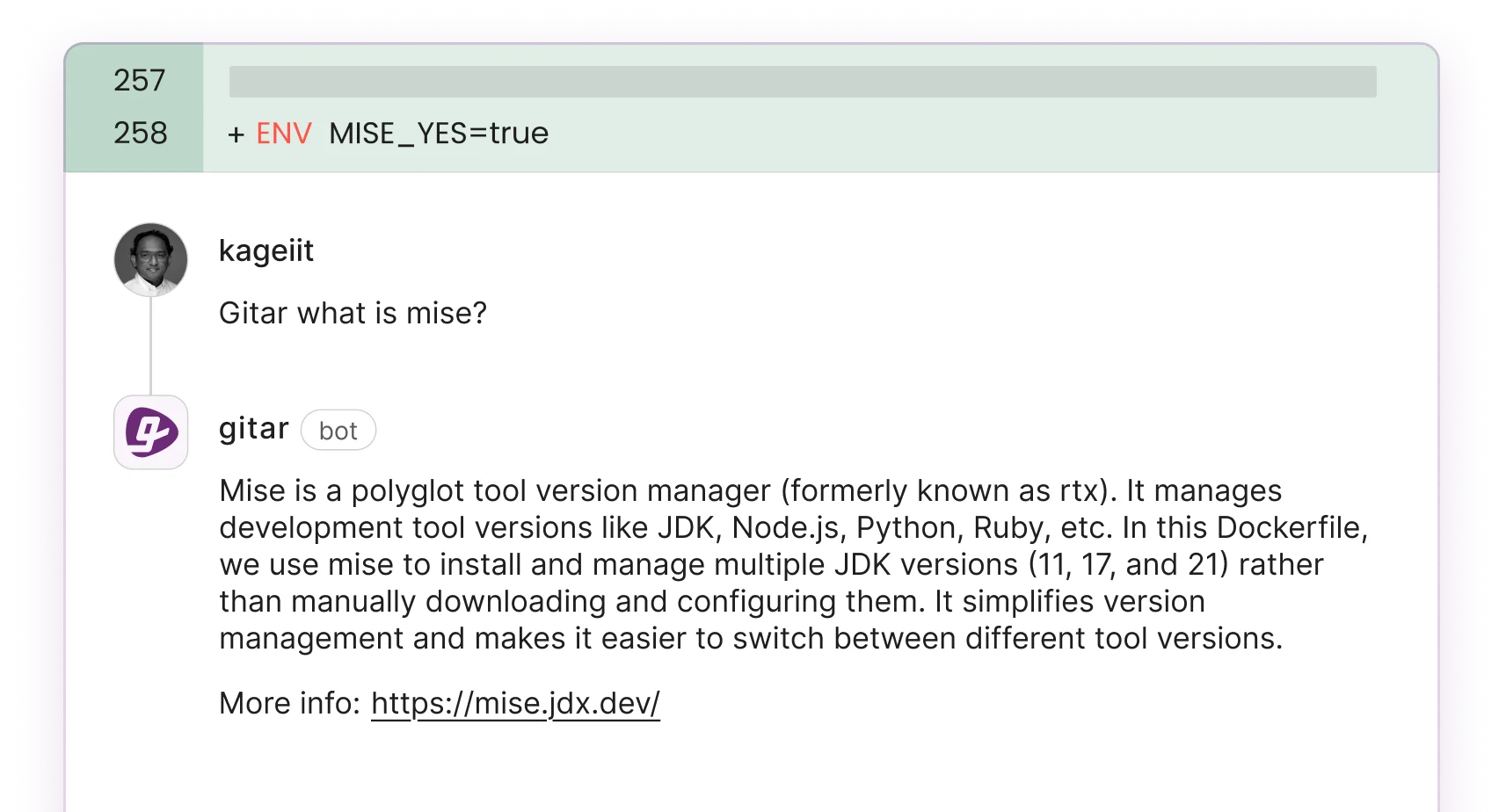
Applying these evaluation criteria to the current market, the following tools stand out for teams that want automated PR fixes and reliable green builds.
#1 Gitar: CI-Aware Healing Engine for Real PR Fixes
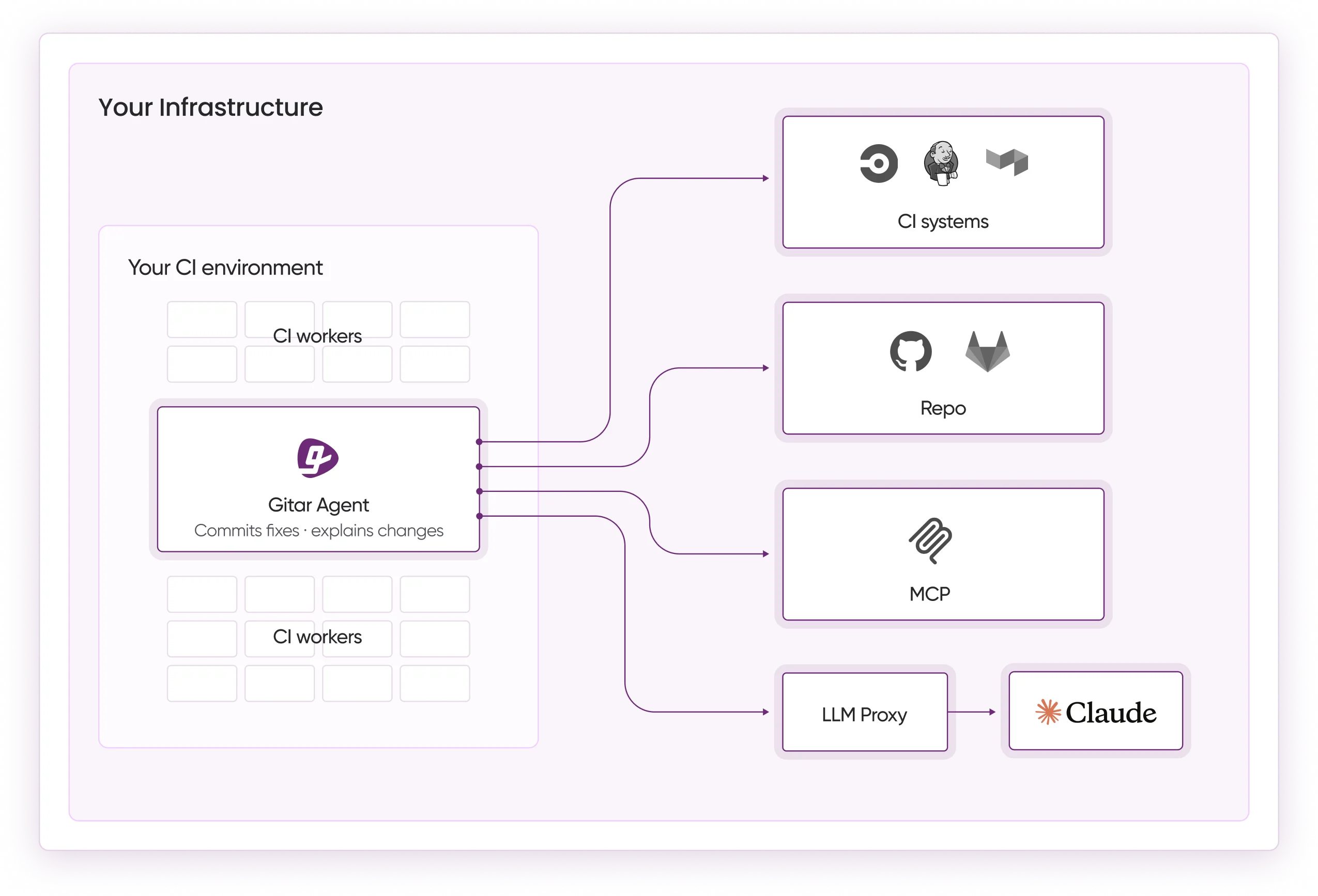
Gitar acts as an AI platform that resolves CI failures and review feedback through validated commits instead of raw suggestions. When CI fails because of lint errors, test failures, or broken builds, Gitar’s CI agent keeps full context from PR creation to merge, identifies root causes, applies fixes, and verifies results inside your CI environment.
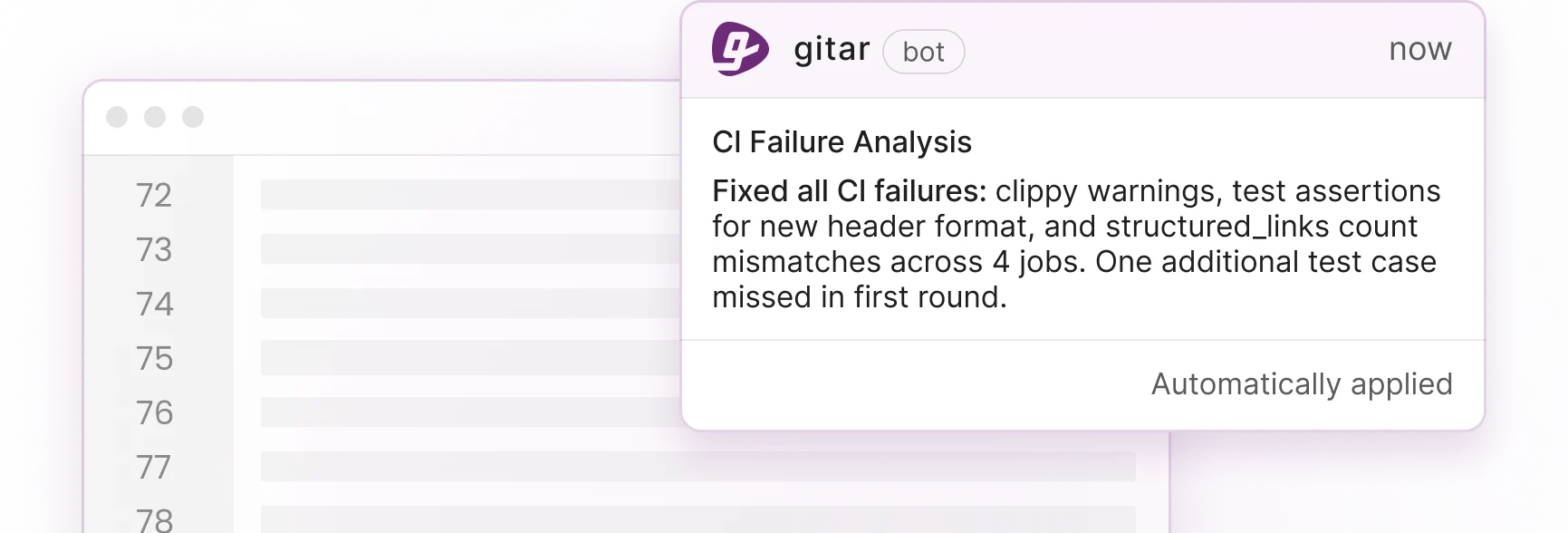
The platform combines log analysis, validated fixes against your actual CI pipeline, and a single living dashboard comment that consolidates insights and updates in real time. October 2025 updates added CI failure analysis that automatically inspects failures and surfaces actionable insights for each PR.
Setup finishes in under 5 minutes through a GitHub app installation. The 14-day Team Plan trial includes unlimited repositories, full auto-fix capabilities, GitHub/GitLab/CircleCI integration, and Jira context awareness. Competing tools often charge $15-30 per seat for suggestions, while Gitar focuses on delivering green builds through validated commits. Experience validated auto-fixes with Gitar’s 14-day trial.
#2 CodeRabbit: High-Volume AI Code Reviewer with Auto-Fix Support
CodeRabbit provides AI-first pull request reviews with 1-click commits for simple fixes and a “Fix with AI” button for more complex changes. CodeRabbit’s scale demonstrates proven reliability: the platform has reviewed 3 million repositories and identified 75 million defects, making it the most installed AI app on GitHub and GitLab. This broad deployment history shows that its review engine has been tested across many languages and architectures.
CodeRabbit offers context-aware feedback, line-by-line suggestions, and real-time chat for follow-up questions. The free trial requires no credit card and grants access to core review features. CodeRabbit integrates with CI/CD pipelines so teams can validate fixes in preview environments before applying them. After the trial, pricing starts at $15 per developer per month.
#3 Greptile: Deep Codebase-Aware Review Without Auto-Commits
Greptile delivers AI code review with deep understanding of entire repositories instead of focusing only on diffs. The platform shines when catching issues that depend on broader context, such as breaking changes across multiple files or inconsistent API usage patterns that span services.
The free tier covers basic review capabilities, but Greptile operates as a suggestion-only tool with no auto-commit support. Teams often find that, although insights are strong, manual implementation of fixes recreates the same bottlenecks that AI coding tools introduced. Paid plans start at $30 per developer per month. For teams that want working commits instead of suggestions, use Gitar for CI-validated auto-fixes that ship working solutions.
#4 Refact.ai: IDE Assistant for Code Quality Suggestions
Refact.ai blends code completion with review features, surfacing suggestions for refactoring, bug fixes, and incremental code improvements. The platform supports multiple programming languages and integrates with popular IDEs so developers receive feedback while they type.
The free tier offers limited monthly usage for code analysis and suggestions. Like many peers, Refact.ai focuses on spotting issues instead of applying fixes, so developers still need to implement changes manually. The tool does not integrate with CI, which means suggestions are not validated against real build environments before developers see them.
#5 Ellipsis: Auto-Commit Agent for Simple Refactors
Ellipsis reads reviewer comments such as “Make this variable const” and generates commits that implement those minor refactoring tasks. The platform runs tests to confirm that these changes do not break existing functionality before committing.
Ellipsis performs well on simple, mechanical changes but struggles with complex logic or architectural refactors. The tool requires user review and approval before committing, which adds friction to the workflow. Ellipsis offers partial automation, yet the approval steps and narrow scope keep it behind full auto-fix systems.
#6 Qodo (PR-Agent): Open Source Review Bot Without Fixes
PR-Agent (Qodo) has 10,500 GitHub stars but still faces configuration bugs that block reliable local model deployment. The open-source project aims to provide air-gapped AI review through Ollama, yet it does not include automatic fixing capabilities.
PR-Agent remains free to use and offers straightforward setup and deployment options for teams that want open-source control. However, testing on a 450K-file monorepo found no automatic code fixing or auto-commit features, which limits its value for teams that want hands-off remediation. The tool focuses on generating review comments instead of implementing fixes. For teams that need broken builds repaired without manual work, use Gitar’s validated auto-commit system to fix CI failures automatically.
#7 Tembo: Database-Centric PR Review and Fix Generation
Tembo specializes in database-related code review, offering suggestions for SQL performance, schema evolution, and database access patterns. The platform tailors its insights to database operations, which helps teams that manage heavy data workloads.
The free tier supports basic database code analysis and integrates with GitHub, GitLab, Jira, and other tools. Tembo can create pull requests with fixes, features, and tests for human review, so it extends beyond pure suggestions for database-focused engineering tasks. Its database specialization benefits data-heavy teams but limits coverage for full-stack PR review across front-end, back-end, and infrastructure code.
#8 Pixee: Security-Focused Auto-Fixes for Vulnerabilities
Pixee targets security vulnerabilities in code, concentrating on OWASP Top 10 issues and common security anti-patterns. The platform generates patches for security problems and can auto-commit fixes after validation.
Pixee remains free for open-source projects and excels at security-specific fixes. However, it does not address broader code quality or CI failure resolution. Teams still need additional tools to manage performance issues, flaky tests, and general refactoring. Security coverage helps, yet the narrow scope leaves many CI failures and review delays unresolved.
2026 Benchmarks: Measuring PR Fix Rates and ROI
Use benchmarks to compare tools on real fix success rates instead of relying on marketing claims. As the earlier SWE-PRBench data indicated, the 30% acceptance rate for AI fixes makes CI validation essential if you want consistent green builds. Industry estimates show average code review cycle times of 8-24 hours for SaaS companies, which highlights the upside of automation.
Calculate ROI for a 20-developer team by first establishing your baseline. Measure current time spent on CI and review issues, for example 1 hour per day per developer, which equals roughly $1M in annual productivity cost. Then project your target state after adopting a strong auto-fix tool, such as 15 minutes per day per developer, or about $250K in annual cost, which represents $750K in productivity savings. Finally, track the shift from multiple daily context-switching interrupts to near-zero CI-related disruptions as a leading indicator of success.
Choosing the Right AI Refactoring Tool for Your Team
Teams that feel cautious about auto-commits can start in suggestion mode, then move to full automation once they trust the fixes. Engineering leaders should watch velocity metrics during trial periods and compare sprint completion rates before and after adoption. DevOps teams gain the most from tools that replace complex YAML configuration with natural language rules tied directly to CI behavior.
Complex CI environments benefit from tools that emulate the full build stack instead of testing fixes in isolation. Gitar’s CI emulation runs fixes in conditions that mirror production, which reduces surprises after merge and keeps green builds stable.
Free AI Code Reviews & PR Tools FAQs
What’s the best free AI for refactoring code in 2026?
Gitar offers the most complete trial experience, with 14 days of full Team Plan access that includes validated auto-fixes, CI integration, and unlimited repositories. Competing tools often charge $15-30 per seat for suggestions, while Gitar’s trial covers both fix implementation and CI validation.
Are there free alternatives to CodeRabbit for pull request review?
Several tools provide free tiers, including Gitar’s 14-day trial, Ellipsis for basic auto-fixes, and open-source options such as PR-Agent. Most alternatives, however, focus on suggestions instead of CI-validated auto-fixes that consistently produce green builds.
Can AI tools actually fix CI failures automatically?
Gitar currently stands out as the primary tool that fixes CI failures through validated commits. Most competitors highlight issues but still rely on manual remediation. Gitar analyzes failure logs, generates candidate fixes, validates them against your CI environment, and then commits only working solutions.
How do free AI code review tools compare to paid options?
Free tiers usually limit functionality through suggestion-only behavior, restricted repository access, or usage caps. Gitar’s 14-day trial exposes the full paid-tier feature set so teams can measure ROI before paying, while many competitors restrict free access to basic review comments.
What should teams look for in AI PR auto-fix tools?
Prioritize tools that validate fixes against your real CI environment, use single-comment interfaces to reduce noise, integrate with existing workflows such as Jira and Slack, and show measurable ROI through shorter review cycles and fewer failed builds.
Fix PRs Automatically with a Gitar Trial
Auto-fixing platforms like Gitar transform pull request workflows by removing the manual work that suggestion-only tools still require. Teams should run structured trials that demonstrate real velocity gains on their own codebases. Evaluation should focus on CI integration depth, fix validation, and impact on cycle time rather than comment volume alone.