
Key Takeaways
- AI coding tools sped up code generation 3-5x, but CI and PR capacity stayed flat, so review queues exploded with 84% developer adoption.
- Gitar leads as a free AI code healing platform, with unlimited free code review and a 14-day auto-fix trial that guarantees green builds.
- True code healing analyzes CI failures, generates validated fixes, and commits working solutions, instead of only suggesting changes.
- Gitar beats Cursor, Kodezi, Tabnine, and others on CI integration depth, auto-commit support, and the strength of its free tier.
- Teams save about $750K per year with Gitar’s 30-second setup, so install Gitar now for automatic CI healing and faster shipping.
Why Free AI Code Healing Solves the Post-AI Bottleneck
The AI coding wave created a new bottleneck: developers write code 3-5x faster, but review and CI capacity did not grow. About 80% of developers now use AI tools in their workflows, yet sprint velocity often stalls at the pull request stage.
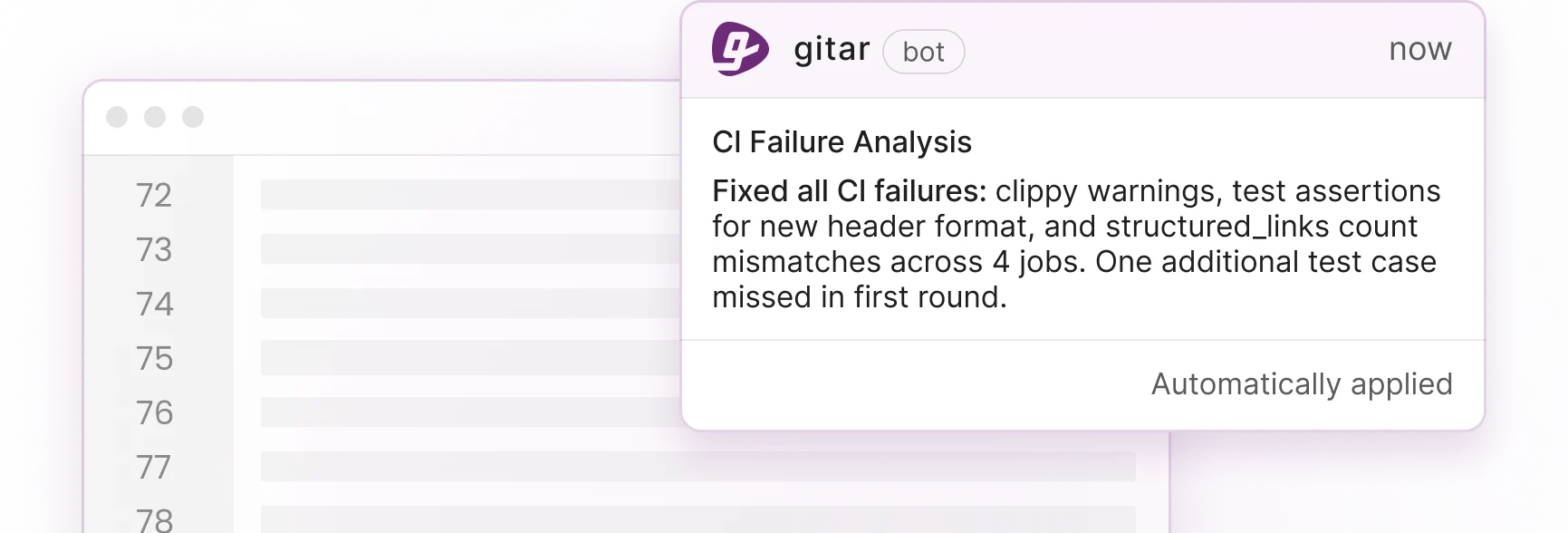
Most AI code review tools charge $15-30 per developer each month for suggestion engines that still need manual edits and commits. True code healing platforms focus on hands-off automation and deliver:
- Automatic analysis of CI failure logs to pinpoint root causes
- Generated code fixes that use full codebase context
- Validation of fixes inside your actual CI environment
- Auto-committed working solutions directly to PRs
- Green build guarantees instead of untested suggestions
Our evaluation favors platforms that provide real automation instead of manual suggestion workflows, with special weight on free tier depth and CI integration quality.
Install Gitar now, automatically fix broken builds, and ship higher quality software faster
Top 7 Free AI Code Healing Platforms in 2026
#1 Gitar: Free Auto-Healing With Green Build Guarantees
Gitar is the only platform that offers free AI code review across unlimited repositories and users, including full PR analysis, security scanning, and bug detection at no cost. Auto-fix features run on a 14-day free trial, so teams can experience healing before paying.
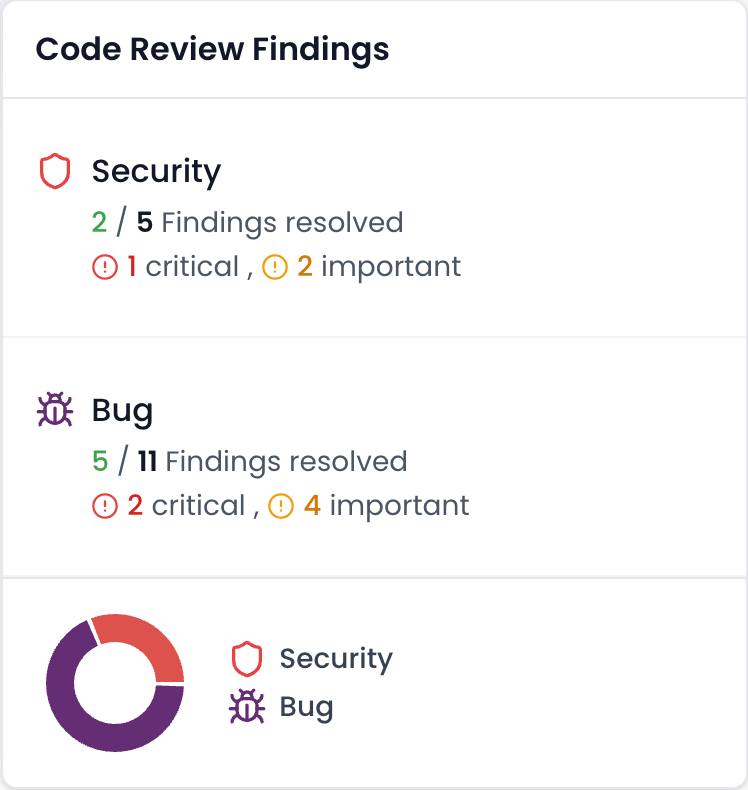
The healing engine reviews CI failures, generates context-aware fixes, validates them in your environment, and commits working code. All updates appear in a single dashboard comment that refreshes in place, which keeps noise low and makes resolved issues easy to track.

Key differentiators include:
- 14-day free trial of auto-fix features with no credit card required
- CI failure analysis for GitHub Actions, GitLab CI, CircleCI, and Buildkite
- Green build guarantees through validated fixes
- One updating comment interface that reduces cognitive load
- Enterprise-scale validation that handles more than 50M lines of code daily
ROI models show a 20-developer team can save $750K per year by cutting CI and review friction from 1 hour to 15 minutes per developer each day. Pinterest and Tigris teams report that Gitar’s summaries are “more concise than Greptile/Bugbot” and that it catches security issues missed by other AI tools.
Setup takes about 30 seconds through a GitHub App installation and PR dashboards update immediately.
#2 Cursor: IDE Editor With Multi-File Fixes
Cursor works well as an AI-powered code editor that supports strong multi-file refactors through its Composer agent. The platform predicts next edits and supports project-wide bug fixes, which helps with localized code healing inside the IDE.
Cursor does not provide PR-level auto-commit support or deep CI integration, and its debugging success trails specialized healing tools. The free tier includes limited completions and does not offer green build guarantees.
#3 Kodezi: Auto-Debug via CLI and Web
Kodezi includes Auto-Debug features that find and fix bugs automatically, plus code quality improvements and security checks through a web interface and CLI. It performs well on bug detection and standards compliance.
Kodezi’s PR-level auto-commit support is less complete than Gitar’s, and CI pipeline integration is more limited for fully automatic failure resolution. The platform supports CI/CD debugging but focuses mainly on individual bug fixes and some codebase maintenance.
Install Gitar now, automatically fix broken builds, and ship higher quality software faster
#4 Tabnine: Refactoring and Code Explanations
Tabnine performs well on fixes and refactors, helping developers repair bugs, add features, and explain legacy code. It integrates cleanly with IDEs and supports privacy-focused local processing.
Tabnine mainly acts as a suggestion engine with some CI/CD hooks, but it does not match Gitar’s full auto-commit or CI failure validation. Developers still apply and test many fixes manually.
#5 Windsurf: Cascade Agent for Autonomous Coding
Windsurf, previously Codeium Editor, offers a free AI editor with built-in features and a Cascade AI agent that runs autonomous workflows with deep codebase awareness. It focuses on privacy and delivers strong completion quality.
The platform centers on IDE workflows and provides less PR automation than Gitar, with limited CI failure analysis and fewer extensions than long-standing editors. Windsurf includes some automated validation but does not match Gitar’s green build guarantees.
#6 Tusk: Self-Healing for Test Suites
Tusk focuses on automated test maintenance and self-healing test suites, which helps teams that struggle with flaky tests. The platform can update tests automatically when application changes break existing cases.
This test-first focus limits coverage for broader CI failures such as build errors, lint issues, or dependency conflicts. Teams still handle manual PR review and fix implementation for non-test problems.
Install Gitar now, automatically fix broken builds, and ship higher quality software faster
#7 Open-Source Tools (Aider and Cline): DIY Flexibility
Aider works as an open-source CLI tool that edits code through Git-tracked diffs to support bug fixes and refactors in terminal workflows. Cline offers model-agnostic AI assistance with Bring-Your-Own-Key flexibility.
These tools give teams cost control and customization but require setup effort, have weaker native CI integration than Gitar, and do not guarantee green builds. Teams often add extra configuration to reach full automation.
Comparison Table: Gitar vs Other Free AI Code Healers
|
Platform |
Auto-Apply Fixes |
CI Integration |
Green Build Guarantee |
Free Tier Depth |
|
Gitar |
Yes (14-day trial) |
Full (4 platforms) |
Yes |
Unlimited repos/users (code review) |
|
Cursor |
Inline auto-fixes |
Limited |
No |
Limited completions |
|
Kodezi |
Web/CLI/PRs |
CI/CD support |
No |
Basic debugging |
|
Tabnine |
Suggestions/agents |
CI/CD integration |
No |
Limited features |
Gitar vs Copilot: Best Free AI for Fixing Code
GitHub Copilot is used by 90% of Fortune 100 companies, and it excels at code suggestions with some agentic behavior. Gitar focuses on healing, with deeper auto-commit support and CI failure analysis that delivers validated, working fixes.
|
Capability |
GitHub Copilot |
Gitar |
|
Code suggestions |
Yes |
Yes (Free) |
|
Auto-commit fixes |
Limited (PRs) |
Yes |
|
CI failure analysis |
Some support |
Yes |
|
Green build guarantee |
No |
Yes |
How Gitar’s CI Auto-Healing Works in Practice
Gitar’s CI auto-healing follows a clear, short setup flow:
- Install the GitHub App or GitLab integration, which takes about 30 seconds.
- Let Gitar read CI failure logs automatically after each run.
- Review the context-aware fixes that the platform generates.
- Allow Gitar to validate solutions in your CI environment.
- Approve auto-committed code with a single dashboard update.
Teams report a 75% drop in context switching and about $375K in yearly savings, even when they assume only 50% effectiveness. The platform supports enterprise complexity while keeping setup close to zero.
How to Choose a Free AI Code Healing Platform
Teams should avoid suggestion-only tools that add extra manual work. Start with platforms that automate fixes, validate changes in your CI environment, and publish clear ROI metrics with generous free tiers that support entire teams.
Frequently Asked Questions
Which AI tool fixes code automatically?
Gitar leads automatic code fixing with a healing engine that analyzes CI failures, generates validated fixes, and auto-commits working solutions. Competing tools offer partial automation, but Gitar guarantees green builds through deep CI integration with GitHub Actions, GitLab CI, CircleCI, and Buildkite. The free tier covers unlimited repositories and users for code review, and the 14-day auto-fix trial keeps it accessible for teams of any size.
Are there free AI coding agents that apply fixes for you?
Gitar provides a 14-day free trial of auto-fix features with no credit card, then continues with permanently free code review. Many competitors charge $15-30 per developer each month for suggestion tools, while Gitar applies fixes automatically and validates them in your CI environment. Open-source tools such as Aider also exist but need more setup and offer weaker native CI integration.
How does Gitar compare to CodeRabbit for CI workflows?
Gitar outperforms CodeRabbit by delivering true auto-commit support and CI failure analysis, while CodeRabbit stays focused on suggestions that require manual edits. Gitar’s single updating dashboard comment cuts notification noise compared with CodeRabbit’s many inline comments. Gitar’s core features remain free, while CodeRabbit typically charges $15-30 per developer each month for basic suggestions.
What setup is required for free AI code healing?
Gitar setup takes about 30 seconds through a GitHub App or GitLab integration. No account, credit card, or complex configuration is required. The platform starts analyzing PRs and posting dashboard comments immediately. The 14-day auto-fix trial activates on its own, so teams can test validated healing before making purchase decisions.
Do AI code healing tools guarantee working fixes?
Gitar validates every fix against your CI environment before committing, which enables green build guarantees that suggestion-only tools cannot match. The healing engine tests generated fixes in context and confirms that they resolve the failure without adding new issues. This validation step separates true healing platforms from basic suggestion engines.
Conclusion: Gitar Delivers Real Free AI Code Healing
Across the 7 best free AI code healing platforms reviewed, Gitar stands out by combining comprehensive free code review with a 14-day auto-fix trial and green build guarantees. Competing tools often charge premium prices for suggestions, while Gitar ships a complete healing engine that helps teams escape post-AI coding bottlenecks.
Unlimited free code review, validated auto-fix trials, and enterprise-ready CI integration make Gitar a clear choice for teams that want real productivity gains instead of incremental suggestions.
Install Gitar now, automatically fix broken builds, and ship higher quality software faster