
Written by: Ali-Reza Adl-Tabatabai, Founder and CEO, Gitar
Key Takeaways for VS Code AI Extensions
-
84% of developers now use AI tools, and VS Code extensions with free tiers bypass Copilot paywalls while keeping autocomplete fast for Python, JavaScript, and TypeScript.
-
Evaluate each extension by autocomplete speed, privacy model, usage limits, setup time, language coverage, and recent 2026 feature updates.
-
Strong free tiers include Codeium for unlimited cloud suggestions, Continue for local Ollama models, Copilot for capped usage, Windsurf for rapid prototyping, Tabnine for local low-latency completions, and Amazon Q for AWS-focused workflows.
-
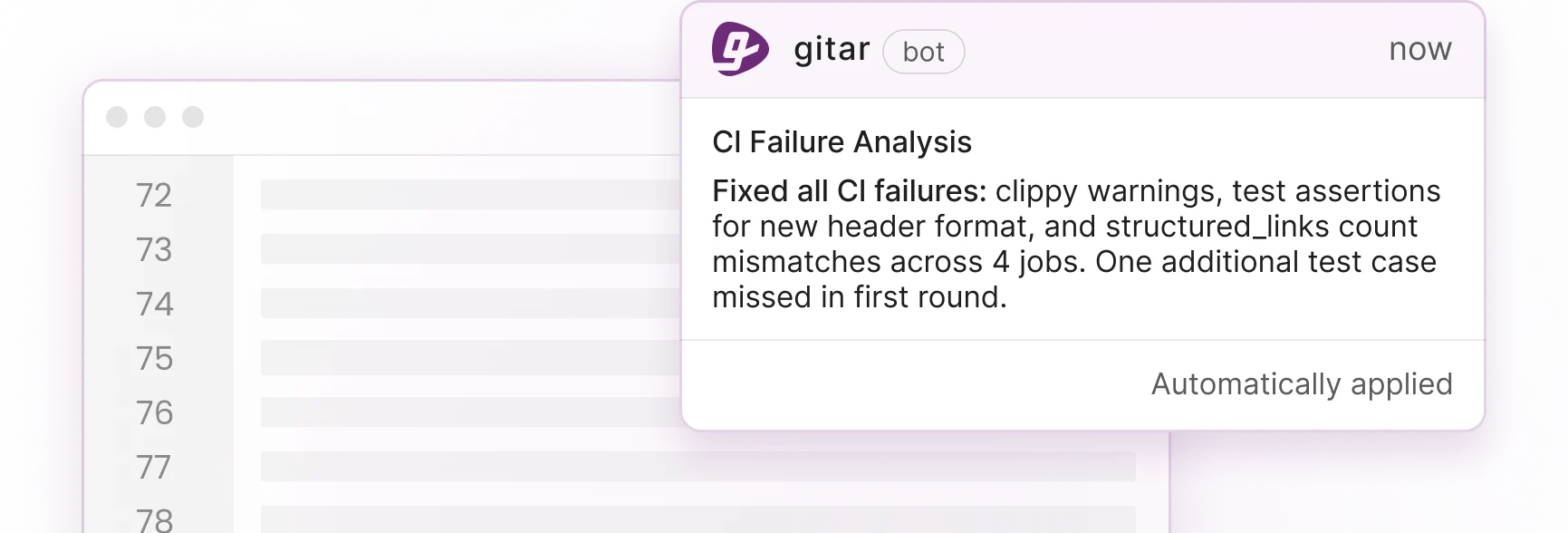
Gitar stands out by turning CI failures and PR feedback into validated auto-fixes that commit changes and keep builds green.
-
Teams that need more than suggestions should boost development velocity with Gitar’s auto-fix capabilities.
How to Evaluate AI Code Suggestion Extensions for Your Team
Start by measuring autocomplete speed and accuracy on your own GitHub repositories or sample projects. Compare latency numbers from independent benchmarks with your real-world experience to see how tools behave under your workload. Review privacy options carefully, including whether code runs through cloud services or stays local with tools like Continue and Tabnine.
Check token or request limits on each free tier so you understand when suggestions may slow or stop. Aim for extensions that install and configure in under five minutes, especially for larger teams. Confirm language and framework support across your stack, then factor in 2026 improvements like Windsurf’s 120ms latency improvements when comparing speed claims.
Use VS Marketplace reviews, Reddit developer threads, and hands-on benchmarks as reference points while you run your own tests. Teams that need auto-fixes beyond suggestions should evaluate Gitar’s trial to see how CI healing and PR auto-fixes change review workflows.
Top 7 AI Code Suggestion Extensions with Free Tiers for VS Code in 2026
#1 Gitar: Auto-Fix Engine for CI and PR Workflows
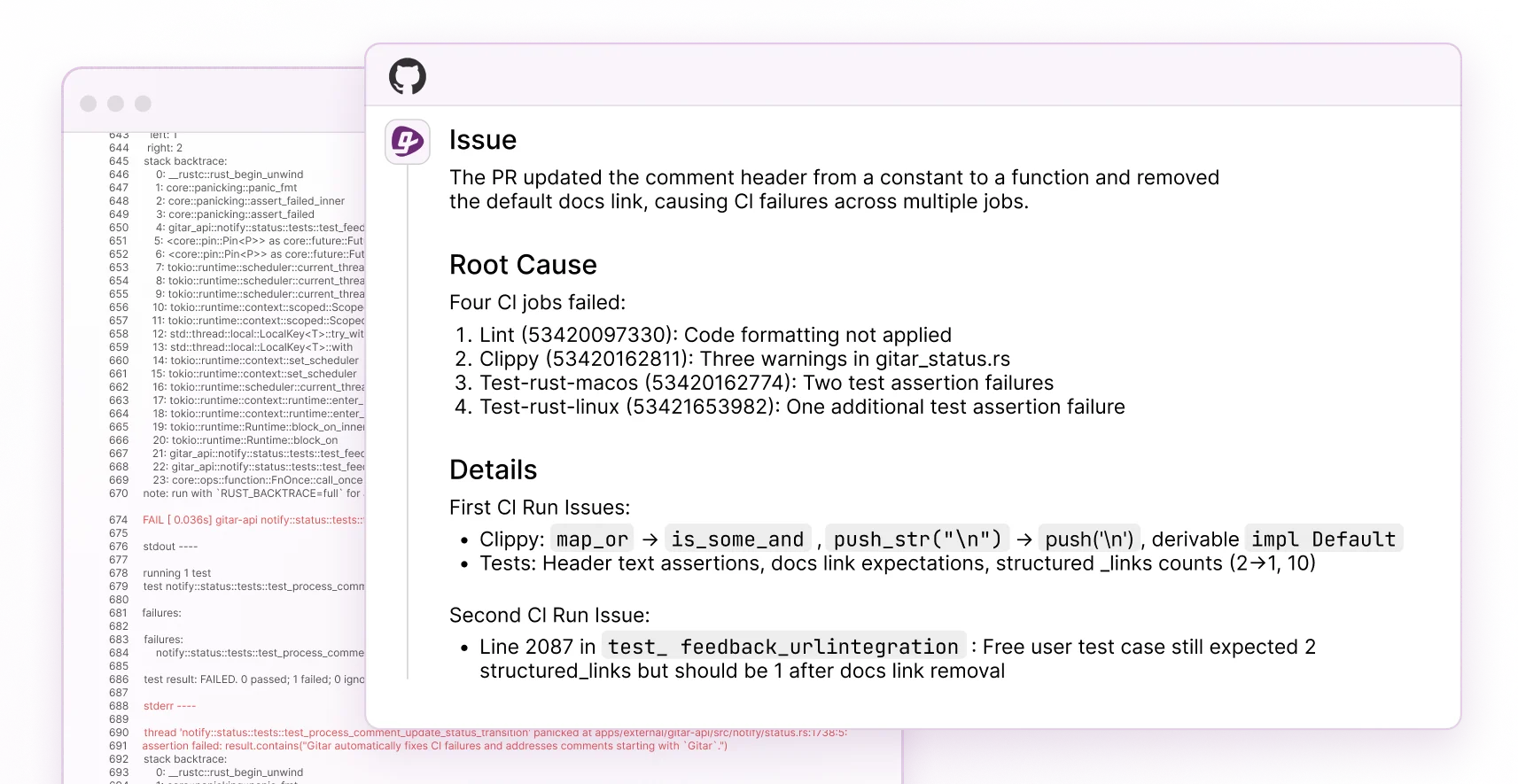
Gitar is an AI code review platform that focuses on PR analysis and automatic fixes for CI failures and review feedback. It provides PR summaries, inline suggestions, and auto-apply fixes that commit validated changes directly to pull requests. Gitar also analyzes CI failures and consolidates feedback into a single-comment interface that reduces notification noise.
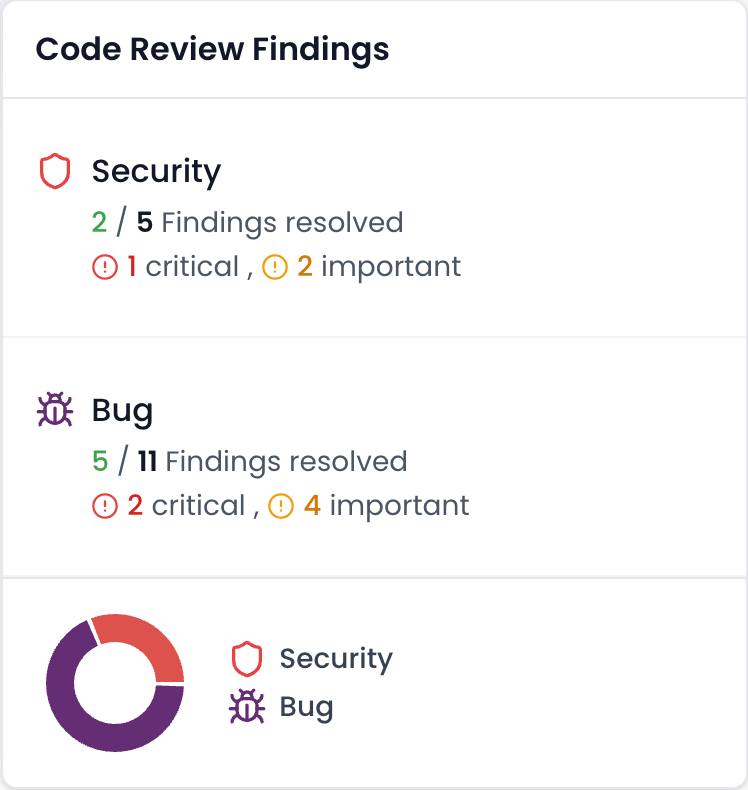
You can install the Gitar GitHub App or GitLab integration in about two minutes and start using it with existing repositories. Key strengths include fix validation against CI pipelines, workflow automation, and integrations with tools like Jira and Slack. Benchmark tests show JavaScript lint fixes in 1.2 seconds, which keeps feedback loops tight for busy teams.
Gitar fits teams that need guaranteed green builds rather than occasional suggestions. It goes beyond code hints by validating fixes and committing working changes automatically.
Explore how Gitar automatically fixes broken builds.
#2 Codeium: Unlimited Cloud Autocomplete for Speed
Codeium’s free tier provides unlimited cloud autocomplete and offers SOC 2 compliance on enterprise plans. You install it by searching the VS Code Marketplace, clicking Install, and signing in with your preferred account. This quick setup makes it easy for individual developers to start testing suggestions immediately.
Strengths include the sub-150ms response time mentioned earlier and a training corpus limited to permissively licensed code for commercial safety. These choices help teams reduce legal risk while keeping suggestions responsive. Limitations center on cloud processing, which may raise privacy concerns for regulated industries or sensitive codebases.
Performance benchmarks show comparable completion speeds for Next.js functions, aligning with the earlier latency figures. Codeium works best for individual developers and small teams that prioritize speed and unlimited usage over strict local privacy.
#3 Continue: Local and Open-Source AI Coding
Continue is an open-source VS Code extension that supports unlimited completions with any LLM backend, including local models via Ollama. You install it from the Marketplace, then configure Ollama or another provider for local inference. This setup gives you full control over which models power your suggestions.
Advantages include complete privacy through local processing and flexibility to use GPT-4, Claude, Llama, or other models. These options help teams match model strengths to specific projects. Disadvantages include slower performance for local models and more complex configuration, which can challenge less experienced developers.
Benchmark results show TypeScript refactoring in about two seconds, which many teams consider acceptable for local privacy. Continue works best for air-gapped environments, security-conscious organizations, and developers who want open-source tooling.
#4 GitHub Copilot Free Tier: Familiar Experience with Limits
GitHub Copilot’s free tier limits users to 2,000 completions and 50 chat messages monthly. You install it through the VS Code Marketplace and authenticate with your GitHub account. This process feels familiar for developers already using GitHub for source control.
Benefits include a polished interface, tight GitHub and Microsoft integration, and strong support for popular languages. Constraints include the monthly usage caps and full reliance on cloud infrastructure. Latency measures 160ms for autocomplete responses, which keeps suggestions reasonably fast for most workflows.
Copilot’s free tier suits light usage scenarios, such as occasional pair programming, learning new frameworks, or evaluating AI assistance before committing to a paid plan.
#5 Windsurf: Fast Prototyping with Agentic Cascade
Windsurf achieved the fastest MVP development time at 3 hours 58 minutes in 2026 benchmarks, powered by its agentic Cascade engine. You install it using a VSIX download and manual setup instead of a simple Marketplace click. This extra step adds friction but unlocks advanced capabilities.
Strengths include rapid prototyping speed and first working page generation in 18 minutes. These results help teams validate ideas quickly. Weaknesses include inconsistent code quality and potential security issues in generated output, which require careful review.
Windsurf fits rapid proof-of-concept work, hackathons, and early-stage product experiments where speed matters more than production-grade quality.
#6 Tabnine Free Tier: Local Low-Latency Completions
Tabnine’s free Starter tier delivers line completions with under 50ms latency using local models. You install it from the Marketplace and authenticate with GitHub or Google to start using it immediately. This quick onboarding helps teams test local AI without complex configuration.
Advantages include local model options for enhanced privacy and support for more than 80 programming languages. These features make Tabnine attractive for polyglot teams and enterprises with strict data policies. Limitations include basic feature restrictions on the Starter tier and higher CPU usage on developer machines.
Tabnine works well for organizations that want fast, local suggestions with predictable privacy and broad language coverage.
#7 Amazon Q Developer: AWS-Focused Coding Assistant
Amazon Q Developer offers a free tier with 50 agentic requests monthly and a VS Code plugin. You install it from the Marketplace and link your AWS account during setup. This connection allows Q Developer to draw on your AWS environment for context.
Strengths include deep AWS service expertise, security scanning, and infrastructure-as-code optimization. These capabilities help teams tune CloudFormation, CDK, and related stacks. Weaknesses include a strong bias toward AWS workloads and weaker performance for general-purpose coding tasks outside that ecosystem.
Latency varies with request complexity, especially for multi-step agentic tasks. Amazon Q Developer fits teams heavily invested in AWS infrastructure and services that want AI support tailored to that environment.
While Amazon Q excels at AWS-specific tasks, Gitar’s auto-fix engine works across any infrastructure to eliminate CI bottlenecks.
AI Extensions with Free Tiers Comparison Matrix
The comparison table below highlights how each extension balances speed, privacy, usage limits, and auto-fix capabilities. Notice how local tools like Continue and Tabnine trade some speed for stronger privacy, while Gitar uniquely focuses on validated auto-fixes instead of autocomplete latency.
|
Extension |
Autocomplete Speed |
Privacy |
Limits |
Setup Time |
Stack Support |
Auto-Fix |
|---|---|---|---|---|---|---|
|
Gitar |
N/A |
Cloud (secure) |
14-day trial |
2min |
All |
Yes |
|
Codeium |
120ms |
Cloud |
None |
1min |
All |
No |
|
Continue |
2s (local) |
Local |
None |
5min |
All |
No |
|
Copilot Free |
160ms |
Cloud |
2k/mo |
1min |
All |
No |
|
Windsurf |
120ms |
Cloud |
Free tier |
2min |
All |
No |
|
Tabnine |
<50ms |
Local |
Basic |
1min |
80+ |
No |
|
AWS Q |
Variable |
Cloud |
50/mo |
1min |
AWS+ |
No |
Gitar stands out for teams that need working fixes instead of suggestions alone. While other extensions focus on autocomplete speed, Gitar validates and commits solutions that remove CI bottlenecks and keep pipelines healthy.
Choosing the Right Extension and Avoiding Setup Pitfalls
Individual developers who want unlimited suggestions and fast responses often start with Codeium for its balance of speed and features. Teams that prioritize privacy and local control should evaluate Continue with Ollama-backed models. No other free extension currently provides automatic CI fixes at the level Gitar offers, which makes Gitar unique for production teams.
Expect common setup issues such as Ollama installation challenges, API token configuration errors, and corporate firewall restrictions that block model endpoints. Tabnine users report “Deep Cloud unreachable” errors that require api.tabnine.com whitelisting, which illustrates how network policies can affect AI tools.
Experience Gitar’s 14-day free Team Plan trial to see auto-fixes in your own CI pipeline.
Frequently Asked Questions
What is the best free AI extension for VS Code?
For unlimited autocomplete, Codeium leads with low latency and enterprise-ready SOC 2 compliance on higher tiers. For strict privacy, Continue supports local models through Ollama and other providers. For teams that need auto-fixes beyond suggestions, Gitar offers the only solution in this list that validates and commits working code automatically.
Benchmark Gitar first through its trial to compare the impact of suggestions versus fully applied fixes in your development workflow.
How do I use AI in VS Code for free?
You can install extensions directly from the VS Code Marketplace by searching for Codeium, Continue, or Tabnine and clicking Install. For local models, install Ollama separately, then configure the Continue extension to point at your local runtime. GitHub Copilot provides 2,000 monthly completions on its free tier, which covers light usage.
Amazon Q Developer adds 50 agentic requests monthly with AWS integration, which helps if you work heavily with AWS services and infrastructure code.
How do I install the Codeium VS Code extension?
Open VS Code’s Extensions panel, search for “Codeium,” and click Install to add the extension. After installation, sign in with GitHub or Google to unlock unlimited autocomplete on the free tier. Setup usually takes about one minute and requires no extra configuration for basic usage.
Is GitHub Copilot completely free?
GitHub Copilot offers a limited free tier that includes 2,000 code completions and 50 chat messages each month. Access beyond those limits requires a paid subscription with higher usage caps. Developers who want unlimited usage without payment can consider Codeium or Continue with local models.
What are the best open source AI extensions for VS Code?
Continue leads open-source options with support for many LLMs, including local Ollama models. Cline adds agentic capabilities and has reached more than 5 million installs, which signals strong community adoption. Tabby focuses on self-hosted deployment with zero telemetry for teams that want full control over infrastructure.
These tools enable effectively unlimited usage when you connect them to your own model providers or local inference setups.
Conclusion and Next Steps for VS Code AI Extensions
AI code suggestion extensions with free tiers remove Copilot’s paywall while still delivering powerful autocomplete capabilities. You should test several tools against your own projects, paying attention to privacy requirements, latency, and how much setup complexity your team can handle. Suggestions now represent the baseline, while auto-fix capabilities create the next level of productivity.
Gitar’s healing engine improves development velocity by automatically fixing CI failures and applying review feedback. Competing tools often charge premium prices for basic commentary, while Gitar demonstrates value through validated fixes that keep builds green and reduce manual rework.
Start your 14-day free Team Plan trial to experience the complete development intelligence platform beyond basic suggestions.