
Engineering teams often struggle to balance productivity gains from AI-assisted coding with the need for control over code changes. This article dives into how adjusting automation based on risk levels, using tools like Gitar, offers a balanced solution. You’ll see how automated CI fixes and code review feedback can shorten time-to-merge while maintaining confidence and oversight in complex CI/CD setups.
Why Rigid Automation and Basic AI Suggestions Slow Down CI/CD
Productivity vs. Control: The Cost of CI Failures and Code Reviews
CI failures and code review delays drain developer time and focus, costing organizations significantly each year. When a pull request fails CI checks or needs revisions, developers must switch tasks, dig into logs, apply fixes, and push updates. This constant interruption breaks their focus and slows down progress on critical work.
The financial hit is real. For a team of 20 developers spending one hour daily on these issues, the yearly cost of lost productivity hits around $1 million. This assumes a cost of $200 per developer hour over 250 workdays, totaling 5,000 wasted hours that could go toward building new features.
Context switching adds to the problem. Pausing a complex task to fix a minor issue, like a linting error, takes more time than just the fix itself. Getting back into the original task requires mental effort to regain focus, amplifying the disruption.
Distributed teams face even longer delays. A developer in the US waiting for feedback from a reviewer in Bangalore might deal with 24 to 48-hour cycles due to time zone differences. Quick fixes that should take minutes stretch into days, slowing down entire development timelines.
Why Traditional AI Tools Fall Short in CI/CD Workflows
Many AI coding tools either offer passive suggestions or push risky, opaque automation, both creating hurdles for teams.
Suggestion-based AI tools provide helpful ideas but leave the heavy lifting to developers. They must review, adapt, and apply each suggestion, then hope it passes CI checks. This manual process keeps the burden of context switching and adds extra decision-making time.
On the other hand, fully automated tools without adjustable settings raise trust issues. Enterprise systems with complex dependencies need careful handling to avoid errors. Developers hesitate to rely on automation that might break things without clear insight or easy reversal options.
These approaches often shift bottlenecks rather than solve them. Faster code generation from AI just piles up more pull requests and tests, increasing failure points that still need human attention.
The core issue is a lack of flexibility. Teams need tools that adjust automation based on the specific risks and needs of each change, rather than enforcing a one-size-fits-all approach.
How Gitar’s Adjustable Trust Levels Speed Up Coding with Control
Gitar moves away from rigid automation by offering adjustable trust settings that let teams tailor AI assistance to their risk tolerance. Instead of choosing between manual effort and unclear automation, Gitar provides detailed control, transparency, and visibility into every action.

Customizing Automation: Gitar’s Flexible Trust Options
Gitar balances speed and caution through two main modes, letting teams decide how much automation fits their comfort level and project needs.
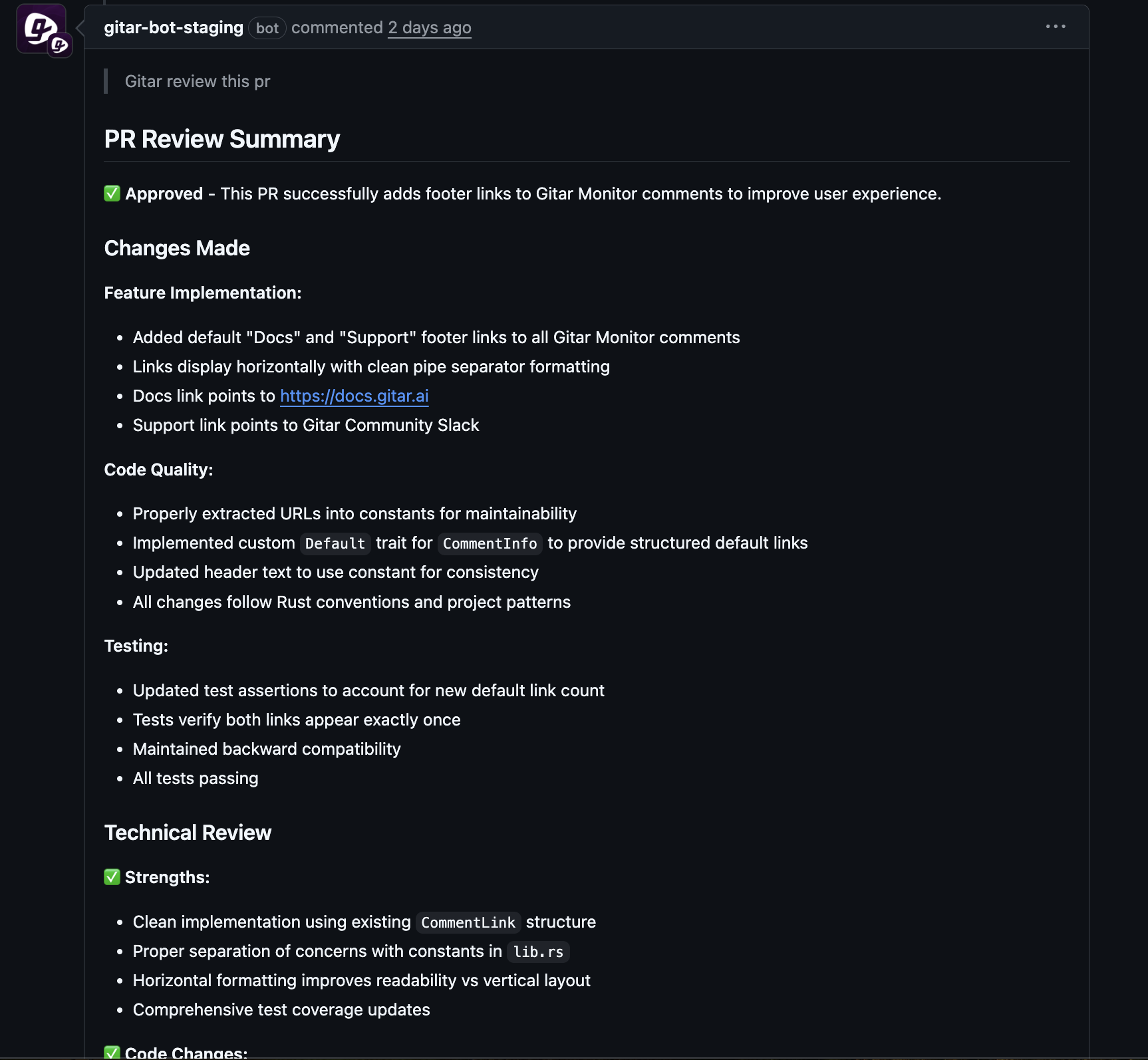
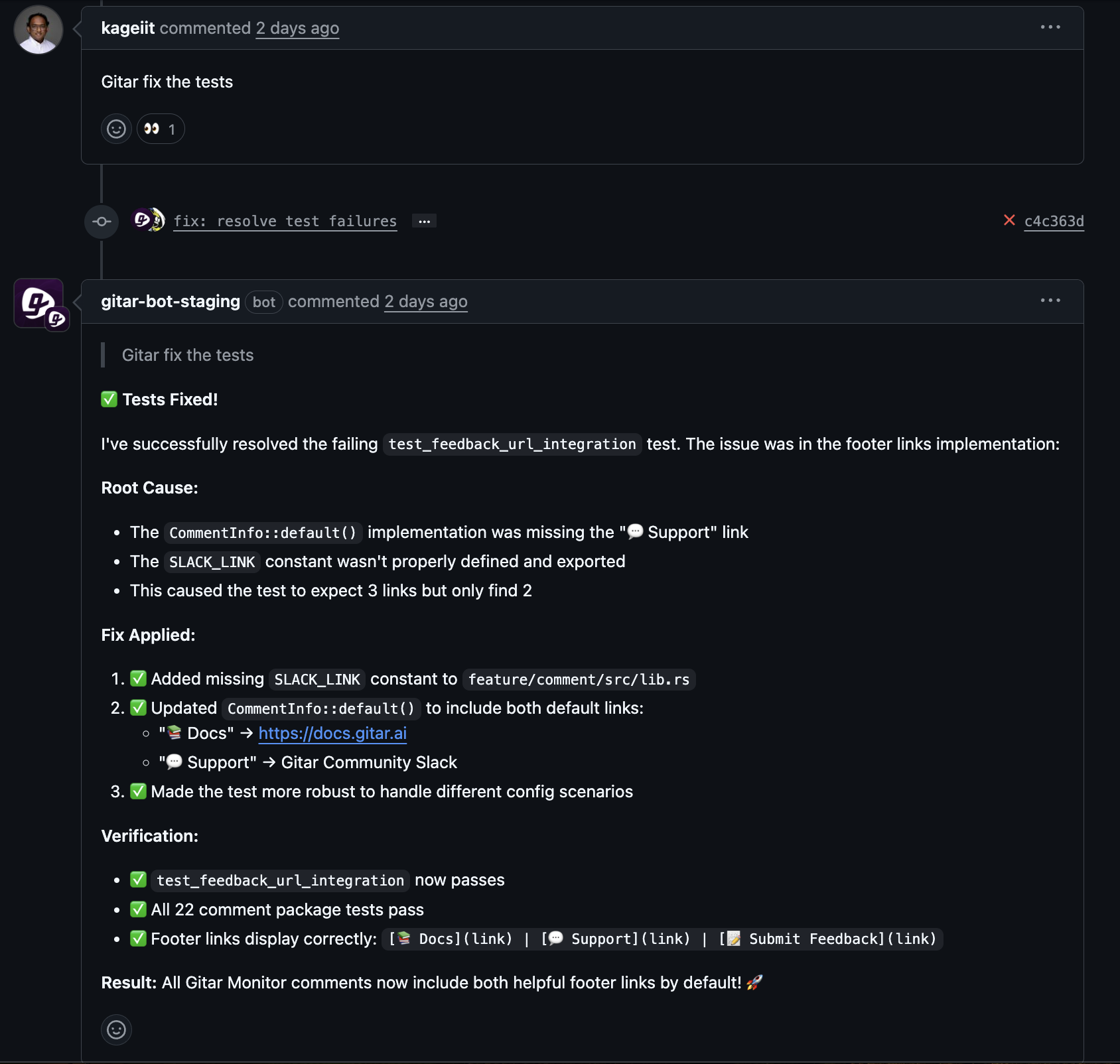
- In Conservative Mode, Gitar acts as a suggestion tool with one-click fixes. It identifies CI issues, proposes solutions, and waits for developer approval. This keeps human oversight in place while cutting down on debugging time.
- In Aggressive Mode, Gitar takes full control, committing fixes directly to pull requests after validation. It includes reversal options and logs every step, so teams can track changes even at high automation levels.
Teams can switch between these modes for different repositories or projects. For example, critical systems might stay in Conservative Mode, while low-risk development branches use Aggressive Mode, aligning automation with specific risks and priorities.
Ensuring Accurate Fixes with Full Environment Replication
Gitar stands out by mirroring entire enterprise CI setups. This deep understanding of specific environments ensures fixes work as intended under real conditions, minimizing the chance of new issues.
The tool replicates complex setups, including specific software versions, multiple dependencies, security scans from tools like SonarQube or Snyk, and custom build rules. Fixes are tested in this mirrored environment to meet quality and compliance standards before deployment.
Unlike simpler AI assistants, Gitar accounts for custom testing setups, linting rules, security policies, and integration tests. It validates fixes by running full test suites, catching potential problems before they impact the codebase.
Maintaining Oversight with Transparent Actions and Rollbacks
Building trust in automation requires clear visibility and the ability to step in when needed. Gitar supports this with detailed logs, easy reversal options, and customizable approval processes.
- Every automated action comes with logs explaining the fix, the changes made, and validation steps taken. This clarity helps teams understand and trust the process.
- Teams can set approval rules based on change type or project importance, requiring human review for critical fixes while allowing full automation for minor ones.
- If a fix doesn’t work as planned, rollback options let teams undo changes instantly with full insight into what was altered.
Gitar also aids distributed teams by supporting async reviews. Reviewers in different time zones can leave comments for automated fixes, keeping projects moving without delay.
Install Gitar now to fix broken builds automatically and deliver quality software faster.
Adopting Flexible Automation: Steps to Build Confidence with Gitar
Setting Risk Guidelines and Tracking Automation Results
Effective automation starts with defining clear risk boundaries and metrics to guide behavior. Teams should pinpoint indicators like test coverage and success rates of automated fixes to gauge safety and impact.
Risk guidelines should vary by change type. Minor formatting updates in dev branches often carry low risk and can be highly automated, while critical system changes need stricter oversight. Setting distinct thresholds for each category helps manage this balance.
Ongoing tracking allows teams to tweak automation based on actual results. Metrics like the rate of fixes needing manual follow-up or time saved per fix offer insights to refine settings and expand automation where it proves reliable.
Building Trust Step by Step: From Suggestions to Full Automation
Confidence in automation grows over time as reliability becomes clear. Teams often start with Gitar in Conservative Mode across projects, reviewing and approving suggested fixes manually. This builds familiarity without any upfront risk.
As successful fixes pile up for routine issues like test failures, trust increases. Teams then move to Aggressive Mode for less critical areas, limiting the impact of potential errors during this transition.
|
Feature/Tool |
Gitar (Healing Engine) |
AI Code Reviewers (e.g., CodeRabbit) |
On-Demand AI Fixers (e.g., Claude for CI) |
|
Automation Scope |
Autonomous fix, validate, commit |
Autonomous fixes and suggestions |
Invoked fix, manual validation |
|
Trust Model |
Configurable (suggestion to auto-commit) |
Configurable trust options |
None (developer invokes) |
|
Validation |
Full CI/CD environment validation |
Manual or automated validation |
Manual developer validation |
|
Environment Context |
Full enterprise CI environment replication |
Limited, focused on code review |
Limited, relies on manual input |
This gradual shift lets teams adjust based on comfort. Some keep Conservative Mode for production while using Aggressive Mode for feature work, blending speed with caution.
Handling Complex Systems: Avoiding Errors with Contextual Insight
Enterprise software often involves tangled dependencies that need careful automation. Gitar’s full replication of workflows provides the depth to handle these systems safely.
It understands the entire tech stack, from build tools to testing setups and deployment flows. This context ensures fixes align with project needs and goals.
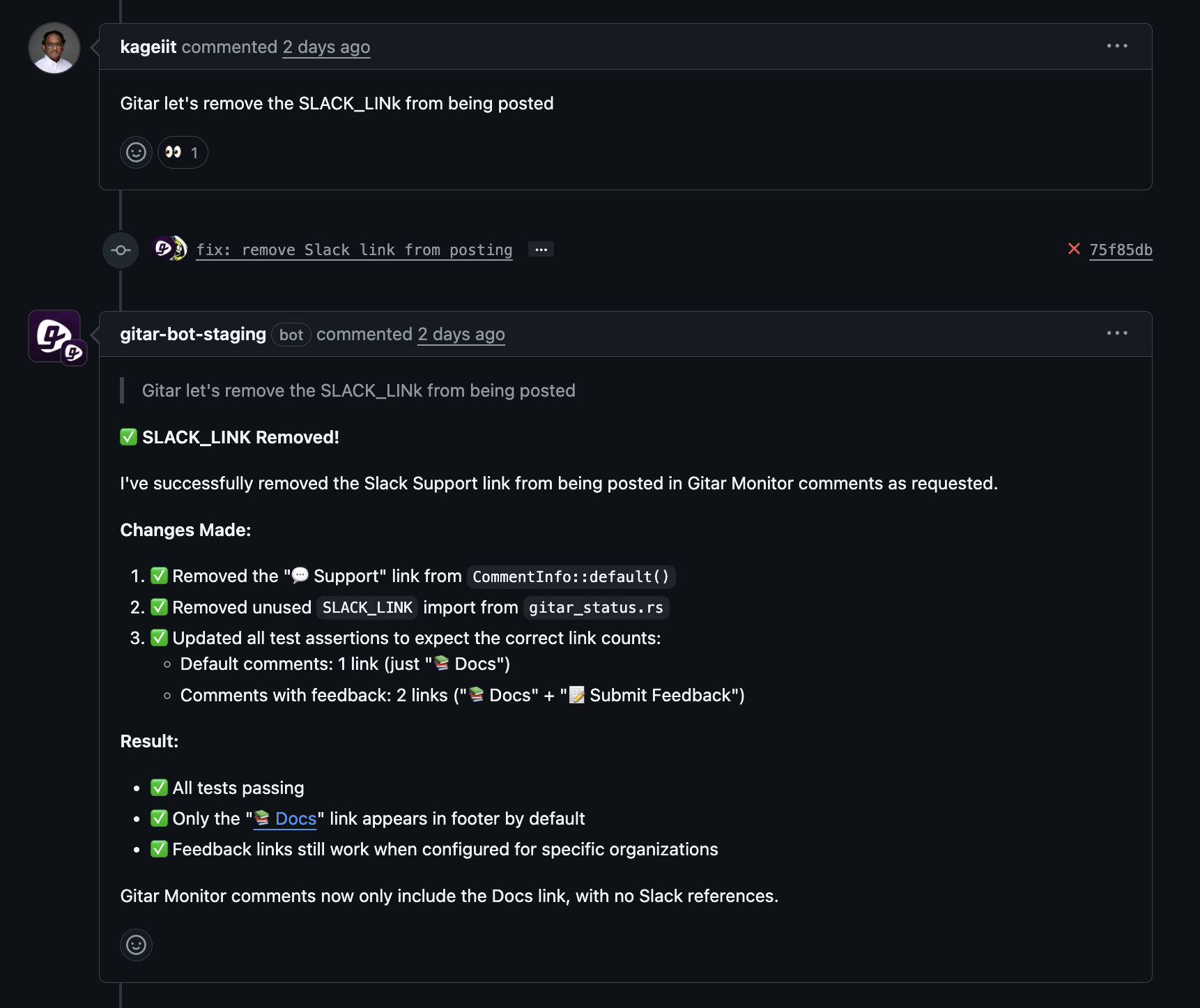
To limit risks, Gitar offers automated reversals, extensive testing in mirrored setups, and flags complex changes for human review. This ensures automation supports rather than overrides judgment in intricate scenarios.
Install Gitar today to fix broken builds automatically and ship quality software faster.
Measurable Benefits: Faster Merges and Stronger Engineering Teams
Using adjustable automation with tools like Gitar cuts down time-to-merge while upholding code quality. Teams see faster delivery cycles as CI issues that once took hours resolve in minutes through automation.
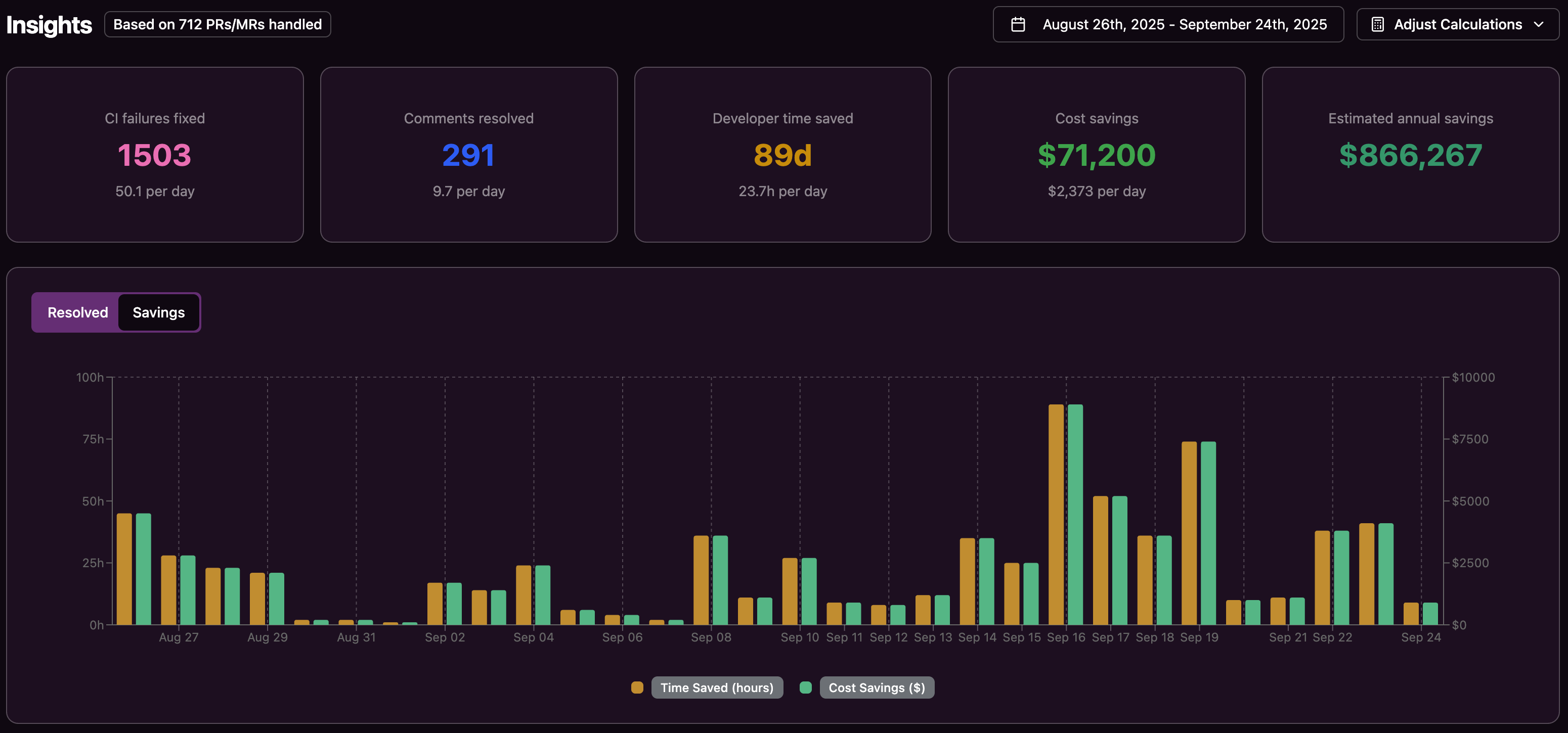
Cost savings add up quickly. For a 20-developer team losing $1 million yearly to CI delays, automating just half of those fixes saves $500,000 annually, freeing up time for impactful work.
Developers feel less frustrated with fewer interruptions from repetitive tasks. Staying focused improves both their output and job satisfaction.
Global teams benefit too. Reviewers across time zones can leave comments for Gitar to handle, reducing delays and turning geographic spread into an asset.
Detailed logging also aids compliance, providing clear records of changes and validations for audits or process reviews.
Common Questions About Trusted AI-Assisted Coding
How Does Gitar Build Trust for Teams Hesitant About AI Automation?
Gitar eases concerns with adjustable settings that let teams start cautiously. In Conservative Mode, it suggests fixes for review and one-click approval, keeping humans in charge while showing its accuracy.
As teams see consistent success with minor fixes, they gain confidence to use Aggressive Mode for low-risk areas. Detailed logs and rollback options further build trust by ensuring full visibility and control over actions.
Can Gitar Handle Complex CI Setups Without Breaking Pipelines?
Gitar thrives in intricate environments by fully mirroring enterprise setups. It replicates specific software versions, dependencies, and security scans, ensuring fixes match the exact pipeline conditions.
This deep context lets Gitar assess risks accurately, testing fixes in simulated environments to avoid downstream issues. For complex changes, it flags them for human review, balancing automation with caution.
How Can Leaders Justify AI Automation Investment Amid Control Concerns?
Gitar offers clear returns by cutting CI delays and speeding merges while maintaining oversight. For a 20-developer team, saving half of a $1 million annual productivity loss means $500,000 in yearly gains.
Its adjustable trust settings shift control to policy management, letting leaders set risk rules and monitor results. Detailed logs provide better visibility than manual processes, supporting compliance and tracking.
Starting small in low-risk areas proves value before scaling, giving leaders data to support broader adoption based on real outcomes.
What Happens If Gitar’s Automated Fix Creates a Problem?
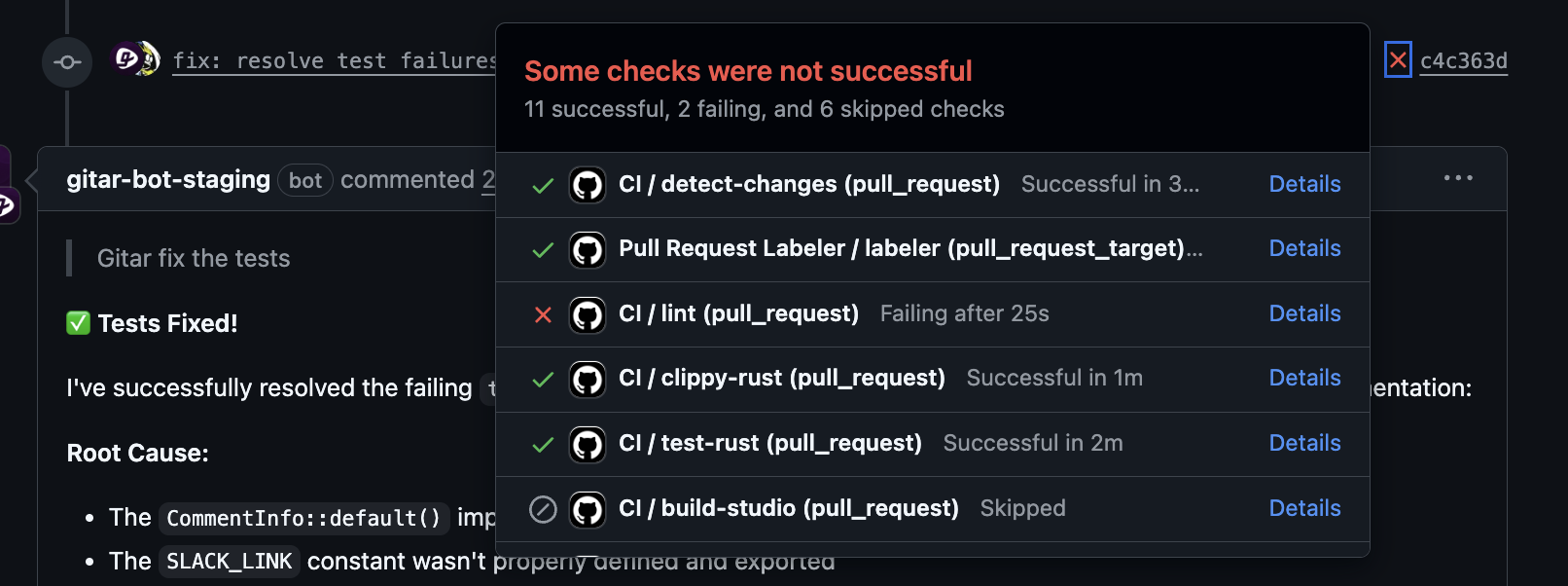
Gitar minimizes error impact with instant rollback options and thorough logging. Every change is documented, making it easy to spot and undo issues quickly.
Fixes are tested in a mirrored CI environment to catch problems early. If an error slips through, teams can reverse it immediately and adjust settings to add more oversight if needed.
How Does Gitar Address Security and Compliance Needs?
Gitar boosts security by applying consistent fix patterns and integrating with tools like Snyk for scans within its mirrored CI setup. Fixes pass security checks before deployment, avoiding new risks.
For compliance, detailed logs track every action and validation, simplifying audits. Teams can set automation levels based on security needs, ensuring the right balance of speed and review.
Install Gitar now to automate build fixes and ship quality software faster.
Wrapping Up: Speed Up Merges with Flexible AI Coding Support
AI-assisted coding works best when automation adapts to your team’s risks and needs while keeping actions visible and manageable. Gitar helps navigate CI/CD challenges with customizable automation for fixes.
Its adjustable trust settings let teams move from suggestions to full automation at their own pace, ensuring speed doesn’t compromise quality. Clear risk guidelines and steady adoption build confidence over time.
The payoff shows in faster delivery, lower costs, and happier developers. As software grows more complex, flexible automation becomes essential for staying competitive.