
Written by: Ali-Reza Adl-Tabatabai, Founder and CEO, Gitar
Key Takeaways for Enterprise Vibe Coding Teams
- AI coding tools have increased pull requests 20–30% depending on team size and AI adoption patterns, while review time rose 91%, creating severe bottlenecks for enterprise teams.
- Gitar leads with auto-fix capabilities that validate and commit fixes directly to CI, which guarantees green builds while suggestion-only competitors still depend on manual work.
- CodeRabbit, Greptile, and Snyk offer strong analysis and partial automation but require manual implementation for many complex issues.
- Key evaluation criteria include CI integration depth, trial accessibility, and measurable ROI from reduced CI failure resolution time.
- Start your 14-day Gitar Team Plan trial to experience auto-fix productivity gains on real PRs.
Why Vibe Coding Overloads Enterprise Code Review
AI-generated code now floods review queues and stretches engineering capacity. Pull requests per developer increased 20% with AI coding assistants, while incidents per pull request rose 23.5%. Salesforce experienced up to a 30% increase in code volume, with PRs regularly expanding beyond 20 files and 1,000 lines of change.
Traditional suggestion-based tools charge $15-30 per developer monthly but still rely on manual implementation of fixes. Teams now need platforms that validate changes against CI, apply fixes automatically, and keep builds green instead of hoping suggestions work once merged.
The following platforms represent current market leaders for vibe coding workflows. Each one tackles automation, CI integration, and trial access differently. Comparing them side by side shows which tools actually reduce manual intervention and which ones only shift work around.
Top Enterprise Vibe Coding AI Code Review Platforms 2026
Enterprise teams evaluating AI code review platforms should prioritize auto-fix capabilities, CI integration depth, and practical trial access. Run each platform against your real PRs so you can see how well it handles your actual CI failures and review patterns.
| Platform | Auto-Fix CI Failures | PR Summaries | Integrations | Pricing |
|---|---|---|---|---|
| Gitar | Yes (validates/commits) | Yes | GitHub/GitLab/CircleCI/Buildkite | 14-day Team trial |
| CodeRabbit | Suggestions only | Yes | GitHub/GitLab | $12-30/seat/month |
| Greptile | Suggestions only | Yes | Limited | $30/seat/month |
| Snyk Code | Semi-auto PRs | Yes | GitHub/GitLab | Contact sales |
The comparison above highlights a clear pattern: only Gitar validates fixes and commits them automatically, while competitors stop at suggestions or partial automation. Use Gitar’s two-week evaluation period to measure real productivity gains before you commit to paid subscriptions.
Gitar: Healing Engine for Enterprise Teams
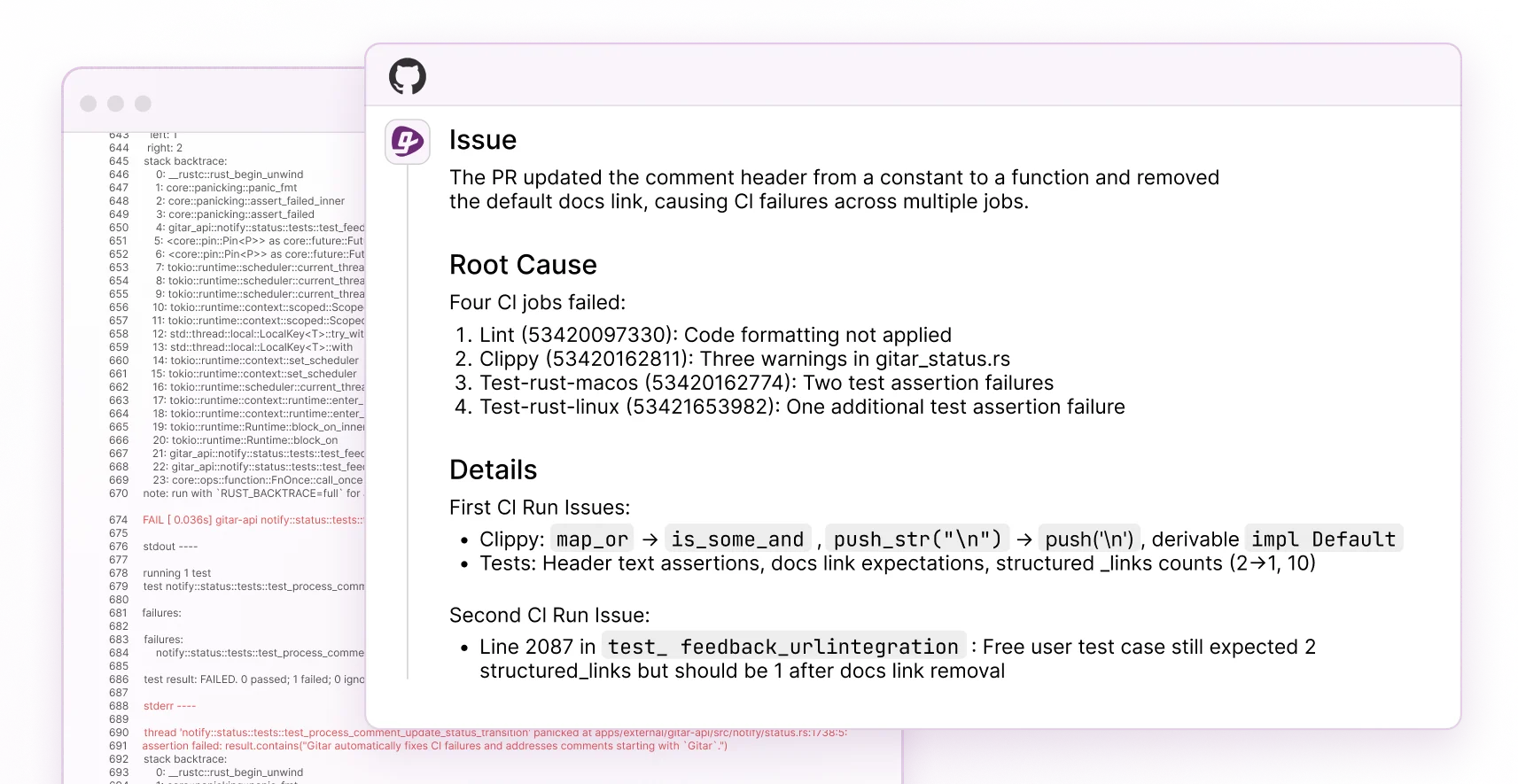
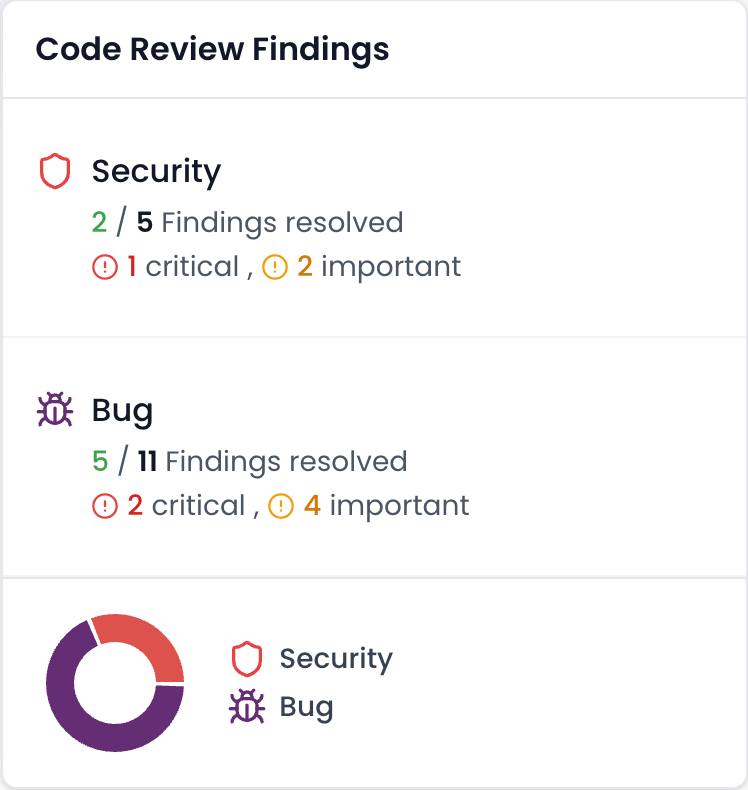
Gitar turns code review from suggestion-based commentary into autonomous problem resolution. When CI failures occur, such as lint errors, test failures, or build breaks, Gitar analyzes failure logs, generates validated fixes, and commits solutions automatically. Recent updates include configurable PR merge blocking based on review severity and inline code review comments with verdict badges.
The platform consolidates all findings in a single living Dashboard comment that stays updated in real time, which eliminates notification spam common with competitor tools. Gitar’s CI agent maintains full context from PR opening to merge and works continuously to keep CI green.
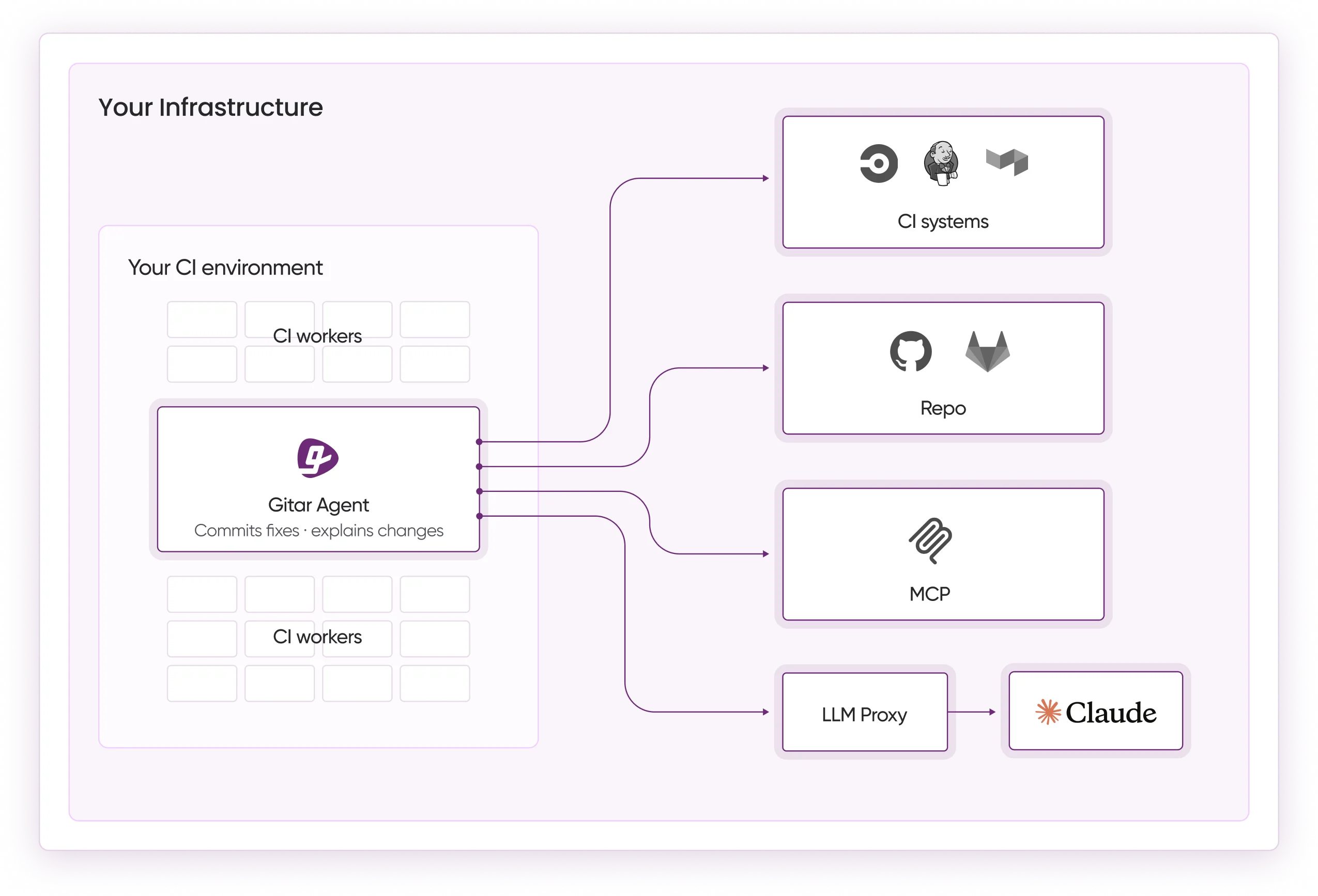
Enterprise features include natural language repository rules, Jira and Slack integrations, and deployment options within your own CI pipeline for maximum security. A 14-day Team Plan trial provides unlimited access to auto-fix capabilities, custom rules, and all integrations without seat limits so you can test Gitar at full scale.
CodeRabbit: Comprehensive Analysis with Manual Implementation
CodeRabbit leads the suggestion-based category with over 2 million repositories connected and 13 million+ PRs processed. The platform provides detailed PR analysis, security vulnerability detection, and codebase-aware reviews using codegraph intelligence.
CodeRabbit still requires manual implementation of most suggested fixes. It offers “1-click commits” for simple changes, but complex issues continue to demand developer intervention. CodeRabbit achieves 46% accuracy in detecting real-world runtime bugs, and teams must validate and apply fixes manually.
Pricing ranges from $12-30 per developer monthly, with enterprise plans available for self-hosting scenarios.
Greptile: Deep Context with Limited Automation
Greptile, valued at $180M after its Series A, specializes in context-aware analysis using the Anthropic Claude Agent SDK. Version 3 offers autonomous investigation capabilities with deep codebase understanding.
Despite sophisticated analysis, Greptile operates as a suggestion engine without auto-fix capabilities. Independent evaluations note the highest false positive rate among leading platforms, which requires additional developer time for triage.
At $30 per developer monthly, Greptile targets teams that prioritize comprehensive analysis over automated resolution.
Snyk Code: Security-Focused Semi-Automation
Snyk Code combines static analysis with AI-powered auto-fixes and transitive reachability analysis. The platform automatically opens pull requests for dependency updates and security vulnerabilities, which provides semi-automated remediation.
Snyk’s DeepCode AI engine performs context-aware analysis across 25 million data flow cases and focuses primarily on security issues rather than general CI failures. Teams that require comprehensive CI auto-fix capabilities may find Snyk’s scope limiting.
Side-by-Side Comparison and Evaluation Criteria for Vibe Coding Tools
Enterprise teams should evaluate platforms based on automation depth, CI integration, and measurable ROI by running trials with real PRs. The table below reveals a clear pattern: Gitar is the only platform that guarantees green builds through validated auto-fixes, while competitors require manual intervention at critical points in the workflow.
| Capability | Gitar | CodeRabbit | Greptile | Snyk |
|---|---|---|---|---|
| Auto-Apply Fixes | Yes | Manual | Manual | Semi-auto |
| Guarantee Green Builds | Yes | No | No | Limited |
| CI/CD Support | All major platforms | GitHub/GitLab | Limited | GitHub/GitLab |
| Trial Period | 14-day full access | 14-day basic | Contact sales | Contact sales |
Test platforms using real PRs to measure time savings and CI failure reduction. Gitar’s 14-day trial gives you full access to measure ROI on your actual workload.
Key Considerations for Enterprise Adoption
Engineering leaders evaluating AI code review platforms should consider multiple stakeholder perspectives, and each group brings different priorities that the platform must balance. Developers need reduced context switching and notification noise to maintain flow state. Platform teams require CI cost reduction and workflow automation to justify the investment. Security teams demand compliance and audit capabilities to meet regulatory requirements, and a platform that satisfies only one group will face adoption resistance from the others.
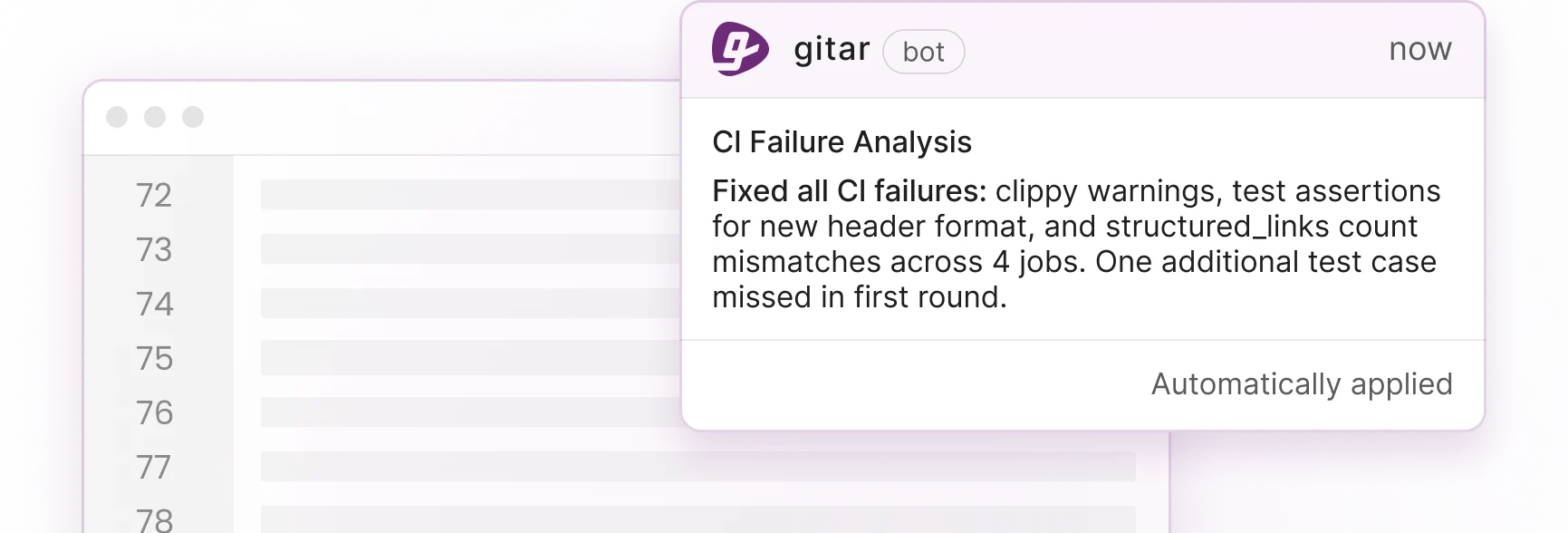
Trust remains a critical factor, with developer trust in AI accuracy dropping to 29%. Platforms that offer configurable automation levels, from suggestion-only to full auto-commit, allow teams to build trust gradually instead of forcing an all-or-nothing shift.
Security considerations include data handling, compliance certifications, and deployment options. Teams in regulated industries should prioritize platforms that support on-premises deployment and SOC 2 compliance so they can meet internal and external requirements.
See how Gitar’s auto-fix capabilities perform in your environment with a risk-free 14-day trial.
Frequently Asked Questions
How should enterprises evaluate vibe coding AI code review ROI?
Teams should measure productivity gains through reduced CI failure resolution time, fewer review cycles, and developer time savings. Compare the cost of manual fix implementation with the cost of automated resolution to understand the tradeoff. Gitar’s 14-day trial enables measurement of actual time savings on real PRs, and teams typically see 45-minute daily reductions in CI-related work per developer.
What is the key difference between Gitar and CodeRabbit for enterprise teams?
CodeRabbit provides comprehensive analysis and suggestions but still requires manual implementation of fixes. Gitar automatically validates fixes against your CI environment and commits working solutions. For high-volume teams that manage three to five times more PRs from vibe coding, auto-fix capabilities remove the manual bottleneck that suggestion tools create.
Which platform offers the strongest trial for enterprise evaluation?
Gitar provides the most comprehensive trial with 14-day full access to Team Plan features, including auto-fix, custom rules, and unlimited repositories. This level of access enables accurate assessment of productivity gains before financial commitment, unlike limited trials that restrict core functionality.
How do auto-fix platforms handle security and compliance requirements?
Enterprise platforms typically offer configurable automation levels that range from suggestion-only to full auto-commit modes. Gitar provides audit trails, role-based access controls, and deployment within your own CI pipeline for maximum security. Teams can start in suggestion mode and gradually enable automation as trust builds.
What integration capabilities are essential for enterprise AI code review platforms?
Teams should look for native support across the entire toolchain, including version control systems such as GitHub and GitLab, CI/CD systems such as CircleCI, Buildkite, and GitHub Actions, and workflow tools such as Jira and Slack and Linear. Platforms that support natural language rules and webhook integrations provide greater flexibility for custom workflows without complex configuration.
Conclusion and Next Steps for Vibe Coding Platforms
The vibe coding revolution now demands AI code review platforms that move beyond suggestions and deliver autonomous problem resolution. Suggestion-based tools charge premium prices while still relying on manual workflows, and healing engines like Gitar create measurable productivity gains through validated auto-fixes and consistently green builds.
Enterprise teams should prioritize platforms that offer comprehensive trials, deep CI integration, and configurable automation levels. The shift from code generation bottlenecks to review capacity constraints requires tools that actually resolve problems instead of only identifying them.