
Key Takeaways
- AI code generation speeds up development but slows PR review, with AI PRs waiting 4.6x longer than non-AI PRs.
- Most enterprise AI code review tools charge $15-30 per developer each month for suggestions only, with no automated fixes or CI validation.
- Gitar is the only free platform that heals CI failures automatically, validates fixes, guarantees green builds, and supports 50M+ lines of code.
- Gitar connects with GitHub, GitLab, CircleCI, and Buildkite, supports natural language workflows, is SOC2 compliant, and replaces noisy alerts with one dashboard comment.
- Enterprise teams save $375K+ per year with Gitar; install Gitar now to automate PR fixes and ship higher quality software faster.
How We Evaluated Enterprise AI Code Review Platforms (2026)
Our evaluation focuses on automated fix validation, CI depth, scalability proof, and total cost of ownership for large engineering teams. Basic PR analysis alone no longer meets enterprise needs.
Core criteria include automated fix validation with CI commit guarantees, transparent pricing at enterprise scale, and proven support for 50M+ lines of code. We also prioritize Jira, Slack, and Linear integrations, support beyond GitHub, quantifiable ROI for teams of 20+ developers, and SOC 2 Type II security compliance.
We base this analysis on vendor documentation, LinearB engineering benchmarks, case studies from Pinterest, Collate, and Tigris, and direct enterprise feedback on notification noise and fix accuracy.
Top 7 Enterprise AI Code Review Platforms That Fix PRs (2026)
1. Gitar: Free Healing Engine with Auto-Fix Validation
Gitar is the only platform that offers full PR analysis, security scanning, and bug detection for unlimited repositories at no cost. Competing tools charge $15-30 per seat for suggestions, while Gitar’s healing engine analyzes CI failures, generates validated fixes, and commits them directly to PRs.
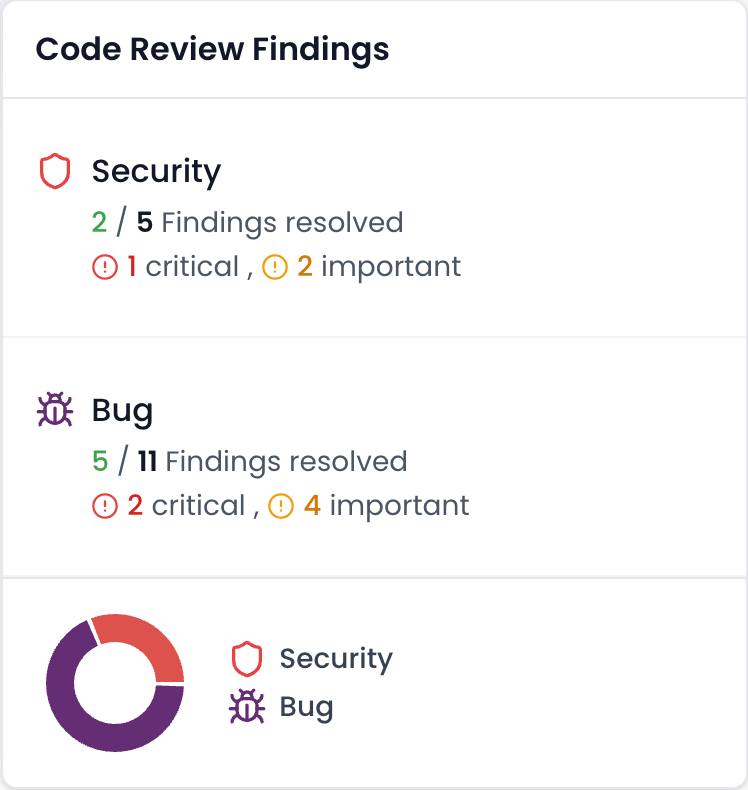
Pinterest runs more than 50M lines of code and thousands of daily PRs through Gitar’s infrastructure, which proves its enterprise scale. When CI checks fail, Gitar reads the logs, generates fixes with full codebase context, validates them against CI, and updates PRs with a single clean comment instead of a flood of notifications.
Key differentiators include free unlimited code review, a 14-day free trial of auto-fix features, CI failure analysis with automatic resolution, a single dashboard comment instead of inline clutter, cross-platform support for GitHub, GitLab, CircleCI, and Buildkite, and natural language workflow rules that avoid YAML.
2. CodeRabbit: Suggestion Engine with Premium Pricing
CodeRabbit charges $24/user/month for line-by-line PR analysis with severity rankings and one-click suggested fixes. It supports GitHub, GitLab, Bitbucket, and Azure DevOps, and connects to more than 40 linters and SAST scanners, but it does not validate fixes or heal CI failures.
CodeRabbit learns from context across repositories but still acts as a suggestion engine. Teams must apply and verify changes manually while paying premium prices for commentary without guaranteed working code.
3. Greptile: Context-Aware Analysis at Enterprise Pricing
Greptile costs $30/developer/month for unlimited reviews with deep codebase context. It focuses on repository structure and contextual feedback but stops at suggestions and does not integrate with CI to resolve failures automatically.
4. Qodo (formerly Codium): Multi-Agent Framework
Qodo charges $30/user/month for context-aware analysis and automated test generation using a multi-agent framework. It includes Merge for PR review but does not provide automated PR fixing or CI healing.
5. GitHub Copilot Code Review: Integrated but Limited
GitHub Copilot Code Review costs $10-39/month as part of existing subscriptions. It adds inline comments with suggested fixes but relies on diff-based analysis that misses architectural issues and cross-file dependencies, and it does not validate or commit fixes automatically.
9. Snyk Code: Security-Focused Analysis
Snyk Code focuses on security vulnerabilities in PR workflows and uses DeepCode AI for fix suggestions, automated fix pull requests for SAST and SCA, and intelligent remediation. It applies context-aware security fixes directly but centers on security issues, not broad CI healing for general code failures across all PR types.
7. Aikido: Application Security Integration
Aikido offers security-focused code review with strong application security integration but no automated PR fixing or CI healing. It functions as an analysis and alerting layer, so teams still handle remediation manually.
Feature Comparison Matrix:
| Capability | Gitar | CodeRabbit | Greptile | Others |
|---|---|---|---|---|
| Auto-apply Fixes | Yes (Free Trial) | No | No | No |
| CI Fix/Validation | Yes | No | No | No |
| Green Build Guarantee | Yes | No | No | No |
| Pricing | Free/$0 | $24-30/dev | $30/dev | $12-40/dev |
Install Gitar now, automatically fix broken builds, start shipping higher quality software, faster.
How Gitar Auto-Fixes PRs and CI Failures
Gitar automates PR fixing with a structured workflow that replaces guesswork and suggestions with validated, working solutions. It focuses on turning CI failures into green builds without extra manual effort.
The rollout starts when you install the GitHub or GitLab app in about 30 seconds, with no credit card or account setup. Gitar begins in suggestion mode, posting dashboard comments on PRs to build trust before you enable automated commits.
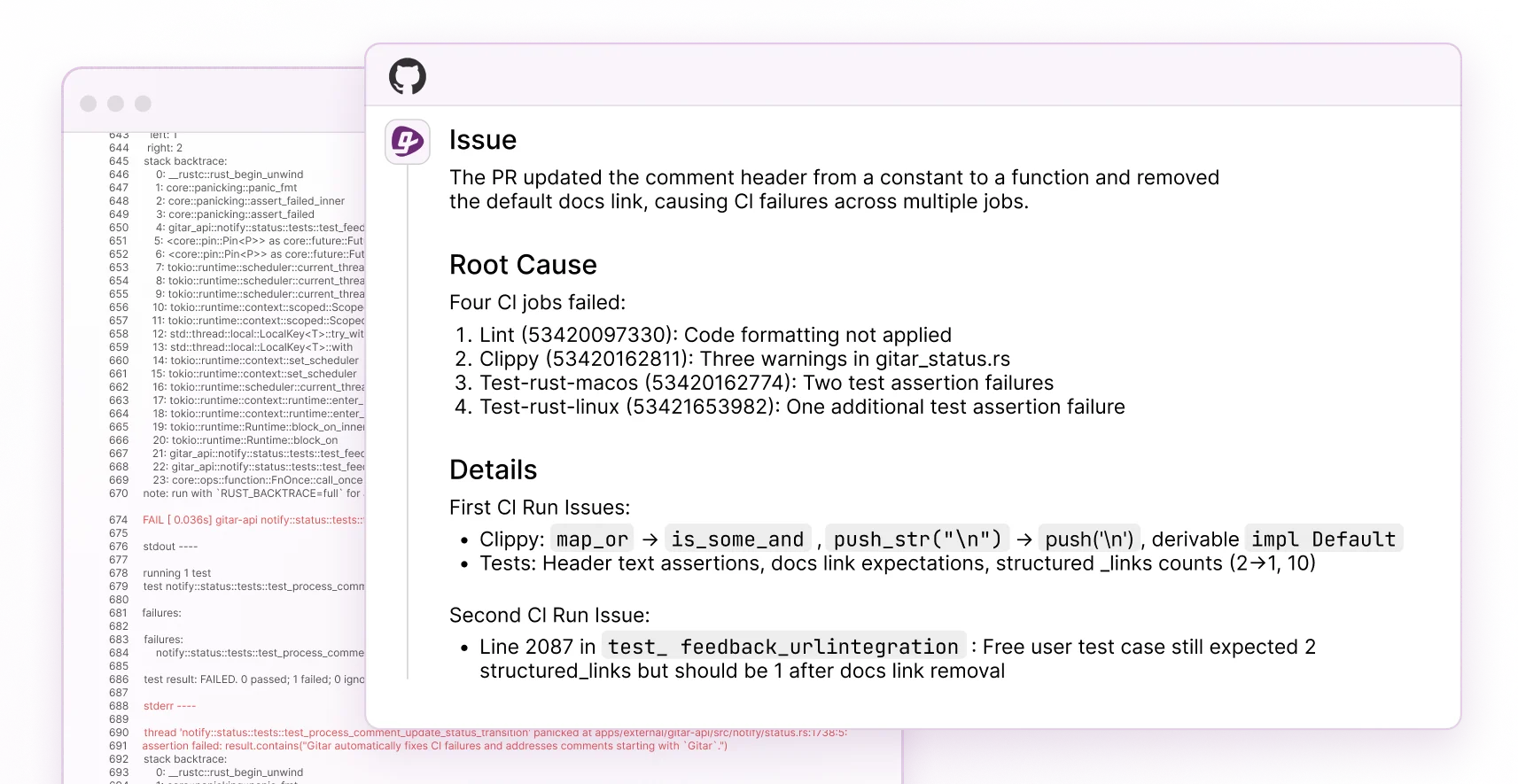
When CI fails, Gitar reads the logs, identifies the root cause, and generates code fixes using full codebase context. It then emulates the complete CI environment, including SDK versions and multi-dependency builds, validates the fix, commits the working change to the PR, and sends one consolidated dashboard comment instead of multiple alerts.
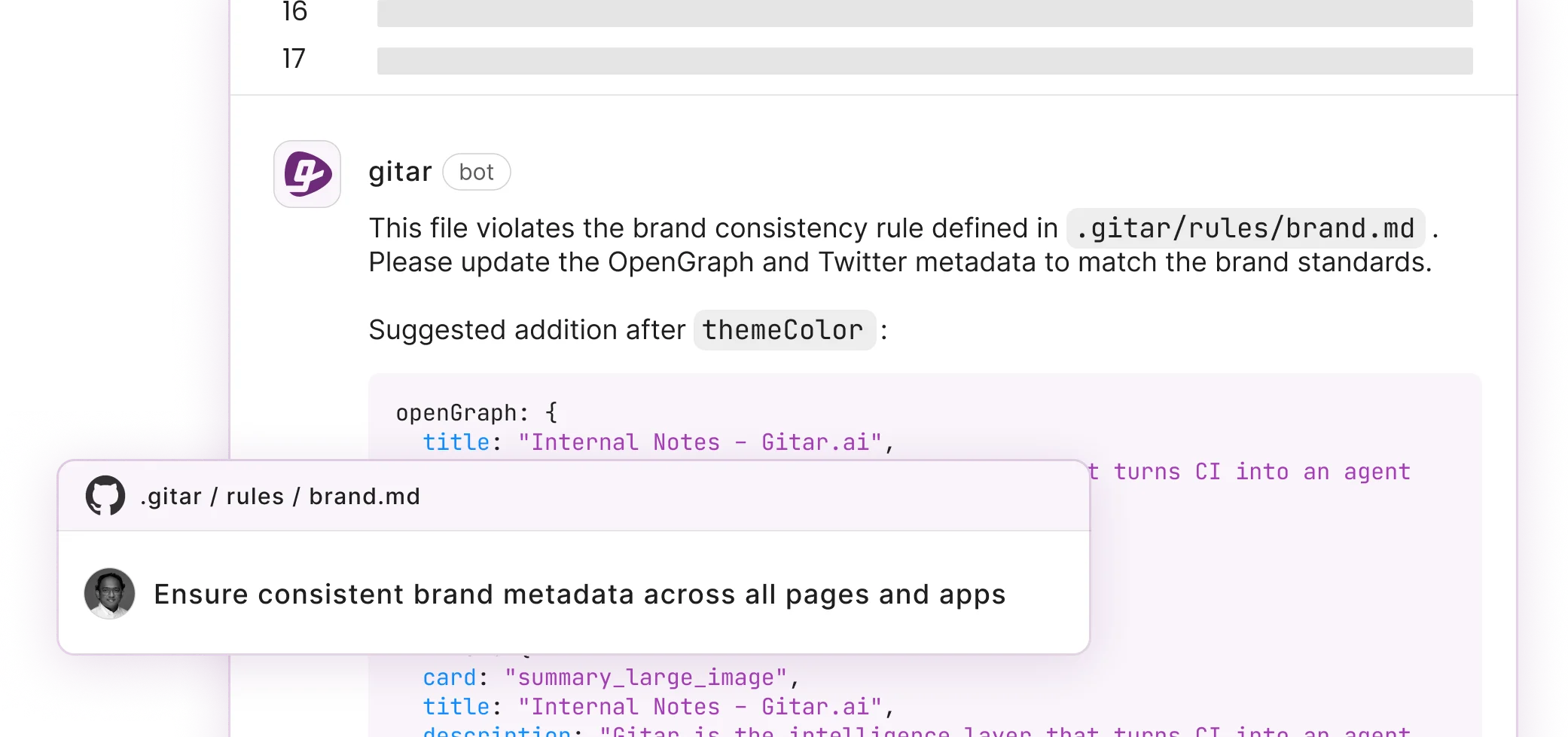
Teams control automation through .gitar/rules, written in natural language instead of YAML. For example, “When PRs modify authentication code, assign security team and add security-review label” creates a workflow without DevOps scripting.
ROI Impact for 20-Developer Teams:
| Metric | Before | After (Gitar) |
|---|---|---|
| Time on CI/Review | 1hr/day/dev | ~15min/day/dev |
| Annual Cost | $1M productivity loss | $250K |
| Tool Expenses | $450-900/month | $0 |
Even at 50% effectiveness, Gitar saves about $375K per year and removes tool subscription costs.
Why Gitar’s Free Model Outperforms Paid Competitors
Gitar’s architecture focuses on healing and validation, while most paid tools focus on suggestions and commentary. This difference shifts value from manual follow-up work to automated, verified fixes.
Pricing comparisons highlight the gap. Gitar offers unlimited repositories and users at $0. CodeRabbit costs $450-900 each month for a 20-developer team, while Greptile and Qodo each cost about $600 monthly. These tools still require manual implementation of suggestions, while Gitar validates fixes through CI and commits them.
Gitar also delivers CI healing with automatic failure analysis, supports GitHub, GitLab, CircleCI, and Buildkite, and replaces noisy notifications with a single dashboard comment. It has proven scale at Pinterest’s 50M+ lines of code and uses natural language rules instead of YAML for workflow automation.
Teams often worry about free model sustainability, automated commits, and complex CI environments. Gitar addresses these concerns with configurable automation that starts in suggestion mode, full CI environment emulation including secrets and caches, and SOC2 compliance with zero data retention on the free tier.
Real-world proof includes Pinterest’s large-scale deployment, security issues caught that GitHub Copilot missed, Collate’s “unrelated PR failure detection” that reduced debugging time, and Tigris feedback that praised Gitar’s concise summaries compared to Greptile and BugBot.
Install Gitar now, automatically fix broken builds, start shipping higher quality software, faster.
Enterprise Buying Checklist for AI Code Review
Enterprise buyers must balance developer experience, leadership ROI expectations, and platform team needs. AI-generated code adds bugs, security risks, and complexity that strain human review, so automated fixing becomes a requirement, not a bonus.
For software engineers, priorities include less context switching through automated CI fixes, review feedback that applies across time zones, and consolidated notifications that reduce cognitive load. Engineering leaders look for measurable velocity gains despite AI coding tools, clear ROI from less manual work, and a single platform that replaces several subscriptions.
Platform and DevOps engineers care about self-healing CI that cuts rerun costs and infrastructure load, natural language rule configuration that speeds onboarding, and security compliance such as SOC2 and clear data retention policies. Security governance adds overhead and human review mandates, so automated validation helps maintain deployment speed.
Architecture decisions should consider support beyond GitHub-only tools, native Slack and Jira integrations, and deployment options such as on-premises agents for strict environments. Teams should review vendor lock-in risk, total cost of ownership including per-seat fees, and real scalability proof from large customers.
Frequently Asked Questions
What is the best free AI code review platform for enterprise teams?
Gitar offers the most complete free AI code review platform for enterprise teams, with unlimited repositories, users, and full PR analysis that includes security scanning and bug detection. While competitors charge $15-30 per developer each month for basic suggestions, Gitar adds automated fixes through a 14-day free trial, CI failure analysis and healing, cross-platform support for GitHub, GitLab, CircleCI, and Buildkite, and natural language workflows.
Gitar already supports Pinterest’s 50M+ lines of code and maintains SOC2 compliance with zero data retention on the free tier, which matches strict enterprise security expectations.
What are the best alternatives to CodeRabbit for automated PR fixing?
Gitar is the strongest alternative to CodeRabbit because it actually fixes PRs, while CodeRabbit only suggests changes. CodeRabbit charges $24-30 per user each month for suggestion-only analysis, but Gitar provides free code review with real fix implementation, CI healing, and green build guarantees.
Gitar’s single dashboard comment design cuts notification noise that CodeRabbit often creates. It also supports GitLab, CircleCI, and Buildkite in addition to GitHub. The healing engine validates fixes in full CI environments instead of sending untested suggestions, which produces clear ROI through less manual work and reliable outcomes.
How can teams automate GitLab PR reviews with AI?
Teams can automate GitLab PR reviews using Gitar’s native GitLab integration, which covers PR analysis, automated fixes, and CI pipeline healing. Setup takes under 30 seconds and does not require a credit card or complex configuration.
Gitar scans GitLab PRs for security issues, bugs, and performance problems, then commits fixes when CI fails. It supports GitLab CI along with CircleCI and Buildkite, and uses natural language rules instead of YAML to define cross-platform workflows.
How should enterprises measure ROI from AI PR review automation?
Enterprises should track CI rerun reduction, PR cycle time, and developer productivity to measure ROI from AI PR review automation. A common pattern is a drop from about one hour per day on CI and reviews to roughly 15 minutes when automation works well.
Cost analysis should compare subscription fees with productivity gains, where a 20-developer team can save $375K+ each year even at 50% automation effectiveness. Helpful secondary metrics include fewer context switches, lower notification volume, higher green build rates, acceptance rates for automated fixes, faster merge times for AI-assisted PRs, and improved developer satisfaction.
What security considerations apply to enterprise AI code review platforms?
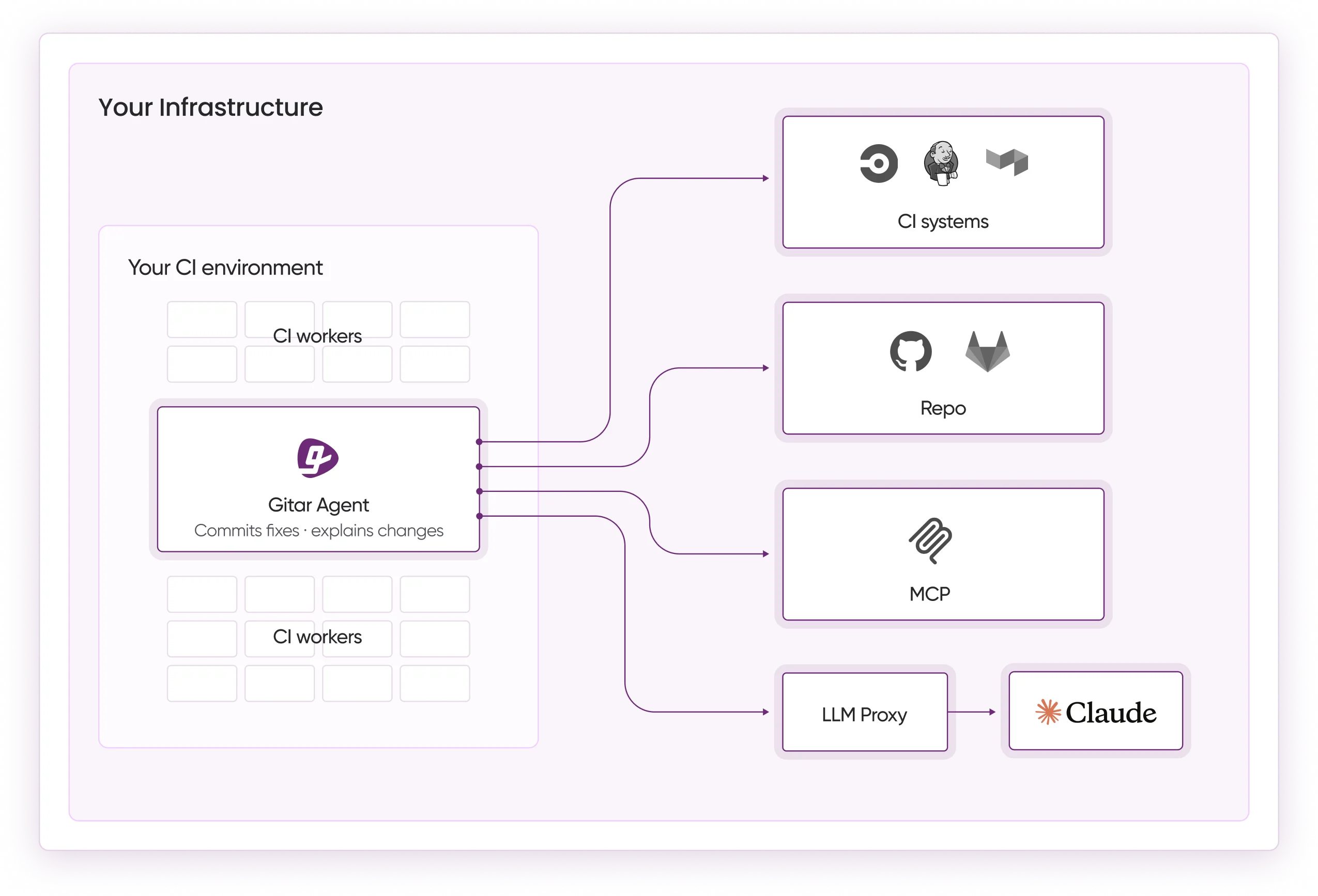
Enterprise AI code review platforms must meet SOC2 Type II compliance, define strict data retention policies, and support flexible deployment for sensitive environments. Gitar meets these needs with zero data retention on the free tier and an enterprise option that runs an agent inside customer CI pipelines.
Security teams should review code exposure risks with cloud analysis, audit trail requirements for automated commits, integration with existing security tools, and alignment with regulations that require human oversight of AI output. Vendor certifications, data handling practices, and architectures that keep code inside organizational boundaries all matter.
Which AI code review platform handles the largest enterprise scale?
Gitar shows the strongest proof of scale, supporting Pinterest’s 50M+ lines of code and thousands of daily PRs while still offering a free tier. This level of usage exceeds most enterprise needs and confirms production-ready performance.
Gitar’s architecture supports unlimited repositories and users without per-seat limits that restrict other platforms. Its cross-platform support lets enterprises with mixed GitHub, GitLab, CircleCI, and Buildkite environments standardize on one review system, while natural language rules reduce operational overhead compared to YAML-based systems.
Conclusion: Gitar Turns AI Review into Automated Fixes
The enterprise AI code review market often charges high prices for suggestion engines that still require manual fixes and create notification overload. Teams pay $15-30 per developer each month without guaranteed working code.
Gitar breaks this pattern by offering free, comprehensive code review with automated fixes, CI healing, and green build guarantees. Its healing engine validates solutions in full CI environments, commits working fixes to PRs, and consolidates feedback into a single dashboard comment.
For enterprise teams facing AI-driven PR backlogs, where AI PRs wait 4.6x longer for review, Gitar is the only platform that focuses on fixing code instead of only suggesting improvements.
The ROI case is clear: more than $375K in annual savings for a 20-developer team, zero subscription costs, and proven scale at 50M+ lines of code. While competitors keep enterprises in expensive suggestion loops, Gitar commoditizes review and delivers automated fixes that keep builds green.
Install Gitar now, automatically fix broken builds, start shipping higher quality software, faster.