
Key Takeaways for Enterprise Engineering Leaders
- AI coding tools accelerate development 3-5x but increase PR review time by 91%, creating serious bottlenecks for large monorepos.
- Gitar leads as the top free AI code review tool, with validated auto-fixes that ship green builds instead of suggestions that add work.
- Gitar scales past 50M lines of code with full CI/CD integration across GitHub, GitLab, and more, proven at Pinterest scale.
- Enterprise teams save $375K+ per year with Gitar by cutting CI fix time from 1 hour to 15 minutes per developer per day and avoiding per-seat fees.
- Deploy Gitar today at gitar.ai for free, unlimited code review and automatic build healing so teams ship higher quality software faster.
How We Evaluated Enterprise AI Code Review Platforms
Our analysis compares enterprise AI code review tools across five dimensions: autofix depth, pricing, scalability, CI/CD coverage, and security posture. Autofix depth focuses on validated commits versus suggestion-only comments. Pricing compares free access against per-seat or usage-based models.
We also assess support for monorepos above 50 million lines of code, coverage across GitHub, GitLab, and major CI systems, and alignment with enterprise security and compliance needs. Inputs include vendor documentation, Pinterest-scale benchmarks, and feedback from teams running massive codebases.
The post-AI coding environment now requires tools that resolve problems, not just highlight them. Suggestion engines still leave developers with manual fixes and extra review cycles. Enterprise teams now expect validated auto-fixes, tight CI integration, and zero-seat pricing that scales without budget friction. Install Gitar now, automatically fix broken builds, start shipping higher quality software, faster.
Leading Enterprise AI Code Review Tools in 2026
Enterprise teams evaluating AI code review automation can focus on a small set of serious contenders. The platforms below represent the most relevant options for large organizations.
- Gitar: Free healing engine with validated auto-fixes, scales to 50M+ LOC, broad CI/CD and platform integration
- CodeRabbit: Paid suggestion platform ($15-30/seat), GitHub-focused, line-by-line comments
- Greptile: Context-heavy analysis ($30/seat), deep codebase understanding, suggestion-only output
- Qodo: Per-user pricing from $45/user/month, security-focused, limited auto-fixing
- SonarQube: Static analysis veteran, strong policy enforcement, no validated autofix capability
Autofix capability creates the clearest separation between these tools. Competitors charge premium prices for suggestions that still require manual work. Gitar instead delivers free code review with validated auto-fixes that ship green builds. Install Gitar now, automatically fix broken builds, start shipping higher quality software, faster.
Hero Comparison Table for Enterprise Buyers
| Feature | Gitar | CodeRabbit | Greptile |
|---|---|---|---|
| Pricing | Free review + 14d trial | $15-30/developer | $30/developer |
| Auto-fix CI | Yes (validated) | No | No |
| Single Comment UX | Yes | Noisy inline | Noisy inline |
| Scale (LOC) | 50M+ | Variable | 500M+ demonstrated |
| Platform Support | GitHub/GitLab/CI | GitHub-only | GitHub/GitLab |
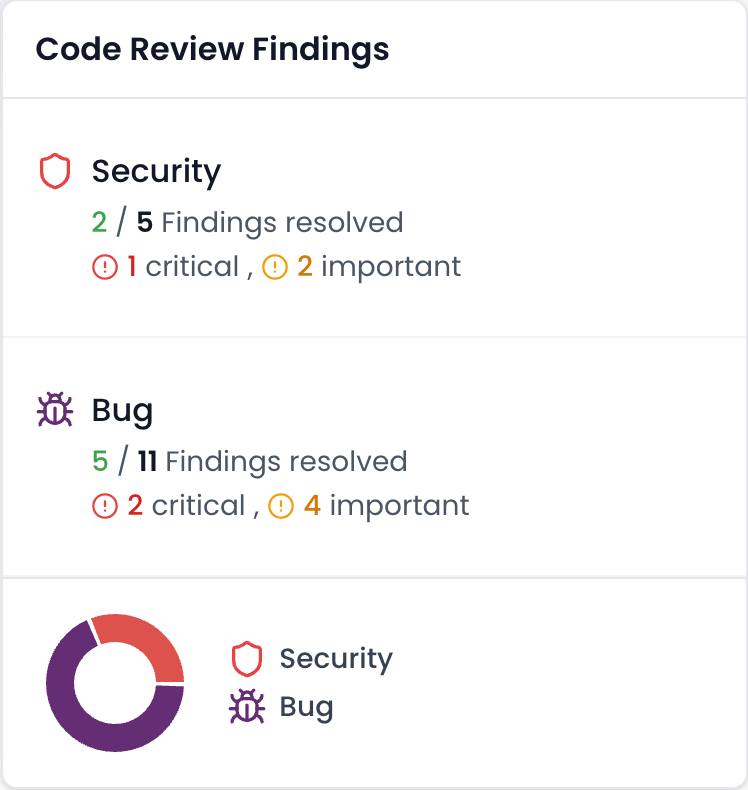
Gitar covers every major enterprise requirement with free unlimited analysis, validated auto-fixes, large-scale support, and broad platform coverage. The single updating comment pattern reduces notification noise while preserving full visibility into CI analysis, review feedback, and rule checks.
This architecture matters most for large teams that manage hundreds of PRs each day. Developers stay focused on code instead of chasing scattered comments and fragmented CI signals.
Gitar Deep Dive: Healing Engine for High-Volume Teams
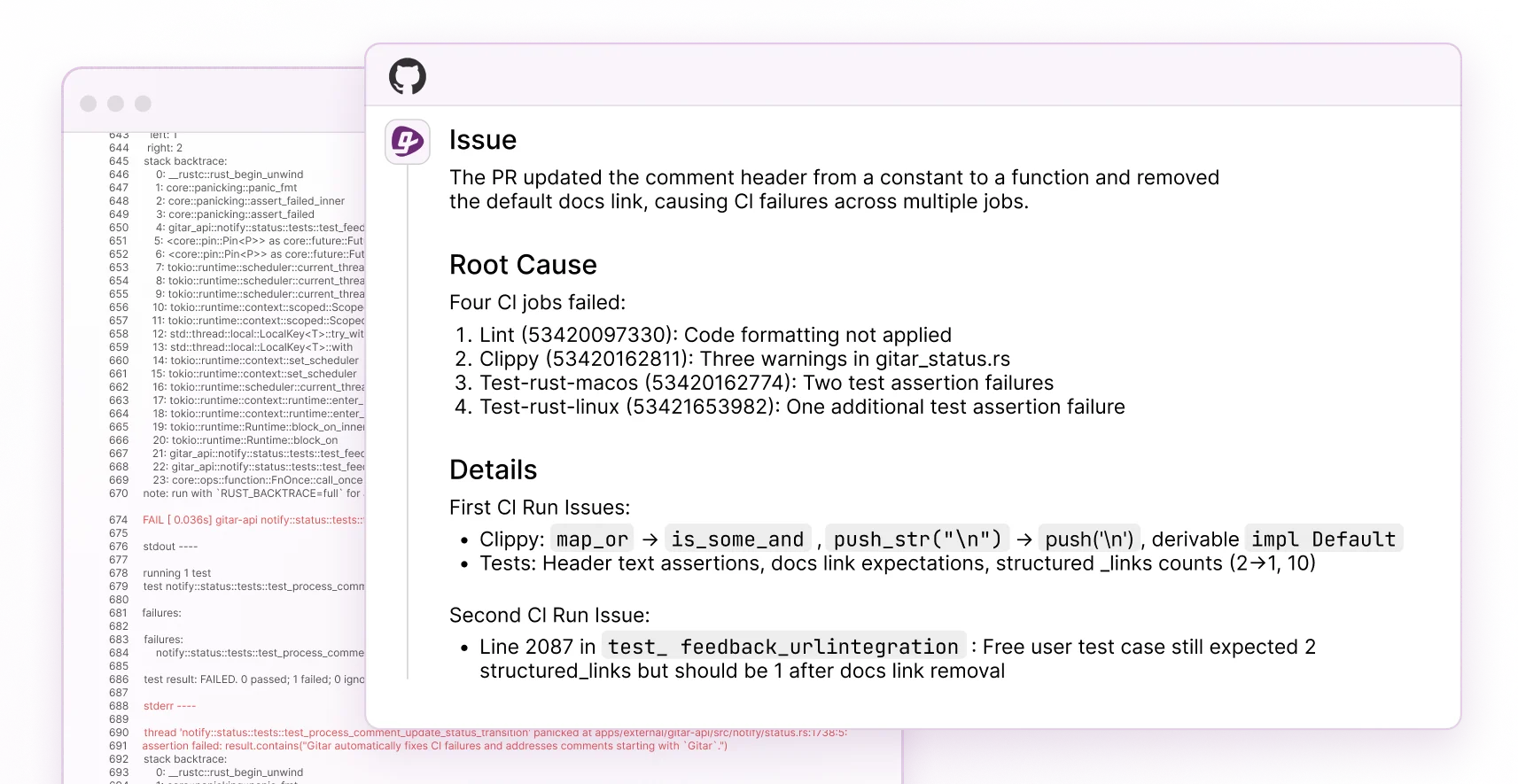
Gitar’s healing engine replaces suggestion-only workflows with validated auto-fixing. When CI fails due to lint errors, test failures, or build breaks, Gitar reads the failure logs, generates candidate fixes with full codebase context, and validates them against CI.
After validation, Gitar commits working code automatically so developers receive green builds instead of red pipelines. This approach removes guesswork and avoids repeated CI runs that burn time and budget.
Pinterest validates Gitar’s performance on a 50M+ line codebase that handles thousands of PRs daily while keeping access free. The natural language rules system (.gitar/rules.md) lets teams define workflows without complex YAML, which keeps CI configuration accessible to the entire engineering organization.
ROI calculations for a 20-developer team show dramatic savings, moving from roughly $1M in annual productivity loss to about $250K with Gitar in place. CI and review issue time drops from 1 hour per developer per day to about 15 minutes. Context switching falls sharply because Gitar fixes many issues before developers even see failures. Competing tools often charge $450-900 per month for suggestions, while Gitar delivers more capability at zero cost.
The hierarchical memory system tracks context at the line, PR, repo, and organization levels. Integrations with Jira and Linear add product context so Gitar understands the intent behind changes, not just the diff. This design scales naturally as teams grow, without per-seat pricing that slows adoption.
Gitar vs. Top Competitors for Enterprises
Gitar vs. CodeRabbit for CI and PR Workflows
CodeRabbit charges $15-30 per developer for line-by-line suggestions that still require manual edits. CodeRabbit offers one-click fixes on PRs, but those fixes do not run through CI validation and cannot guarantee resolution.
Gitar instead provides free code review plus validated auto-fixes that ship green builds. Developers skip the manual verification step and avoid repeated CI runs.
Gitar vs. Greptile on Context and Resolution
Greptile’s $30 per developer pricing focuses on deep codebase context while remaining suggestion-only. Greptile performs strong cross-file reasoning but stops short of implementing fixes or validating them.
Gitar combines similar depth of context with a healing engine that both analyzes and resolves issues. Teams receive analysis and working code at zero cost.
Gitar vs. Enterprise-Focused Security Platforms
Qodo offers Enterprise plans starting at $45 per user per month with free and Teams tiers and a strong focus on security and compliance. These platforms often provide robust scanning but limited auto-fixing.
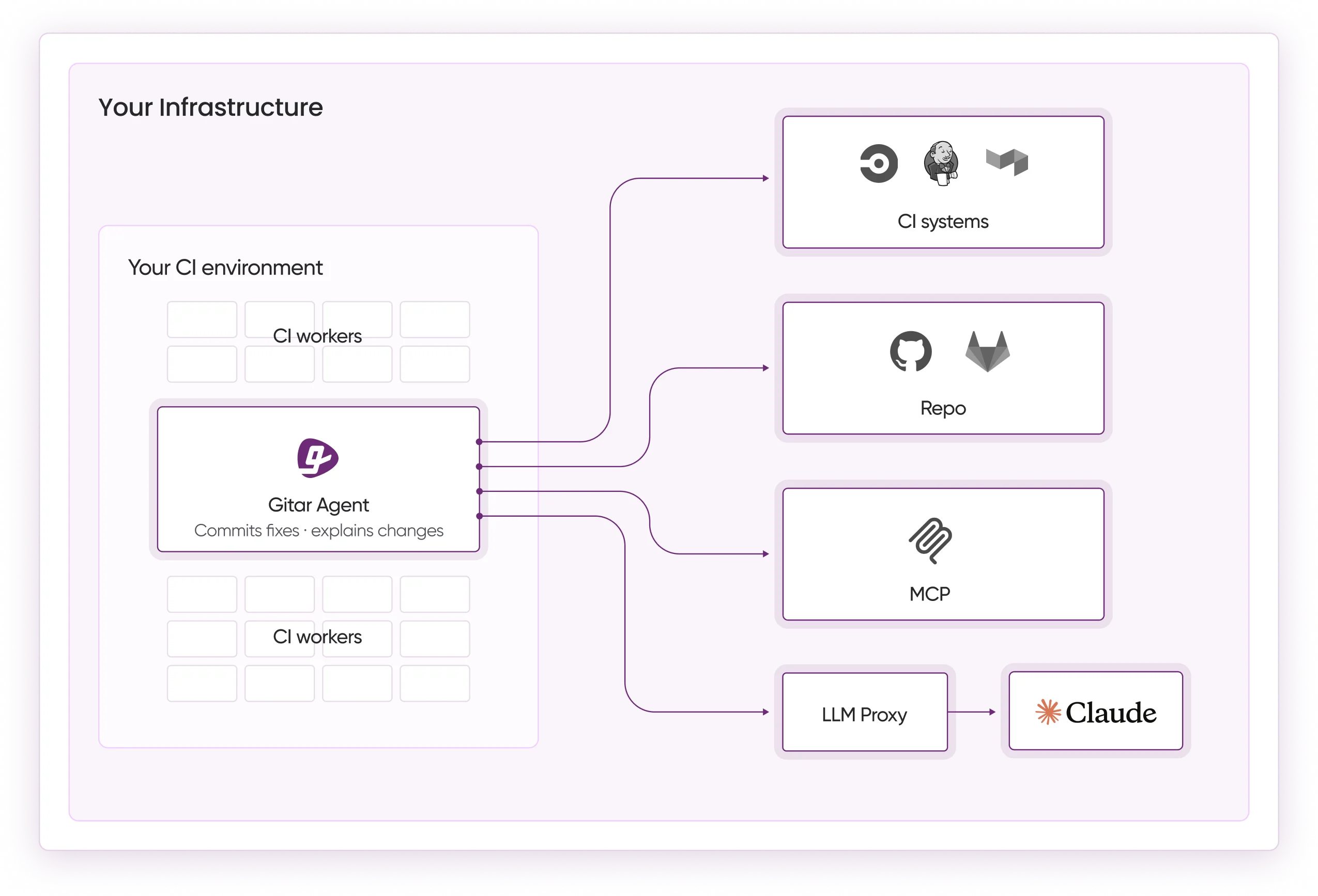
Gitar delivers enterprise-grade capabilities with agents that run inside your own CI, with access to configs, secrets, and caches. Teams keep sensitive data within existing infrastructure while still using free core code review and healing features.
Enterprise Deployment Priorities and Personas
Engineering leaders evaluating AI code review automation usually balance the needs of three personas. Software engineers want fewer context switches and less time in CI triage. Engineering managers focus on throughput and predictable delivery.
CTOs and VPs of Engineering require measurable ROI and clear governance. Enterprise AI adoption in 2026 prioritizes transparent, audit-ready systems with human-in-the-loop control for higher-risk changes.
Free, unlimited access removes budget constraints that often block rollout across large teams. Per-seat pricing can push a 100-developer team into $1,500-3,000 in monthly costs for suggestion-only tools. Gitar’s zero-cost model supports organization-wide deployment without procurement delays or usage caps.
Governance controls let teams tune auto-fix behavior, starting in suggestion mode to build trust. Teams can then enable automatic commits for specific validated fix types. This staged rollout addresses security concerns while proving value through faster CI, fewer manual fixes, and cleaner PRs. Install Gitar now, automatically fix broken builds, start shipping higher quality software, faster.
Frequently Asked Questions for Enterprise Teams
What is the best free enterprise AI code review tool for large development teams?
Gitar offers the most complete free AI code review platform for enterprise teams. Competing tools often charge $15-30 per developer for suggestion-only reviews, while Gitar provides unlimited code review, security scanning, and performance analysis at no cost.
The platform scales to monorepos above 50 million lines of code and supports teams of any size without seat limits or credit card requirements.
Which AI code review tools support GitHub Enterprise workflows?
Gitar supports GitHub Enterprise natively and also integrates with GitLab, CircleCI, and Buildkite. This coverage enables validated auto-fixes across multiple CI/CD environments instead of locking teams into a single platform.
Enterprise deployment options include cloud-managed agents and on-premises installation to meet strict security and compliance standards.
How do you measure ROI from AI code review automation?
Most enterprise teams see savings of $375K or more per year from reduced CI and review friction. Core metrics include time spent on manual fixes, which often drops from 1 hour to about 15 minutes per developer per day, along with fewer context switches and faster sprints.
Paid tools can require $450-900 in monthly spend, while Gitar delivers more capability at zero cost, which keeps ROI calculations simple and favorable.
What is the difference between Gitar and CodeRabbit for enterprise teams?
CodeRabbit charges $15-30 per developer each month for suggestion-only reviews that still need manual edits. Gitar instead provides free code review plus validated auto-fixes that ship working solutions.
For a 50-developer team, CodeRabbit costs $750-1,500 per month. Gitar delivers broader functionality at zero cost with unlimited scale.
Can AI code review tools handle monorepos with 50+ million lines of code?
Gitar was designed for very large codebases and already supports Pinterest’s 50M+ line monorepo with thousands of daily PRs. The hierarchical memory system and distributed processing model sustain enterprise performance while keeping access free.
Many competitors struggle with monorepos at this scale or introduce usage caps that become expensive or restrictive for high-volume teams.
Conclusion and Next Steps for Adopting Gitar
The AI coding wave created a review and CI bottleneck that suggestion-only tools cannot clear. Competitors charge premium prices for comments that still demand manual work, while Gitar’s healing engine fixes CI failures and applies review feedback with validated commits.
This architectural shift removes the productivity paradox facing enterprise teams that ship more code but wait longer on reviews. Free, unlimited code review opens enterprise-grade automation to every developer, not just a small subset with paid seats.
Gitar’s proven performance on Pinterest’s 50M+ line codebase shows readiness for the largest environments. Install Gitar now, automatically fix broken builds, start shipping higher quality software, faster.
Teams can start with Gitar’s 30-second installation, with no credit card, no seat limits, and immediate value from PR analysis and CI integration. This experience highlights the difference between suggestion engines and healing automation that consistently delivers green builds with minimal manual intervention.