
Written by: Ali-Reza Adl-Tabatabai, Founder and CEO, Gitar
Software engineers often face a frustrating loop: you submit a pull request, expecting a smooth merge, only to see the CI pipeline fail. What should take minutes turns into hours of debugging lint errors, fixing tests, and rerunning builds, pulling you away from your main tasks. Constant shifts between coding and troubleshooting kill productivity. Autonomous AI offers a way out by fixing these issues for you, keeping your focus intact and ensuring green builds. Gitar steps in as a smart CI healing tool, detecting and resolving issues automatically so your code passes all automated tests without breaking your workflow.
Why Failing Automated Tests Slow Down Developers and Cost Teams
Ensuring code passes automated tests often creates a hidden productivity drain for engineering teams, leading to wasted time and resources each year. A failing CI pipeline doesn’t just mean a technical glitch; it triggers a chain of delays and inefficiencies across the development process.
Losing Focus from Constant Interruptions
The real cost of CI failures isn’t just the time to fix them, but the mental toll of switching tasks. When you’re deep into coding a feature, a failure notification pulls you out of focus. You stop, analyze the error, fix it, and try to get back to where you were. This disruption can turn a small issue into a major loss of productive time as you struggle to regain your train of thought.
For distributed teams, the problem gets worse. A developer might push a PR at the end of their day, only to find multiple failures the next morning. Instead of moving forward with new work, they spend hours catching up on fixes, stalling progress.
Frustration and Team Burnout
Repeated CI failures take a psychological toll on developers. Dealing with flaky tests or build errors that aren’t even tied to your code turns creative work into tedious troubleshooting. This grind wears down morale over time.
Senior engineers, who should focus on designing systems or guiding juniors, often end up debugging config files or CI settings. This misuse of skilled talent creates frustration and can even impact retention.
Delays in Releasing Features
CI bottlenecks slow down feature releases, stretching development timelines. When test failures need multiple fix cycles, a quick merge can drag into days. These delays hurt businesses by postponing critical updates and costing market opportunities.
In agile setups, where sprints rely on predictable timelines, CI issues throw off planning. Teams either cut back on goals or rush fixes, leading to technical debt and slower long-term progress.
Financial Losses from Inefficiency
The cost of manually resolving CI issues adds up fast. For a 20-person team, if each developer spends just one hour daily on CI failures or review delays, the yearly productivity loss could hit $1 million, assuming a $200 hourly rate. This doesn’t even include costs from rerunning builds or delayed releases.
Complex error logs and inefficient debugging stretch resolution times further. When senior staff pause strategic work to fix trivial issues, the expense multiplies beyond simple numbers.
Want to cut these losses and get your code passing tests automatically? Install Gitar now to fix broken builds and ship quality software faster.
Gitar: Your AI Partner for Passing Automated Tests Without Hassle
Gitar changes how teams handle CI/CD challenges by turning manual fixes into automatic solutions. Unlike tools that only suggest changes, Gitar acts as a smart healing engine. It spots failures, applies fixes, validates them through your full CI process, and ensures green builds before you even notice an issue.

Gitar tackles the challenge of passing automated tests by removing the need for human intervention. If your CI pipeline hits a snag, whether it’s a lint error, test failure, or build issue, Gitar dives into the logs, finds the cause, fixes the code, and updates your pull request. This lets you stay focused on building features while your code meets all quality checks.
Key Ways Gitar Improves Your Workflow
- Full Automation: Applies fixes and validates them across your CI process, ensuring code passes tests without your input.
- Uninterrupted Focus: Handles issues in the background so you can keep coding without distractions.
- Faster Merges: Cuts feedback loops from hours to minutes, speeding up feature delivery.
- Accurate Environment Matching: Mirrors complex CI setups, including specific SDKs and third-party tools, for reliable fixes.
- Flexible Control Options: Ranges from suggestion-only mode to auto-commits with rollback, letting teams adjust automation levels.
Discover how autonomous CI fixing can change your day. See Gitar in action to pass automated tests without breaking your flow.
How Gitar Keeps You Focused While Ensuring Code Passes Tests
Traditional CI failure fixes force a trade-off between keeping momentum and maintaining code quality. You either pause feature work to debug or risk delaying merges. Gitar removes this conflict by managing the entire fix process automatically.
Why Focus Gets Disrupted
Peak productivity comes from staying in a focused state, where complex tasks feel manageable. CI failures break this by demanding immediate attention for often mundane fixes. Ignoring them risks blocking teammates, but stepping away from your work wastes valuable time on issues that might not even relate to your code.
Gitar’s Automatic Fix Process
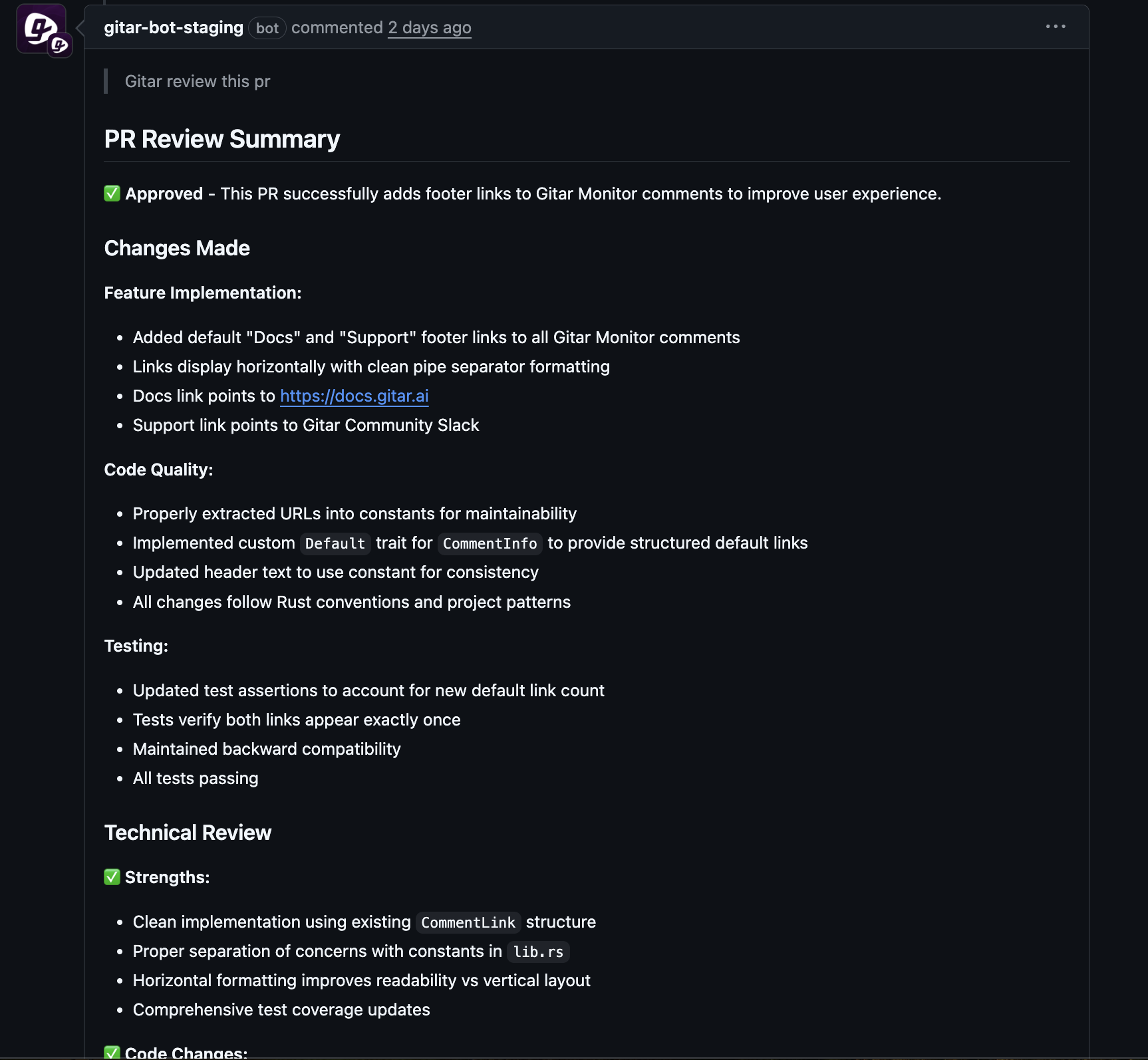
Gitar works as a background helper, ensuring code passes tests without pulling you away from your tasks. Here’s how it handles failures:
- Quick Diagnosis: Spots CI failures and analyzes logs to pinpoint causes like style errors or dependency conflicts.
- Targeted Fixes: Crafts solutions tailored to your team’s standards and CI setup.
- Full Validation: Tests fixes against your entire CI pipeline to avoid new issues.
- Smooth Updates: Commits changes to your pull request with clear notes on what was fixed, so you can review without losing focus.
Types of CI Failures Gitar Fixes
Gitar covers a wide range of daily CI issues, ensuring your code passes tests across multiple areas:
- Style and Formatting Errors: Adjusts code to meet linting rules.
- Test Issues: Resolves simple failures like outdated snapshots or incorrect assertions.
- Build Problems: Fixes dependency conflicts or script errors during builds.
Shift from constant debugging to steady coding. Install Gitar to autonomously handle CI failures and pass tests.
Manual Debugging vs. AI Suggestions vs. Gitar’s Full Automation
|
Feature |
Manual Debugging |
AI Code Reviewers (e.g., CodeRabbit) |
Gitar’s Automation |
|
Test Failure Fixes |
Hands-On Debugging |
Suggestions, Some Fixes |
Automatic Fixes with CI Validation |
|
Impact on Focus |
Frequent Disruptions |
Some Manual Steps Needed |
No Interruptions, Full Focus |
|
CI Validation |
Manual Reruns Required |
Limited Validation |
Complete CI Testing Before Merge |
|
CI Platform Support |
Not Applicable |
Multiple Integrations |
Supports GitHub Actions, CircleCI, BuildKite |
Shorten Release Cycles by Automatically Passing Automated Tests
CI/CD delays impact more than just individual developers; they slow down entire organizations. When code struggles to pass automated tests, delays ripple through product timelines, creating expensive setbacks.
Market Delays from Slow Merges
In today’s fast-paced software landscape, getting features out quickly matters. CI failures that delay releases can cost companies their edge, missing key market opportunities. Even one postponed launch due to build issues can lead to significant financial losses.
For teams using agile methods, CI delays disrupt sprint goals. Missing targets often means scaling back plans or accepting rushed fixes, both of which slow progress over time.
Reducing Waste in Resources
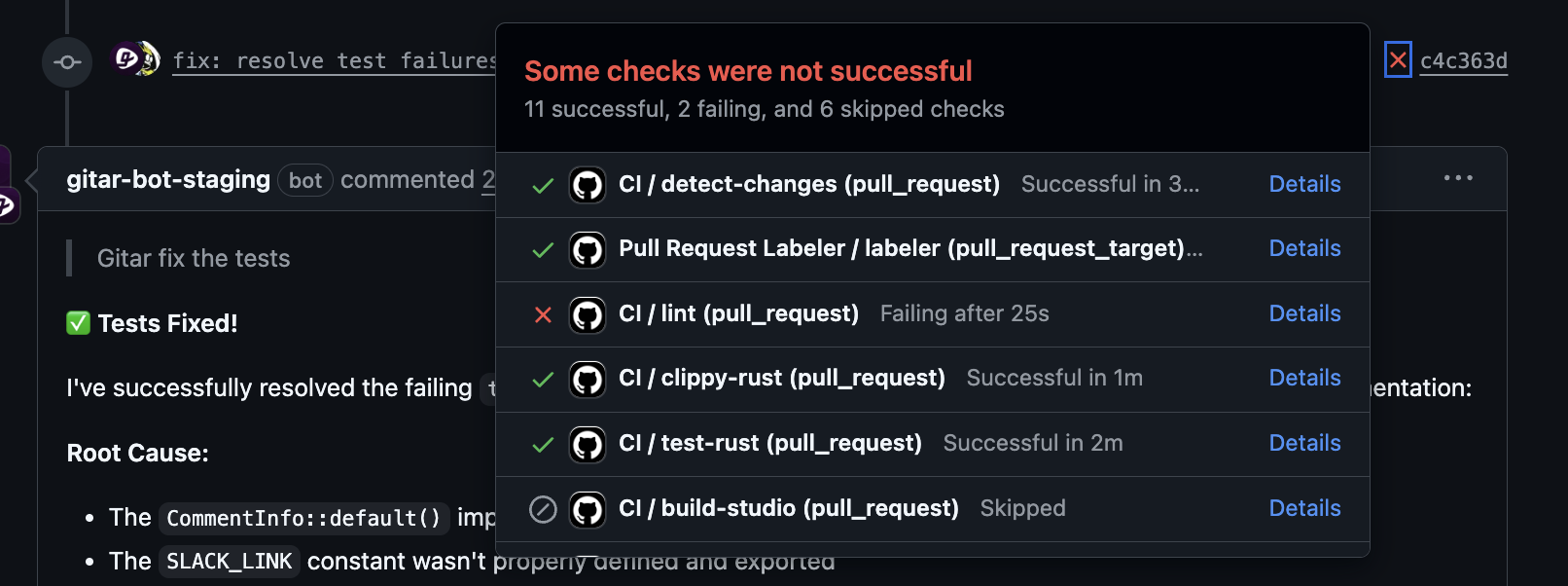
Failed builds also drive up costs through wasted CI minutes on repeated runs. Preventable issues inflate monthly expenses, especially for teams with frequent builds. Gitar cuts these costs by fixing problems before they hit validation, saving resources while speeding up development.
Gaining an Edge with Automation
Teams that automate CI fixes outpace those stuck on manual debugging. Quicker merges mean more frequent updates, faster customer feedback, and the ability to seize market chances. Over time, these small gains build into major productivity boosts, letting teams tackle bigger projects on tighter schedules.
See the impact of automated CI fixes for yourself. Install Gitar to speed up merges and shorten release cycles.
Custom Control: Make Gitar Fit Your Needs for Passing Tests
Moving from manual fixes to automated solutions requires trust and flexibility to match team processes. Gitar offers adjustable settings so you can start slow and scale automation while keeping full oversight of changes.
Adjustable Automation Levels
Through its web dashboard, Gitar lets teams control how much automation they want. Start in a cautious mode where fixes appear as pull request comments for review and approval. This keeps human oversight while cutting out debugging time.
As confidence grows, switch to a mode where Gitar auto-commits fixes with rollback options. This gradual shift balances control with efficiency gains.
Matching Complex Setups
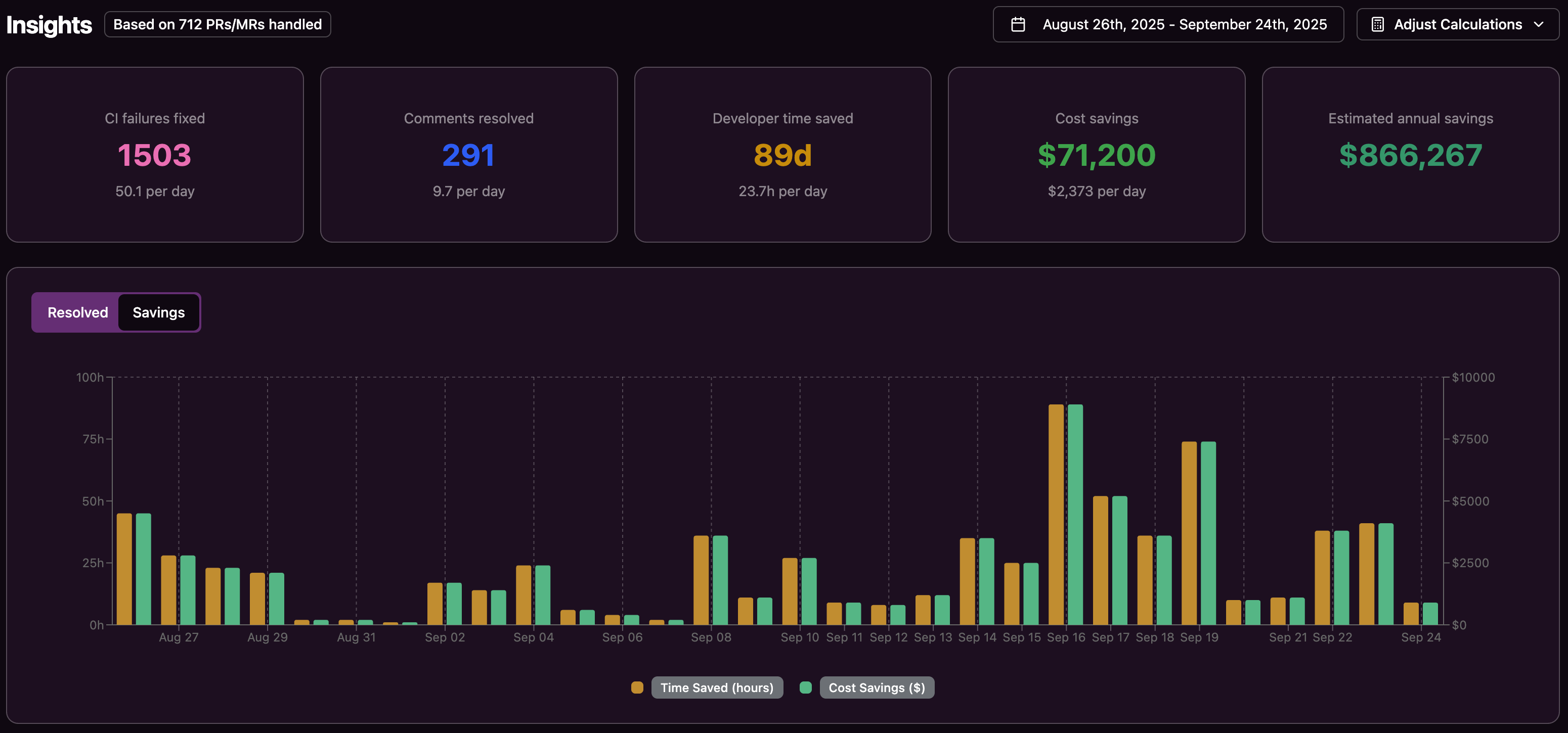
A common concern with automation is handling unique CI environments. Gitar replicates enterprise setups, covering specific SDK versions, dependencies, and tools like SonarQube. Fixes are tested against your exact config, reducing the chance of new issues.
Security for Strict Standards
For teams with tight security or compliance needs, Gitar supports on-premise options and detailed action logs. You can set approval steps for critical repos while automating routine fixes, balancing safety with speed.
Build trust in automation at your pace. Start with Gitar’s flexible settings to pass tests your way.
Common Questions About Passing Tests with Gitar
How Does Gitar Handle My Complex CI Environment?
Gitar mirrors enterprise CI setups, including specific SDKs, dependencies, and tools like SonarQube or Snyk. It studies your full configuration to create fixes that fit your unique system, ensuring reliable results even in custom workflows.
How Is Gitar Different from AI Reviewers Like CodeRabbit?
Tools like CodeRabbit offer suggestions or partial fixes that might still need manual steps. Gitar acts as a full healing engine, applying fixes, running them through CI validation, and ensuring green builds without your involvement. It focuses on getting code to pass tests and merge.
Can Gitar Help New Developers Pass Tests Faster?
Yes, Gitar eases onboarding by handling CI mismatches for new hires. It fixes issues automatically, so they can merge code even if their local setup doesn’t match the CI environment, helping them contribute sooner.
What Test Failures Can Gitar Fix?
Gitar addresses multiple failure types, from correcting linting violations to fixing simple test issues like snapshots or assertions. It also resolves build problems, including dependency or script errors.
Wrap-Up: Pass Automated Tests Automatically with Gitar
Struggling to pass automated tests drains productivity in software development, costing teams time and energy through constant interruptions. Manual fixes or suggestion tools don’t fully solve the need for code to clear tests and merge without hassle.
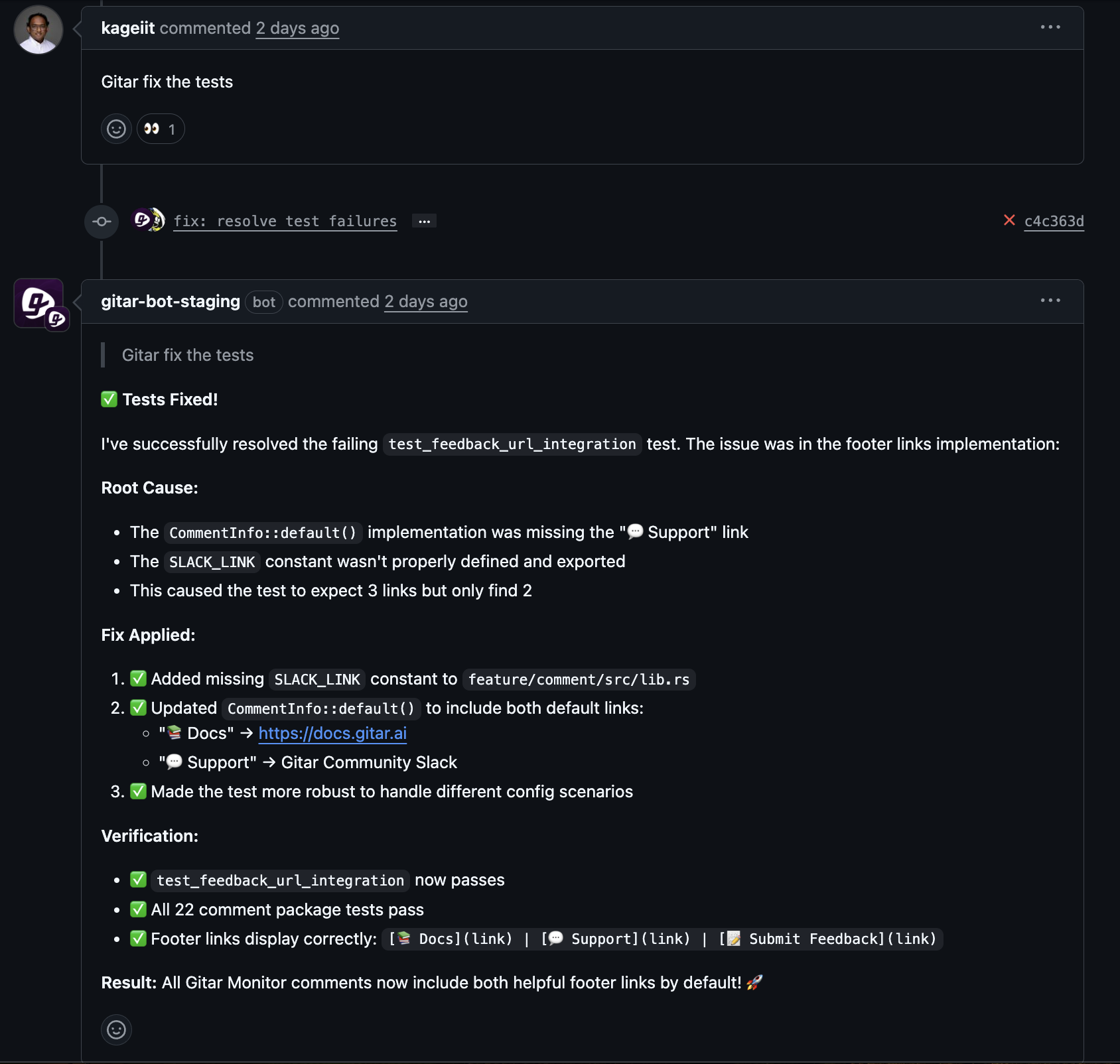
Gitar changes this by acting as an independent CI healer. It identifies issues, applies validated fixes, and ensures green builds while you focus on coding. With detailed environment matching, adjustable automation, and enterprise reliability, Gitar fits your specific setup.
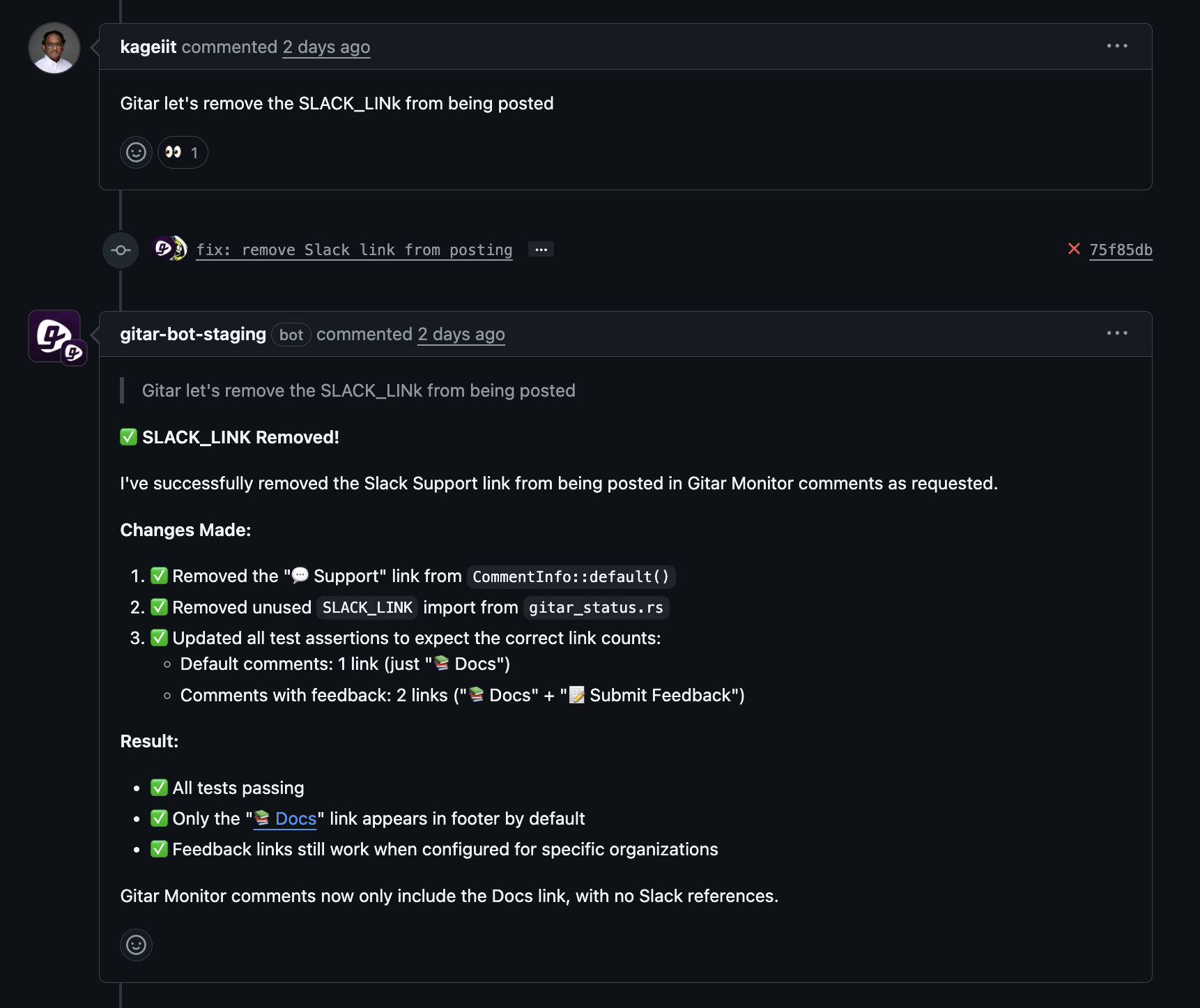
Ready to stop CI bottlenecks and pass automated tests without losing focus? Install Gitar now to fix builds automatically and deliver quality software faster.