
Software development today moves at a relentless pace, yet teams often face delays from CI failures and repetitive code review cycles. While AI offers solutions to speed up workflows, unbalanced automation can create new obstacles. The key is to fine-tune the level of automation to match your team’s needs, balancing human input with AI efficiency. This article dives into how Gitar’s adjustable trust settings help tackle these challenges, boosting productivity and developer focus while maintaining high code quality.
Why Development Delays Persist with AI Tools
Most developers know the frustration of submitting a pull request, only to see it fail due to a small error like a missing dependency or a linting issue. This triggers a time-consuming loop: reading error logs, switching to a local setup, fixing the issue, committing changes, and waiting for the CI pipeline to rerun. What should take minutes often eats up an hour or more.
These interruptions are costly. When developers shift focus to address failures or feedback, they lose momentum on their main tasks. This constant back-and-forth disrupts deep focus, one of the biggest drains on productivity.
For teams spread across time zones, delays grow worse. A simple code review between a developer in California and a teammate in India can stretch across days due to a 12-hour difference. Many AI tools add to this problem by offering suggestions that still need manual work to apply and verify.
Poorly balanced automation, whether too limited or overly bold, often slows down development by creating inefficiencies. AI meant to help can instead hinder progress if not tailored properly.
Hidden Costs of Workflow Inefficiencies
These delays carry a steep price beyond just frustration. For a team of 20 developers losing one hour daily to CI issues and reviews, the yearly cost of lost time can hit around $1 million, based on an average hourly cost of $200 and 250 working days.
Financial losses aren’t the only concern. While AI can speed up pull request cycles, overly aggressive automation may lead to errors if changes skip proper checks. The real issue is finding the right level of automation to gain efficiency without risking quality.
Delays also slow down product releases and weaken market position. When teams spend more time fixing builds than building features, deadlines slip, and businesses lose ground to faster competitors.
Want to adjust automation to fit your team’s workflow? Install Gitar now to fix failing builds automatically.
Why Adjustable Automation Matters for Coding
Efficient software development depends on balancing AI assistance with human oversight, adjusting automation based on project needs and team experience. A flexible trust system lets AI support range from simple suggestions to full, independent action.
Developers value the ability to scale AI help from basic tips to complete autonomy as they grow more comfortable. This step-by-step approach builds confidence while keeping control over key processes.
Different situations call for different automation levels. A new developer on a critical system might need AI to only suggest changes for review, while an experienced engineer fixing minor errors could benefit from instant, automated commits.
AI tools increase efficiency by handling repetitive tasks. The true gain comes from smartly managing automation scope, increasing it for simple fixes and limiting it for complex, high-stakes updates.
This flexibility resolves the tension between speed and caution. Teams can adjust AI involvement based on practical experience, ensuring maximum benefit with minimal risk.
Meet Gitar: Smart CI Fixes with Custom Trust Levels
Gitar takes AI coding support to a new level by acting as a healing engine, not just a suggestion tool. Unlike typical solutions that point out issues and stop there, Gitar fixes problems, tests them in your full CI setup, and ensures builds pass before finalizing changes.

Gitar’s main features improve development through:
- Complete Problem Resolution: Automatically applies fixes, tests them, and confirms builds pass, bridging the gap between spotting issues and solving them.
- Full Setup Matching: Mirrors complex enterprise systems, including specific SDKs, mixed-language dependencies, and tools like SonarQube or Snyk.
- Custom Trust Settings: Adjusts AI involvement from suggestions needing approval to direct commits as trust builds.
- Smart Review Support: Handles feedback implementation, cutting delays across time zones and speeding up merges.
- Wide CI Compatibility: Works with GitHub Actions, GitLab CI, CircleCI, BuildKite, and more for easy integration.
Ready to customize automation for your team? Explore Gitar and see the difference.
How Gitar Improves Engineering with Tailored Automation
Protect Developer Focus and Increase Output
Switching tasks is a major productivity killer in coding. Every time a developer stops to fix a CI failure or address feedback, they lose valuable focus. Gitar takes over these routine fixes, letting developers stay immersed in their work.
AI tools can speed up coding tasks overall, especially by cutting down on task interruptions and automating small fixes. Gitar saves mental energy for complex challenges by managing standard issues.
Less task switching through tool integration helps keep developers in a focused state. This leads to quicker progress and less mental strain.
Speed Up Merges and Delivery Timelines
Standard workflows often drag out the time between finishing code and deploying it. Gitar cuts this wait by delivering instant, verified fixes that keep pipelines moving.
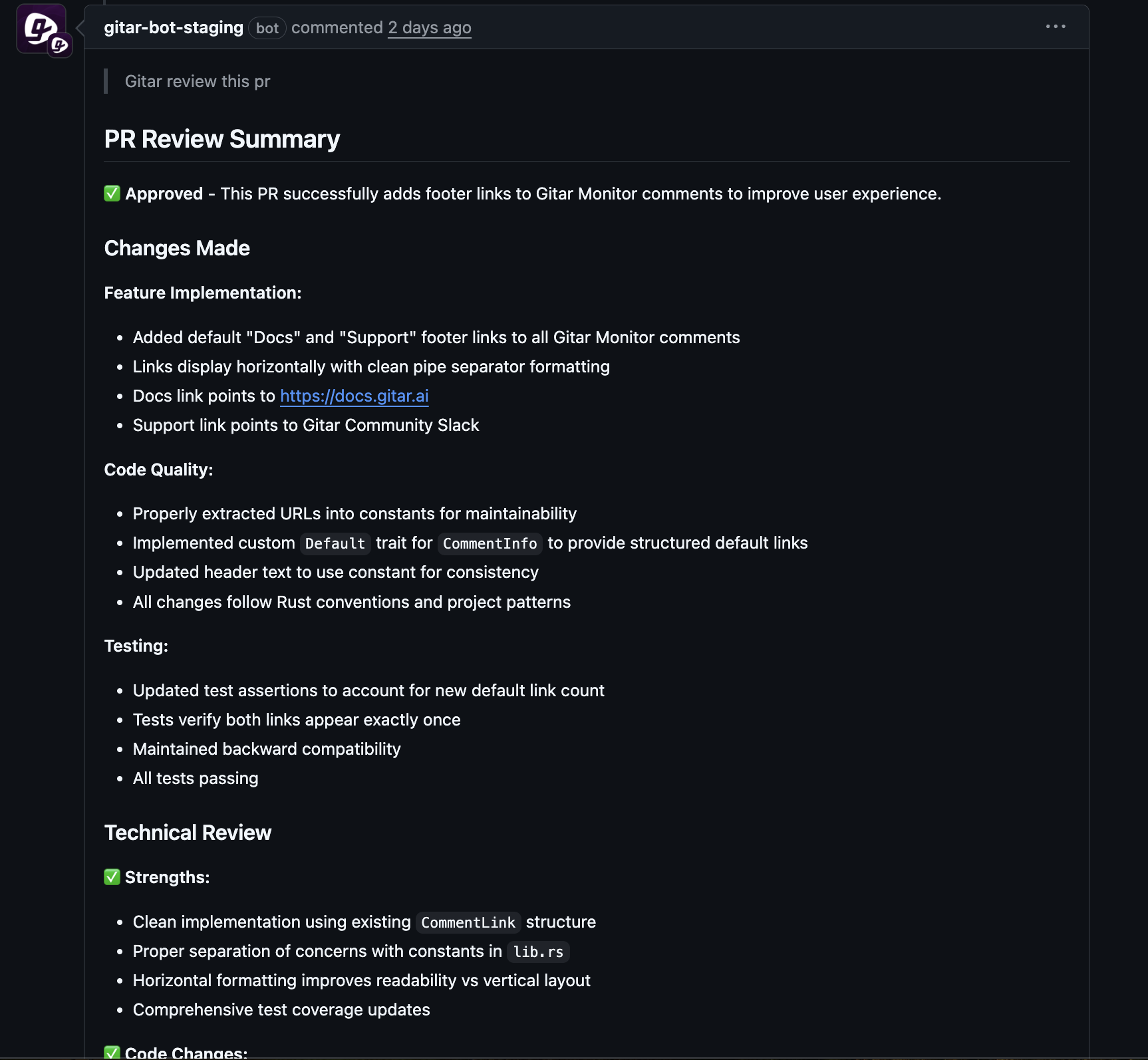
AI with high autonomy shortens pull request cycles and eases team coordination. Gitar resolves issues and applies feedback without waiting for manual steps.
For teams in different regions, this speed is a game-changer. A reviewer can leave notes for Gitar, and the fix is ready before the coder’s next shift, erasing time zone delays.
Build Trust with a Flexible AI System
Confidence in AI grows over time with reliable results. Gitar’s adjustable settings let teams start with limited automation and expand it as they see consistent success.
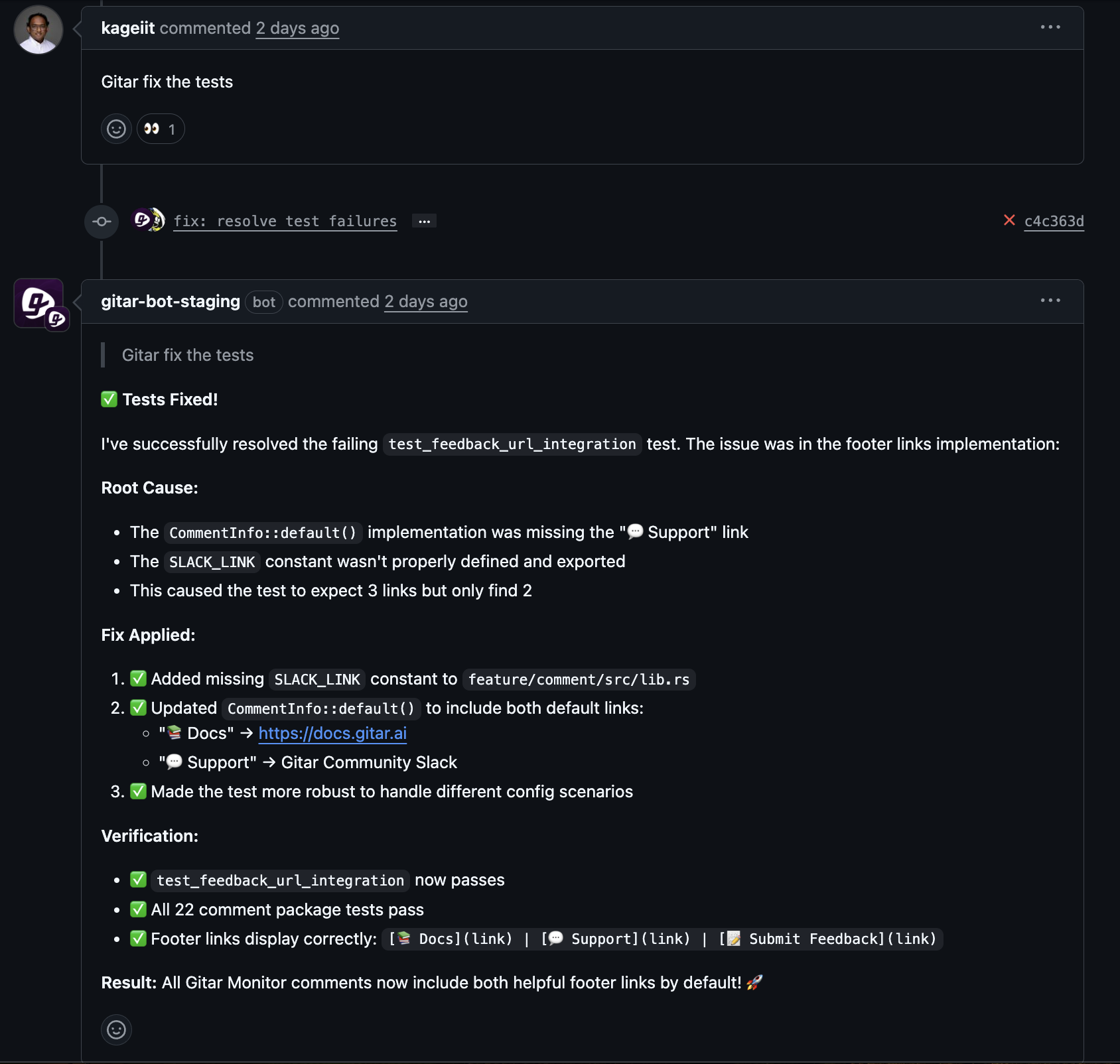
Slowly increasing AI’s role as reliability proves out works well for adoption. Teams can start with suggestions needing approval, then move to automatic commits with rollback options.
This gradual shift tackles fears of AI errors in critical code. Transparent actions and clear records build trust through proven outcomes.
Ensure Fixes Match Real-World Systems
Enterprise setups often have unique dependencies and CI rules that generic AI can’t handle. Gitar fully mirrors these environments, ensuring fixes fit your exact context.
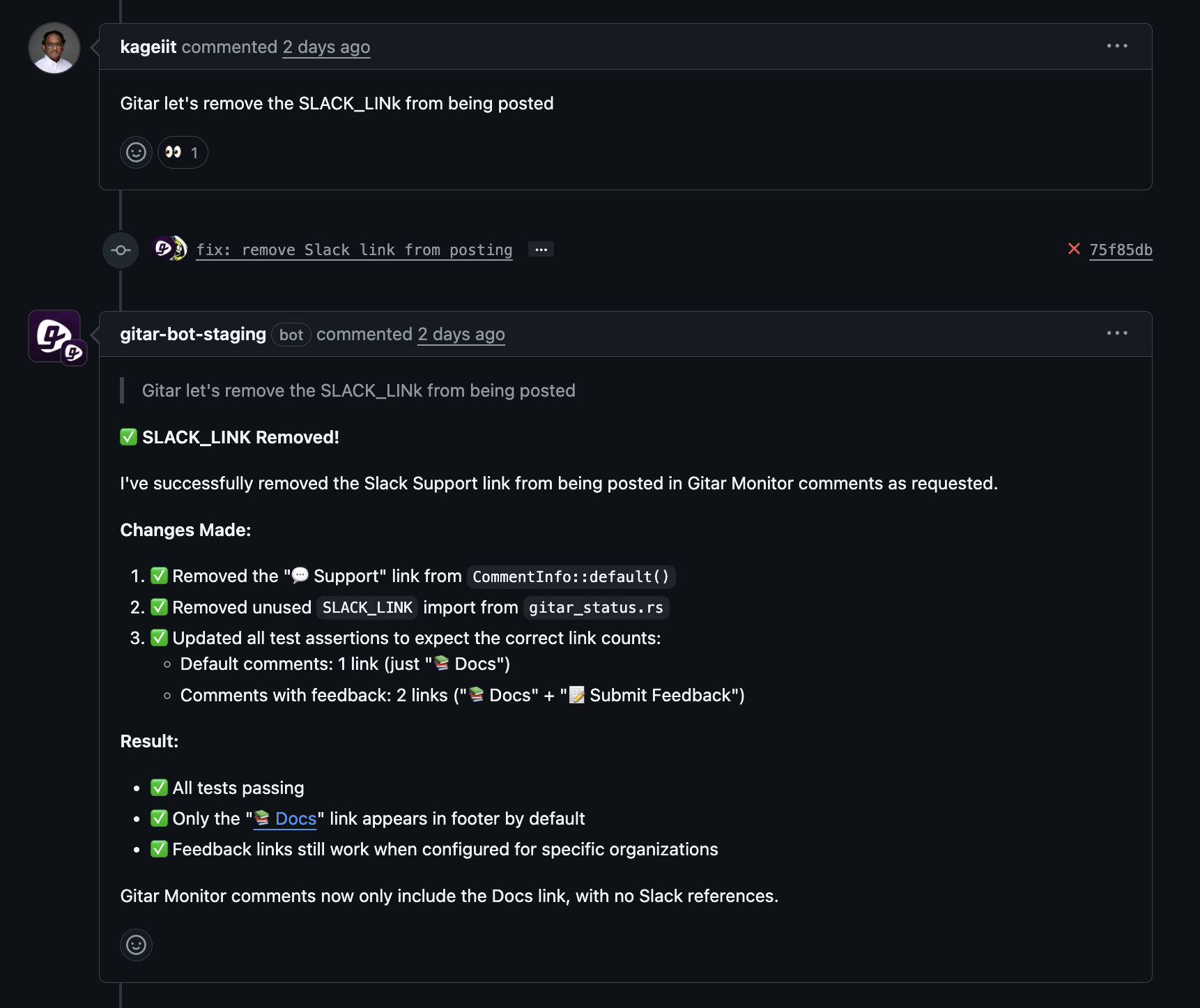
This deep understanding of your setup, including security tools and compliance needs, means more accurate fixes and less chance of new problems. It delivers practical solutions, not just guesses.
Ready to fix builds with precision? Install Gitar now for tailored automation.
Gitar’s Fixing Power vs. Basic Suggestion Tools
|
Feature / Tool |
Gitar (Healing Engine) |
AI Reviewers (e.g., CodeRabbit) |
Manual Work (Status Quo) |
|
Automation Scope |
Adjustable: Suggestions to Full Action |
Adjustable: Suggestions to Fix Options |
All Manual |
|
Fix Implementation |
Applies, Tests, Ensures Build Success |
Provides One-Click Fix Options |
Developer Debugs Manually |
|
CI Integration |
Full System Match, Multi-Platform |
Supports Git Platforms, Test Spaces |
None, Developer-Driven |
|
Developer Workflow |
Cuts Repetitive Work, Keeps Focus |
Lessens Task Switching with Tools |
High Switching, Time-Intensive |
|
Trust Model |
Flexible, Adjustable Action Levels |
Custom Rules and Settings |
Developer Fully Accountable |
Common Questions About Gitar
How Does Gitar Earn Trust for Automated Fixes?
Gitar builds confidence with a flexible trust system. Teams can start in a cautious mode, reviewing and approving fixes with one click. As reliability becomes clear, they can switch to a mode where fixes commit directly, with options to undo if needed. This respects developer control while showing value through steady performance.
Can Gitar Work with Our Complex CI Setup?
Yes, Gitar is built for intricate systems. It replicates your exact workflow, matching dependencies, SDK versions, multi-language builds, and tools like SonarQube or custom scanners. This ensures fixes fit your unique environment, no matter the complexity.
How Is Gitar Different from Other AI Review Tools?
While many AI tools suggest fixes or offer quick applications, Gitar goes further as a healing engine. It applies changes, runs your full CI tests, and confirms builds pass, handling the entire process with minimal developer input.
Does Gitar Cut Review Time for Distributed Teams?
Yes, Gitar speeds up reviews, especially with time zone gaps. Reviewers can leave instructions, and Gitar implements changes instantly. A teammate in another region sees the update ready when they log in, removing wait times.
How Does Gitar Maintain Code Quality?
Gitar upholds standards by matching your CI setup, running all tests and scans before finalizing fixes. Adjustable settings let teams control oversight, from approving every change to automating specific fixes. Clear explanations and reversibility add transparency.
Wrap-Up: Speed Up Delivery with Smart Automation
Software development thrives on automation that supports, not replaces, human skill. Misaligned AI tools can create as many issues as they fix, either demanding too much manual effort or risking errors from lack of review.
Gitar’s ability to adjust automation levels marks a shift to context-aware tools. With flexible trust settings, full system matching, and complete fix cycles, it lets teams shape AI use to their workflow and risk comfort.
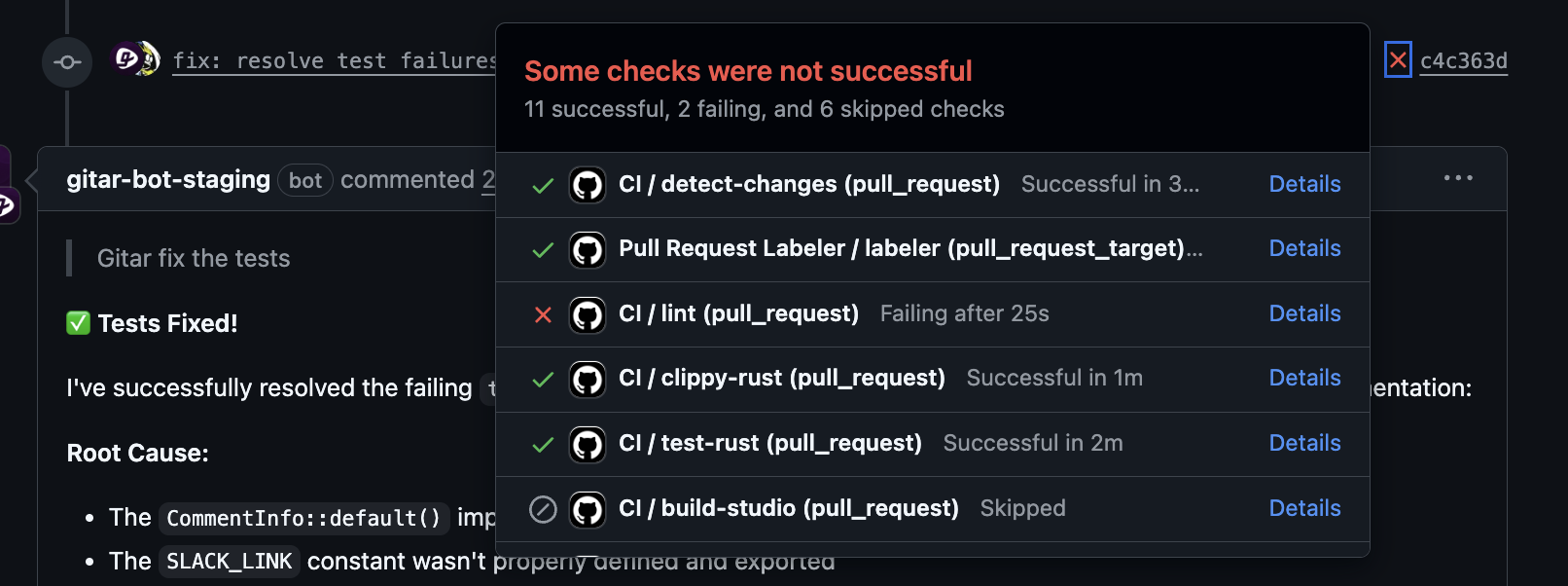
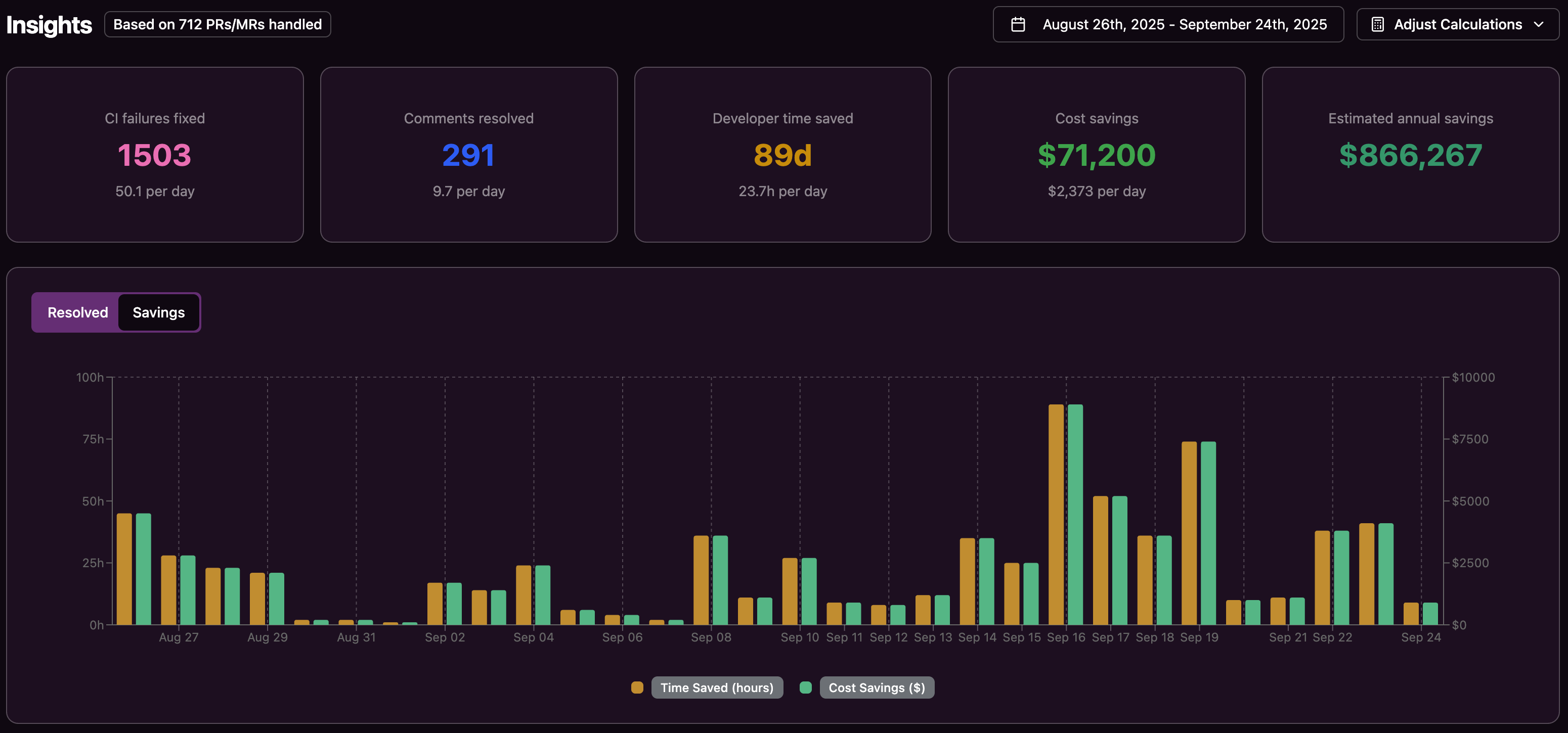
This leads to faster cycles, better developer satisfaction, and steadier releases. Teams cut time lost to build issues and reviews while steering their automation approach.
Don’t let CI failures and review delays slow you down. See how Gitar can optimize your workflow and shorten merge times. Discover Gitar today.